'SEP 15 1937 '^ C1B 349775 THE JOURNAL OF INDUSTRIAL HYGIENE AND TOXICOLOGY Volume 19 SEPTEMBER, 1937 Kmu 7 THE PROBLEM OF POSSIBLE SYSTEMIC EFFECTS FROM CERTAIN CHLORINATED HYDROCARBONS* Cecil K.
refid# x5mOpXkQOEqRJLZr2kq8y872617 pages
Ethyl Corp. has applied this technique, with byproduct HC1 used to pro duce ethyl chloride for manufacture of tetraethyl lead antiknock compounds.
refid# 2jJo8Erb2B93zG56bGE6Y4EE512 pages
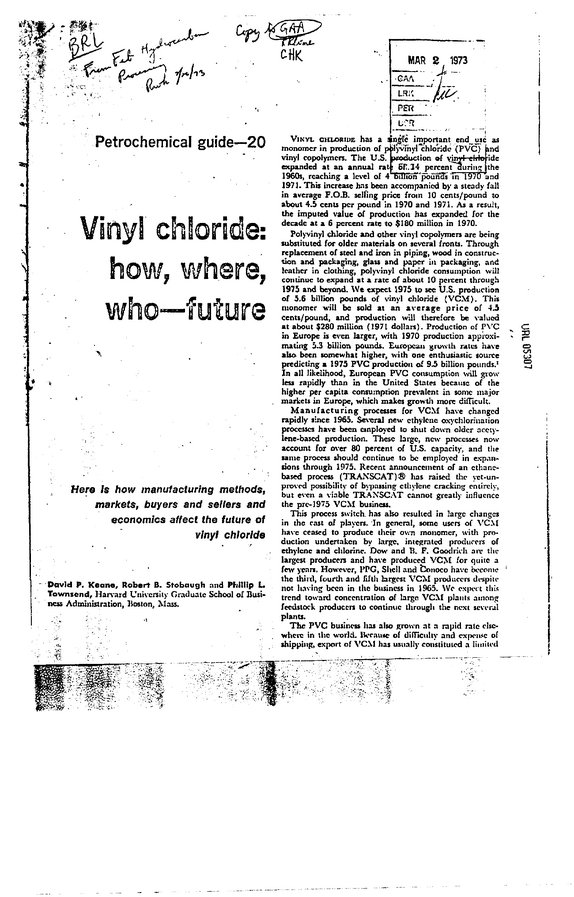
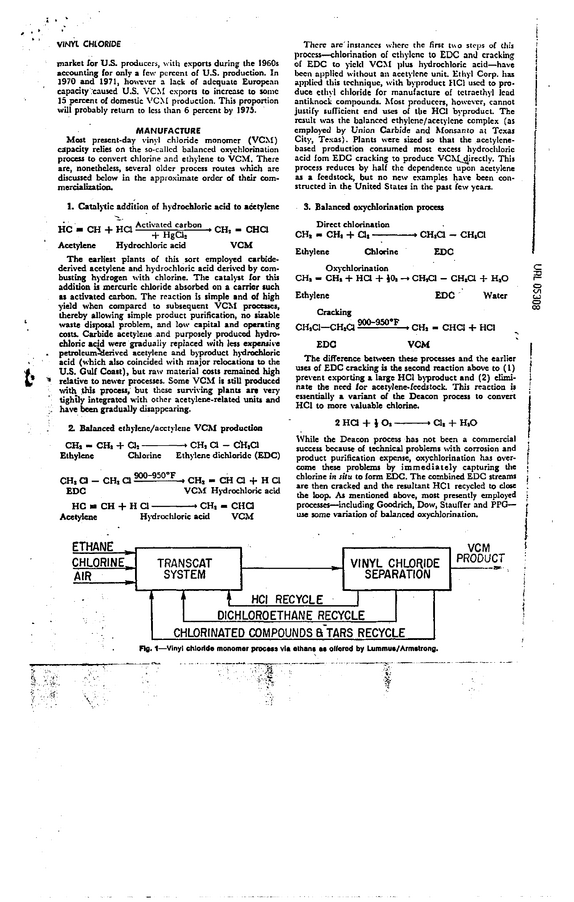
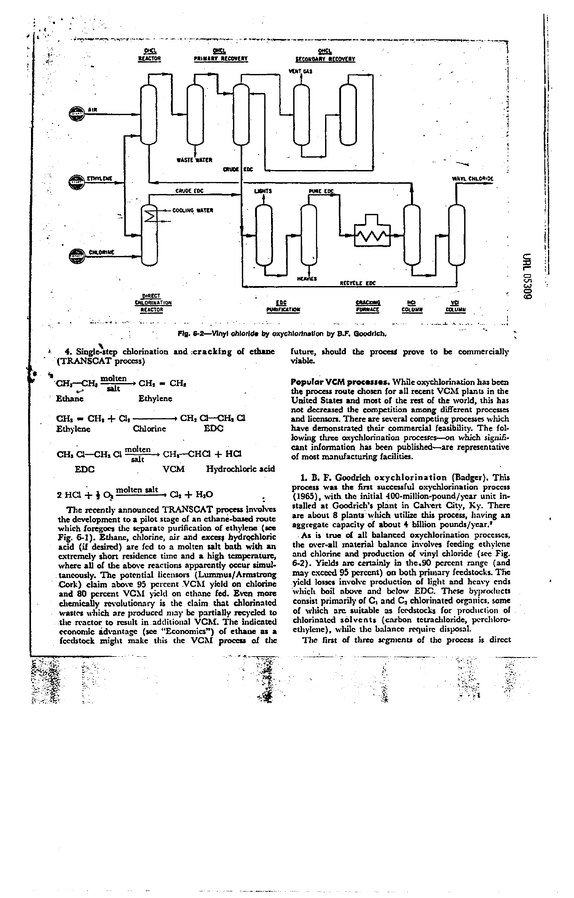
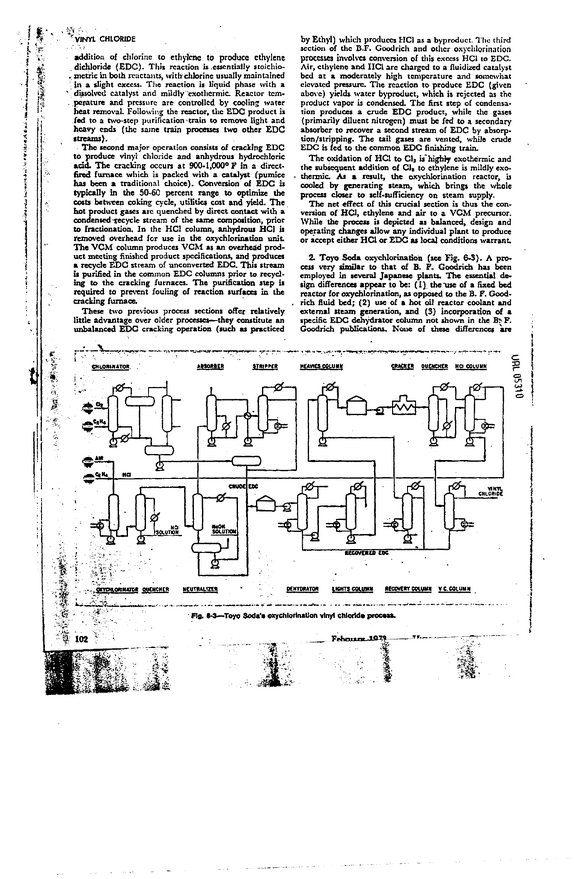
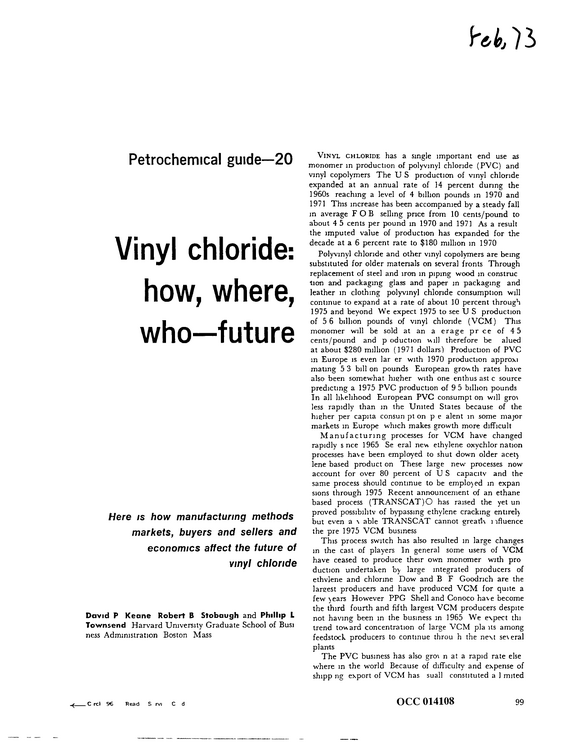
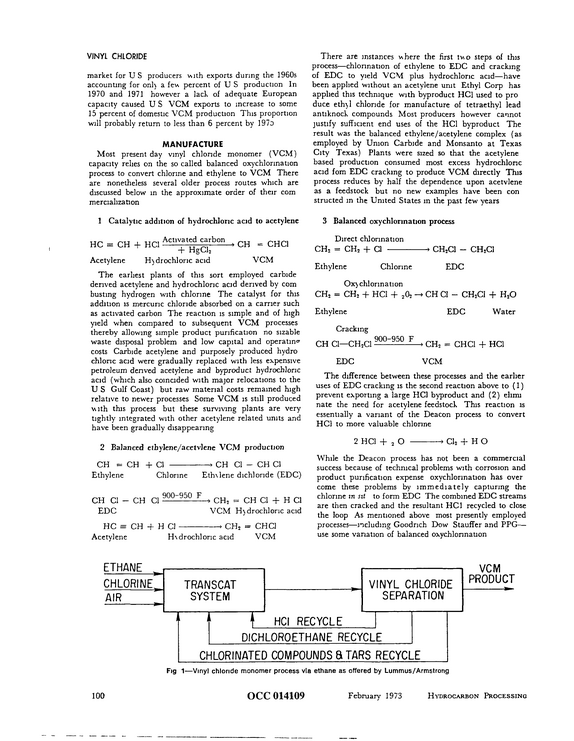
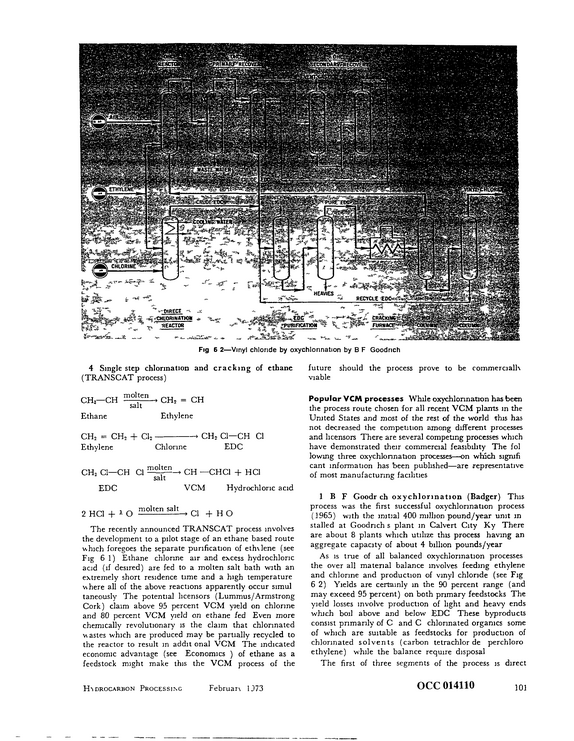
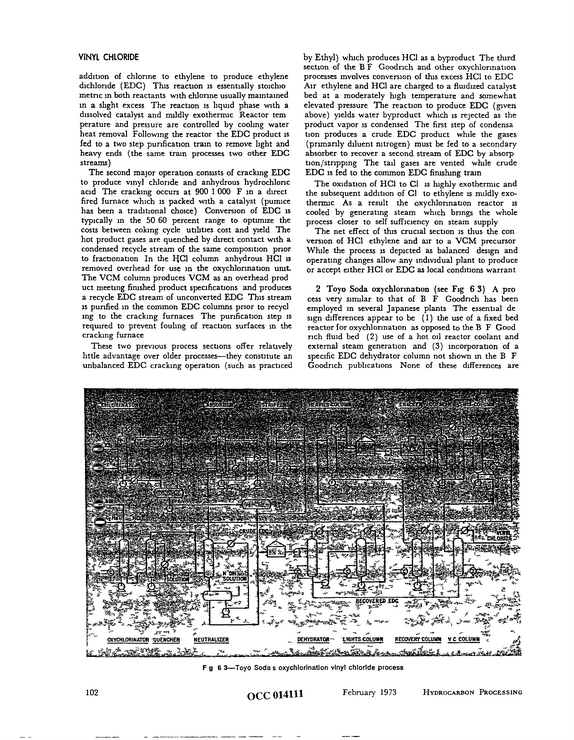
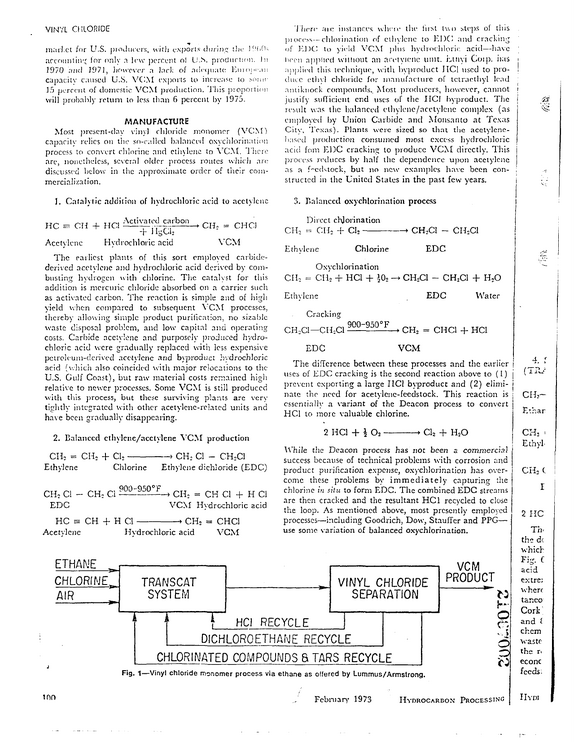
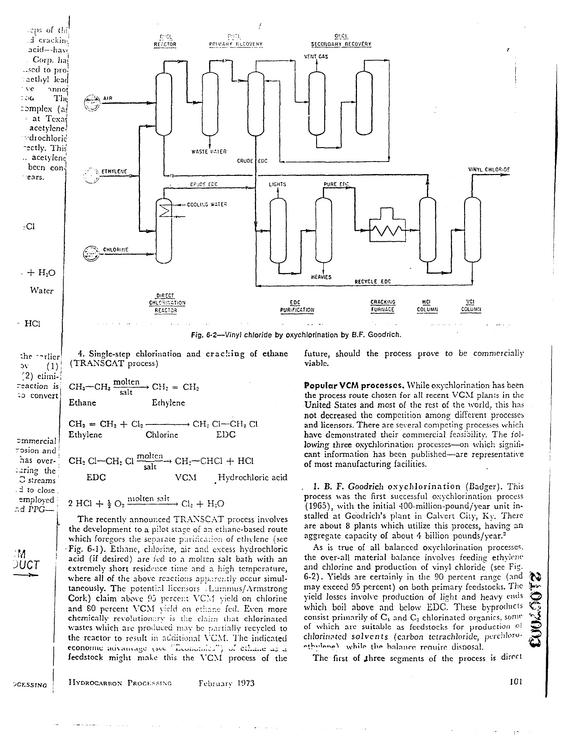
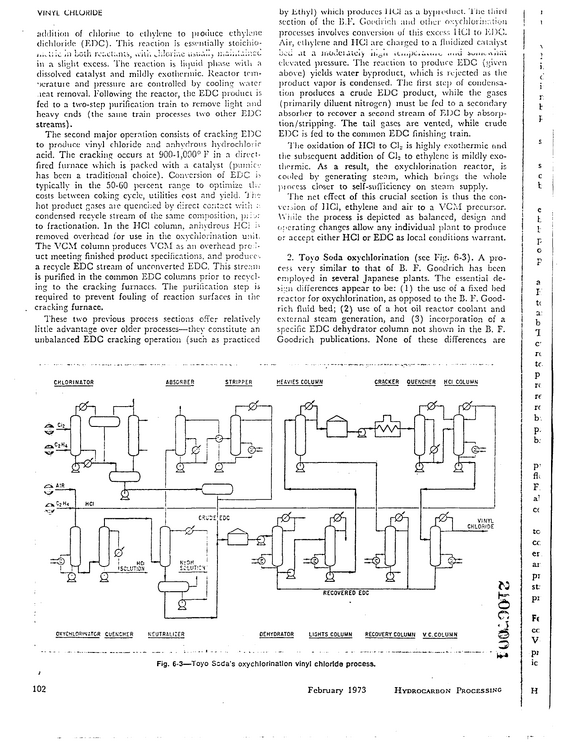
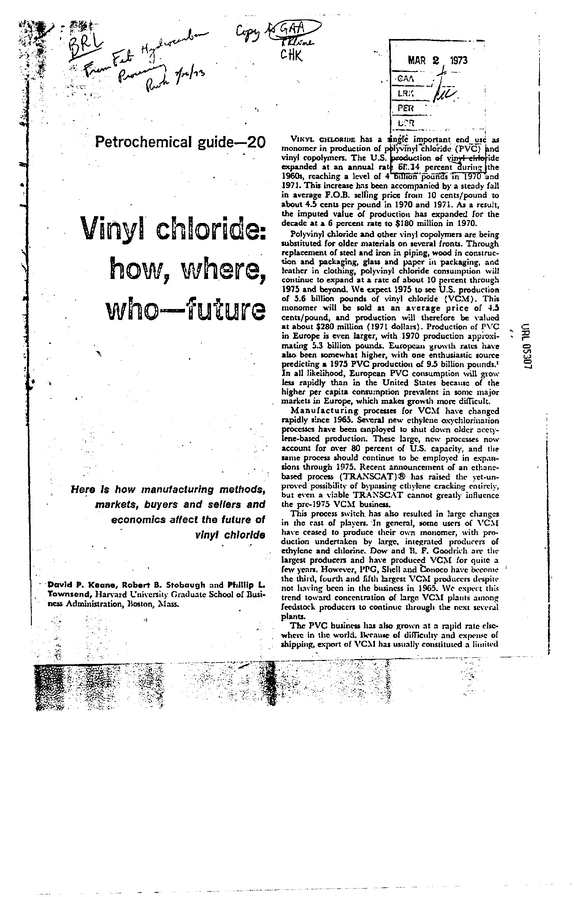
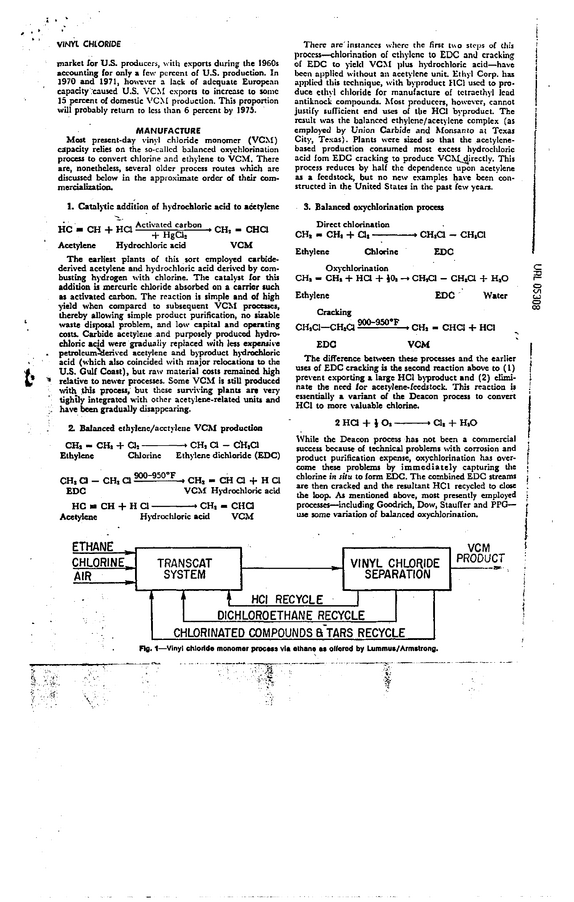
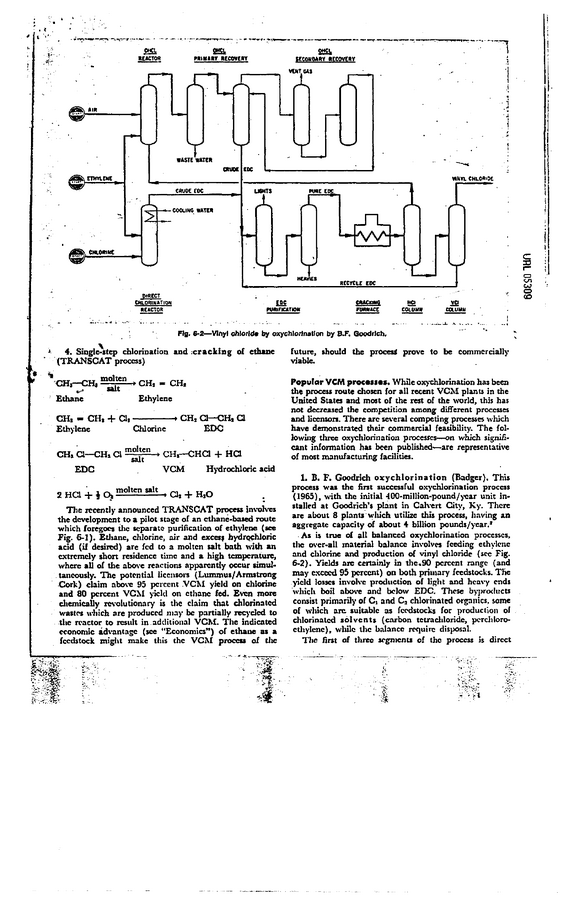
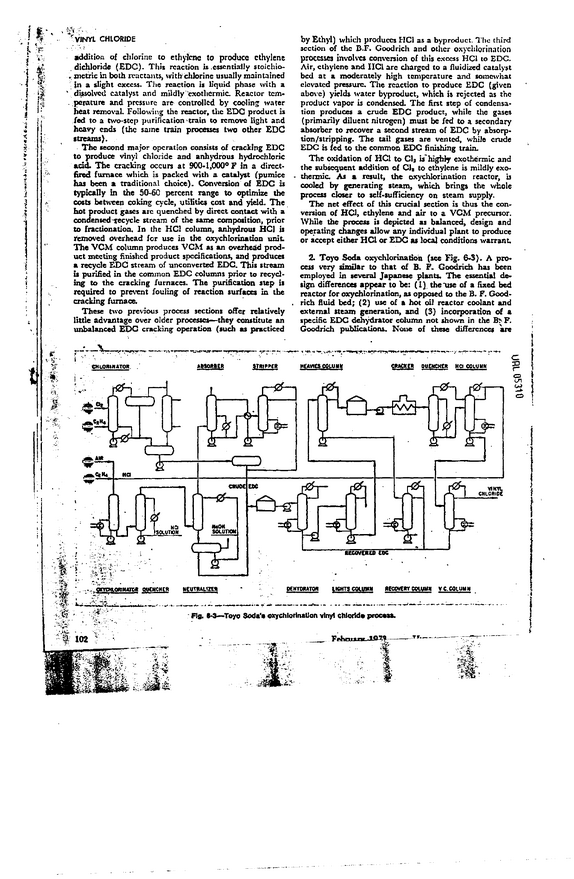
Production of PVC m Europe is even lar er with 1970 production approxi mating 5 3 bill on pounds European grow th rates have also been somewhat higher with one enthus ast c source predicting a 1975 PVC production of 9 5 billion pounds In all likelihood European PVC consumpt on will grot less rapidly than in the United States because of the higher per capita consun pt on p e alent in some major markets m Europe which makes growth more difficult Manufacturing processes for VCM have changed rapidly s nee 1965 Se eral new ethylene oxychlor nation processes have been employed to shut down older acety lene based product on These large new processes now account for over 80 percent of U S capacitv and the same process should continue to be employed in expan sions through 1975 Recent announcement of an ethane based process (TRANSCAT)O has raised the yet un proved possibility of bypassing ethylene cracking entirely but even a \ able TRANSCAT cannot greatb i tfluence the pre 1975 VCM business This process switch has also resulted in large changes in the cast of players In general some users of VCM have ceased to produce their own monomer with pro duction undertaken by large integrated producers of ethvlene and chlorine Dow and B F Goodrich are the largest producers and have produced VCM for quite a few years However PPG Shell and Conoco have become the third fourth and fifth largest VCM producers despite not having been in the business in 1965 We expect thi trend toward concentration of large VCM pla its among feedstock producers to continue throu h the next set eral plants The PVC business has also grot n at a rapid rate else where m the world Because of difficulty and expense of shipp ng export of VCM has suall constituted a 1 mited C rcl 96 Read S rvi C d OCC 014108 99 VINYL CHLORIDE market for U S producers with exports during the 1960s accounting for only a few percent of U S production In 1970 and 1971 however a lack of adequate European capacity caused U S VCM exports to increase to some 15 percent of domestic VCM production This proportion will probably return to less than 6 percent by 197d MANUFACTURE Most present day vinyl chloride monomer (VCM) capacity relies on the so called balanced oxychlonnation process to convert chlorine and ethylene to VCM There are nonetheless several older process routes which are discussed below in the approximate order of their com mercialization There are instances where the first two steps of this process--chlorination of ethylene to EDC and cracking of EDC to yield VCM plus hydrochloric acid--have been applied without an acetylene unit Ethyl Corp has applied this technique with byproduct HC1 used to pro duce ethyl chloride for manufacture of tetraethyl lead antiknock compounds Most producers however cannot justify sufficient end uses of the HC1 byproduct The result was the balanced ethylene/acetylene complex (as employed by Union Carbide and Monsanto at Texas City Texas) Plants were sized so that the acetylene based production consumed most excess hydrochloric acid fom EDC cracking to produce VCM directly This process reduces by half the dependence upon acetvlene as a feedstock but no new examples have been con structed in the United States m the past few years 1 Catalytic addition of hydrochloric acid to acetylene HC s CH + HC1 Ac^ated carbon + rigdj Acetylene Hydrochloric acid CH = CHC1 VCM The earliest plants of this sort employed carbide derived acetylene and hydrochloric acid derived by com busting hydrogen with chlorine The catalyst for this addition is mercuric chloride absorbed on a carrier such as activated carbon The reaction is simple and of high yield when compared to subsequent VCM processes thereby allowing simple product purification no sizable waste disposal problem and low capital and operating costs Carbide acetylene and purposely produced hydro chlonc acid were gradually replaced with less expensive petroleum derived acetylene and byproduct hydrochloric acid (which also coincided with major relocations to the U S Gulf Coast) but raw material costs remained high relative to newer processes Some VCM is still produced with this process but these surviving plants are very tightly integrated with other acetylene related units and have been gradually disappearing 2 Balanced ethylene/acetvlene VCM production CH = CH + Cl --------------- > CH Cl - CH Cl Ethylene Chlorine Etfnlene dichloride (EDC) qno-qiyo p CH Cl - CH Cl -> CH2 = CH Cl + H Cl EDC VCM Hydrochloric acid HC = CH + H Cl--------------- > CHs = CHC1 Acetylene Htdrochloric acid VCM 3 Balanced oxychlonnation process Direct chlorination CH2 = CHj + Cl --------------- > CHjCl - CH2C1 Ethylene Chlorine EDC Oxy chlorination CH2 = CH2 + HC1 + 202 -CH Cl - CH2C1 + H20 Ethylene EDC Water Cracking CH Cl--CH2C1 900-950 F > CH2 = CHC1 + HC1 EDC VCM The difference between these processes and the earlier uses of EDC cracking is the second reaction above to (1) prevent exporting a large HC1 byproduct and (2) elimi nate the need for acetylene feedstock This reaction is essentially a variant of the Deacon process to convert HC1 to more valuable chlorine 2 HC1 + 2 O ------------> Cl2 + H O While the Deacon process has not been a commercial success because of technical problems with corrosion and product purification expense oxychlonnation has over come these problems by immediately capturing the chlorine m sit to form EDC The combined EDC streams are then cracked and the resultant HC1 recycled to close the loop As mentioned above most presently employed processes--including Goodrich Dow Stauffer and PPG-- use some variation of balanced oxychlonnation Fig 1--Vinyl chloride monomer process via ethane as offered by Lummus/Armstrong 100 OCC 014109 February 1973 Hydrocarbon Processing Fig 6 2--Vinyl chloride by oxychlorination by B F Goodrich 4 Single step chlorination and cracking of ethane (TRANSCAT process) future should the process prove to be commercialh viable CH3--CH molten salt Ethane CH2 = CH Ethylene CH2 = CH2 + Cl2--------------- > CH2 Cl--CH Cl Ethylene Chlorine EDC CH2 Cl--CH Cl molten salt EDC CH --CHC1 + HC1 VCM Hydrochloric acid molten salt 2 HC1 + 1 O Cl + H O The recently announced TRANSCAT process involves the development to a pilot stage of an ethane based route which foregoes the separate purification of eth\lene (see Fig 6 1) Ethane chlorine air and excess hydrochloric acid (if desired) are fed to a molten salt bath with an extremely short residence time and a high temperature where all of the above reactions apparently occur simul taneously The potential licensors (Lummus/Armstrong Cork) claim above 95 percent VCM yield on chlorine and 80 percent VCM yield on ethane fed Even more chemically revolutionary is the claim that chlorinated wastes which are produced may be partially recycled to the reactor to result m addit onal VCM The indicated economic advantage (see Economics ) of ethane as a feedstock might make this the VCM process of the Popular VCM processes While oxychlonnation has been the process route chosen for all recent VCM plants in the United States and most of the rest of the world this has not decreased the competition among different processes and licensors There are several competing processes which have demonstrated their commercial feasibility The fol lowing three oxychlonnation processes--on which signifi cant information has been published--are representative of most manufacturing facilities 1 B F Goodr ch oxychlonnation (Badger) This process was the first successful oxychlonnation process (1965) with the initial 400 million pound/year unit m stalled at Goodrich s plant in Calvert City Ky There are about 8 plants which utilize this process having an aggregate capacity of about 4 billion pounds/year As is true of all balanced oxychlonnation processes the over all material balance involves feeding ethylene and chlorine and production of vinyl chloride (see Fig 6 2) Yields are certainly in the 90 percent range (and may exceed 95 percent) on both primary feedstocks The yield losses involve production of light and heavy ends which boil above and below EDC These byproducts consist primarily of C and C chlorinated organics some of which are suitable as feedstocks for production of chlorinated solvents (carbon tetrachlor de perchloro ethylene) while the balance require disposal The first of three segments of the process is direct Hydrocarbon Processing Februan 1J73 OCC 014110 101 VINYL CHLORIDE addition of chlonne to ethylene to produce e
refid# nzno96YKpZQ5KdNVwgVpEnOm12 pages
Elhyi Cot]), has applied this technique, with byproduct HCl used to pro duce ethyl chloride for manufacture of tetraethyl lead antiknock compounds.
refid# 3mrqeX0RXQo6GM2eMb0QxE2312 pages
1973 OSHA (XINCENTRAnON LJ Incorporating Infrared Analytical Data For Comj; Of the 400-odd gases and vapors for which maximum tolerable limits have been established by the Occupational Safety and Health Administration, many have char acteristic infrared absorption sufficiently strong to be detected and quantized by an Data for Ambient Air Analysis Using the MtRAN Gas Analyzer Compound Maximum Allan,.we Exposure* (8 Ham Weighted Avenge) PPM mg/M1 Minimum Absorbance equivalent to the Concentration OSHA Limit* which the Analytical MIRAN Analyzer | Scale Wavelength can detect Absorbance Expansion Pathlength AcetaldehydeAcetic Acid Acetic Anhydride Aceh,,-a Acetonitrile Acetylene Bichloride, see 1,2Dichloroethyiene Acetylene Tetrabromide Acrolein Acrylamide - Skin Acrylonitrile - Skin Afdrin - Skin Ally!
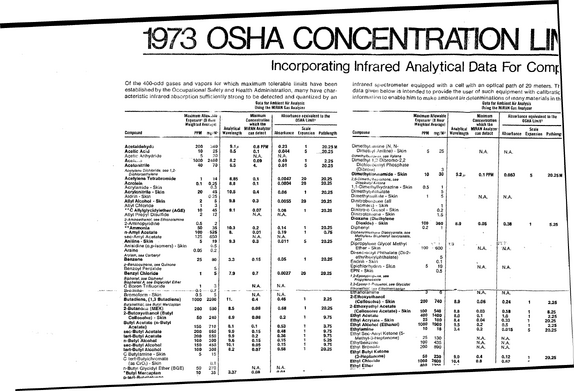
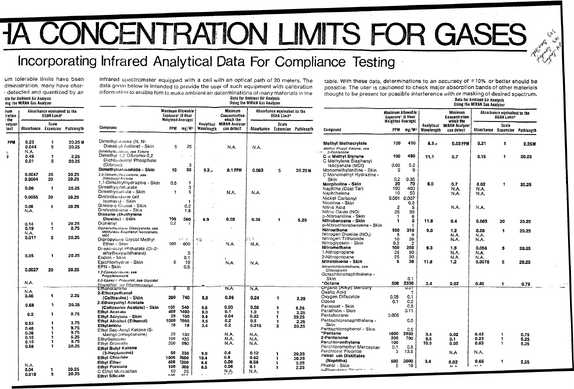
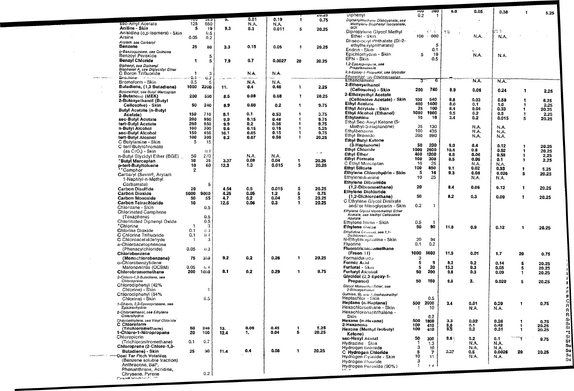
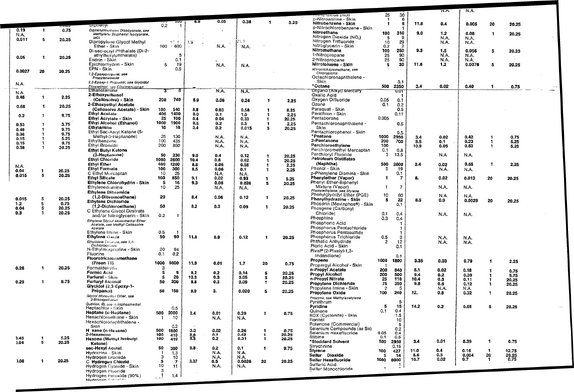
refid# MMoQGJdK90wpK2KqY0Y4dyG0y8 pages
Ethyl Corp. has applied this technique, with byproduct HC1 used to pro duce ethyl chloride for manufacture of tetraethyl lead antiknock compounds.
refid# wgM14jDmBjM57Yyo1bdNGxYx312 pages
H5!)
refid# a4oE23j7v04DE8wgdLG9YLERa11 pages
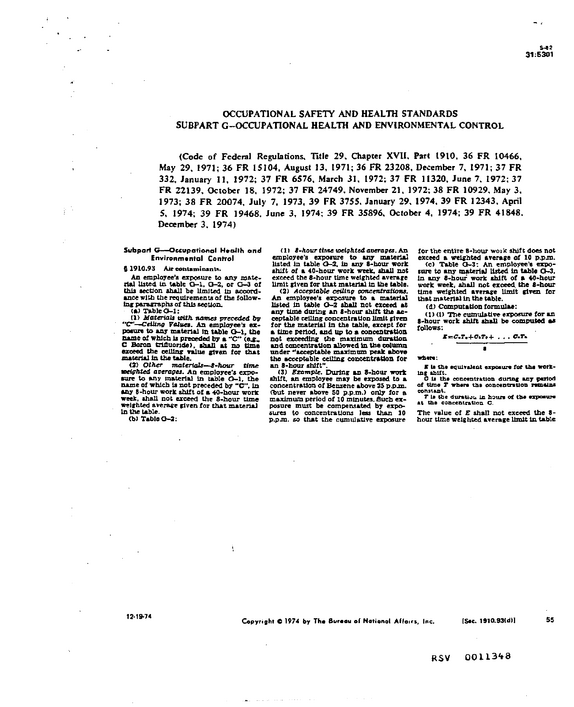
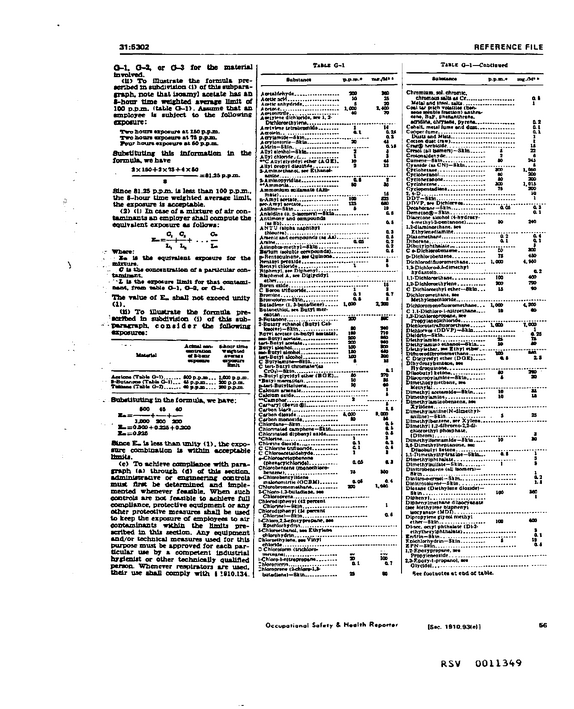
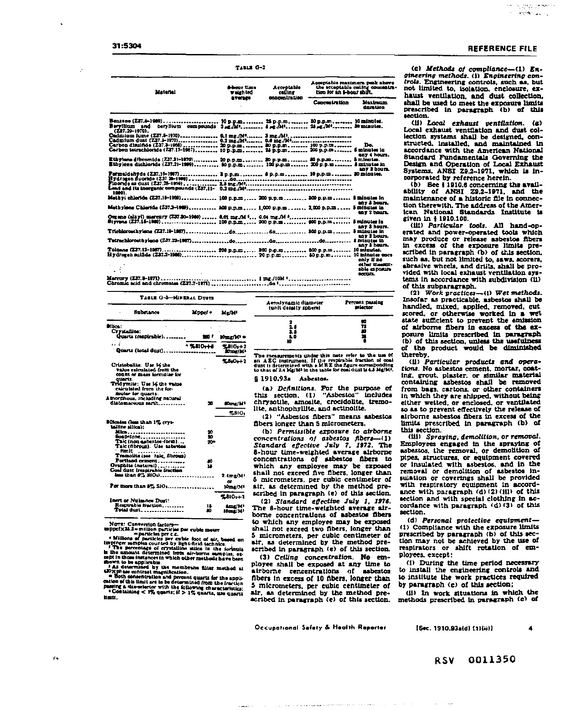
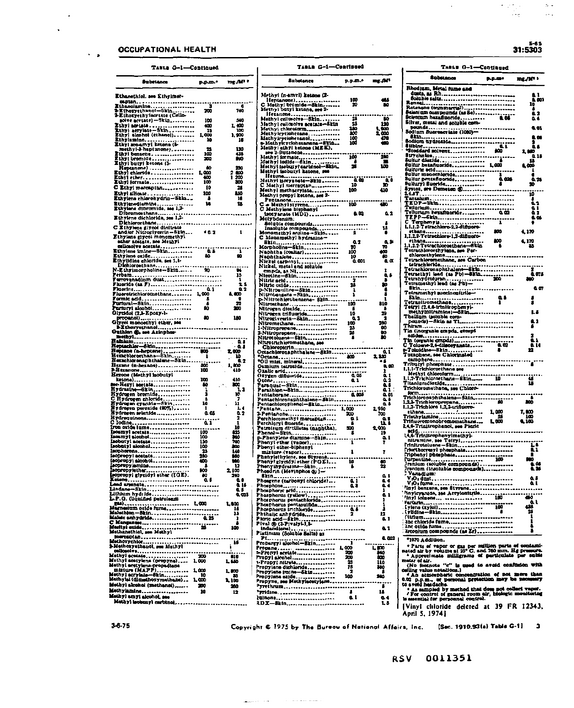
S42 31:5301 OCCUPATIONAL SAFETY AND HEALTH STANDARDS SUBPART G--OCCUPATIONAL HEALTH AND ENVIRONMENTAL CONTROL (Code of Federal Regulations* Title 29, Chapter XVII, Part 1910, 36 FR 10466, May 29, 1971; 36 FR 15104, August 13, 1971; 36 FR 23208, December 7, 1971; 37 FR 332, January H. 1972; 37 FR 6576, March 31, 1972; 37 FR 11320, June 7, 1972; 37 FR 22139, October 18, 1972; 37 FR 24749, November 21, 1972; 38 FR 10929, May 3, 1973; 38 FR 20074, July 7. 1973, 39 FR 3755, January 29, 1974, 39 FR 12343.
refid# Zn3d3wwokz7p6kZ49Jpwk5qDY6 pages
NATIONAL SAFETil C0N6RES!
refid# qJ3Db6bNEJx6wqwoYae1RLME49 pages
'"^'\0 o ^*~ee / '' ViK^ * ''\\\\\S.''
refid# KRROyVbDwYzrLxvZjQ4L843d6481 pages
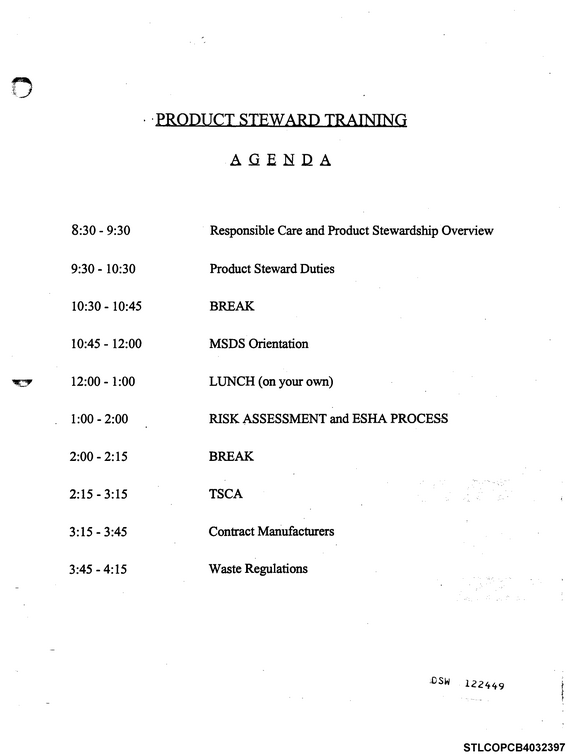
Anniston - Jim Downes Antwerp Guest - Andre Aarts Augusta Jim Mieure Carondolet - Jim Mieure Chocolate Bayou - Tony Sardella Columbia - Jim Mieure Decatur - Jim Mieure Delaware River - Rashmi Nair Fovil - Jim Mieure Ghent - Andre Aarts Greenwood - Jim Mieure Indian Orchard - Rashmi Nair Krummrich - Jim Downes LaSalle - Tony Sardella LLN- Andre Aarts ' Newport - David Tucker Ontario - Jim Downes Pensacola - Jim Mieure Queeny - Jim Downes Soda Springs/Rock Springs - Jim Mieure Trenton - Jim Mieure OS W L22463 STLCOPCB4032411 Westport - Jeff Felder WHQ - Jeff Felder DSW 122464 STLCOPCB4032412 MSDS AND LABEL GROUP CONTACTS Don Montgomery - lead 4-7136 F2EB Existing MSDS's: Jackie Kelly Debbie Goulet 4-3221 4-2517 F2EB F2EB New MSDS's: See the Product Stewardship Manager ESHA Review Labels: Jerry Lambert Joanne Theel 4-5662 4-3481 F2EB F2EB DSW 122465 STLCOPCB4032413 List of oa ers CZJ n 3 83 atn1 DSW STLCOPCB4032414 BUSINESS UNIT Acrilan Industrial Products Therminol/DPO/Polyphenyls Skydrol SkyKIeen Dequest Glacier/I-Aspartic Acid Intermediates NTA AN/HCN/Formalin Santoquin Adiponitrile/HMDA/Co-products Chlorobenzenes Ammonia KA/Nitric Acid/Nylon Salt Tetrathal Phenol Commercial Development Nylon Industrial Polymer Modifiers Resins Coatings/DME Adhesives and Binders Plastics Products Nylon Plastics Sheetl PS MANAGER Jim Mieure PRODUCT STEWARD MAIL CODE PHONE Bret Bement 1260 628-2711 Jim Downes Jim Downes Jim Downes Andre Aarts Jim Downes Jerry Brown Joe Giardina Frank Jakse Tom Christ Andrew Waller 1060 T4M T4M T1D T3W 621-8406 4-3954 4-4546 4-4593 4-5740 Tony Sardella Tony Sardella Tony Sardella Tony Sardella Jim Downes Jim Downes Jim Downes Jim Downes .

refid# 8Rvr1z186opRM6j4daG4kxEQa290 pages
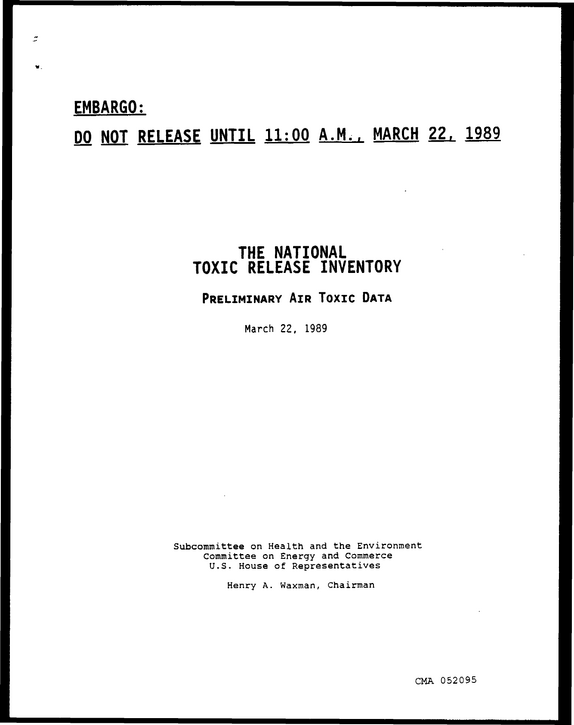
EMBARGO: DO NOT RELEASE UNTIL 11:00 A.M..
refid# 9JLG4G4Yx78qBa0bwjMRrYmGe80 pages
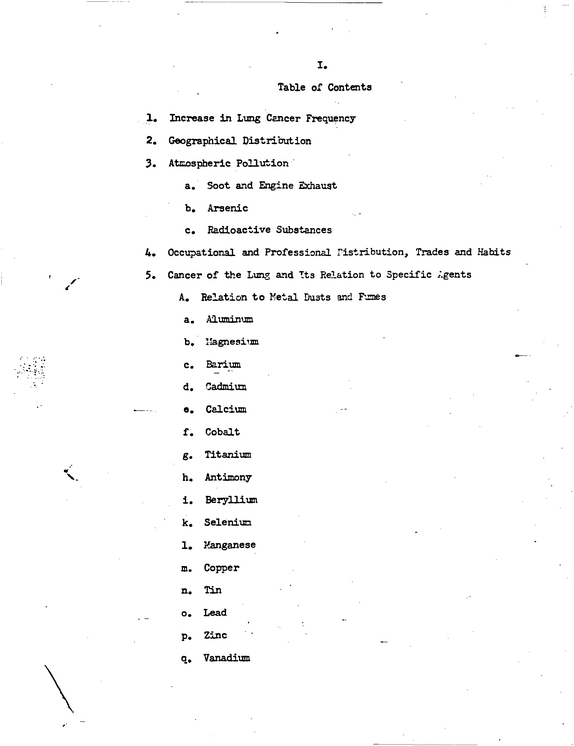
Lead p.
refid# 3eGNL2L2vzzRNaNQ8JBQxKJw6163 pages
Lead p.
refid# qdxOR9bne3Xd4G61X4kq4vvbj163 pages
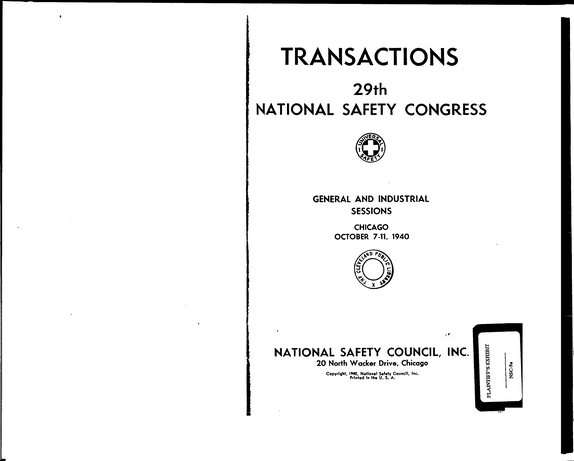
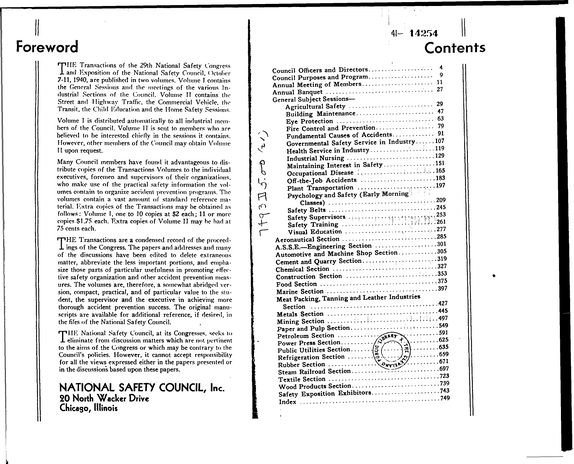
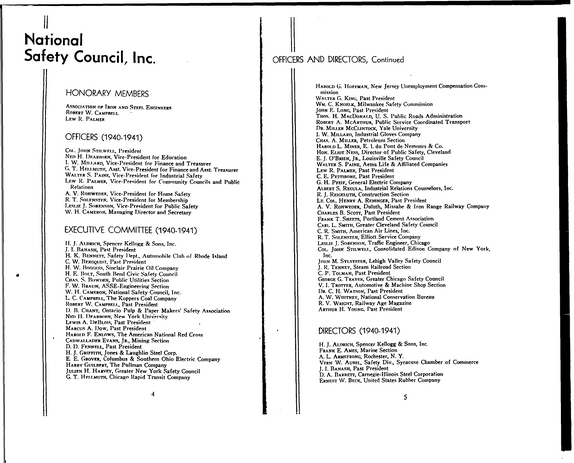
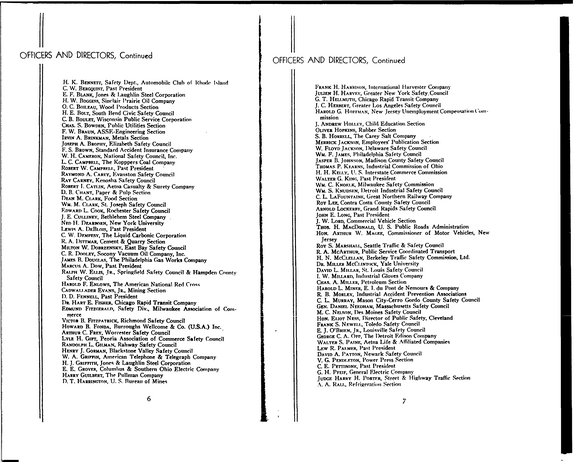
1 TRANSACTIONS 29th NATIONAL SAFETY CONGRESS GENERAL AND INDUSTRIAL SESSIONS CHICAGO OCTOBER 7-11, 1940 NATIONAL SAFETY COUNCIL, INC 20 North Wacker Drive, Chicago Copyright, It40, Notional Safaty Council, Inc.
refid# j12LZpZQbZqooxkBqxKZgb1Z49 pages