Refine
Estimated Years 1960-1969Clear
334 results foundRefine Search
Ethyl Corp. has applied this technique, with byproduct HCl used to pm. duce`ethyl chloride tor manipactnre of tetraethyl lead antiknock compounds.
refid# kDmyGmqx6k7j8ZoeGk7EN947q12 pages
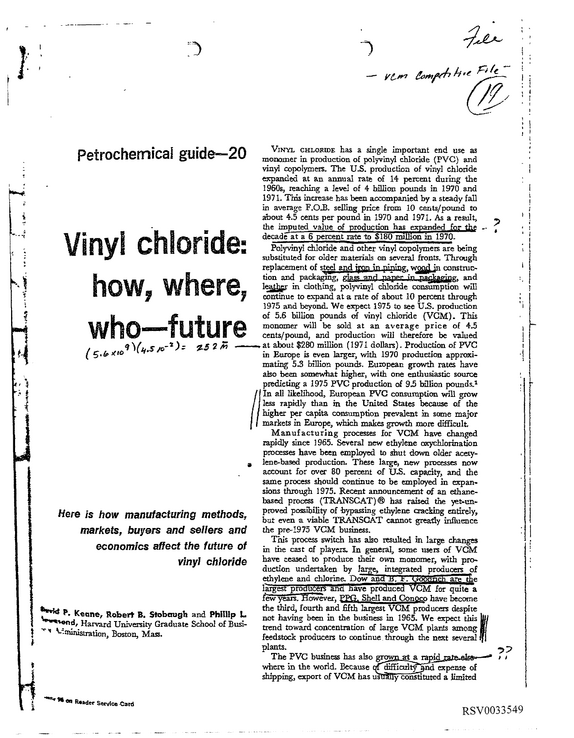
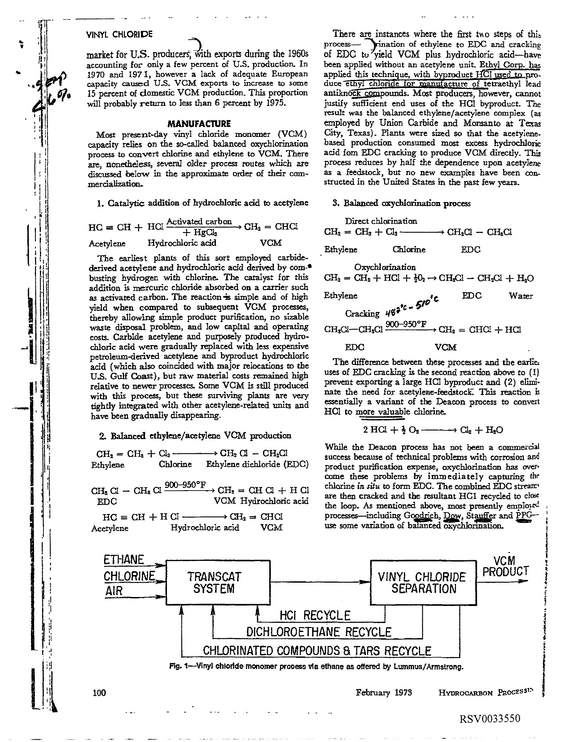
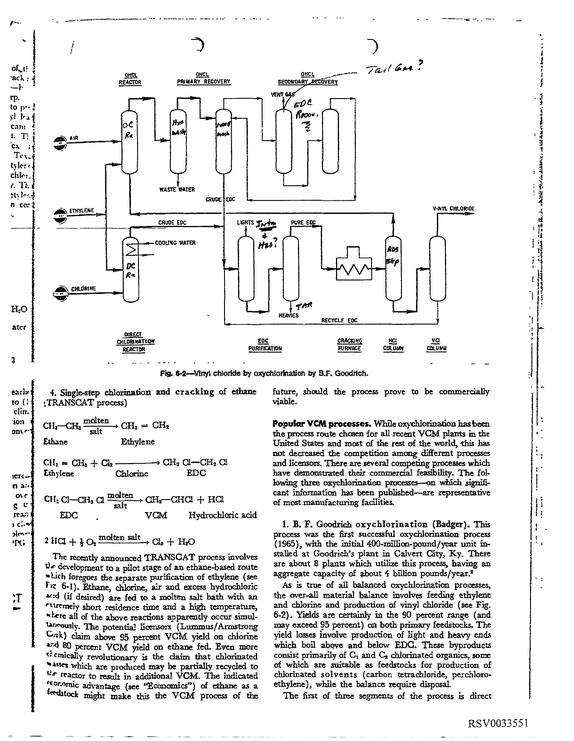
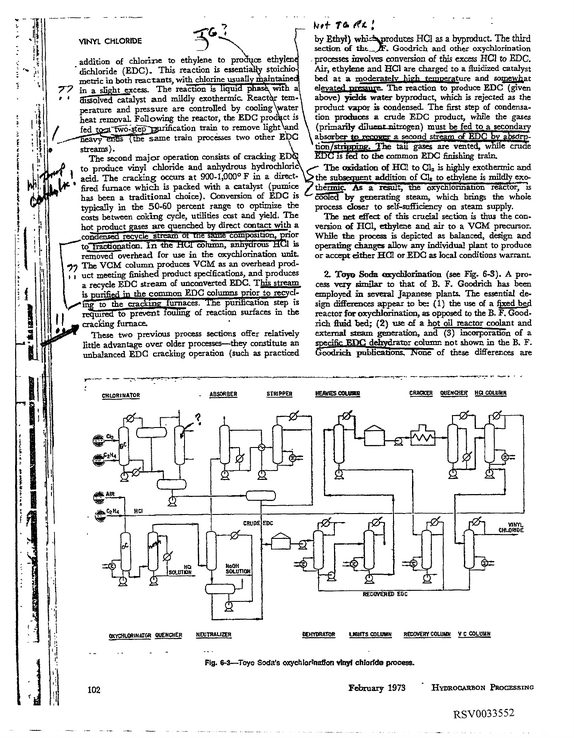
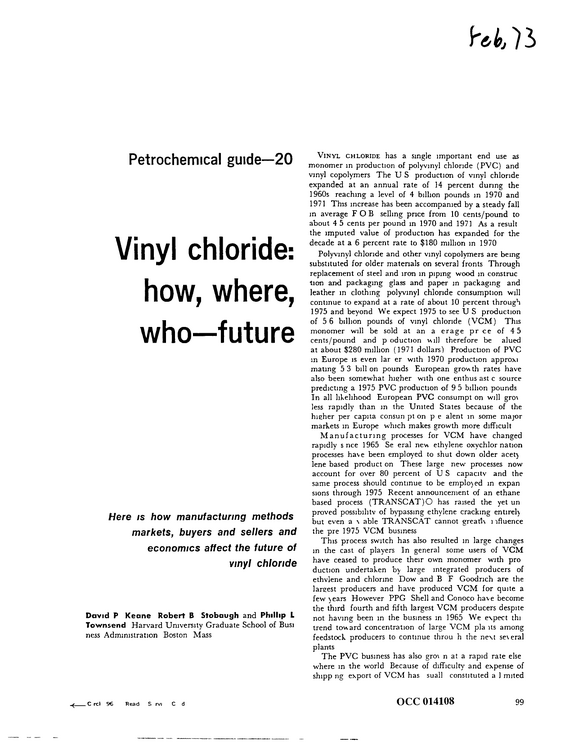
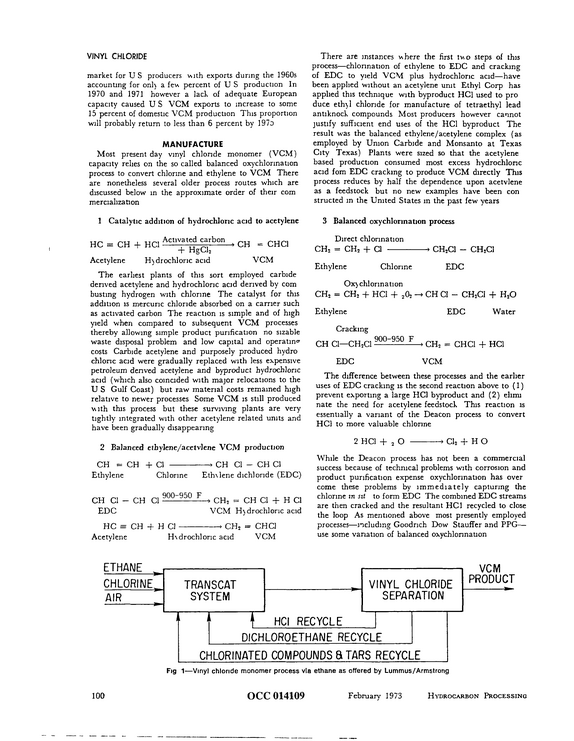
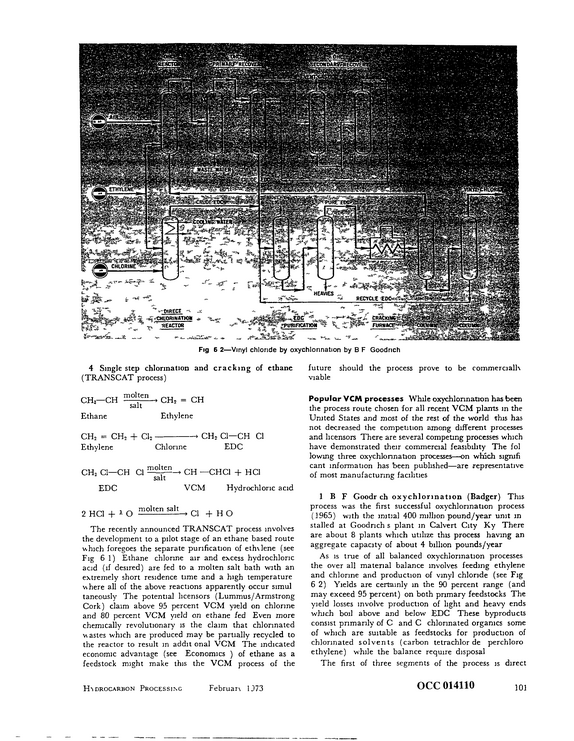
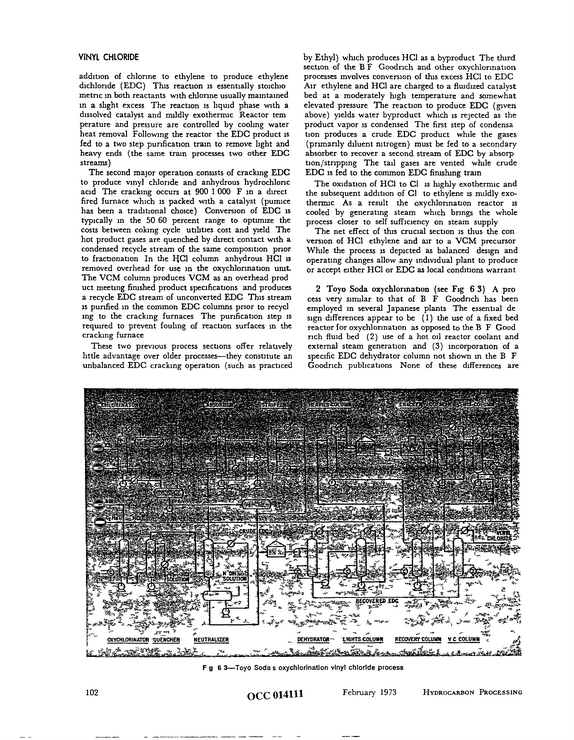
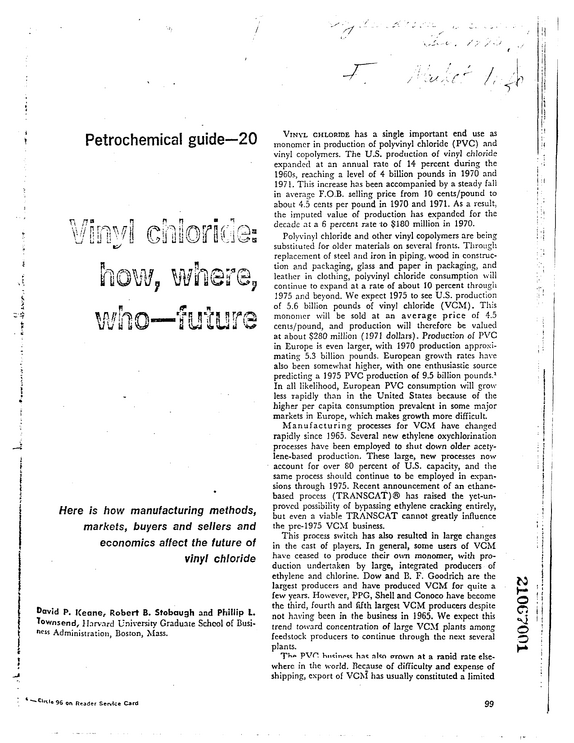
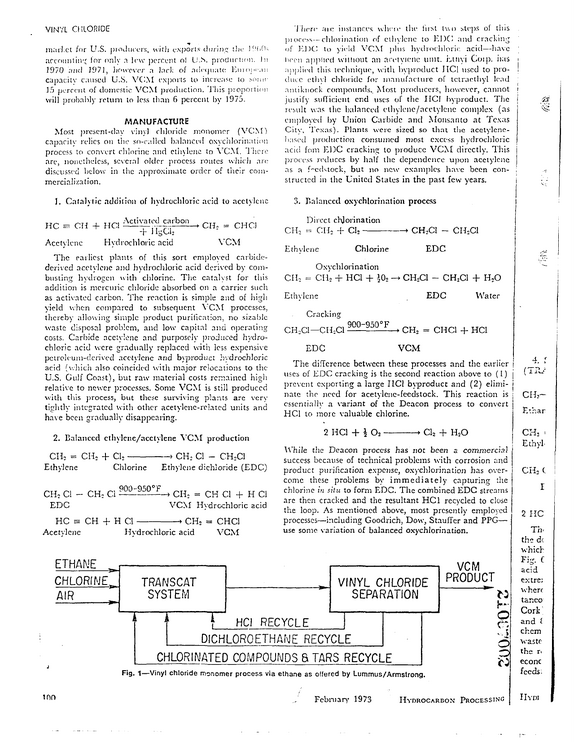
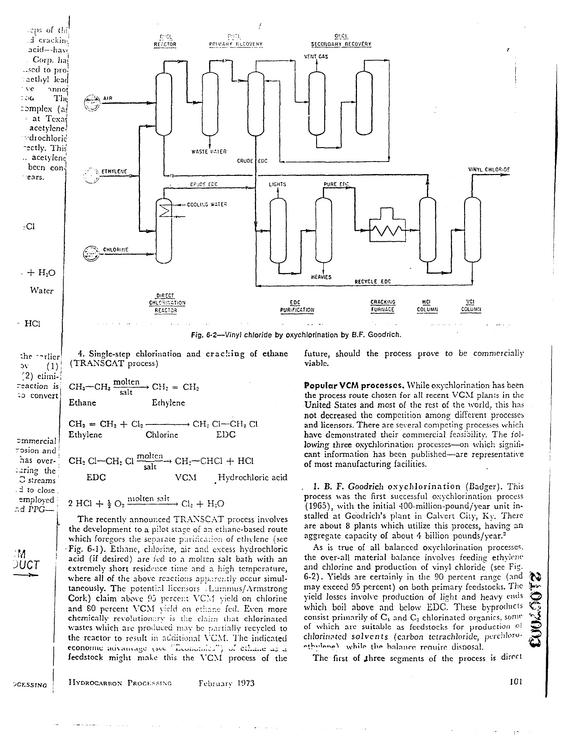
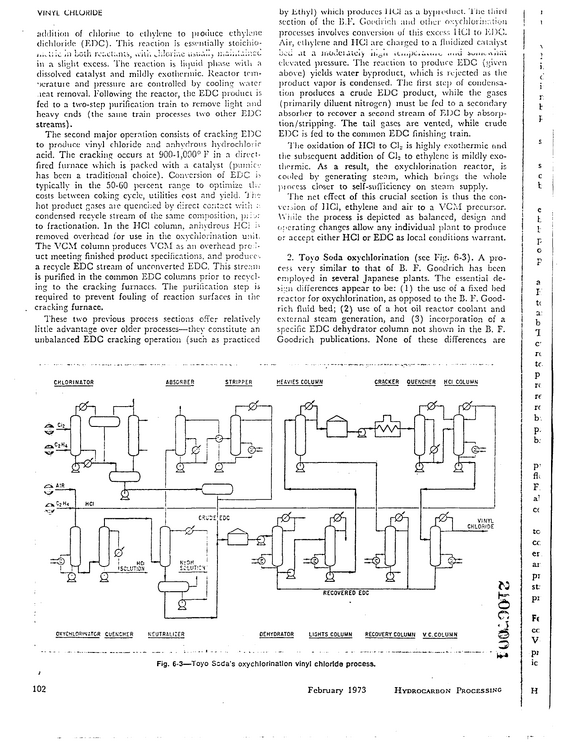
Production of PVC m Europe is even lar er with 1970 production approxi mating 5 3 bill on pounds European grow th rates have also been somewhat higher with one enthus ast c source predicting a 1975 PVC production of 9 5 billion pounds In all likelihood European PVC consumpt on will grot less rapidly than in the United States because of the higher per capita consun pt on p e alent in some major markets m Europe which makes growth more difficult Manufacturing processes for VCM have changed rapidly s nee 1965 Se eral new ethylene oxychlor nation processes have been employed to shut down older acety lene based product on These large new processes now account for over 80 percent of U S capacitv and the same process should continue to be employed in expan sions through 1975 Recent announcement of an ethane based process (TRANSCAT)O has raised the yet un proved possibility of bypassing ethylene cracking entirely but even a \ able TRANSCAT cannot greatb i tfluence the pre 1975 VCM business This process switch has also resulted in large changes in the cast of players In general some users of VCM have ceased to produce their own monomer with pro duction undertaken by large integrated producers of ethvlene and chlorine Dow and B F Goodrich are the largest producers and have produced VCM for quite a few years However PPG Shell and Conoco have become the third fourth and fifth largest VCM producers despite not having been in the business in 1965 We expect thi trend toward concentration of large VCM pla its among feedstock producers to continue throu h the next set eral plants The PVC business has also grot n at a rapid rate else where m the world Because of difficulty and expense of shipp ng export of VCM has suall constituted a 1 mited C rcl 96 Read S rvi C d OCC 014108 99 VINYL CHLORIDE market for U S producers with exports during the 1960s accounting for only a few percent of U S production In 1970 and 1971 however a lack of adequate European capacity caused U S VCM exports to increase to some 15 percent of domestic VCM production This proportion will probably return to less than 6 percent by 197d MANUFACTURE Most present day vinyl chloride monomer (VCM) capacity relies on the so called balanced oxychlonnation process to convert chlorine and ethylene to VCM There are nonetheless several older process routes which are discussed below in the approximate order of their com mercialization There are instances where the first two steps of this process--chlorination of ethylene to EDC and cracking of EDC to yield VCM plus hydrochloric acid--have been applied without an acetylene unit Ethyl Corp has applied this technique with byproduct HC1 used to pro duce ethyl chloride for manufacture of tetraethyl lead antiknock compounds Most producers however cannot justify sufficient end uses of the HC1 byproduct The result was the balanced ethylene/acetylene complex (as employed by Union Carbide and Monsanto at Texas City Texas) Plants were sized so that the acetylene based production consumed most excess hydrochloric acid fom EDC cracking to produce VCM directly This process reduces by half the dependence upon acetvlene as a feedstock but no new examples have been con structed in the United States m the past few years 1 Catalytic addition of hydrochloric acid to acetylene HC s CH + HC1 Ac^ated carbon + rigdj Acetylene Hydrochloric acid CH = CHC1 VCM The earliest plants of this sort employed carbide derived acetylene and hydrochloric acid derived by com busting hydrogen with chlorine The catalyst for this addition is mercuric chloride absorbed on a carrier such as activated carbon The reaction is simple and of high yield when compared to subsequent VCM processes thereby allowing simple product purification no sizable waste disposal problem and low capital and operating costs Carbide acetylene and purposely produced hydro chlonc acid were gradually replaced with less expensive petroleum derived acetylene and byproduct hydrochloric acid (which also coincided with major relocations to the U S Gulf Coast) but raw material costs remained high relative to newer processes Some VCM is still produced with this process but these surviving plants are very tightly integrated with other acetylene related units and have been gradually disappearing 2 Balanced ethylene/acetvlene VCM production CH = CH + Cl --------------- > CH Cl - CH Cl Ethylene Chlorine Etfnlene dichloride (EDC) qno-qiyo p CH Cl - CH Cl -> CH2 = CH Cl + H Cl EDC VCM Hydrochloric acid HC = CH + H Cl--------------- > CHs = CHC1 Acetylene Htdrochloric acid VCM 3 Balanced oxychlonnation process Direct chlorination CH2 = CHj + Cl --------------- > CHjCl - CH2C1 Ethylene Chlorine EDC Oxy chlorination CH2 = CH2 + HC1 + 202 -CH Cl - CH2C1 + H20 Ethylene EDC Water Cracking CH Cl--CH2C1 900-950 F > CH2 = CHC1 + HC1 EDC VCM The difference between these processes and the earlier uses of EDC cracking is the second reaction above to (1) prevent exporting a large HC1 byproduct and (2) elimi nate the need for acetylene feedstock This reaction is essentially a variant of the Deacon process to convert HC1 to more valuable chlorine 2 HC1 + 2 O ------------> Cl2 + H O While the Deacon process has not been a commercial success because of technical problems with corrosion and product purification expense oxychlonnation has over come these problems by immediately capturing the chlorine m sit to form EDC The combined EDC streams are then cracked and the resultant HC1 recycled to close the loop As mentioned above most presently employed processes--including Goodrich Dow Stauffer and PPG-- use some variation of balanced oxychlonnation Fig 1--Vinyl chloride monomer process via ethane as offered by Lummus/Armstrong 100 OCC 014109 February 1973 Hydrocarbon Processing Fig 6 2--Vinyl chloride by oxychlorination by B F Goodrich 4 Single step chlorination and cracking of ethane (TRANSCAT process) future should the process prove to be commercialh viable CH3--CH molten salt Ethane CH2 = CH Ethylene CH2 = CH2 + Cl2--------------- > CH2 Cl--CH Cl Ethylene Chlorine EDC CH2 Cl--CH Cl molten salt EDC CH --CHC1 + HC1 VCM Hydrochloric acid molten salt 2 HC1 + 1 O Cl + H O The recently announced TRANSCAT process involves the development to a pilot stage of an ethane based route which foregoes the separate purification of eth\lene (see Fig 6 1) Ethane chlorine air and excess hydrochloric acid (if desired) are fed to a molten salt bath with an extremely short residence time and a high temperature where all of the above reactions apparently occur simul taneously The potential licensors (Lummus/Armstrong Cork) claim above 95 percent VCM yield on chlorine and 80 percent VCM yield on ethane fed Even more chemically revolutionary is the claim that chlorinated wastes which are produced may be partially recycled to the reactor to result m addit onal VCM The indicated economic advantage (see Economics ) of ethane as a feedstock might make this the VCM process of the Popular VCM processes While oxychlonnation has been the process route chosen for all recent VCM plants in the United States and most of the rest of the world this has not decreased the competition among different processes and licensors There are several competing processes which have demonstrated their commercial feasibility The fol lowing three oxychlonnation processes--on which signifi cant information has been published--are representative of most manufacturing facilities 1 B F Goodr ch oxychlonnation (Badger) This process was the first successful oxychlonnation process (1965) with the initial 400 million pound/year unit m stalled at Goodrich s plant in Calvert City Ky There are about 8 plants which utilize this process having an aggregate capacity of about 4 billion pounds/year As is true of all balanced oxychlonnation processes the over all material balance involves feeding ethylene and chlorine and production of vinyl chloride (see Fig 6 2) Yields are certainly in the 90 percent range (and may exceed 95 percent) on both primary feedstocks The yield losses involve production of light and heavy ends which boil above and below EDC These byproducts consist primarily of C and C chlorinated organics some of which are suitable as feedstocks for production of chlorinated solvents (carbon tetrachlor de perchloro ethylene) while the balance require disposal The first of three segments of the process is direct Hydrocarbon Processing Februan 1J73 OCC 014110 101 VINYL CHLORIDE addition of chlonne to ethylene to produce e
refid# nzno96YKpZQ5KdNVwgVpEnOm12 pages
Elhyi Cot]), has applied this technique, with byproduct HCl used to pro duce ethyl chloride for manufacture of tetraethyl lead antiknock compounds.
refid# 3mrqeX0RXQo6GM2eMb0QxE2312 pages
FILE NAME Firestone FIRE DATE 1969 1963 DOC FIRE017 DOCUMENT DESCRIPTION Firestone Corporate Health and Safety Manual BC Ex 317 000014894 0 0 14894 SUBJECT TO DISCLOSURE RESTRICTION 4063 ADMINISTRATION MANUAL HEALTH SAFETY ENGINEERING & PROPERTY PROTECTION THE FIRESTONE TIRE & RUBBER COMPANY AKRON OHIO SUBJECT TO DISCLOSURE RESTRICTION 40638 Pages Section I Pages Section II Pages Section III Pages Section IV Pages Section V Pages Section VI Pages ADMINISTRATION HEALTH SAFETY ENGINEERING & PROPERTY PROTECTION CURRENT PAGES AND DATE OF ISSUE 12/29/69 Manual Outline and Table of Contents i thru vii - 12/9/63 vii - 10/22/63 Home * viii - 8/29/62 ( ixx 10/22/63 ( Office Office * Akron Akron - manuals manuals .


refid# 8VrQKDXznbK90ab3Y0ymwMory233 pages
practices for respiratory protection Z M .2-1969 Compliments of Mine Safety Appliances Co.
refid# v9k3q1XJy5L5EX2j22GR5Z8Z46 pages
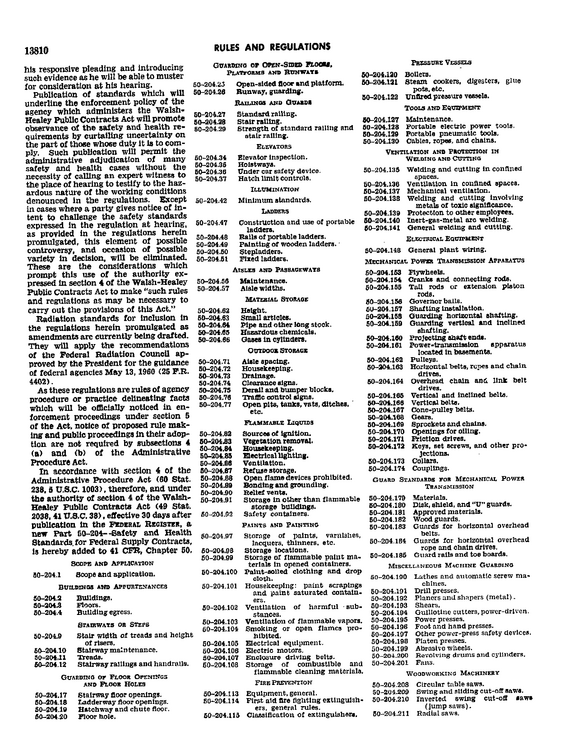
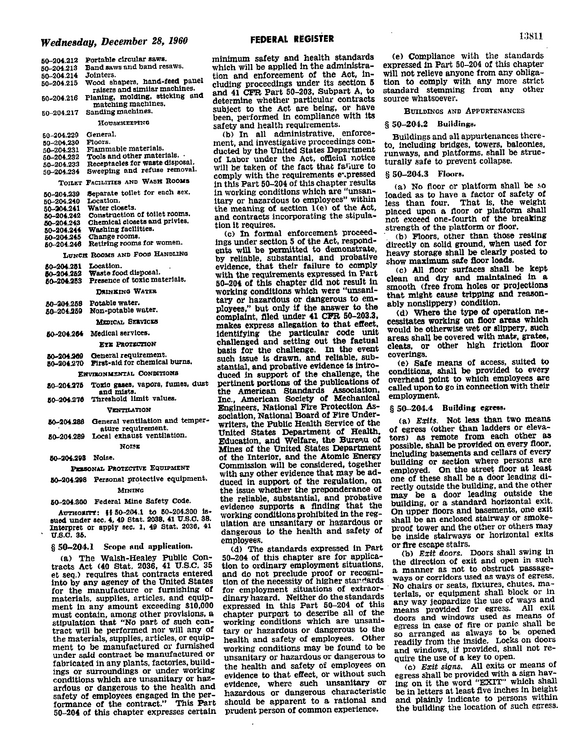
Where, therefore, the common experi ence of men is all th at is needed to lead a rational and prudent person to the conclusion that certain conditions of em ployment are incompatible with the safety and health of employees, no de fense is provided by the statutory "prima-facie evidence" rule merely be cause such conditions may not be spe cifically prohibited in the State safety, sanitary, and factory inspection laws, or the regulations hereby proposed.
refid# G6ZbR5V0Qn6YqEk9oep5ZYE7x17 pages
ANSI Z8.2-1969 ,, ", . . *' ?
refid# wa2EoLyoonw4yLYd0awgEYRB84 pages
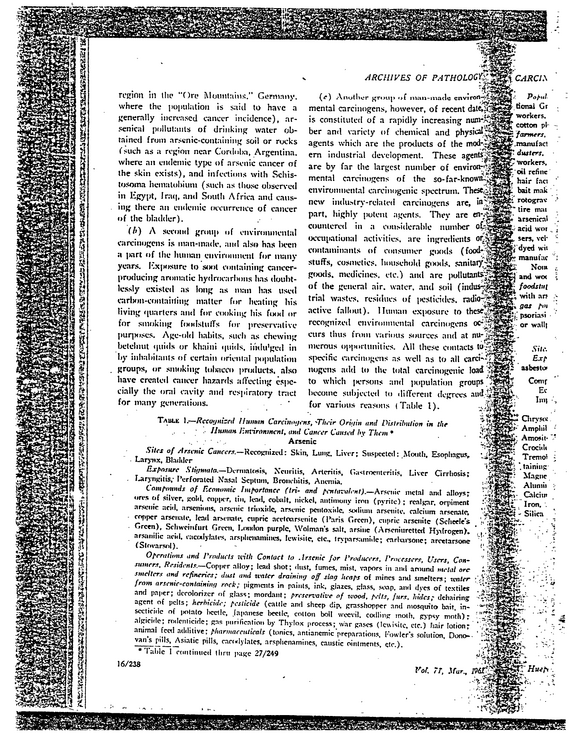
; Compounds of Economic Importance tri- and pentavalent metal and alloys ores of silver gold copper tin lead cobalt nickel antimony iron pyrite realgar orpiment arsenic acid arsenions arsenic trioxide arsenic pentoxide sodium arsenite calcium arsenate - copper arsenate lead arsenate cupric acetoarsenite Paris Green cupric arsenite Scheele's .
refid# e79VDQ55wo2QJzJDrJmE5LJvy34 pages
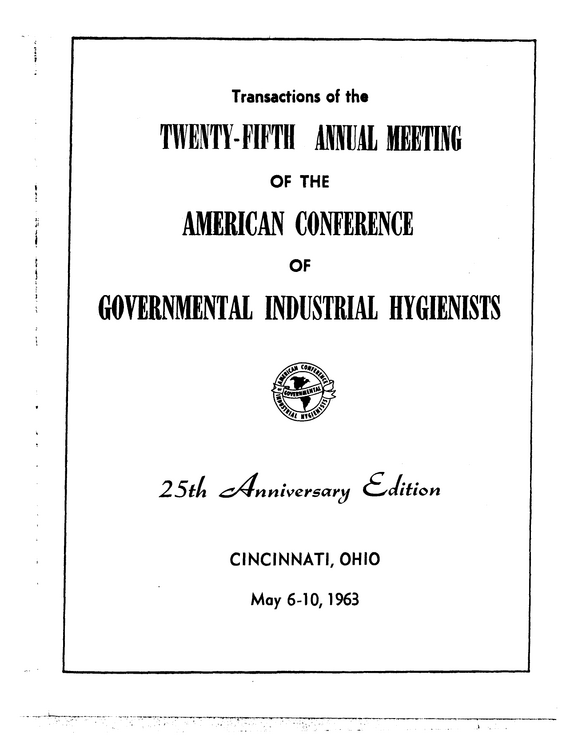
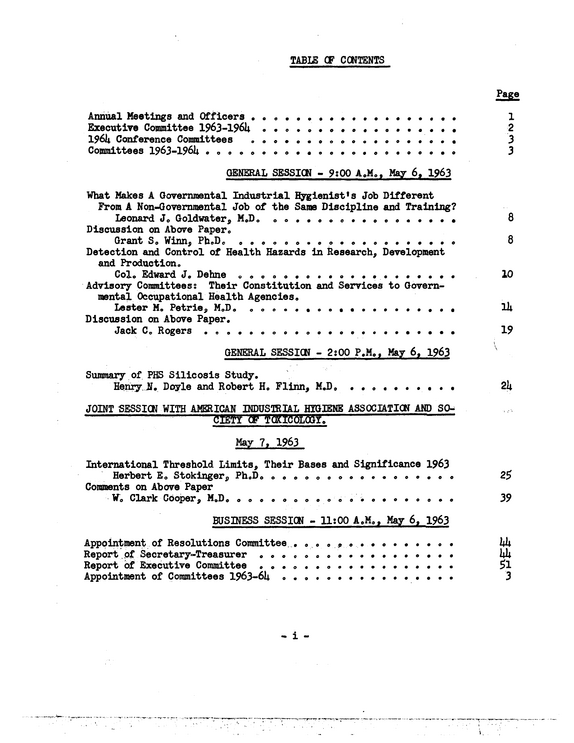
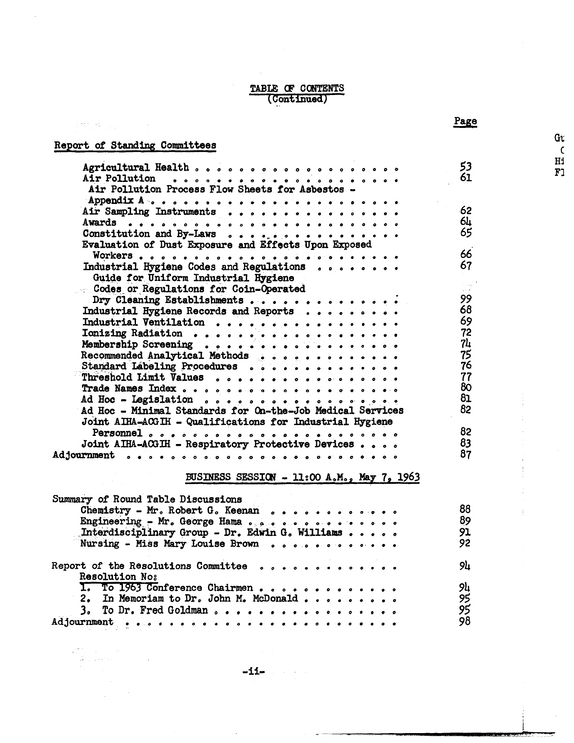
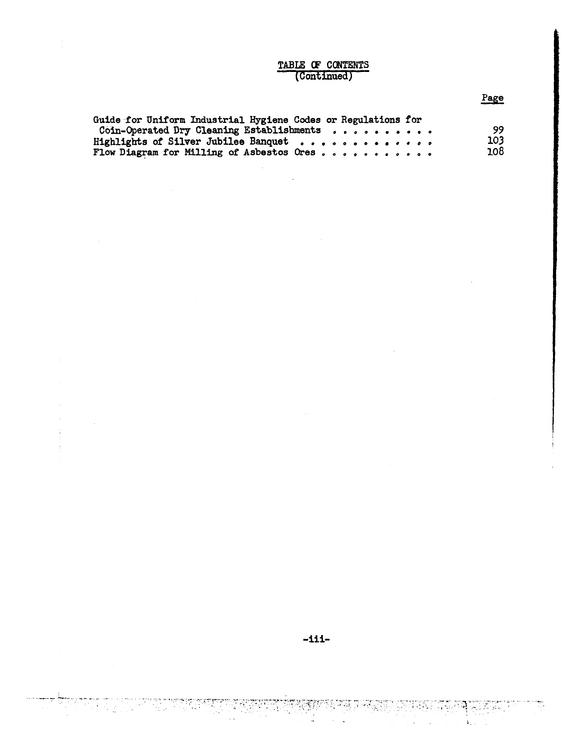
Transactions of the TWENTY-FIFTH MIL HEETI1C OF THE AMERICAN CONFERENCE OF GOVERNMENTAL INDUSTRIAL HYGIENISTS 25 L < 4. sdition i z nniversary CINCINNATI, OHIO May 6-10,1963 \ TABLE CF CONTENTS Annual Meetings and Officers ............................................
refid# JNaYngOrq9bD7VpKeZ7NmBqBZ95 pages
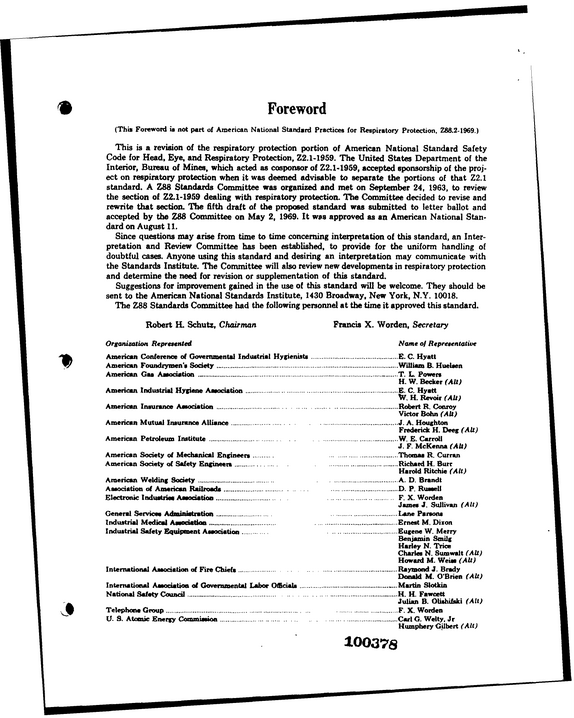
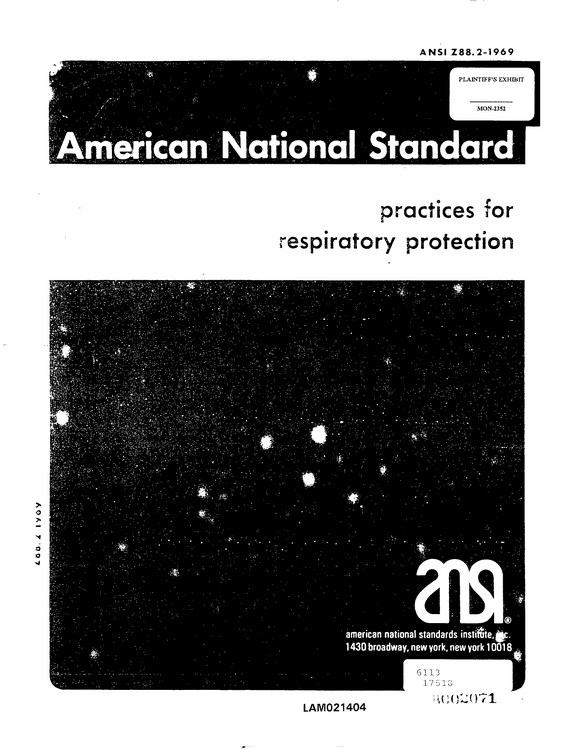
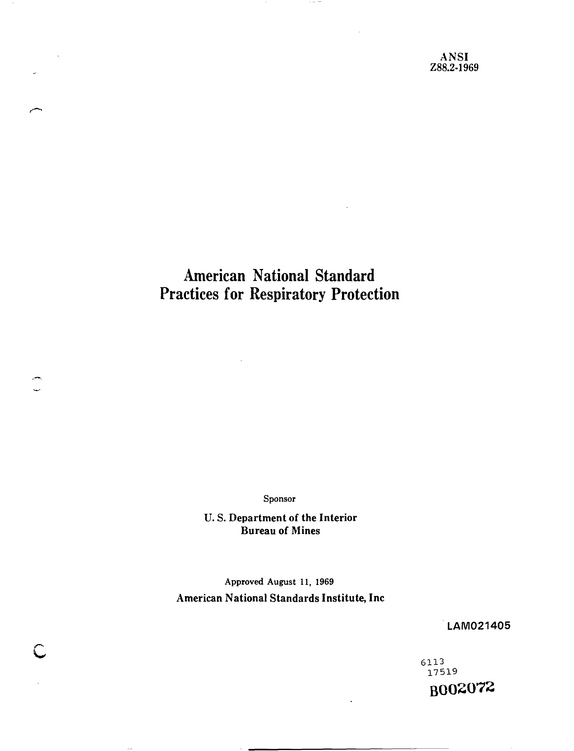
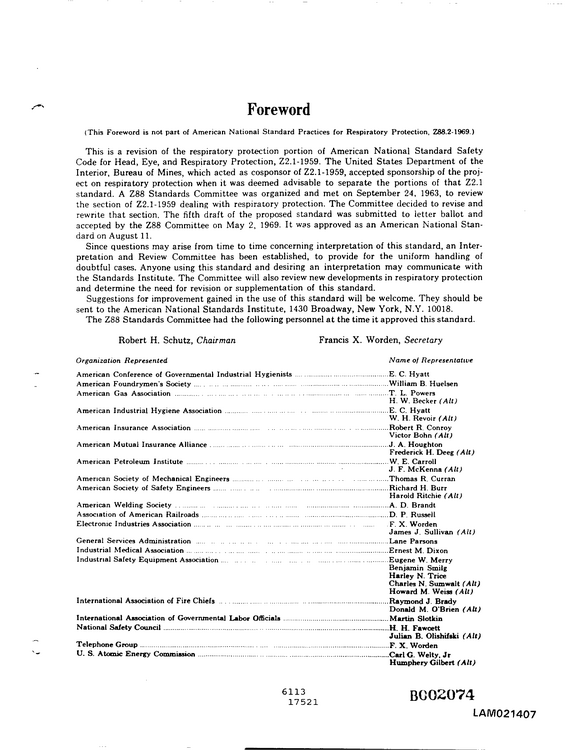
ANSI Z88.2-1969 practices for respiratory protection LAM021404 AQAI 7 0 0 7 ANSI Z88.2-1969 American National Standard Practices for Respiratory Protection Sponsor U.
refid# RjwOk9wKkkrojov6wKMvrgojE32 pages
As one of the world's leading processors of specialized information, NTIS ships about 23,000 information products daily, supplying the public with approximately 6 million documents and microforms annually.
refid# LK65Ez9dn0ZJ0b6wjrg19ZM0Q96 pages
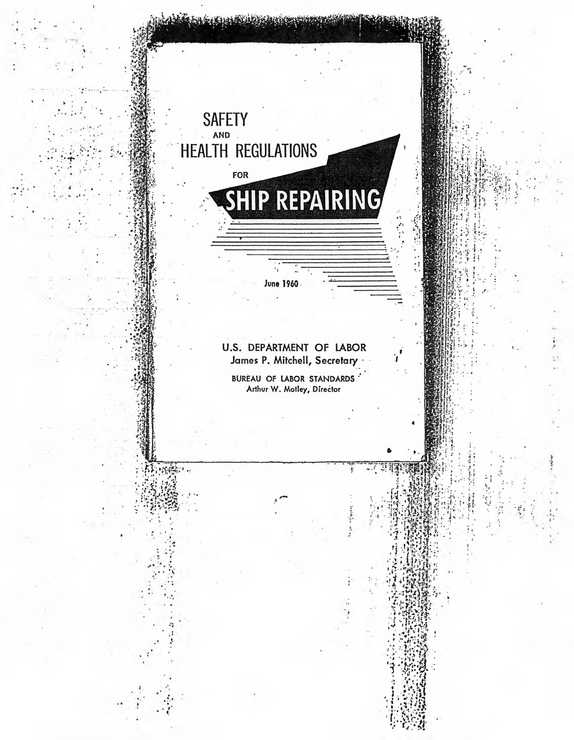
FILE NAME: Todd Shipyards (TODD) DATE: 1960 June DOC#: TODD004 DOCUMENT DESCRIPTION: US Dept of Labor Regulations VJ- - r a
refid# QJ1Mvd6o4J8RNnRLNnVDNVrwv87 pages
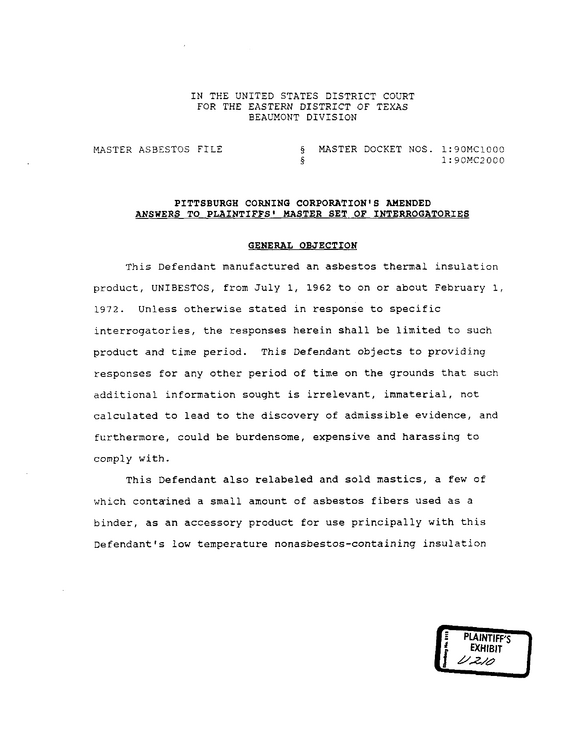
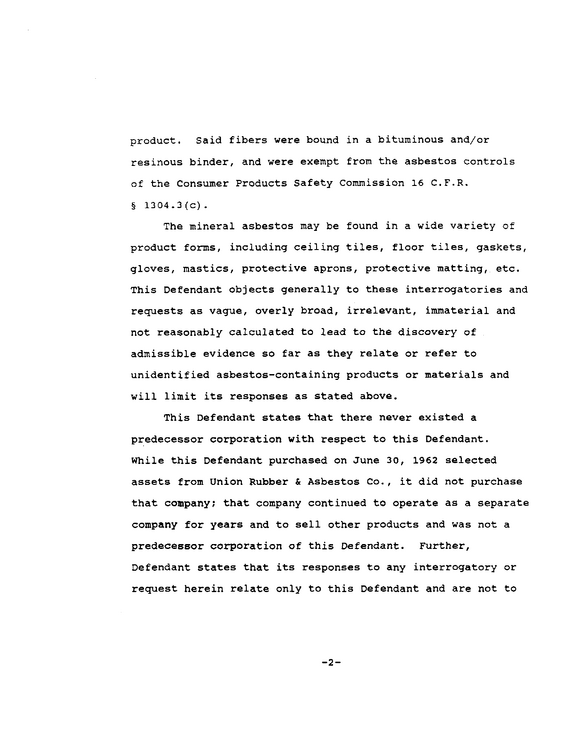
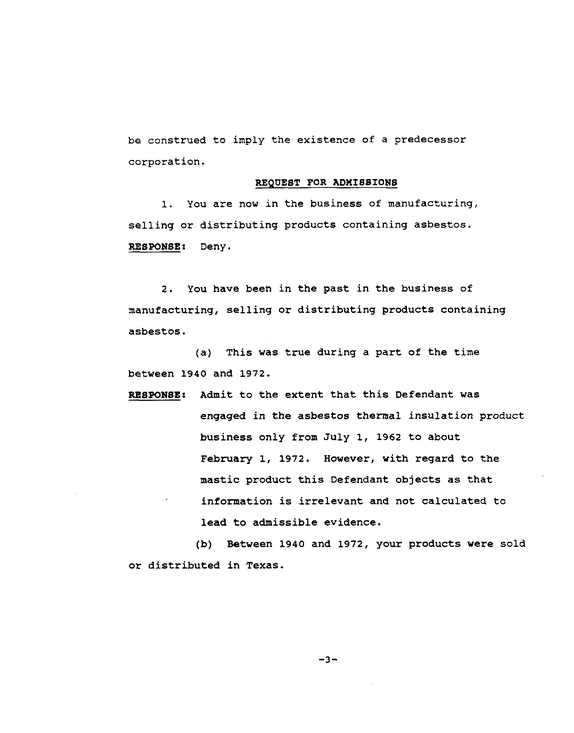
However, with regard to the mastic product this Defendant objects as that ' information is irrelevant and not calculated to lead to admissible evidence.
refid# zb9gBBL1QrXz3YvZGj4wZbEyB111 pages
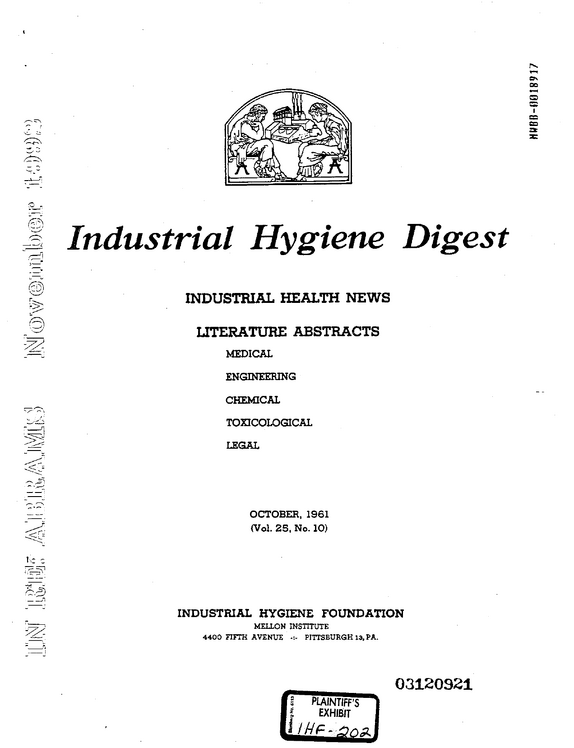
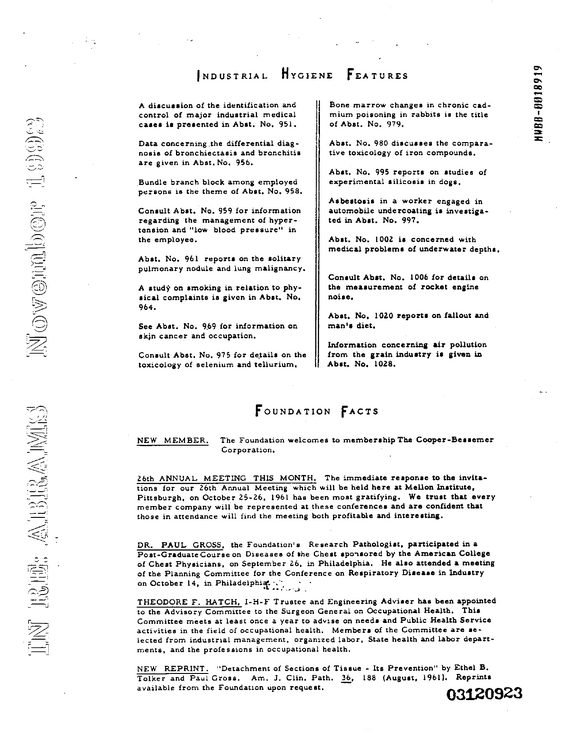
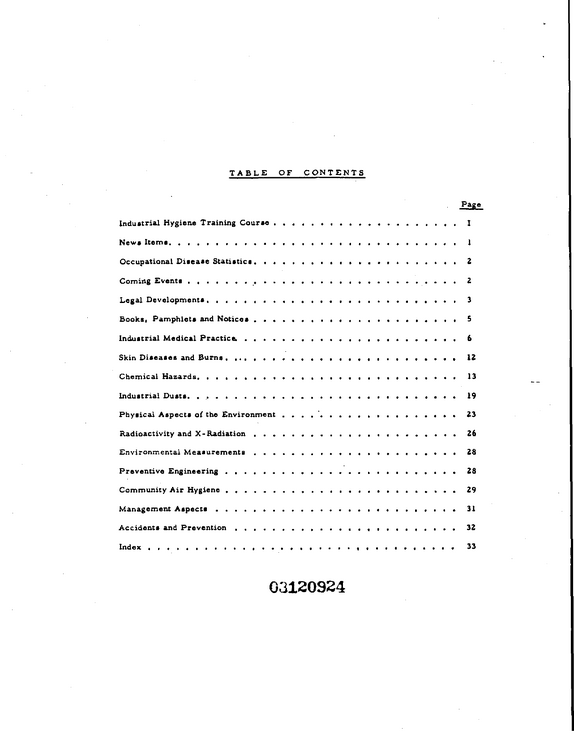
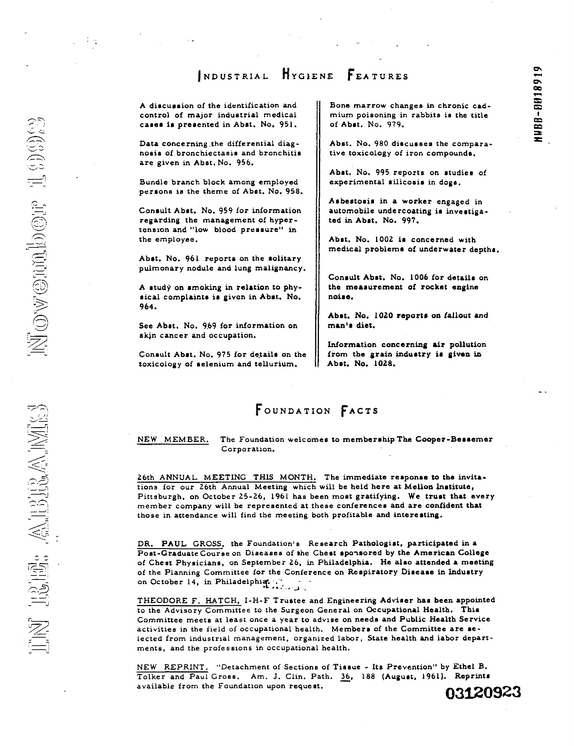
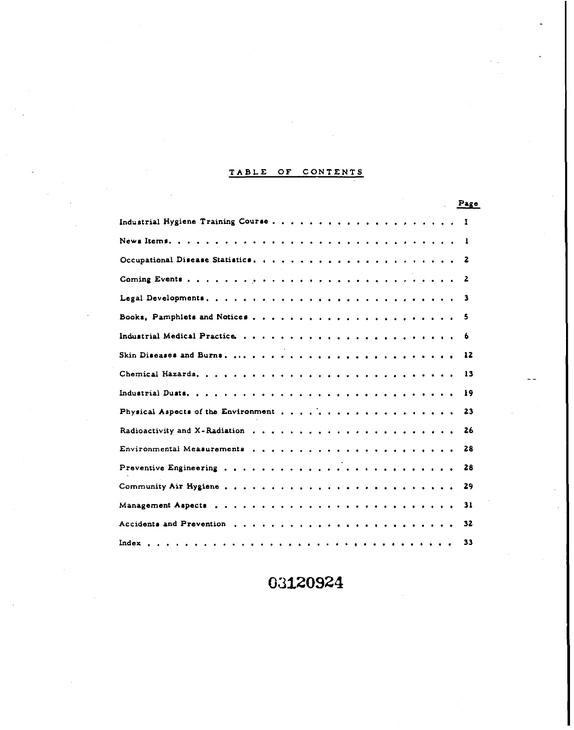
( HPBB-H018917 J Industrial Hygiene Digest INDUSTRIAL HEALTH NEWS LITERATURE ABSTRACTS MEDICAL ENGINEERING CHEMICAL TOXICOLOGICAL legal OCTOBER, 1961 (Vol. 25, No. 10) hr INDUSTRIAL HYGIENE FOUNDATION MELLON INSTITUTE 4400 FIFTH AVENUE PITTSBURGH 13, PA. 03120921 It r 03120922 Industrial Hygiene Foundation assumes no responsibility lor statements In articles abstracted In this Digest or for material from other organisations which may be sent to members from time to time.
refid# ppoOdzgEZvEZ374OJ1O7L7zdw39 pages
HWBB-0018917 t jl Industrial Hygiene Digest INDUSTRIAL HEALTH NEWS (5) LITERATURE ABSTRACTS MEDICAL ENGINEERING CHEMICAL TOXICOLOGICAL LEGAL OCTOBER, 1961 <VoL 25, No. 10) lc c INDUSTRIAL HYGIENE FOUNDATION MELLON INSTITUTE 4400 FIFTH AVENUE PITTSBURGH 13.
refid# zd1xx0Y7drGzO2rrKDRZdxre739 pages