Twenty-eight types of disease ere listed, the more prominent among them being: dermatitis, 286 cases; plant poisoning, 180; carbon monoxide, 48; lead poisoning, 12; silicosis, 22; heat prostration, 56; freezing, 26; synovitis and teno-synovitis, 55; and tuberculosis, 6.
refid# YD2oONdz8wbQExz8xRxkwK2v019 pages
Twenty-eight types of disease ere listed, the more prominent among them being: dermatitis, 286 cases; plant poisoning, 180; carbon monoxide, 48; lead poisoning, 12; silicosis, 22; heat prostration, 56; freezing, 26; synovitis and teno-synovitis, 55; and tuberculosis, 6.
refid# kwLVp4KkGepBZ7464qQ5DVyE19 pages
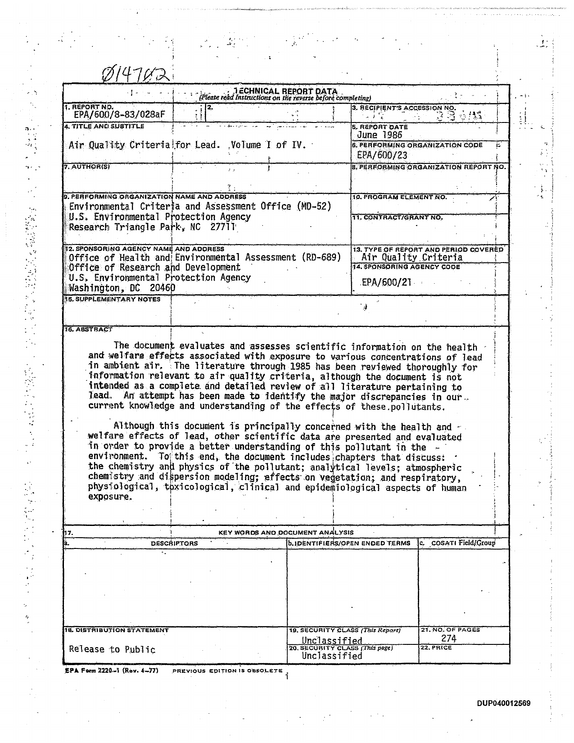
,fo:r Lead.
refid# xjwV19knMkgpwvqBkw6QraQ8J275 pages
.i IU3T.T 0 Lead. soft in * uutimonial 11 Nickel
refid# RJrnXge70bdB9DkGK0QMQVX2n57 pages
1 `ft/l . `' ' Air 3/glene Foundation, 4400 ?
refid# jmo4KmQkOLvGdMVJEbzwMrELy18 pages
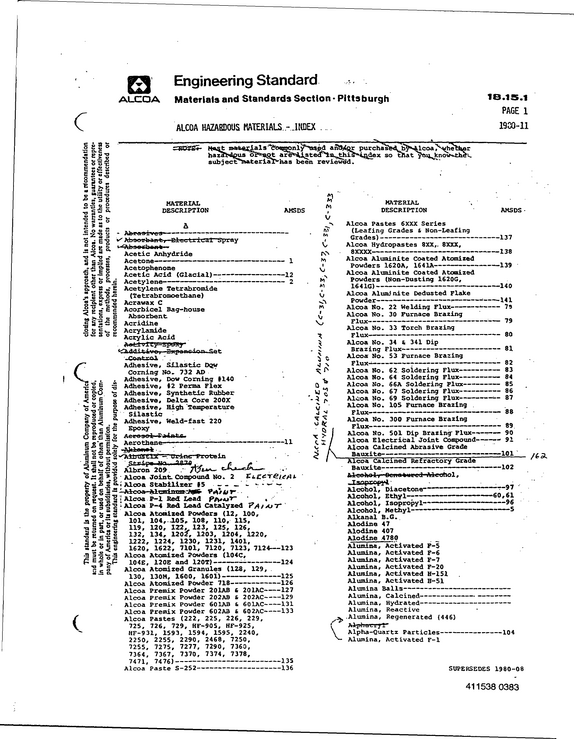
VAfiir - g I Alcoa P-1 Red Lead Pft,ur ^ e | 11 Alcoa P-4 Red Lead Catalyzed VA / aj T -- "o o 3" * *a PI 5t*"*a *3c2v 3oK ccw-no D5v sTI S*a | 5 Alcoa Atomized Powders (12, 100, 101, 104,. .105, 108, 110, 115, 119, 120, 122. 123, 125, 126, 132, 134, 1202, 1203, 1204, 1220, 1222, 1224, 1230, 1231, 1401, 1620, 1622, 7101, 7120, 7123, 7124----- 123 Alcoa Atomized Powders (104c, "t3 ^ 10 4E, 120E and 120T)------------ ------------------ 124 Alcoa Atomized Granules (128, 129, 130, 130M, 1600, 1601)------------------------------125 Alcoa Atomized Powder 718------------------------- 126 Alcoa Premix Powder 201AB t 201AC-------- 127 Alcoa Premix Powder 202AB S 202AC-------- 129 Alcoa Premix Powder 601AB & 601AC-------- 131 Alcoa Premix Powder 602A3 t 602AC-------- 133 Alcoa Pastes (222, 225, 226, 229, 725, 726, 729, HF-905, HF-925, HF-931, 1593, 1594, 1595, 2240, 2250, 2255, 2290, 2468, 7250, 7255, 7275, 7277, 7290, 7360, 7364, 7367, 7370, 7374, 7378, 7471, 7476)------------------------------------------------------135 Alcoa Paste S-252- -136 s?
refid# ybxpxExZowK2pyEXb66G55qeV15 pages
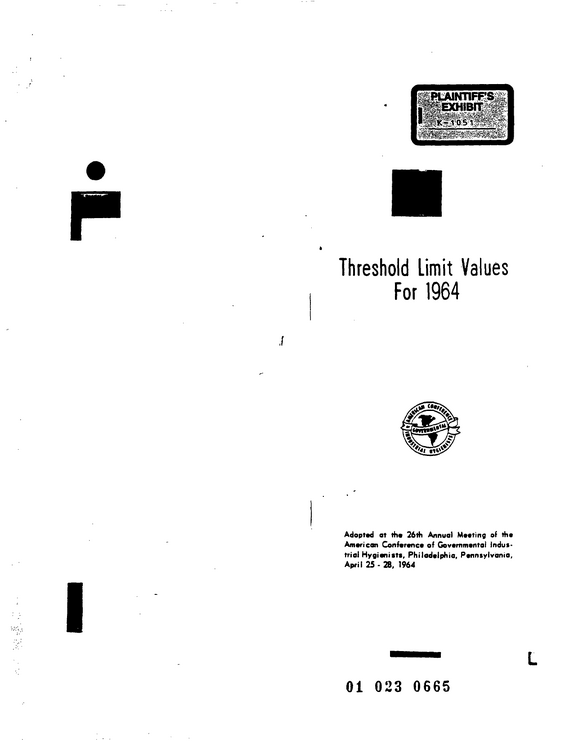
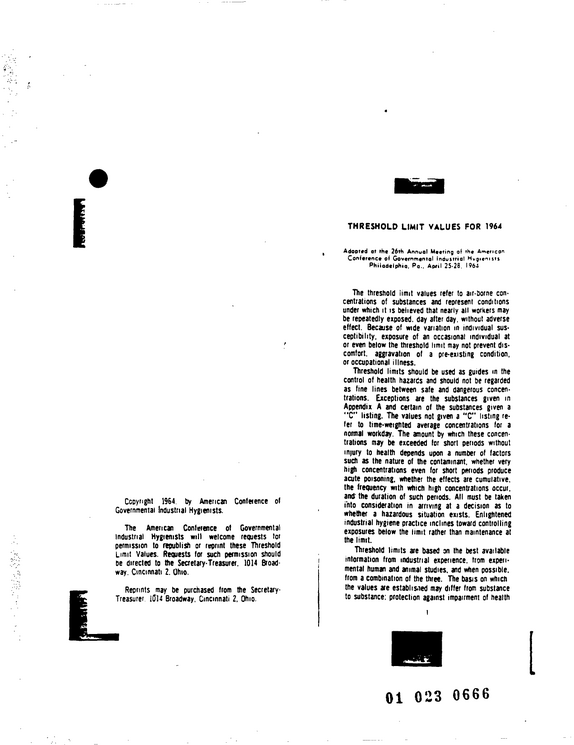
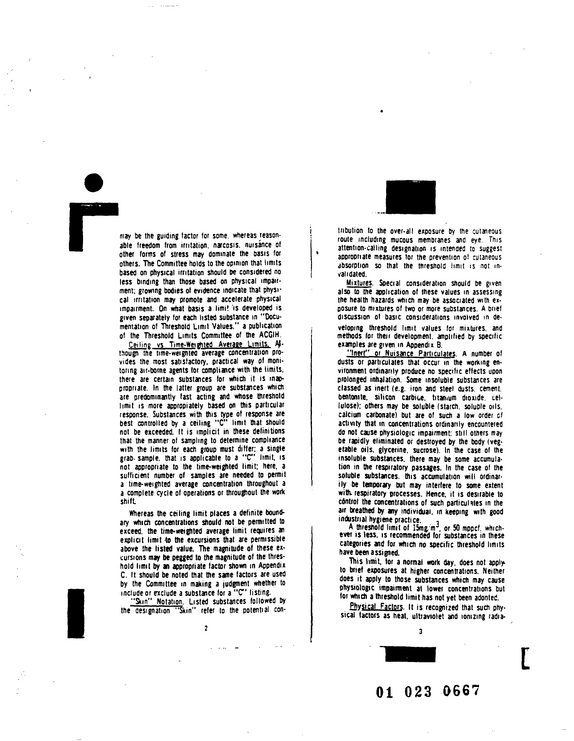
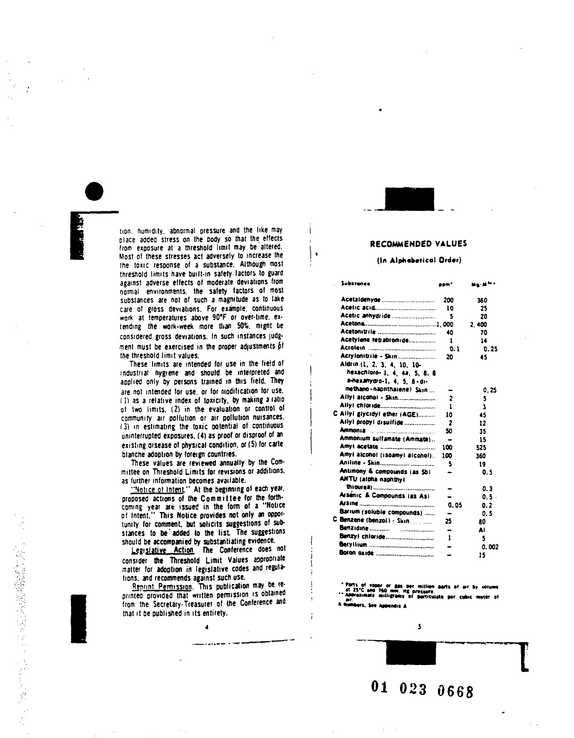
* Threshold Limit Values For 1964 ,i Adopted at the 26th Annual Moating of the American Conference of Governmental Indus trial Hygienists, Philadelphia, Pennsylvania, April 25 - 28, 1964 01 023 0665 Copyright 1964. by American Conference of Governmental Industrial Hygienists.
refid# BR9gvv07BQVKmNnDd4pyDqoXj13 pages
( l / Before the Academy of Medicine of Belgium, Nelis and Stijns described^ iricrge number of alimentary lead intoxications in & Luxembourg community. as Inquiry revealed that the source was a flour which contained lead and had 5 been obtained from a mill the grindstone of which had been relined with lead over a total surface of 300 square cent
refid# e722bKXeo4MKpygwrgLbmKJr946 pages
Inquiry revealed that the source was a flour which contained lead and had been obtained from a mill the grindstone of which had been relined with lead over a total surf
refid# JGv8dL4LQy4VKxjOZyVpnZQ246 pages
There is only one outstanding example, for instance, of the possibility o f absorption o f lead through the skin, namely tetraethyl lead, and this occurs in the form o f a fluid.
refid# rxO3JRD9er75jJqJb75Kopx3E130 pages
There is only one outstanding example, for instance, of the possibility o f absorption o f lead through the skin, namely tetraethyl lead, and this occurs in the form o f a fluid.
refid# Zeo2qOy4pY0pgnqo8gZDmo8130 pages
FILE NAME: Pennsylvania (PA) DATE: 1968 DOC#: PA034 DOCUMENT DESCRIPTION: 1968 Updated of 1961 Govt Regulations for Threshold Limits in Places of Employment .
refid# wD22JvdNdyaEvYpjzEjQKvbod15 pages
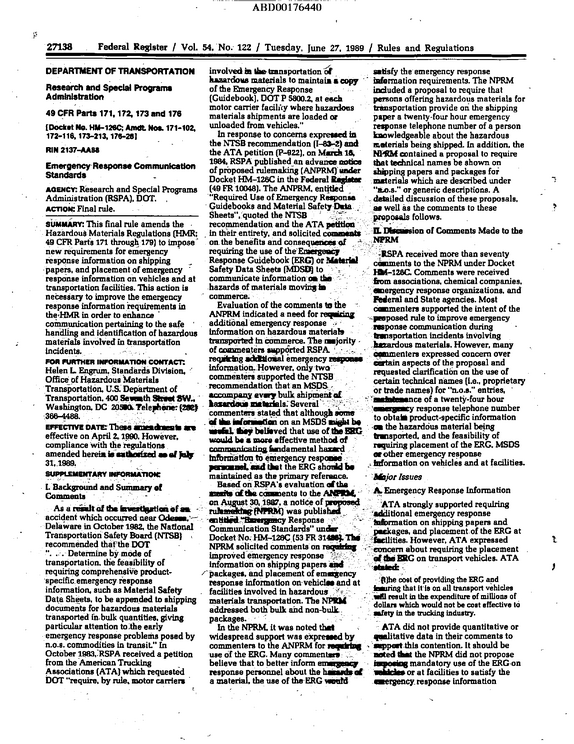
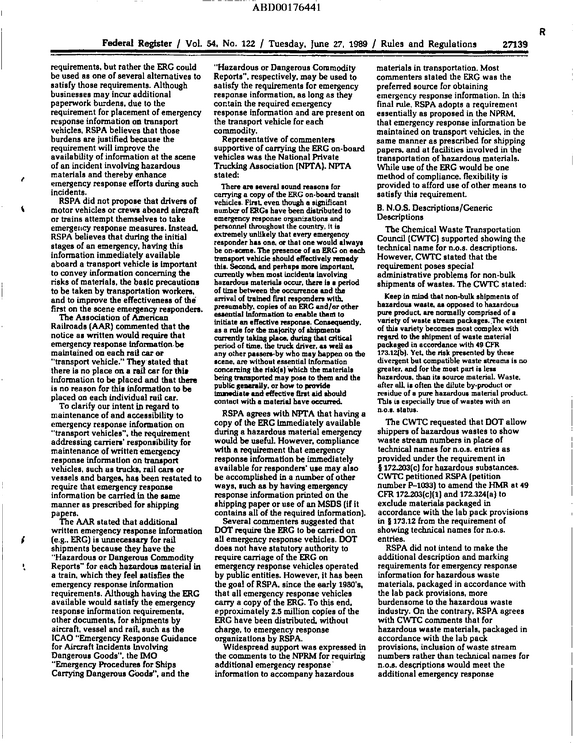
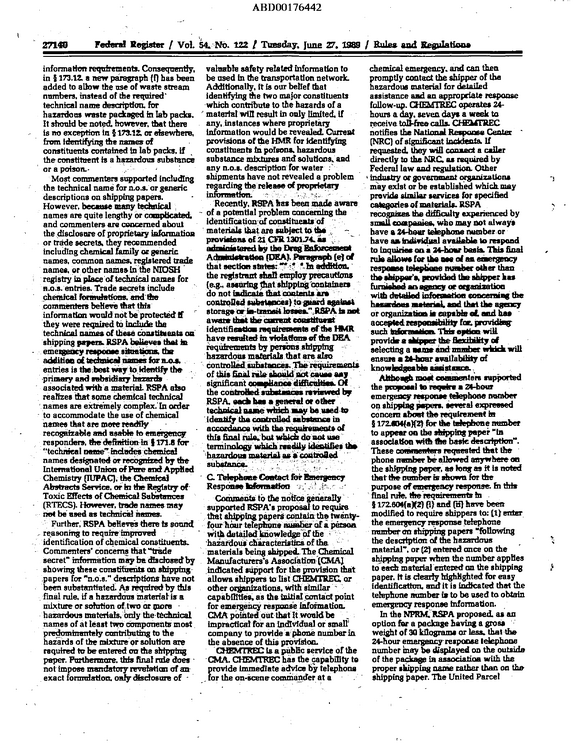
ABDOO176439 Tuesday June 27, 1989 STS Part IX Department of Transportation Research and Special Programs Administration 49 CFR Part 171 et al.
refid# vVgoRj9217aQvBO3bYGo5ynk911 pages
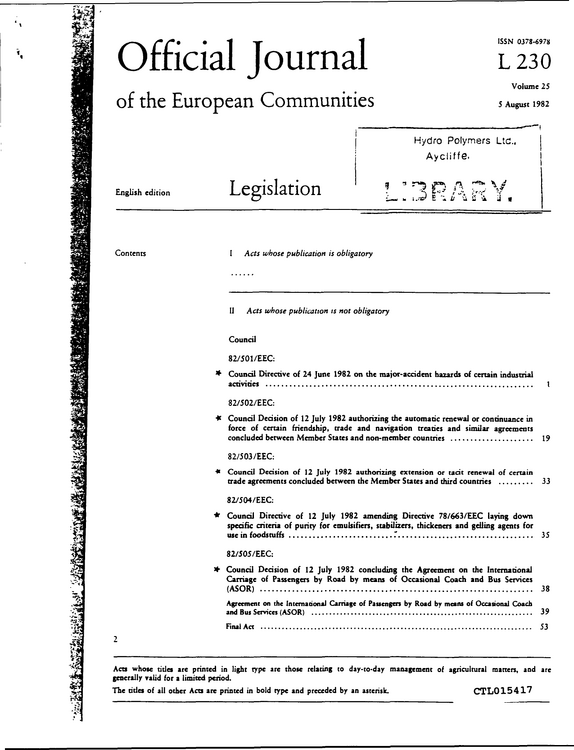
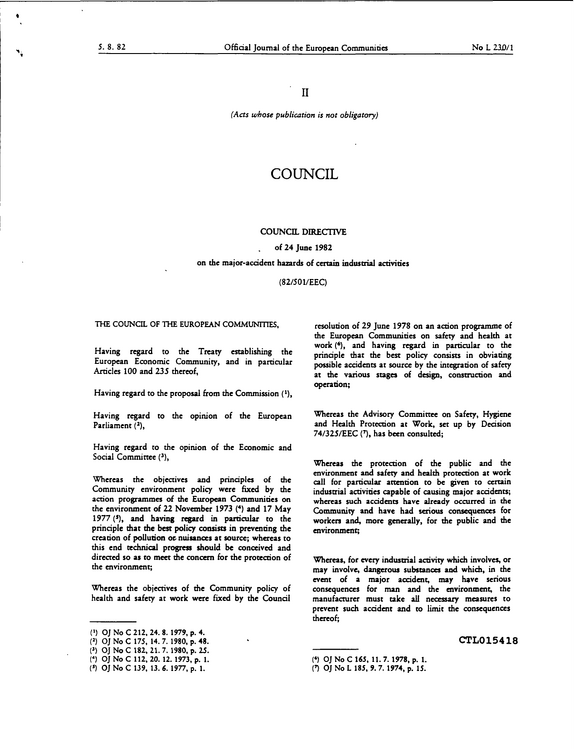
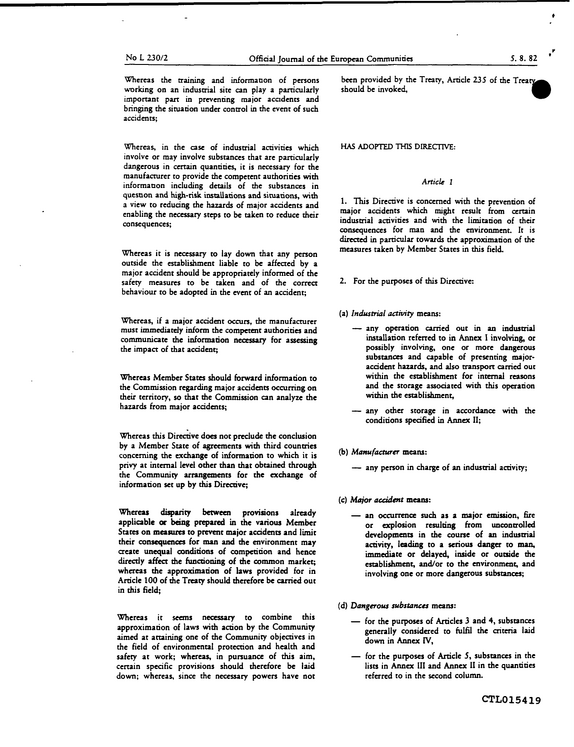
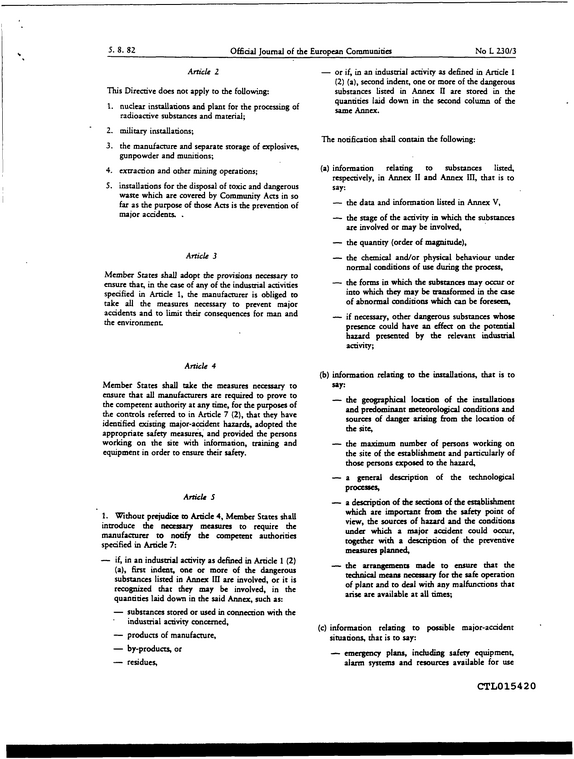
For the purposes of this Directive: (a) Industrial activity means: -- any operation carried out in an industrial installation referred to in Annex I involving, or possibly involving, one or more dangerous substances and capable of presenting majoraccident hazards, and also transport carried out within the establishment for internal reasons and the storage associated with this operation within the establishment, -- any other storage in accordance with the conditions specified in Annex II; (b) Manufacturer means: -- any person in charge of an industrial activity; (c) Motor accident means: -- an occurrence such as a major emission, fire or explosion resulting from uncontrolled developments in the course of an industrial activity, leading to a serious danger to man, immediate or delayed, inside or outside the establishment, and/or to the environment, and involving one or more dangerous substances; (d) Dangerous substances means: -- for the purposes of Articles 3 and 4, substances generally considered to fulfil the criteria laid down in Annex IV, -- for the purposes of Article 5, substances in the lists in Annex III and Annex II in the quantities referred to in the second column.
refid# KJ0qRMkGvo8mEdgbMGB6Bq6R219 pages
Metallizing operations, lead burning, sand blasting and pipe recon ditioning -- all present potontial industrial hygiene problems.
refid# v6bx3xmo13LGxwa98nn0ny69w30 pages