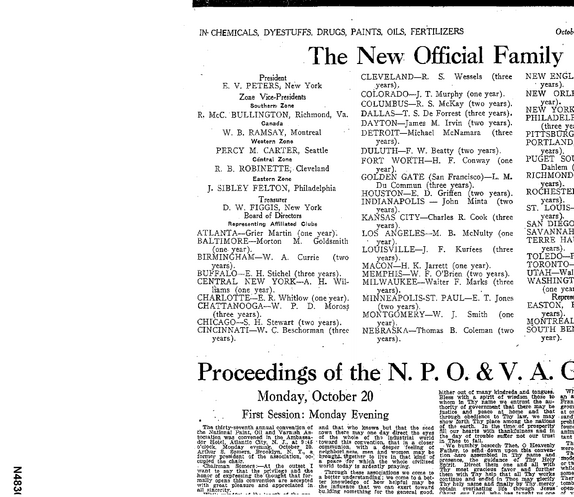
IN- CHEMICALS, DYESTUFFS, DRUGS, PAINTS, OILS, FERTILIZERS Octobe The New Official Family President E, V, PETERS; New York .
refid# V3ok4GqX3MM6qoYqw96QazVwo56 pages
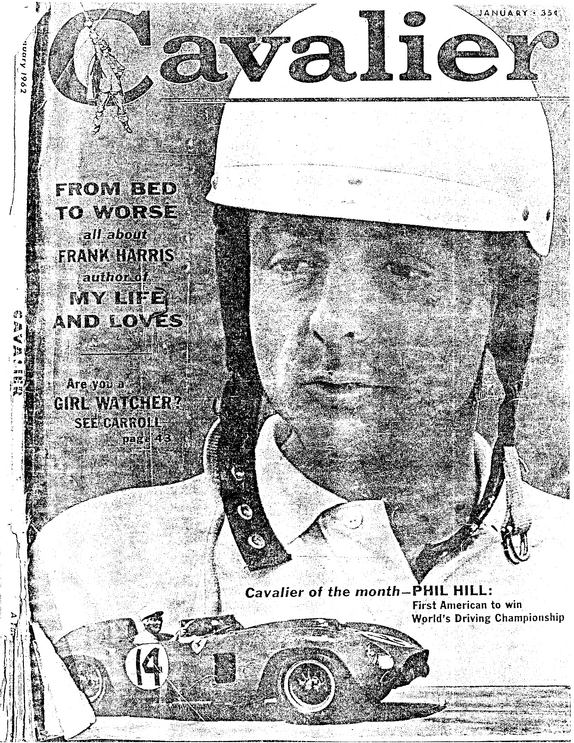
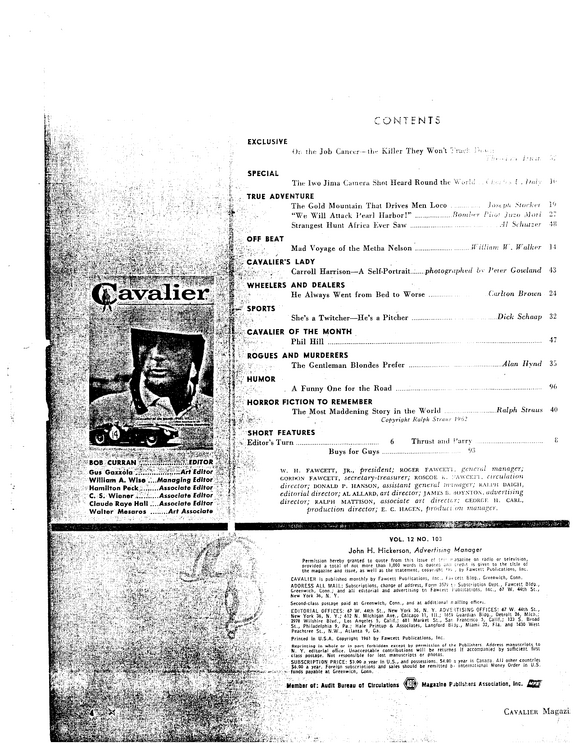
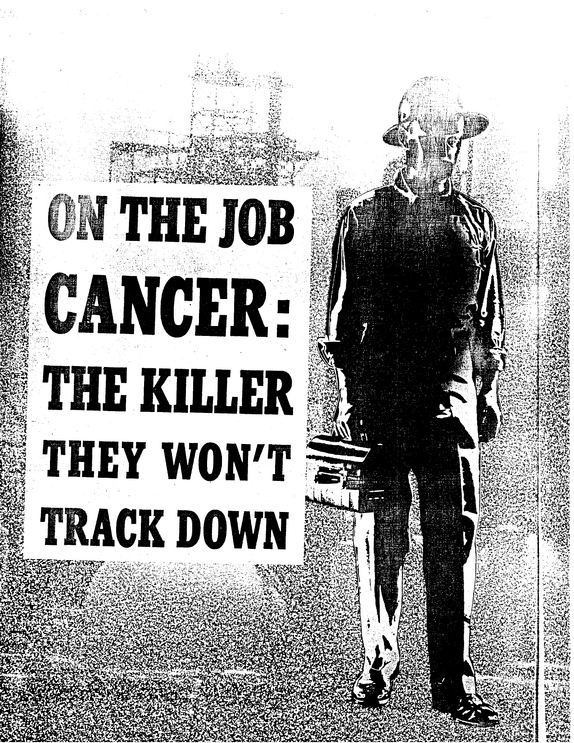
FILE NAME Newspaper & Magazine Articles NMA DATE 1962 Jan DOC NMA028 DOCUMENT DESCRIPTION Trade Magazine Article - On the Job Cancer The Killer They Won't Track Down _ Lis Cavalier Cavalier Cavalier CavalieCravalier of the the month monthmonth - PHIL HILL i st st American American to win World's World's World's Driving Driving Championship Championship > Claude Raye Hall.: : Walter Mesaros CONTENTS EXCLUSIVE 7 On the Job Cancer Killer They Won't Truck Down SPECIAL The Iwo Jima Camera Shot Heard Round the World Chahs Chahs [ Daly TRUE ADVENTURE The Gold Mountain That Drives Men Loco ..........
refid# QJ8NaY67JbbMw6XRjGnME77XR11 pages
Aeronautical Research leads the way in payroll allocation, 9.30%, while Chemical Research is second in the participa tion column, 88.1%.
refid# 10R7DbyQBoe4B5kQg5LkbJGZZ394 pages
PAaDr-tA21i 5" o 0f 012THE INSTALLATION RESTORATION PROGRAM TOXICOLOGY GUIDE Volume 4 ADA215002 ADA215002 by BiomediHcOaeOlaaalkatknhRdRaidEnidgdngeve,SiraTNofeenantmtyinoeeRnnsatesalesleeLaIa3rnbc7fhoo8rr3aDm1t-ioa6vrt0iiyso5*ino0nAnalysis for Harry G.
refid# 2JDa1ZeLokLqqn3kxKnJYRrdR760 pages
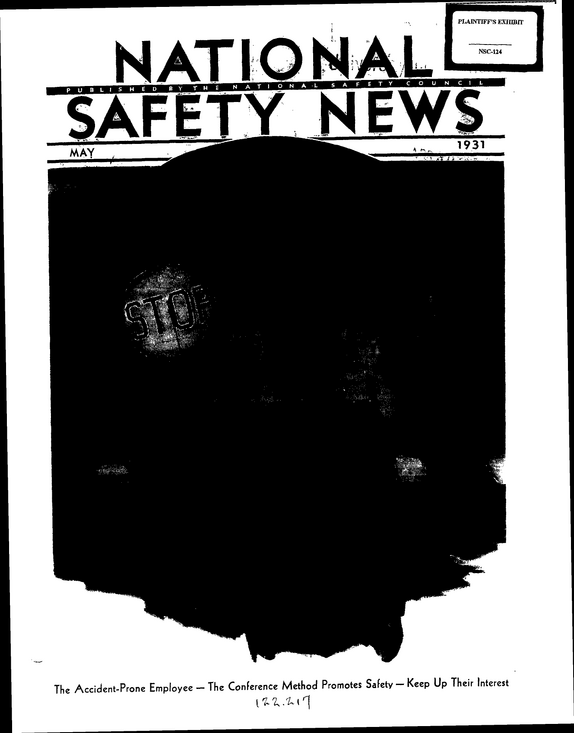
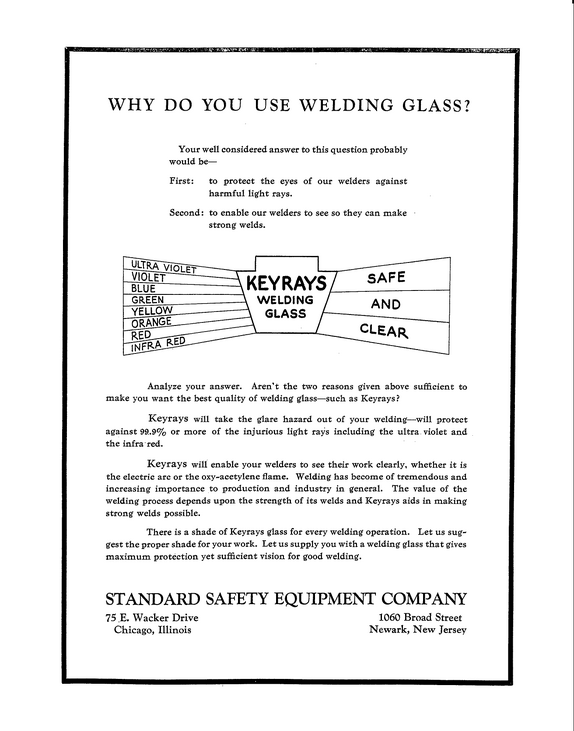
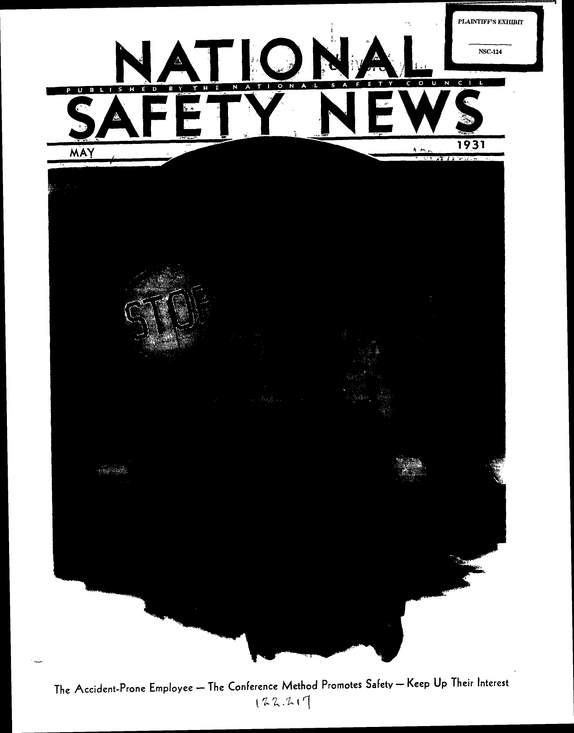
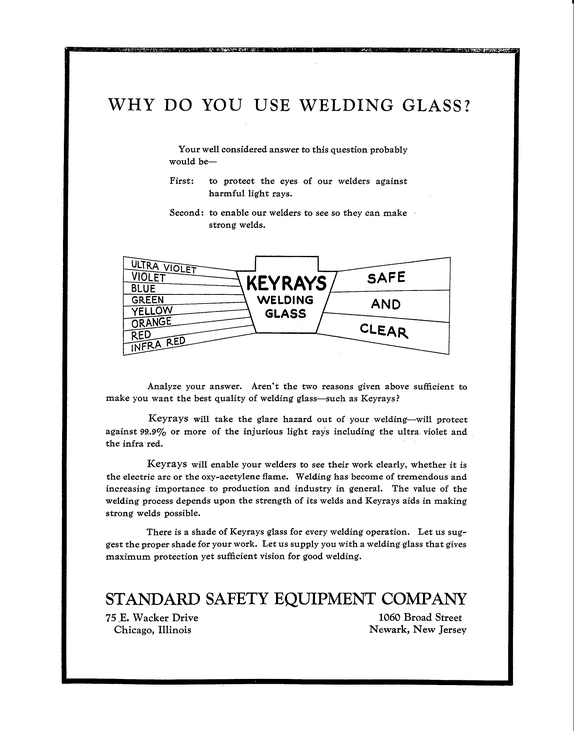
e Accident-Prone Employee - The Conference Method Promotes Safety - Keep Up Their Interest WHY DO YOU USE WELDING GLASS?
refid# Y0dOkaap34xDJzrV1pdNabRV87 pages
e Accident-Prone Employee - The Conference Method Promotes Safety - Keep Up Their Interest WHY DO YOU USE WELDING GLASS?
refid# VqbL1jjjqYkR4OoX8MaB6r5j87 pages
Joseph Lead Company Board Chairman Industrial Hygiene Foundation ADDRESS mbent OF WELCcO cc ceM ceceE enc ceeceas Dr.
refid# wr1XQvDmpbLK3d62mLDvLJYN464 pages
By 1940 virtually all automobiles were equipped with molded brake linings although woven products continue to be used in trucks heavy equipment and for specialized applications The molded linings in use were cut to length usually by the manufacturer and mounted on brake shoes using rivets Until the mid 1920's brakes were only mounted on rear wheels However with the development of internal shoes four wheel mountings soon became standard and by 1930 were generally operated hydraulically As automobiles were designed for use at even higher speeds brake linings im- Various new materials were introduced proved in both quality and performance as fillers binders and friction modifiers In 1948 bonded brake linings were developed and soon accounted for approximately 40 of the original equipment brake market However they rapidly dominated the replacement market because of the considerable savings in labor during installation In 1965 the first disc brakes were introduced on American automobiles and rapidly increased in use In 1975 virtually all original equipment front wheel brakes on cars were of this type However because of less stringent braking requirements and the difficulty of adapting mechanical parking brakes to the disc configuration the rear wheel brakes on 95 of currently sold cars are still of the drum variety Requirements for Brake Linings A constant or slightly decreasing coefficient of friction C.F. with tempera- tures up to about 1000 is required for an efficient brake lining values of from 0.30 to 0.45 C.F. are normally sought Lower values produce brakes requiring excess pedal pressure and those with higher values are too sensitive to pressure and develop excess wear Ideally the desired frictional qualities should be maintained throughout the life of the lining material During braking chemical and physical changes occur in the material at the braking surfaces These changes may produce an increase build or a decrease fade in friction Satisfactory linings will fade slightly upon repeated applications but will return to their initial stat~ upon cooling Low wear of the linings is obviously desirable for economical and practical considerations However high wear resistance can be associated with the tendency of the lining to glaze with a concomitant reduction in the coefficient of friction This can be overcome by allowing a slow alteration of the brake lining material to occur Pyrolysis of the organic binders and thermal decomposition of the chrysotile fibers under braking provide the necessary continuing renewal of the lining surface The lining should be abrasive to the drum surface In addition to causing rapid drum wear abrasive linings score the drums which in turn leads to a rapid wearing of the lining Drums made of cast iron and steel are common with steel being the more susceptible to scoring Since brake drums have a hardness of from 3.5 to 4.0 on the MOH scale virtually all lining materials used have lower hardness values Other necessary or desirable properties of brake linings include physical strength dimensional stability quiet operation and safe and offensive degradation products Of the various properties desired in the linings greatest attention is paid to build and recovery characteristics Wear problems are not as serious and can more readily be overcome with the mate- rials available 7,8,9,10 Compounding Ingredients of Brake Linings To achieve the desired friction properties a wide variety of ingredients are commonly used in the manufacturer of automobile brake linings These include A Asbestos Asbestos is used for fiber reinforcement of the friction product Chrysotile is used almost exclusively and comprises from 40 to 50 percent of the brake lining Fiber grades 4 through 7 are used and occasionally several sizes are mixed or even calcined to improve performance characteristics Amosite crocidolite or other amphibole asbestos varieties are not used because they are too harsh and tend to score the brake drums Organic binders Organic binders are primarily phenolic type resins selected for high binding strength Unmodified phenolic resins when subjected to heat usually become hard and brittle To prevent this linseed cashew nut or China wood oils or cresols are added Rubber which also finds use as a binder imparts desirable friction qualities and improves the flexibility of the lining material Friction modifiers Friction modifiers are added to achieve a desirable coefficient of friction over all operating conditions These modifiers also produce a more homogeneous lining surface Included among these materials are lead zinc brass cashew nut oil graphite and oxides of iron and copper Fillers Fillers such as rubber scrap barites clays silica coke coal and other minerals are used These also have utility in achieving desired friction properties in some cases through action as abrasives to recondition braking surfaces It is important to note that one major purpose of the reconditioning agents is to retard the formation of forsterite which may accumulate on the surface of the brake lining Forsterite is a mineral not originally present in the brake material but is created by dehydroxylation and recrystallization of chrysotile asbestos at high temperatures The hardness of forsterite hardness 6.5-7.0 on the MOH Scale is such that it tends to score and gouge brake drums and discs hardness 3.5 degrading them prematurely Therefore recrystallization of chrysotile to forsterite is an unwanted effect Curing agents Curing agents and accelerators are used to assure that appropriate chemical reactions occur to produce the desired brake quality Types of Brake Linings and Manufacturing Processes In making the of different types of brake linings various manufacturing processes are utilized to achieve a wide range of potential applications .These include Wired Back These are made by a calendering process in which putty stock is formed into a ribbon about a wire backing The wire reinforcing serves to maintain strength during the curing process Further as linings of this type are invariably riveted the wire reinforcing provides long term structural strength and prevents shearing of the lining at the rivets during braking Linings of this type were extensively produced prior to World War II They are in little use today Extruded Linings These are manufactured by extruding the soft plastic stock through an appropriately sized rectangular orifice To minimize structural weakness in this lining curing agents are added t
refid# Lp4mbjQ078GB7ejEM23m1xvGb42 pages
Included among these materials are lead, zinc, brass, cashew nut oil, graphite, and oxides of iron and copper.
refid# RpgXwpon4pbwLbDjkerpEG5JV42 pages
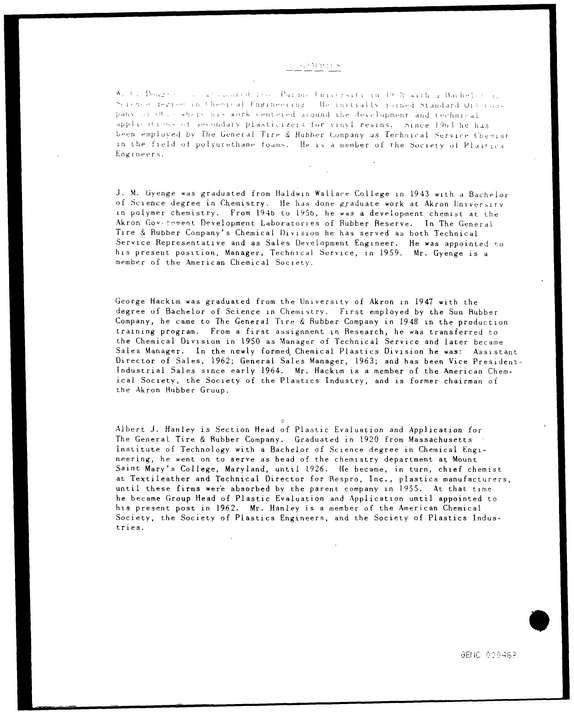
Graduated in 1920 from Massachusetts Institute of Technology with a Bachelor of Science degree in Chemical F.ngineering, he went on to serve as head of the chemistry department at Mount Saint Mary's College, Maryland, until 1926.
refid# oeVjgez2k9jzQ19QBZEzx7Rn327 pages
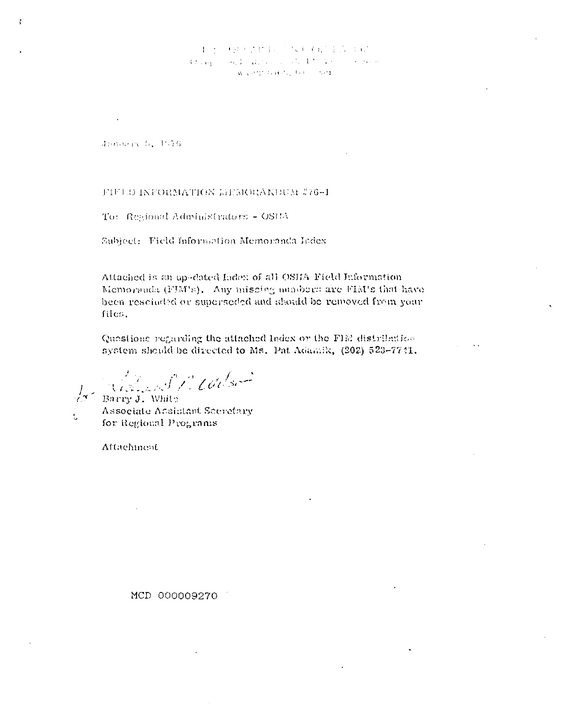
CFR 1910. 219) 9/24/74 Entering Workplaces for Evaluating Variance Kcqui 0/27/74 29 CFR 1926. 550(n)(l 5)(i) and (ii) and (i 11) 9/30/74 Citation for 5(a)(1) Violation When 99 CVR 1919.6s Inapplicable MOD 000009272 N'n i: 11 r r 7 f - 77 7 1-7'. 74-V) 74-SU 74-81 74-32 74-S3 74-S4 74-85 74-87 74-33 74-80 74-00 7'{-{)?.


refid# BDaj4M7L1jE06q0YNXmX8R9w76 pages
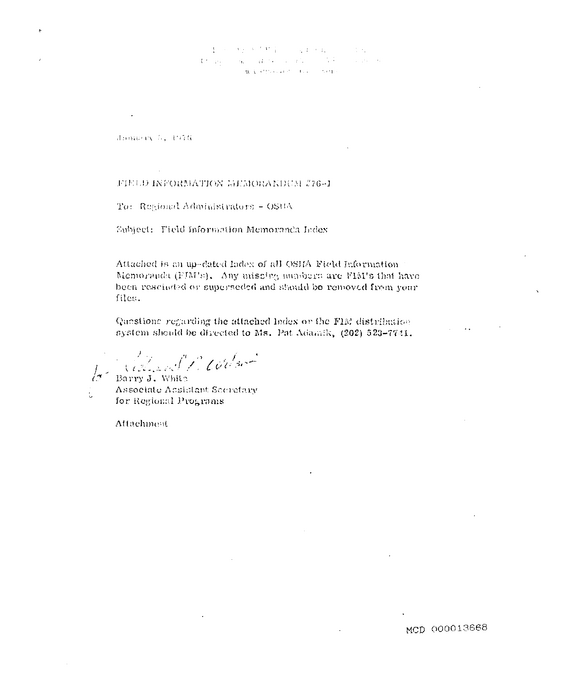
/ .`1/7 IVdc r: 11 (. lip i v I i t i | 11 i i i > < \ I l < p- nu < I >v Slide Oc.si^iuv:- with \j>j> roved Si :il r Plans l/il/75 P;i rt 1930 -- Telecom 111 mi i c;il ion--; \ eh iele - V- > 11, ee Flcvuling and Relating Plat h>rim~, .Mid 1 lelk >|d <rv 4/15/75 Handling C ited Non-Hign;:torv Employers Under the National Concrete -Masonry Association Ygreemcnt 4/21/75 Notifying Uneitcd Efnployers Using a Close-Out Notice 4/24/75 29 C3>R 1926.


refid# xjopzXG08LD4ZyJj0XqM2x4Q678 pages
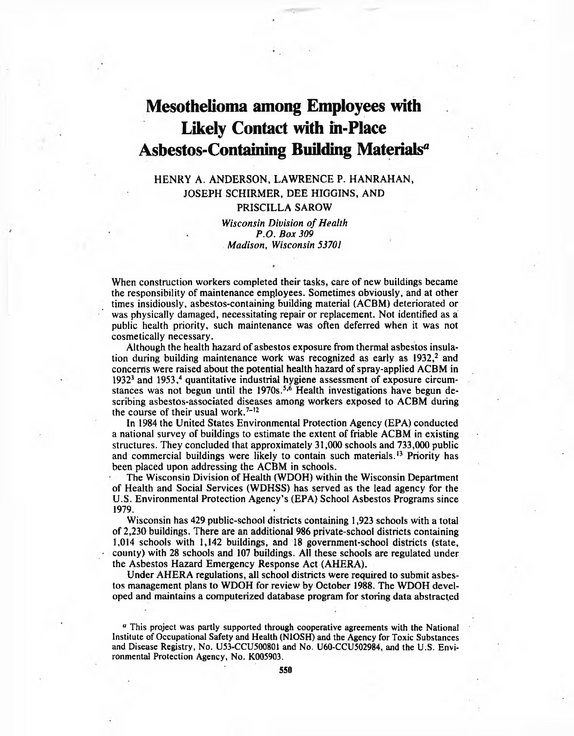
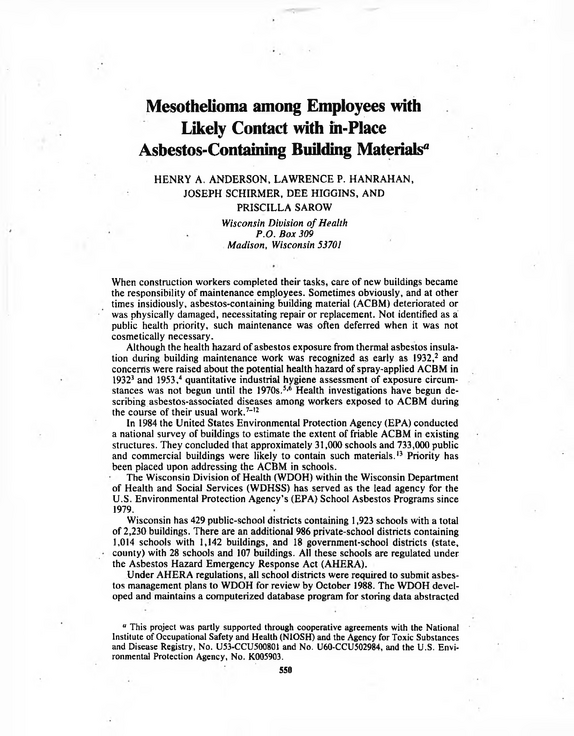
The Wisconsin Division of Health (WDOH) within the Wisconsin Department of Health and Social Services (WDHSS) has served as the lead agency for the U.S.
refid# 71B663dwRdLp6Zmpq0qzkmEka24 pages
The Wisconsin Division of Health (WDOH) within the Wisconsin Department of Health and Social Services (WDHSS) has served as the lead agency for the U.S.
refid# ZBg8mM48j4Jde9GeGmvKK5pGO24 pages
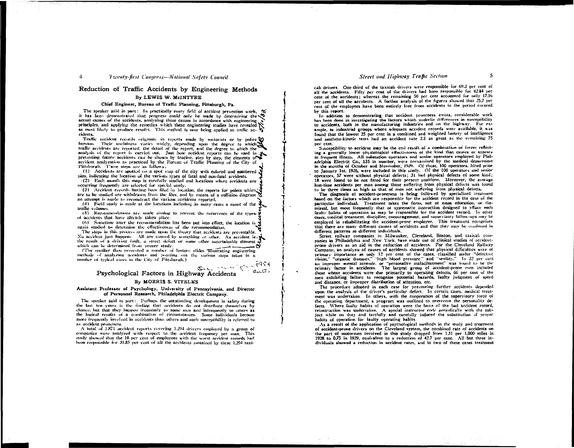
Of these, 100 operators, hired ir<or to January 1st. 1926, were included in this study.
refid# dD5xyoBQ9qE6JGzYLZM7r5d6e39 pages