Refine
Estimated Years UndatedClear
1,309 results foundRefine Search
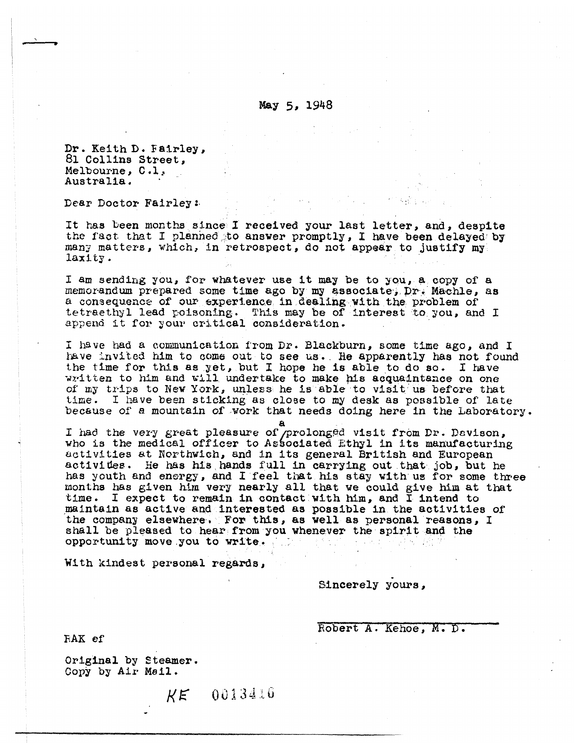
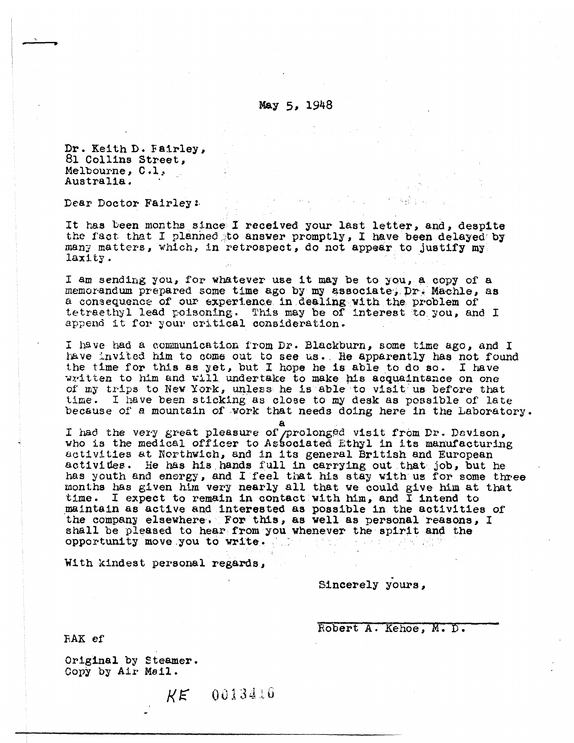
I am sending you, for whatever use it may be to you, a copy of a memorandum prepared some time ago by my associate; Dr> Machle, as a consequence of our experience, in dealing with the problem of tetraethyl lead poisoning.

refid# kDVpxRJN9XbNrYdZb90e9aQVn2 pages
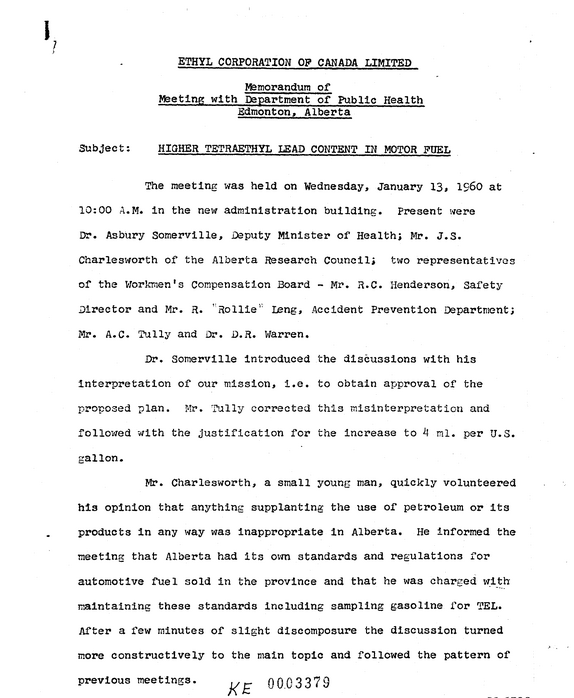
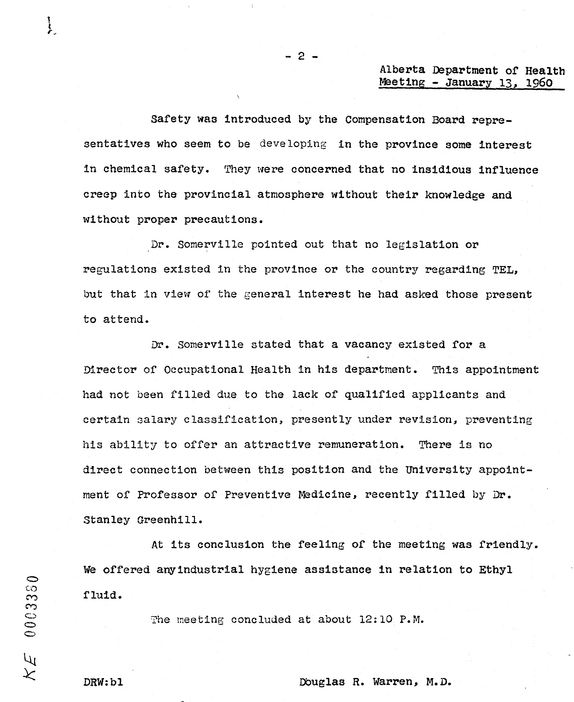
ETHYL CORPORATION OP CANADA LIMITED Mmorandum of Meeting with Department of Public Health Edmonton, Alberta Subject: HIGHER TETRAETHYL LEAD CONTENT IN MOTOR FUEL The meeting was held on Wednesday, January 13, i960 at 10:00 A .
refid# dny1ryk1674zYN1bw2aBZEgQ62 pages
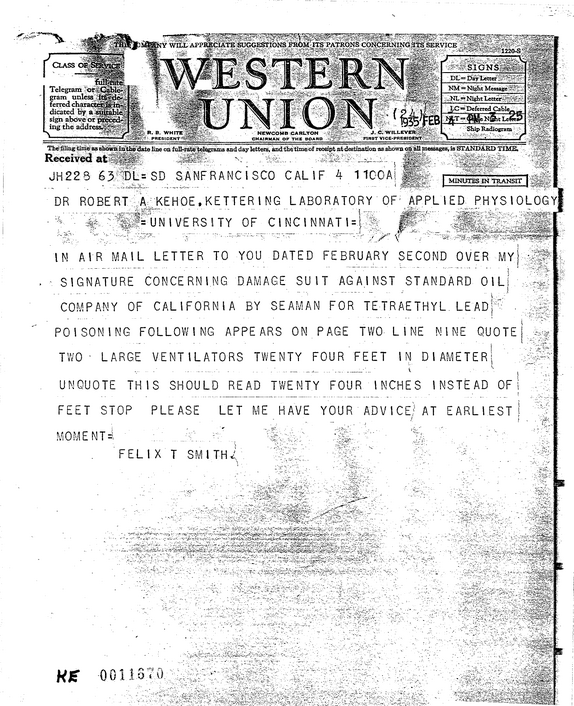
KETTERi NG LABORATORY OF APPLI ED PHYSI OLOGY UNI VERSI T Y OF CI N CI N N A T I :F X- V IN AI R MAI L LETTER TO YOU DATED FEBRUARY SECOND OVER MY SI GNATURE CONCERNI NG DAMAGE SUI T AGAI NST STANDARD OI LS COMPANY OF CALI FORNI A BY SEAMAN FOR TETRAETHYL.
refid# 5DVmpoMX7wk2k659o89Vzy2zN1 page
I am sending you, for whatever use it may be to you, a copy of a memorandum prepared some time ago by my associate; Dr> Machle, as a consequence of our experience, in dealing with the problem of tetraethyl lead poisoning.

refid# XVygp5V4n8rVXzYOgq50pDxK2 pages
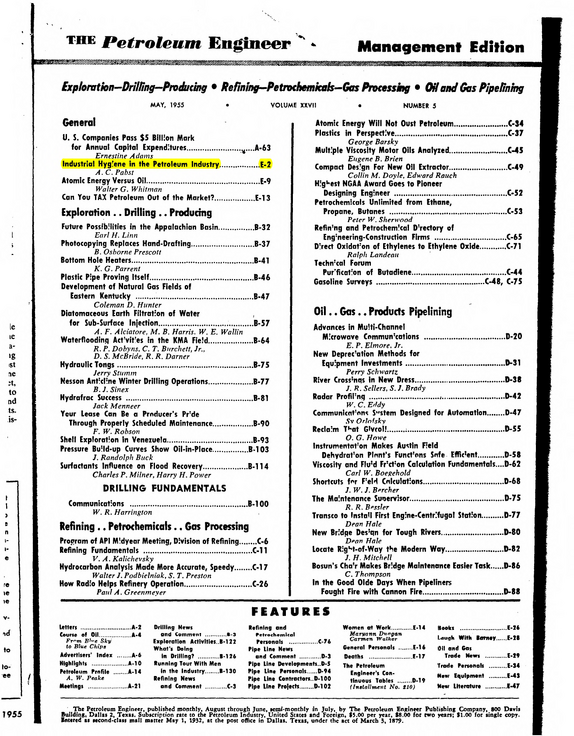
Castleman File: American Petroleum Institute w/c = with cover letter or memo If DATE = 0, undated CD-ROM Document #:API [ DATE /</<' __ published article from medical journal V/ published article from trade journal __ published advertisements __ newspaper article __ published government report __ government inspection results __ unpublished or internal report __ unpublished presentation from conference __ letter __ memorandum __ industry warning labels __ industry sales literature __ industry recommended practices __ meeting minutes (with attachments) __ membership list BC notes MKASITRiniT MAY 19 1955 kSITY OF CALIFOR' c r .

refid# mBvYkJB923bbmBMdgwXm1nza47 pages
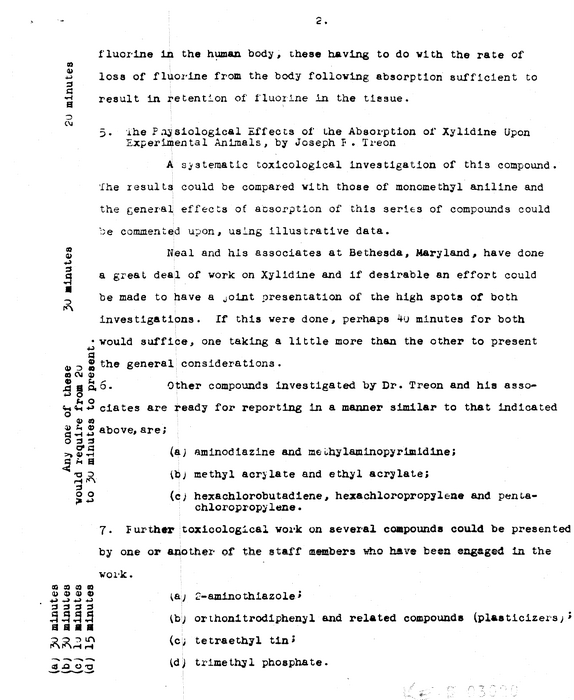
; (aj 2-aminothlazole* (bj orihonitrodiphenyl and related compounds (plasticizers;* (c; tetraethyl tin* (dj trimethyl phosphate.
refid# v1mBK1oRygbNGGQ4OQpKe2J9q3 pages
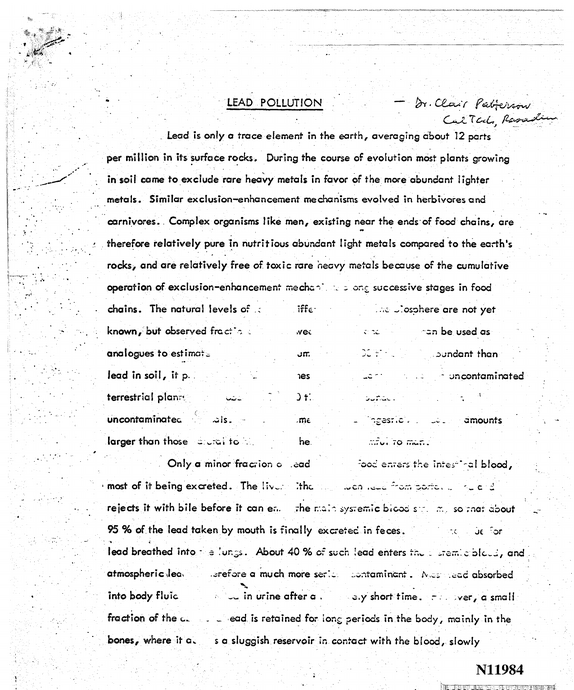
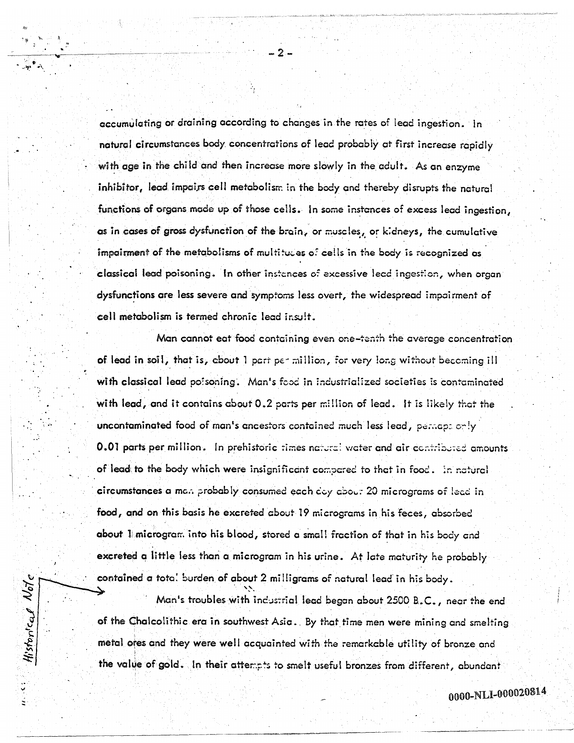
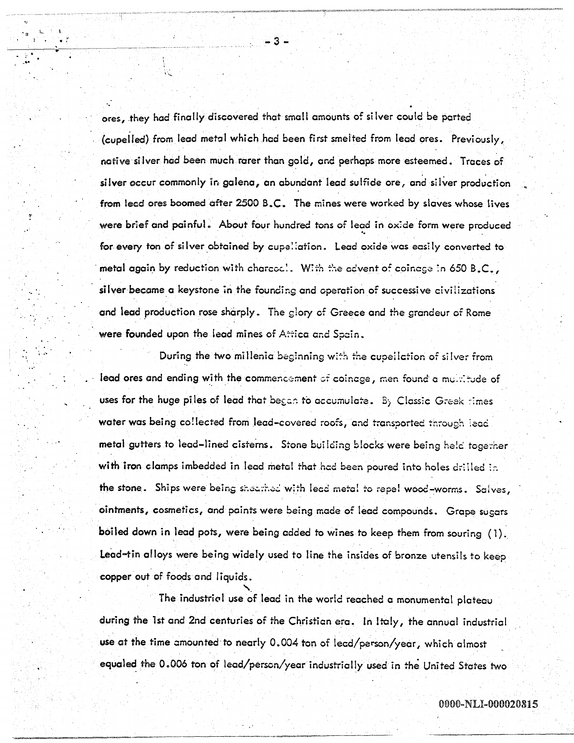
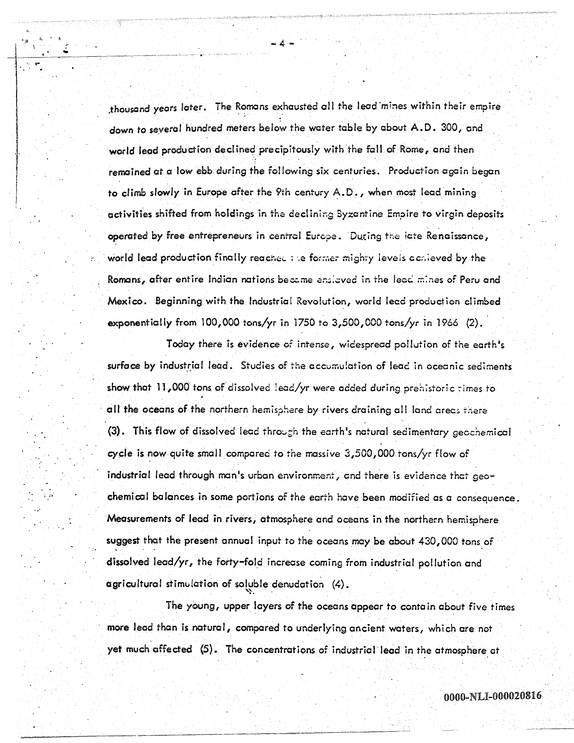
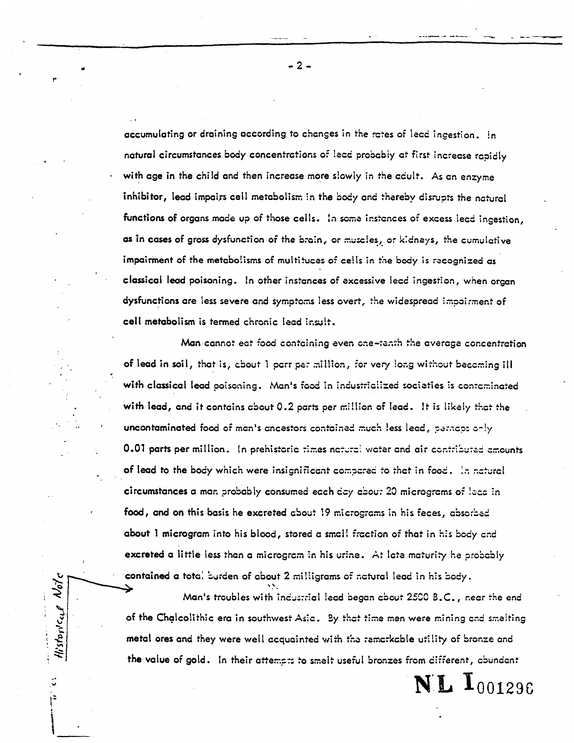
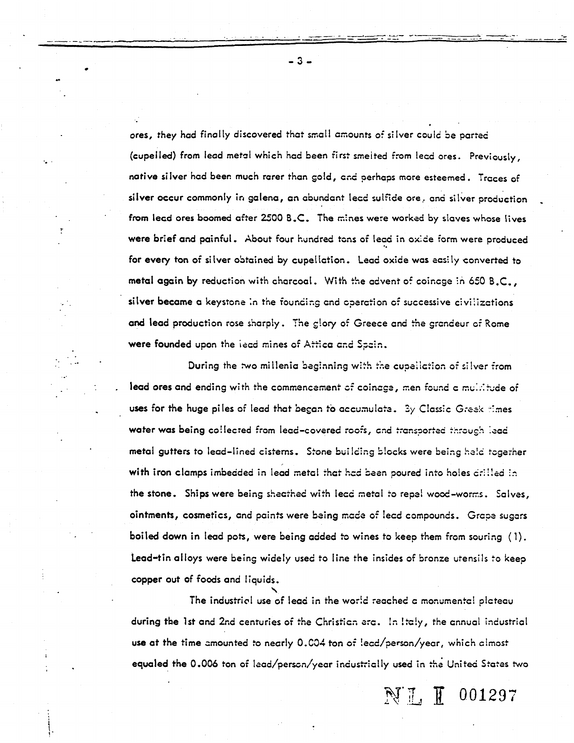
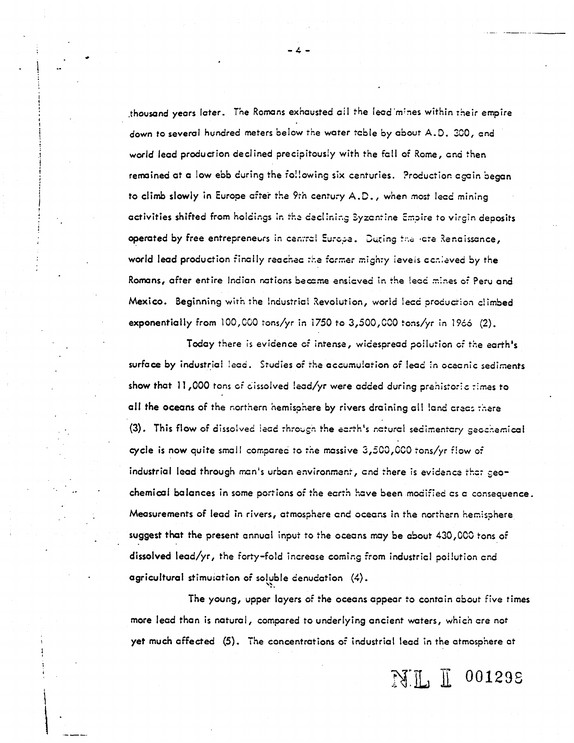
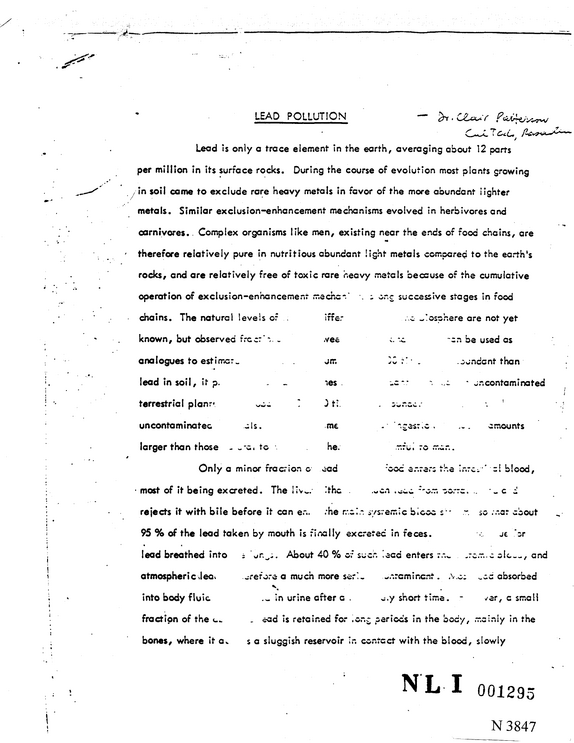
V LEAD POLLUTION '
refid# 4azJ4g8xgQOYYbZ6DZeEV7xLV24 pages
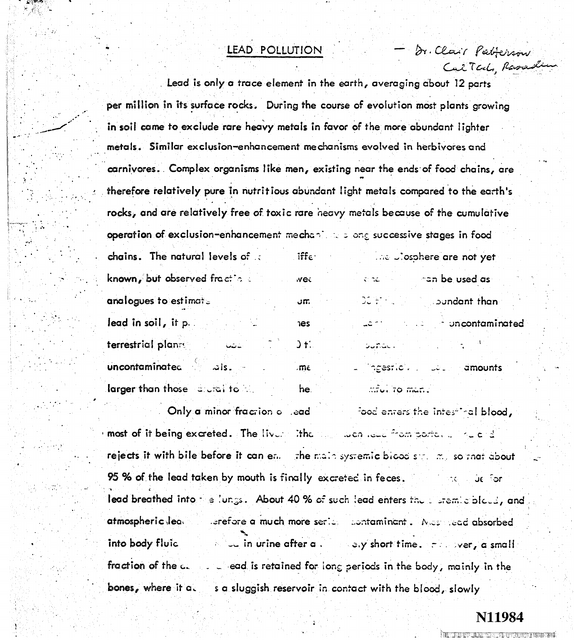
V LEAD POLLUTION '
refid# 82QV0MbJ4p4YR96vXmRgvEwM524 pages
ue "or lead breathed into ; ur.
refid# pBkpx5ZVxdbDpqvDMMebmkDwj23 pages
ue "or lead breathed into ; ur.
refid# v412Q0aOpVxqxgGDJEE82Gw823 pages
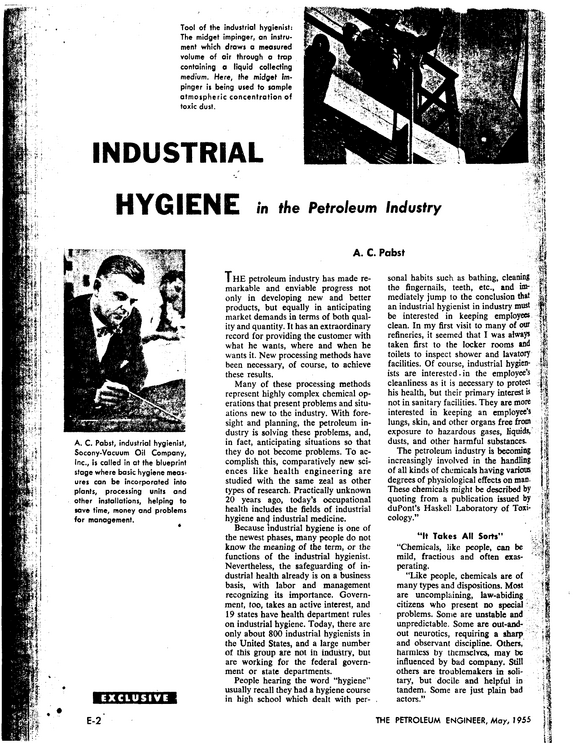
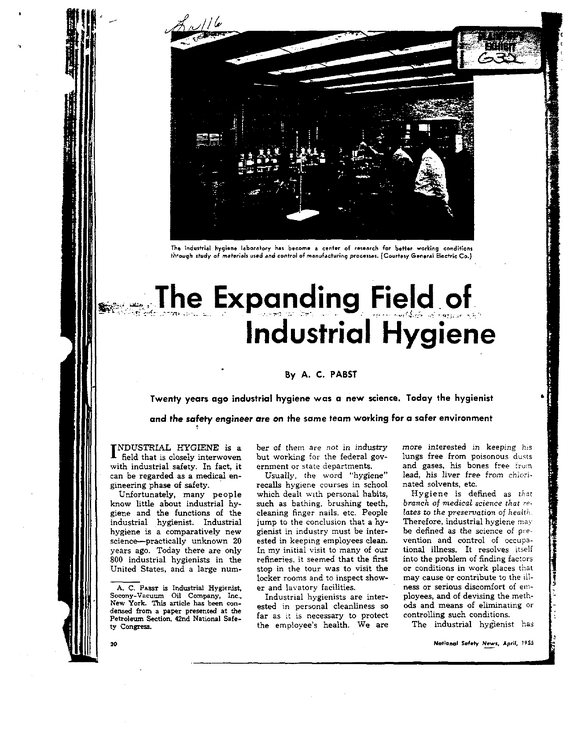
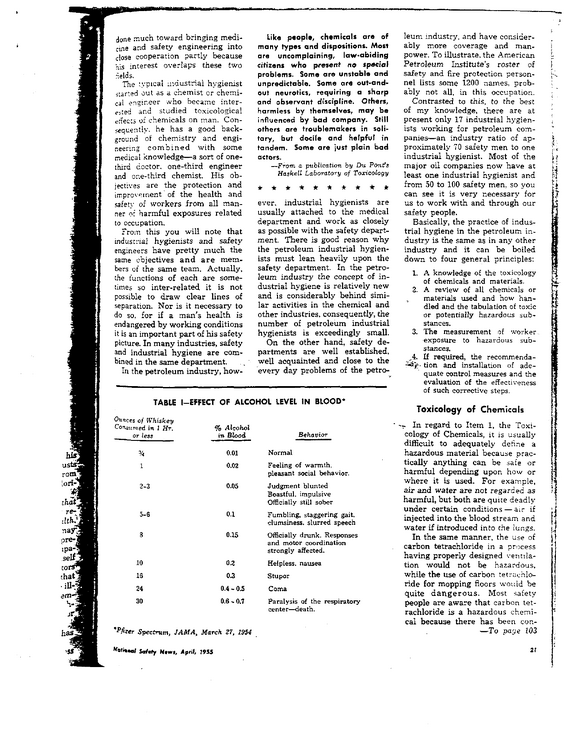
We are 20 more interested in keeping ins lungs free from poisonous dusts and gases, his bones free truin lead, his liver free from chlori nated solvents, etc.
refid# azRLEp9n0r8NYXdnKddXgXvR11 pages
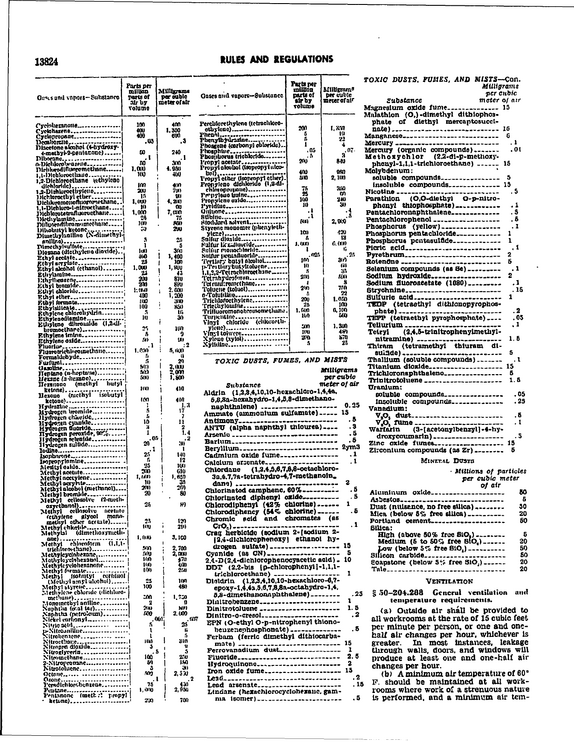
Strychnine . 15 Sulfuric add_________ _________________ TEDP (tetraethyl dlthtonopyrophos- phate)__ TEPP (tetraethyl pyrophosphate) ____ Tellurium__--______ ......__ ________ Tetryl (2,4,5-trlnltrophenylmethyl- nltramlne)______________________ -- Thtrftm (tetramethyl thluram dl- .5 .1 .3 .6 .1 .1 2 .1 1 .2 .05 .l 1. 6 suiade)____________ ______ ___________ s TOXIC DUSTS, FUMES, AND MISTS Thallium (soluble compounds)----------- . i Milligrams per cubic Substance meter of air Aldrln (l,2,8,4,10,10-hoxachloro-l,4,4a. 6r0,8a-hexahydi`o-l,4,3,8-dlmethaiio- naphthalene)----------------------------------- 0-25 Animate (ammonium sulfamate)--... 15 Antimony___
refid# N2X9YmBeQJx2BdDwQNGbaK5rQ1 page
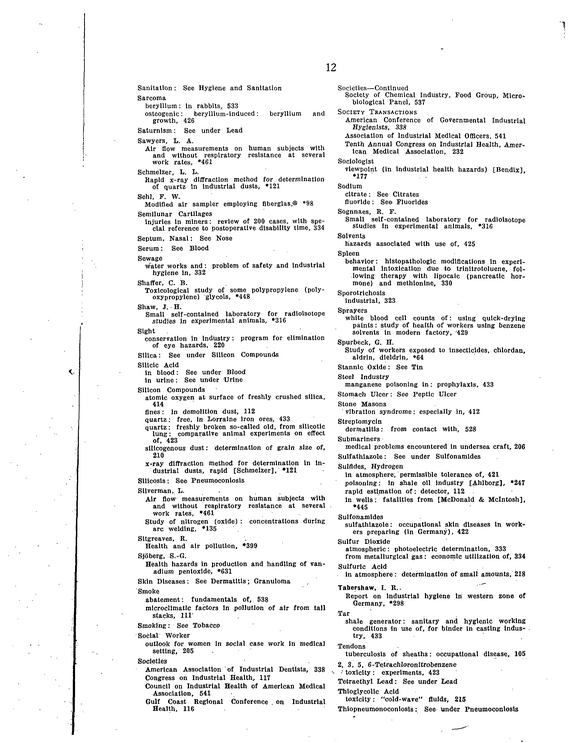
Report on industrial hygiene In western zone of Germany, *298 Tar shale generator: sanitary and hygienic working conditions in use of, for binder in casting indus try, 433 outlook for women in social case work In medical setting, 205 Tendons tuberculosis of sheaths: occupational disease, 105 Societies American Association of Industrial Dentists, 338 Congress on Industrial Health, 117 Council on Industrial Health of American Medical Association, 541 2, 3, 5, 6-TetrachIoronltrobenzene , ' toxicity : experiments, 423 Tetraethyl Lead: See under Lead Thioglycolic Acid Gulf Coast Regional Conference on Industrial toxicity: "cold-wave" fluids, 215 Health, 116 Thiopneumonoconlosis: See under Pneumoconiosis 1
refid# 2JJq2JvOG6gkx12MzEbRrmdXL1 page
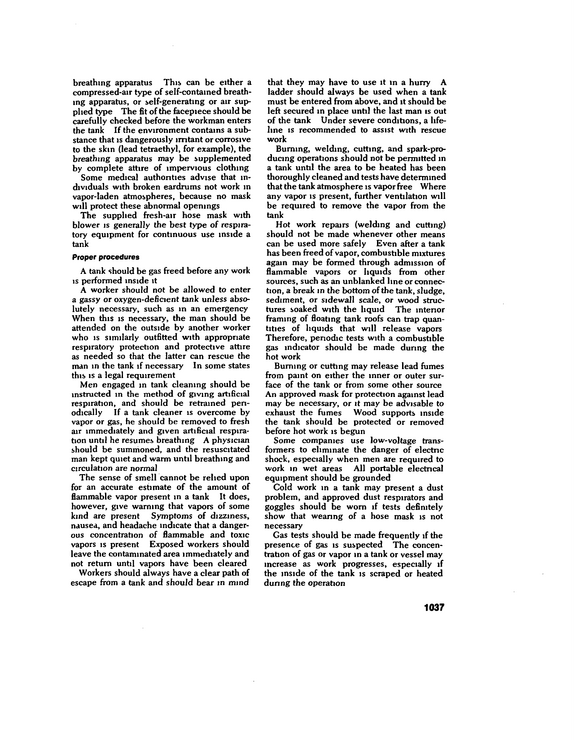
breathing apparatus This can be either a compressed-air type of self-contained breath ing apparatus, or self-generating or air sup plied type The fit of the facepiece should be carefully checked before the workman enters the tank If the environment contains a sub stance that is dangerously irritant or corrosive to the skin (lead tetraethyl, for example), the breathing apparatus may be supplemented by complete attire of impervious clothing Some medical authorities advise that in dividuals with broken eardrums not work m vapor-laden atmospheres, because no mask will protect these abnormal openings The supplied fresh-air hose mask with blower is generally the best type of respira tory equipment for continuous use inside a tank Proper procedures A tank should be gas freed before any work is performed inside it A worker should not be allowed to enter a gassy or oxygen-deficient tank unless abso lutely necessary, such as m an emergency When this is necessary, the man should be attended on the outside by another worker who is similarly outfitted with appropriate respiratory protection and protective attire as needed so that the latter can rescue the man in the tank if necessary In some states this is a legal requirement Men engaged in tank cleaning should be instructed in the method of giving artificial respiration, and should be retrained peri odically If a tank cleaner is overcome by vapor or gas, he should be removed to fresh air immediately and given artificial respira tion until he resumes breathing A physician should be summoned, and the resuscitated man kept quiet and warm until breathing and circulation are normal The sense of smell cannot be relied upon for an accurate estimate of the amount of flammable vapor present in a tank It does, however, give warning that vapors of some kind are present Symptoms of dizziness, nausea, and headache indicate that a danger ous concentration of flammable and toxic vapors is present Exposed workers should leave the contaminated area immediately and not return until vapors have been cleared Workers should always have a clear path of escape from a tank and should bear m mind that they may have to use it in a hurry A ladder should always be used when a tank must be entered from above, and it should be left secured in place until the last man is out of the tank Under severe conditions, a life line is recommended to assist with rescue work Burning, welding, cutting, and spark-producing operations should not be permitted in a tank until the area to be heated has been thoroughly cleaned and tests have determined that the tank atmosphere is vapor free Where any vapor is present, further ventilation will be required to remove the vapor from the tank Hot work repairs (welding and cutting) should not be made whenever other means can be used more safely Even after a tank has been freed of vapor, combustible mixtures again may be formed through admission of flammable vapors or liquids from other sources, such as an unblanked line or connec tion, a break m the bottom of the tank, sludge, sediment, or sidewall scale, or wood struc tures soaked with the liquid The interior framing of floating tank roofs can trap quan tities of liquids that will release vapors Therefore, periodic tests with a combustible gas indicator should be made during the hot work Burning or cutting may release lead fumes from paint on either the inner or outer sur face of the tank or from some other source An approved mask for protection against lead may be necessary, or it may be advisable to exhaust the fumes Wood supports inside the tank should be protected or removed before hot work is begun Some companies use low-voltage trans formers to eliminate the danger of electric shock, especially when men are required to work in wet areas All portable electrical equipment should be grounded Cold work in a tank may present a dust problem, and approved dust respirators and goggles should be worn if tests definitely show that wearing of a hose mask is not necessary Gas tests should be made frequently if the presence of gas is suspected The concen tration of gas or vapor m a tank or vessel may increase as work progresses, especially if the inside of the tank is scraped or heated dunng the operation 1037
refid# X6xED8E3oVQv8q2oMLjY7JqR1 page
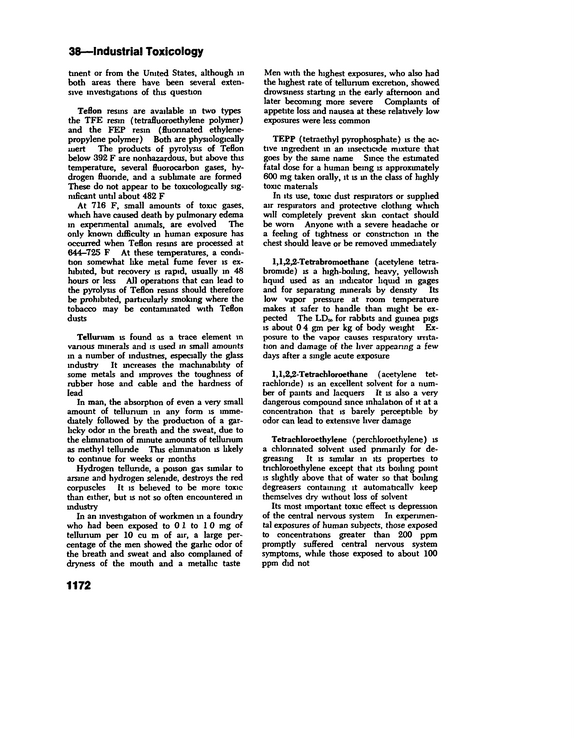
38--Industrial Toxicology tinent or from the United States, although in both areas there have been several exten sive investigations of this question Teflon resms are available m two types the TFE resm (tetrafluoroethylene polymer) and the FEP resm (fluonnated ethylenepropylene polymer) Both are physiologically inert The products of pyrolysis of Teflon below 392 F are nonhazardous, but above this temperature, several fluorocarbon gases, hy drogen fluonde, and a sublimate are formed These do not appear to be toxicologically sig nificant until about 482 F At 716 F, small amounts of toxic gases, which have caused death by pulmonary edema in experimental animals, are evolved The only known difficulty in human exposure has occurred when Teflon resins are processed at 644-725 F At these temperatures, a condi tion somewhat like metal fume fever is ex hibited, but recovery is rapid, usually m 48 hours or less All operations that can lead to the pyrolysis of Teflon resins should therefore be prohibited, particularly smoking where the tobacco may be contaminated with Teflon dusts Tellurium is found as a trace element in various minerals and is used m small amounts m a number of industries, especially the glass industry It increases the machinabihty of some metals and improves the toughness of rubber hose and cable and the hardness of lead In man, the absorption of even a very small amount of tellurium m any form is imme diately followed by the production of a gar licky odor in the breath and the sweat, due to the elimination of minute amounts of tellurium as methyl tellunde This elimination is likely to continue for weeks or months Hydrogen tellunde, a poison gas similar to arsine and hydrogen selenide, destroys the red corpuscles It is believed to be more toxic than either, but is not so often encountered in industry In an investigation of workmen in a foundry who had been exposed to 0 1 to 10 mg of tellunum per 10 cu m of air, a large per centage of the men showed the garlic odor of the breath and sweat and also complained of dryness of the mouth and a metallic taste 1172 Men with the highest exposures, who also had the highest rate of tellunum excretion, showed drowsiness starting in the early afternoon and later becoming more severe Complaints of appetite loss and nausea at these relatively low exposures were less common TEPP (tetraethyl pyrophosphate) is the ac tive ingredient in an insecticide mixture that goes by the same name Since the estimated fatal dose for a human being is approximately 600 mg taken orally, it is in the class of highly toxic matenals In its use, toxic dust respirators or supplied air respirators and protective clothing which will completely prevent skin contact should be worn Anyone with a severe headache or a feeling of tightness or constriction m the chest should leave or be removed immediately 1.1.2.2- Tetrabromoethane (acetylene tetrabromide) is a high-boiling, heavy, yellowish liquid used as an indicator liquid in gages and for separating minerals by density Its low vapor pressure at room temperature makes it safer to handle than might be ex pected The LDm for rabbits and guinea pigs is about 0 4 gm per kg of body weight Ex posure to the vapor causes respiratory irrita tion and damage of the liver appearing a few days after a single acute exposure 1.1.2.2- Tetrachloroethane (acetylene tet rachloride) is an excellent solvent for a num ber of paints and lacquers It is also a very dangerous compound since inhalation of it at a concentration that is barely perceptible by odor can lead to extensive liver damage Tetrachloroethylene (perchloroethylene) is a chlorinated solvent used primarily for de greasing It is Similar in its properties to trichloroethylene except that its boiling point is slightly above that of water so that boiling degreasers containing it automaticallv keep themselves dry without loss of solvent Its most important toxic effect is depression of the central nervous system In experimen tal exposures of human subjects, those exposed to concentrations greater than 200 ppm promptly suffered central nervous system symptoms, while those exposed to about 100 ppm did not
refid# ExOpEEzLL0x25a4xwQJ9DBrGN1 page