Refine
Estimated Years 1980-1989Clear
96 results foundRefine Search
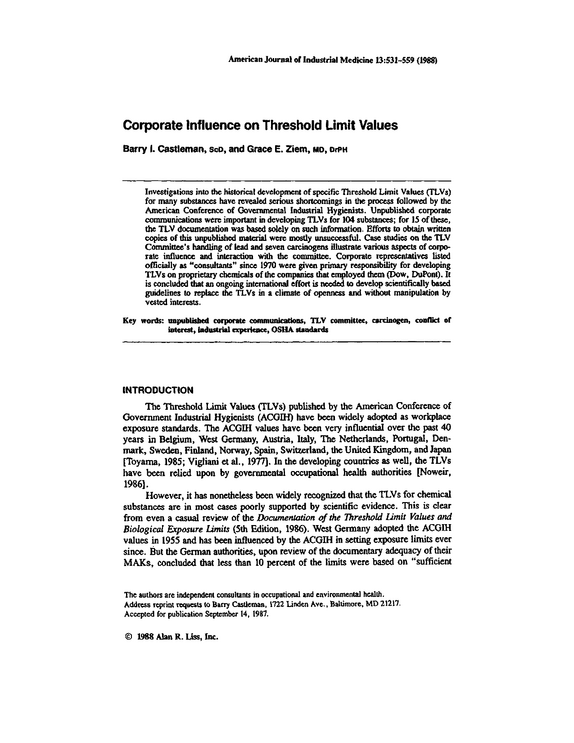
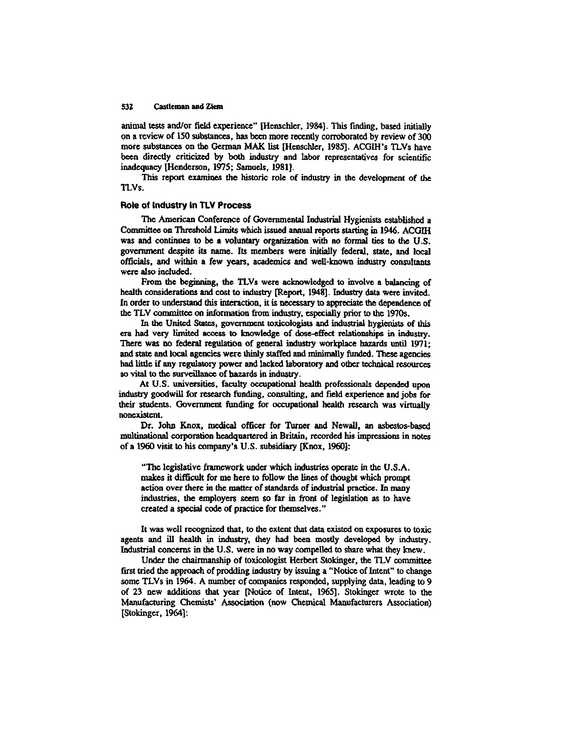
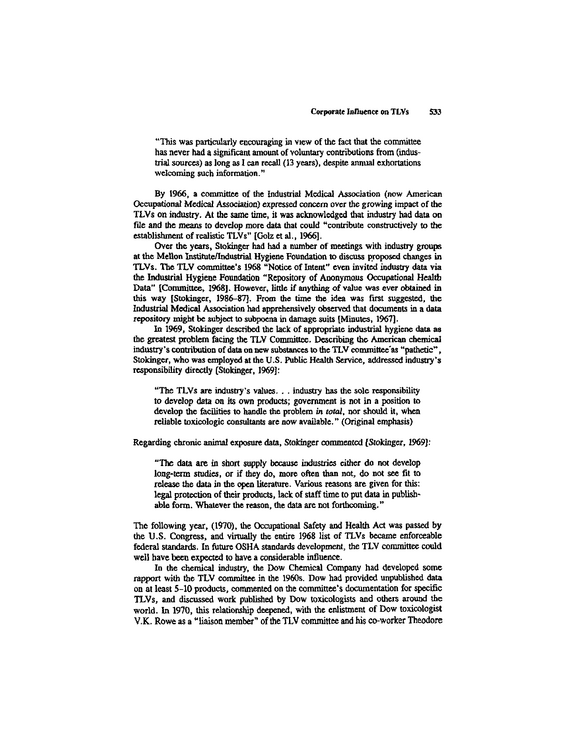
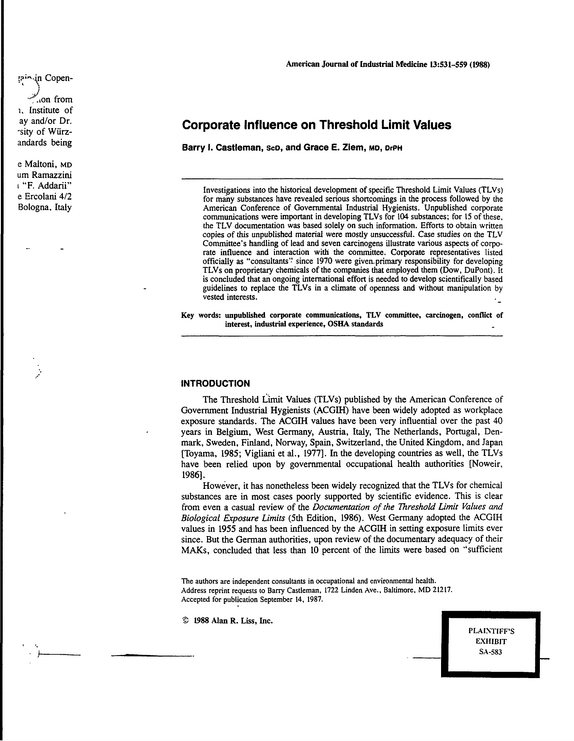
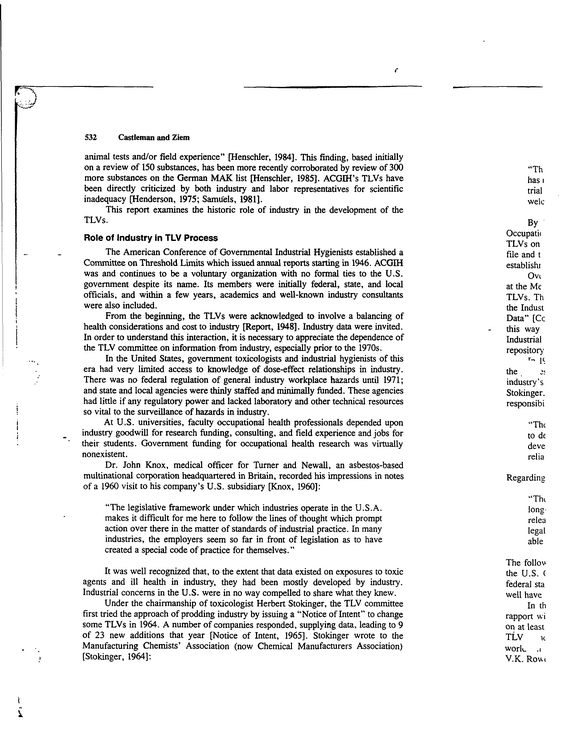
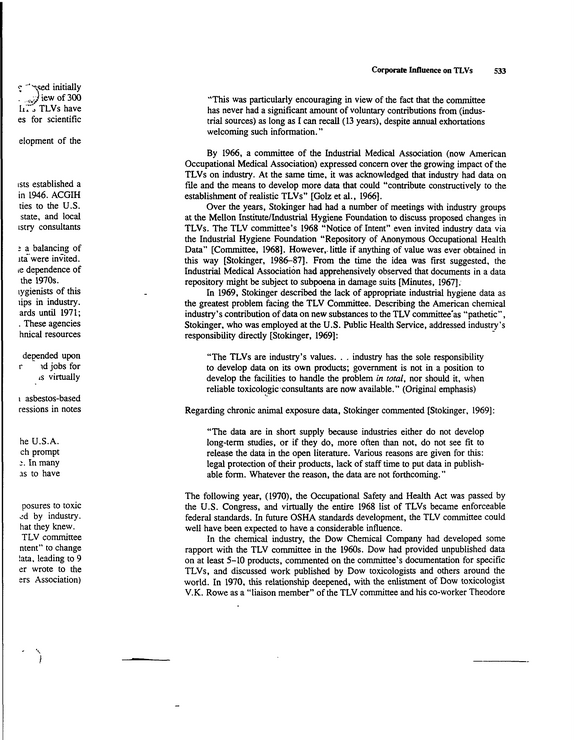
A number of companies responded supplying data leading to 9 of 23 new additions that year Notice of Intent 1965 Stokinger wrote to the Manufacturing Chemists Association now Chemical Manufacturers Association Stokinger 1964 Corporate Influence on TLVs 533 This was particularly encouraging in view of the fact that the committee has never had a significant amount of voluntary contributions from indus- trial sources as long as I can recall 13 years despite annual exhortations welcoming such information By 1966 a committee of the Industrial Medical Association now American Occupational Medical Association expressed concern over the growing impact of the TLVs on industry At the same time it was acknowledged that industry had data on file and the means to develop more data that could contribute constructively to the establishment of realistic TLVs Golz et al 1966 Over the years Stokinger had had a number of meetings with industry groups at the Mellon Industrial Hygiene Foundation to discuss proposed changes in TLVs The TLV committee's 1968 Notice of Intent even invited industry data via the Industrial Hygiene Foundation Repository of Anonymous Occupational Health Data Committee 1968 However little if anything of value was ever obtained in this way Stokinger 1986-87 From the time the idea was first suggested the Industrial Medical Association had apprehensively observed that documents in a data repository might be subject to subpoena in damage suits Minutes 1967 In 1969 Stokinger described the lack of appropriate industrial hygiene data as the greatest problem facing the TLV Committee Describing the American chemical industry's contribution of data on new substances to the TLV committee'as pathetic Stokinger who was employed at the U.S.
refid# zoQrR08NO6D62Knw8zR867mYa30 pages
A number of companies responded, supplying data, leading to 9 of 23 new additions that year [Notice of Intent, 1965].
refid# YGE3wnMy1oxZdy9Obp1xJdEvD29 pages
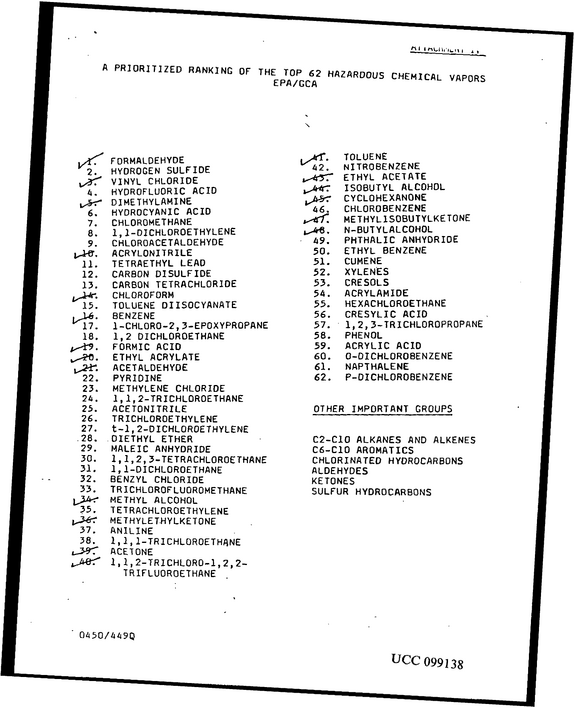
FORMALDEHYDE HYDROGEN SULFIDE VINYL CHLORIDE HYDROFLUORIC ACID DIMETHYLAMINE HYDROCYANIC ACID CHLOROMETHANE 1,I-DICHLOROETHYLENE CHLOROACETALDEHYDE ACRYLONITRILE TETRAETHYL LEAD CARBON DISULFIDE CARBON TETRACHLORIDE CHLOROFORM TOLUENE DIISOCYANATE BENZENE 1-CHL0R0-2,3-EPOXYPROPANE 1,2 DICHLOROETHANE FORMIC ACID ETHYL ACRYLATE ACETALDEHYDE PYRIDINE METHYLENE CHLORIDE 1,1,2-TRICHL0R0ETHANE ACETONITRILE TRICHLOROETHYLENE t-1,2-DICHL0R0ETHYLENE OIETHYL ETHER MALEIC ANHYDRIDE 1,1,2,3-TETRACHL0R0ETHANE 1,1-DICHLOROETHANE BENZYL CHLORIDE TRICHLOROFLUOROMETHANE METHYL ALCOHOL TETRACHLOROETHYLENE METHYLETHYLKETONE ANILINE 1,1,1-TRICHLORQETHANE ACETONE 1,1,2-TR1CHL0R0-1,2,2TRIFLUOROETHANE T. ^42. ^4Tr 46. 49. 50. 51. 52. 53. 54. 55. 56. 57. 58. 59. 60. 61. 62.
refid# 33Xg6DJX5yp8NzawB5QxEkb06 pages
There is an interest in establishing some sort of QC check for locations which are performing tetraethyl lead analyses on site for safe tank entry.
refid# jmZQgL074x9NN0VBNbpjwejq98 pages
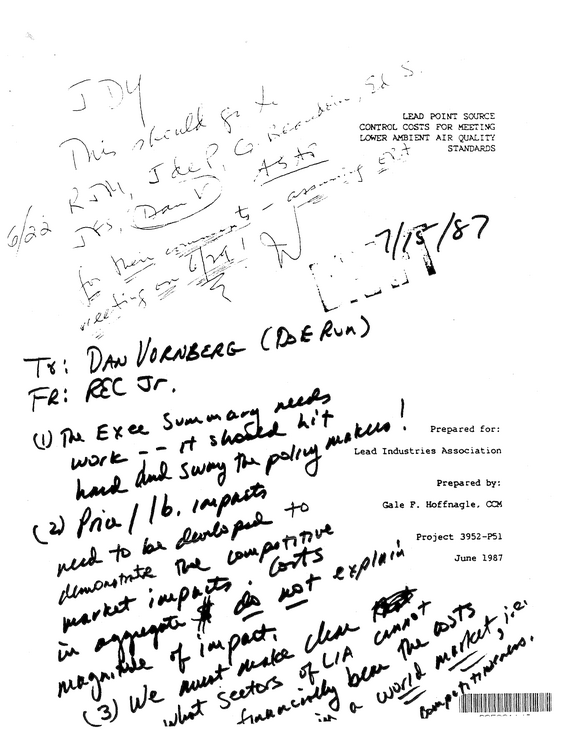
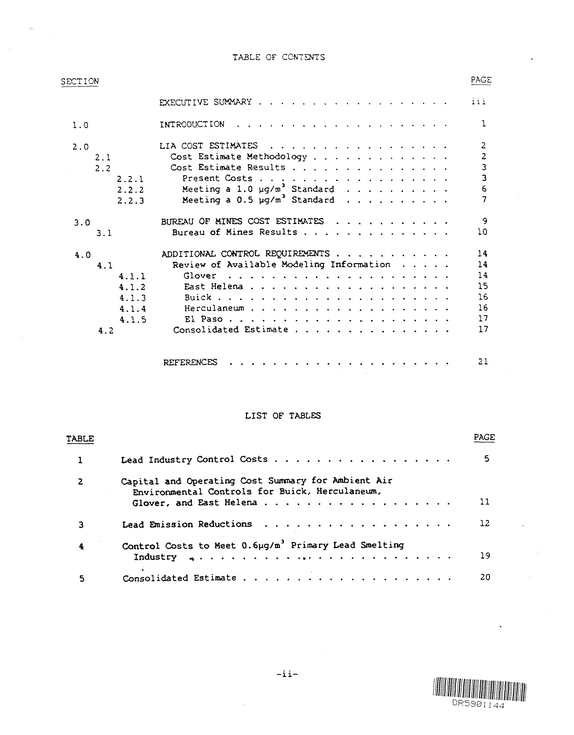
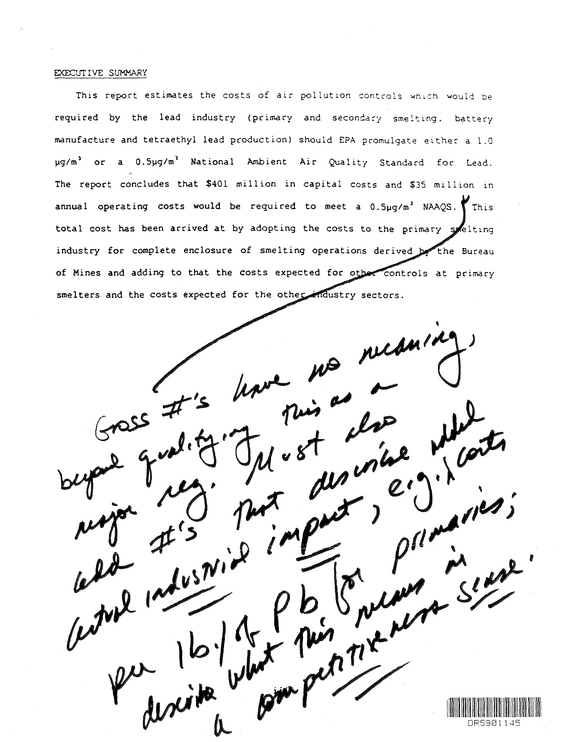
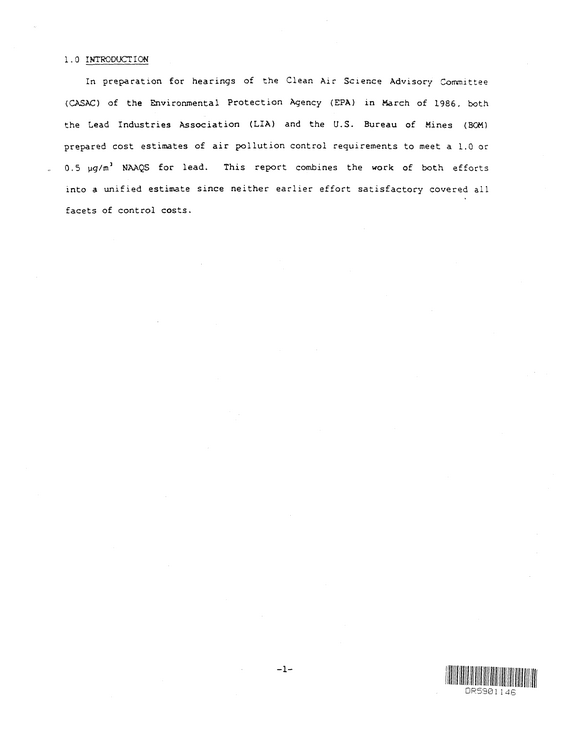
PAGE 5 11 12 19 20 -11- EXECUTIVE SUMMARY This report estimates the costs of air pollution controls wfuch would be required by the lead industry (primary and secondary smelting, battery manufacture and tetraethyl lead production) should EPA promulgate either a 1.0 pg/m1 or a O.Spg/m1 National Ambient Air Quality Standard for Lead.
refid# Znq823Zoy7KNXXvZvw6bEMxzY29 pages
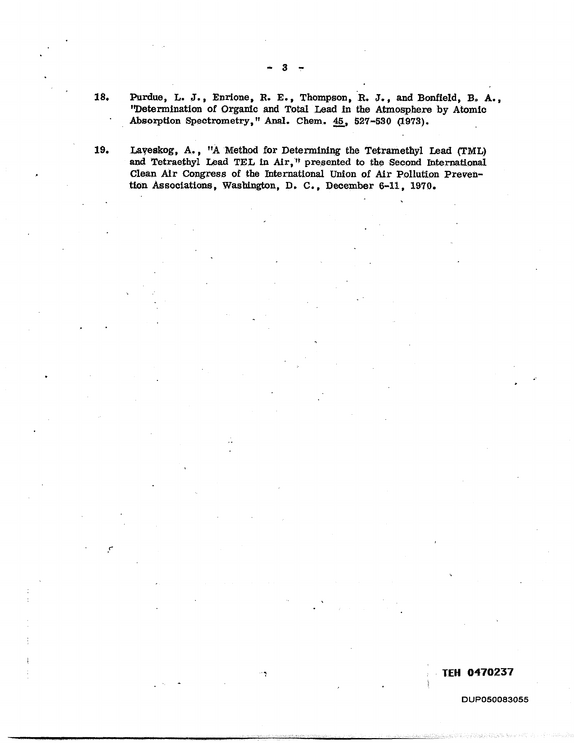
Layeskog, A., "A Method for Determining the Tetramethyl Lead (TML) and Tetraethyl Lead TEL in Air,'' presented to the Second International Clean Air Congress of the International Union of Air Pollution Preven tion Associations, Washington, D, C., December 6-11, 1970. r TEH 0470237 DUP050083055 -4- Blood Lead Analysis 1.
refid# kakBaxzq3ODw81BQqorkY4zMB12 pages
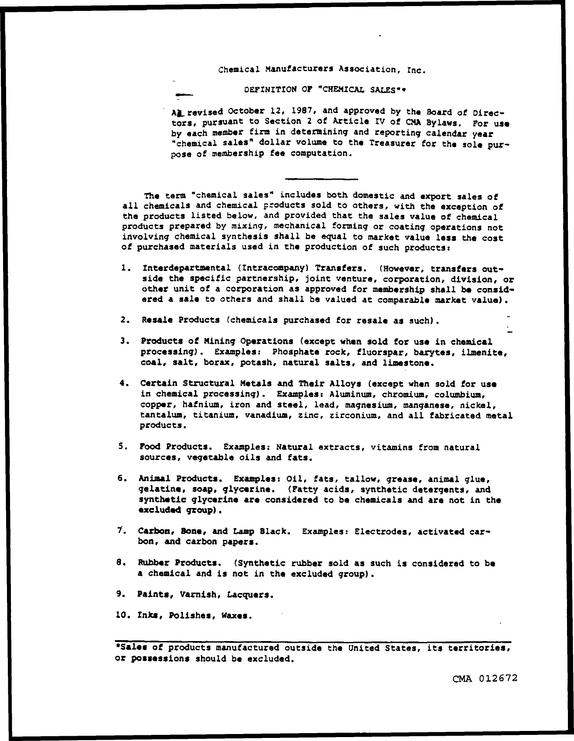
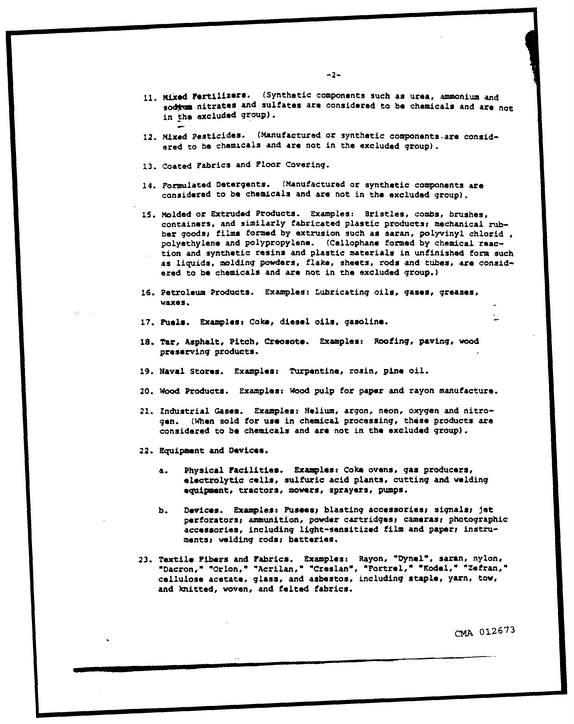
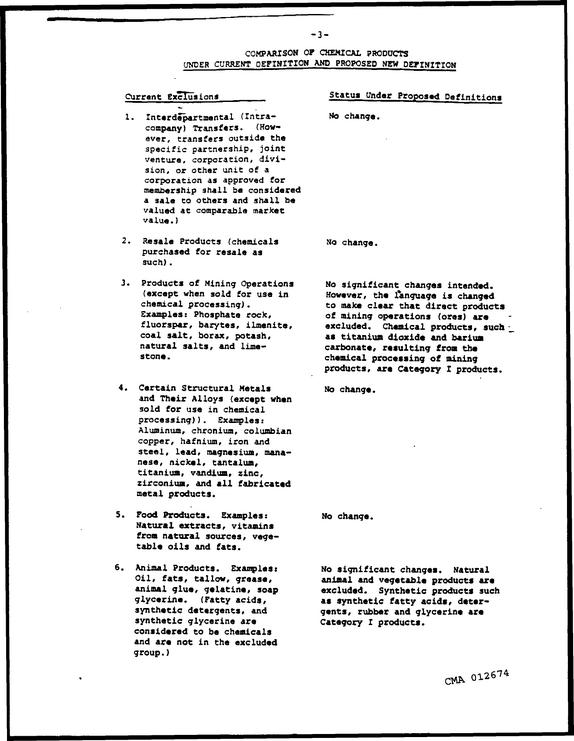
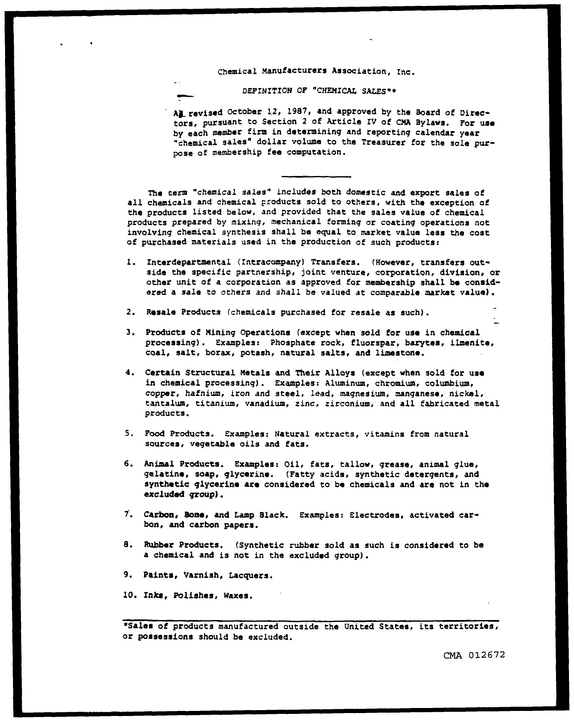
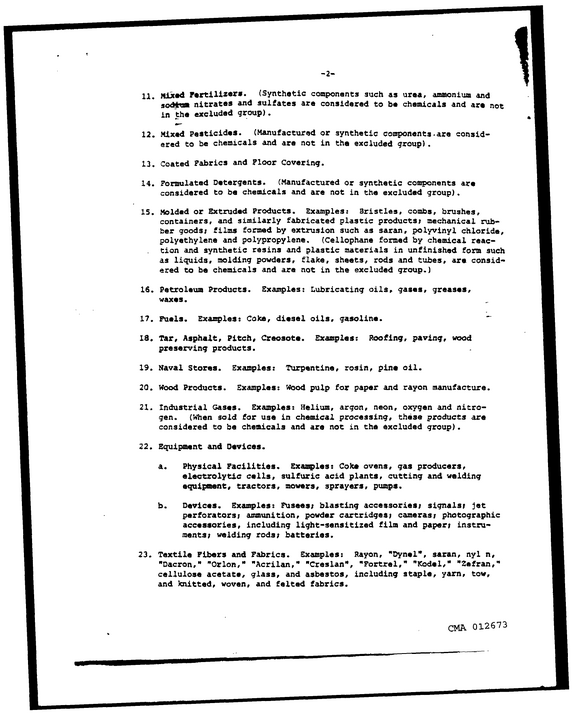
Examples: Aluminum, chromium, columbium, copper, hafnium, iron and steel, lead, magnesium, manganese, nickel, tantalum, titanium, vanadium, zinc, zirconium, and all fabricated metal products. 5.
refid# ga7zkRn1Qd69jnEYmVD2jeKGG6 pages
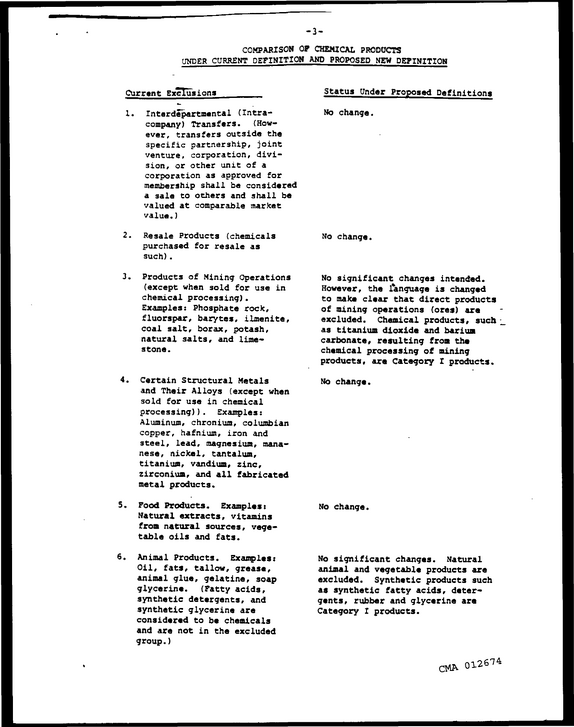
Examples: Aluminum, chronium, Columbian copper, hafnium, iron and steel, lead, magnesium, mananese, nickel, tantalum, titanium, vandium, zinc, zirconium, and all fabricated metal products.
refid# xzw7JjXEr4O0GqqQne0Z1ko906 pages
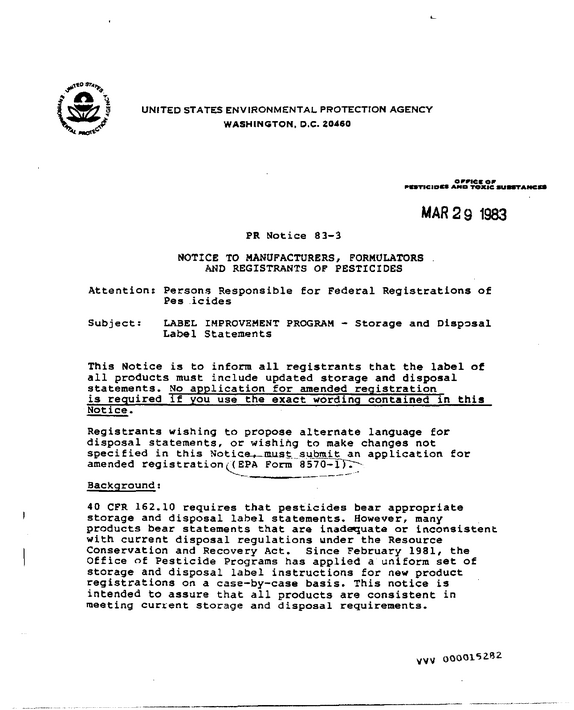
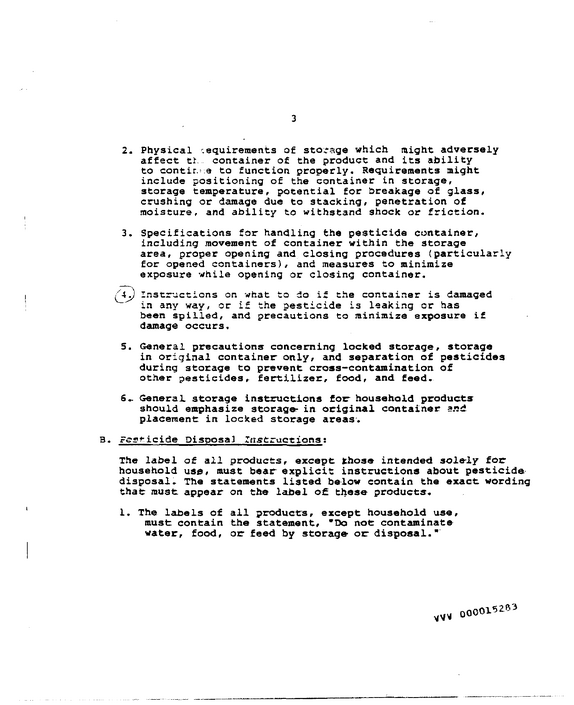
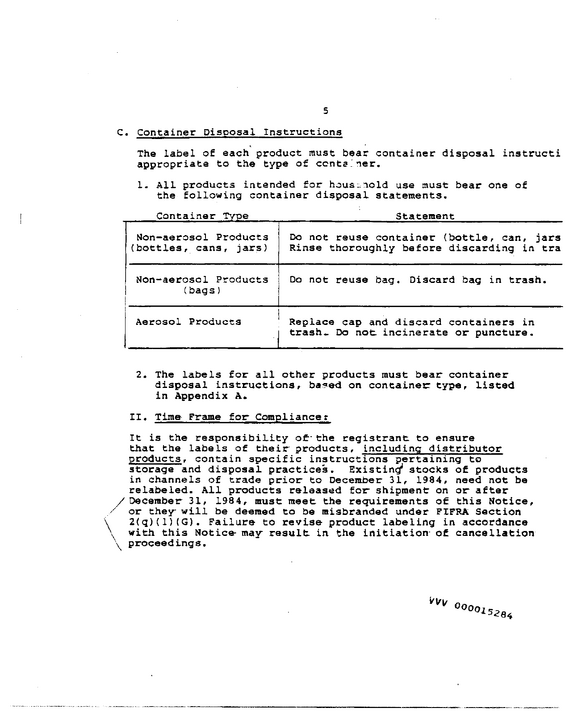
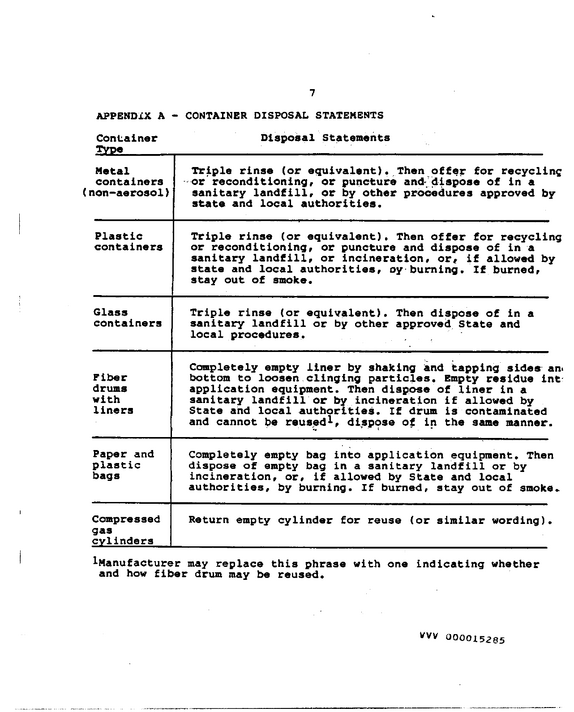
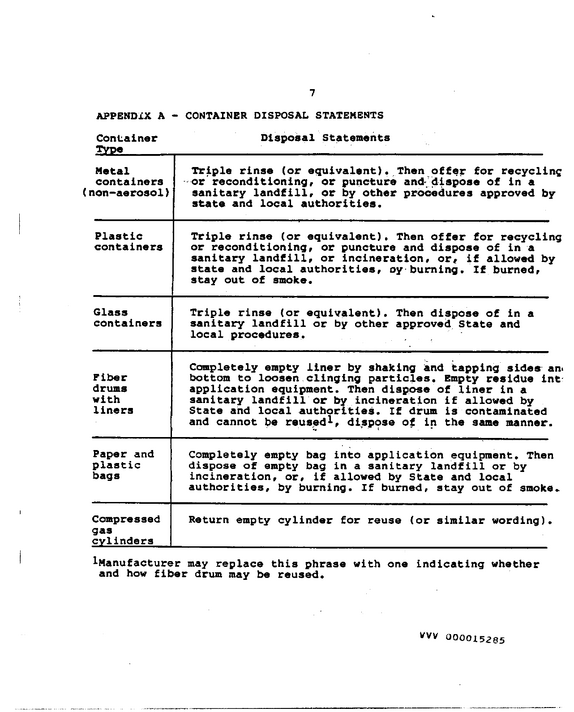
^-Manufacturer may replace this phrase with one indicating whether and how fiber drum may be reused* WV OOQ015285 9 "Acutely Hazardous" Commercial Pesticides (RCRA "E" List) Active Incredients continued: Phenylroercuric acetate (PKA) Phorate Potassium cyanide Prcpargyl alcohol Sodium azide Sodium cyanide Sodium fluoroacetate Strychnine and salts C,0#C,C-Tetraethy1 dithiopyrophosphate Tetraethyl pyrophosphate Thallium sulfate Thiofanox Toxaphene Warfarin Zinc phosphide (sulfotepp) There are currently no inert ingredients for commercial pesticides on the "Acutely Hazardous" List (RCRA "" List).
refid# kDe2XYG4o2XNg3Derr3jkq0wy9 pages
^-Manufacturer may replace this phrase with one indicating whether and how fiber drum may be reused* WV OOQ015285 9 "Acutely Hazardous" Commercial Pesticides (RCRA "E" List) Active Incredients continued: Phenylroercuric acetate (PKA) Phorate Potassium cyanide Prcpargyl alcohol Sodium azide Sodium cyanide Sodium fluoroacetate Strychnine and salts C,0#C,C-Tetraethy1 dithiopyrophosphate Tetraethyl pyrophosphate Thallium sulfate Thiofanox Toxaphene Warfarin Zinc phosphide (sulfotepp) There are currently no inert ingredients for commercial pesticides on the "Acutely Hazardous" List (RCRA "" List).
refid# J3Ga1nwm0GgpMM5G5Qav4ngdB9 pages
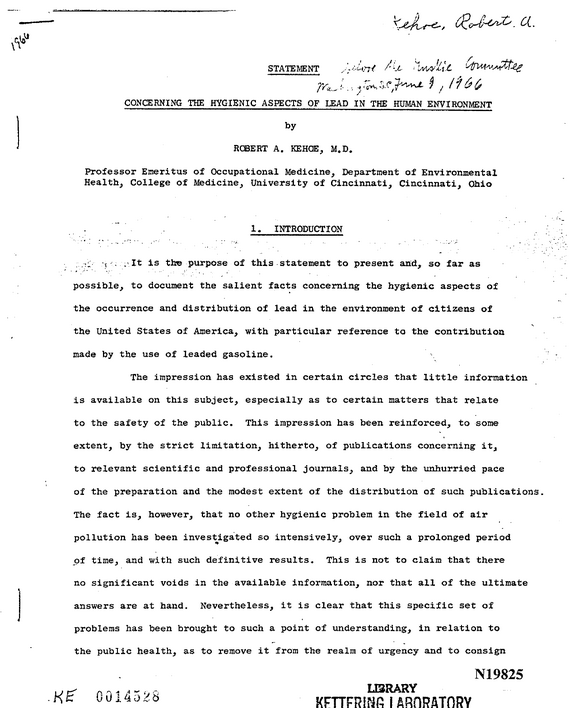
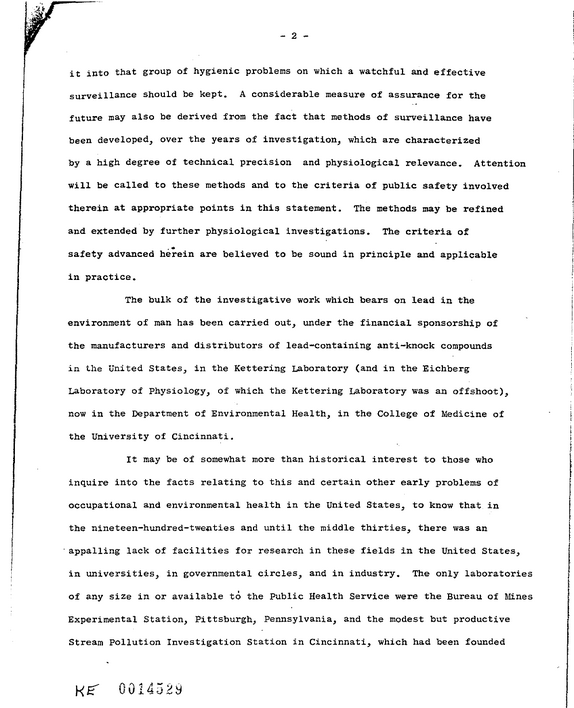
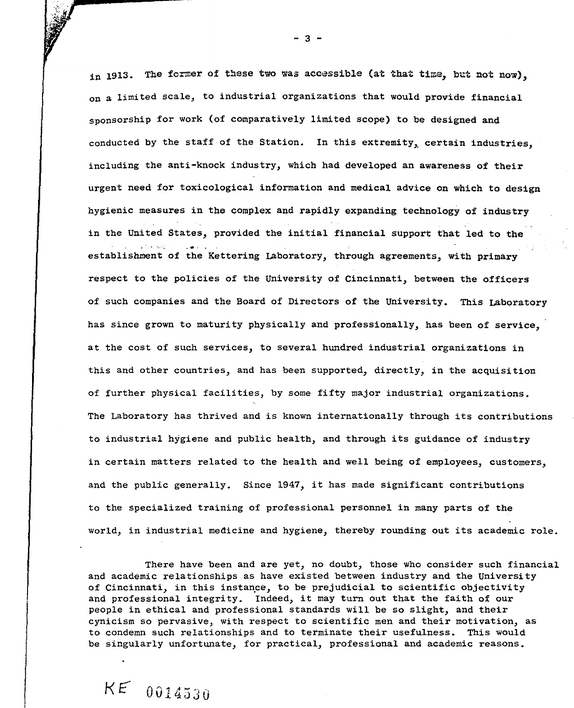
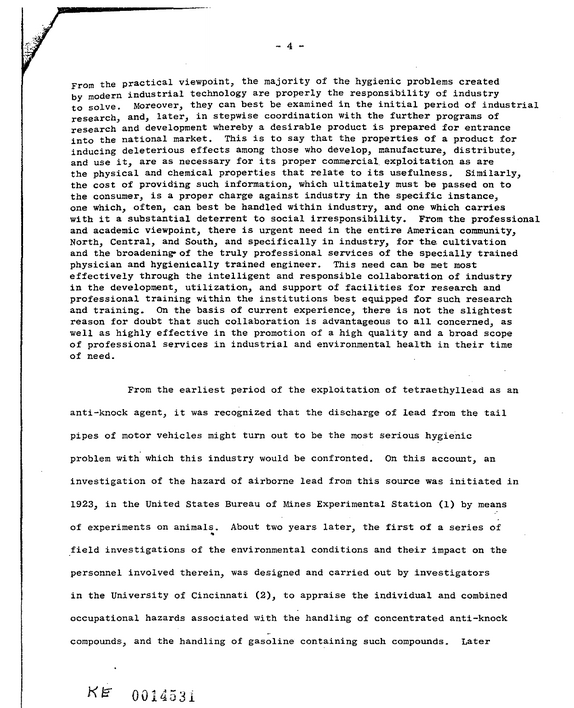
, 7 > v , 7 // 0> CONCERNING THE HYGIENIC ASPECTS OF LEAD IN THE HUMAN ENVIRONMENT by ROBERT A.
refid# p02pYGan43Gn6jNmQodd1kDd32 pages
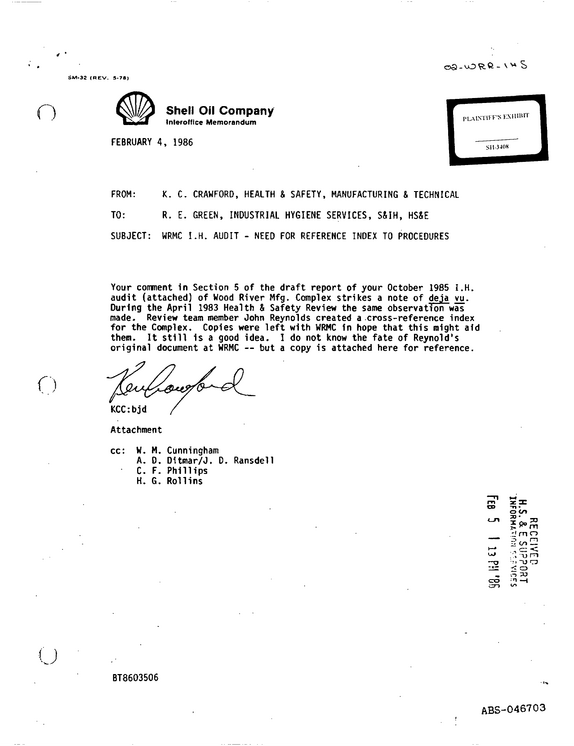
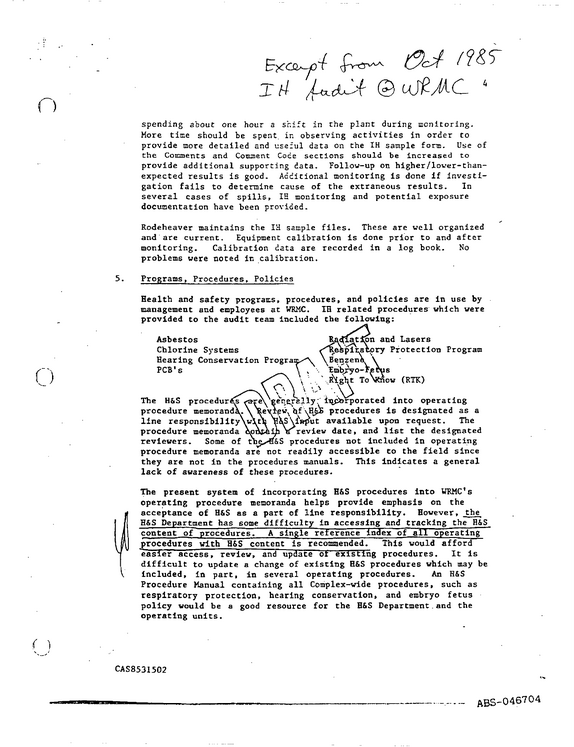
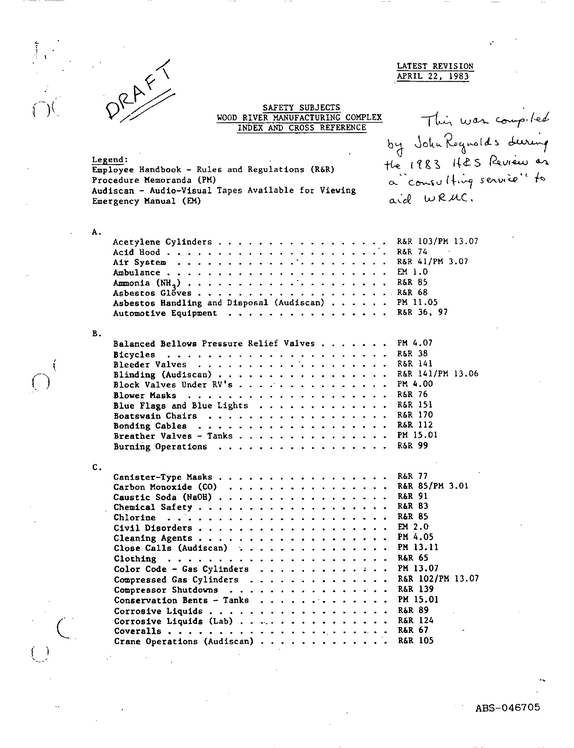
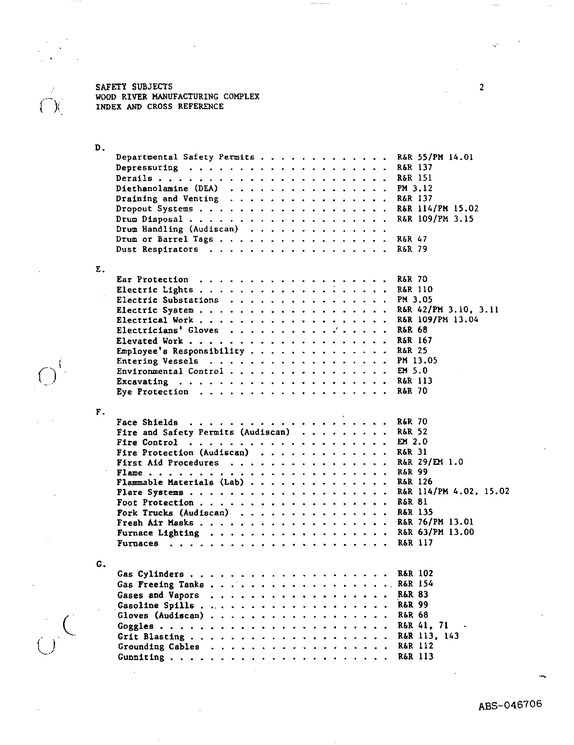
SM*32 (REV. 5-7#) Shell Oil Company Inlerolflce Memorandum FEBRUARY 4, 1986 V v* S> PLAINTIFF'S KXIimll SI I-340K FROM: K.
refid# xdaea5GV4ba0E3mm38n3Vzko18 pages
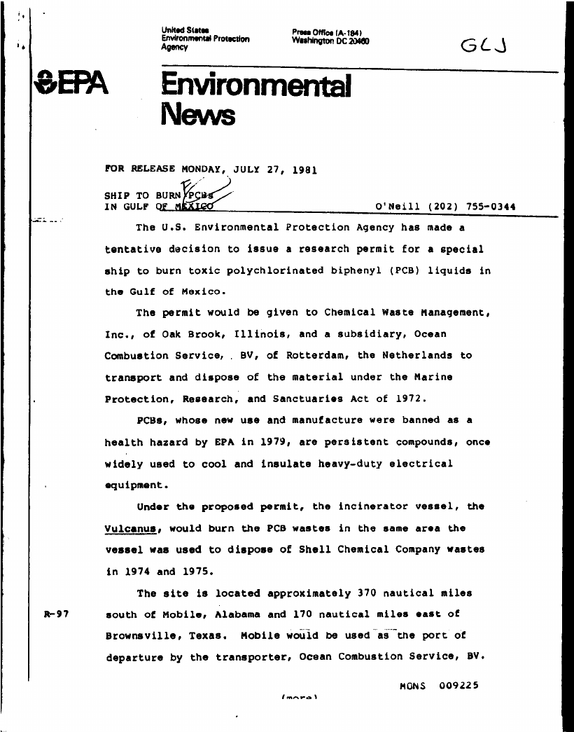
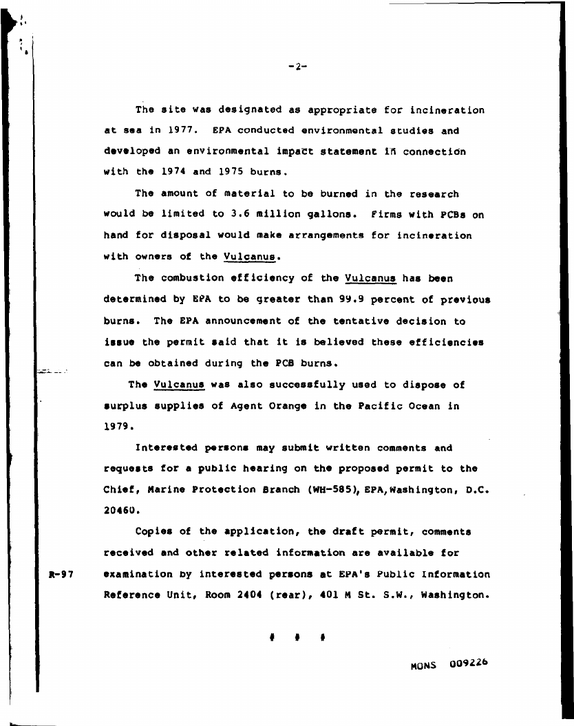
>ERA United StatM Environmental Protection Agency Preee Office IA-184) Washington DC 20480 Environmental News R-97 FOR RELEASE MONDAY, JULY 27, 1981 SHIP TO IN GULF O'Neill (202) 755-0344 The U.S.
refid# NEy05NEexzZk65qG24XNJz10V27 pages
Chisolm is expected to test ify about lead.
refid# 0gOYBGojmbLRRYEkvqm1yNYgx82 pages
Victery (1982) found lead associated with a significant elevation of blood pressure in rats with blood lead levels of 41 ug/dl.
refid# v1n5nbdkpD01aLgQ8bgRMyaD644 pages