Refine
Estimated Years 1960-1969Clear
31,974 results foundRefine Search
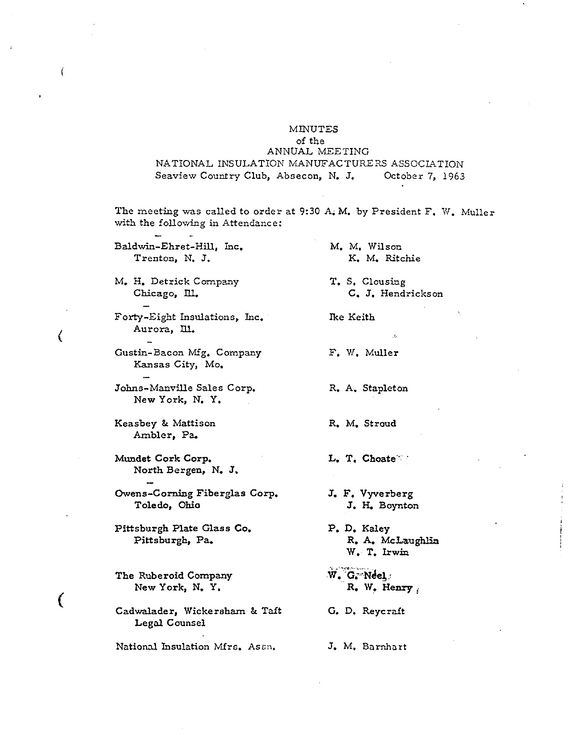
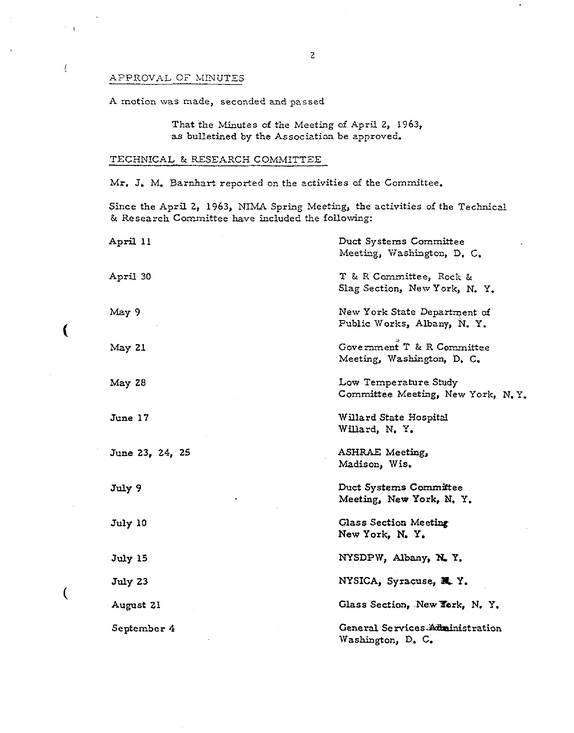
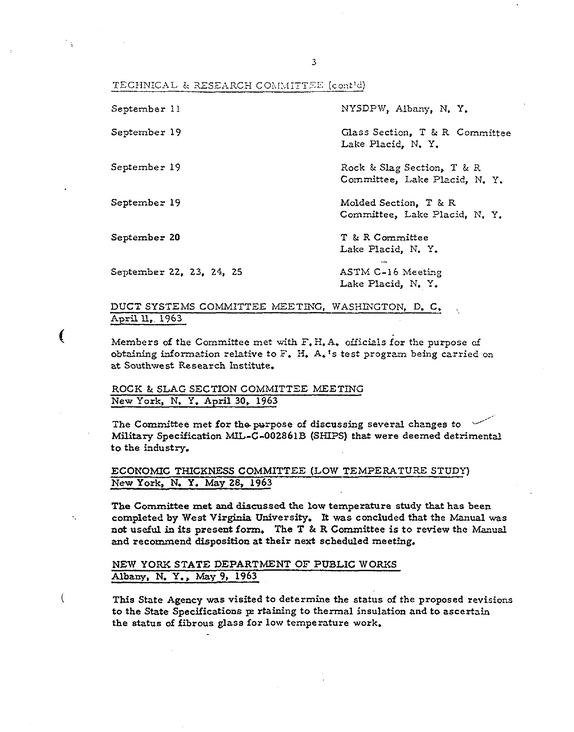
MINUTES OF ANNUAL, MEETING OF THE NATIONAL INSULATION MANUFACTURERS ASSOCIATION Absecon, N J, October 7, 1963 ( C MINUTES of the ANNUAL MEETING NATIONAL INSULATION MANUFACTURERS ASSOCIATION Seaview Country Club, Absecon, N.
refid# e5y8L707R87mvvmbONB0xyJYM11 pages
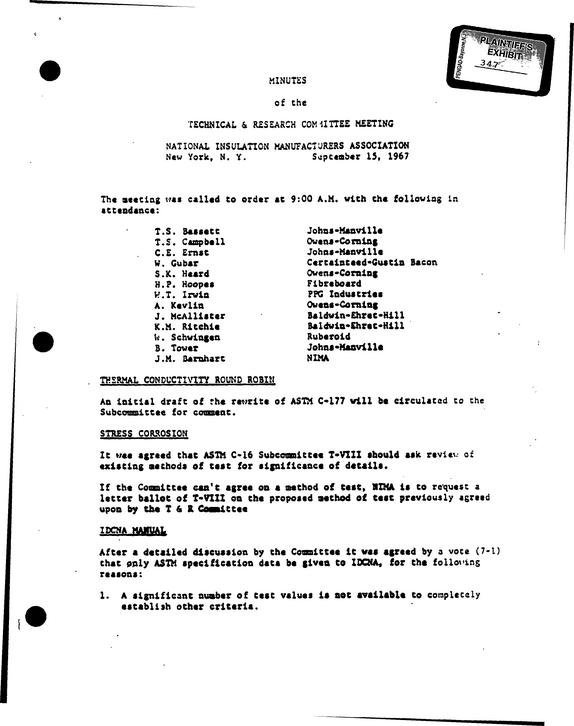
MINUTES of Che TECHNICAL & RESEARCH COMMITTEE MEETING NATIONAL INSULATION MANUFACTURERS ASSOCIATION New York, N.
refid# zd3wnZGLXM02k6kepe1myyNYz2 pages
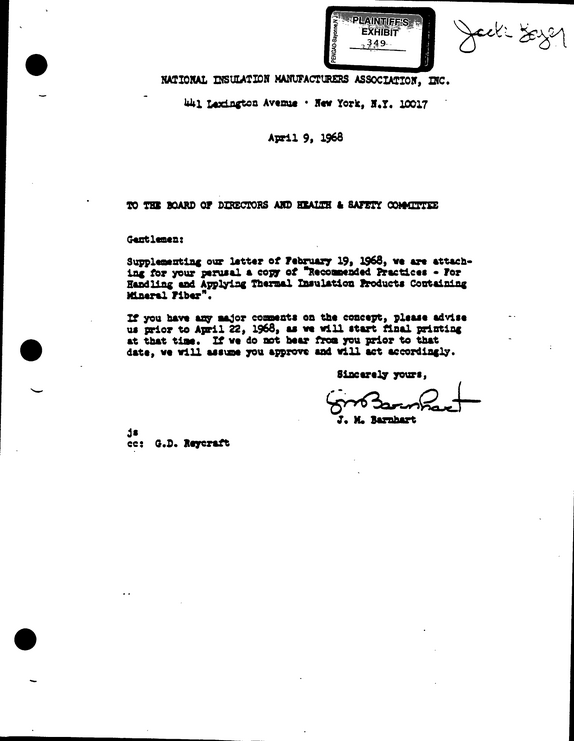
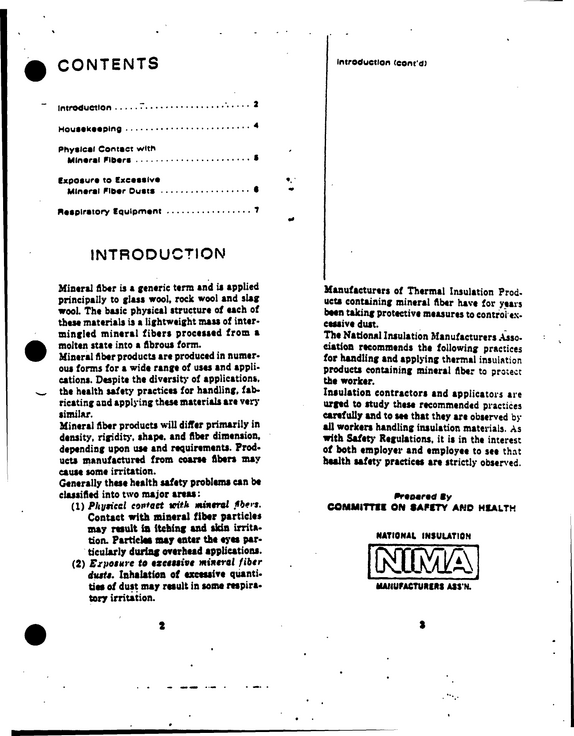
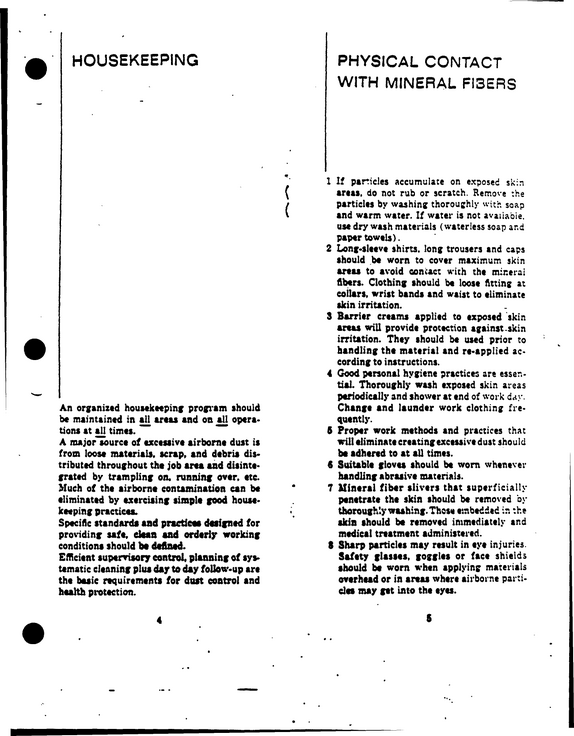
NATIONAL INSULATION MANUFACTURERS ASSOCIATION, INC U4l Lexington Avenue Nev York, N.Y. 10017 April 9, 1968 TO TBS BOARD OF DIRECTORS AND HSAX2B k SAFETY C0M4I7T5E Gentlemen: Supplementing our letter of February 19, 1968, ve ere Attach* lac for your perusal a copy of "Racoamendad Practices - For and Applying Thermal Insulation Products Containing Mineral Fiber".
refid# 3N21p9ZR5J6JVRyr3bymwpxN65 pages
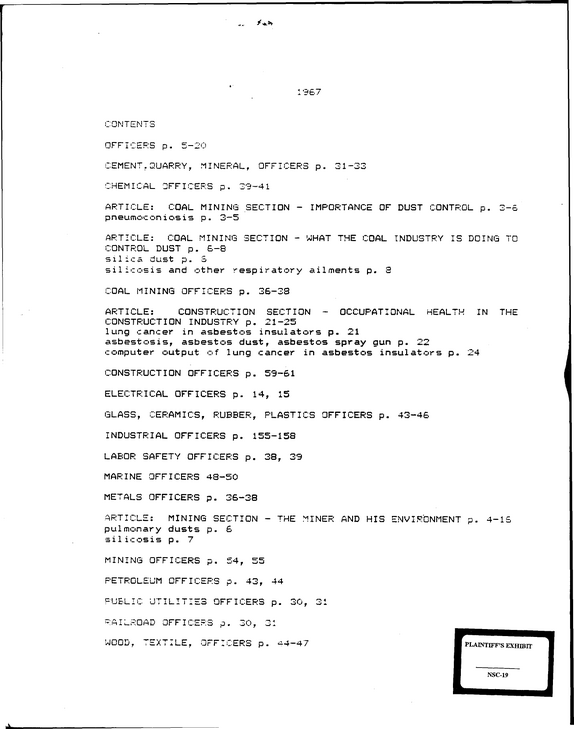
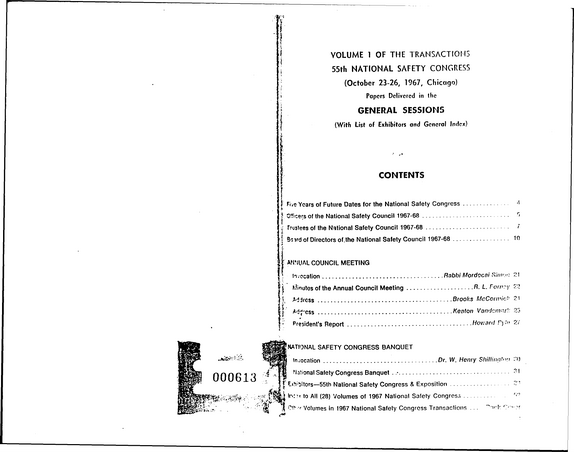
4 1967 CONTENTS OFFICERS p. 5--20 CEMENT.QUARRY, MINERAL, OFFICERS p. 31-33 CHEMICAL OFFICERS p. 39-41 ARTICLE: COAL MINING SECTION - IMPORTANCE OF DUST CONTROL p. 3-6 pneumoconiosis p. 3-5 ARTICLE: COAL MINING SECTION - WHAT THE COAL INDUSTRY CONTROL DUST p. 6-8 si1ica dust p.

refid# gbd2awQXnbzwbyj659y2grX2353 pages
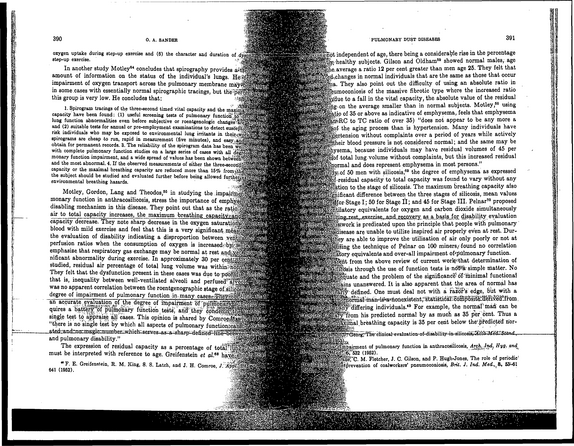
390 O.
refid# 8OQ3O8GNd1gE9qRMj75VnnQ8e1 page
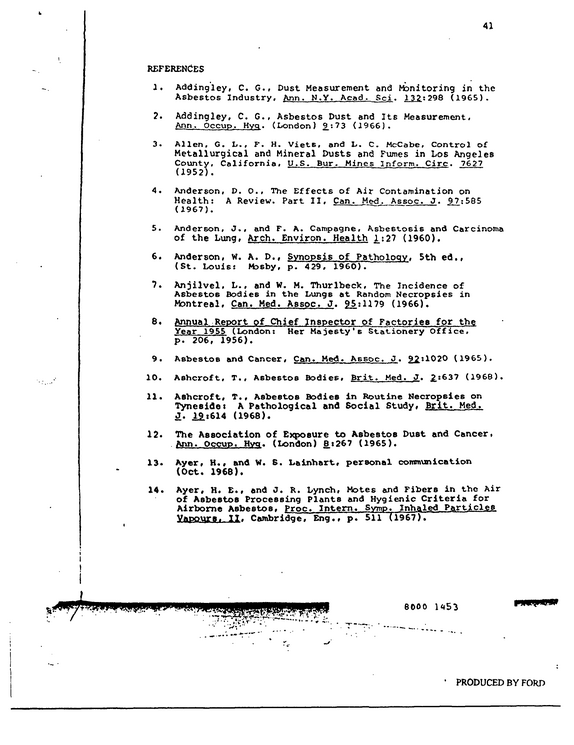
41 REFERENCES 1.
refid# LKNweyp3YRDgqqD1ewKzaDNyb1 page
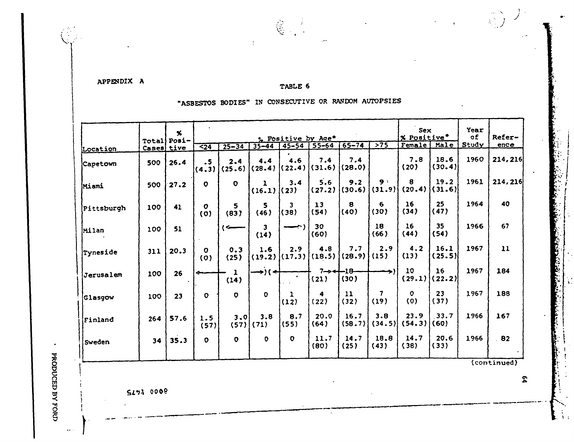
) APPENDIX A TABLE 6 "ASBESTOS BODIES" IN CONSECUTIVE OR RANDOM AUTOPSIES Capetown Miami Pittsburgh Milan Tyneside Jerusalem Glasgow Finland Sweden % Total Poai-- Cases tive <24 Positive bv Aqe* 25-34 35-44 45-54 55-64 65-74 500 26.4 .5 2.4 4.4 4.6 7.4 7.4 (4.3) (25.6) (28.4) (22.4) (31.6) (28.0) >75 Sea Year X Posit.ive* of Refer- Female Male Study ence 7.8 18.6 1960 214,216 (20) (30.4) 500 27.2 0 0 1 3.4 5.6 9.2 9 8 19.2 1961 214,216 (16.1) (23) (27.2) (30.6) (31.9) (20.4) (31.6) 100 41 100 51 0 5 5 3 13 (0) (83) (46) (38) (54) <------- 3 (14) ------- r*) 30 (60) 8 (40) 6 (30) 18 (66) 16 (34) 16 (44) 25 (47) 35 (54) 1964 1966 40 67 311 20.3 0 (0) 0.3 1.6 2.9 4.8 7.7 2.9 4.2 16.1 1967 (25) (19.2) (17.3) (18.5) (28.9) (15) (13) (25.5) 11 100 26 --*1 ( (14) 7 Tr .90 ' (21) (30) 10 16 1967 (29.1) (22.2) 184 100 23 0 0 01 4 11 7 0 23 1967 188 (12) (22) (32) (19) (0) (37) 264 57.6 1.5 (57) 3.0 3.8 8.7 20.0 16.7 3.8 23.9 33.7 (57) (71) (55) (64) (58.7) (34.5) (54.3) (60) 1966 167 34 35.3 0 0 0 0 11.7 14.7 18.8 14.7 20.6 1966 82 (80) (25) (43) (38) (33) (continued) i l( -I $i*j\ oooe . cf* PRODUCED BY FORD
refid# XRVw3BvJmXXrEQoD8J3XGqX9y1 page
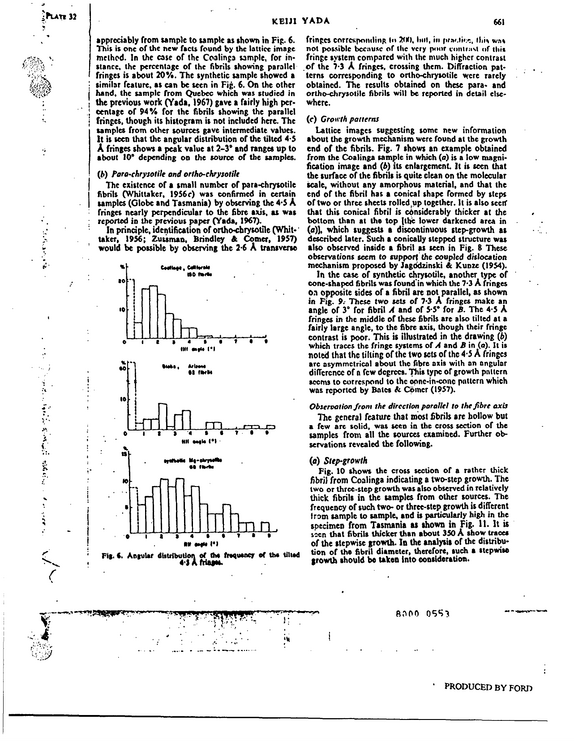
KE1J1 YADA 661 sppreciably from umplc to sample as shown in Ftp. 6. fringes corresponding In 200, but, in praoicc, iliii w.i% This is one of the new facts found by the lattice image not possible because of the very poor tonlnisl of this melhod.
refid# KRgB6ywM35NQZ5vokQzeq94Lo1 page
J.
refid# Lpqr346Er8061b5M6zKxEwMRX1 page
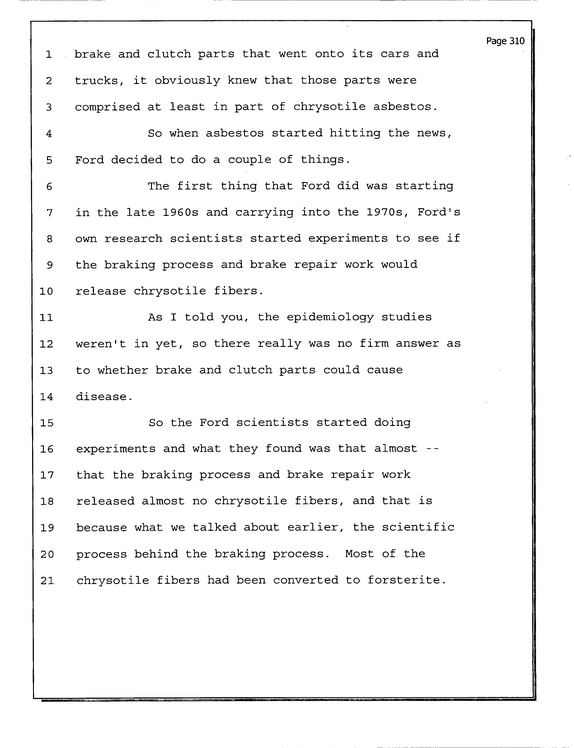
1 brake and clutch parts that went onto its cars and 2 trucks, it obviously knew that those parts were 3 comprised at least in part of chrysotile asbestos. 4 So when asbestos started hitting the news, 5 Ford decided to do a couple of things. 6 The first thing that Ford did was starting 7 in the late 1960s and carrying into the 1970s, Ford's 8 own research scientists started experiments to see if 9 the braking process and brake repair work would 10 release chrysotile fibers. 11 As I told you, the epidemiology studies 12 weren't in yet, so there really was no firm answer as 13 to whether brake and clutch parts could cause 14 disease. 15 So the Ford scientists started doing 16 experiments and what they found was that almost -17 that the braking process and brake repair work 18 released almost no chrysotile fibers, and that is 19 because what we talked about earlier, the scientific 20 process behind the braking process.
refid# XRd1EDod98MpnNNLznOKE017G1 page
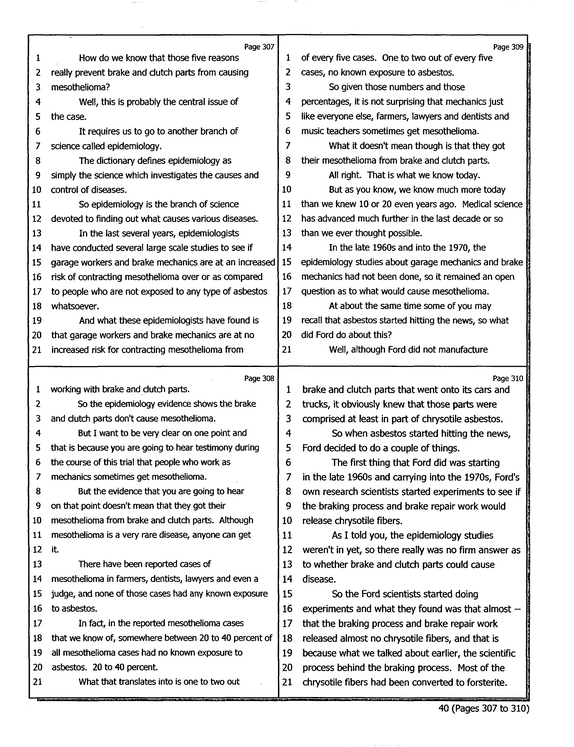
Page 307 Page 309 1 How do we know that those five reasons 1 of every five cases.
refid# jg4mNvmwrKy79QDXXZnBMMRM51 page
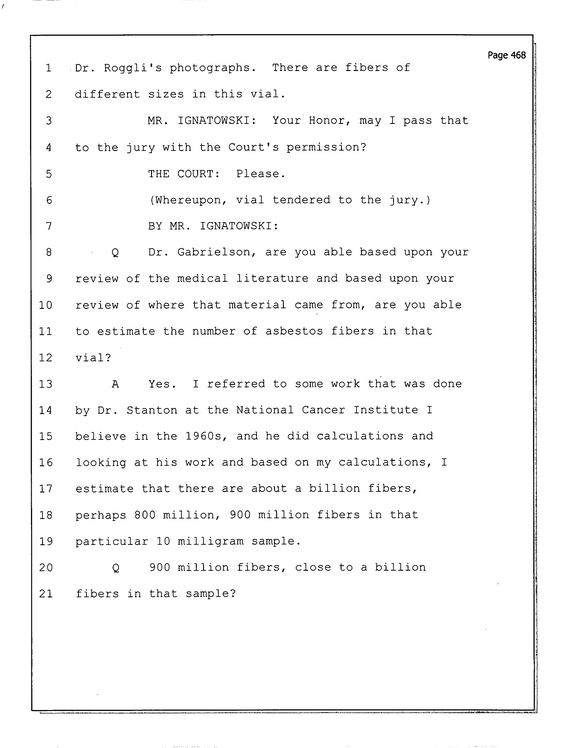
1 Dr.
refid# ja9MLJx47bakoNJa0ZYwe50N1 page
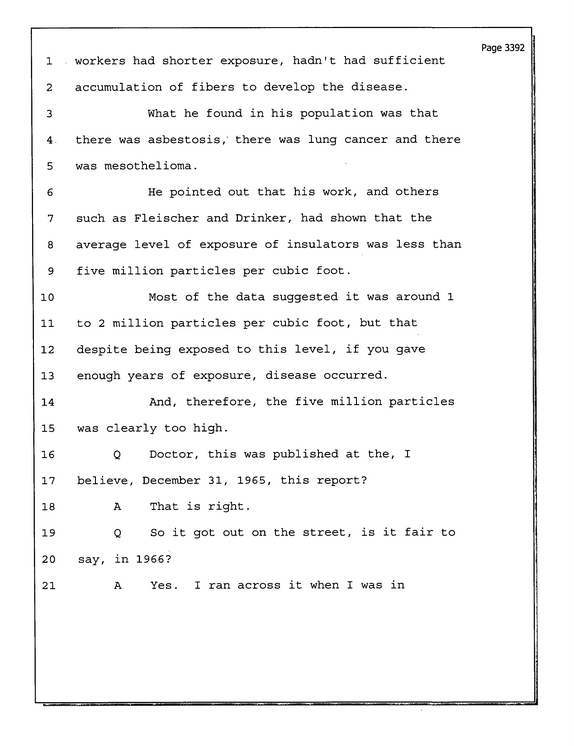
1 workers had shorter exposure, hadn't had sufficient Page 3392 2 accumulation of fibers to develop the disease. 3 What he found in his population was that 4. there was asbestosis,' there was lung cancer and there 5 was mesothelioma. 6 He pointed out that his work, and others 7 such as Fleischer and Drinker, had shown that the 8 average level of exposure of insulators was less than 9 five million particles per cubic foot. 10 Most of the data suggested it was around 1 11 to 2 million particles per cubic foot, but that 12 despite being exposed to this level, if you gave 13 enough years of exposure, disease occurred. 14 And, therefore, the five million particles 15 was clearly too high. 16 Q Doctor, this was published at the, I 17 believe, December 31, 1965, this report?
refid# qknNMoXpzy1rJwx87znpoymbG1 page
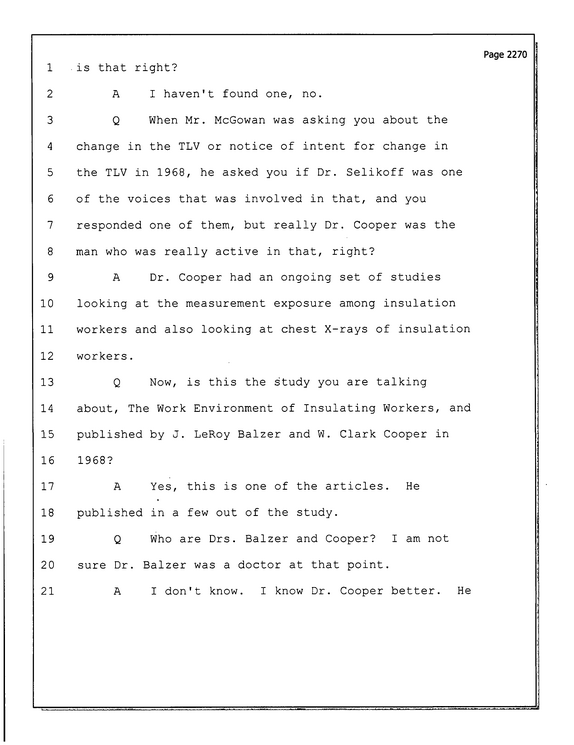
1 is that right?
refid# jgNJwN5BZda7MqRMDkQKYEoQp1 page
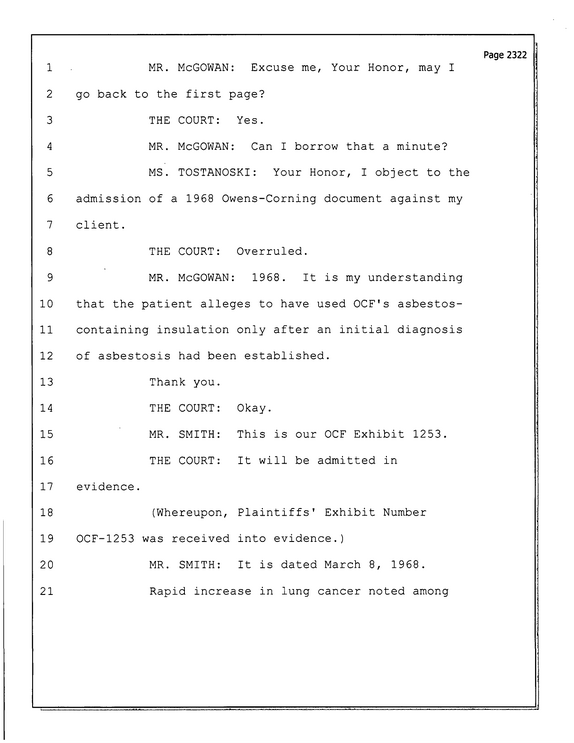
Page 2322 i 1 MR.
refid# qkZN4y4GLkNYr3XgEokQKoBxM1 page