Refine
Estimated Years 1960-1969Clear
7,161 results foundRefine Search
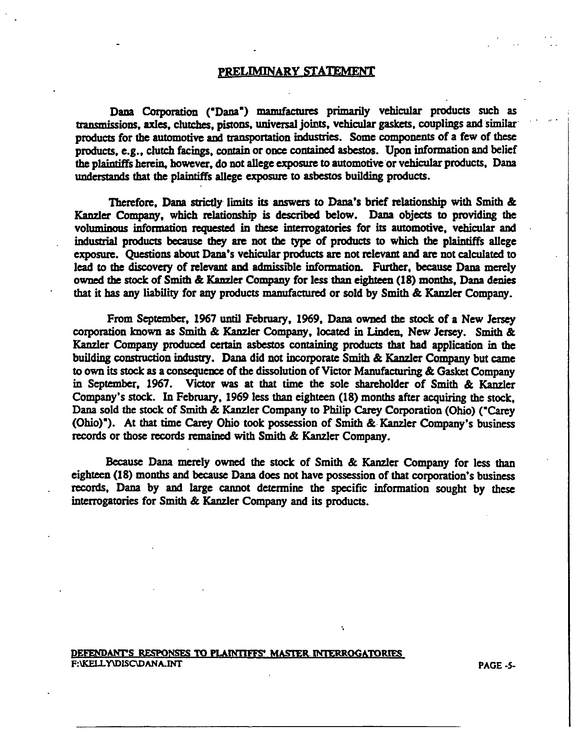
Questions about Dana's vehicular products are not relevant and are not calculated to lead to die discovery of relevant and admissible information.
refid# v6EDBRJqogLqm8EL3aejE7eLq1 page
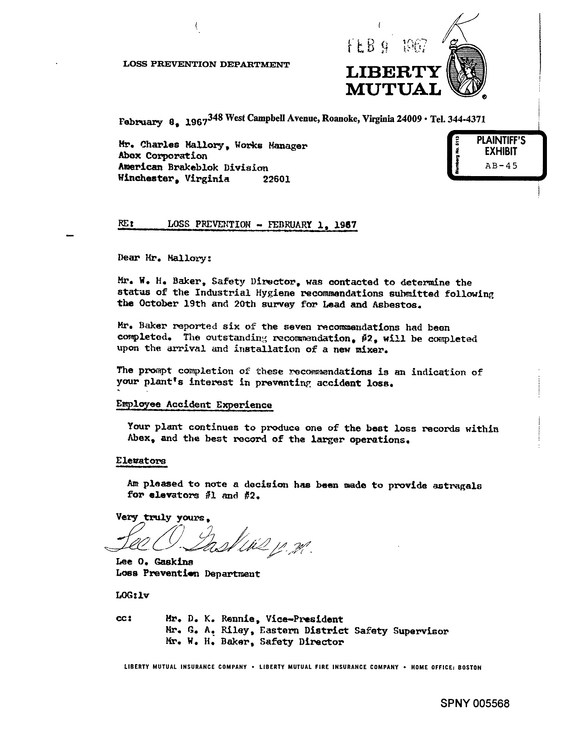
Baker, Safety Director, was contacted to determine the status of the Industrial Hygiene recommendations submitted following the October 19th and 20th survey for Lead and Asbestos.

refid# gbaqD6y34wjXo3jo7aBxLaZkV4 pages
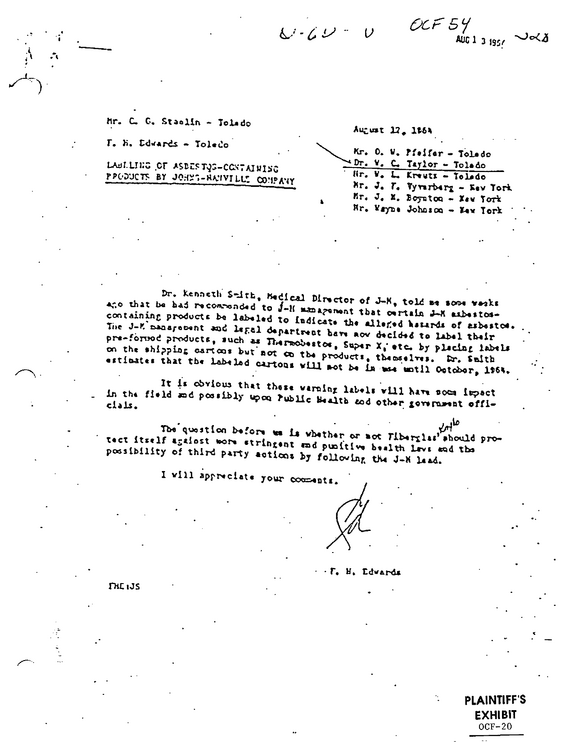
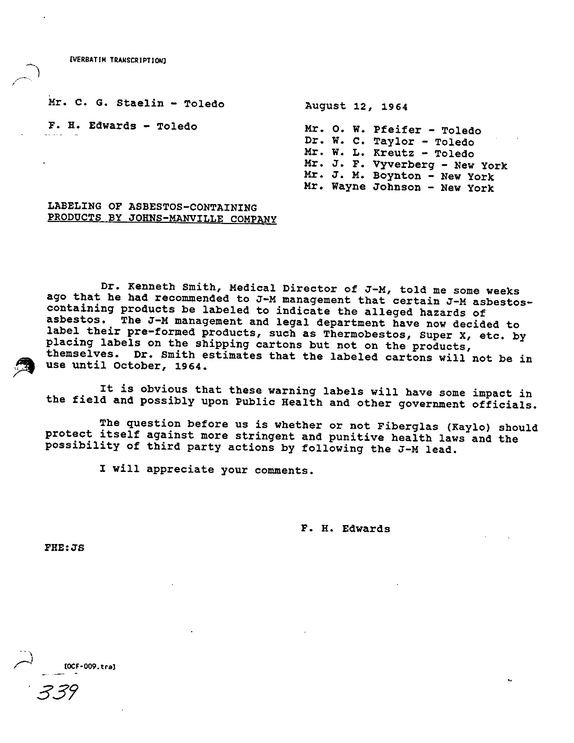
Smith estimates that the labeled cartons will not be in use until October 1964 the It is field and obvious that these warning labels will have some possibly upon Public Health and other government impact in officials protect The question before itself against more us is whether stringent and or not Fiberglas Kaylo punitive health laws and possibility of third party actions by following the M lead should the I will appreciate your comments FHE JS F.
refid# EXp4yjqoJQoDDyDpR1EMoDxL3 pages
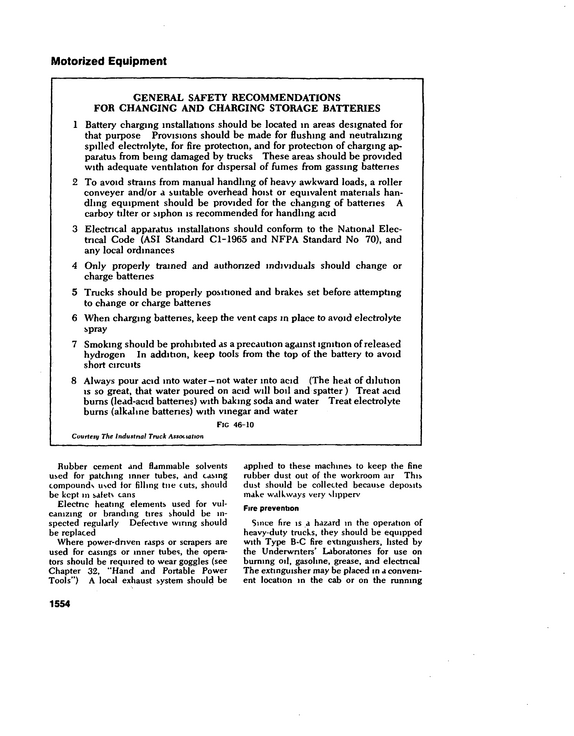
Motorized Equipment GENERAL SAFETY RECOMMENDATIONS FOR CHANGING AND CHARGING STORAGE BATTERIES 1 Battery charging installations should be located m areas designated for that purpose Provisions should be made for flushing and neutralizing spilled electrolyte, for fire protection, and for protection of charging ap paratus from being damaged by trucks These areas should be provided with adequate ventilation for dispersal of fumes from gassing batteries 2 To avoid strains from manual handling of heavy awkward loads, a roller conveyer and/or a suitable overhead hoist or equivalent materials han dling equipment should be provided for the changing of batteries A carboy tilter or siphon is recommended for handling acid 3 Electrical apparatus installations should conform to the National Elec trical Code (ASI Standard Cl-1965 and NFPA Standard No 70), and any local ordinances 4 Only properly trained and authorized individuals should change or charge batteries 5 Trucks should be properly positioned and brakes set before attempting to change or charge batteries 6 When charging batteries, keep the vent caps m place to avoid electrolyte spray 7 Smoking should be prohibited as a precaution against ignition of released hydrogen In addition, keep tools from the top of the battery to avoid short circuits 8 Always pour acid into water--not water into acid (The heat of dilution is so great, that water poured on acid will boil and spatter) Treat acid bums (lead-acid batteries) with baking soda and water Treat electrolyte burns (alkaline batteries) with vinegar and water Fig 46-10 Courtesy The Industrial Truck Association Rubber cement and flammable solvents used for patching inner tubes, and casing compounds used tor filling tne cuts, should be kept in satets cans Electnc heating elements used for vul canizing or branding tires should be in spected regularly Defective winng should be replaced Where power-dnven rasps or scrapers are used for casings or inner tubes, the opera tors should be required to wear goggles (see Chapter 32, "Hand and Portable Power Tools") A local exhaust system should be applied to these machines to keep the fine rubber dust out of the workroom air This dust should be collected because deposits make walkways very shpperv Fire prevention Since fire is a hazard m the operation of heavy-duty trucks, they should be equipped with Type B-C fire extinguishers, listed by the Underwriters' Laboratories for use on burning oil, gasoline, grease, and electrical The extinguisher may be placed in a conveni ent location in the cab or on the running 1554
refid# O153bJKR9JzygkjdLK67oD3KX1 page
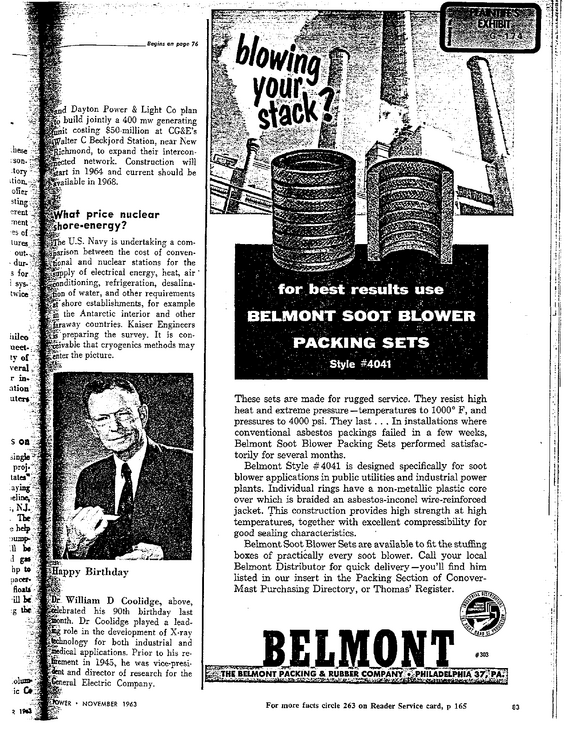
Dr Coolidge played a lead ' role in the development of X-ray lltechnology for both industrial and tp&edical applications.
refid# 5znmL0XrnQr5dY7m5rxMk5r41 page
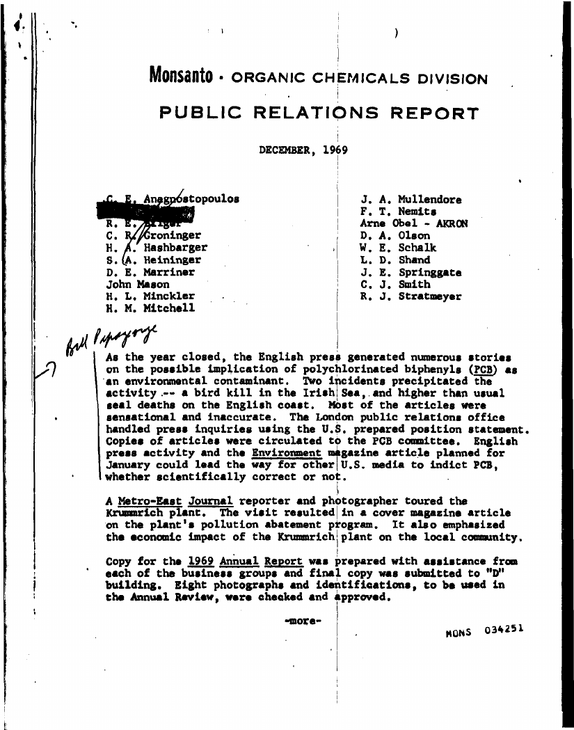
English press activity and the Environment magazine article planned for January could lead the way for other U.S. media to Indict PCB, whether scientifically correct or not. i .
refid# yrYna18mZNobpYo3EBroDQdaV2 pages
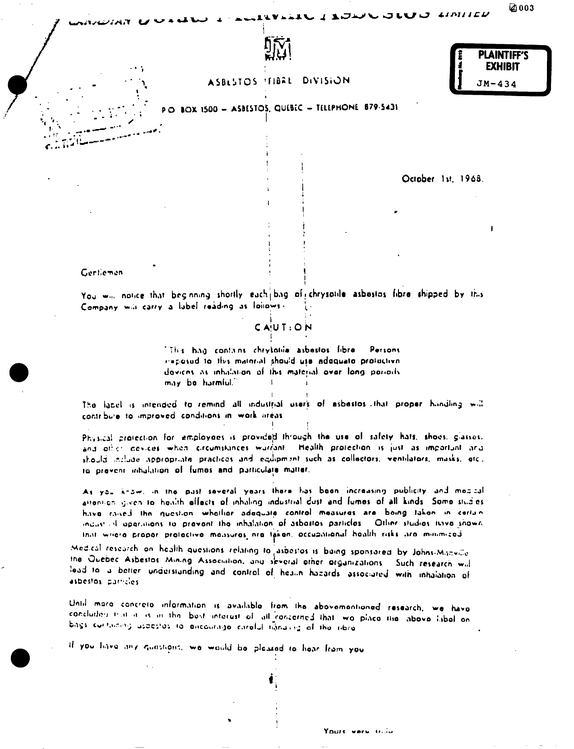
.,1 lead to j belter under Handing and control ol hca..n hazards associated w.ln inhalation ol asbestos paroles Uniil maro conceits information is available from the abovomoniionod research, w* havg concluiJivj i- >i .i is ,n ihn bo-.l mloiusi ol all concerned that wo place Hie nbovo i sbol on t-lii' cw`t.i.".'
refid# O1Gz0BjqLyZ2RDjKz0BorENnM1 page
L e t 's put this episode behind us and I 'll remember 'that, if I 'm to maintain our friendship, I'll have to stay away from lead in any form.

refid# 6R7DrwjL5eObNpK7LE1mzqQE11 page
Kehoe: Since our meeting with you on January 10 regarding our position in connection with specification restrictions on the use of 4.23 gms lead per gallon of gasoline, I have discussed the timing for a con ference in Washington with Adm.


refid# M4Xnk5v1Y783z7XjzZp8OVEzz2 pages
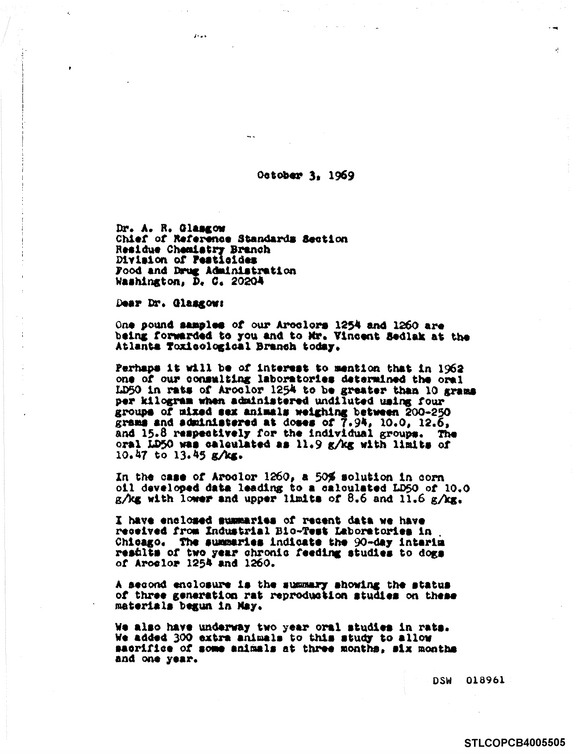
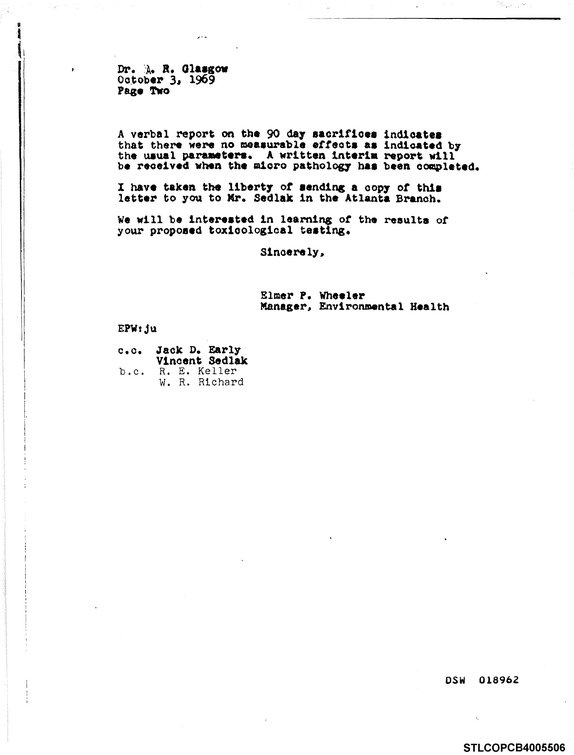
Zn the case of Aroclor 1260, a 50$ solution In corn oil developed data leading to a calculated LD50 of 10.0 g/kg with lower and upper limits of 8.6 and 11.6 g/kg.
refid# gDdbBy1XmxZmeGgLmLo2LV3yQ2 pages
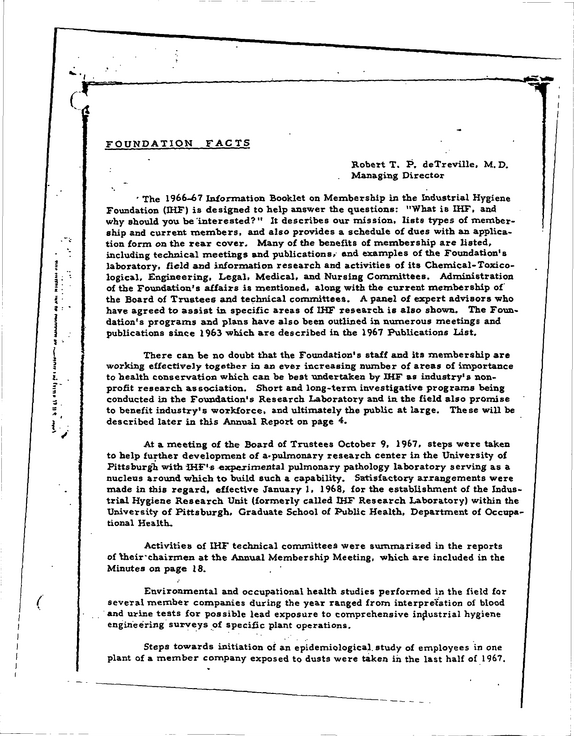
Environmental and occupational health studies performed in the field for several member companies during the year ranged from interpretation of blood and urine tests for possible lead exposure to comprehensive industrial hygiene engineering surveys of specific plant operations.
refid# VJBBMvMdy588EGMopNRyg46pq1 page
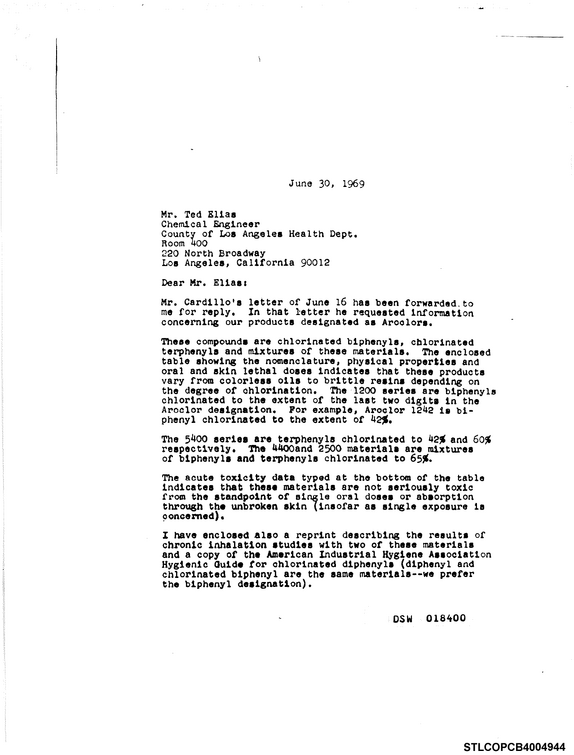
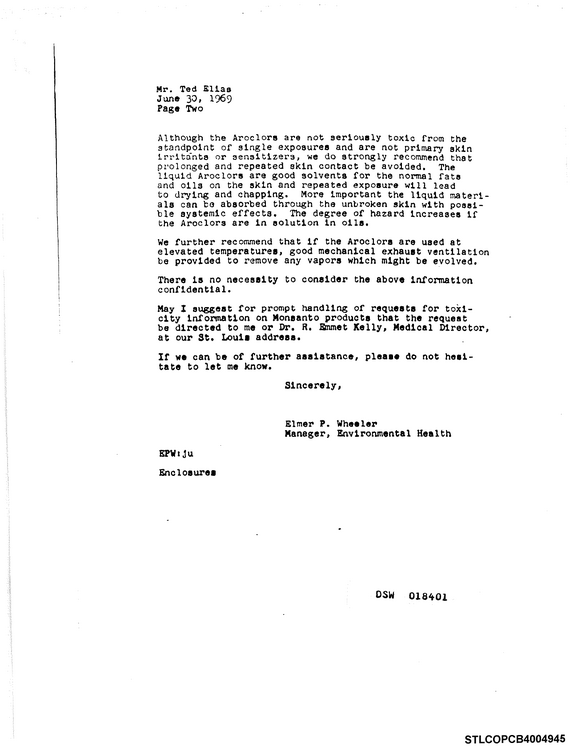
The liquid Aroclors are good solvents for the normal fats and oils on the skin and repeated exposure will lead to drying and chapping.
refid# ZYXw4qnaO6VnLBLDVb6pjZNJ2 pages
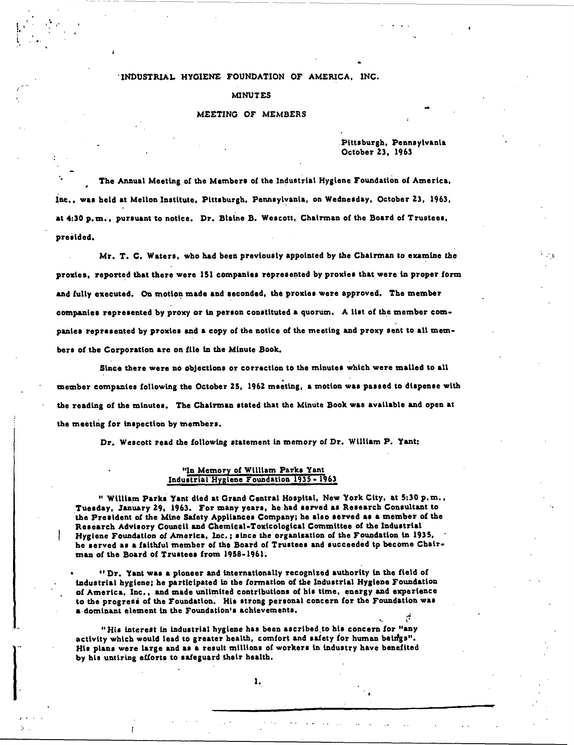
., and made unlimited contributions of bis time, energy and experience to the progress of the Foundation, His strong personal concern for the Foundation was a dominant element in the Foundation's achievements, "His interest in Industrial hygiene has been ascribed,to his concern for "any activity which would lead to greater health, comfort and safety for human beiifgs".
refid# 91m4Gv211p71EoxDm9o3700Z61 page
B* Soil Analyses for Lead I have told the laboratory people that we can ex pect to start the analyses of the soil samples in the be ginning of January.


refid# 4JNXVowwwNKoKmJxVkMaJV2e2 pages
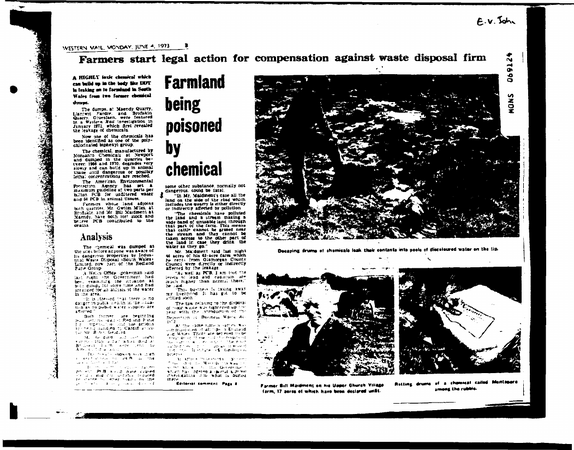
I am 'ie rsgh; 'he Govern.T.i-n'. had ;.v-U o: lead and cad.ir.um *r be-., exam.n.rg ;ne s;:iauor a: much higher than ncrnul there."
refid# yrdOnN42K2jyajJ46V1mgqKnV1 page