j. 1970 National Safety Congress . , , Eastern Safety Equipment Co., Inc., 19-79 Stcihway St, New York; N.
refid# NNgZp25Qoj3Dp3D69Bxjvnog1 page
^yyj^!
refid# q9GE5rpOGq26x2bGwj1Zr7OK1 page
f) The requirements or subsection (b) shall only apply to hulk gasoline plants: 1) That-have an annual gasoline throughput greater than or equal to 1.000.OOP gallons, as averaged over the preceding three calendar years: and 2) That either- distribute gasoline td gasoline dispensing facilities subject to the requirements of Section 215.583(a)(2) or that are located In the following counties: Boone.
refid# LJ5naDnoaZxZ51kyax1kw4GRd1 page
20 O' That asbestos brake linings (friction material) may be used In a brake system when the friction material operates In cither a dry or oil-wetted environment in a totally enclosed brake compartment which prevents the emission of brake wear products into the ambient air. 2.
refid# 917dqzo0QpQNqnavYZZBQgN6V1 page
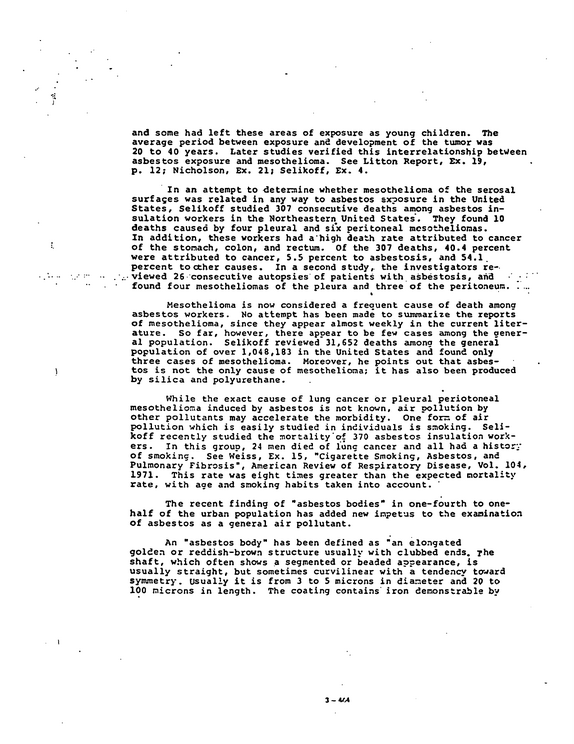
and some had left these areas of exposure as young children.
refid# b5w5oRy335qqByNO2n7zpZ9ko1 page
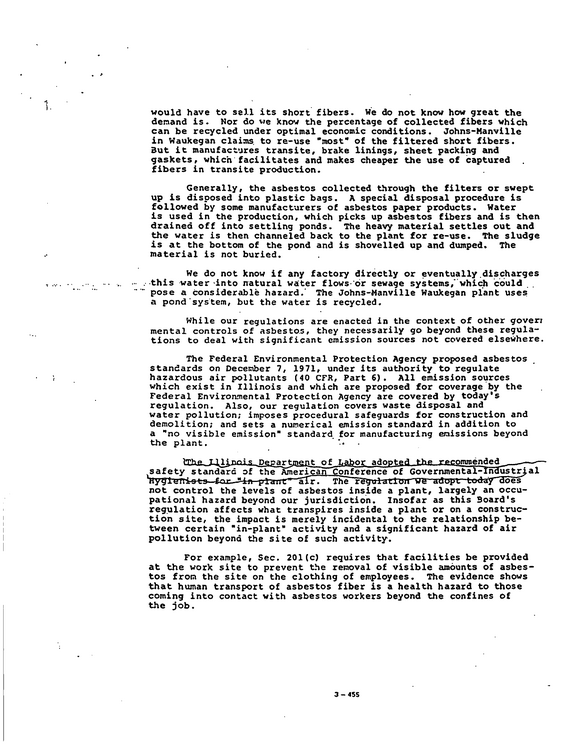
would have to sell its short fibers.
refid# 24aQodjgYvnMJbLx6MzQwN6R1 page
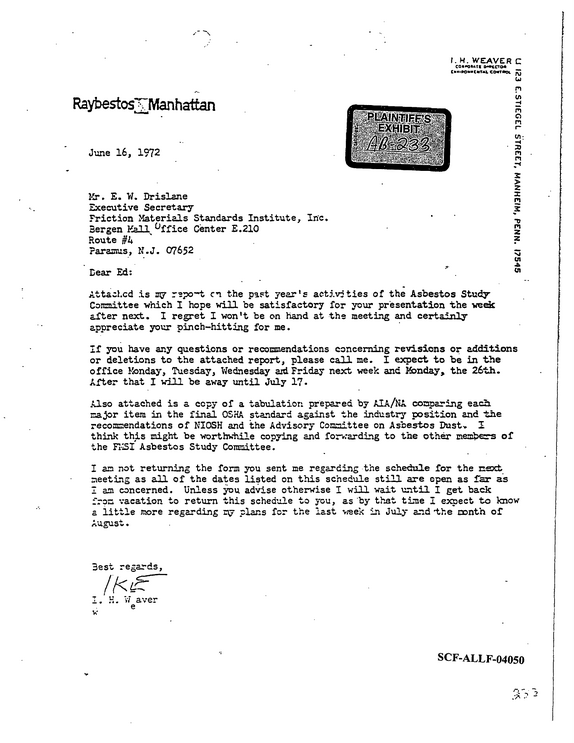
U 123 E.STIEGEL STREET.
refid# k60r9Eo09er6bEea8vaBwxGXn1 page
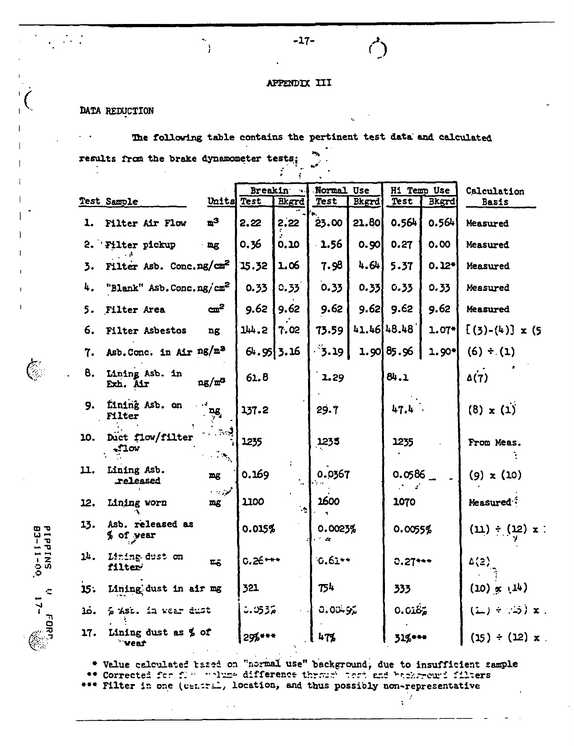
( DATA REDUCTION APPENDIX HI - ' Hie following table contains the pertinent test data and calculated results from the brake dynamometer tests; **. .
refid# OzydjVyJZ6B0KxVakaLL9byxe1 page
"h"111?"?'
refid# 8Vy1x47DJRNJVqLDp5mk9Mm551 page
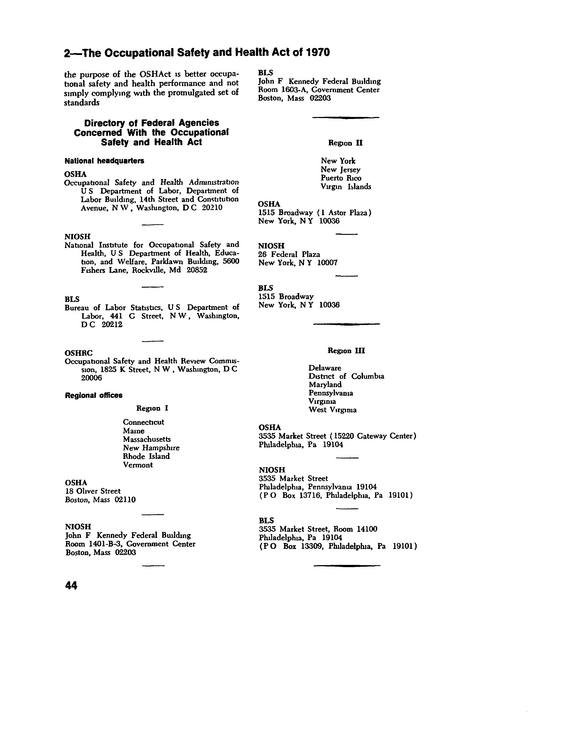
2--The Occupational Safety and Health Act of 1970 the purpose of the OSHAct is better occupa tional safety and health performance and not simply complying with the promulgated set of standards BLS John F Kennedy Federal Building Room 1603-A, Government Center Boston, Mass 02203 Directory of Federal Agencies Concerned With the Occupational Safety and Health Act National headquarters OSHA Occupational Safety and Health Administration U S Department of Labor, Department of Labor Building, 14th Street and Constitution Avenue, N W , Washington, D C 20210 NIOSH National Institute for Occupational Safety and Health, U S Department of Health, Educa tion, and Welfare, Parldawn Building, 5600 Fishers Lane, Rockville, Md 20852 Region II New York New Jersey Puerto Rico Virgin Islands OSHA 1515 Broadway (1 Astor Plaza) New York, N Y 10036 NIOSH 26 Federal Plaza New York, N Y 10007 BLS Bureau of Labor Statistics, U S Department of Labor, 441 G Street, N W, Washington, DC 20212 BLS 1515 Broadway New York, N Y 10036 OSHRC Occupational Safety and Health Review Commis sion, 1825 K Street, N W , Washington, D C 20006 Regional offices Region I Connecticut Maine Massachusetts New Hampshire Rhode Island Vermont OSHA 18 Oliver Street Boston, Mass 02110 NIOSH John F Kennedy Federal Building Room 1401-B-3, Government Center Boston, Mass 02203 Region IH Delaware District of Columbia Maryland Pennsylvania Virginia West Virginia OSHA 3535 Market Street (15220 Gateway Center) Philadelphia, Pa 19104 NIOSH 3535 Market Street Philadelphia, Pennsylvania 19104 (PO Box 13716, Philadelphia, Pa 19101) BLS 3535 Market Street, Room 14100 Philadelphia, Pa 19104 (PO Box 13309, Philadelphia, Pa 19101) 44
refid# 1547Mre4K2GMeJv4VyZnDxvyj1 page
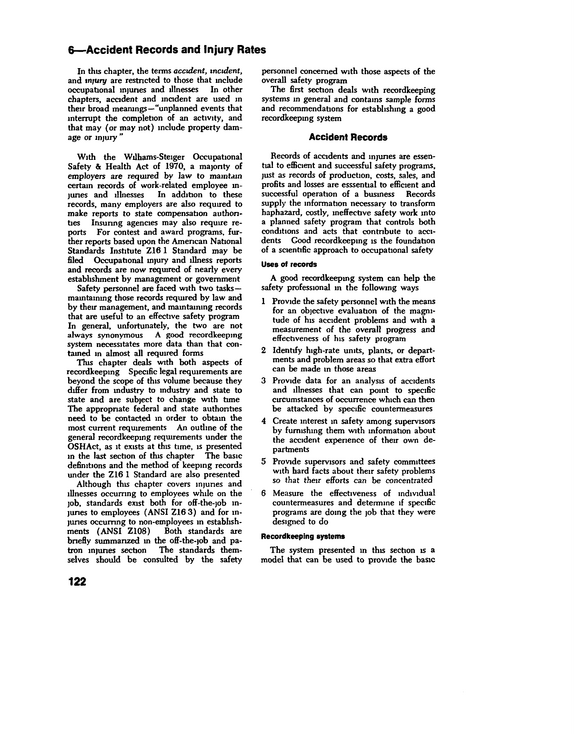
6--Accident Records and Injury Rates In this chapter, the terms accident, incident, and injury are restricted to those that include occupational injuries and illnesses In other chapters, accident and incident are used in their broad meanings--"unplanned events that interrupt the completion of an activity, and that may (or may not) include property dam age or injury " With the Wilhams-Steiger Occupational Safety & Health Act of 1970, a majority of employers are required by law to maintain certain records of work-related employee in juries and illnesses In addition to these records, many employers are also required to make reports to state compensation authori ties Insuring agencies may also require re ports For contest and award programs, fur ther reports based upon the American National Standards Institute Z16 1 Standard may be filed Occupational injury and illness reports and records are now required of nearly every establishment by management or government Safety personnel are faced with two tasks-- maintaining those records required by law and by their management, and maintaining records that are useful to an effective safety program In general, unfortunately, the two are not always synonymous A good recordkeeping system necessitates more data than that contamed m almost all required forms This chapter deals with both aspects of recordkeeping Specific legal requirements are beyond the scope of this volume because they differ from industry to industry and state to state and are subject to change with time The appropriate federal and state authorities need to be contacted m order to obtain the most current requirements An outline of the general recordkeeping requirements under the OSHAct, as it exists at this time, is presented m the last section of this chapter The basic definitions and the method of keeping records under the Z16 1 Standard are also presented Although this chapter covers injuries and illnesses occurring to employees while on the job, standards exist both for off-the-job in juries to employees (ANSI Z16 3) and for in juries occurring to non-employees in establish ments (ANSI Z108) Both standards are briefly summarized in the off-the-job and pa tron injuries secbon The standards them selves should be consulted by the safety personnel concerned with those aspects of the overall safety program The first section deals with recordkeeping systems in general and contains sample forms and recommendations for establishing a good recordkeeping system Accident Records Records of accidents and injuries are essen tial to efficient and successful safety programs, just as records of production, costs, sales, and profits and losses are esssential to efficient and successful operation of a business Records supply the information necessary to transform haphazard, costly, ineffective safety work into a planned safety program that controls both conditions and acts that contribute to acci dents Good recordkeeping is the foundation of a scientific approach to occupational safety Uses of records A good recordkeeping system can help the safety professional in the following ways 1 Provide the safety personnel with the means for an objective evaluation of the magni tude of his accident problems and with a measurement of the overall progress and effectiveness of his safety program 2 Identify high-rate units, plants, or depart ments and problem areas so that extra effort can be made m those areas 3 Provide data for an analysis of accidents and illnesses that can point to specific circumstances of occurrence which can then be attacked by specific countermeasures 4 Create interest m safety among supervisors by furnishing them with information about the accident experience of their own de partments 5 Provide supervisors and safety committees with hard facts about their safety problems so that their efforts can be concentrated 6 Measure the effectiveness of individual countermeasures and determine if specific programs are doing the job that they were designed to do Recordkeeping systems The system presented in this section is a model that can be used to provide the basic 122
refid# bayqedX5Z3xMbBew7vdJyp6nO1 page
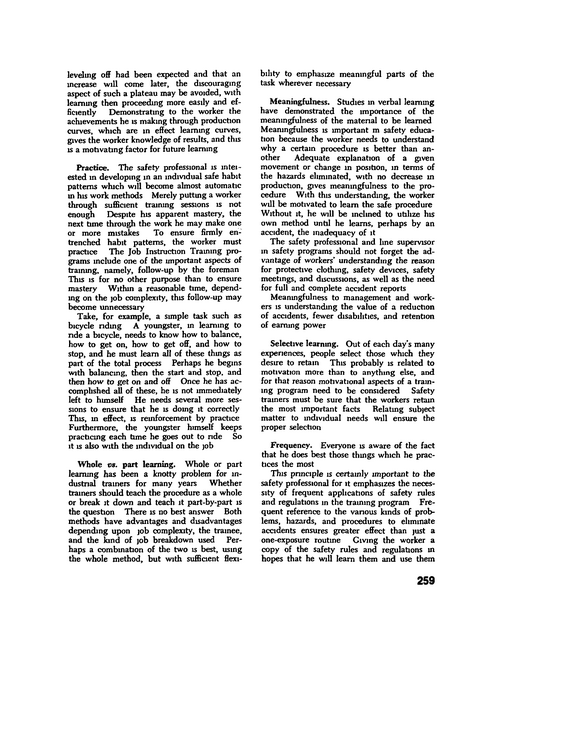
leveling off had been expected and that an increase will come later, the discouraging aspect of such a plateau may be avoided, with learning then proceeding more easily and ef ficiently Demonstrating to the worker the achievements he is making through production curves, which are in effect learning curves, gives the worker knowledge of results, and this is a motivating factor for future learning Practice.
refid# K64ak6q0JoQNNZOLdBXoyqmm01 page
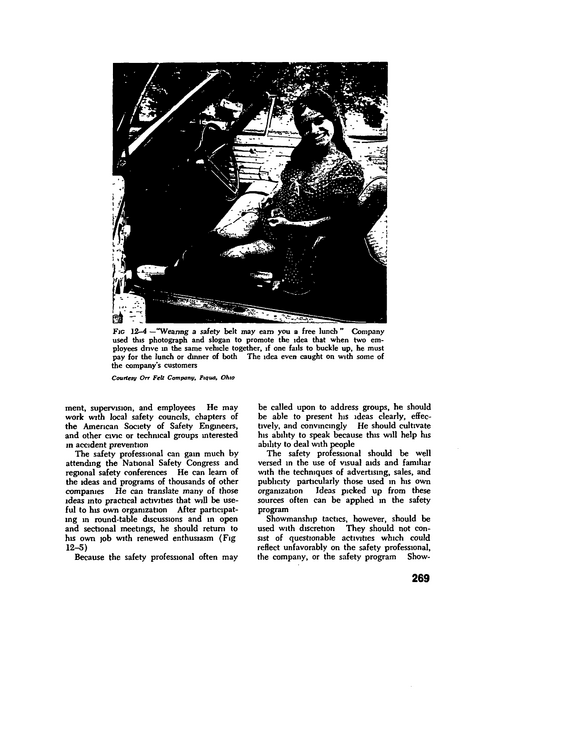
Fic 12-4 --"Wearing a safety belt may earn you a free lunch " Company used this photograph and slogan to promote the idea that when two em ployees drive m the same vehicle together, if one fails to buckle up, he must pay for the lunch or dinner of both The idea even caught on with some of die company's customers Courtesy Orr Felt Company, Ptqua, Ohto ment, supervision, and employees He may work with local safety councils, chapters of the American Society of Safety Engineers, and other civic or technical groups interested in accident prevention The safety professional can gain much by attending the National Safety Congress and regional safety conferences He can Ieam of the ideas and programs of thousands of other companies He can translate many of those ideas into practical activities that will be use ful to his own organization After participat ing in round-table discussions and in open and sectional meetings, he should return to his own job with renewed enthusiasm (Fig 12-5) Because the safety professional often may be called upon to address groups, he should be able to present his ideas clearly, effec tively, and convincingly He should cultivate his ability to speak because this will help his ability to deal with people The safety professional should be well versed in the use of visual aids and familiar with the techniques of advertising, sales, and publicity particularly those used in his own organization Ideas picked up from these sources often can be applied in the safety program Showmanship tactics, however, should be used with discretion They should not con sist of questionable activities which could reflect unfavorably on the safety professional, the company, or the safety program Show- 269
refid# 3Np9ZJ7LG5a9jepwZr6LYemv61 page
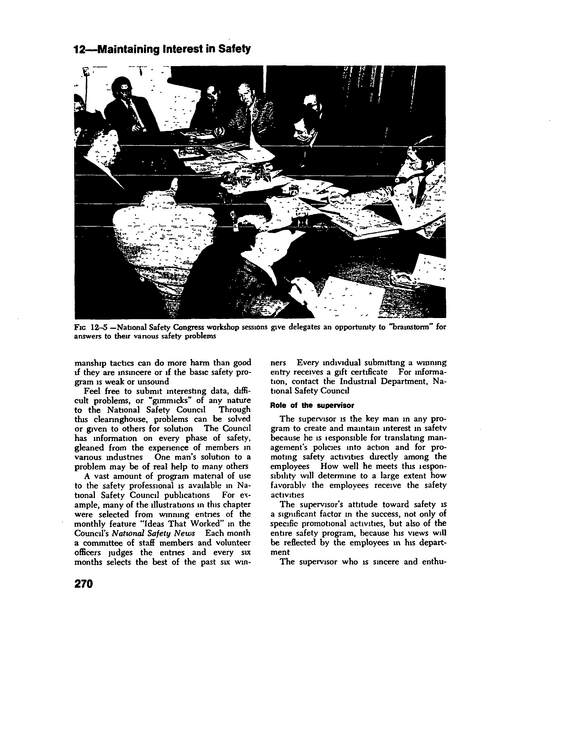
12--Maintaining Interest in Safety Fic 12-5 --National Safety Congress workshop sessions give delegates an opportunity to "brainstorm" for answers to their various safety problems manship tactics can do more harm than good if they are insincere or if the basic safety pro gram is weak or unsound Feel free to submit interesting data, diffi cult problems, or "gimmicks" of any nature to the National Safety Council Through this cleannghouse, problems can be solved or given to others for solution The Council has information on every phase of safety, gleaned from the experience of members in various industries One man's solution to a problem may be of real help to many others A vast amount of program matenal of use to the safety professional is available in Na tional Safety Council publications For ex ample, many of the illustrations m this chapter were selected from winning entries of the monthly feature "Ideas That Worked" m the Council's National Safety News Each month a committee of staff members and volunteer officers judges the entries and every six months selects the best of the past six win 270 ners Every individual submitting a winning entry receives a gift certificate For informa tion, contact the Industrial Department, Na tional Safety Council Role of the supervisor The supervisor is the key man m any pro gram to create and maintain interest in safety because he is lesponsible for translating man agement's policies into action and for pro moting safety activities directly among the employees How well he meets this lesponsibility will determine to a large extent how favorably the employees receive the safety activities The supervisor's attitude toward safety is a significant factor m the success, not only of specific promotional activities, but also of the entire safety program, because his views will be reflected by the employees m his depart ment The supervisor who is sincere and enthu-
refid# byx6yxmJqVOQDReG31pbQLZd01 page
Industrial Buildings and Plant Layout Chapter 16 Design for Safety Buildings, equipment, and processes Planning checklist Codes and standards Site Planning Location, climate, and terrain Space requirements Outside Facilities Enclosures Shipping and receiving Railroad sidings Roadways and walkways Parking lots Landscaping Waste disposal .
refid# KJYxojnJJey4ddwjRDx5pxJO21 page