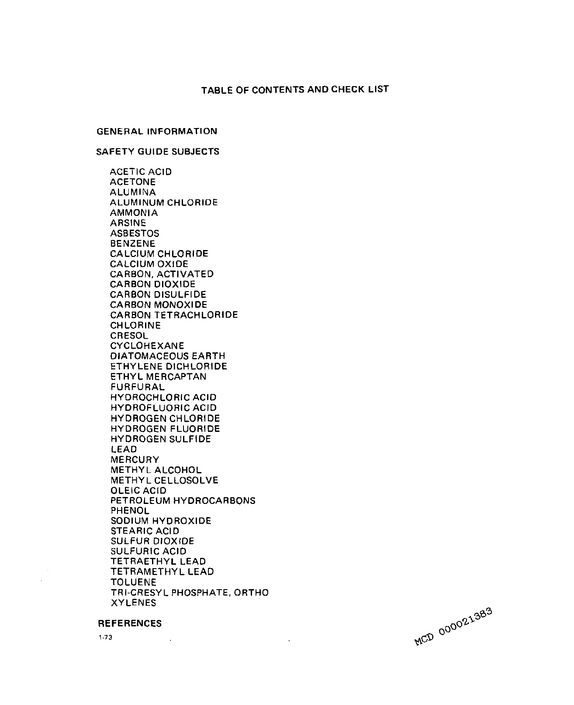
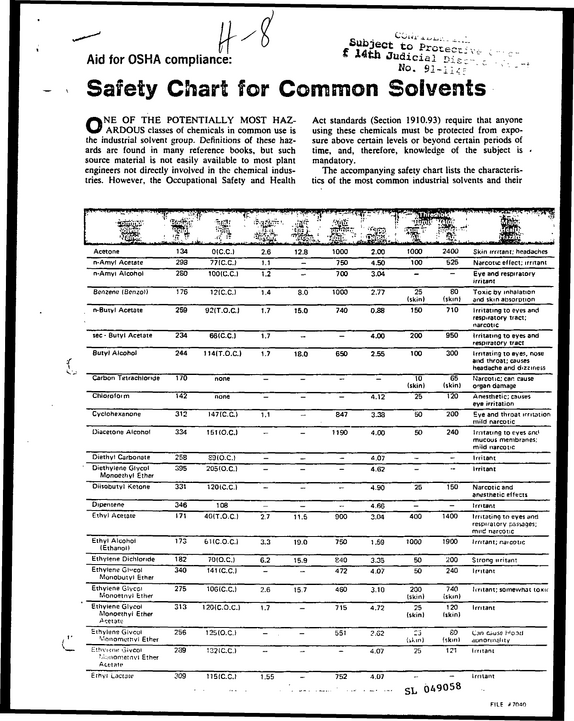
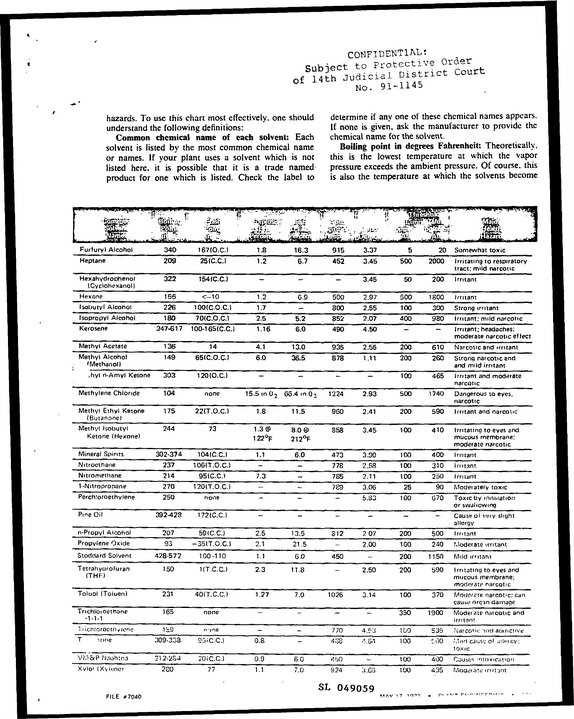
TABLE OF CONTENTS AND CHECK LIST GENERAL INFORMATION SAFETY GUIDE SUBJECTS ACETIC ACID ACETONE ALUMINA ALUMINUM CHLORIDE AMMONIA ARSINE ASBESTOS BENZENE CALCIUM CHLORIDE CALCIUM OXIDE CARBON, ACTIVATED CARBON DIOXIDE CARBON DISULFIDE CARBON MONOXIDE CARBON TETRACHLORIDE CHLORINE CRESOL CYCLOHEXANE DIATOMACEOUS EARTH ETHYLENE DICHLORIDE ETHYL MERCAPTAN FURFURAL HYDROCHLORIC ACID HYDROFLUORIC ACID HYDROGEN CHLORIDE HYDROGEN FLUORIDE HYDROGEN SULFIDE LEAD MERCURY METHYL ALCOHOL METHYL CELLOSOLVE OLEIC ACID PETROLEUM HYDROCARBONS PHENOL SODIUM HYDROXIDE STEARIC ACID SULFUR DIOXIDE SULFURIC ACID TETRAETHYL LEAD TETRAMETHYL LEAD TOLUENE TRI-CRESYL PHOSPHATE, ORTHO XYLENES REFERENCES 1-73 && 0. * o' REFERENCES Sax, "Dangerous Properties of Industrial Materials," Third Edition, Reinhold Book Corporation.
refid# 0ger6mwO13Be5w10wbyqykmdJ54 pages
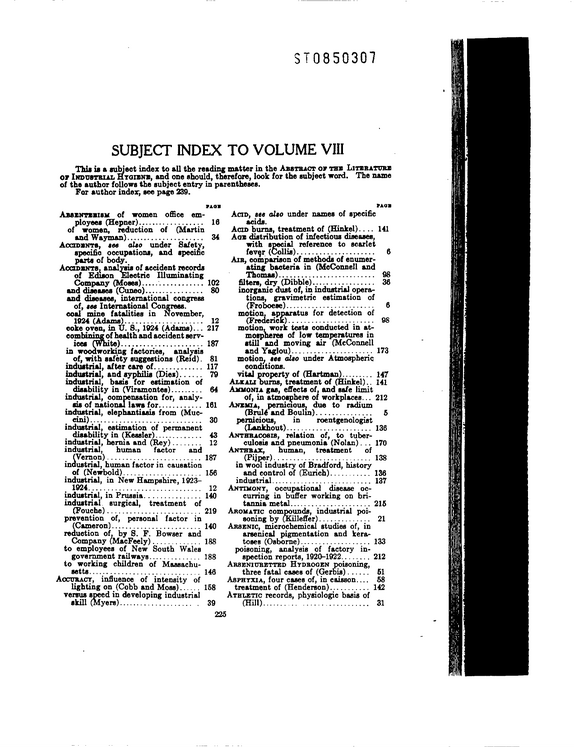
Ill sandstone dust hazard among miners, quarrymen, and stonemasons in New South Wales (Badham and Assheton)........................................ 206 working conditions and health of quarrymen in New South Wales (Badham and Assheton)................ 206 Aviator, blood pressure in (Cruchet)................................................ 144 neuroses of (Meier-MQller)............... 197 routine pathologic examination for physiologically inefficient aviators (Whittingham)................................. 126 Bakeries, night work in..................... 33 Bakers, dermatitis in (Mummery)___ 28 tuberculosis in (Pansot and Rich ard)........................................... 138, 186 Baking industry, lead poisoning from heating ovens with wood from old boats (Bodros)............................... 88 Batteries, storage, lead poisoning in manufacture of (Balsac, Lafont, and Feil)......................................... 77 Belgium, factory inspection in, 1923.. 70 industrial medicine and hygiene in large coal mines of (Stassen)........ 151 Benefit association in industry, phy sician and (Cannon)...................... 42 Benzene, see Benzol.
refid# LK4Ma1JEO7a6NQNgOZX82gbaw26 pages
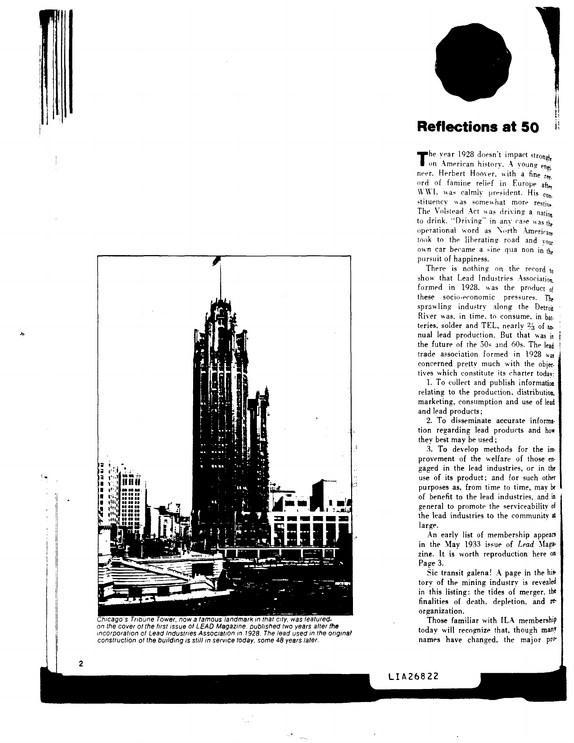
The Chicago industrial area leads all other industrial areas in the production of meat and packing house products; soaps, perfumes, cosmetics and toilet preparations; machinery; petroleum products and many others.


refid# vwBv0rrp4v9OD04JVLXJy8b8333 pages
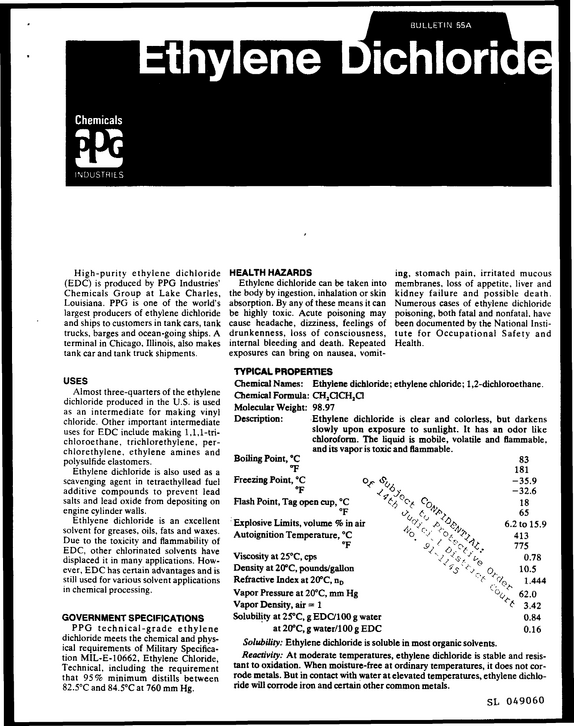
Ethylene dichloride is also used as a scavenging agent in tetraethyllead fuel additive compounds to prevent lead salts and lead oxide from depositing on engine cylinder walls.
refid# zQYJza1nwXqJ6n0m4XryMEKg719 pages
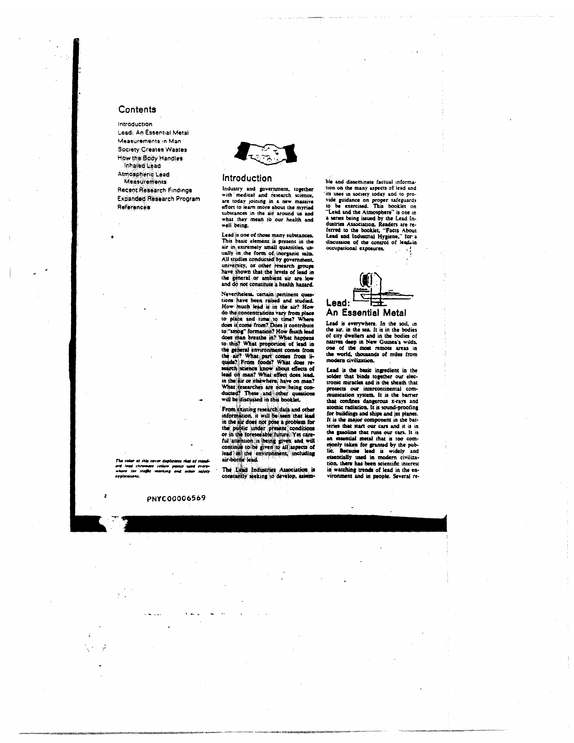
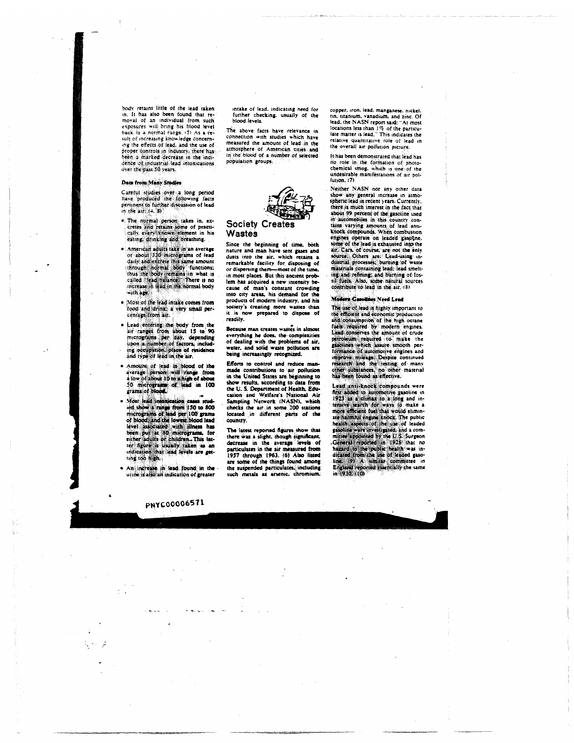
How much lead is in the air?

refid# GmjbvM0oRzbYQnpgq2o0369nr12 pages
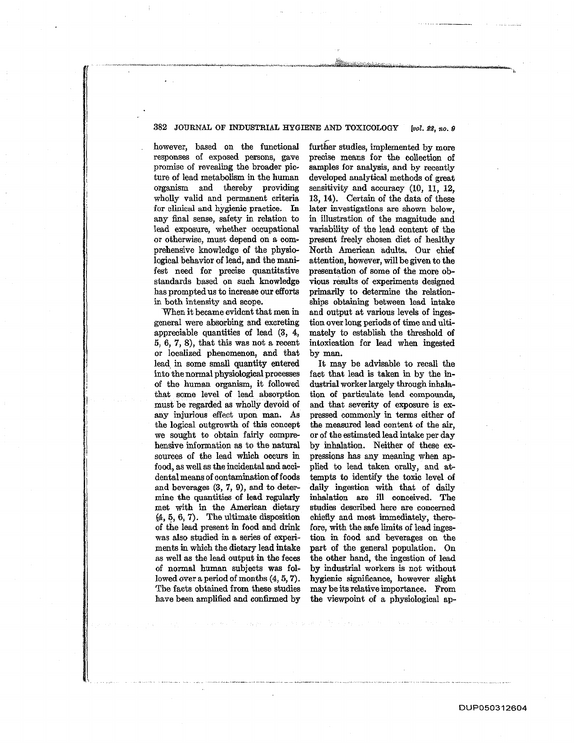
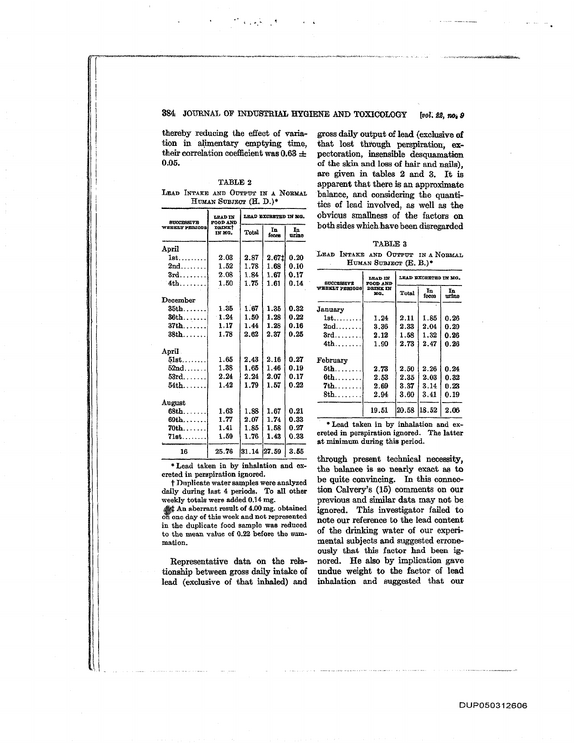
From the viewpoint of a physiological ap- DUP050312604 Nov. mo] INGESTION OF LEAD COMPOUNDS 388 proach to the problem of lead intoxi cation, moreover, the rate of lead ab sorption as compared with the rate of lead excretion is of primary impor tance regardless of the avenue of entrance of lead into the body.
refid# DMLrKMwE4vwJxaNw55NKb0RNO20 pages
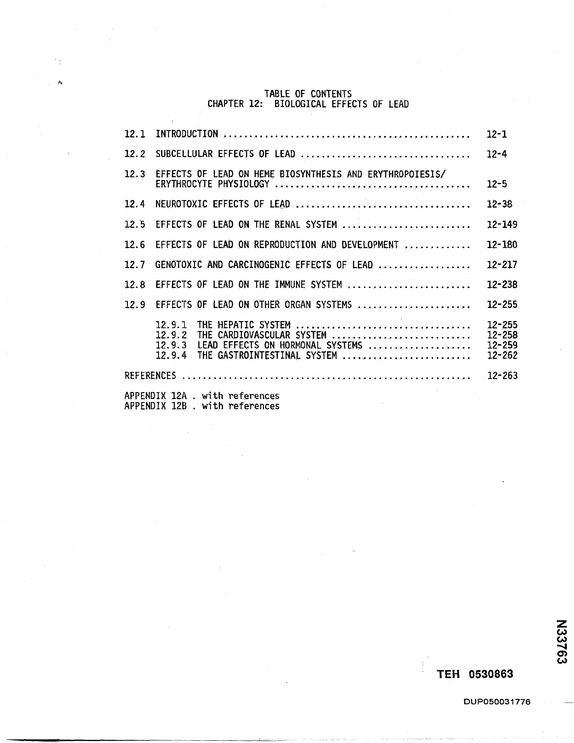
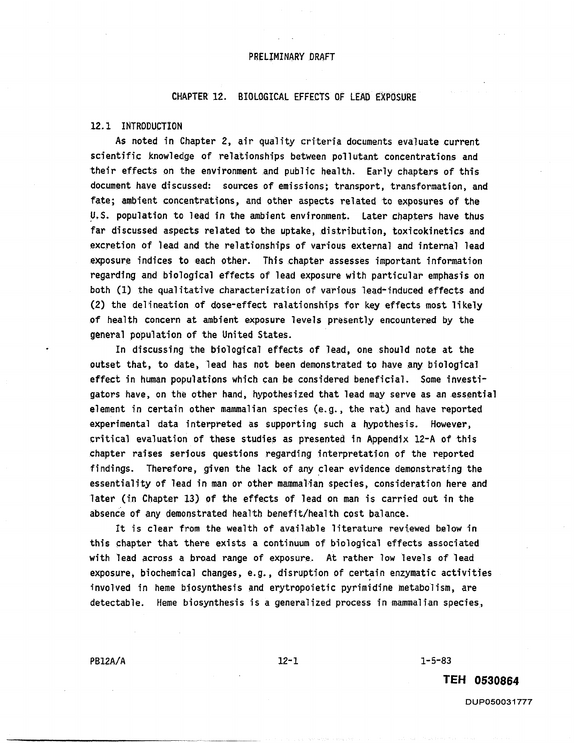
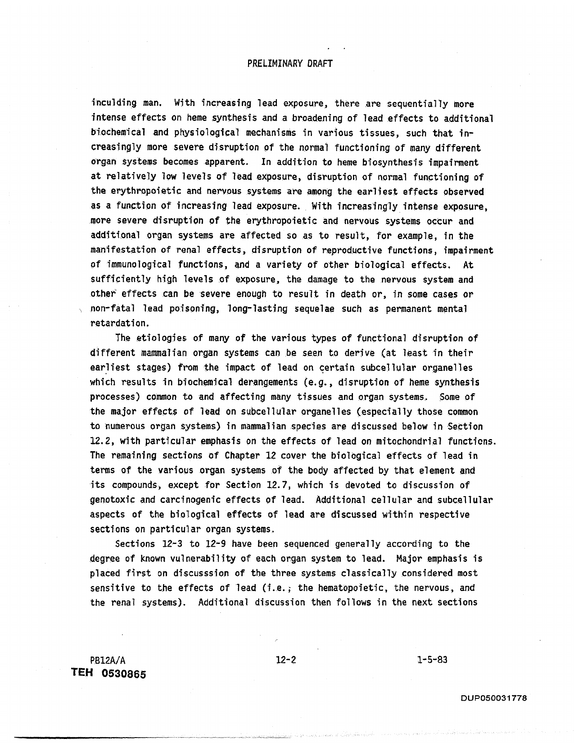
Genotoxic effects of lead and data reported in regard to possible carcinogenic effects of lead are then reviewed, followed by discussion of effects of lead on the immune system and, lastly, an overview of lead effects on other organ systems.

refid# rejNZXd7zg1gN6Jy4nw873eX7335 pages
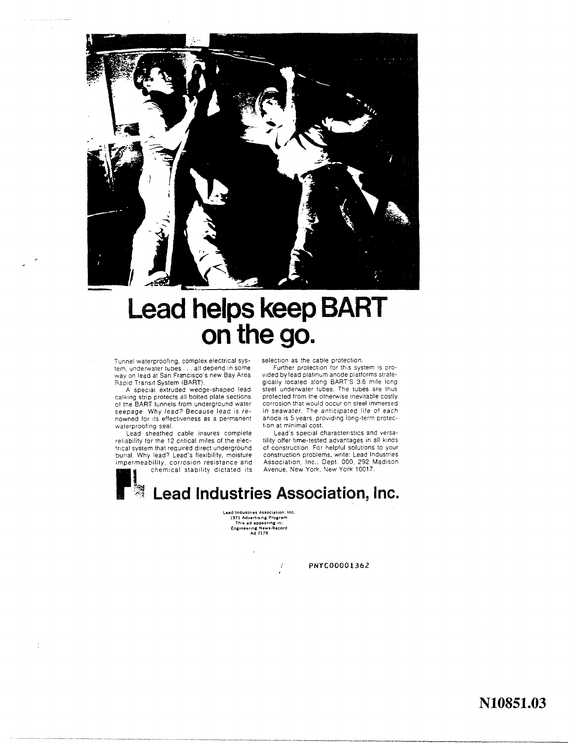
Why lead?

refid# wr9kO9Mkdv3adLaMXx1jQEpaQ28 pages
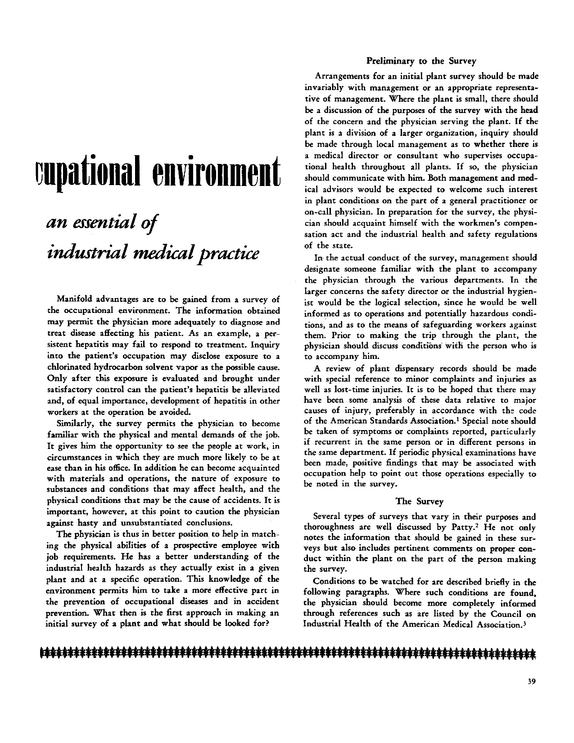
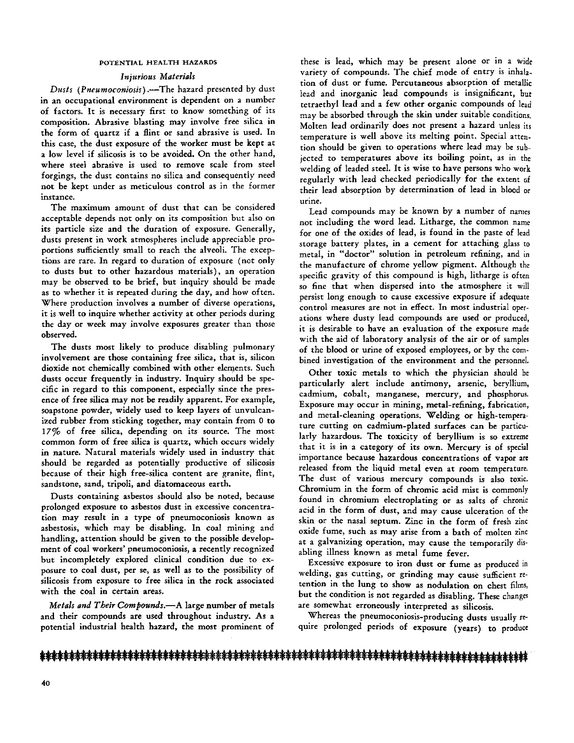
He not only notes the information that should be gained in these sur- veys but also includes pertinent comments on proper con- duct within the plant on the part of the person making the survey Conditions to be watched for are described briefly in the following paragraphs Where such conditions are found the physician should become more completely informed through references such as are listed by the Council on Industrial Health of the American Medical Association.3 FREER EEE TERRE EEE EEEEE TERE EERE EEE EEE EERE EEE EEE EEE ey 39 POTENTIAL HEALTH HAZARDS Injurious Materials Dusts Pneumoconio.sTihse hazard presented by dust in an occupational environment is dependent on a number of factorIst is necessary first to know something of its composition Abrasive blasting may involve free silica in the form of quartz if a flint or sand abrasive is used In this case the dust exposure of the worker must be kept at a low level if silicosis is to be avoided On the other hand where steel abrasive is used to remove scale from steel forgings the dust contains no silica and consequently need not be kept under as meticulous control as in the former instance The maximum amount of dust that can be considered acceptable depends not only on its composition but also on its particle size and the duration of exposure Generally dusts present in work atmospheres include appreciable proportions sufficiently small to reach the alveoli The exceptions are rare In regard to duration of exposure not only to dusts but to other hazardous materials an operation may be observed to be brief but inquiry should be made as to whether it is repeated during the day and how often Where production involves a number of diverse operations it is well to inquire whether activity at other periods during the day or week may involve exposures greater than those observed The dusts most likely to produce disabling pulmonary involvement are those containing free silica that is silicon dioxide not chemically combined with other elements Such dusts occur frequently in industry Inquiry should be specific in regard to this component especially since the presence of free silica may not be readily apparent For example soapstone powder widely used to keep layers of unvulcanized rubber from sticking together may contain from 0 to 17 of free silica depending on its source The most common form of free silica is quartz which occurs widely in nature Natural materials widely used in industry that should be regarded as potentially productive of silicosis because of their high silica content are granite flint sandstone sand tripoli and diatomaceous earth Dusts containing asbestos should also be noted because prolonged exposure to asbestos dust in excessive concentration may result in a type of pneumoconiosis known as asbestosis which may be disabling In coal mining and handling attention should be given to the possible development of coal workers pneumoconiosis a recently recognized but incompletely explored clinical condition due to exposure to coal dust per se as well as to the possibility of silicosis from exposure to free silica in the rock associated with the coal in certain areas Metals and Their Compounds large number of metals and their compounds are used throughout industry As a potential industrial health hazard the most prominent of PEER ERE IER 40 these is lead which may be present alone or in a wide variety of compounds The chief mode of entry is inhalation of dust or fume Percutaneous absorption of metallic lead and inorganic lead compounds is insignificant but tetraethyl lead and a few other organic compounds of lead may be absorbed through the skin under suitable conditions Molten lead ordinarily does not present a hazard unless its temperature is well above its melting point Special attention should be given to operations where lead may be s

refid# v113Y1YrZJbzBL19005aG5DG610 pages
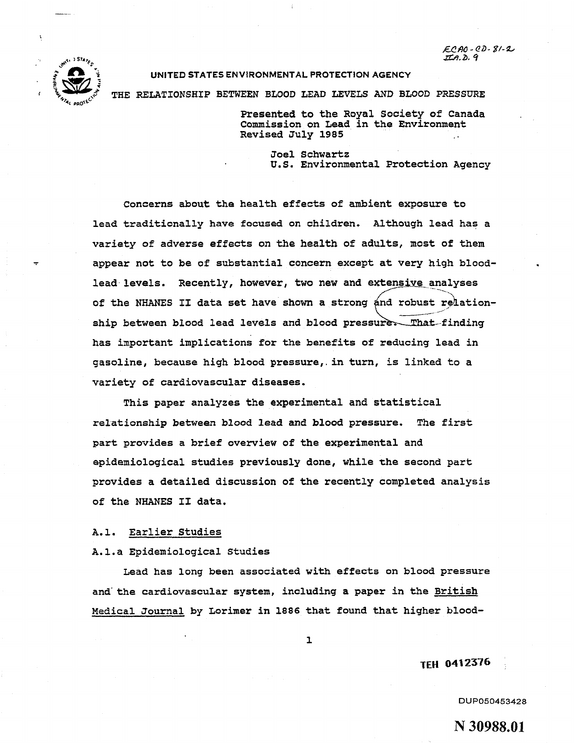
Victery (1982) found lead associated with a significant elevation of blood pressure in rats with blood lead levels of 41 ug/dl.
refid# v1n5nbdkpD01aLgQ8bgRMyaD644 pages
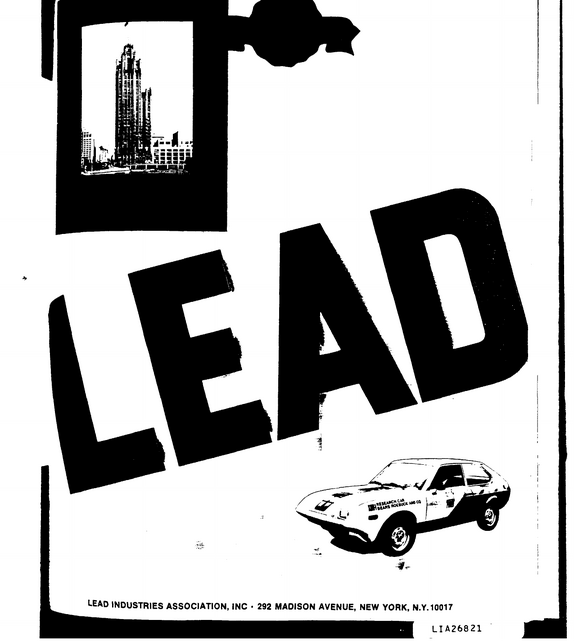
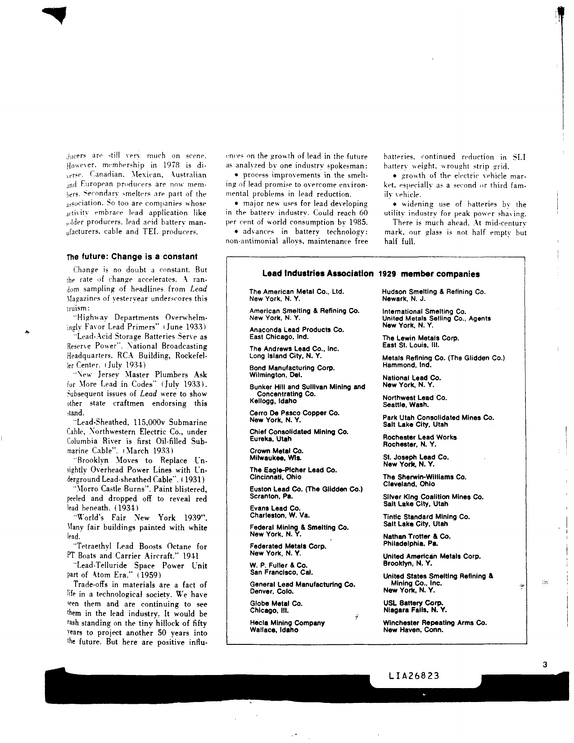
"Tetraethyl Lead Boosts Octane for PT Boats and Carrier Aircraft." 1941 "Lead-Telluride Space Power Unit part of Atom Era." (1959) Trade-offs in materials are a fact of life in a technological society.
refid# dDnO7xY6EwKL0y97eVJ1oojre16 pages
The principal ore of lead is galena (lead sulfide, PbS) although cerussite (lead carbonate, PbOOj), anglesite (lead sulfate, PbSOA) and pyromorphite (PbgCLf104)5) are common ores.

refid# JrQz5DqX11EVn6p4rzy3YV8MX39 pages
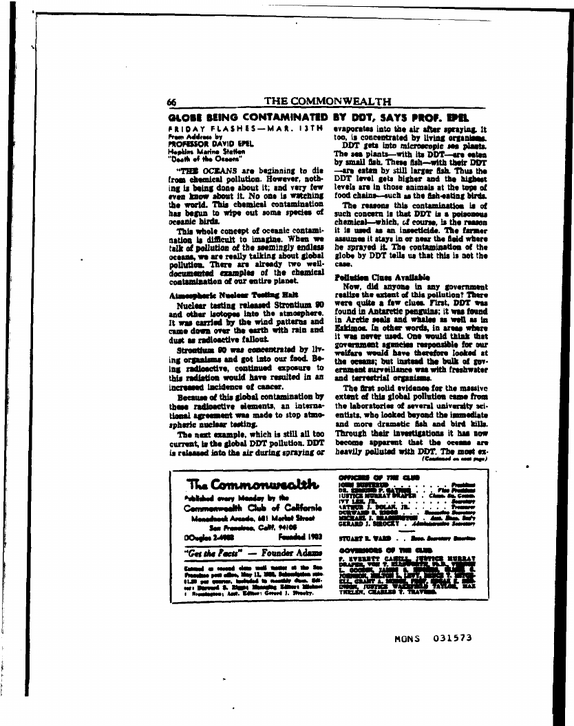
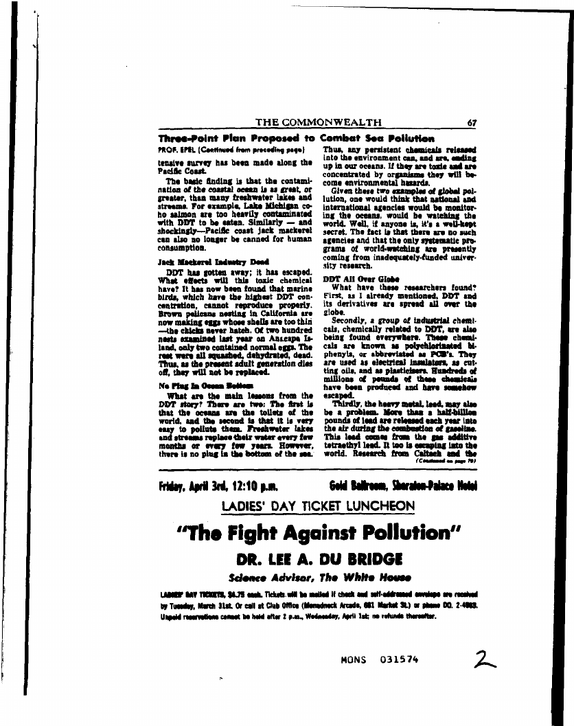
This lead comes bum the gas additive tetraethyl lead.
refid# 6wM7zLGJyrXJN7eXbVgLYMV748 pages
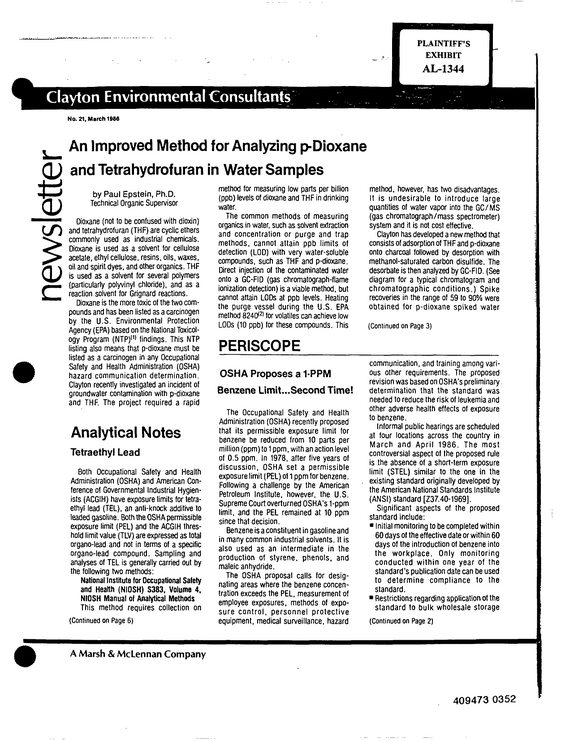
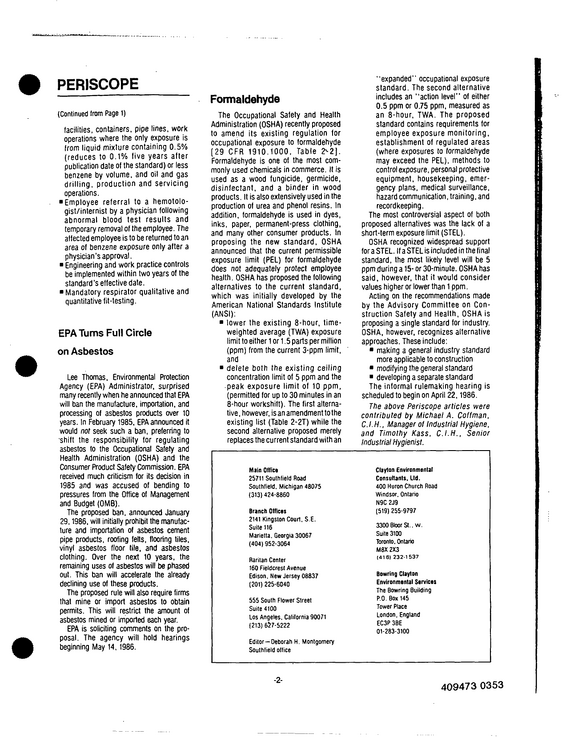
The project required a rapid Analytical Notes Tetraethyl Lead Both Occupational Safety and Health Administration (OSHA) and American Con ference of Governmental Industrial Hygien ists (ACGIH) have exposure limits for tetra ethyl lead (TEL), an anti-knock additive to leaded gasoline.
refid# RJgmO0J19rbMpyr3zqEyqYKG88 pages
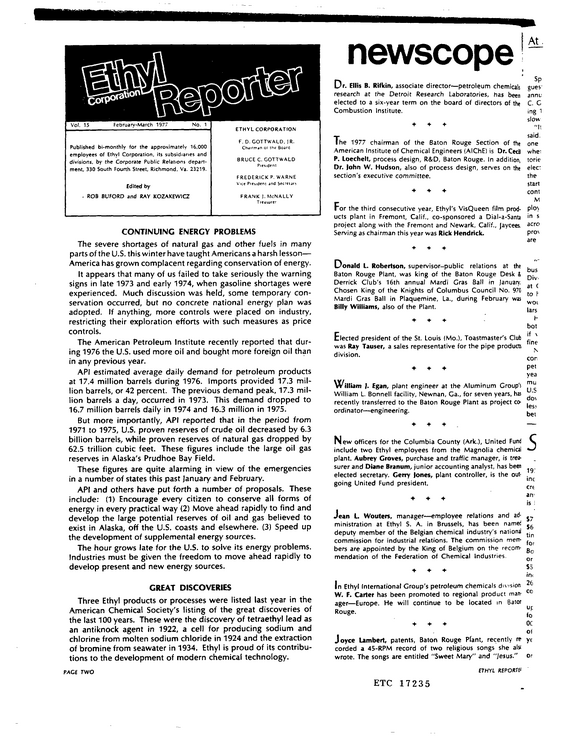
These were the discovery of tetraethyl lead as an antiknock agent in 1922, a cell for producing sodium and chlorine from molten sodium chloride in 1924 and the extraction of bromine from seawater in 1934.

refid# 1QqLkRyBQXJ0zyeoe4rdzrpdj89 pages