Refine
Estimated Years UndatedClear
92,592 results foundRefine Search
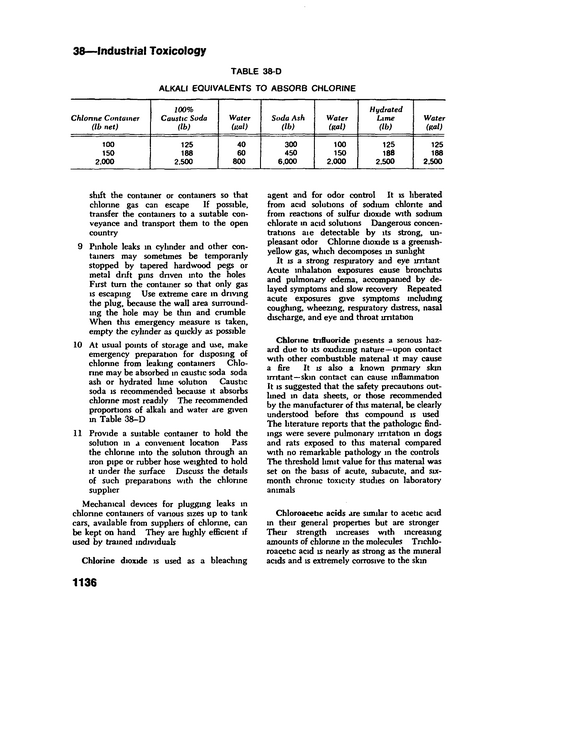
38--Industrial Toxicology TABLE 38-D ALKALI EQUIVALENTS TO ABSORB CHLORINE Chlonne Container (lb net) 100 150 2,000 100% Caustic Soda (lb) 125 188 2,500 Water (ml) 40 60 800 Soda Ash (lb) 300 450 6,000 Water (ml) 100 150 2.000 Hydrated Lime (lb) 125 188 2.500 Water (ml) 125 188 2,500 shift the container or containers so that chlorine gas can escape If possible, transfer the containers to a suitable con veyance and transport them to the open country 9 Pinhole leaks m cylinder and other con tainers may sometimes be temporarily stopped by tapered hardwood pegs or metal dnft pins driven into the holes First turn the container so that only gas is escaping Use extreme care in driving the plug, because the wall area surround ing the hole may be thin and crumble When this emergency measure is taken, empty the cylinder as quickly as possible 10 At usual points of storage and use, make emergency preparation for disposing of chlorine from leaking containers Chlo rine may be absorbed in caustic soda soda ash or hydrated lime solution Caustic soda is recommended because it absorbs chlorine most readily The recommended proportions of alkali and water are given in Table 38-D 11 Provide a suitable container to hold the solution m a convenient location Pass the chlorine into the solution through an iron pipe or rubber hose weighted to hold it under the surface Discuss the details of such preparations with the chlorine supplier Mechanical devices for plugging leaks in chlorine containers of various sizes up to tank cars, available from suppliers of chlorine, can be kept on hand They are highly efficient if used by framed individuals Chlorine dioxide is used as a bleaching 1136 agent and for odor control It is liberated from acid solutions of sodium chlorite and from reactions of sulfur dioxide with sodium chlorate in acid solutions Dangerous concen trations aie detectable by its strong, un pleasant odor Chlorine dioxide is a greenishyellow gas, which decomposes in sunlight It is a strong respiratory and eye irritant Acute inhalation exposures cause bronchitis and pulmonary edema, accompanied by de layed symptoms and slow recovery Repeated acute exposures give symptoms including coughing, wheezing, respiratory distress, nasal discharge, and eye and throat irritation Chlorine trifluoride piesents a serious haz ard due to its oxidizing nature--upon contact with other combustible material it may cause a fire It is also a known primary slon irritant--skin contact can cause inflammation It is suggested that the safety precautions out lined m data sheets, or those recommended by the manufacturer of this material, be clearly understood before this compound is used The literature reports that the pathologic find ings were severe pulmonary irritation in dogs and rats exposed to this material compared with no remarkable pathology m the controls The threshold limit value for this material was set on the basis of acute, subacute, and sixmonth chronic toxicity studies on laboratory animals Chloroacetic acids are similar to acetic acid in their general properties but are stronger Their strength increases with increasing amounts of chlorine m the molecules Trichlo roacetic acid is nearly as strong as the mineral acids and is extremely corrosive to the skin
refid# MGZqrLD3KypqEJa9ybGpJeQVx1 page
38--Industrial Toxicology apparatus with full face piece should be used under severe exposure conditions such as would be encountered in moderate spills or equipment failures Because ethyl acrylate may penetrate the skin and cause dermatitis and possibly sensi tization, all skm areas should be protected against intermittent contact with the liquid Impervious clothing including gloves of rub ber, neoprene or certain plastics should be worn and should be cleaned on both sides after each usage Because ethyl acrylate is a flammable liquid with a low flash point, it should be stored and handled awav from excessive heat, flame, and sparks In the case of over-exposure, the victim should be removed to an uncontaminated at mosphere and administered artificial respira tion In all cases emergency treatment should be instituted promptly and a physician sum moned Ethylamine is a volatile material with an ammonia-like odor which is identical m its effects with diethylamine Quantitatively, ethylamine is probably slightly less irritating, but probably not enough to make any prac tical difference Ethylbenzene (phenylethane) is a chemical intermediate and lacquer diluent and is often found m appreciable quantities in commercial petroleum solvents For both acute and chronic exposures, its health hazard is mod erate Absorption is mainly by inhalation, and eye irritation begins at about 200 ppm Higher concentrations produce tearing of the eyes, nasal irritation, and narcosis Ethylbenzene is considered the most severe skin irritant of the benzene senes, although it does not have the deletenous effect on the blood-forming organs that benzene does No report of injury from mdustnal use has been recorded Animal studies of chronic vapor inhalation show no significant effects Ethyl bromide (bromoethane) is one of the less toxic halogenated hydrocarbons It is used as an anesthetic for minor surgery to some extent Inhalation in high concentra tions (5 to 10 percent) or for a long time in low concentration (0 3 percent) will produce 1144 lung irritation and edema and injury to the liver and kidneys Ethyl chloride (chloroethane) is similar in its effects to ethyl bromide but considerably less toxic It is used as an anesthetic or anal gesic for minor surgery, both by refrigeration and by general anesthesia Ethylene chlorohydrin is used as a solvent for resins and lacquers, as a chemical inter mediate, and in agriculture to reduce the dormant period of potatoes It has produced fatal poisonings It is dangerous, especially because it is not irritating to inhale, and is rapidly absorbed through the skm either as the pure liquid or from water solution Since this material is both soluble in, and dissolves in rubber, it is absorbed by rubber gloves and penetrates them so that they offer no pro tection from the liquid or its solution in water and may, in fact, be an added hazard The lethal dose for a man is certainly not more than 5 ml when held in contact with the skin Inhalation of 2 ppm of ethylene chlorohydnn for one hour, repeated once, was fatal for rats according to one report Ethylenediamine is an extremely hygro scopic liquid which fumes in air It can be recognized by its ammonia-like odor It pre sents a moderate health hazard for both acute and chronic exposures Its effects are primarily irritation of the mucous membranes and skm The liquid causes immediate skin damage with blistering Skin and respiratory sensitization may follow exposure to low vapor concentrations Ethylene dibromide--see 1,2-Dibromoethane.
refid# dYMbQne8JwYexJkLy1MxN0kgG1 page
Nitrous oxide N20 A colorless gas of sweetish odor and taste, used as a general anesthetic Also called "laughing gas " Olefins A class of unsaturated hydro carbons characterized by relatively great chemical activity Obtained from petroleum and natural gas Examples butene, ethylene and propylene Generalized formula CnH2n Organic Term used to designate chem icals that contain carbon To date nearly one million organic compounds have been syn thesized or isolated Many occur m nature, others are produced by chemical synthesis See also Inorganic Oxidation Process of combining oxygen with some other substance, a chemical change in which an atom loses one or more electrons Opposite of reduction See also Reduction Paraffins, Paraffin series (From va rum affims -- small affinity ) Those straight or branched chain hydrocarbon components of crude oil and natural gas whose molecules are saturated (1 e, carbon atoms attached to each other by single bonds) and therefore very stable Examples methane and ethane Generalized formula C,,H2n+2 Periodic Table Systematic classifi cation of the elements according to atomic numbers (nearly the same order as by atomic weights) and by physical and chemical properties Pesticides General term for that group of chemicals used to control or kill such pests as rats, insects, fungi, bactena, weeds, etc, that prey on man or agricultural products Among these are insecticides, herbicides, fungicides, rodenticides, miticides, fumigants and repellents Pharmaceuticals That group of drugs and related chemicals reaching the public primarily through drug suppliers In Gov ernment reports, category includes not only such medicinals as aspirin and antibiotics but also such nutriments as vitamins and amino acids for both human and animal use pH Means used to express the degree of acidity or alkalinity of a solution with neu trality indicated as 7 Phenol CgHsOH Popularly known as carbolic acid Important chemical inter mediate and base for plastics, pharmaceuti cals, explosives, antiseptics, many other end products Photosynthesis The process by which plants produce carbohydrates from carbon dioxide and water when the green tissues (chlorophyl) are exposed to sunlight In reducing the carbon dioxide, oxygen is re leased Were it not for this process, life on the earth would be impossible Plasticizers Organic chemicals used in modifying plastics, synthetic rubber and similar materials to facilitate compounding and processing, and to impart flexibility to the end product Plastics Officially defined as "any one of a large and varied group of materials which consists of, or contains as an essential in gredient, an organic substance of large molec ular weight, and which, while solid in the fin ished state, at some stage in its manufacture has been or can be formed (cast, calendered, extruded, molded, etc) into various shapes by flow --usually through application of heat and pressure singly or together " Each plas tic has individual physical, chemical and electrical properties Two basic types thermosetting (irreversibly rigid) and thermo plastic (reversibly rigid) Prior to compound ing and processing, plastics often are referred to as (synthetic) resins Final form may be as film, sheet, solid, or foam, flexible or ngid See also Resin Polymer A high molecular weight ma terial formed by the joining together of many simple molecules (monomers) There may be hundreds or even thousands of the origi nal molecules linked end to end and often crosshnked Rubber and cellulose are natu rally occurring polymers Most resins are chemically produced polymers See also Monomer Protective coating A thin layer of 1237
refid# Xz36kMxaxnK8GJLGevyKG4vd1 page
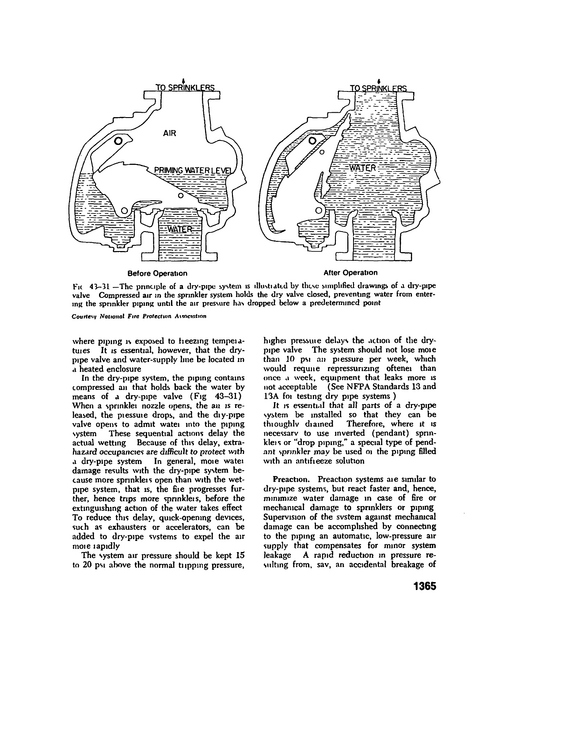
Fic 41-31 --The principle of a dry-pipe system is illustiatcd by these simplified drawings of a dry-pipe valve Compressed air in the sprinkler system holds the dry valve closed, preventing water from enter ing the sprinkler piping until the air pressure has dropped below a predetermined point Covrteut National Ftre Protection Association where piping is exposed to heezmg tempeiatuies It is essential, however, that the drypipe valve and water-supply line be located m a heated enclosure In the dry-pipe system, the piping contains compressed an that holds back the water by means of a dry-pipe valve (Fig 43-31) When a sprinklei nozzle opens, the au is re leased, the piessuie drops, and the diy-pipe valve opens to admit watei into the piping system These sequential actions delay the actual wetting Because of this delay, extra hazard occupancies are difficult to protect with a dry-pipe system In general, moie watei damage results with the dry-pipe system be cause more sprmkleis open than with the wetpipe system, that is, the fiie progresses fur ther, hence trips more sprmkleis, before the extinguishing action of the water takes effect To reduce this delay, quick-opening devices, such as exhausters or accelerators, can be added to dry-pipe systems to expel the air moie lapidly The system air pressure should be kept 15 to 20 psi above the normal tupping pressure, highei pressuie delays the action of the drypipe valve The system should not lose moie than 10 psi an piessure per week, which would requne repressurizmg oftenei than once a week, equipment that leaks more is not acceptable (See NFPA Standards 13 and 13A foi testing dry pipe systems ) It is essential that all parts of a dry-pipe system be installed so that they can be thioughlv diamed Therefore, where it is necessary to use inverted (pendant) spnnkleis or "drop piping," a special type of pend ant sprinkler may be used oi the piping filled with an antifieeze solution Preaction.
refid# jyVJ85J7d71adJeggd289J2kO1 page
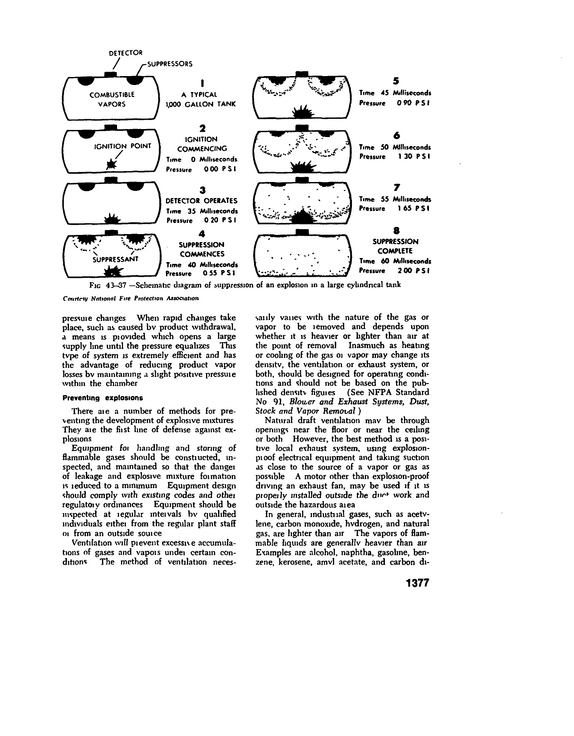
DETECTOR 5 Time 45 Milliseconds Pressure 0 90 P S I 6 Time 50 Milliseconds Pressure 1 30 P S I 3 DETECTOR OPERATES Time 35 Milliseconds Pressure 0 20 P S I 4 SUPPRESSION COMMENCES Time 40 Milliseconds Pressure 0 55 P SI 7 Time 55 Milliseconds Pressure 1 65 P SI 8 SUPPRESSION COMPLETE Time 60 Milliseconds Pressure 2 00 PS I Fic 43-37 --Schematic diagram of suppression of an explosion in a large cylindrical tank Courtesy National Fire Protection Association pressuie changes When rapid changes take place, such as caused bv product withdrawal, a means is piovided which opens a large supply line until the pressure equalizes This tvpe of system is extremely efficient and has the advantage of reducing product vapor losses bv maintaining a slight positive pressuie within the chamber Preventing explosions There aie a number of methods for pre venting the development of explosive mixtures They aie the fiist line of defense against ex plosions Equipment foi handling and storing of flammable gases should be constiucted, in spected, and maintained so that the dangei of leakage and explosive mixture foimation is ledueed to a minimum Equipment design should comply with existing codes and othei regulatoiy ordinances Equipment should be inspected at legular inteivals bv qualified individuals eithei from the regular plant staff oi from an outside souice Ventilation will pi event excessive accumula tions of gases and vapois undei certain con ditions The method of ventilation neces- sanly vanes with the nature of the gas or vapor to be lemoved and depends upon whether it is heavier or lighter than air at the point of removal Inasmuch as heating or cooling of the gas oi vapor may change its densitv, the ventilation or exhaust system, or both, should be designed for operating condi tions and should not be based on the pub lished densitv figuies (See NFPA Standard No 91, Blower and Exhaust Systems, Dust, Stock and Vapor Removal ) Natural draft ventilation mav be through openings near the floor or near the ceiling or both However, the best method is a posi tive local exhaust system, using explosionpioof electrical equipment and taking suction as close to the source of a vapor or gas as possible A motor other than explosion-proof driving an exhaust fan, may be used if it is piopeily installed outside the dun- work and outside the hazardous aiea In general, industiial gases, such as acety lene, carbon monoxide, hvdrogen, and natural gas, are lighter than air The vapors of flam mable liquids are generally heavier than air Examples are alcohol, naphtha, gasoline, ben zene, kerosene, amvl acetate, and carbon di- 1377
refid# QkzyrYxqMzyOMYRMq525YEe241 page
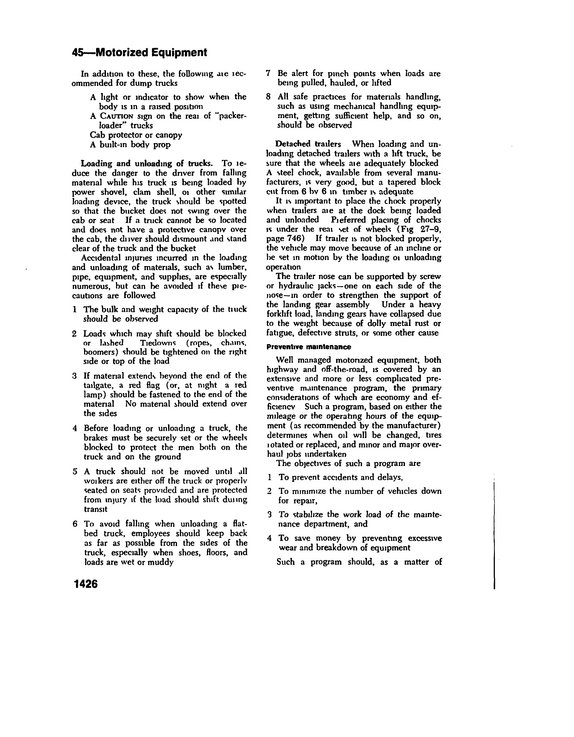
45--Motorized Equipment In addition to these, the following aie lecommended for dump trucks A light or indicator to show when the body is in a raised position A Caution sign on the real of "packerloader" trucks Cab protector or canopy A built-in body prop Loading and unloading of trucks.
refid# ykGwd7kd6EezEE6YB0EeYRzkV1 page
Index Knives, use, 986-987 Knots, efficiency, 716 L Labels Department of Transportation, 117, 655 hazardous chemical, 1034-1035 principles, 227 solvents, 1048-1049 Labor Canadian offices, 624-626 international associations, 626-628 state offices, 618-623 U S Department of Labor, 22-24, 619 Labor-management cooperation, 15 Ladders, 413-418 bases, nonshp, 413-414 electrical hazards, 417--418 maintenance, 414--416 manhft, 785 rolling, 357 safety tops, 413-414 slope, 416 stock picking, 656-657 Ladles, foundry, 905--906 Lamps, see Lighting equipment Landings, elevator, 775 Landscaping, 371 Laser beams, 1057-1059 effect on man, 1058-1059 eye protection, 487 TLV's, 1099-1103 Latex, 1236 Lathes engine, 831-832 screw machines, 832 spinning, 838 turret, 832 Lavatories per employee, 538 Laws early, 16, 21 noise (sound), 1484-1492 terminology, 572-573 see also Workmen's compensation laws and Occupational Safety and Health Act Layout office, 352-357 plant, 373 Lead, 901 casts, 940 clothing, 526 poisoning, 1030-1031 toxicology, 1113, 1151-1152 Learning, 257-261 processes, 241 Leather clothing, 517-518 Length, conversion factors, 1474 1510 Lenses laser protection, 487 plastic vs glass, 483-484 welding filter shades, 486, 488, 972 see also Eye protection Lethal dose (LD), definition, 1115-1116 Lettering, visual aid, 325-326 Liability, third party, 192 Licensee, 572 Lifelines, safety belt, 422, 513-514, 716 Life Safety Code, 354, 389, 1326 Lifting correct way, 833-637 dummy, visual aid, 336--337 equipment for, 640-644 heavy objects, 403 limits, 632 personal protection, 660-661 specific shapes, 637-640 Lift trucks guards for, 742 operation, 747--752 Lighting, see Illumination Lighting equipment, 373 lamps, 382-385 luminaries, 379, 381 maintenance, 381-382, 434--435 Limerick contests, 282-283 Linen Supply Association of America, 614 Liners, safety hat, 472--473 Links, safety, 403 Linoleum, 578 Liquefied petroleum gas, see LP-gas Liquid, definition, 1236 specific gravity, 1459-1460 Liquids, flammable and hazardous definitions, 1287, 1289-1291 fueling, 402, 409 handling, 408, 1291-1296 health hazards, 1296-1298, 1314-1318 loading and unloading, 648-652, 1298-1303 storage, 374, 648-652, 1303-1314 uses, 1318-1321 see also individual chemical names Lith-X dry powder, 1356 Live roll conveyors, 708-709 Loading, see Materials handling Loads, bearing on soils and rock, 1459 Loans, small business, 42 Local exhaust systems, 1009, 1010 Locker rooms, 540, 1338 Lockouts, electric equipment, 402, 437, 1282- 1284 Locomotive cranes, 691-692 Locomotives, 790-791 Loss control, total, 94-97 LP-gas, 1236 handling, 759-760, 1321 heaters, 409-410
refid# b536XDgEXYzQMDZe3Jrgjjoog1 page
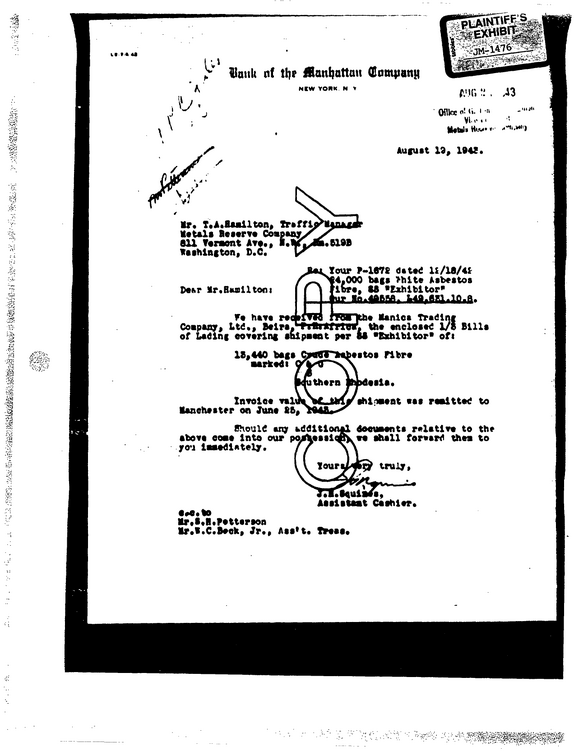
/ I /' $tmh nf tljr Manhattan (Euntpanii NEW YORK N Y '*`-1 O' //. , <?
refid# rezB1Xyr5gGGYMDNBpaJ2MGvV1 page
amr . ,43
refid# e1Mo3DJovdnx6mEY5Dwr2aBxe1 page
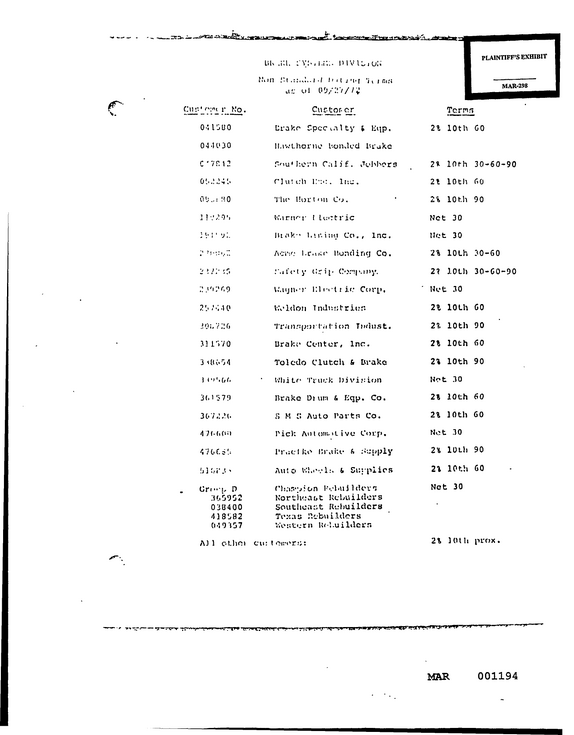
r No.
refid# RjMO55GOndYmZEO94qkz1Q70v1 page
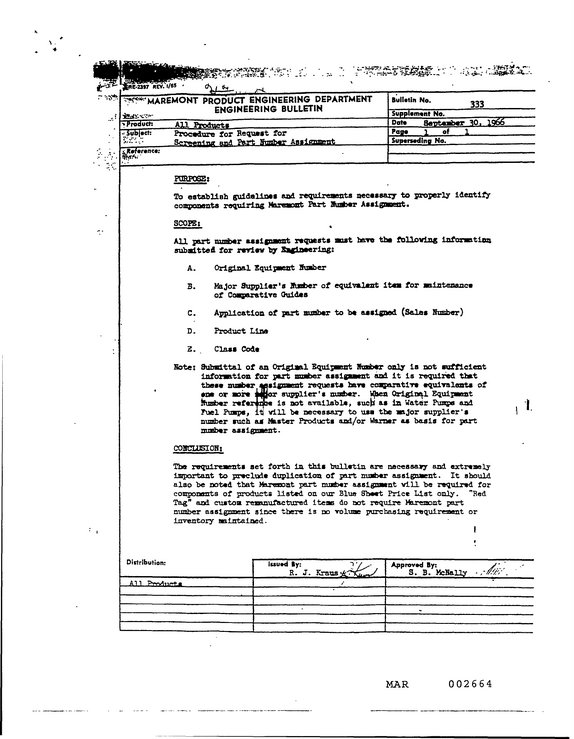
1 4> I PLAINTIFF'S EXHIBIT l f i ) MAR 002663 \. .- !
refid# VGyGKJbnKwKEOE2z4BJyem84w2 pages
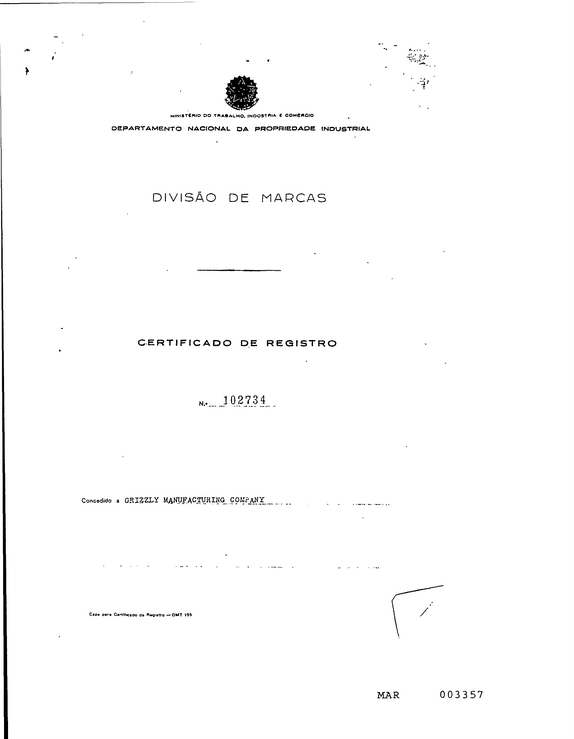
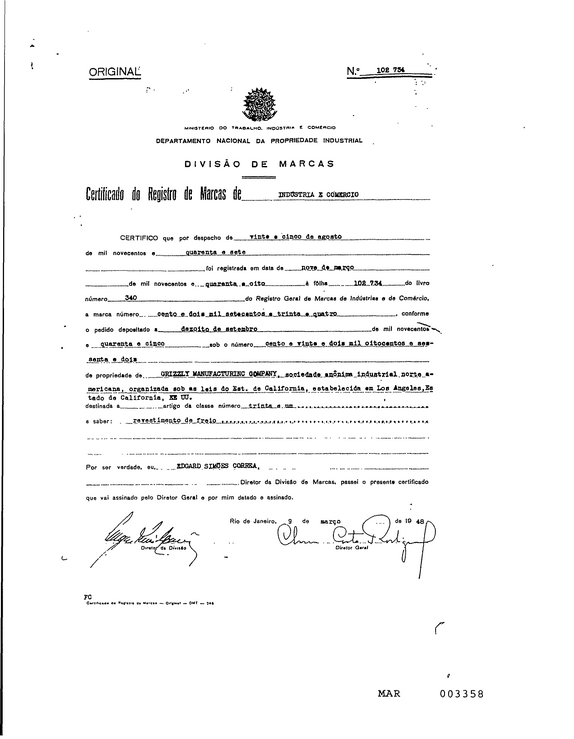
PLAINTIFF'S EXHIBIT 003356 MiNisrimo do taabalho, ino031*a i comArcio DSPARTAMENTO NACtONAL OA PROPRIEDADE INDUSTRIAL DIVISAO DE MARCAS CERTIFICADO DE REQISTRO N>... 1 0273 4 Concedido a GRIZZLY MANUFACTURING ..COMPANY Cap* p*t C'ilfteaoo ftgi*tro -- DMT 156 MAR 003357 [ ORIGINAL N 108 784 MiNI3TEiO OO TAA8ALHO. iNOC/STRi* C COMfiWClO DEPARTAMENTO NACIONAL DA PROPRIEDADE INDUSTRIAL DIVISAO D E MARCAS Certifado do Reyisiro de Marcas da........ * cqmrciq_______ _____ _ CERTIFICO quo por doBpacho do........_7lMl,,...oA"...dp...agp.atiO......................... ........ .................
refid# 93ee8mmQ44j0LpYZ2oBddy5KV7 pages
S tf U,;'.'-- f ) "1 ^STArC3 UWl.tOS l VEf'fXZUi'LA Ia L 3:JCA:tOApf.
refid# qkyL2axbrDeB5JnOoB7gk0o253 pages
V.
refid# wn4pKgnRJmgoBKoEJ9KY8DwD1 page
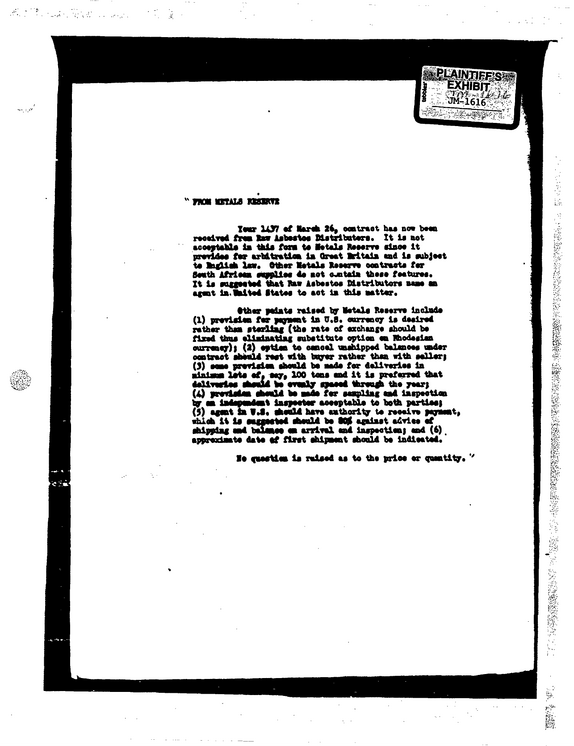
m URALS KKSSCnt Xwr 1437 of Sarah 24, ooatraot haa atm boon roooltod fron tar AibHta Matrlbotoro.
refid# g2ej64p9b1Ymm7qrybb0XVZx31 page