Refine
Estimated Years 2010-2019Clear
342 results foundRefine Search
FILE NAME Talc TALC DATE 2014 DOC TALC147 DOCUMENT DESCRIPTION Journal Article - Asbestos in Commercial Cosmetic Talcum Powder as a Cause of Mesothelioma in Women Asbestos in commercial cosmetic talcum powder as a cause of mesothelioma in women Ronald E.
refid# MMVd97v9k159jMjndBe9Rm4ka16 pages
FILE NAME Rogers Corporation ROG DATE 2014 DOC ROG003 DOCUMENT DESCRIPTION Legal - Defendant Rogers Corporation's Ammended Answers to Plaintiffs Interrogatories 7478-688 IN THE CIRCUIT COURT STATE OF MISSOURI TWENTY JUDICIAL CIRCUIT City of St.
refid# qm9RGw5gzqXy26b6zzG38BLM521 pages
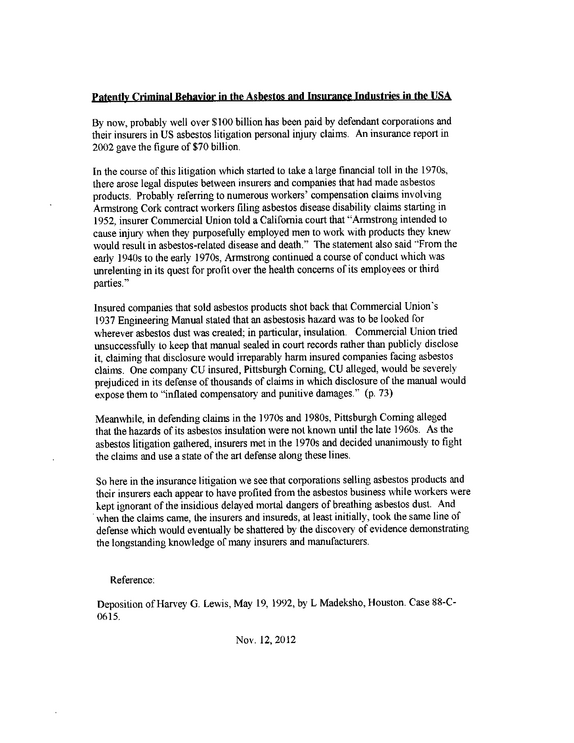
FILE NAME Insurance Industry INS DATE 2012 DOC INS078 DOCUMENT DESCRIPTION Paper - Patently Criminal Behavior in the Asbestos and Insurance Industries in the USA Written by Barry Castleman Patently Criminal Behavior in theAsbestos and Insurance Industries Industries thtehe USA By now probably well over 100 billion has been paid by defendant corporations and their insurers in US asbestos litigation personal injury claims An insurance report in 2002 gave the figure of 70 billion In the course of this litigation which started to take a large financial toll in the 1970s there arose legal disputes between insurers and companies that had made asbestos products Probably referring to numerous workers compensation claims involving Armstrong Cork contract workers filing asbestos disease disability claims starting in 1952 insurer Commercial Union told a California court that Armstrong intended to cause injury when they purposefully employed men to work with products they knew would result in asbestos disease and death The statement also said From the early 1940s to the early 1970s Armstrong continued a course of conduct which was unrelenting in its quest for profit over the health concerns of its employees or third parties Insured companies that sold asbestos products shot back that Commercial Union's 1937 Engineering Manual stated that an asbestosis hazard was to be looked for wherever asbestos dust was created in particular insulation Commercial Union tried unsuccessfully to keep that manual sealed in court records rather than publicly disclose it claiming that disclosure would irreparably harm insured companies facing asbestos claims One company CU insured Pittsburgh Corning CU alleged would be severely prejudiced in its defense of thousands of claims in which disclosure of the manual would expose them to inflated compensatory and punitive damages p 73 Meanwhile in defending claims in the 1970s and 1980s Pittsburgh Corning alleged that the hazards of its asbestos insulation were not known until the late 1960s As the asbestos litigation gathered insurers met in the 1970s and decided unanimously to fight the claims and use a state of the art defense along these lines So here in the insurance litigation we see that corporations selling asbestos products and their insurers each appear to have profited from the asbestos business while workers were kept ignorant of the insidious delayed mortal dangers of breathing asbestos dust And when the claims came the insurers and insureds at least initially took the same line of defense which would eventually be shattered by the discovery of evidence demonstrating the longstanding knowledge of many insurers and manufacturers Reference Deposition of Harvey G.
refid# rBe126KBr9XoGz0a1pQQZYbrJ2 pages
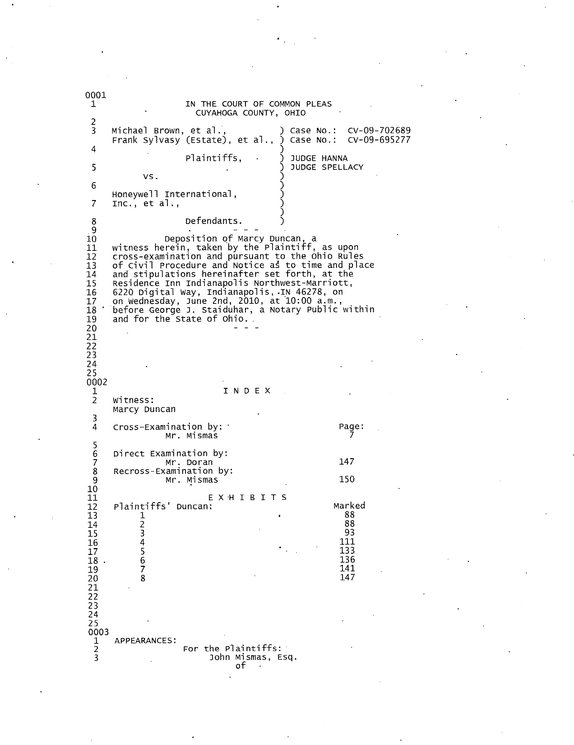
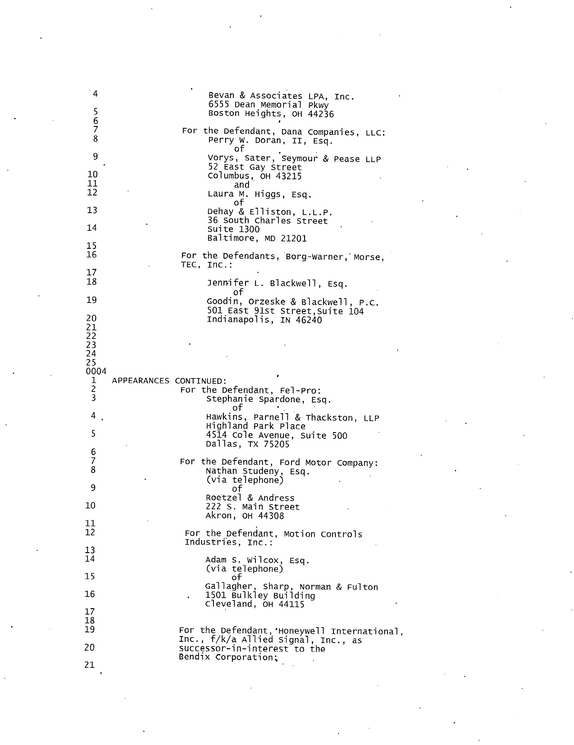
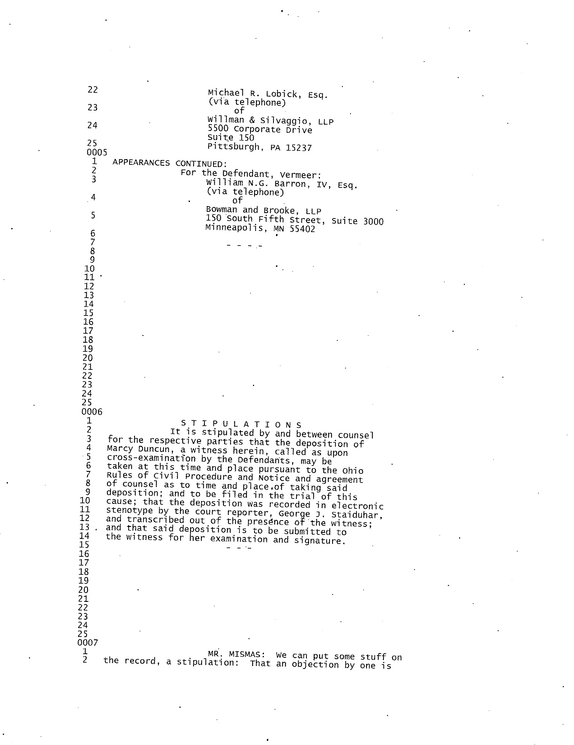
FILE NAME: Dana (DAN) DATE: 2010 DOC#: DAN010 DOCUMENT DESCRIPTION: Legal - Deposition of Marcy Duncan 0001 1 2 3 IN THE COURT OF COMMON PLEAS .
refid# rxvLnY1EOZyLk4EVJBNr1EnD063 pages
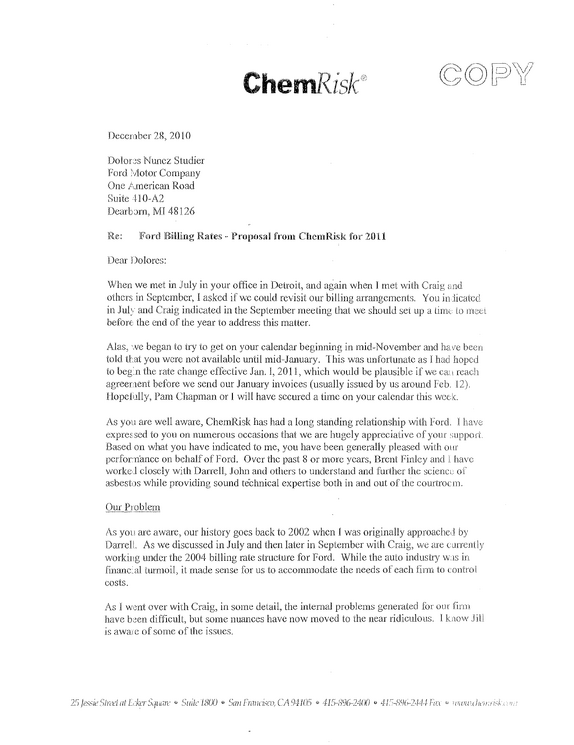
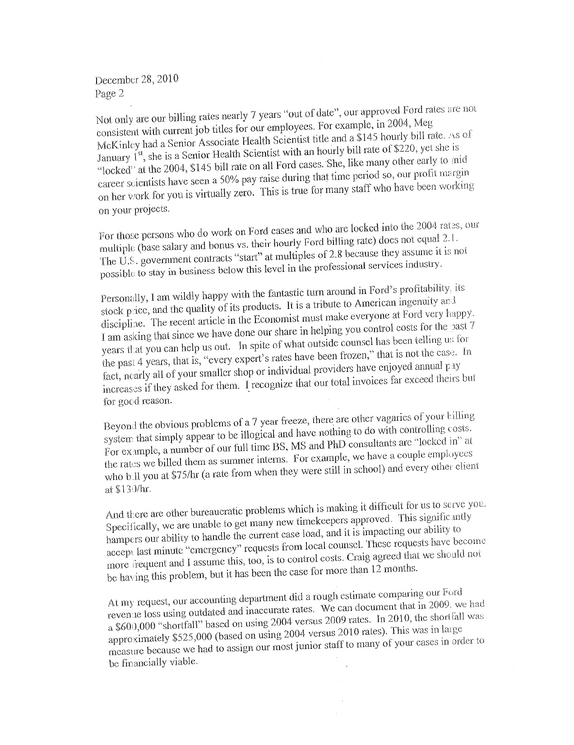
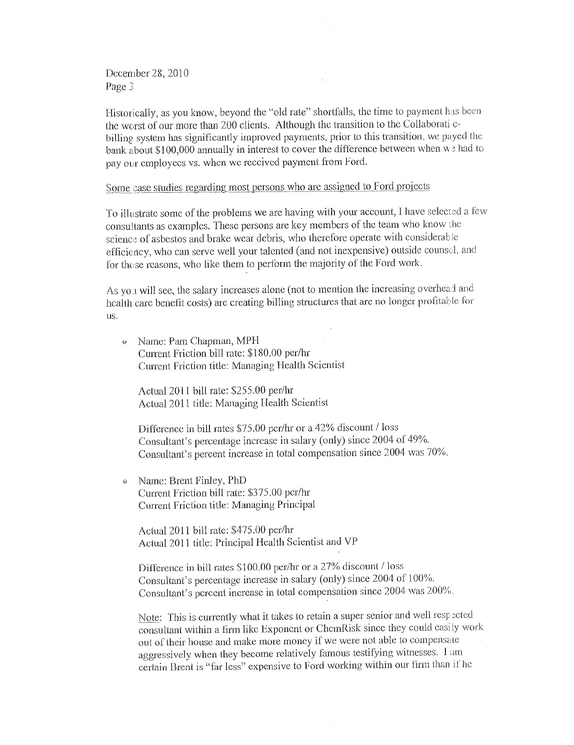
FILE NAME: Ford (FD) DATE: 2010 Dec 28 DOC#: FD238 DOCUMENT DESCRIPTION: Letter to Ford from ChemRisk RE Ford Billing Rates ChemRisk'" IT December 28, 2010 Dolores Nunez Studier Ford Motor Company One American Road Suite 410-A2 Dearborn, M I 48126 Re: Ford Rilling Rates - Proposal from C hem R isk for 2011 Dear Dolores: When we met in July in your office in Detroit, and again when I met with Craig and others in September, I asked if we could revisit our billing arrangements.
refid# vVaOpqL11jgLegOdpdmZEEM8634 pages
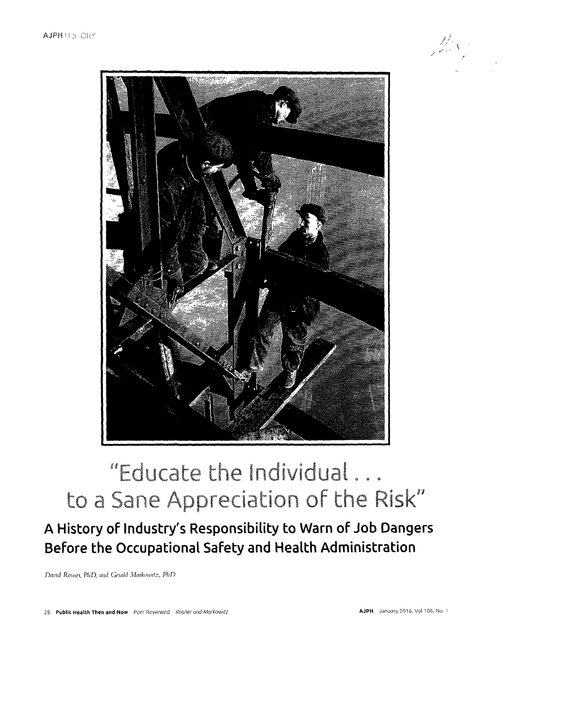
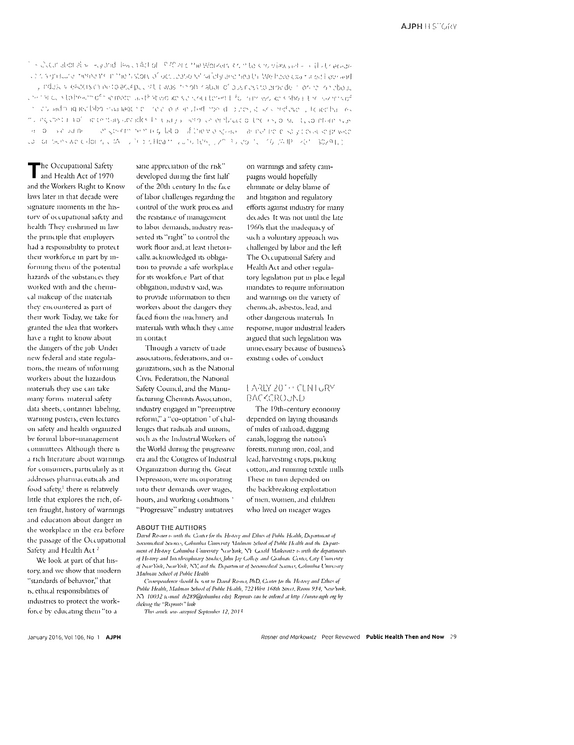
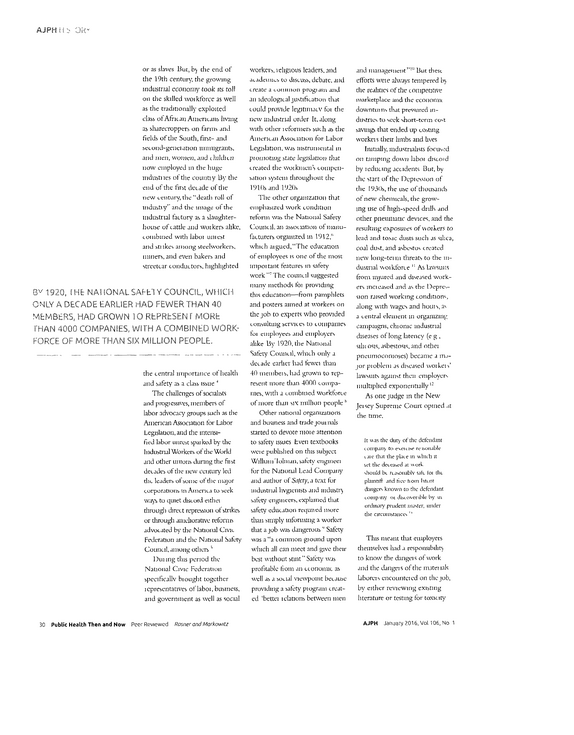
FILE NAME: Warning Labels (WL) DATE: 2016 June DOC#: WL015 DOCUMENT DESCRIPTION: Journal Article - A History of Industry1 Responsibility to Warn of Job Dangers before OSHA AJPH ' i :i C!
refid# NGD6LmLKae4rxJ0bLeY4m8NZQ9 pages
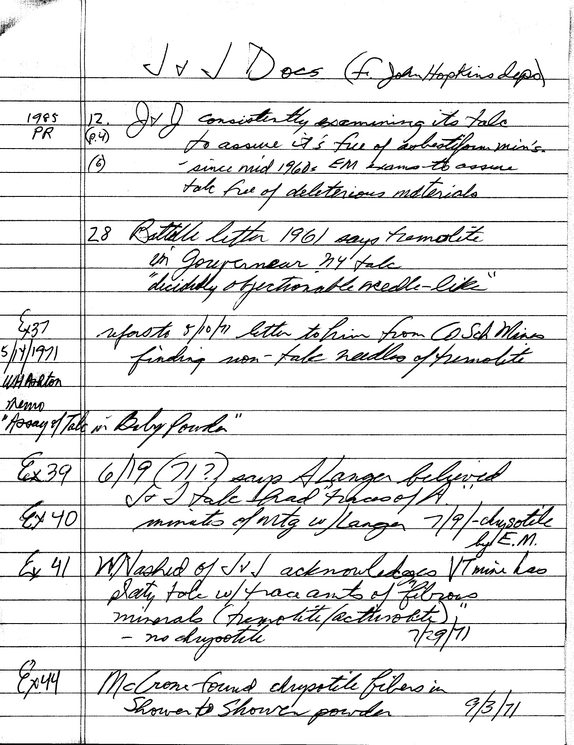
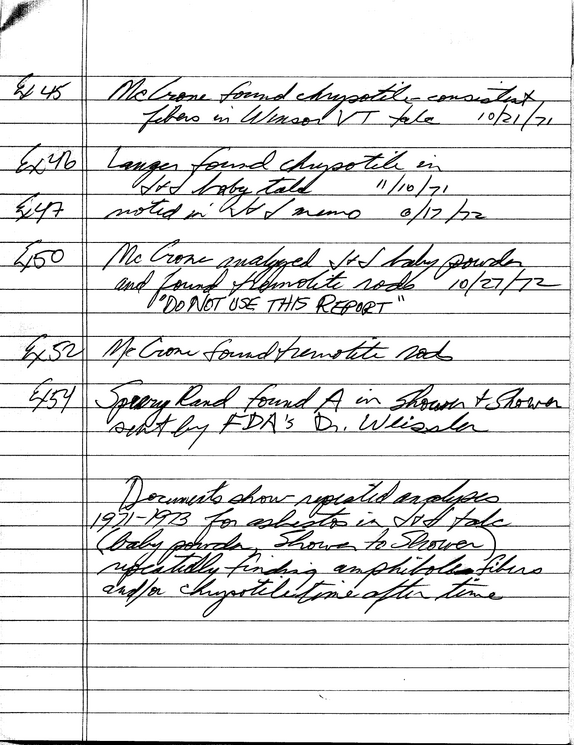
FILE NAME: Johnson & Johnson (JAJ) DATE: 2018 DOC#: JAJ020 DOCUMENT DESCRIPTION: Barry Castleman Handwritten Notes on J&J Docs - j ff!
refid# LKpQr1gjM1QnK9K3G5neeKMxX3 pages
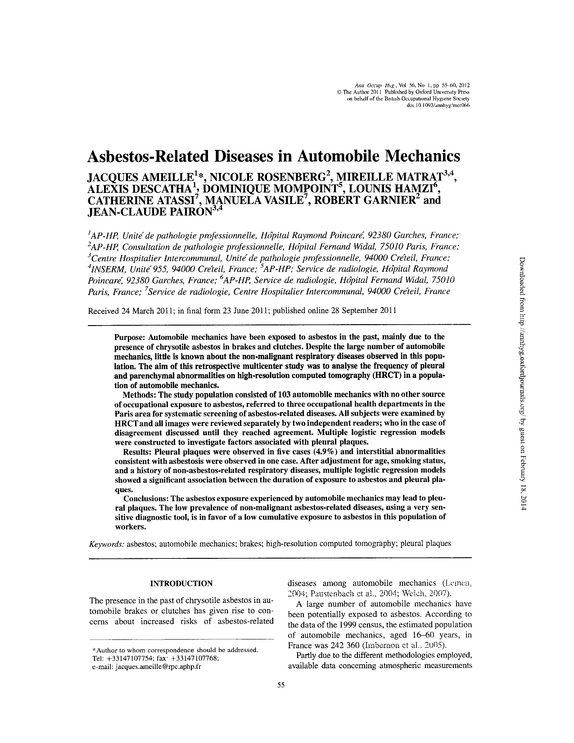
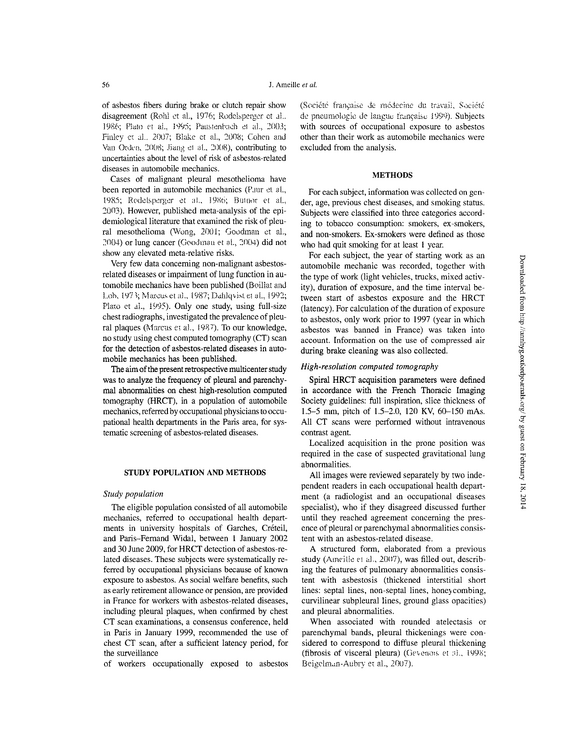
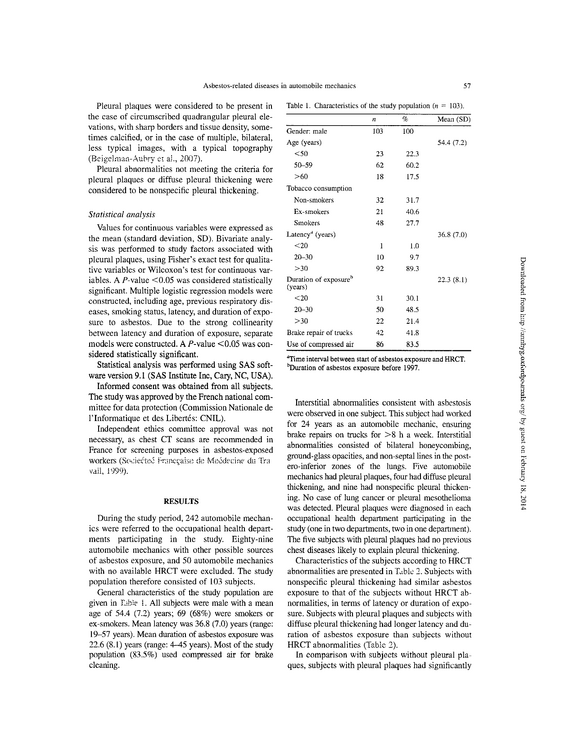
FILE NAME Brakes BRK DATE 2012 DOC BRK222 DOCUMENT DESCRIPTION Journal Article - Asbestos Diseases in Automobile Mechanics Ann Occup Hyg Vol No 1 pp 55-60 2012 'The Author 2011 Published by Oxford University Press on behalf of the British Occupational Hygiene Society doi 10 mer066 Asbestos Diseases in Automobile Mechanics JACQUES AMEILLE,,NICOLE ROSENBERGMIREILLE MATRAT ALEXIS DESCATHA,,DOMINIQUE MOMPOINT LOUNIS HAMZI CATHERINE ATASSI MANUELA VASILE ROBERT GARNIERand CLAUDE PAIRON HP Unit^'de pathologie professionnelle H^pitalRaymond Poincar^'92380 Garches France 2AP Consultation de pathologie professionnelle Hopital Fernand Widal 75010 Paris France Centre Hospitalier Intercommunal Unit^'de pathologie professionnelle 94000 Cr^'teilFrance INSERM Unit^'955 94000 Cr^'teilFrance HP Service de radiologie Hopital Raymond Downlade Poincar^'92380 Garches France HP Service de radiologie Hopital Fernand Widal 75010 Paris France Service de radiologie Centre Hospitalier Intercommunal 94000 Cr^'teilFrance Received 24 March 2011 in final form 23 June 2011 published online 28 September 2011 from htp:/anhyg.oxfrdjounals.org/ htp:/anhyg.oxfordjournals.org/ Purpose Automobile mechanics have been exposed to asbestos in the past mainly due to the htp:/anhyg.oxfrdjounals.org/ presence of chrysotile asbestos in brakes and clutches Despite the large number of automobile mechanics little is known about the malignant respiratory diseases observed in this popu- lation The aim of this retrospective multicenter study was to analyse the frequency of pleural htp:/anyg.oxfrdjuls and parenchymal abnormalities on resolution computed tomography HRCT in a popula- tion of automobile mechanics Methods The study population consisted of 103 automobile mechanics with no other source of occupational exposure to asbestos referred to three occupational health departments in the Paris area for systematic screening of asbestos diseases All subjects were examined by HRCT and all images were reviewed separately by two independent readers who in the case of by guest disagreement discussed until they reached agreement Multiple logistic regression models were constructed to investigate factors associated with pleural plaques Results Pleural plaques were observed in five cases 4.9 and interstitial abnormalities on consistent with asbestosis were observed in one case After adjustment for age smoking status February and a history of asbestos respiratory diseases multiple logistic regression models a showed significant association between the duration of exposure to asbestos and pleural pla- ques 18 2014 Conclusions The asbestos exposure experienced by automobile mechanics may lead to pleu- ral plaques The low prevalence of malignant asbestos diseases using a very sen- sitive diagnostic tool is in favor of a low cumulative exposure to asbestos in this population of workers Keywords asbestos automobile mechanics brakes resolution computed tomography pleural plaques INTRODUCTION The presence in the past of chrysotile asbestos in automobile brakes or clutches has given rise to con- cerns about increased risks of asbestos * Author to whom correspondence should be addressed Tel +33147107754 fax +33147107768 mail jacques.ameille@rpc.aphp.fr jacques.ameille@rpc.aphp.fr diseases among automobile mechanics Lemnen 2004 Paustenbach et al 2004 Welch 2007 A large number of automobile mechanics have been potentially exposed to asbestos According to the data of the 1999 census the estimated population of automobile mechanics aged 16-60 years in France was 242 360 Imbernon et al 2005 Partly due to the different methodologies employed available data concerning atmospheric measurements 55 56 J.
refid# RJK1M59LQXrz5b3YVze0VLLwv7 pages
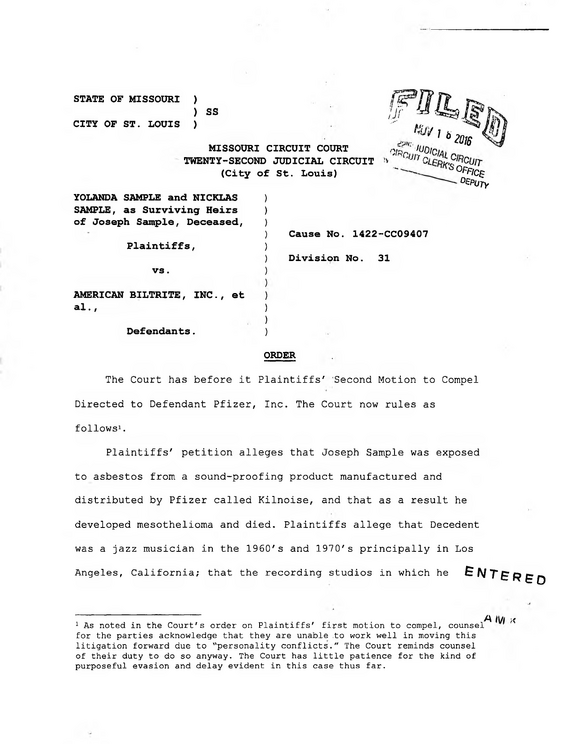
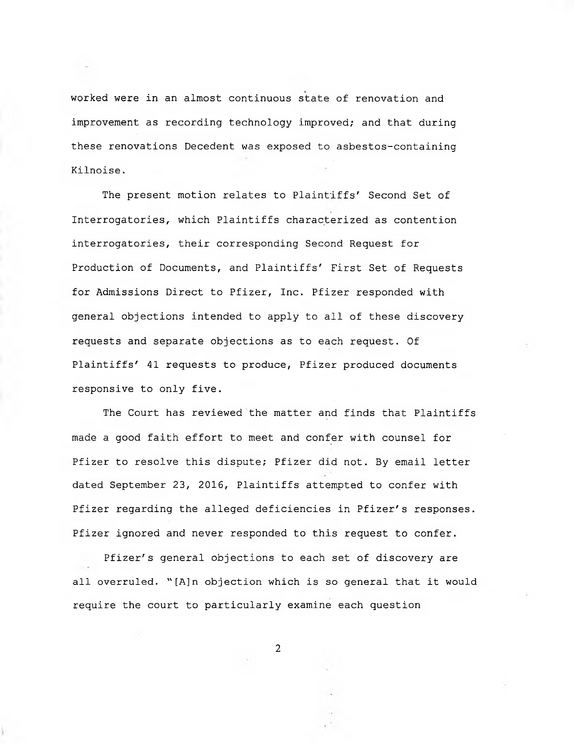
FILE NAME: Pfizer (PFIZ) DATE: 2016 DOC#: PFIZ052 DOCUMENT DESCRIPTION: Legal - Order [Sample vs.
refid# KRr7MBJ2y9qGgpjyV6Qb8O31Q12 pages
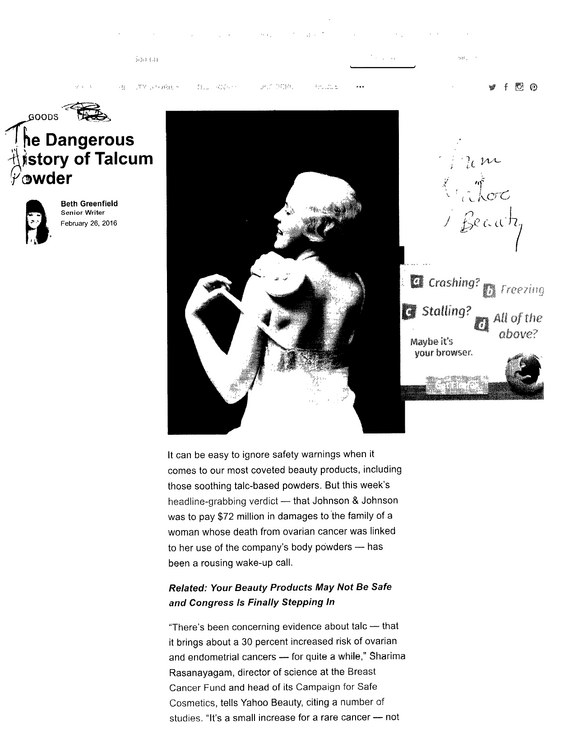
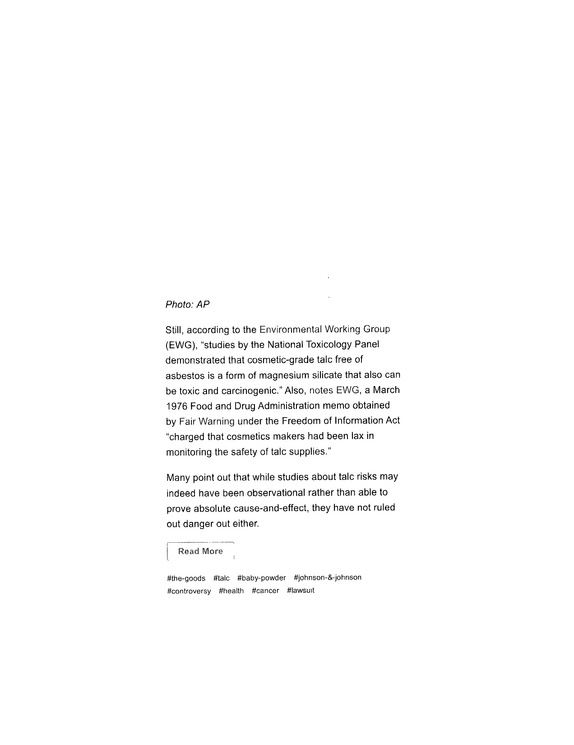
FILE NAME: Talc (TALC) DATE: 2016 DOC#: TALC124 DOCUMENT DESCRIPTION: Yahoo Article - The Dangerous History of Talcum Powder C300DS liee DDangerous jstory of Talcum powder Beth Greenfield Senior Writer February 26, 2016 * f It can be easy to ignore safety warnings when it comes to our most coveted beauty products, including those soothing talc-based powders.
refid# 1y0OmjMVpkEaNpLNnmB9QX7JK4 pages
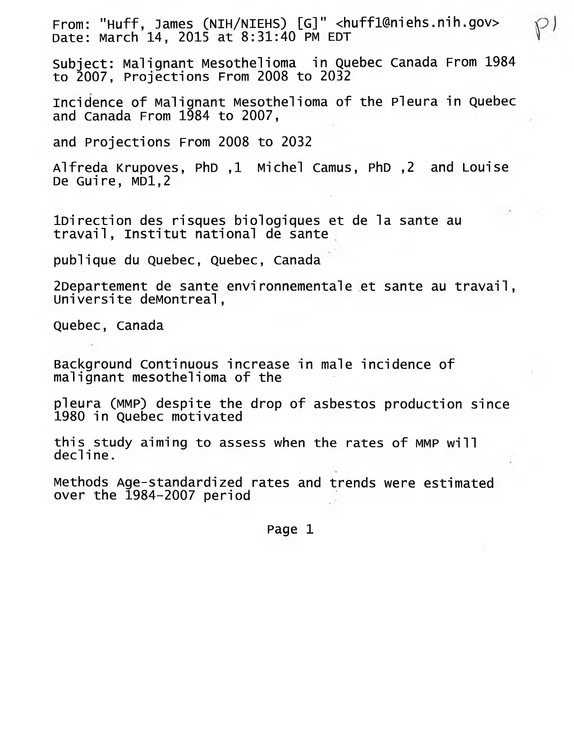
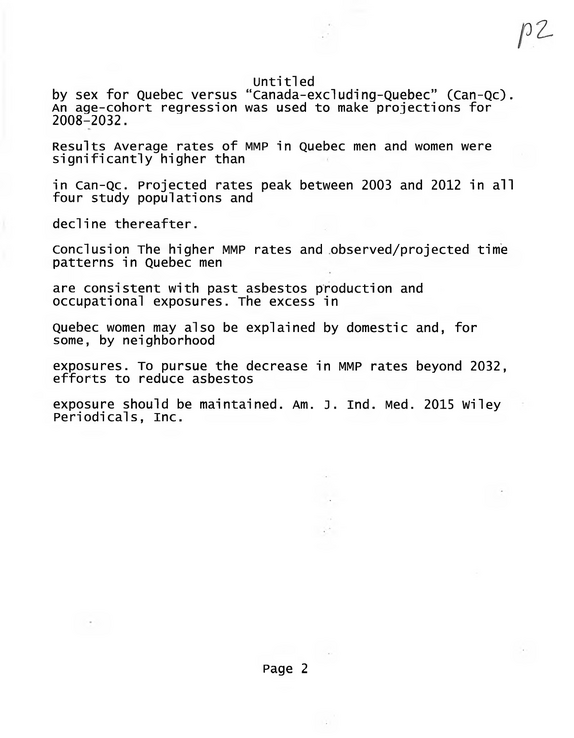
FILE NAME: Neighborhood Exposures (NE) DATE: 2015 DOC#: NE001 DOCUMENT DESCRIPTION: Medical Journal Abstract - Mesothelioma in Quebec and Canada From: "Huff, James (NIH/NIEHS) [G]" <huffl@niehs.nih.gov> Date: March 14, 2015 at 8:31:40 PM EDT Subject: Malignant Mesothelioma in Quebec Canada From 1984 to 2007, Projections From 2008 to 2032 incidence of Malignant Mesothelioma of the Pleura in Quebec and Canada From 1984 to 2007, and Projections From 2008 to 2032 Alfreda Krupoves, PhD ,1 Michel Camus, PhD ,2 and Louise De Gui re, MDl,2 lDirection des risques biologiques et de la sant au travail, institut national de sant publique du Quebec, Quebec, Canada 2Departement de sant environnementale et sant au travail, Universit deMontreal, Quebec, canada Background continuous increase in male incidence of malignant mesothelioma of the pleura (MMP) despite the drop of asbestos production since 1980 in Quebec motivated this study aiming to assess when the rates of MMP will decli ne.
refid# 0wxgVByLDKyQNX7k1DzZ4NOd3 pages
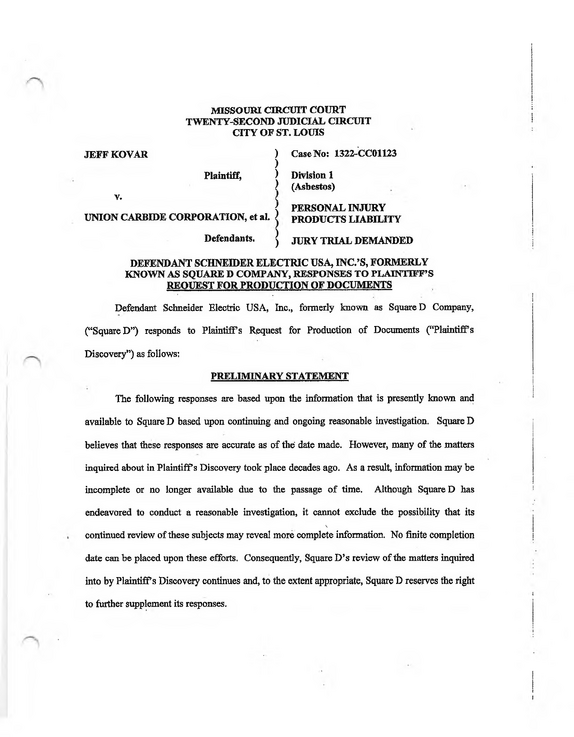
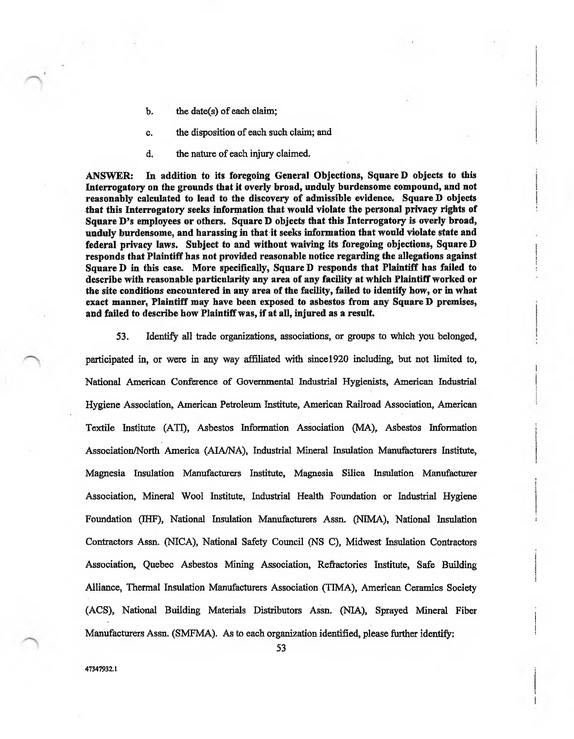
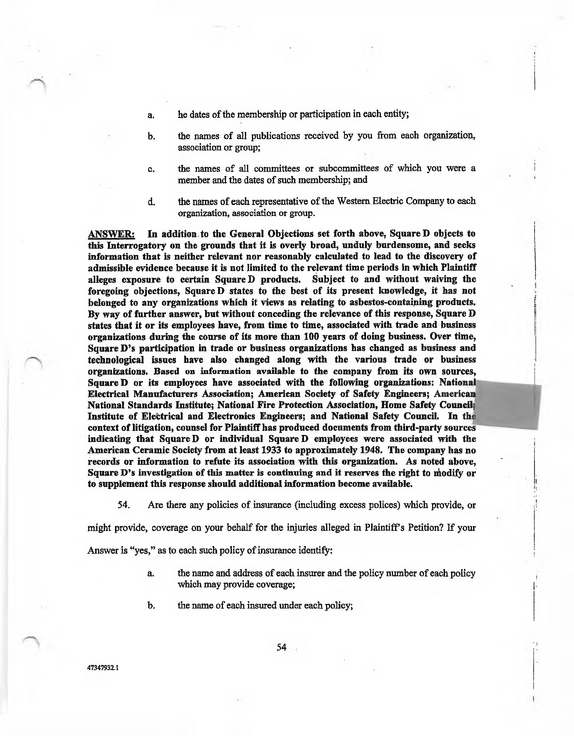
FILE NAME: Square D(SQD) DATE: 2014 DOC#: SQ.D004 DOCUMENT DESCRIPTION: Response to Plaintiffs Request for Interrogatories with NSC Membership Certificate 1952 MISSOURI CIRCUIT COURT TWENTY-SECOND JUDICIAL CIRCUIT CITY OF ST.
refid# k6zV6vGvZVjJkyeLV6JEzD6Oq7 pages
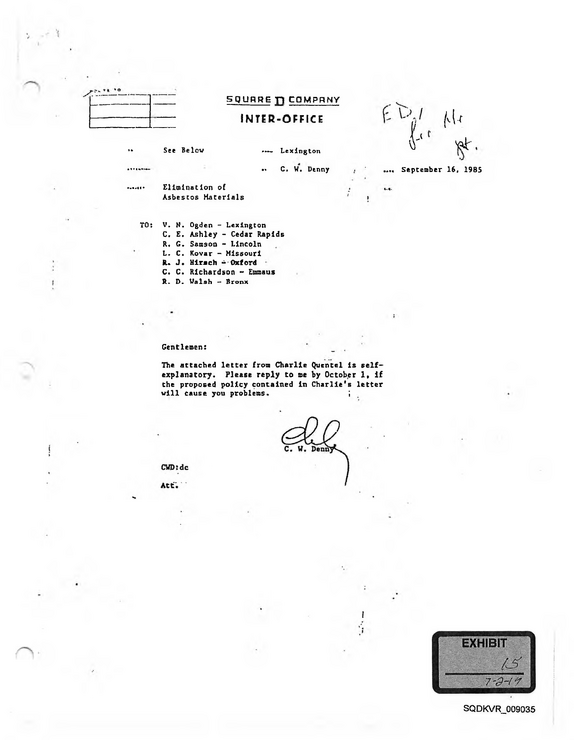
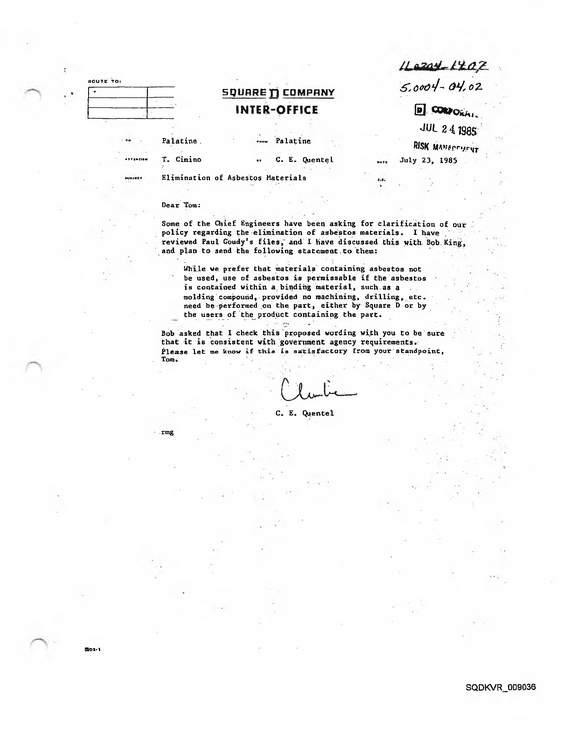
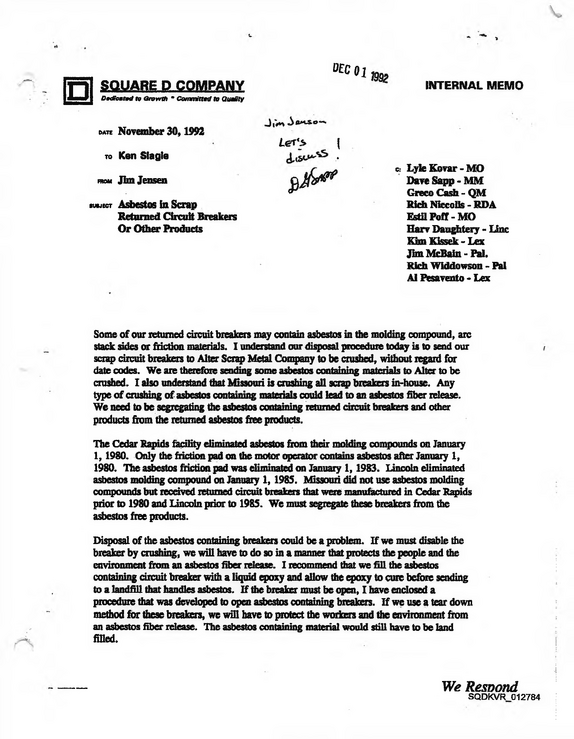
FILE NAME: Square D(SQD) DATE: 2014 DOC#: SQD020 DOCUMENT DESCRIPTION: Legal - Deposition of Redfield for Square D App#15 5Q U RREnCdM PRN Y INTER-OFFICE >* See Below -- L exington C.
refid# dax4brxzQgqXxykv86E65MjMe5 pages
FILE NAME: Metropolitan Life (ML) DATE: 2016 Aug DOC#: ML176 DOCUMENT DESCRIPTION: Legal - Declaration of Barry Castleman ALBERT HOFF, JR. and GLORIA HOFF, Plaintiffs, -vs- X SUPERIOR COURT OF NEW JERSEY LAW DIVISION-MIDDLESEX COUNTY DOCKET NO.
refid# Jr5oz40dYm3JoQR6DoYYRKGd625 pages
FILE NAME Talc TALC DATE 2014 DOC TALC134 DOCUMENT DESCRIPTION Journal Article - Talc Use and Ovarian Cancer- Epidemiology Between a Rock and a Hard Place DOI dju260 First published online September 11 2014 xs Published by Oxford University Press 2014 This work is written by a US Government employee and is in the public domain in the US Talc Use and Ovarian Cancer Epidemiology Between a Rock and a Hard Place Nicolas Wentzensen Sholom Wacholder Correspondence to Nicolas Wentzensen MD PhD MS Division of Cancer Epidemiology and Genetics National Cancer Drive Room E114 Bethesda MD 20892-9774 mail Institute 9609 Medical Center wentzenn@mail.nih.gov With over 14000 deaths in the United Stated each year ovarian cancer is the most lethal gynecologic cancer 1 Most ovarian can- cers are detected at late stage and have poor prognoses Given the failure at prevention of death by screening for ovarian cancer using CA and transvaginal ultrasound 2 finding potential preventive interventions has greatest promise of reducing ovarian cancer mortality Ample epidemiologic evidence suggesting that inflammation plays an important role in ovarian carcinogenesis include associa- Downlade tions of incessant ovulation endometriosis and pelvic inflamma- tory disease with increased ovarian cancer risk 3 and reduced risks from observed for regular aspirin users 4 Evidence on perineal talc use as a risk factor for ovarian can- cer is more equivocal Talc a metamorphic mineral composed of magnesium silicate that absorbs water is a common component of genital powders Naturally talc has similarities to and occurs with asbestos although early studies hypothesized that asbestos contamination of talc may have a causal role in ovarian carcinogen- htp:/jnci.oxfrdualsg/ esis later control studies reporting use after cosmetic prod- in medical or pharmacy records that could be used to confirm or supplant reported use Therefore reporting bias is of great concern in control studies Previous studies have argued that a stronger association observed for certain ovarian cancer subtypes speaks against reporting bias 8 However the clinical presentation and prognosis of ovarian cancer which varies by ovarian cancer subtype may differentially affect cases reporting Further the quantification of tale dose is very difficult Cosmetic perineal powders vary in talc content Talc can be applied as spray or powder either directly to the genital region using swabs or by application on diaphragms The amount of talc applied or making contact with the ovary may vary substantially by mode of application Particularly the cohort studies suffer from very limited exposure information The Nurses Health Study which previously reported on talc use collected only information on frequency of talc use per week 11 whereas the Women's Health Initiative 7 only collected information on duration of use not on frequency So far no epidemiologic study has demonstrated a response relationship between talc use and ovarian cancer risk ucts became asbestos in the United States continued to show associations In addition to the difficulties of talc exposure assessment ovarian by guest The biological basis of possible talc cancer is a challenging outcome because of its rarity and heteroge- carcinogenicity is not neity 12 There is increasing evidence supporting the hypothesis on understood Direct physical contact of tale with ovarian epithelium that ovarian cancers may derive from different cells of origin For May may cause chronic inflammation some studies have suggested ret- example some serous ovarian cancers supposedly originate in the rograde transport of talc particles through the reproductive tract fallopian tubes while some endometrioid 29 5 A mechanism that would not require direct contact of talc with cancers may originate in 2016 the tissue at risk is reduction of ectopic or orthotopic endometrial tissue 13 Reports of a stronger MUC1 antibodies which are association of talc use with serous ovarian cancers compared with associated with lower risk of ovarian cancer 6 other subtypes 8 might suggest that talc to the fallo- In this issue of the Journal Houghton and colleagues report on exposure pian tubes plays a role in carcinogenesis However the associations the association between perineal powder use and ovarian cancer with serous cancers are not consistent and experimental data are risk from the observational arm of the Women's Health Initiative lacking Even larger sample sizes and quality subtype data are WHI 7 Although several control studies have reported needed to establish specific associations associations between talc use and ovarian cancer risk 8-10 the Based on the evidence from epidemiologic studies in 2006 the only previous prospective evaluation of talc use and ovarian can- International Agency for Research on Cancer IARC classified cer risk did not find an association with ovarian cancer overall but geni- tal talc use as possibly carcinogenic to humans carcinogen group 2B with serous ovarian cancer the most common and most lethal sub- 14 The limited evidence for this recommendation based type 11 With over 400 cases the new study was well powered to was pri- marily on the control studies that showed increased risk of ovar- confirm previously reported effect sizes 7 However the authors ian cancer From a regulatory perspective cosmetic products do not found neither an association between perineal powder use with require review by the US Food and Drug Administration FDA but ovarian cancer overall nor with specific subtypes the FDA can act on evidence of harm related to cosmetic products Assessing the association between talc use and ovarian cancer While the FDA is currently monitoring potential health effects of cos- risk poses several challenges First and foremost assessment of talc metic talc use the activities have mainly focused on assuring that cos- exposure relies purely on report Talc use is not documented metic tale products are asbestos 15 Helpful recommendations inci.oxfordjournals.org JNCI [ Editorial 1 of2 to women will need to weigh the benefits of perineal talc use against the potential harms and the effective alternative products for reducing moisture absorption to prevent chafing and rashes no evaluation of term use of alternative products has been undertaken How do the results from Houghton et al 7 change the assessment of harm related to perineal talc use Overall the evidence regarding carcinogenicity of talc use remains inconclusive While reporting bias may explain the positive associations reported from control studies the limitations of cohort studies regarding possibil- exposure assessment still do not completely eliminate the ity that talc use is associated with ovarian cancer risk So where do we go from here Ideally we would want to have quality exposure data on talc use in a cohort setting with periodic updates on exposure These data are currently not available Ovarian cancer is rare and collecting these data prospectively will take time Behavioral exposures such as cosmetic talc use are very difficult to assess even though they are important for etiology and possibly public health Cohort studies need attentive participants long follow detailed histology and large sample size to be helpful control studies must avoid differential misclassification There does not seem to be an independent more objective data source that could be used to assess talc exposure With the current evidence it does not seem likely that additional conventional epidemiological studies will strengthen the evidence for or against talc carcinogenicity Other exposures face similar challenges of misclassification and reporting bias such as diet and physical activity One possible long shot for exposure assessment might be phone apps similar to those that can improve food frequency assessment or physical activity 16 These technologies could improve quantification of talc use providing detailed data on dose frequency and duration in cohort study participants Meanwhile cosmetic talc use has substantially decreased in the United States between 1982 and 2004 17 While the reasons are not clear it is possible that consumers already react to reports of potential harms despite the lack of clear evidence References 1.
refid# KJKrYJOyv6vpJpbYMzdVxqR203 pages