Refine
Estimated Years 1980-1989Clear
7,383 results foundRefine Search
The metabolism of benzene can be inhibited by toluene, leading to decreased toxicity.
refid# RJED1mGbzk6yv0zvemYOqLXZk18 pages
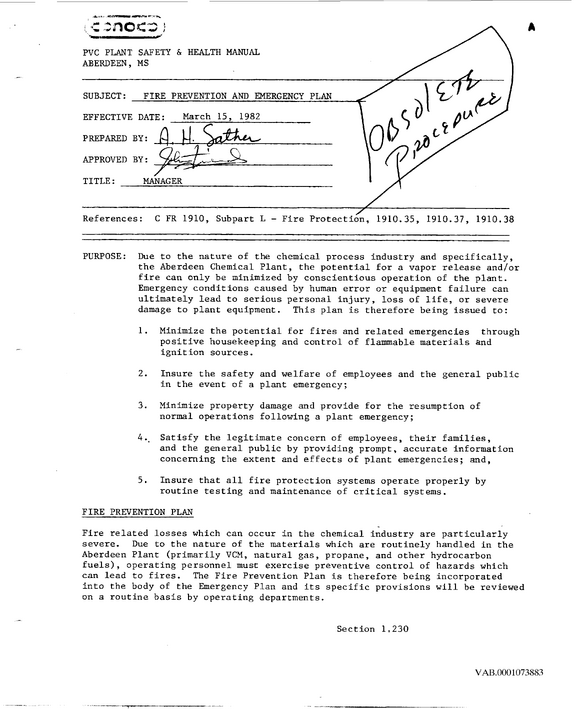
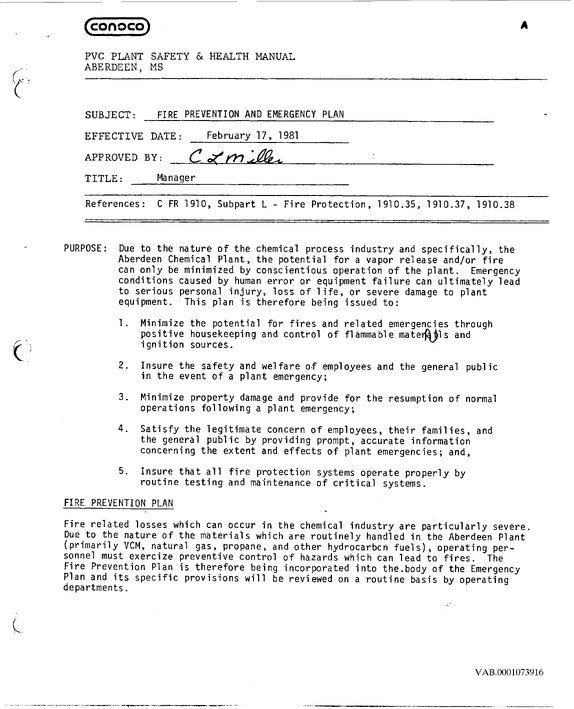
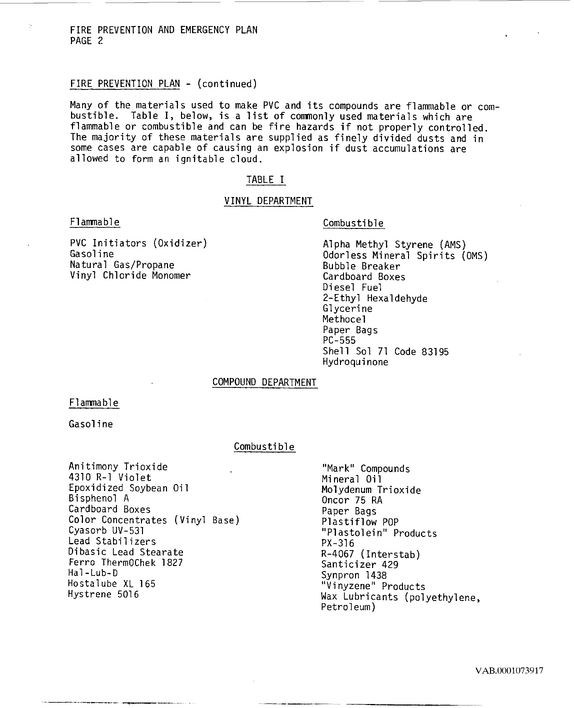
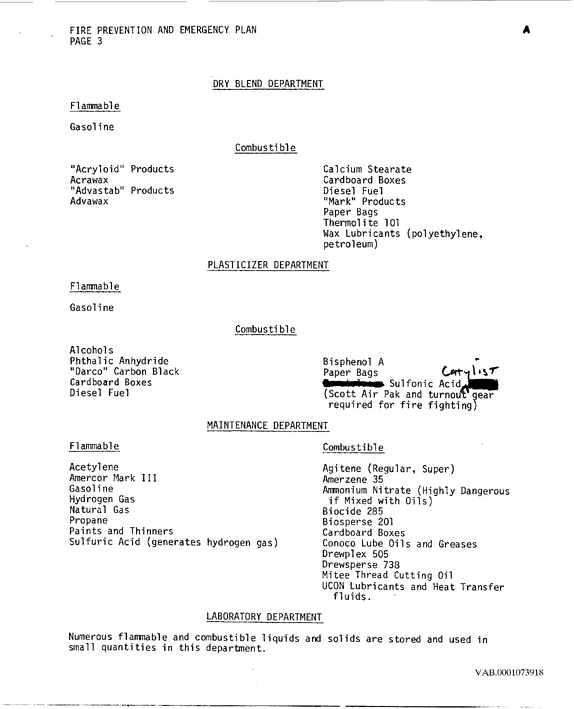
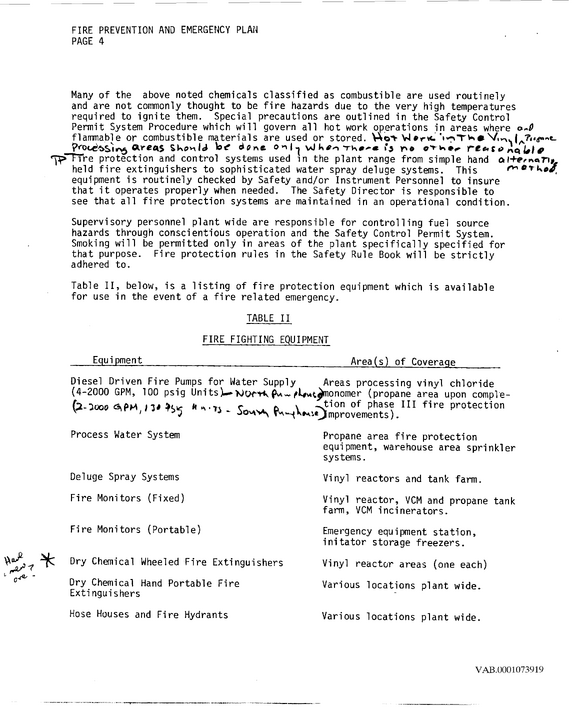
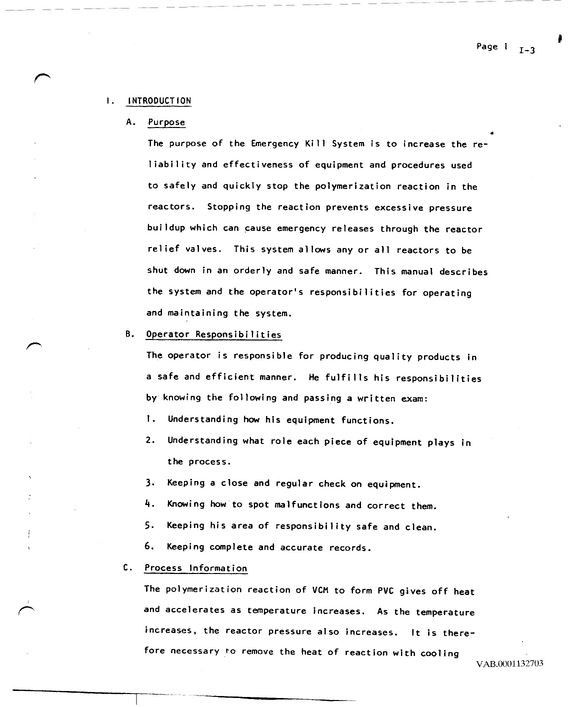
Emergency conditions caused by human error or equipment failure can ultimately lead to serious personal injury, loss of life, or severe damage to plant equipment.
refid# Obb6oB4vrOERwBzymrMBLYQQ28 pages
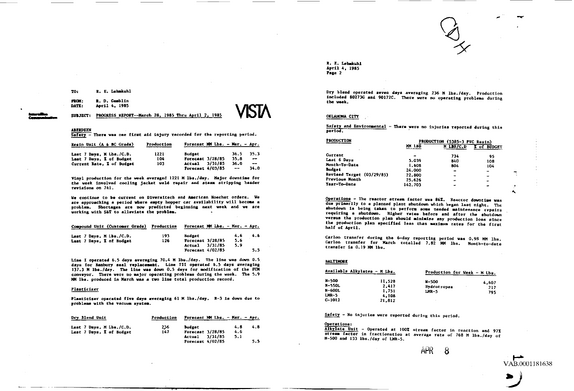
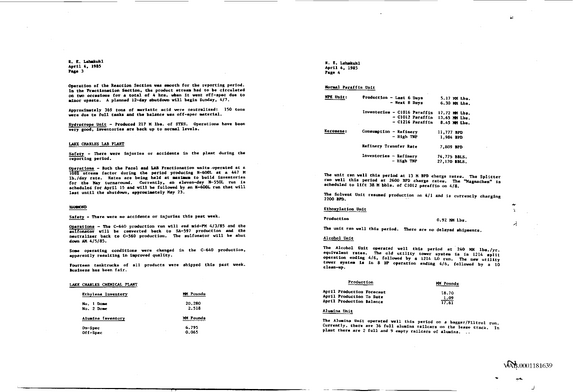
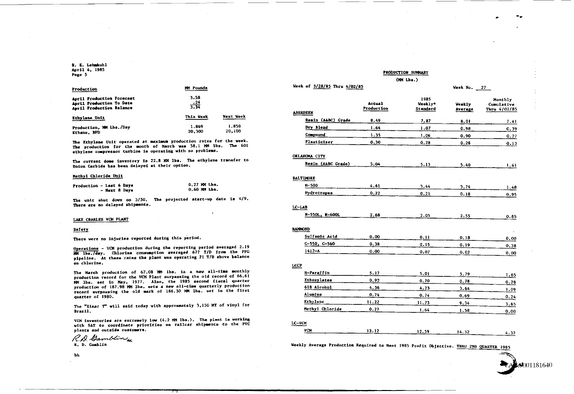
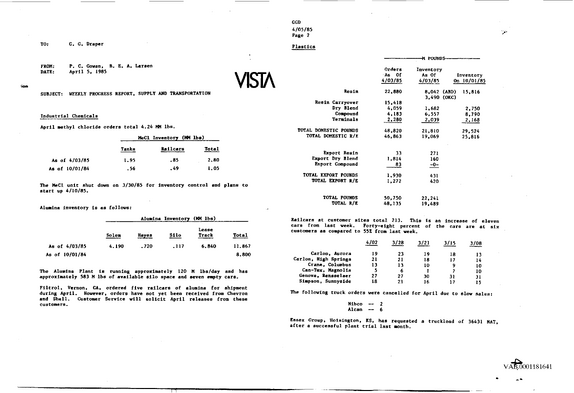
TO: R, E.
refid# zQN8MaLDrOwjVKpgBDXY49rp722 pages
V Chemical Number PEL Percent Number PEL Percent VCM Lead Total Particulates 77 16 7 100.0 88.9 100.0 0 0.0 2 11.1 0 0.8 The two lead overexposures occurred with respiratory protection.
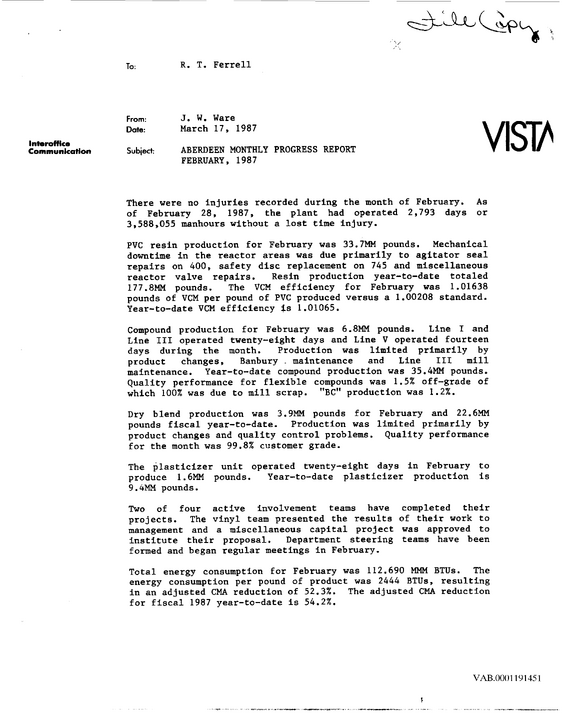
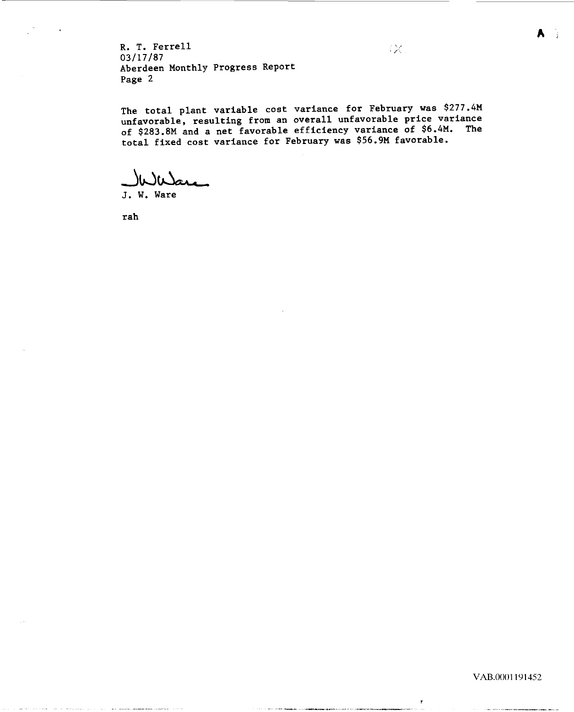
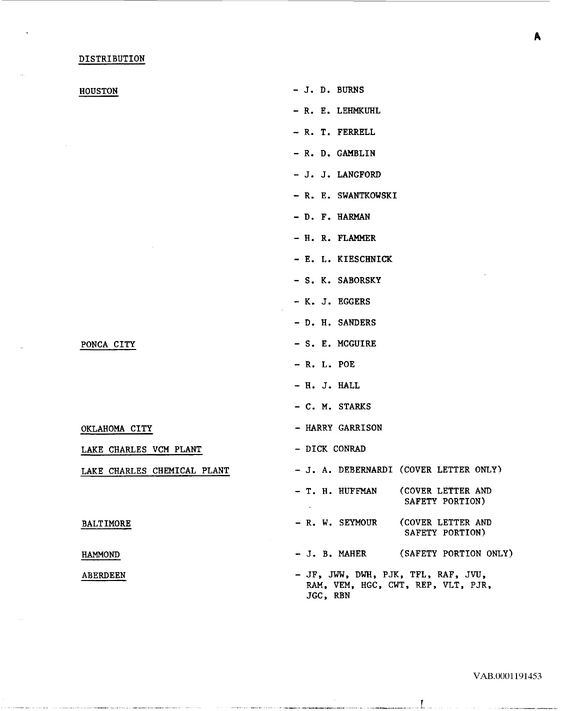
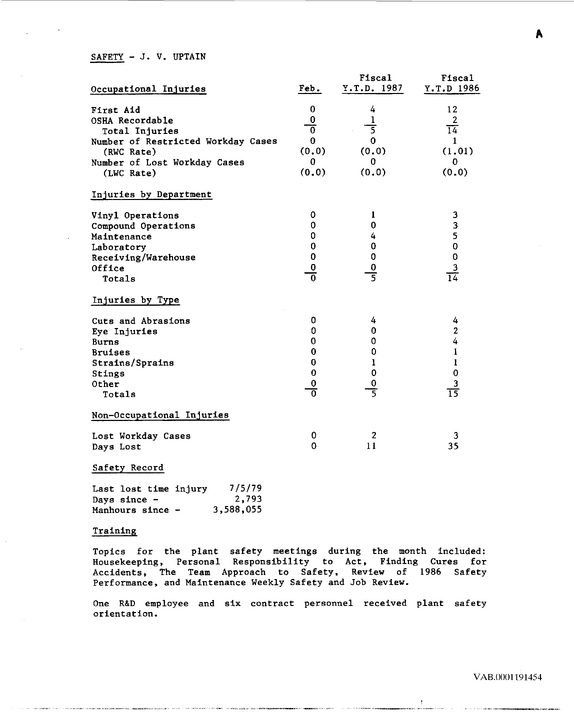
refid# 609vmjrZmEapxeRV2ONGp12d38 pages
FILE NAME Brakes BRK DATE 1982 Nov 22 DOC BRK119 DOCUMENT DESCRIPTION NIOSH Report - Industrial Hygiene Summary of Asbestos Exposure Assessment For Brake Mechanics Same as 119 INDUSTRIAL HYGIENE SUMMARY REPORT OF ASBESTOS EXPOSURE ASSESSMENT FOR BRAKE MECHANICS REPORT WRITTEN BY Dennis R.
refid# MGqk1YeMYGQ7Dv2x7EpxKz3jV47 pages
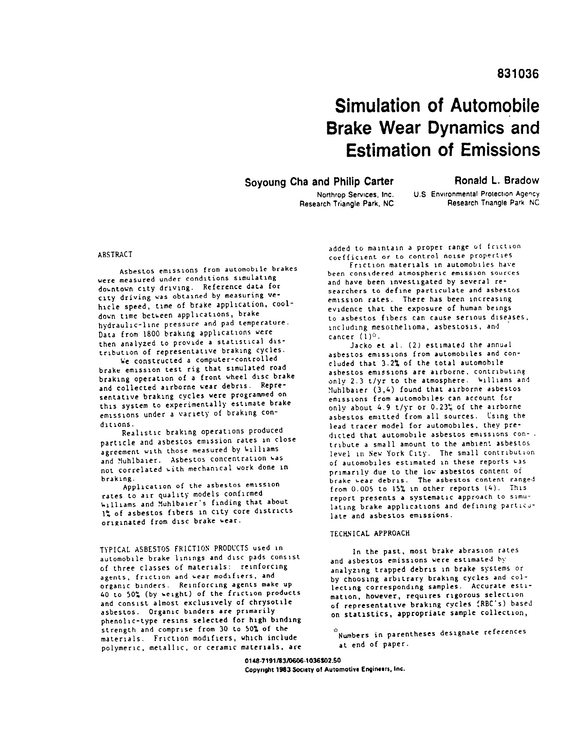
Bradow U.S Environmental Protection Agency Research Triangle Park NC ABSTRACT Asbestos emissions from automobile brakes were measured under conditions simulating downtown city driving Reference data for city driving was obtained by measuring vehicle speed time of brake application cool- down time between applications brake hydraulic pressure and pad temperature Data from 1800 braking applications were then analyzed to provide a statistical distribution of representative braking cycles We constructed a controlled brake emission test rig that simulated road braking operation of a and collected airborne front wheel disc brake wear debris Repre- sentative braking cycles were programmed on this system to experimentally estimate brake emissions under a variety of braking con- ditions Realistic braking operations produced particle and asbestos emission rates in close agreement with those measured by Williams and Muhlbaier Asbestos concentration Was not correlated with mechanical work done in braking Application of the asbestos emission rates to air quality models confirmed Williams and Muhlbaier's finding that about % of asbestos fibers in city core districts originated from disc brake wear added to maintain a proper range of friction coefficient or to control noise properties Friction materials in automobiles have been considered atmospheric emission sources and have been investigated by several re- searchers to define particulate and asbestos emission rates There has been increasing evidence that the exposure of human beings to asbestos fibers can cause serious diseases , including mesothelioma asbestosis and cancer * Jacko et al 2 estimated the annual asbestos emissions from cluded that 3.2 of the automobiles and contotal automobile asbestos emissions are airborne contributing only 2.3 yr to the atmosphere Williams and Muhlbaier 3,4 found that airborne asbestos emissions from automobiles can account for only about 4.9 yr or 0.23 of the asbestos emitted from all sources airborne Using the lead tracer model for automobiles they pre- dicted that automobile tribute a small amount asbestos emissions . con- to the ambient asbestos level in New York City of automobiles estimated The small contribution in these reports was primarily due to the low asbestos content of brake wear debris The asbestos content ranged from 0.005 to 15 in other reports 4 This report presents a systematic approach to simulating brake applications and defining particu- late and asbestos emissions TECHNICAL APPROACH TYPICAL ASBESTOS FRICTION PRODUCTS used in automobile brake linings and disc pads consist of three classes of materials reinforcing agents friction and wear modifiers and organic binders Reinforcing agents make up 40 to 50 by weight of the friction products and consist almost exclusively of chrysotile asbestos Organic binders are primarily phenolic resins selected for high binding strength and comprise from 30 to 50 of the materials Friction modifiers which include polymeric metallic or ceramic materials are and In the past most asbestos emissions brake abrasion were estimated rates by analyzing trapped debris in brake systems or by choosing arbitrary braking cycles and collecting corresponding samples Accurate esti- mation however requires rigorous selection of representative braking cycles RBC's based on statistics appropriate sample collection Numbers in parentheses at end of paper designate references 0606-1036 Copyright 1983 Society of Automotive Engineers Inc. 2 and analysis This section will describe technical approach used to find the RBC's this study the in BRAKE WEAR MECHANISM - Brakes convert the kinetic energy of automobiles to heat energy by friction work at the stator interface Most of the heat generated there is absorbed by the rotor and dissipated to the atmosphere through conduction and convection The heat generated raises the temperature at the interface and alters the composition of microstructures in the brake pad and rotor surfaces forming friction heat affected layers Therefore the wear rate of friction material depends not only on mechanical properties but also on the chemical properties of friction heat affected layers Although there are various wear mechanisms abrasion by rough surface contact adhesion of materials at contacting surfaces and thermal decompo- sition are believed to control overall wear of friction materials At low brake tempera- tures friction materials undergo ploughing and mechanical damage before thermal decomposition begins At such temperatures abrasion and adhesion wear dominate and the wear rate is fairly stable under constant mechanical conditions Organic binders in brake pads start to degrade at approximately 250 At high temperatures thermal decomposition of organic binders in the outermost layer occurs accompanied by deformation and phase change in the alloy at the rotor surface For this reason thermal wear occurring above 250 increases the wear rate drastically The most interesting material in this study is the portion of chrysotile asbestos that survives thermal de- gradation wear processes and is emitted along with other airborne particulates Chrysotile asbestos is a magnesium silicate 25102 and exists in fibrous form The thermal decomposition of chrysotile follows a stage dehydroxylation at approximately 600 to 780 and anhydride breakdown to nonfibrous forsterite 2MgO.SiO2 and silica 5102 During light braking average temperatures are generally less than 250 However in localized spots temperatures can be high enough to cause thermal degradation of chrysotile asbestos Previous tests showed considerable alteration of asbestos at temperature braking suggest- ing that actual contact temperature is above the thermal degradation temperature Conse- quently thermal heat and mechanical forces at the friction interface produce complicated phenomena that cannot be simply yet accurately described The wear phenomena of friction materials are too complicated to be described micro- scopically because we would require knowledge of local physical properties chemical compo- sition roughness binding structure and interaction of friction forces But macro- scopically we can ditions with three represent factors the wear consurface pressure sliding speed and temperature Temperature is the primary factor governing surface con- dition and friction work is determined by surface pressure and sliding force OBJECTIVE AND METHODOLOGY .
refid# RJE3pj5720DbdXg7Noa4XjwEz24 pages
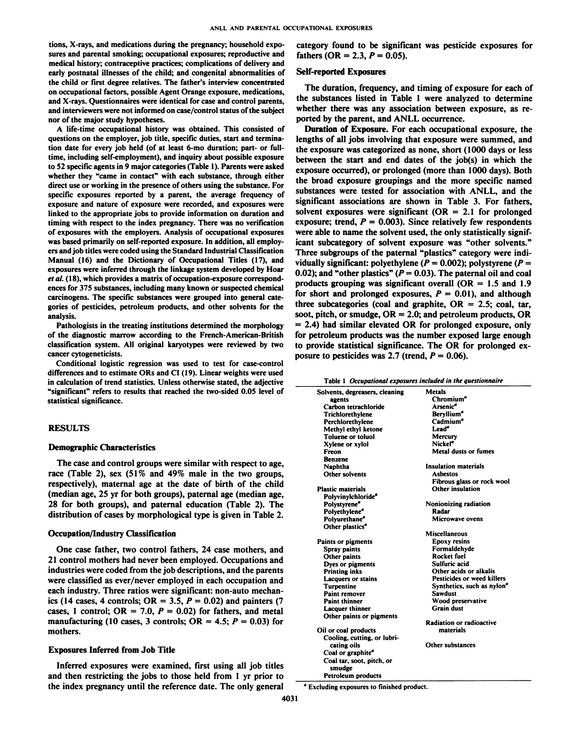
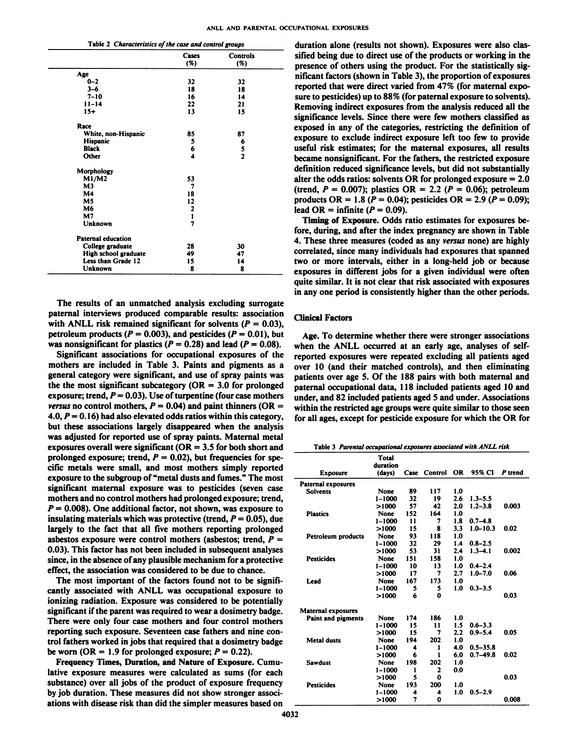
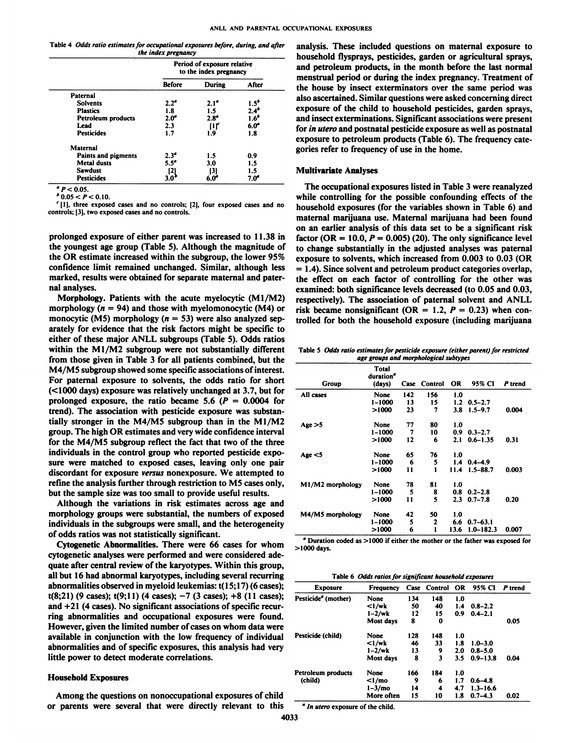
Other occupational exposures reported significantly more often by case parents were paternal exposure to plastics or lead and maternal exposure to paints and pigments, metal dusts, and sawdust.
refid# mBrxeVYeVrdEjXaqwZMmKnGj48 pages
Emergency conditions caused by human error or equipment failure can ultimately lead to serious personal injury, loss of life, or severe damage to plant equipment.
refid# 7LYLvRXpqoVKBka5x2V2EXeg26 pages
It is generally felt that the ultimate chemotherapeutic regimen for HIV infection. which it is hoped will lead to it becoming a chronic manageable disease. will be a combination of several antiretroviral agents acting at different phases of the HIV life cycle together with an immunoenhancing agent.
refid# pBjm6gaKqY9Kwwapq5EYo0eVX8 pages
FILE NAME Brakes BRK DATE 1982 Nov 22 DOC BRK117 DOCUMENT DESCRIPTION NIOSH Report - Industrial Hygiene Summary of Asbestos Exposure Assessment For Brake Mechanics INDUSTRIAL HYGIENE SUMMARY REPORT OF ASBESTOS EXPOSURE ASSESSMENT FOR BRAKE MECHANICS REPORT WRITTEN BY Dennis R.
refid# jmVKKO3bXORg0dZqvrgaG828N47 pages
It is generally felt that the ultimate chemotherapeutic regimen for HIV infection. which it is hoped will lead to it becoming a chronic manageable disease. will be a combination of several antiretroviral agents acting at different phases of the HIV life cycle together with an immunoenhancing agent.
refid# gE3p7zOdjN39nm1jQpZnmkxb98 pages
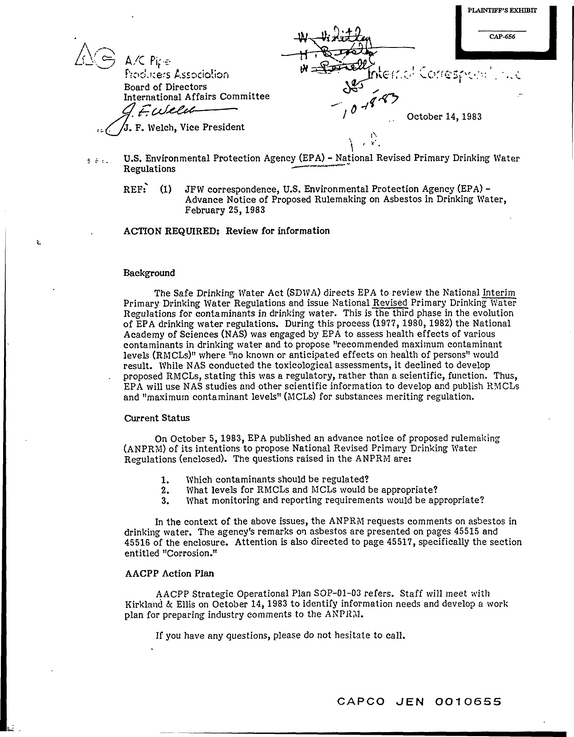
A/C Pi;- F'-oo'jie.'
refid# 3NkGmBeRx46q6jmOK1qKb5bN019 pages
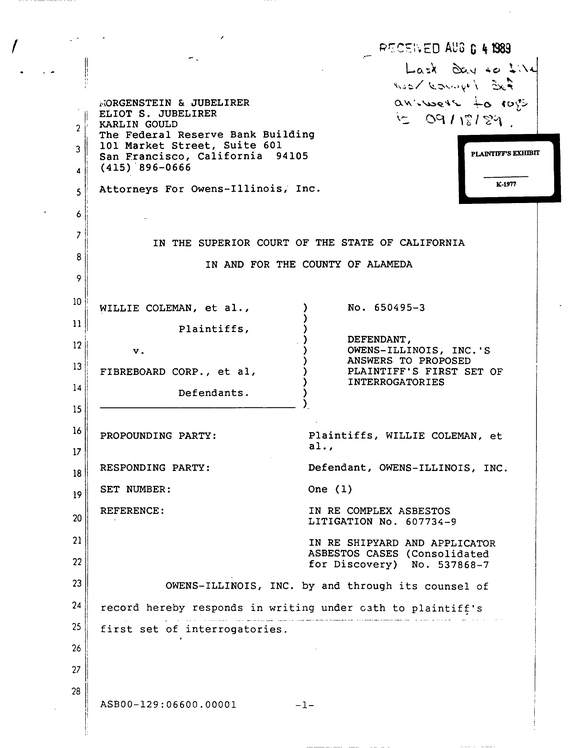
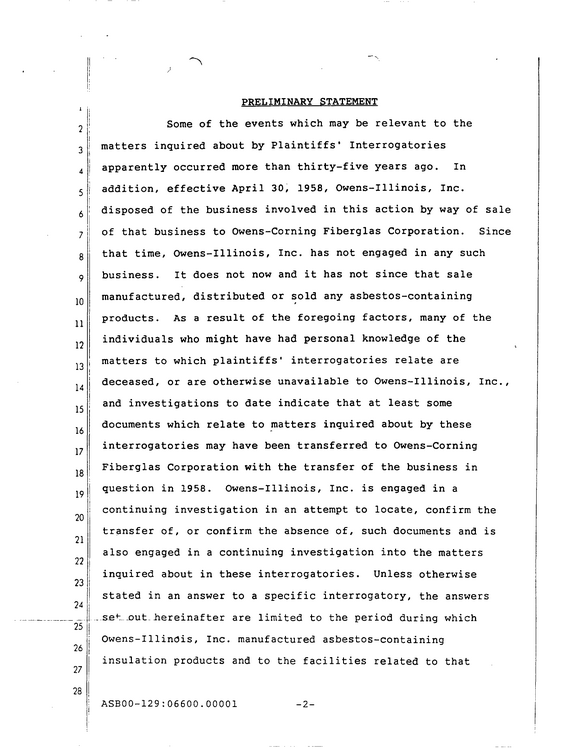
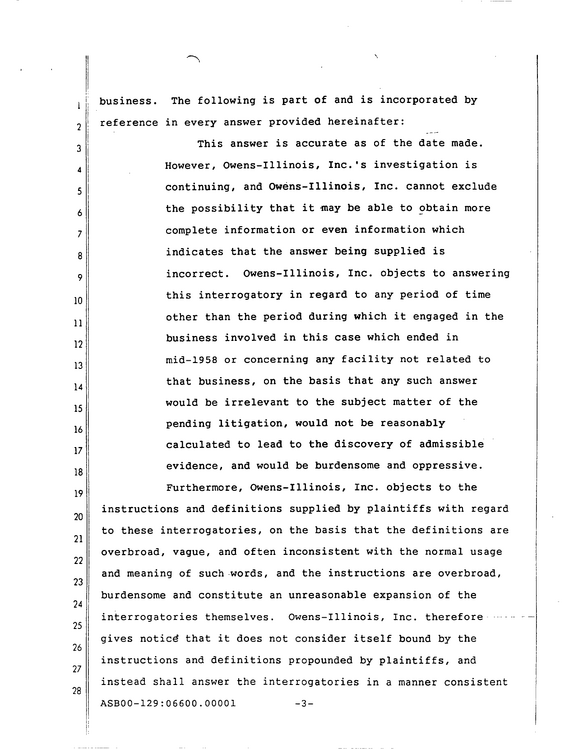
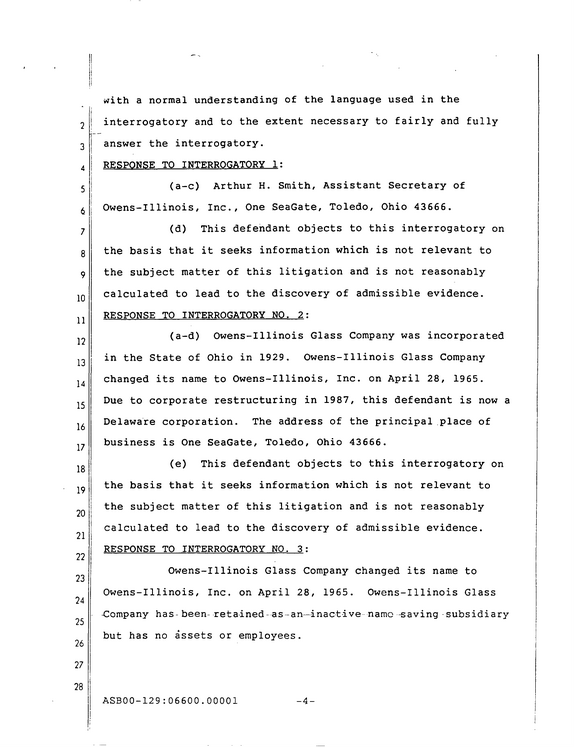
(b, c) This defendant objects to this interrogatory 11 on the basis that it seeks information which is not relevant to 12 the subject matter of this litigation and is not reasonably 13 calculated to lead to the discovery of admissible evidence. 14 (f) This defendant's manufacturing plants were 15 located in Berlin, New Jersey and Sayreville, New Jersey.
refid# 9J6mb3NGey3mv7959yK4KOdkR60 pages
(b, c) This defendant objects to this interrogatory 11 on the basis that it seeks information which is not relevant to 12 the subject matter of this litigation and is not reasonably 13 calculated to lead to the discovery of admissible evidence. 14 (f) This defendant's manufacturing plants were 15 located in Berlin, New Jersey and Sayreville, New Jersey.
refid# jgMaoo1M4aZb0mJR9OpkNd0ER60 pages
Killing agent can then be in jected locally by the A operator or remotely by the lead operator.
refid# 5bov6NgRkdE2ajKxE1Qqg8XmJ102 pages