Refine
Estimated Years 1970-1979Clear
27,937 results foundRefine Search
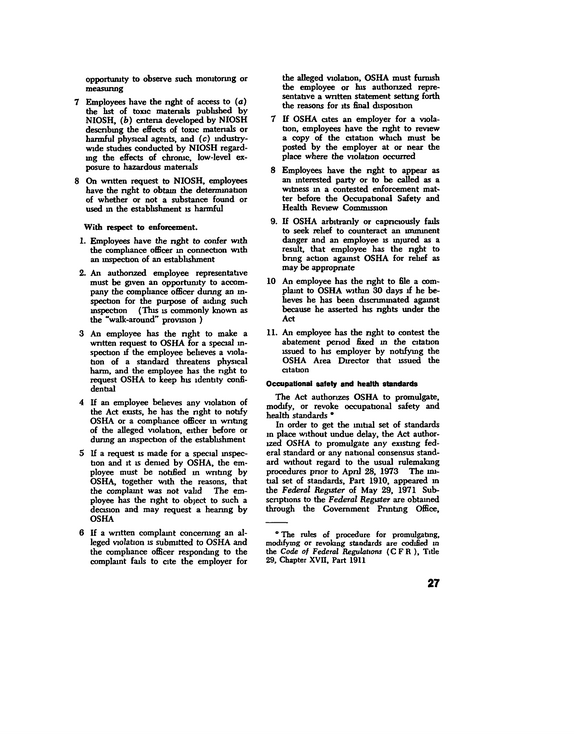
opportunity to observe such monitoring or measuring 7 Employees have the nght of access to (a) the list of toxic materials published by NIOSH, (6) criteria developed by NIOSH describing the effects of toxic materials or harmful physical agents, and (c) industry wide studies conducted by NIOSH regard ing the effects of chrome, low-level ex posure to hazardous materials 8 On written request to NIOSH, employees have the nght to obtain the determination of whether or not a substance found or used in the establishment is harmful With respect to enforcement. 1.
refid# 645Lmp2y7JO0wbOowzYNbZJ31 page
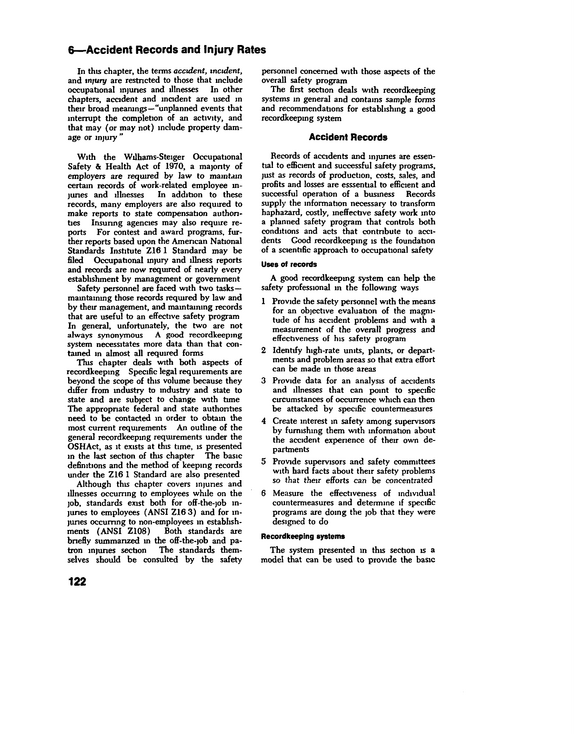
6--Accident Records and Injury Rates In this chapter, the terms accident, incident, and injury are restricted to those that include occupational injuries and illnesses In other chapters, accident and incident are used in their broad meanings--"unplanned events that interrupt the completion of an activity, and that may (or may not) include property dam age or injury " With the Wilhams-Steiger Occupational Safety & Health Act of 1970, a majority of employers are required by law to maintain certain records of work-related employee in juries and illnesses In addition to these records, many employers are also required to make reports to state compensation authori ties Insuring agencies may also require re ports For contest and award programs, fur ther reports based upon the American National Standards Institute Z16 1 Standard may be filed Occupational injury and illness reports and records are now required of nearly every establishment by management or government Safety personnel are faced with two tasks-- maintaining those records required by law and by their management, and maintaining records that are useful to an effective safety program In general, unfortunately, the two are not always synonymous A good recordkeeping system necessitates more data than that contamed m almost all required forms This chapter deals with both aspects of recordkeeping Specific legal requirements are beyond the scope of this volume because they differ from industry to industry and state to state and are subject to change with time The appropriate federal and state authorities need to be contacted m order to obtain the most current requirements An outline of the general recordkeeping requirements under the OSHAct, as it exists at this time, is presented m the last section of this chapter The basic definitions and the method of keeping records under the Z16 1 Standard are also presented Although this chapter covers injuries and illnesses occurring to employees while on the job, standards exist both for off-the-job in juries to employees (ANSI Z16 3) and for in juries occurring to non-employees in establish ments (ANSI Z108) Both standards are briefly summarized in the off-the-job and pa tron injuries secbon The standards them selves should be consulted by the safety personnel concerned with those aspects of the overall safety program The first section deals with recordkeeping systems in general and contains sample forms and recommendations for establishing a good recordkeeping system Accident Records Records of accidents and injuries are essen tial to efficient and successful safety programs, just as records of production, costs, sales, and profits and losses are esssential to efficient and successful operation of a business Records supply the information necessary to transform haphazard, costly, ineffective safety work into a planned safety program that controls both conditions and acts that contribute to acci dents Good recordkeeping is the foundation of a scientific approach to occupational safety Uses of records A good recordkeeping system can help the safety professional in the following ways 1 Provide the safety personnel with the means for an objective evaluation of the magni tude of his accident problems and with a measurement of the overall progress and effectiveness of his safety program 2 Identify high-rate units, plants, or depart ments and problem areas so that extra effort can be made m those areas 3 Provide data for an analysis of accidents and illnesses that can point to specific circumstances of occurrence which can then be attacked by specific countermeasures 4 Create interest m safety among supervisors by furnishing them with information about the accident experience of their own de partments 5 Provide supervisors and safety committees with hard facts about their safety problems so that their efforts can be concentrated 6 Measure the effectiveness of individual countermeasures and determine if specific programs are doing the job that they were designed to do Recordkeeping systems The system presented in this section is a model that can be used to provide the basic 122
refid# bayqedX5Z3xMbBew7vdJyp6nO1 page
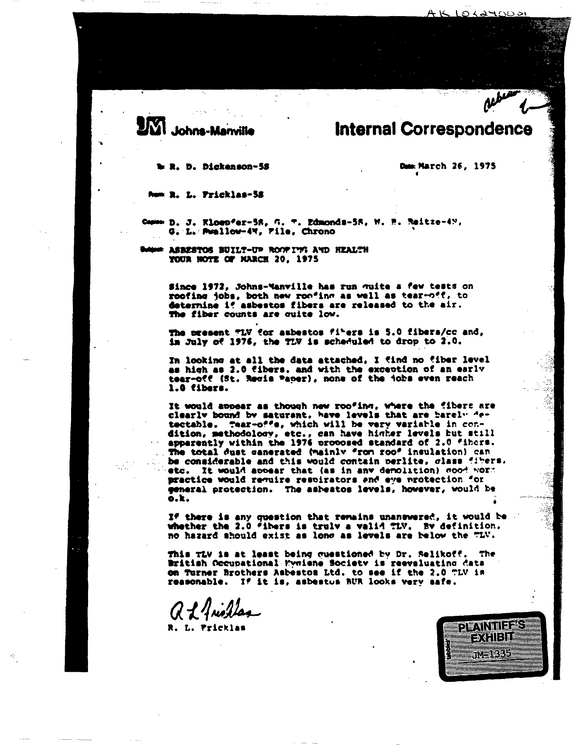
m Johns-ManvOI* Internal Correspondence k R.
refid# p2QGDpB9R138Dkga4nLnOrn8D1 page
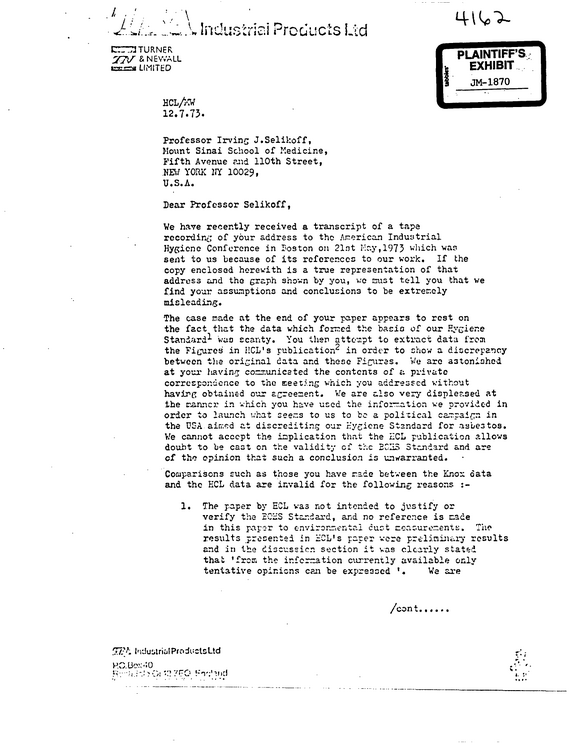
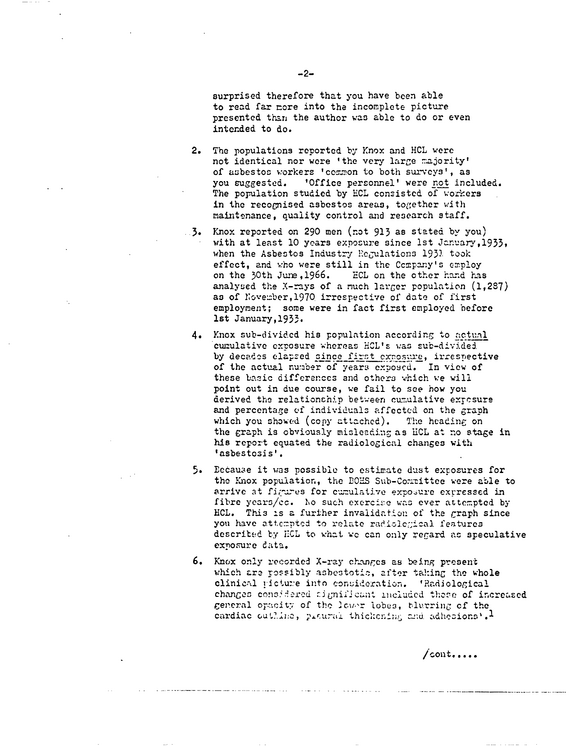
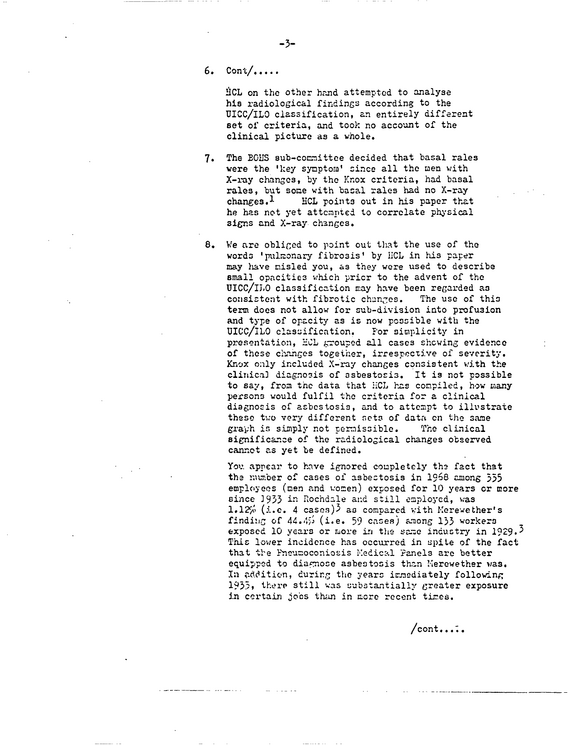
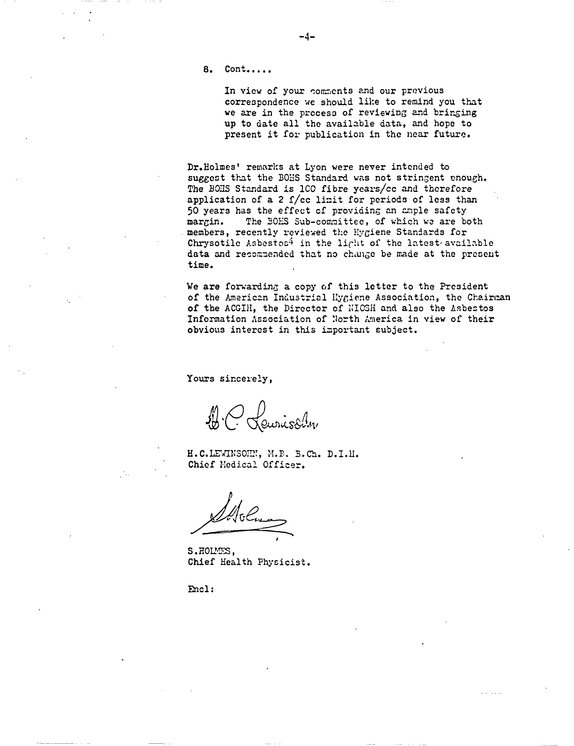
j: ,/ \ AU::,. _.w..L Industrial Products Ltd CTT773 TURNER ZT7\f & NEVVALL i-T---j UNITED HCL/fctf 12.7.73.
refid# NeoLYdrd5VK99nMxVK0eMepo85 pages
22--Non-Employee Accident Prevention cause of injury (contributory negligence).
refid# xz7QgzaR70aYy6VE8r3pZRGmm1 page
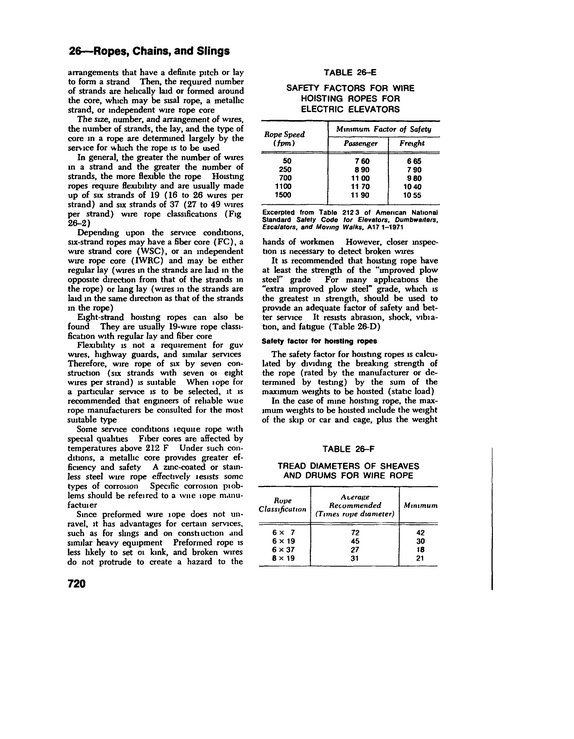
26--Ropes, Chains, and Slings arrangements that have a definite pitch or lay to form a strand Then, the required number of strands are helically laid or formed around the core, which may be sisal rope, a metallic strand, or independent wire rope core The size, number, and arrangement of wires, the number of strands, the lay, and the type of core m a rope are determined largely by the service for which the rope is to be used In general, the greater the number of wires in a strand and the greater the number of strands, the more flexible the rope Hoisting ropes require flexibility and are usually made up of six strands of 19 (16 to 26 wires per strand) and six strands of 37 (27 to 49 wires per strand) wire rope classifications (Fig 26-2) Depending upon the service conditions, six-strand ropes may have a fiber core (FC), a wire strand core (WSC), or an independent wire rope core (IWRC) and may be either regular lay (wires in the strands are laid in the opposite direction from that of the strands m the rope) or lang lay (wires m the strands are laid m the same direction as that of the strands m the rope) Eight-strand hoisting ropes can also be found They are usually 19-wire rope classi fication with regular lay and fiber core Flexibility is not a requirement for guv wires, highway guards, and similar services Therefore, wire rope of six by seven con struction (six strands with seven oi eight wires per strand) is suitable When lope for a particular service is to be selected, it is recommended that engineers of reliable wue rope manufacturers be consulted for the most suitable type Some service conditions lequne rope with special qualities Fiber cores are affected by temperatures above 212 F Under such con ditions, a metallic core provides greater ef ficiency and safety A zinc-coated or stain less steel wire rope effectively lesists some types of corrosion Specific corrosion pioblems should be refeired to a wne lope mnnufactuier Since preformed wire lope does not un ravel, it has advantages for certain services, such as for slings and on constiuction and similar heavy equipment Preformed rope is less likely to set oi kink, and broken wires do not protrude to create a hazard to the TABLE 26-E SAFETY FACTORS FOR WIRE HOISTING ROPES FOR ELECTRIC ELEVATORS Rope Speed (fpm) Minimum Factor of Safety Passenger Freight 50 250 700 1100 1500 760 8 90 11 00 11 70 11 90 665 7 90 9 80 1040 10 55 Excerpted from Table 212 3 ot American National Standard Safety Code tor Elevators, Dumbwaiters, Escalators, and Moving Walks, A17 1-1971 hands of workmen However, closer inspec tion is necessary to detect broken wires It is recommended that hoisting rope have at least the strength of the "improved plow steel" grade For many applications the "extra improved plow steel" grade, which is the greatest in strength, should be used to provide an adequate factor of safety and bet ter service It resists abrasion, shock, vibiation, and fatigue (Table 26-D) Safety factor for hoisting ropes The safety factor for hoisting ropes is calcu lated by dividing the breaking strength of the rope (rated by the manufacturer or de termined by testing) by the sum of the maximum weights to be hoisted (static load) In the case of mine hoisting rope, the max imum weights to be hoisted include the weight of the skip or car and cage, plus the weight TABLE 26-F TREAD DIAMETERS OF SHEAVES AND DRUMS FOR WIRE ROPE Rope Classification Average Recommended (Times rope diameter) Minimum 6x7 72 42 6 x 19 45 30 6X37 27 18 8 x 19 31 21 720
refid# zZ06d4MLeV0bRo59yrY9RxwR1 page
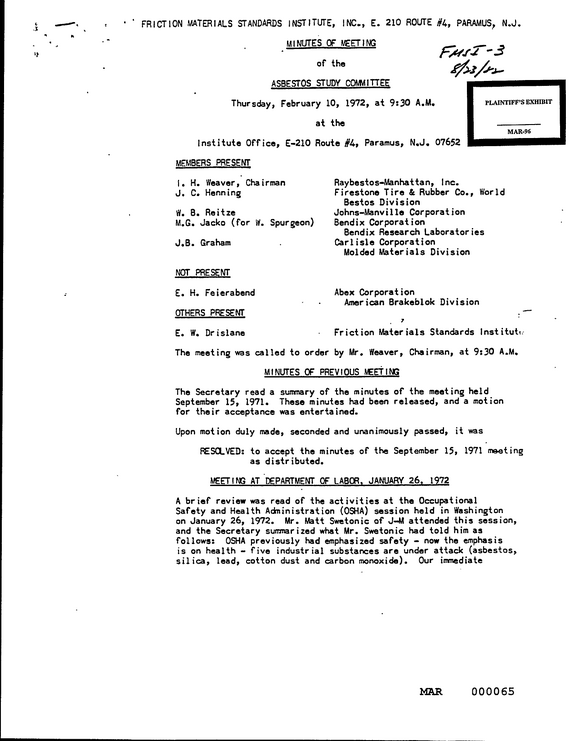
FRICTION .MATERIALS STANDARDS INSTITUTE, INC., E. 210 ROUTE #4, PARAMUS, N.J.
refid# 2j7Z4jbdLoYRkB2VaLabMvEg75 pages
1UU NUUfM MltMlGAN AVI liUI .
refid# 9Kr2Ek8V2LZomOR6XGRBd9R32 pages
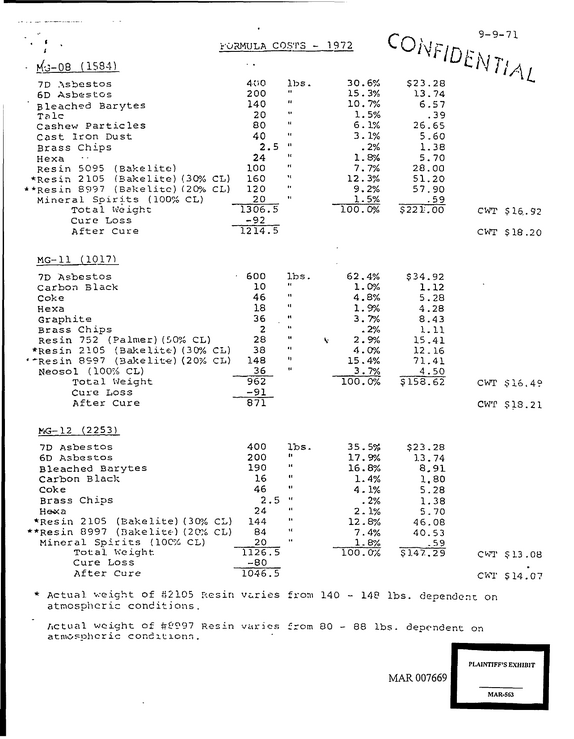
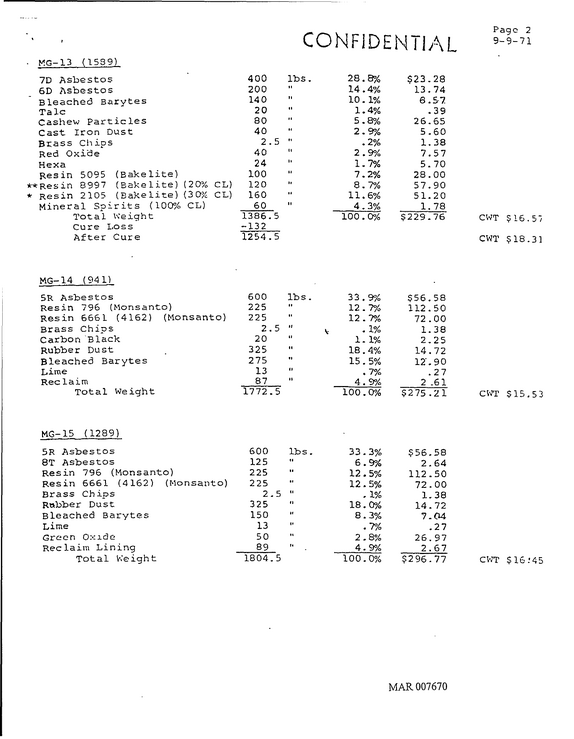
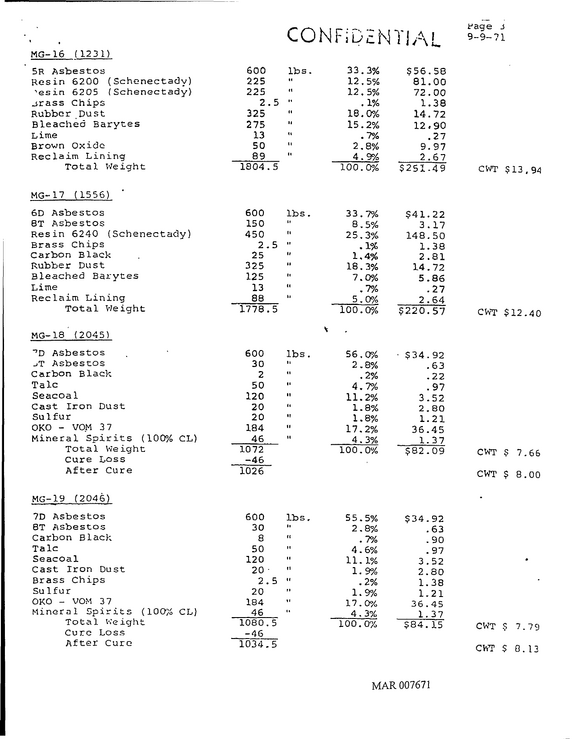
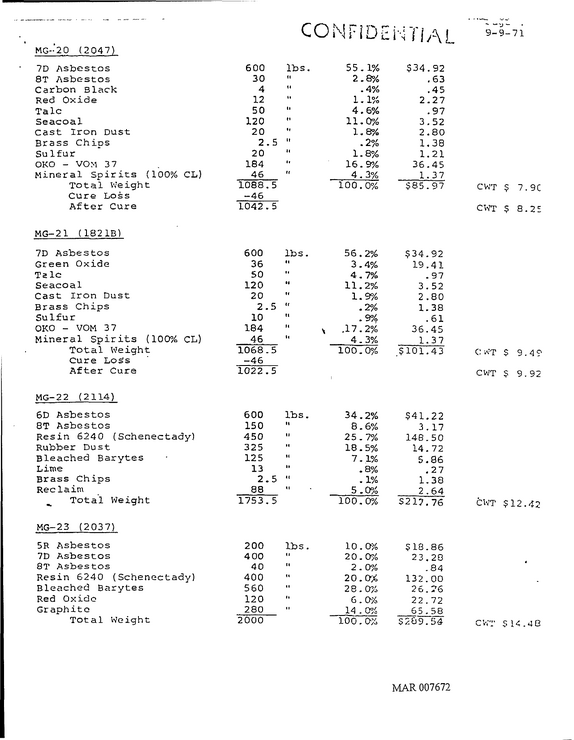
FORMULA COSTS - i - v(-s-08 (1584) 7D Asbestos 6D Asbestos Bleached Barytes Talc Cashew Particles Cast Iron Dust Brass Chips Hexa Resin 5095 (Bakelite) Resin 2105 (Bakelite) (30% CL) **Resin 6997 (Bakelite)(20% CL) Mineral Spirits (100% CL) Total Weight Cure Loss After Cure 400 200 140 20 80 40 2.5 24 100 160 120 20 1306.5 -92 1214.5 lbs. 41 II II 11 II II H ft M K II 1972 30.6% 15.3% 10.7% 1.5% 6.1% 3.1% . 2% 1.8% 7.7% 12.3% 9.2% 1.5% 100.0% Co/- 9-9-71 r/utA/7 IAl $23.28 13.74 6.57 .39 26.65 5.60 1.38 5.70 28.00 51.20 57.90 . 59 5221.00 CWT CWT MG-11 (1017) 7D Asbestos Carbon Black Coke Hexa Graphite Brass Chips Resin 752 (Palmer)(50% CL) Resin 2105 (Bakelite)(30% CL) * "Resin 8997 (Bakelit-e) (20% CL) Neosol (100% CL) Total Weight Cure Loss After Cure 600 10 46 18 36 2 28 38 148 36 962 -91 871 lbs.
refid# E6Yq4rB1RG1NpEZDNrzmVJx10 pages
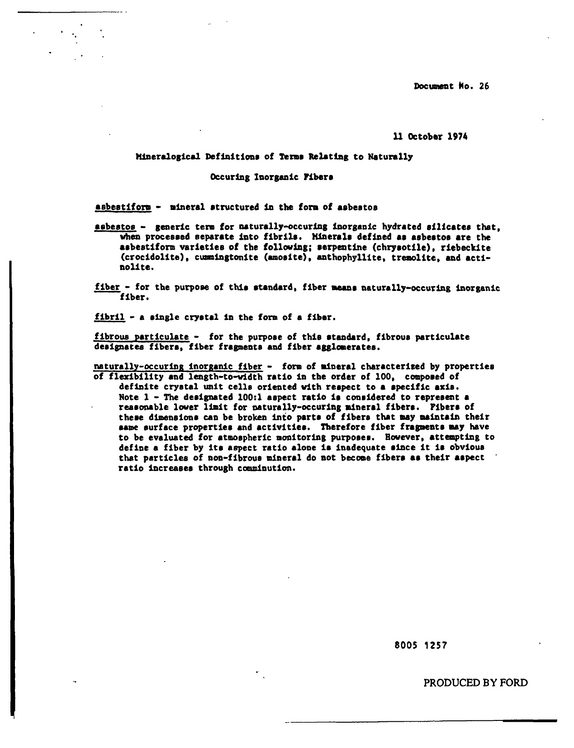
Document Mo. 26 11 October 1974 Mlneraloglcal Definition* of Term* Relating to Naturally Occurlng Inorganic Flbera asbestlform - mineral structured in the form of aebeatos aebeatoa - generic term for naturally-occurlng inorganic hydrated elllcates that, when proceaaed separate into fibrils.
refid# NG3Na40vXK84xkqw0B4BRLzd81 page
/rr.Vs * 0k l c Inter Office Scientific Research StaN June 12, 1975 To: D.
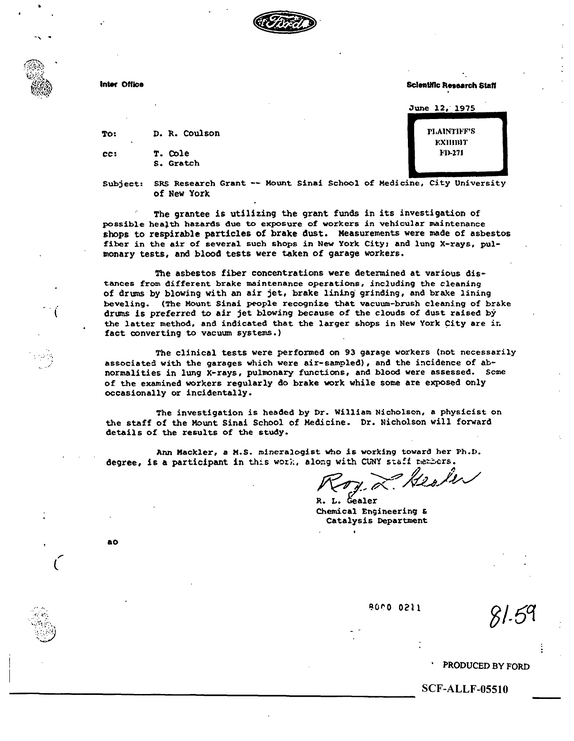
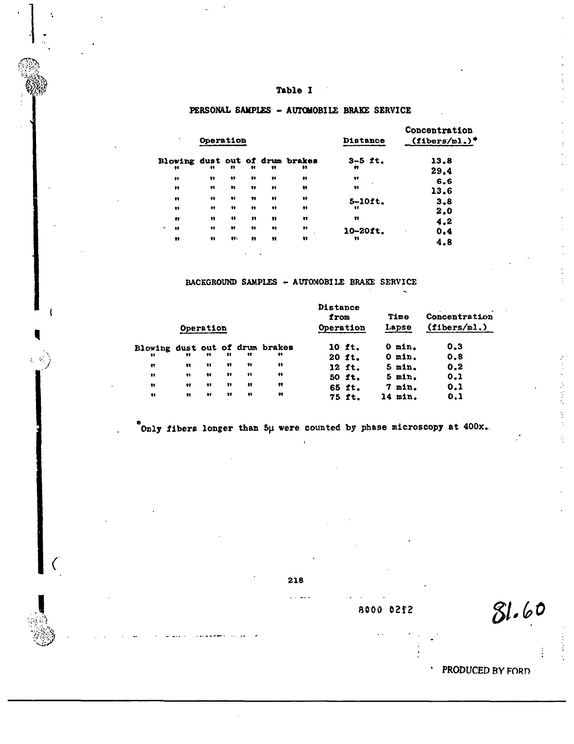
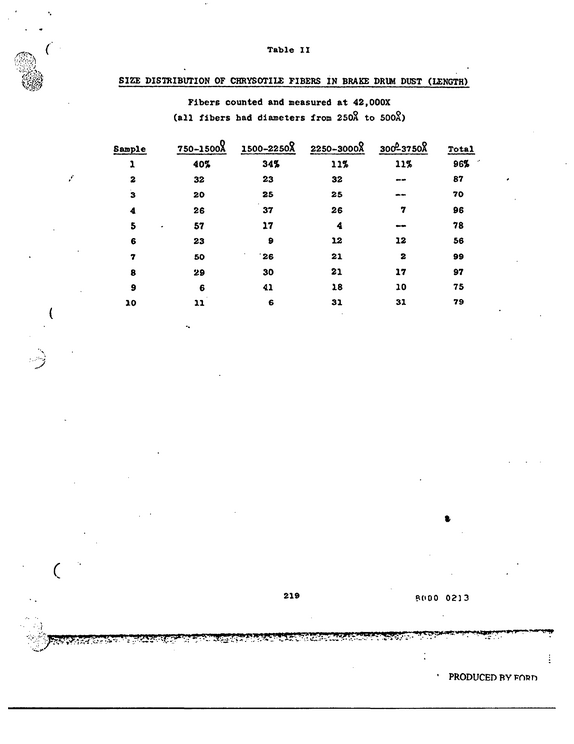
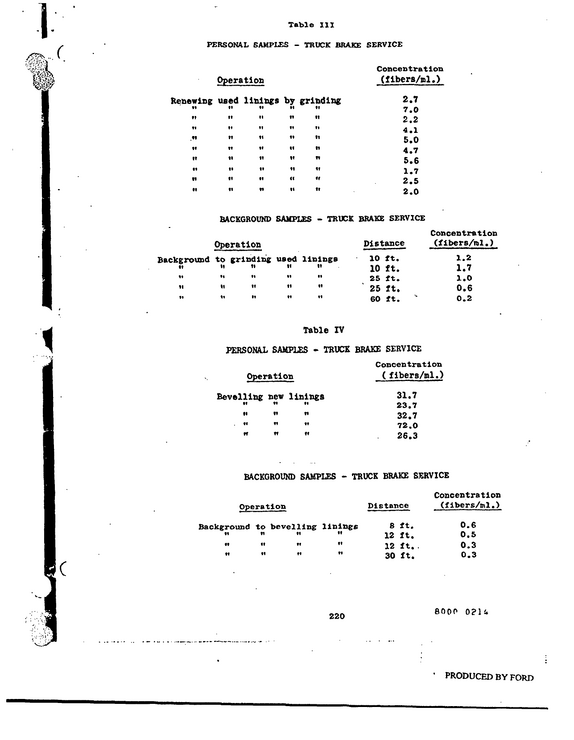
refid# 2RKYRNvmX6KkNexZa4X8M33X513 pages
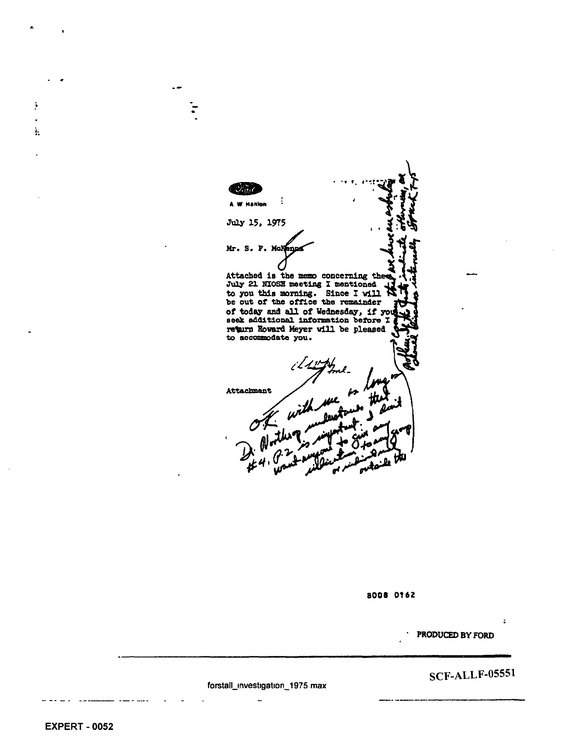
A W Haitian July 15, 19T5 Mr.
refid# x1GZQk22M5Y0pekyr8xbxjRRm1 page
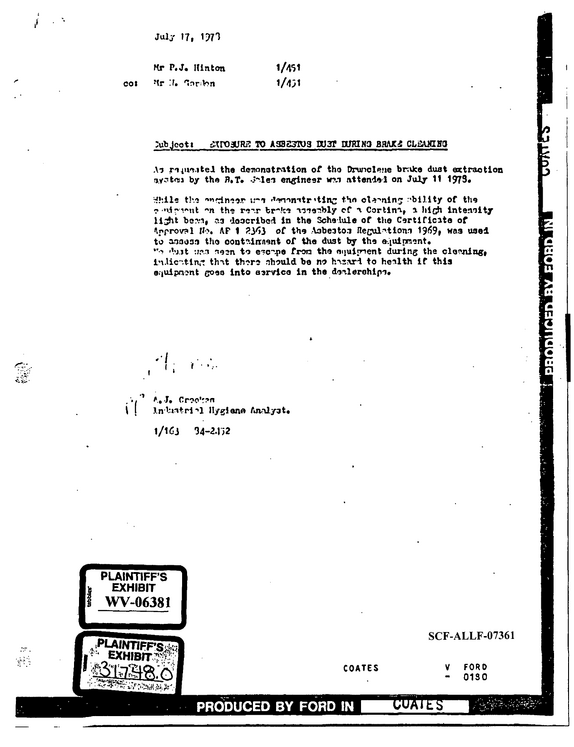
July >7, 1?
refid# QJGy3LjX0GZn6aKxrGeBMeoqk1 page
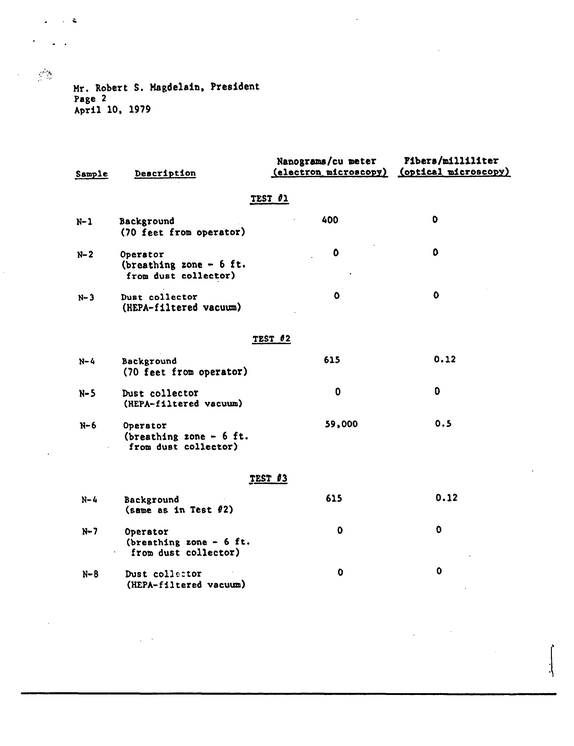
Mr.
refid# Lgax9pvzRoQ3mjYZ4w7Y968R71 page
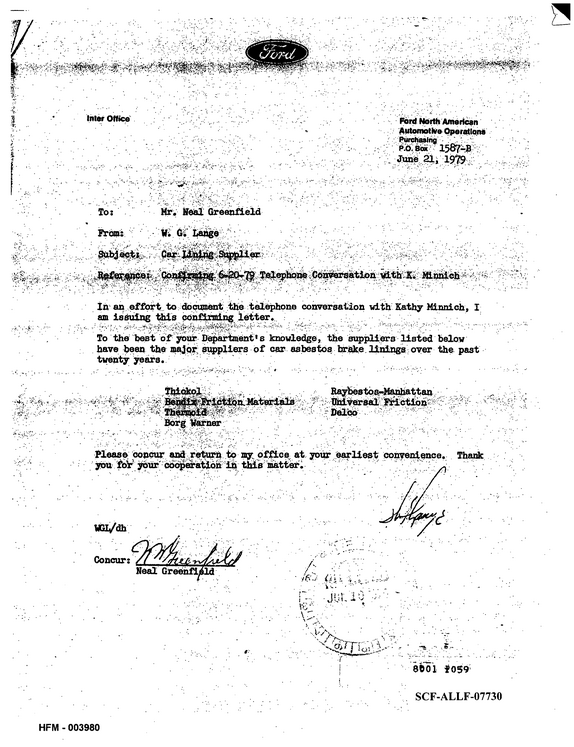
n Inter Office fiord North American Automotive Operations Purchasing P.O.
refid# oMejkeZZV61bNz9r8Egr1ZyY81 page