Refine
Estimated Years 1960-1969Clear
16,810 results foundRefine Search
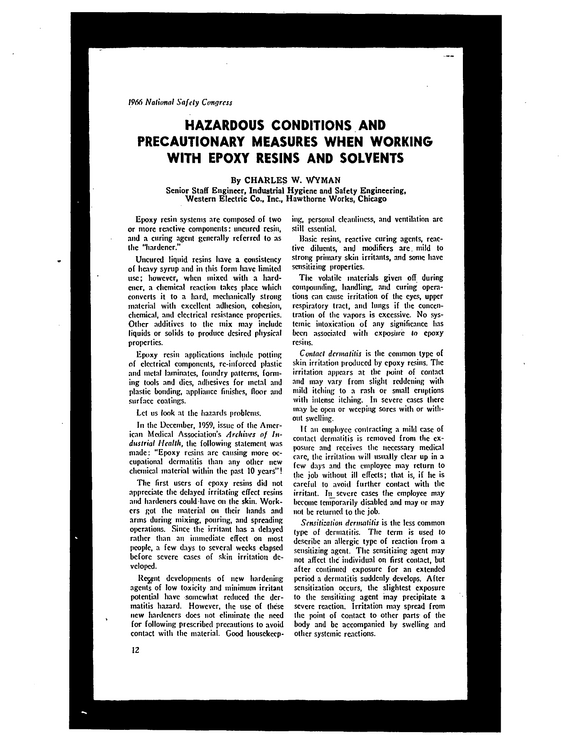
1966 National Safely Congress HAZARDOUS CONDITIONS AND PRECAUTIONARY MEASURES WHEN WORKING WITH EPOXY RESINS AND SOLVENTS By CHARLES W.
refid# VjavRoOvkmakgnZzoLqnBwjmZ1 page
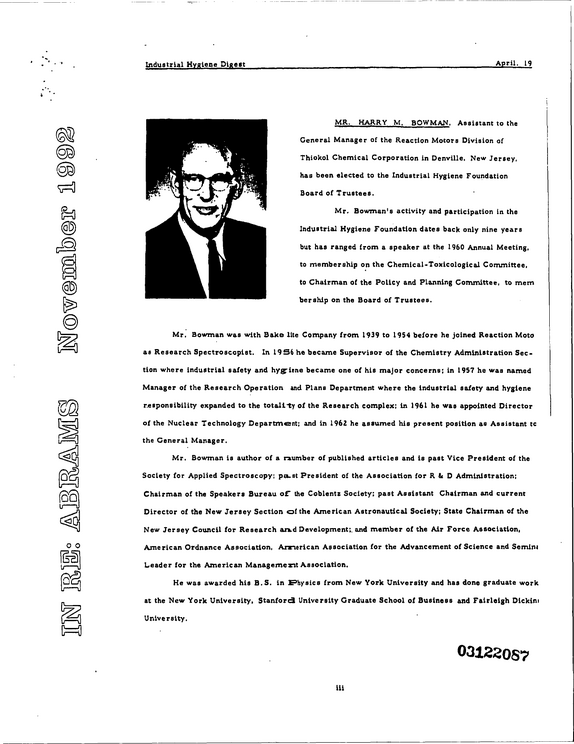
*5=3 fel oo C=fl Industrial Hygiene Digest April. 19 MR.
refid# 2YOMzZj7dnxQBRoZv7GGEKkr1 page
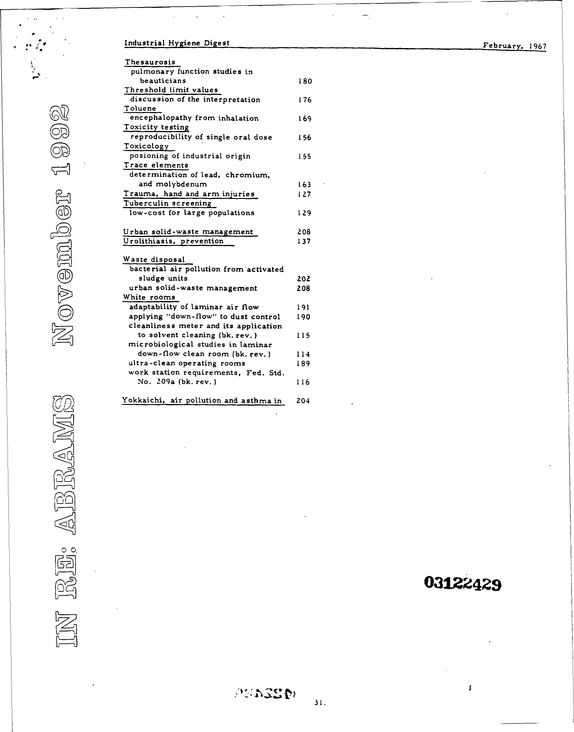
Industrial Hygiene Digest Thesaurosis pulmonary function studies in beauticians Threshold limit values discussion of the interpretation Toluene encephalopathy from inhalation Toxicity testing reproducibility of single oral dose Toxicology posioning of industrial origin Trace elements determination of lead, chromium, and molybdenum Trauma, hand and arm injuries Tuberculin screening low-cost for large populations 180 176 169 156 155 163 1 27 129 Urban solid-waste management Urolithiasis, prevention 208 1 37 Waste disposal bacterial air pollution from activated sludge units urban solid-waste management White rooms adaptability of laminar air flow applying "down-flow" to dust control cleanliness meter and its application to solvent cleaning (bk. rev. ) microbiological studies in laminar down-flow clean room (bk. rev. ) ultra-clean operating rooms work station requirements.
refid# Mo0ee46w2xVE8ejOGNxgKxG8y1 page
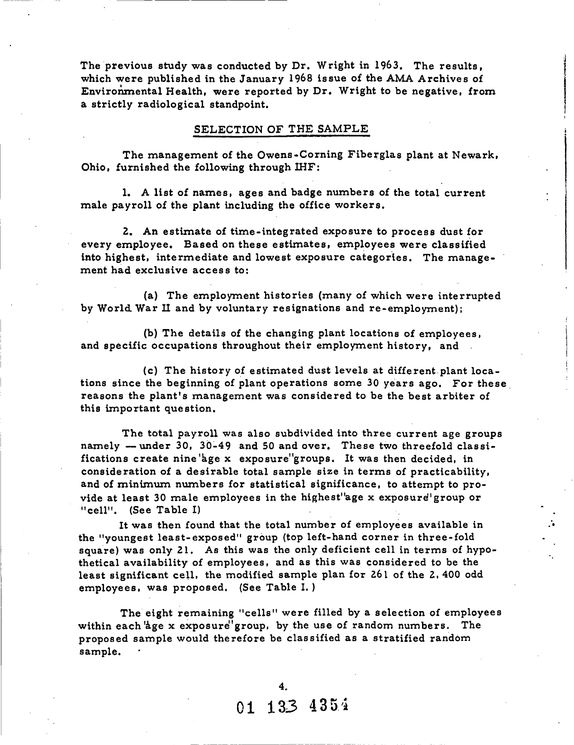
The previous study was conducted by Dr.
refid# nm17NwRGKDgwEqGwyj7BDe1va1 page
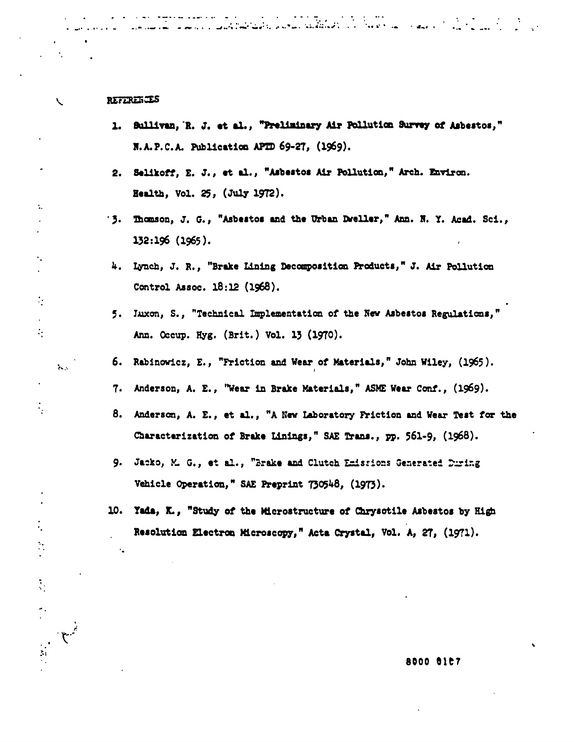
KErXSSiCES 1.
refid# 70wRV7g6gNJKLqd1v24y45Gj1 page
4.
refid# vBXq72X5ZDpZYq2y7Q7od24M81 page
'ijljjb'.
refid# qdoqrR1eE17XDdpYn4NdNb8wj4 pages
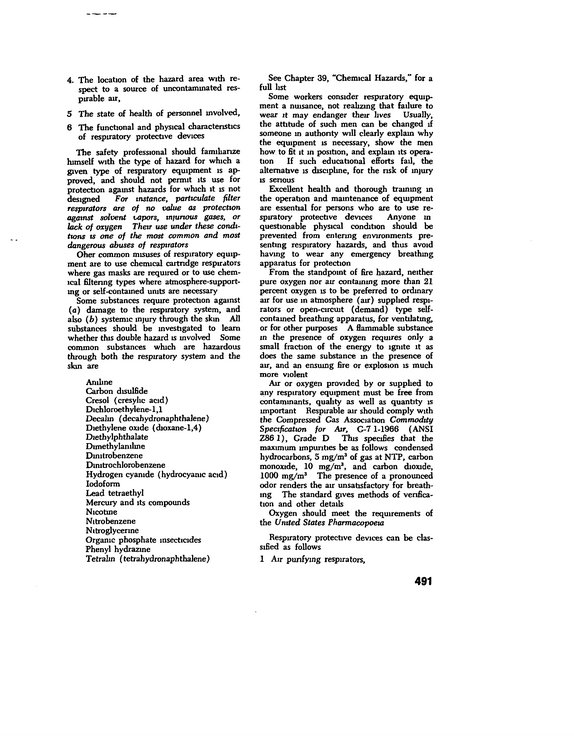
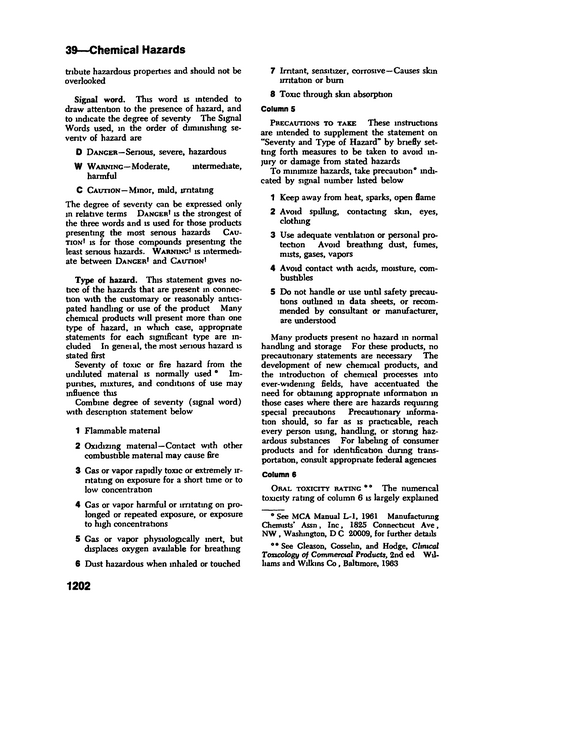
39--Chemical Hazards tribute hazardous properties and should not be overlooked Signal word.
refid# 7M83nbQBGO8mDjGOwKvZr0raj1 page
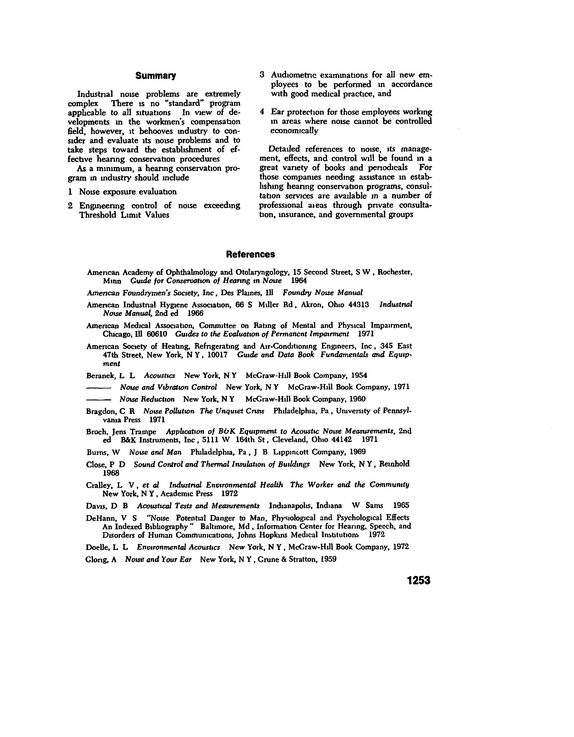
Summary Industrial noise problems are extremely complex There is no "standard" program applicable to all situations In view of de velopments in the workmen's compensation field, however, it behooves industry to con sider and evaluate its noise problems and to take steps toward the establishment of ef fective heanng conservation procedures As a minimum, a heanng conservation pro gram in industry should include 1 Noise exposure evaluation 2 Engineering control of noise exceeding Threshold Limit Values 3 Audiometnc examinations for all new em ployees to be performed m accordance with good medical practice, and 4 Ear protection for those employees working in areas where noise cannot be controlled economically Detailed references to noise, its manage ment, effects, and control will be found in a great variety of books and periodicals For those companies needing assistance in estab lishing heanng conservation programs, consul tation services are available m a number of professional aieas through private consultabon, insurance, and governmental groups References American Academy of Ophthalmology and Otolaryngology, 15 Second Street, S W , Rochester, Minn Guide for Conservation of Heanng tn Notse 1964 American Foundrymen's Society, Inc, Des Plaines, 111 Foundry Noise Manual American Industnal Hygiene Association, 66 S Miller Rd, Akron, Ohio 44313 Industrial Noise Manual, 2nd ed 1966 American Medical Association, Committee on Rating of Mental and Physical Impairment, Chicago, 111 60610 Guides to the Evaluation of Permanent Impairment 1971 American Society of Heating, Refngerabng and Air-Conditioning Engineers, Inc, 345 East 47th Street, New York, N Y, 10017 Guide and Data Book Fundamentals and Equip ment Beranek, L L Acoustics New York, N Y McGraw-Hill Book Company, 1954 ---------- Notse and Vibration Control New York, NY McGraw-Hill Book Company, 1971 ---------- Notse Reduction New York, N Y McGraw-Hill Book Company, 1960 Bragdon, C R Noise Pollution The Unquiet Crisis Philadelphia, Pa , University of Pennsyl vania Press 1971 Broch, Jens Trampe Application of BirK Equipment to Acoustic Noise Measurements, 2nd ed B&K Instruments, Inc, 5111 W 164th St, Cleveland, Ohio 44142 1971 Bums, W Notse and Man Philadelphia, Pa , J B Lippmcott Company, 1969 Close, P D Sound Control and Thermal Insulation of Buildings New York, N Y, Reinhold 1968 Cralley, L V, et al Industrial Environmental Health The Worker and the Community New York, N Y , Academic Press 1972 Davis, D B Acoustical Tests and Measurements Indianapolis, Indiana W Sams 1965 DeHann, V S "Noise Potential Danger to Man, Physiological and Psychological Effects An Indexed Bibliography " Baltimore, Md , Information Center for Hearing, Speech, and Disorders of Human Communications, Johns Hopkins Medical Institutions 1972 Doelle, L L Environmental Acoustics New York, N Y, McGraw-Hill Book Company, 1972 Clong, A Notse and Your Ear New York, N Y, Grune & Stratton, 1959 1253
refid# dnK0vOaOvL1J69xZznR6nJXyR1 page
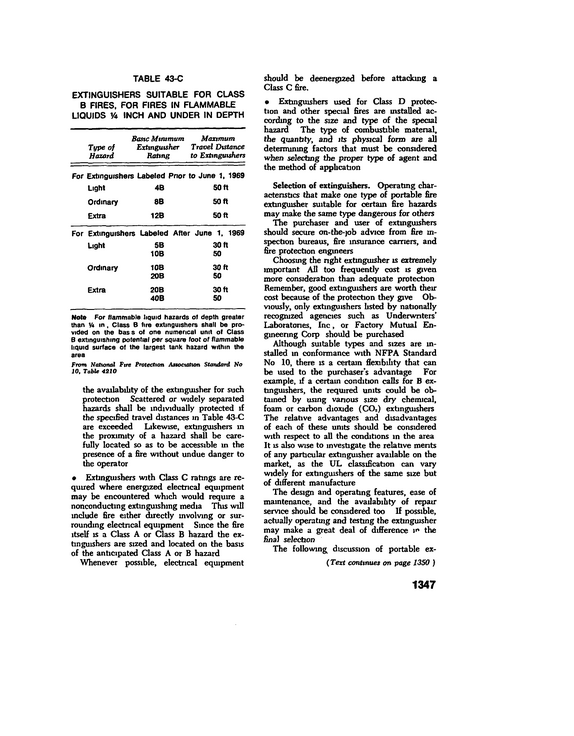
TABLE 43-C EXTINGUISHERS SUITABLE FOR CLASS B FIRES, FOR FIRES IN FLAMMABLE LIQUIDS V INCH AND UNDER IN DEPTH Type of Hazard Baste Minimum Maximum Extinguisher Travel Distance Rating to Extinguishers For Extinguishers Labeled Pnor to June t, 1969 Light 4B 50 ft Ordinary 8B 50 ft Extra 12B 50 ft For Extinguishers Labeled After June 1, 1969 Light SB 10B 30 ft 50 Ordinary 10B 20B 30 ft 50 Extra 20B 40B 30 ft 50 Note For flammable liquid hazards of depth greater than Vi in, Class B fire extinguishers shall be pro vided on the bass of one numerical unit of Class B extinguishing potential per square foot of flammable liquid surface of the largest tank hazard within the area From National Fire Protection Association Standard No 10, Table 4210 the availability of the extinguisher for such protection Scattered or widely separated hazards shall be individually protected if the specified travel distances m Table 43-C are exceeded Likewise, extinguishers in the proximity of a hazard shall be care fully located so as to be accessible in the presence of a fire without undue danger to the operator Extinguishers with Class C ratings are re quired where energized electrical equipment may be encountered which would require a nonconducting extinguishing media This will include fire either directly involving or sur rounding electrical equipment Since the fire itself is a Class A or Class B hazard the ex tinguishers are sized and located on the basis of the anticipated Class A or B hazard Whenever possible, electrical equipment should be deenergized before attacking a Class C fire.
refid# MMQ5NZenD79VrB3QO1NjnqKEy1 page
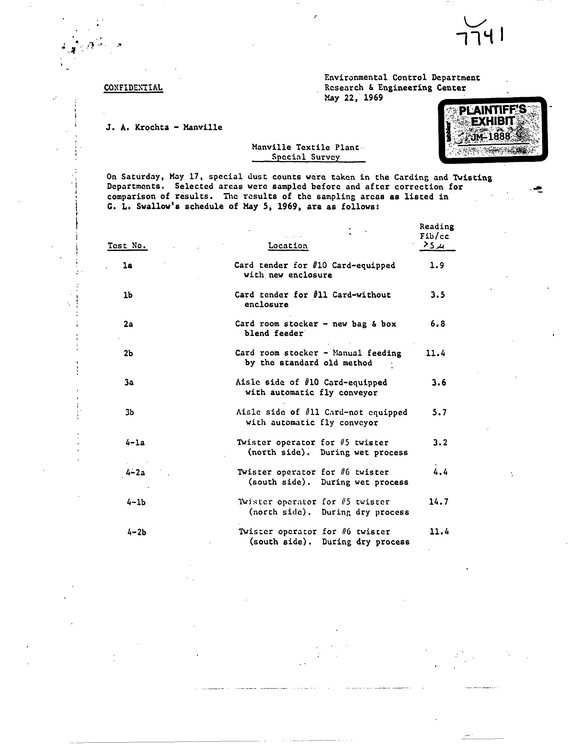
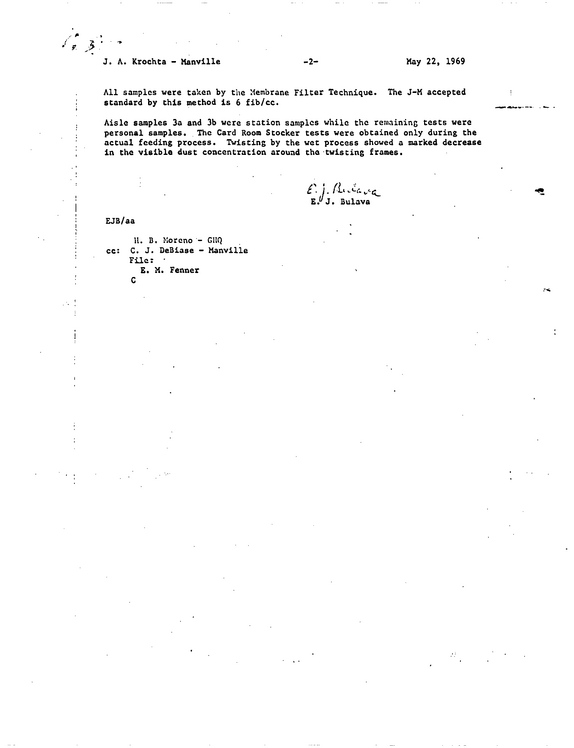
O' -1TH I CONFIDENTIAL J.
refid# qkMXbyjy97mZoRnMd7kM5E23q2 pages
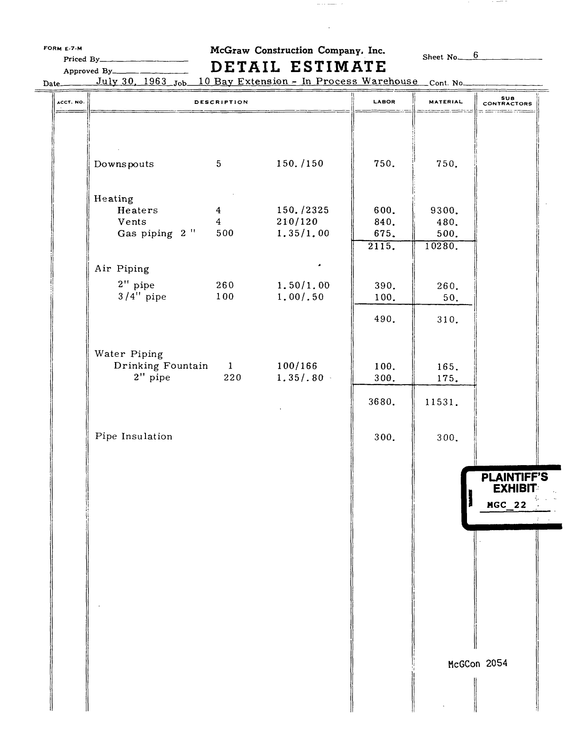
form e-7-m Priced By Approved By DateJuly 30. 1963 toh McGraw Construction Company.
refid# 3eB87zG0GvJgk32ZdG9nyRVaJ1 page
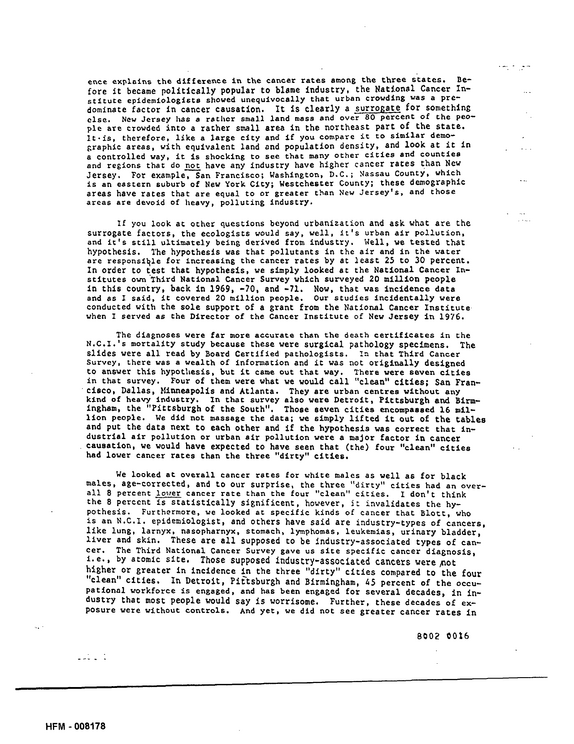
ence explains the difference in the cancer rates among the three states.
refid# B5Q28rwQxX0pONxbJyXn3EeMk1 page
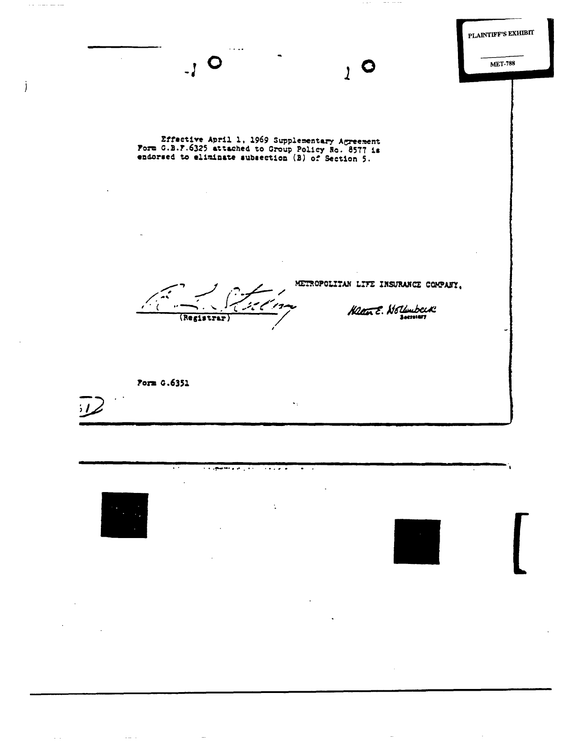
o-/ 1 Effective April 1, 1969 Suppleaentary Agreement For G.B.T.6325 attached to Group Policy So. 8577 It endorsed to eliminate aubaectlon (B) of Section 5. /<' ' ( -------- %. v.J'fV.-.
refid# jNVM0MX7bgvBvK59Q4L3am8DN3 pages
Historic*!
refid# BRDBg78bV8XVGROXZm63yoEXX5 pages