Refine
Estimated Years 1960-1969Clear
7,161 results foundRefine Search
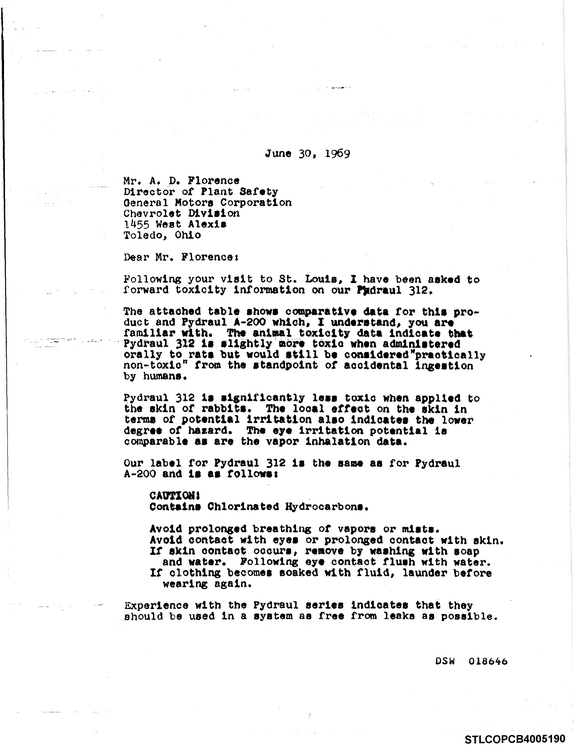
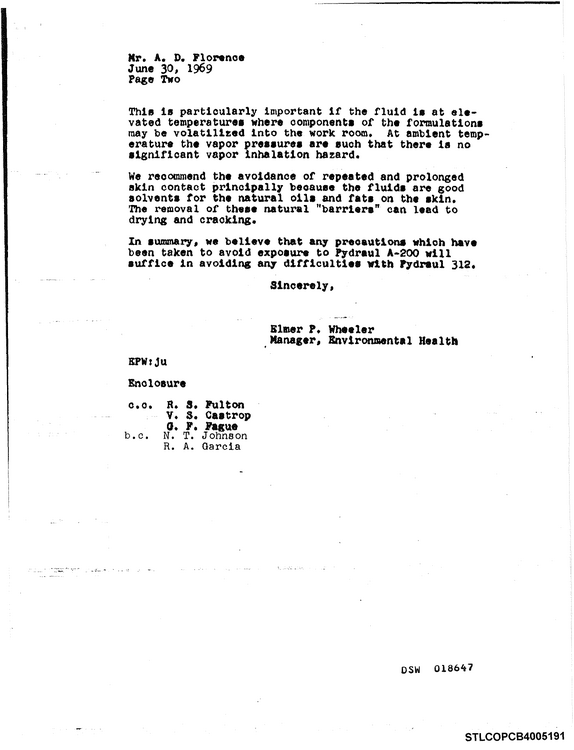
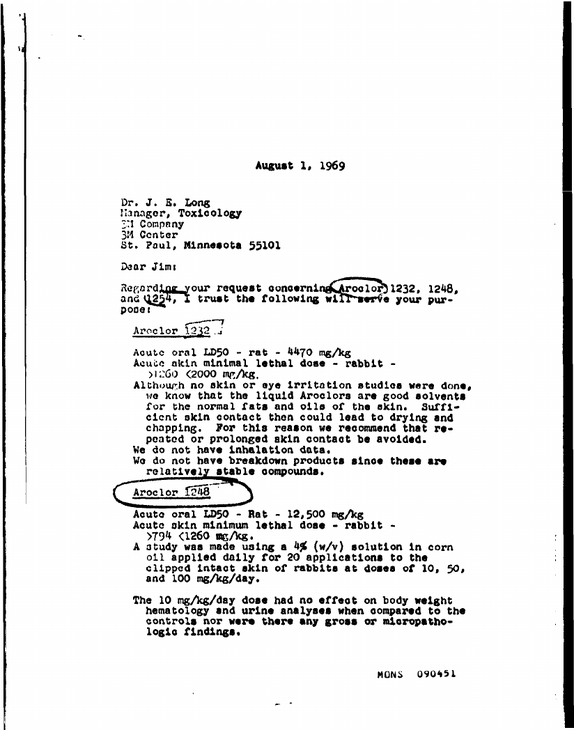
The removal of these natural "barriers" can lead to drying and craoking.
refid# 2qLp08dprgnLo9v80k8zLDDwL3 pages
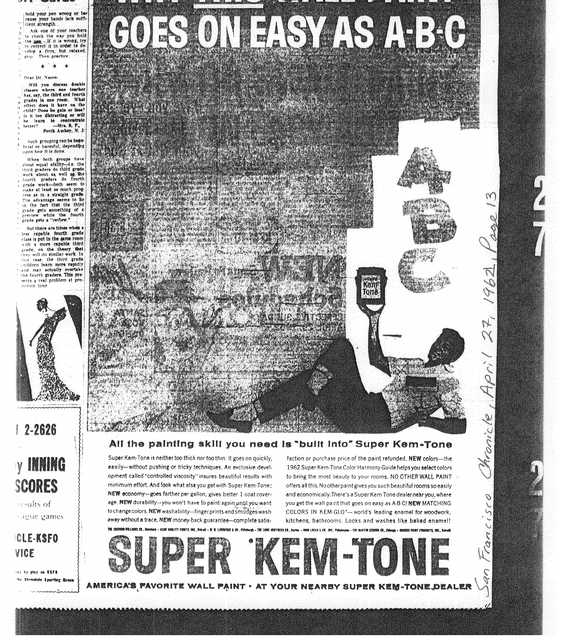
No other paint gives y o u such beautiful rooms so easily NEW economy -goes farther per gallon, gives better J coat cover and economically There s a Super Kern Tone rfealerneftr you, where age NEW durability you won't hav* to paint again .until you want you get the wall paint that goes on easy as ARC NEW MATCHING to change coloi s NEW washaNity -fngei prints and smudges wash COt ORS IN KCM GUT -worlds leading enamel for woodwork, away without a trace.
refid# aDVvrv9da8OeLekodG2bbJ3qY1 page
ELEVATORS AND PLANT RAILWAYS road systems * When plant railway safety problems arise, help and suggestions can be sought from the safety men and operating officers of a plant's connecting railway line Safety meetings and other educational ac tivities should be used to inform plant per sonnel about railway hazards To include all the safe practices required for the safe operation of railway equipment would require a book in itself However, a few of the more important ones are includ ed here 1 Stop and look both ways before crossing any track 2 Expect trams or cars to move at any tune, on any track, in either direction 3 Step over rails when crossing tracks Never step, walk, or sit on any rail 4 Never go between moving cars or cars that may move for the purpose of adjust ing couplers or for any other purpose (The once common practice of lacking couplers to align them is particularly dangerous ) 5 Give a hand or lamp stop signal and re ceive an acknowledgment of the signal before gomg between standing engines or cars 0 To close a boxcar door, place one hand on the door handle and the other on the back end of the door 7 Step down from cars--do not jump 8 Never attempt to nde the leading foot board of an engine (This rule applies to aU employees, including switchmen ) Association of American Railroads, Safety Section, 59 East Van Buren St, Chicago, QL Safety Rules for various services References American Society of Mechanical Engineers, 345 East 47th St., New York City ASME Boiler and Pressure Vessel Code, Section Itl, "Boilers of Locomotives," and Section VUI, "Unfired Pressure Vessels " American Standards Association, 10 East 40th St., New York City Inspection of Elevators (Inspector's Manual) A17 2 Solely Code lor Elevators, Dumbwaiters, end Escalators A17 1 and Sup A17 la (Also pub lished by American Society of Mechanical Engineers ) Salety Code for Manhlts A90 1 ___ Safety Code Buies for Moving Walks A17 1 13 (Part XIII of Safety Code lor Elevators, Dumbwaiters, and Escalators A17 1 Also published by American Society of Mechanical Engineers) Association of American Railroads, 59 East Van Buren Street, Chicago, 01 Engineering Division (American Railway Engineering Association) Manual of Recommended Practice Safety Section Safety Rules Governing Maintenance of Equipment and Stores Employees Safety Rules Governing Maintenance of Way and Structures Employees Safety Rules Governing the Care, Maintenance and Operation of Mechanised Material Han dling Equipment Used in Railway Operations Safety Rules Governing Tram, Engine, and Other Transportation Employees Interstate Commerce Commission, Washington, D C Laws.
refid# xxXMLMK1X6V8jzM3mYxXd28y1 page
For electron microscopy, the tissues were embedded in araldite and after sectioning were stained with lead citrate.
refid# eJG6pDVn23vQ5XG111yvDd5G1 page
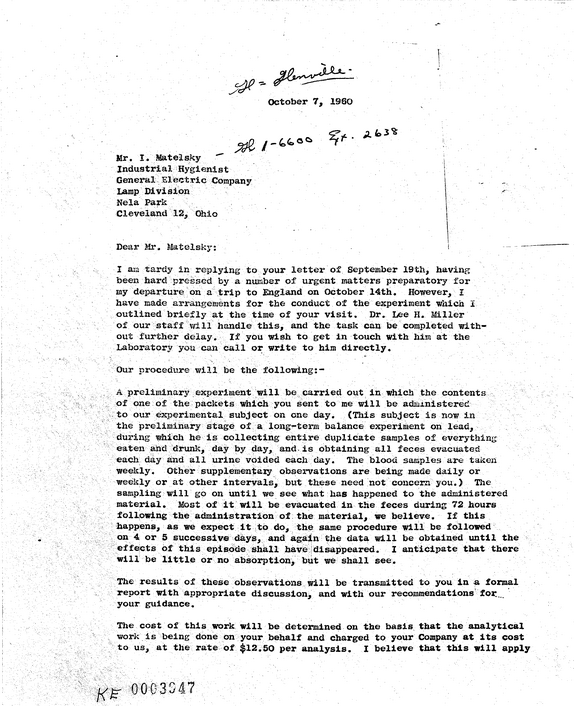
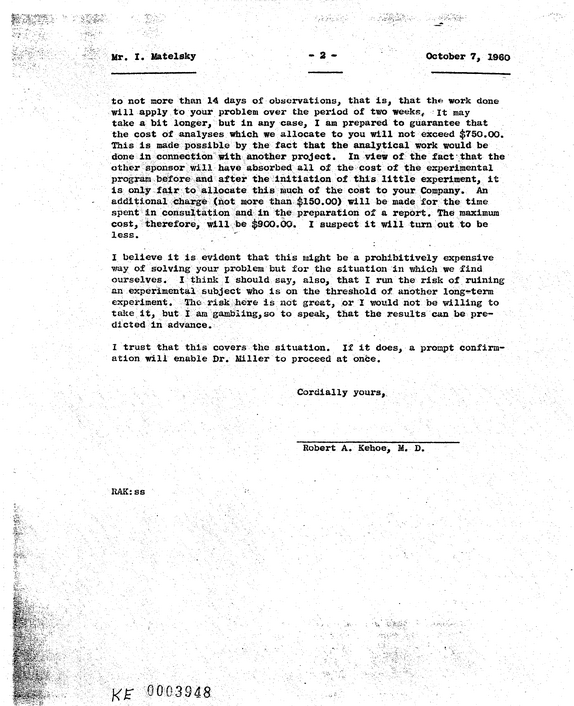
(This subject is now in the preliminary stage of a longr-term balance experiment on lead, during which he is collecting entire duplicate samples of everything eaten and drunk, day by day, and-is obtaining all feces evacuated each day and all urine voided each day.
refid# 3g0rJRwZqqw0a7v7bp0xeOGy2 pages
$ 3,311.00: 28,600.00: 2,320.00: 6,800.00: 4,362.00: 120,000.00: 1,309,571.00: 6,380.00: 9,750.00: 2,776,000.00: 9,981.00: Contribution; Membership Subscription to Lead Industries Association, including Health and Safety, from January 1 to March 31, 1960.


refid# reyoq1303oK0dJq75rp2opYXG2 pages
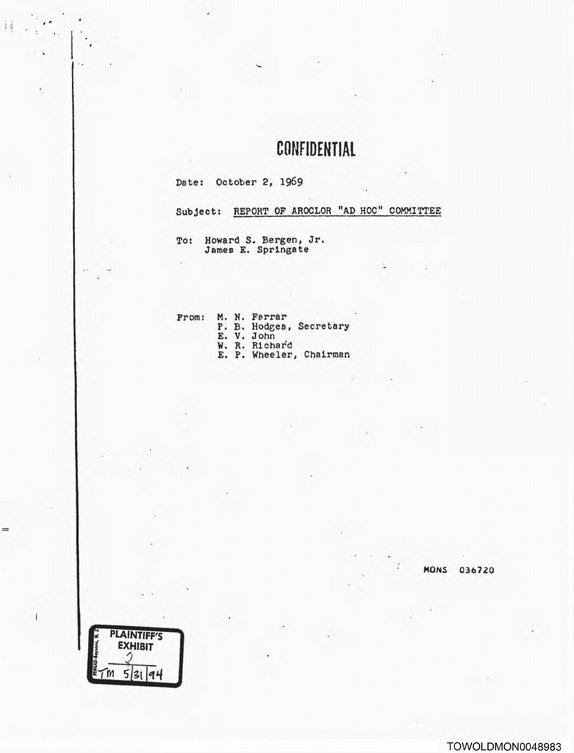
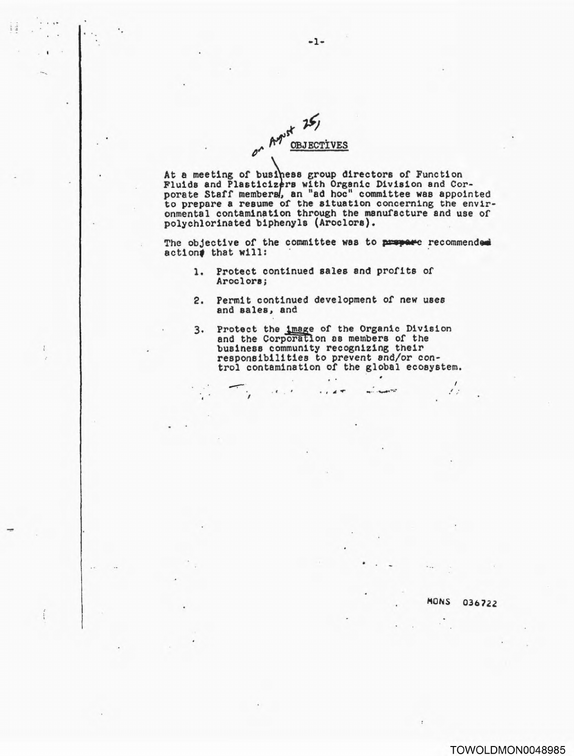
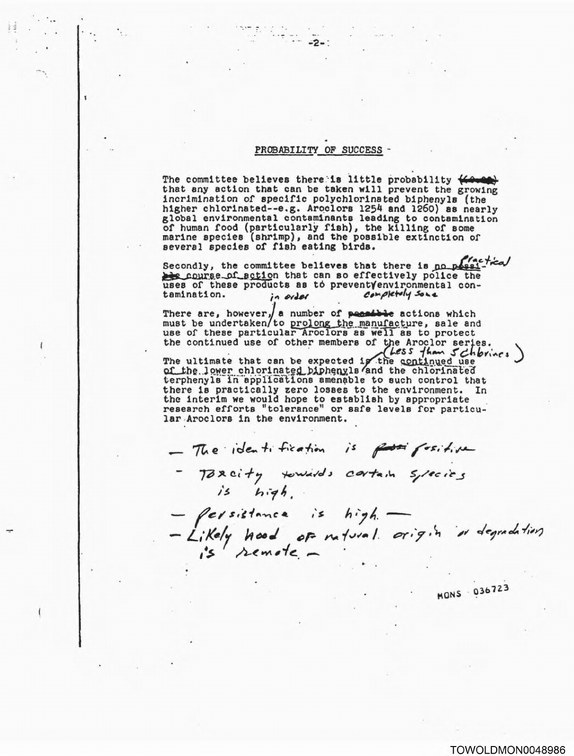
It has been recognized from the beginning that other functional fluid uses could lead to losses of the Aroclors to liquid waste streams from the customers1 plants.
refid# 2NB342VaLB6XXmKxkBZk6r3L713 pages
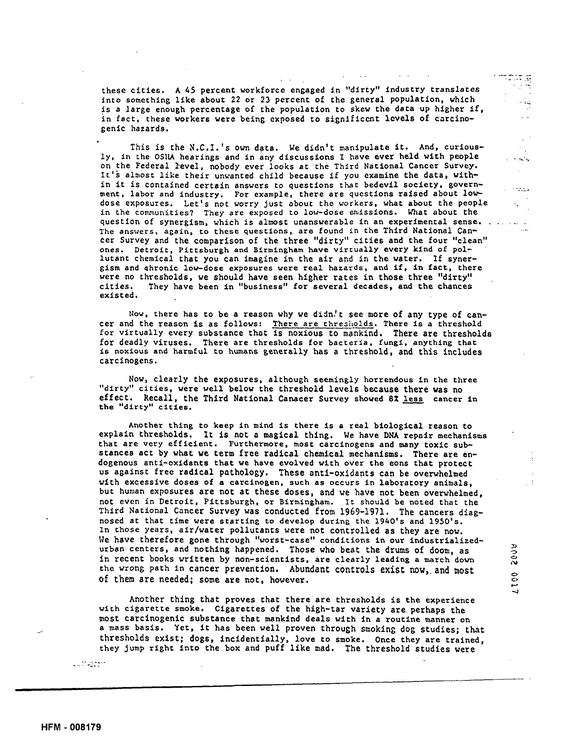
Those who beat the drums of doom, as in recent books written by non-scientists, are clearly leading a march down the wrong path in cancer prevention.
refid# MM5bYn47dYQxakkep7jEjok291 page
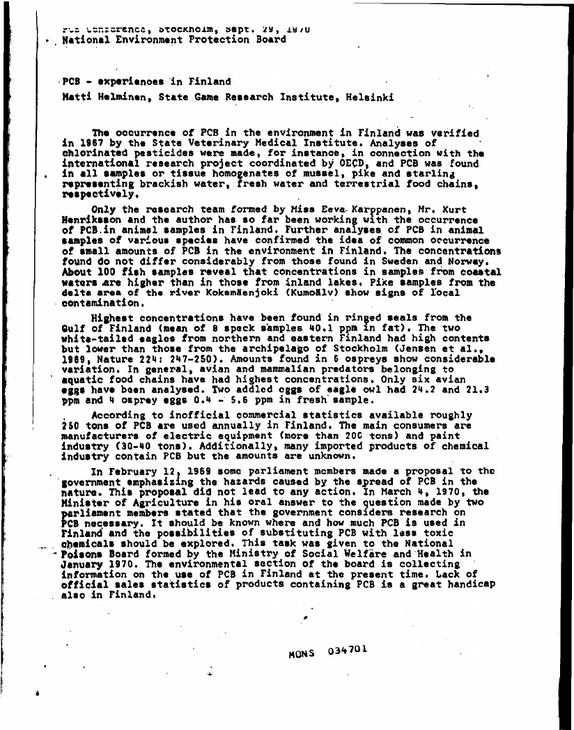
This proposal did not lead to any action.
refid# MMRzwMX01zYqwLbbzMeJ4XmrM1 page
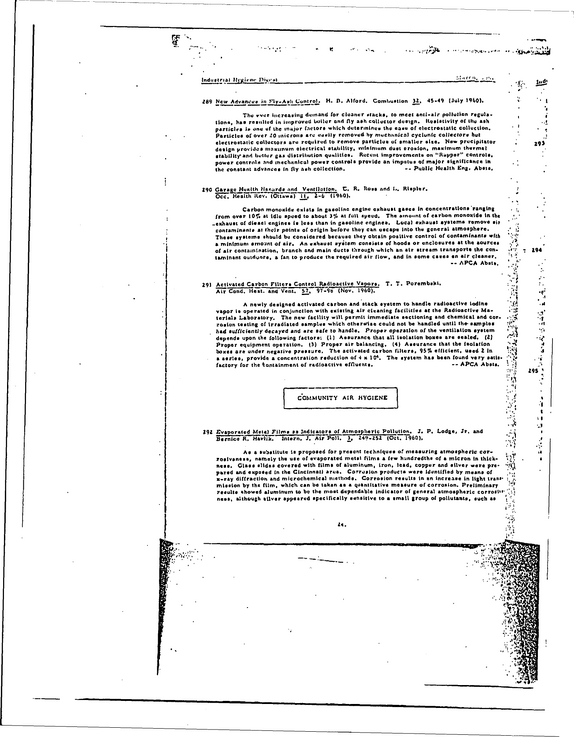
I960), As a substitute is proposed for present technique# of measuring atmospheric corrosivsnsts, namely the use of evaporated metsl films a few hundredths of a micron In thick *1 v;t ness, Class slides coversd with films of aluminum, iron, lead, copper and silver were pre pared and exposed in the Cincinnati area.
refid# Z4XDdo56RyeX9Qn74KzjrpqrJ1 page
Upon motion, the following applications for appropria tions were duly approved: Contributions $ 3,028.75: Membership Subscription to Lead Industries Association, Inc. from October 1 to December 31, 1963. 6,239.00: Dues for quarter year ending December 31, 1963 in the National Paint, Varnish and Lacquer Association, Inc.


refid# YrOZXJ4JLwxYpjXnYEXYpd3ZO3 pages
Suffi cient akin contact than could lead to drying and chapping.
refid# 6wy9rKOE52yMo5er1xyLJNVGg3 pages
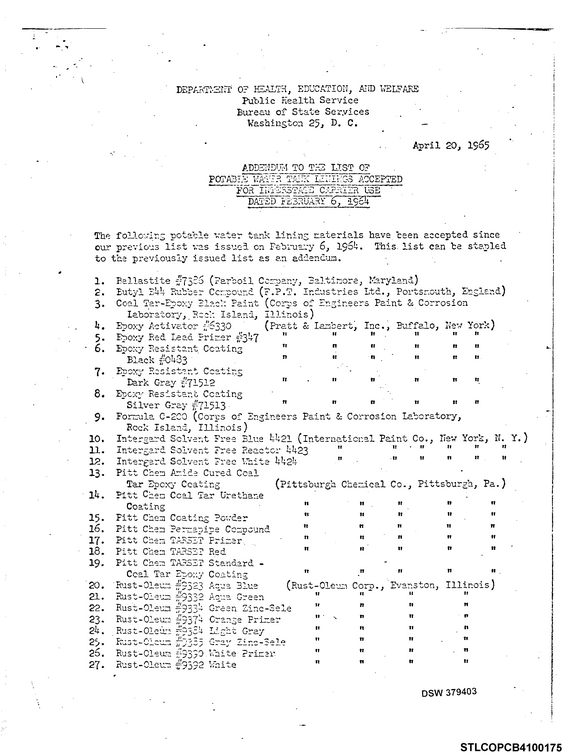
. , Buffalo, Nev Yor>0 5- Epoxy Red Lead Primer #347 6.
refid# LKa8RmRJv3EQdnQEMjx8kOM2d2 pages
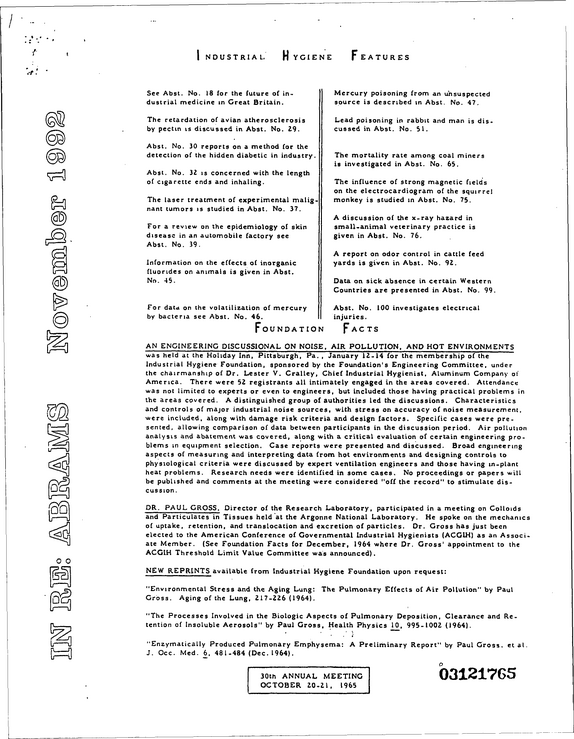
Lead poisoning in rabbit and man is dis cussed in Abst.
refid# MMoMjkGmobrLQgJpXON4DgOK91 page
4--Inspection and Control Procedures By carefully selecting a representative sample of persons, the safety professional can judge the level of safety performance of the entire system at that particular time The object is to discover factors which have con tributed to an actual or potential loss-produc ing accident What the technique can do A two-year study evaluating the usefulness of the critical incident technique was recently conducted at a large manufacturing plant in New Jersey The 187 different unsafe acts and conditions that were identified revealed that the causes of no-injury accidents were the same as the causes of injury type acci dents and that future injury type accidents can be predicted from an analysis of "near-misses " It was also found that 52 percent more unsafe acts and conditions were revealed by the crit ical incident technique than were identified by the accident records compiled during the two-year period studied The results of this study show that 1 The critical incident technique dependably reveals causal factors m terms of errors and/or unsafe conditions that lead to in dustrial accidents 2.
refid# B8rgYQgB5NBw4anrwB8Q0274L1 page