Refine
Estimated Years 1960-1969Clear
7,161 results foundRefine Search
General Information About Lead. . . .


refid# ExrgrGmMkjabpZQ66NrbnYG3g18 pages
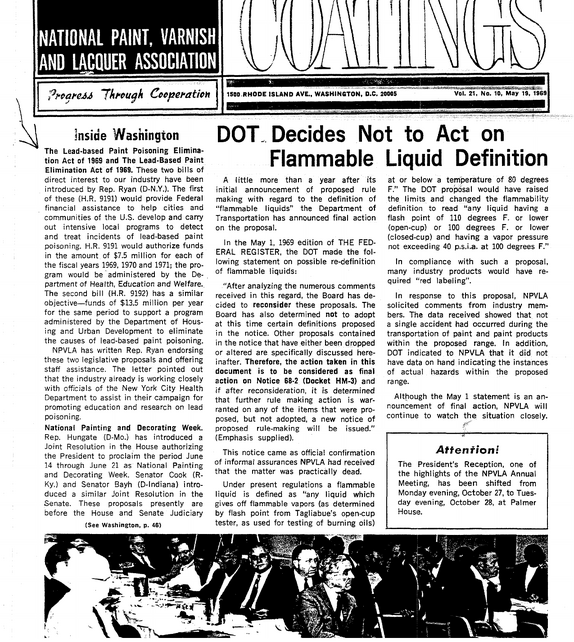
Inside Washington The Lead-based Paint Poisoning Elimina tion Act of 1969 and The Lead-Based Paint Elimination Act of 1969.
refid# 9xdVjdpKQeOvnDYEkNGaZrE34 pages
band added small quantiiiC' ol siillar and .eia iv. niaieruls Figure 2 is a view in perspective of a clutch disc such as . aleined nuilhte loge'hci vvnh copn,-i and lead Figure ?
refid# NEn4x892dXd2NQo83Okq6z04p6 pages
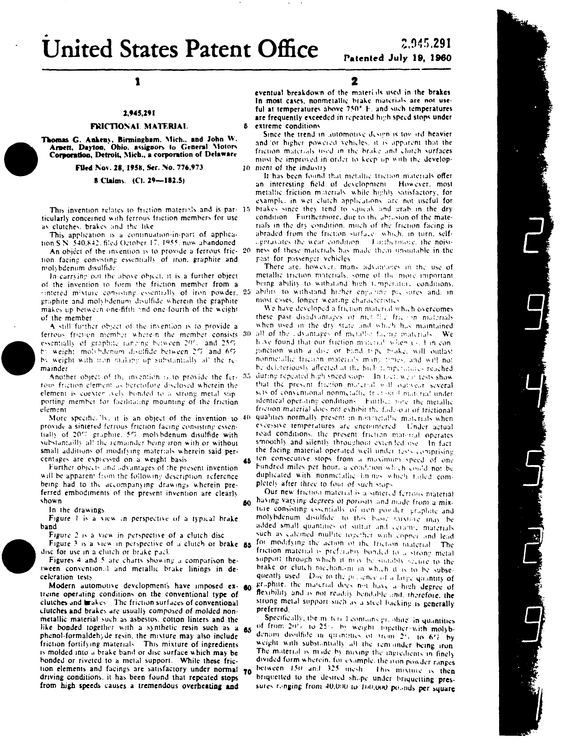
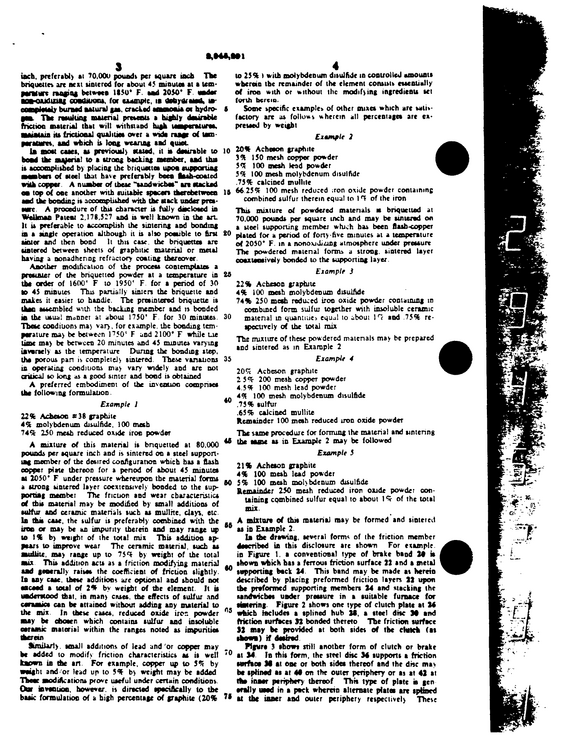
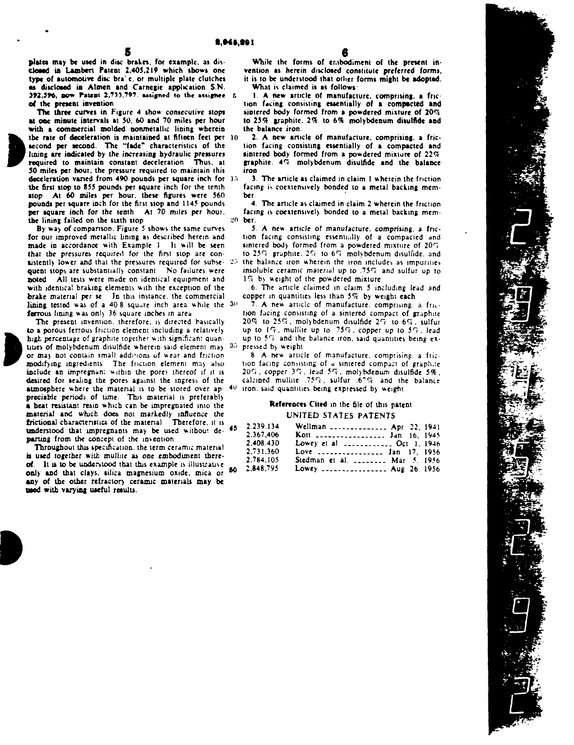
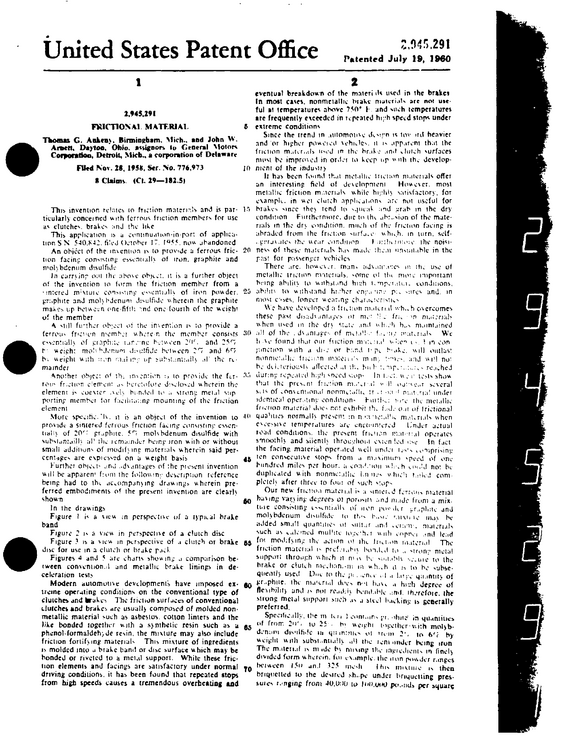
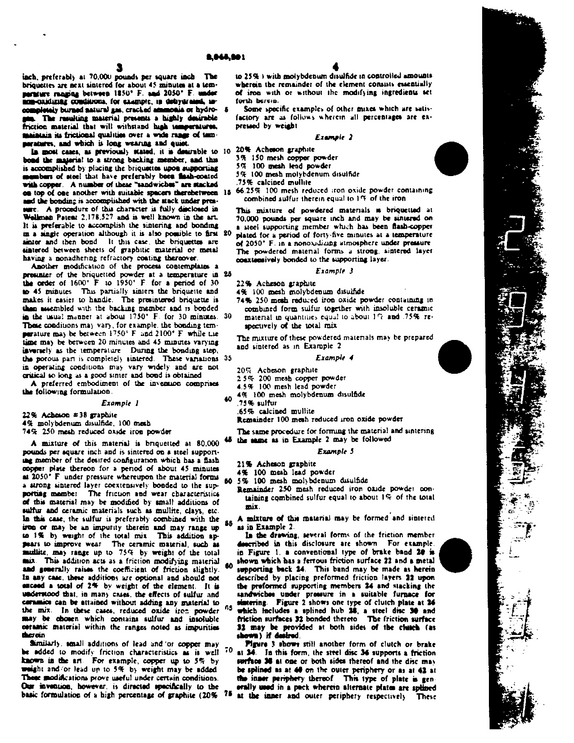
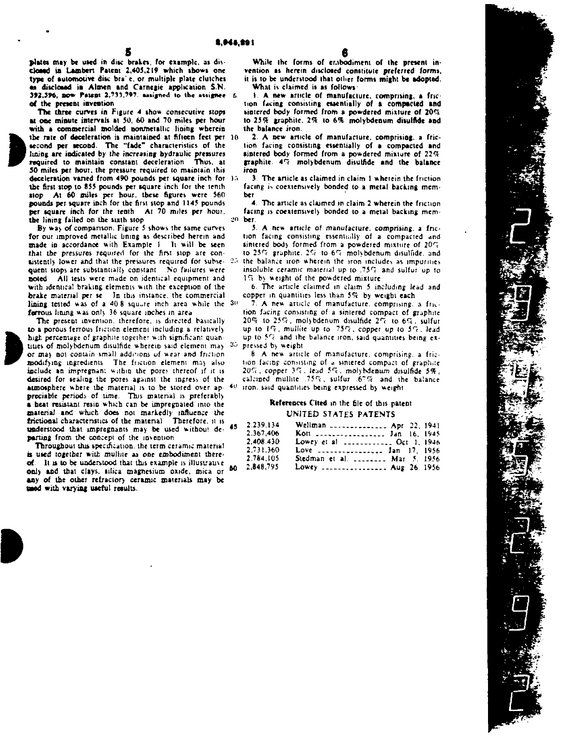
Arnett Dayton Ohio assignors to General Motors Corporation Detroit Mich a corporation of Delaware Flled Nov. 28 1958 Ser No. 776,973 8 Claims Ct 29 182.5 This invention relates to friction materials and is particularly concerned with ferrous friction members for use as clutches brakes and the like This application is a continuation of applica- tion N. 540,842 540,842 filed October 17 1955 now abandoned An object of the invention is to provide a ferrous friction facing consisting essentially of iron graphite and molybdenum disulfide In carrying out the above object it is a further object of the invention to form the friction member from a sintered mixture consisting essentially of iron powder graphite and molybdenum disulfide wherein the graphite makes up between fifth and fourth of the weight of the member A still further object of the invention is to provide a ferrous frichen member whereinwherein the member consists essentially of graphite tanging between 2010 and 257 to weight molibdenum molibdenum disulfide between 27 and 65 b weight with mon making up substantially all the re- mainder Another object of the invention is to provide the furtous friction element as heretofore disclosed wherein the element is coexter vely bonded to strong metal sup porting member for facilitating mounting of the friction element More specifilc it is an object of the invention to provide a sintered ferrous friction facing consisting essentally of 20 graphite 5 molibdenum molibdenum disulfide with substantailly all the remainder being iron with or without small additions of modifying materials wherein said percentages are expressed on a weight basis Further objects and advantages of the present invention will be apparent from the following description reference being had to the accompanying drawings wherein preferred embodiments of the present invention are clearly shown In the drawings Figure 1 is a view in perspective of a typical brake band Figure is a view in perspective of a clutch disc Figure 3 is a view in perspective of a clutch or brake disc for use in clutch or brake pack Figures 4 and 5 are charis showing a comparison between conventional and metallic brake linings in de- celeration tests Modern automotive developments have imposed extreme operating conditions on the conventional type of clutches and brakes are The friction surfaces of conventional clutches and brakes are usually composed of molded nonmetallic material such as asbestos cotton linters and the like bonded together with a synthetic resin such as a formaldeh de resin the mixture may also include friction fortifying materials This mixture of ingredients is molded into a brake band or disc surface which may be bonded or riveted to a metal support While these friction elements and facings are satisfactory under normal driving conditions it has been found that repeated stops from high speeds causes a tremendous overheating and eventual breakdown of the materials used in the brakes In most cases nonmetallic brake materials are not useful at temperatures above 750 F. and such temperatures are frequently exceeded in repeated high speed stops under extreme conditions Since the trend in automotive design is tov and heavier and for higher powered vehicles is apparent that the friction materials insed in the brake and church surfaces most be improved in order to keep up with the developIn ment of the industry It has been found that metallic friction materials offer an interesting field of development However most metallic friction materials while highly satisfactory for example in wet clutch applications are not useful for brakes since they tend to squeak and grab in the dry condition Furthermore due to the abrasion of the mate- rials in the dry condition much of the friction facing is abraded from the friction surface which in turn self- siguravates the wear condiven Karibamore the noisi- ness of these materials has made them unsuitable in the past for passenger vehicles There are however many advaarates in the use of metalle triction materials some of the more important being ability to withstand high temperatu conditions ability to withstand higher enga pi^,, sores and in most cases longer wearing characteristics We have developed a friction friction materid which overcomes these past disadvantages of met the fri on materials when used in the dry state and which has maintained 30 all of the advantages advantages of metalle facing materials We have found that our friction material when us in con junction with a diez or band type brake will outlast nonmetallic friction materie's many times and will not be deleteriously affected at the bish mperatures reached 35 during repeated high speed stops In tech went tests show that the present friction material will outwear several sets of conventional nonmetallic dosa of material under identical operating condition- Further wore the metalhe friction material does not exhibit the fade of trictional 40 qualities normally present in metallic materials when excessive temperatures are encountered Under actual road conditions the present friction material operates smoothly and silently throughout extended use In fact the facing material operated well under les's comprising 48 ten consecutive stops from . maximum speed of one hundred miles per hour a condition which could not be duplicated with nonmetalle nes which taled com pletely after three to fout of such stops Our new friction material is a sintered forrans material having varying degrees of porosity and made from a mix ture consisting essentially of men poeder poeder graphite and molybdenum disulfide to this buste rantite may be added small quantities of siltar and selami materials such as cademed mullite together with copper and lead = 5 for modifying the action of the friction material The friction material is preferably bonded to strong metal support through which it may be suitably secure to the brake or clutch mechanism in which is to be subse- quently used Due to the petence petence of large quantity of graphite the material does not have a high degree of flexibility and is not readily bendable and therefore the strong metal support such as a steel backing is generally backing preferred molyb- Specifically the m teha contains gr shite in quantities of from 20 to 25 25 by weight together with demum disulfide in quinces of trein % to 67 by weight with substantially all the reminder being iron The material is made by mixing the ingredients in finely divided form wherein for example the aton powder ranges between 150 and 325 mesh 70 This mixture is then briquetted to the desired shape under briquetting pres- sures ranging from 40,000 to 100,000 pounds per square 2,065,901 inch preferably at 70,000 pounds per square inch The briquettes are next sintered for about 45 minutes at a tem- perature ranging between 1850 F. and 2050 F. under oxidizing conditions for example in detaydir we completely burned natural gas cracked ammonia or hydro- gm The resulting material presents a highly desirable friction material that will withstand high temperaturge maintain its frictional qualities over a wide range of tam- paratures and which is long wearing and quiet In most cases as to bond the previously stated it is desirable majerial to a strong backing member and this is accomplished by placing the briquettes upos supporting ibers of steel that have preferably been coated oonnttooppofoonene A number of another with these sandwiches are stacked suitable spacers therebetween and the bonding is accom witp h tl he si tacs k unh dereprd ea- eure.
refid# d7RpL2yjdy8Baor646NKKO5e6 pages
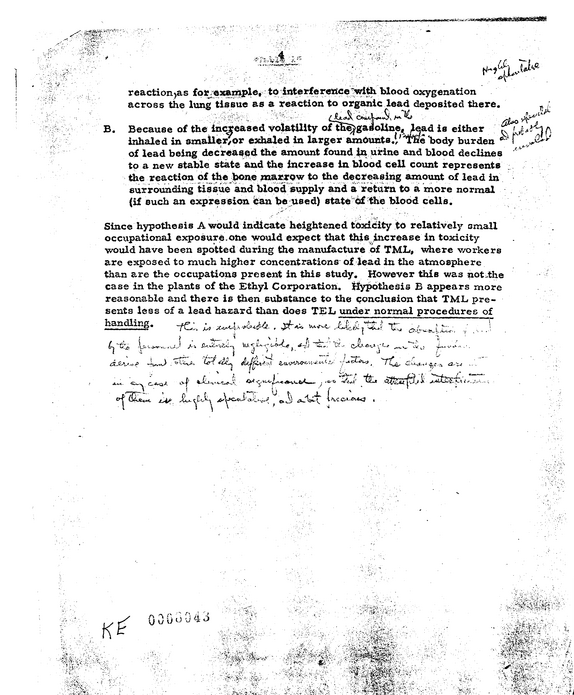
,l.ity of th ^gasoUn e, lead is either inhaled in sm aller/or exhaled in lar ger amdtmts.i'TiHe body burden ^ P of lead being decreased the amount foundin urine and blood declines *' to a new stable state and the in crease in blood cell count represen ts the reaction of the bone m arrow to the decreasing amount of lead in surrounding tissu e and blood supply and a return to a more normal (if such an expression baa be .used) state bf ihe blood cells.
refid# zdrj2jenOLL7j2ozEoGG2K0904 pages
SOT.. 4 ESC. 1966 PffOKTB Of LEAD TROCOCW TOR COBOHmOB (a) (Zb Abort To m) 22*2 Total Art.


refid# ExqoeQemN7ZwZEYNOV0xvLo6048 pages
lead ferrite.


refid# XRZe57Zw5emeg0zQp3XrvDamR10 pages
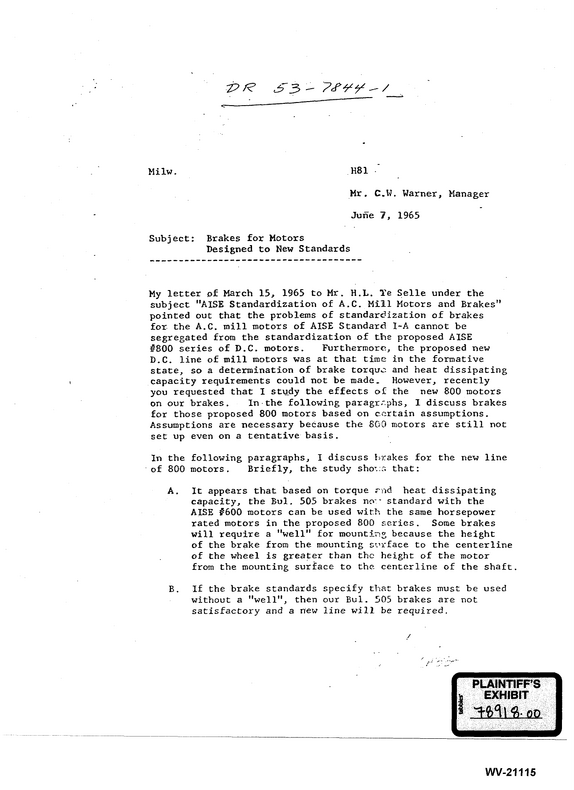
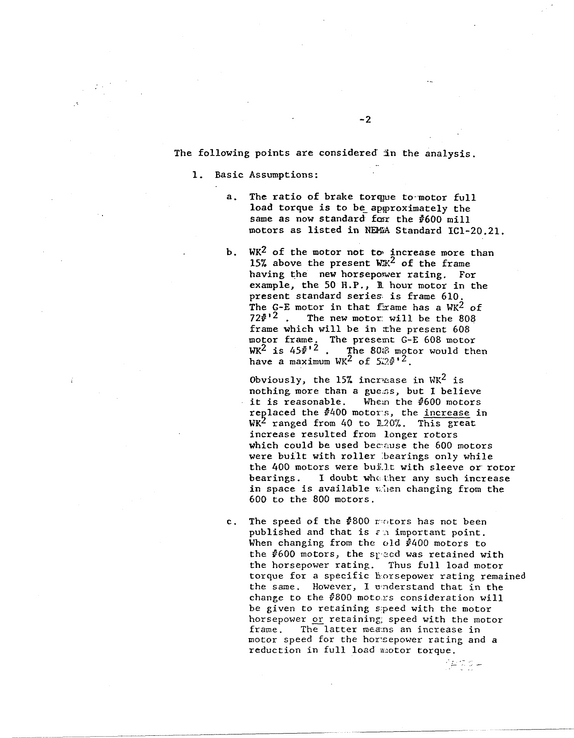
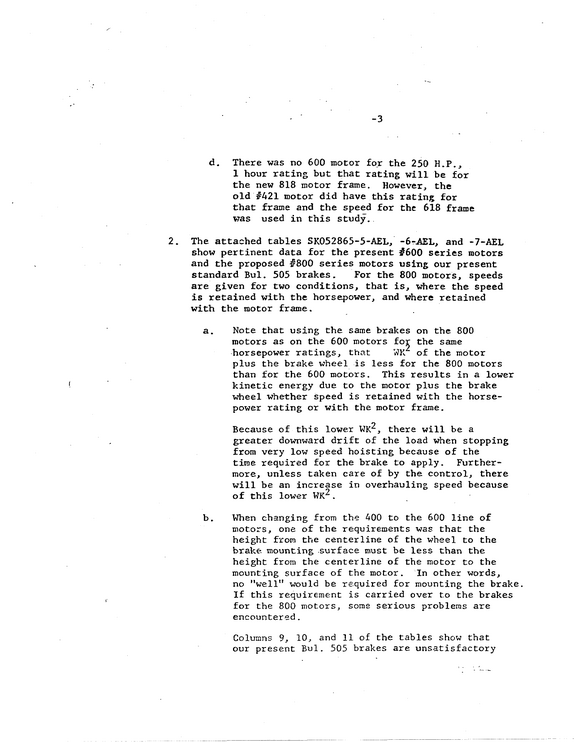
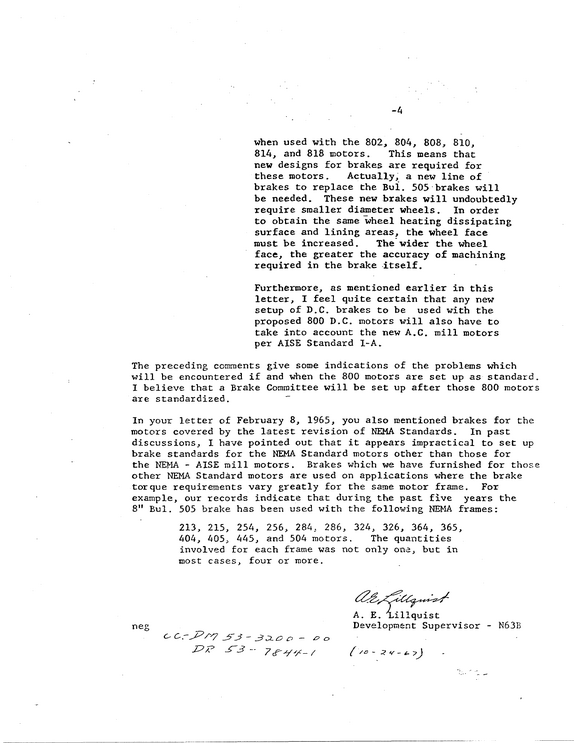
Leads on Bui. 505 brakes do not follovj codes for long leads, yet we haven't had complaints on leads having proper junctions with coil.
refid# NEekzQpN9pZnkzxzDGM4NKM8p23 pages
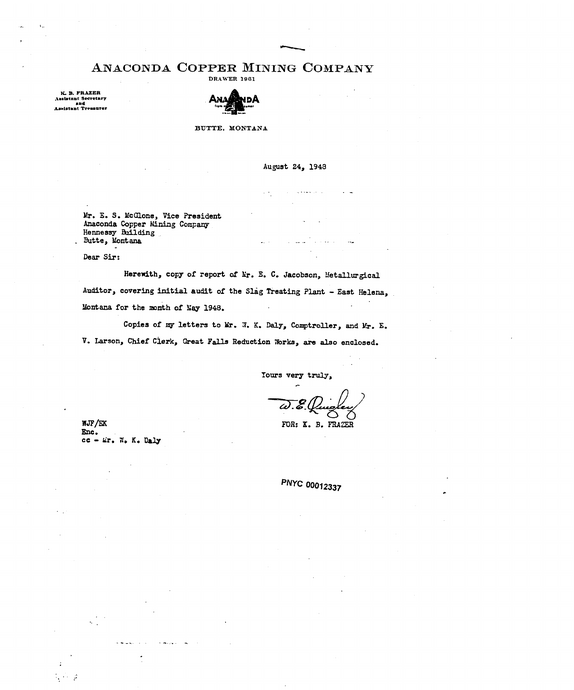
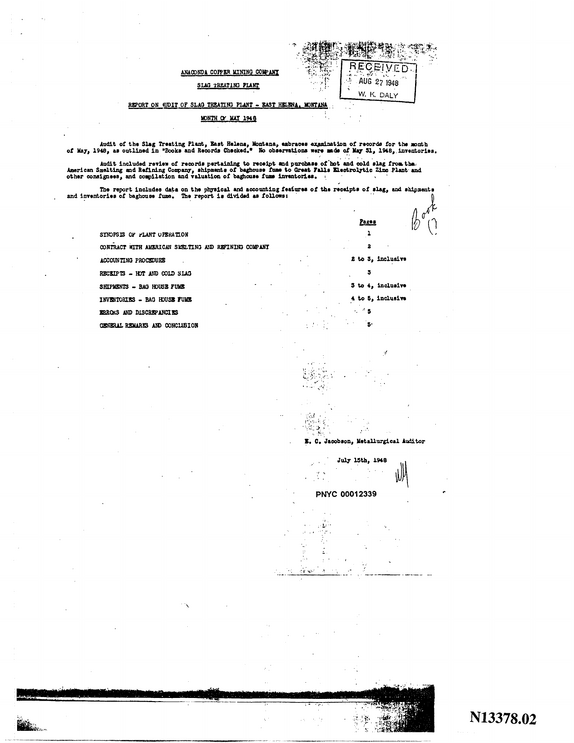
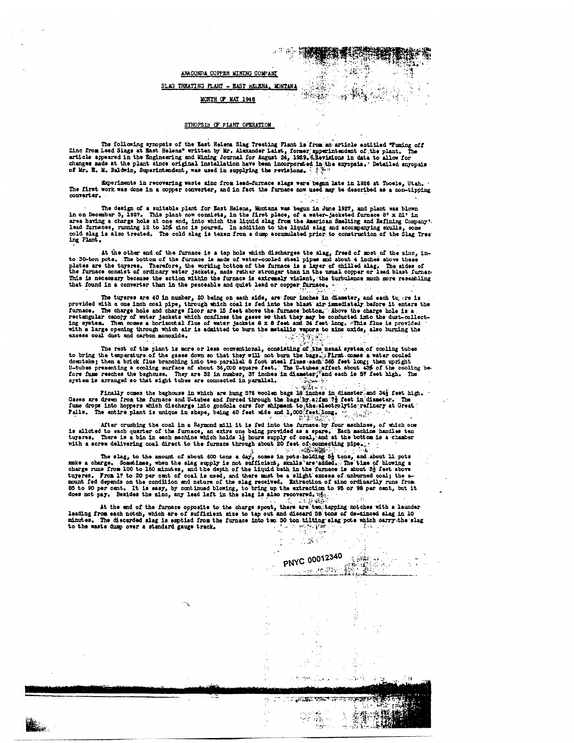
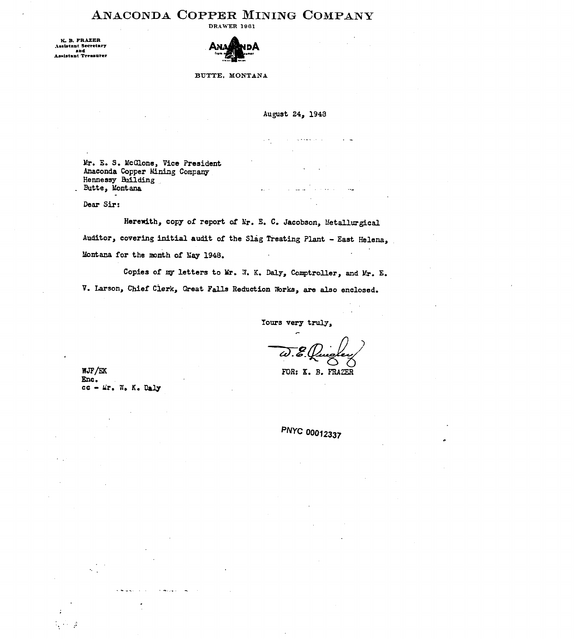
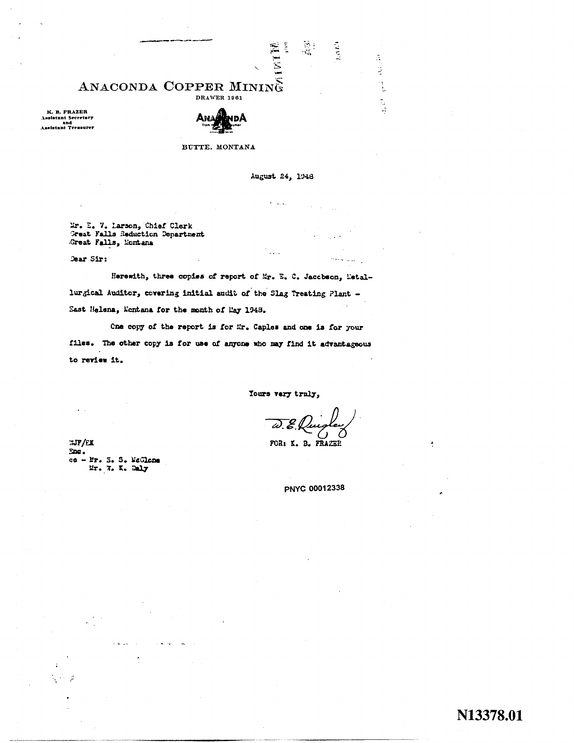
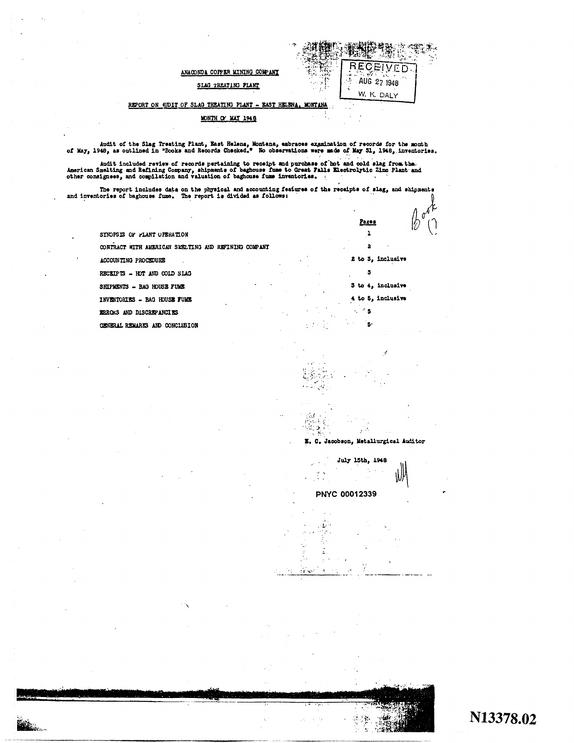
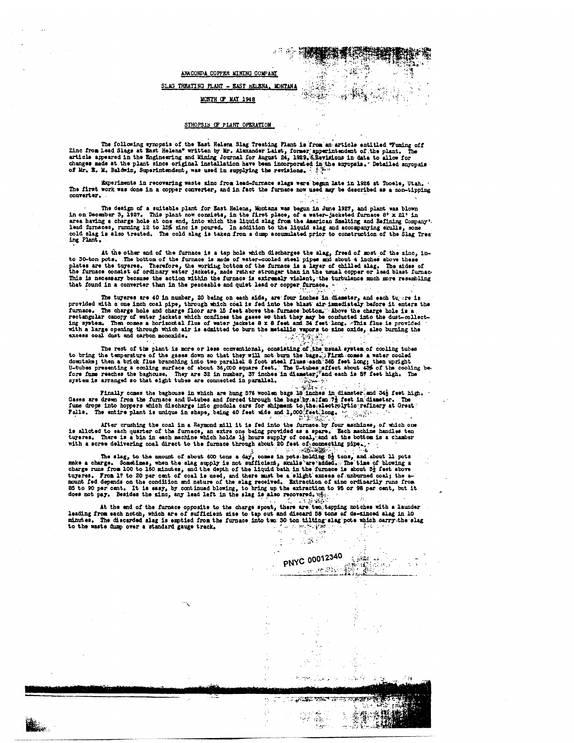
MONTANA MONTH CF MAT 1948 SYNOPSIS CF PUNT OPERATION The following synopsis of the East Helena Slag Treating Plant is fro* an article entitled "Fuming off Zinc from Lead Slags at Bast Helena* written by Hr.
refid# emLZQe54a75zXmpRvzDqdK92M8 pages
MONTANA MONTH CF MAT 1948 SYNOPSIS CF PUNT OPERATION The following synopsis of the East Helena Slag Treating Plant is fro* an article entitled "Fuming off Zinc from Lead Slags at Bast Helena* written by Hr.
refid# NzmKB8GNx48ny4DLYKZbD9bD8 pages
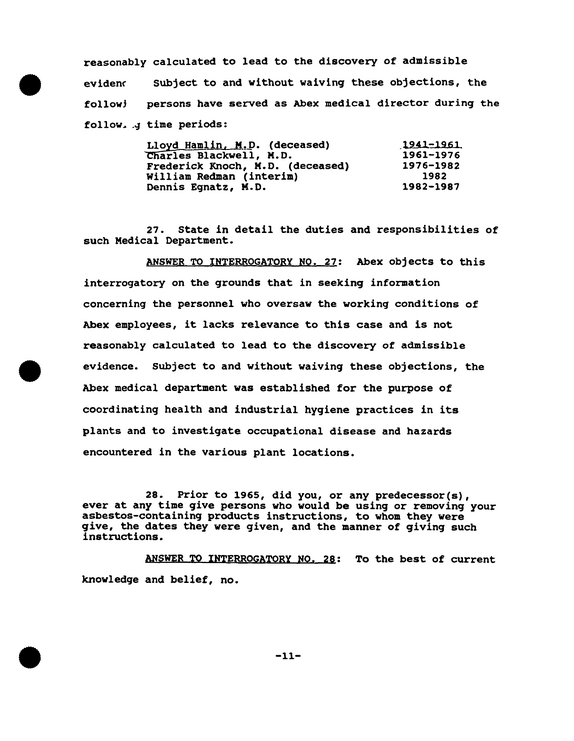
reasonably calculated to lead to the discovery of admissible evidenc Subject to and without waiving these objections, the followi persons have served as Abex medical director during the follow- .4 time periods: Lloyd Hamlin.
refid# reX1O20dD36nRGpgD3oXRrqVJ1 page
K e hoe: Thank you very much indeed for sending me a copy of the "Symposium on Lead".

refid# QkkOm7J1x5z9rQBj45r8y528L1 page
At that time I was engaged partly on trie prevention of lead absorption.

refid# wg6Gxv9nreqZ94ZraGoqBOw441 page
The basic information that I desire is concerning the absorption of leaded gasoline through normal and denuded skin such as that which you find with an eczematized dermatitis.

refid# Znz49OXXqwmL6zQbaOQ3Be2EV1 page
Howard Sarine, Manager Advertising Department National Lead Company Building Dear Sir: Please be advised that at a meeting of the 0 Executive Committee of the Board of Directors of National Lead Company held today, the following resolution was adopted: RESOLVED, That the proposed Paint Advertising Budget for the year 1964 in the amount of $lf977,360.

refid# emBvJyYZ9wO19mXoyzQdVwKkE1 page