Refine
Estimated Years 1930-1939Clear
8,921 results foundRefine Search
V American Society of Heating and Ventilating Engineers Guide, 1934 3.
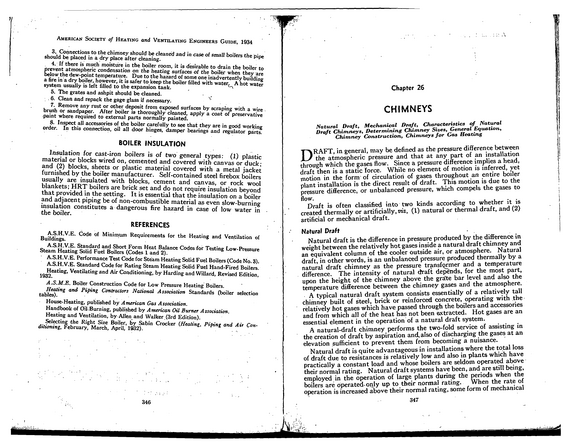
refid# 7RZ3OR043je33JB8dgnXzx8aR1 page
American Society of Heating and Ventilating Engineers.
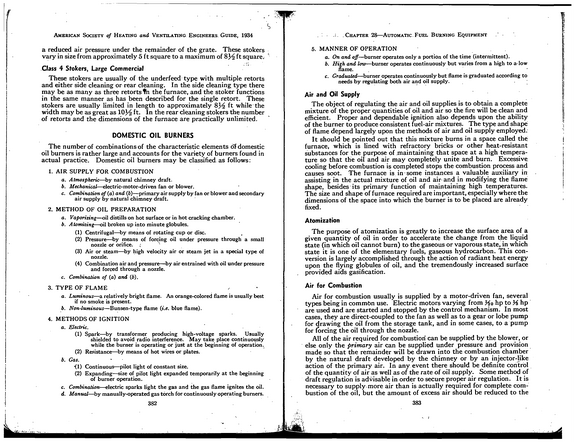
refid# ZBG9nxov9NBLG8yyzQv8vZanJ1 page
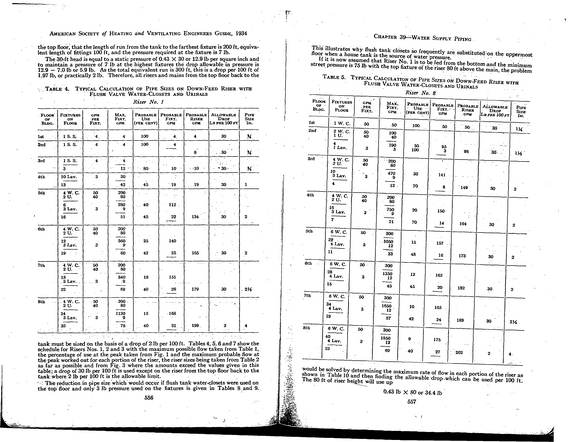
American Society of Heating and Ventilating Engineers Guide, 1934 the top floor, that the length of run from the tank to the farthest fixture is 200 ft, equiva lent length of fittings 100 ft, and the pressure required at the fixture is 7 lb.
refid# OEV0BNm3o5JE9E2ZK50qJa5zj1 page
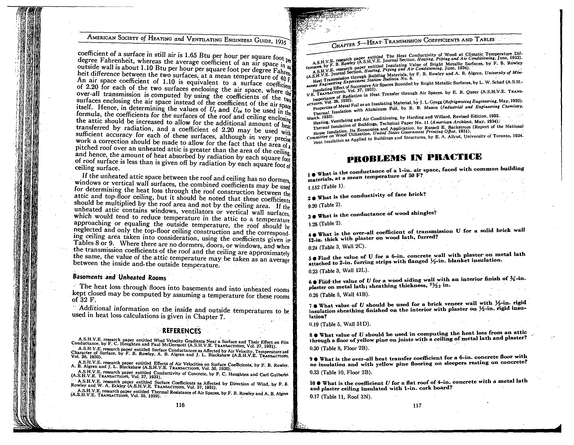
American Society of Heating and Ventilating Engineers Guide, 1935 coefficient of a surface in still air is 1.65 Btu per hour per square foot jw degree Fahrenheit, whereas the average coefficient of an air space in a. outside wall is about 1.10 Btu per hour per square foot per degree Fahrei) heit difference between the two surfaces, at a mean temperature of 4o p An air space coefficient of 1.10 is equivalent to a surface coefficient of 2.20 for each of the two surfaces enclosing the air space, where thj' over-all transmission is computed by using the coefficients of the tvr<> surfaces enclosing the air space instead of the coefficient of the airspa^ itself.
refid# zzYjx7YLNzkBYmXRJoRNg9mxR1 page
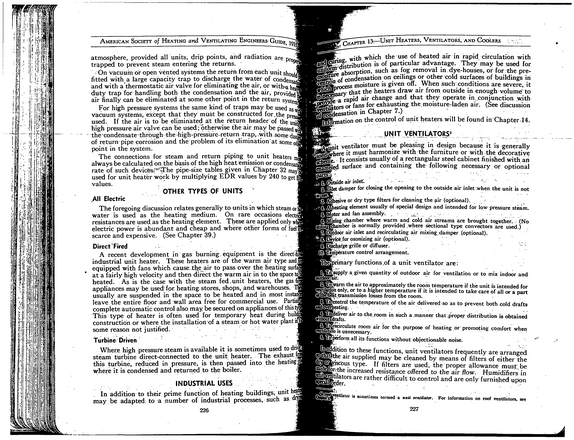
American Society of Heating and Ventilating Engineers Guide 1935 atmosphere, provided all units, drip points, and radiation are pra trapped to prevent steam entering the returns. - On vacuum or open vented systems the return from each unit shouij fitted with a large capacity trap to discharge the water of condense and with a thermostatic air valve for eliminating the air, or with>a hea duty trap for handling both the condensation and the air, provided* air finally can be eliminated at some other point in the return system] For high pressure systems the same kind of traps may be used as vacuum systems, except that they must be constructed for.the pr used.
refid# 3JEdONGygZMgYXXObzB8mRjEJ1 page
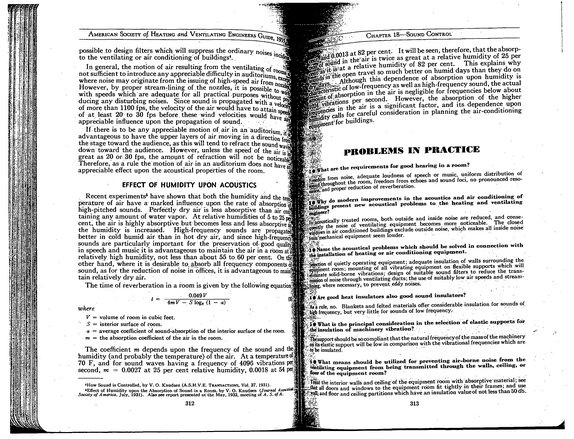
American Society of Heating and Ventilating Engineers Guide Chapter 18--Sound Control possible to design filters which will suppress the ordinary noises ' to the ventilating or air conditioning of buildings4..
refid# RKxY9MMg6VOZq2OOYwkkGwx71 page
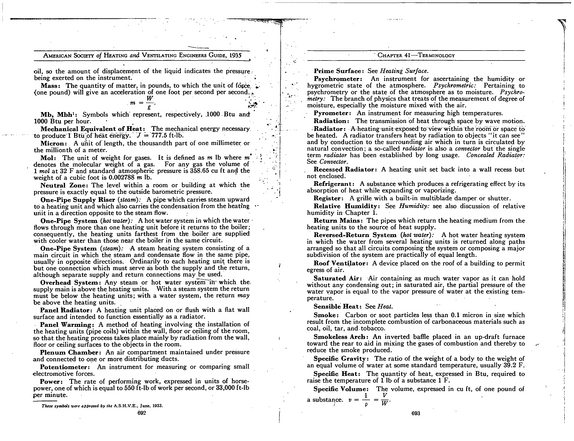
American Society of Heating and Ventilating Engineers Guide, 1935 oil, so the amount of displacement of the liquid indicates the pressure.
refid# bOxJqZJ2r9VaOd7ORxDNY26o11 page
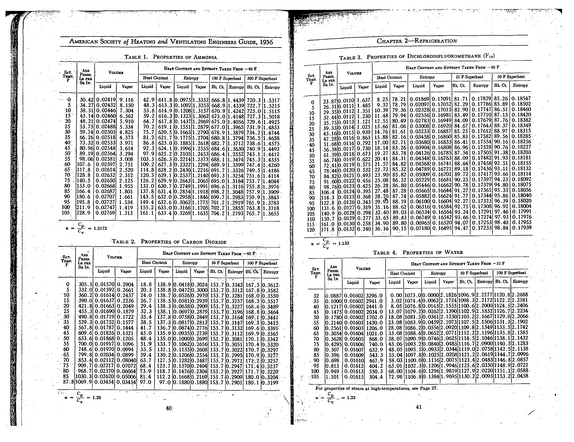
American Society of Heating and Ventilating Engineers Guide, 1936 Temp. .
refid# 2Vg1bD77JNgQEQ6yYw2eM0er1 page
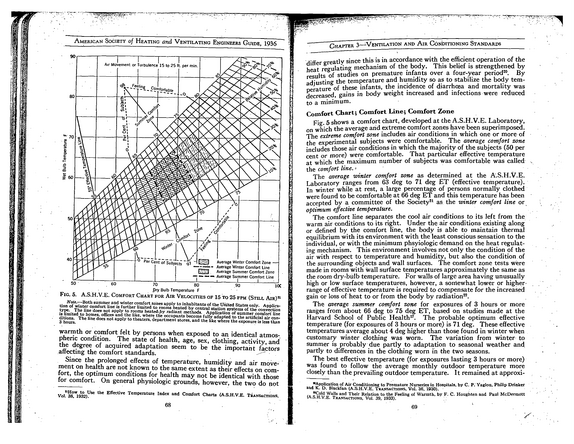
American Society of Heating and Ventilating Engineers Guide, 1936 warmth or comfort felt by persons when exposed to an identical atmos pheric condition.
refid# oDNM1n1qND4YvBKYZmdzG90LD1 page
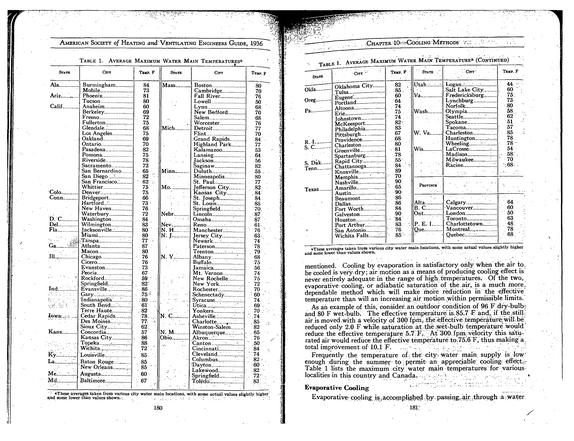
American Society of Heating and Ventilating Engineers Guide, 1936 State Table 1.
refid# 93gdJ9vO2JQNObp2kg1XXXg061 page
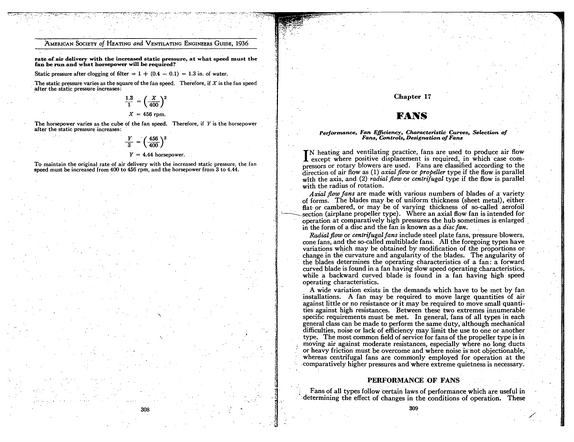
1936American Society of Heating and Ventilating Engineers Guide, rate of air delivery with the increased static pressure, at what speed must the fan be run and what horsepower will be required?
refid# 8V6GDpam2JNgkOrq4azgQG7ey1 page
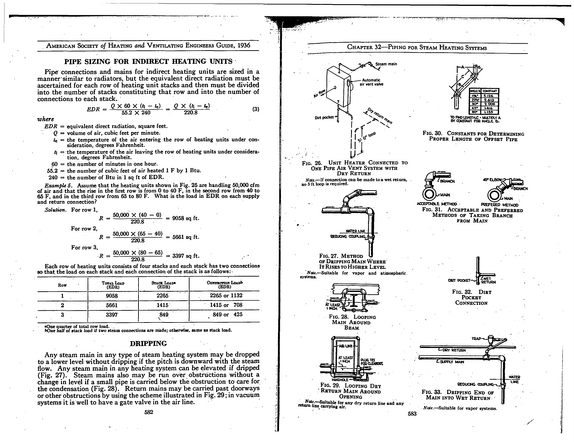
American Society of Heating and Ventilating Engineers Guide, 1936 PIPE SIZING FOR INDIRECT HEATING UNITS Pipe connections and mains for indirect heating units are sized in a manner similar to radiators, but the equivalent direct radiation must be ascertained for each row of heating unit stacks and then must be divided into the number of stacks constituting that row and into the number of connections to each stack.
refid# 1519BJEJ2Ya96LoEjJ0Q6ZmYZ1 page
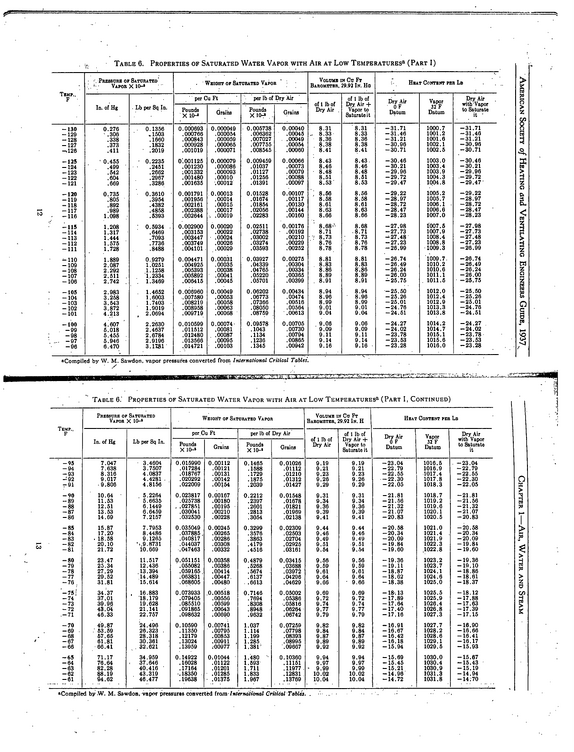
A Vm e r ic a n Society o f H e a t in g and e n t il a t in g E ngineers G u id e , 1937^ Table 6.
refid# kaj4GOrpXqYYLeRJ9K3r9dpN01 page
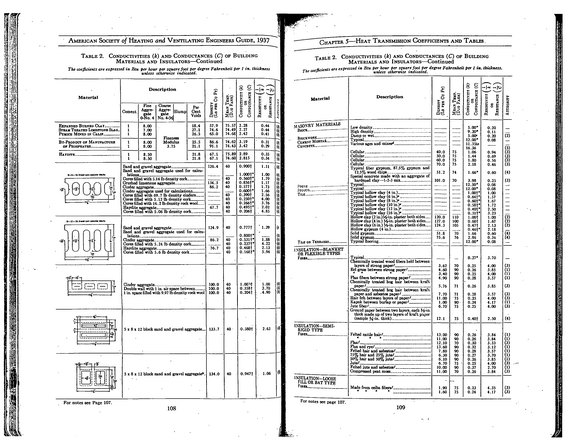
American Society of Heating and Ventilating Engineers Guide, 1937 Table 2.
refid# x15x0JpXgZjB55B0YGnBYnY3b1 page
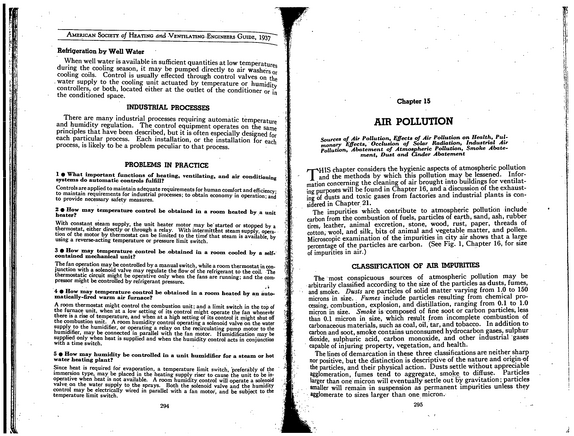
American Society, of Heating and VentilatingEngineers Guide, 1937 Refrigeration by Well Water When well water is available in sufficient quantities at low temperatures during the cooling season, it may be pumped directly to air washers or cooling coils.
refid# 6BMmYE8Qb3OmqrrmnLm04kEb11 page