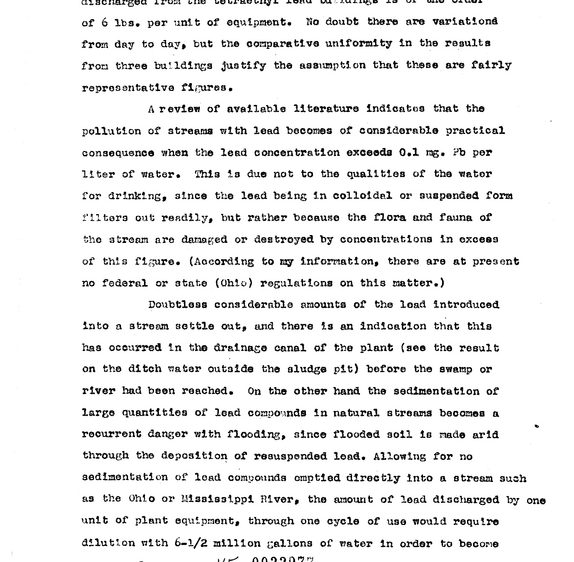
1S22726 FOREIGN LEAD PLANTS discharged from the tetraethyl lead buildings is of the order of 6 lbs* per unit of equipment.
refid# 6RGGpK1rk2Krk07aXM3078p497 pages
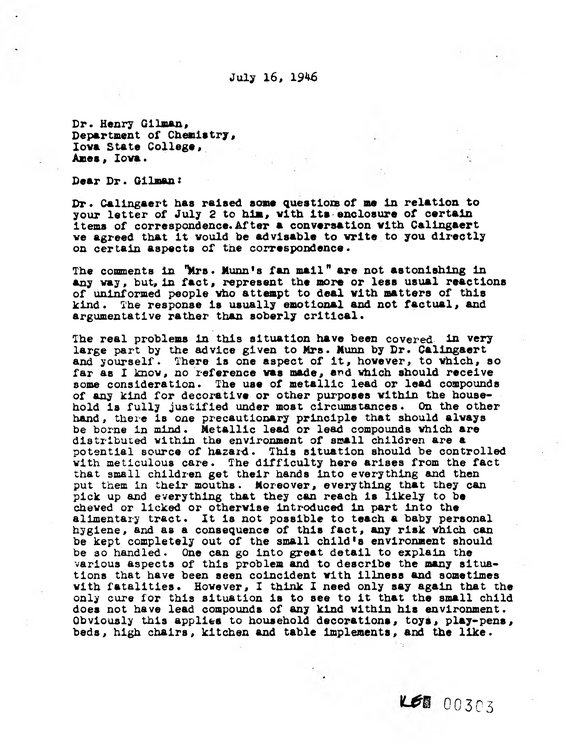
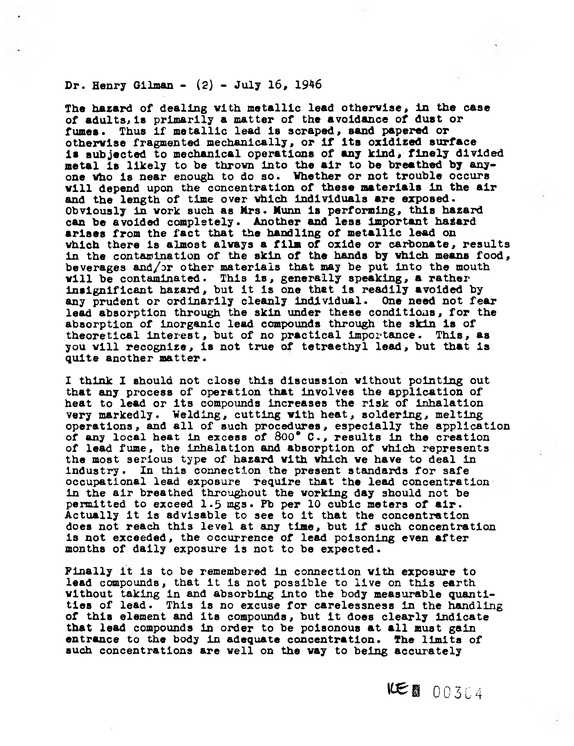
This, as you will recognize, is not true of tetraethyl lead, but that is quite another matter.
refid# pRz5a08ajJVDLKQy9ko4z5jX3 pages
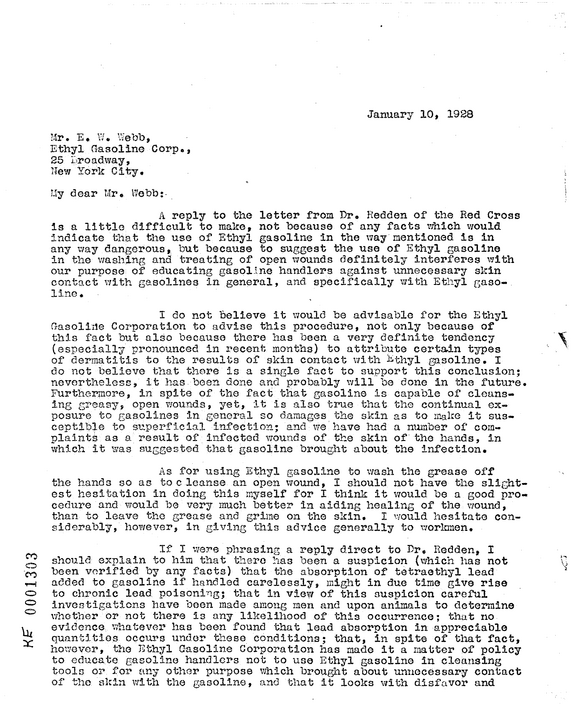
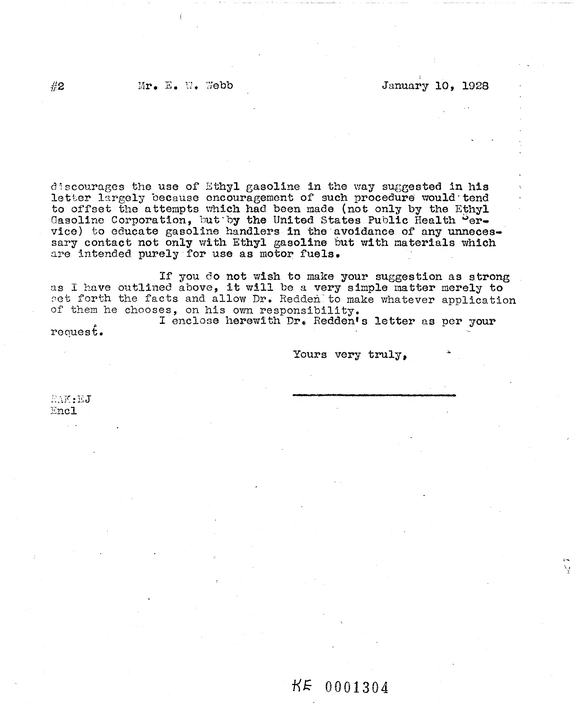
Redden, I should explain to him that there lias been a suspicion (which has not been verified by any facts) that the absorption of tetraethyl lead added to gasoline if handled carelessly, might in due time give rise to chronic lead poisoning; that in view of this suspicion careful investigations have been made among men and upon animals to determine whether or not there 13 any likelihood of thi3 occurrence; that no evidence whatever has been found that lead absorption in appreciable quantities occurs under these conditions; that, in spite of that fact, however, the Ethyl Gasoline Corporation has made it a matter of policy to educate gasoline handlers not to use Ethyl gasoline in cleansing tools or for any other purpose which brought about unnecessary contact of the skin with the gasoline, and that it looks with disfavor and #2 Mr# E l Webb January 10, 1928 discourages the use of Bthyl gasoline In the way suggested in his letter largely because encouragement of such procedure would tend to offset the attempts which had been made (not only by the Ethyl Gasoline Corporation, but'by the United States Public Health ^ervice) to educate gasoline handlers in the avoidance of any unneces sary contact not only with Ethyl gasoline but with materials which are intended purely for use as motor fuels# If you do not wish to make your suggestion as strong as I have outlined above, it will be a very simple matter merely to set forth the facts and allow Dr Redden:to make whatever application of them he chooses, on his own responsibility.
refid# 3QRjpVwdOgO6VJ1yjORONd4OO2 pages
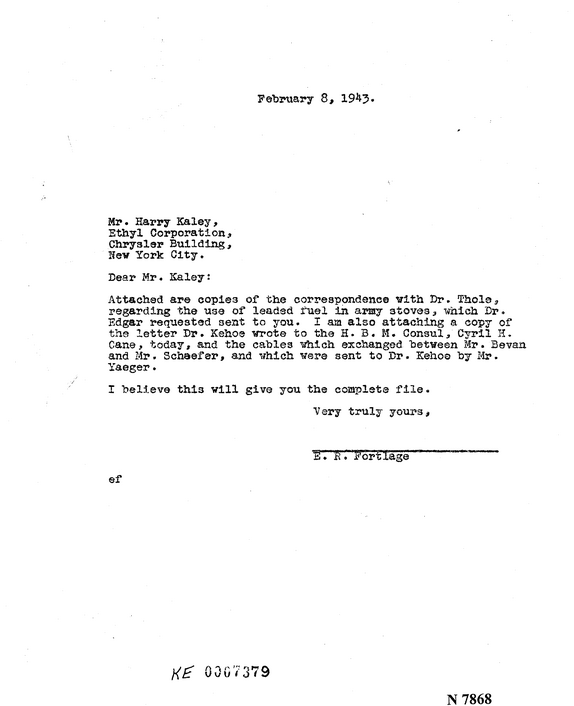
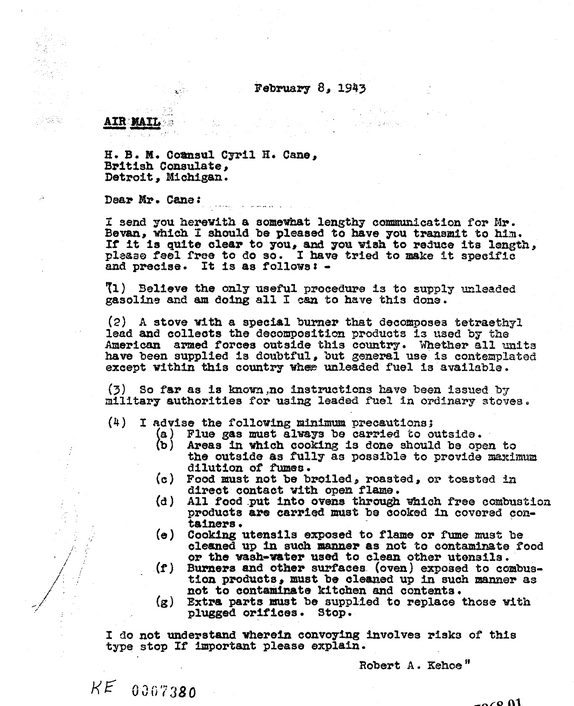
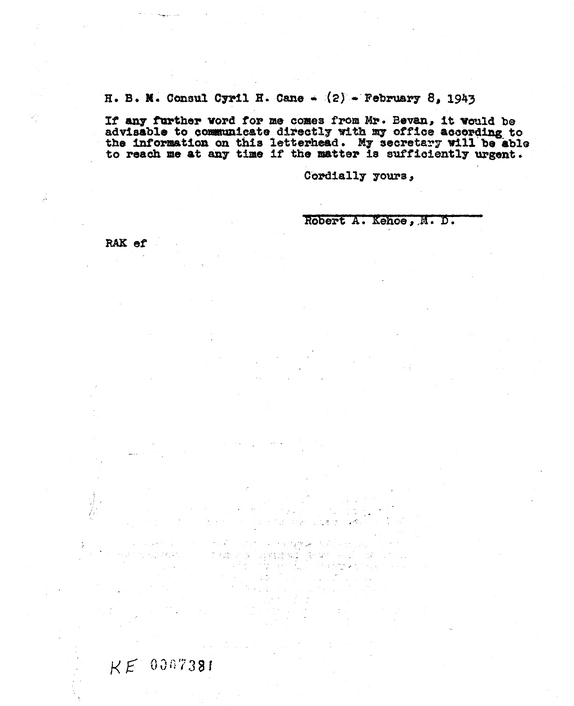
Thole, regarding the use of leaded fuel in army stoves, which D r .
refid# 5RbDoNrOJ03G02B2Y1jn8nr53 pages
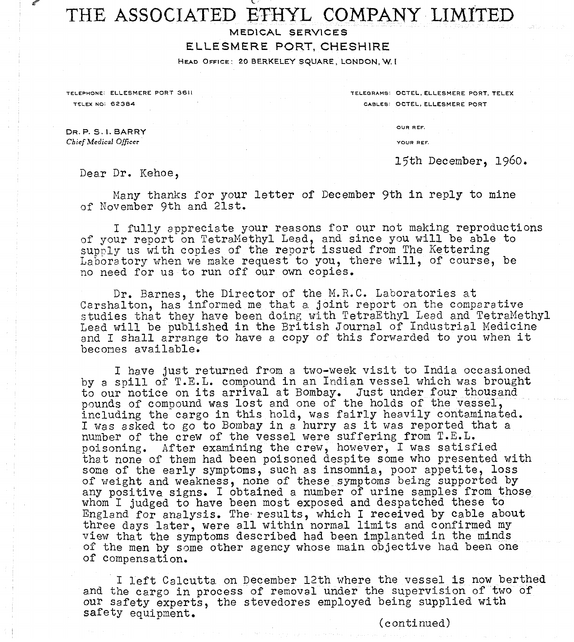
Laboratories at Carshalton, has informed me that a joint report on the comparative studies that they have been doing with TetraEthyl Lead and TetraMethyl Lead will be published in the British Journal of Industrial Medicine and I shall arrange to have a copy of this forwarded to you when it becomes available.
refid# bBZQvjbg7LO065rM6rvN1O6q32 pages
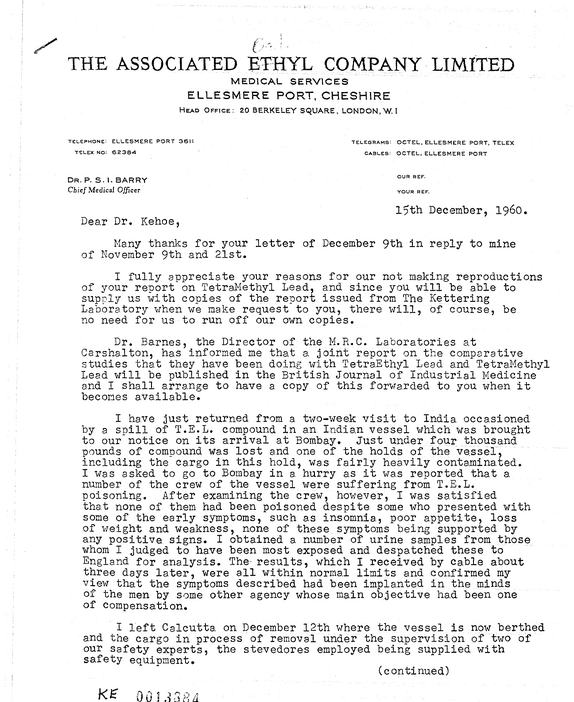
Laboratories at Carshalton, has informed me that a joint report on the comparative studies that they have been doing with TetraEthyl Lead and TetraMethyl Lead will be published in the British Journal of Industrial Medicine and I shall arrange to have a. copy of this forwarded to you when it becomes available.
refid# 3JvV6D9QVoQ3Ebk2Q619j1Rgn2 pages
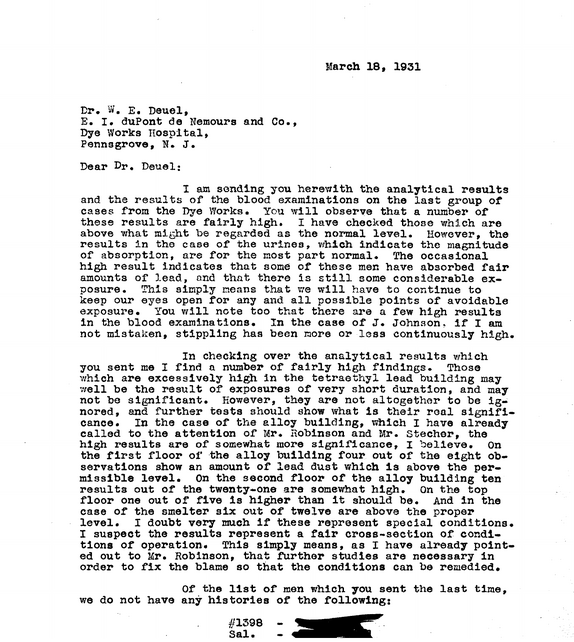
Those which are excessively high in the tetraethyl lead building may well be the result of exposures of very short duration, and may not be significant.
refid# 2jzoL4mo0m1jOZRbM6LGq5bNb2 pages
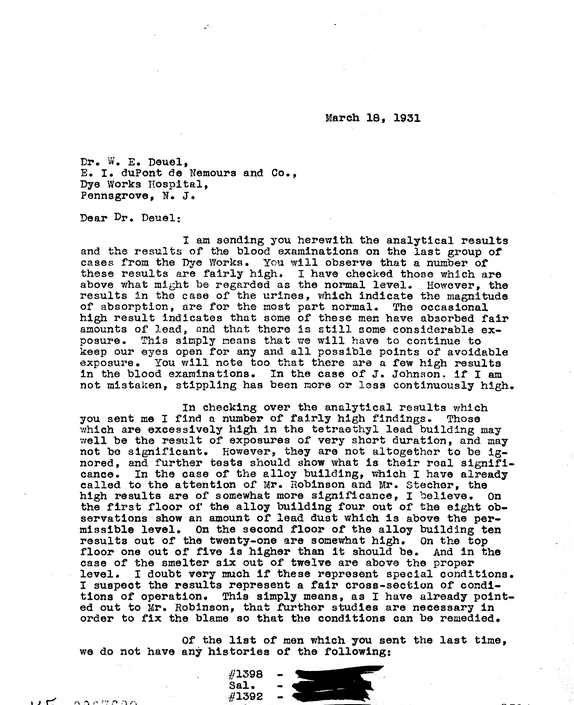
Those which are excessively high in the tetraethyl lead building may well be the result of exposures of very short duration, and may not be significant.
refid# ZnO9nBqZKwXdE4YZ55rxdoVaO2 pages
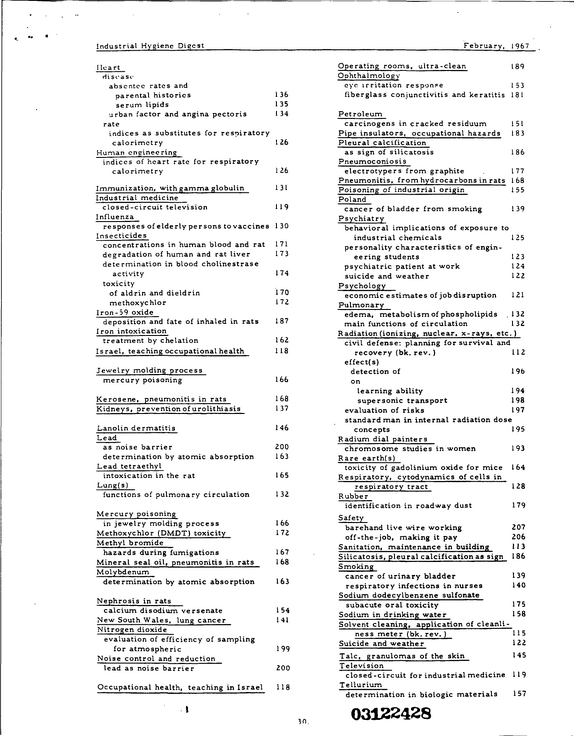
Industrial Hygiene Digest 1 lea rt disease absentee rates and parental histories 136 serum lipids 1 35 urban factor and angina pectoris 134 rate indices as substitutes for respiratory calorimetry 126 Human engineering indices of heart rate for respiratory calorimetry 126 Immunization, with gamma globulin 131 Industrial medicine closed-circuit television 119 Influenza responses of elderly persons to vaccines 1 30 Insecticides concentrations in human blood and rat 171 degradation of human and rat liver 173 determination in blood cholinestrase activity 174 toxicity of aldrin and dieldrin 170 methoxychlor 172 Iron-59 oxide deposition and fate of inhaled in rats 187 Iron intoxication treatment by chelation 162 Is rael, teaching occupational health 118 Jewelry molding process mercury poisoning 166 Kerosene, pneumonitis in rats Kidneys, prevention of urolithiasis 1 68 1 37 Lanolin dermatitis Lead as noise barrier determination by atomic absorption Lead tetraethyl intoxication in the rat Lung(s) functions of pulmonary circulation 1 46 200 163 165 132 Mercury poisoning in jewelry molding process Methoxychlor (DMDT) toxicity Methyl bromide hazards during fumigations Mineral seal oil, pneumonitis in rats Molybdenum determination by atomic absorption 166 172 167 1 68 163 Nephrosis in rats calcium disodium versenate New South Wales, lung cancer Nitrogen dioxide evaluation of efficiency of sampling for atmospheric Noise control and reduction lead as noise barrier 154 1 41 199 200 Occupational health, teaching in Israel 118 i February, 1967 Operating rooms, ultra-clean 189 Ophthalmology eye irritation response 153 fiberglass conjunctivitis and keratitis 181 Petroleum carcinogens in cracked residuum 15!
refid# 3NkY8jGyj8mG46MoX1RRGqVNn1 page
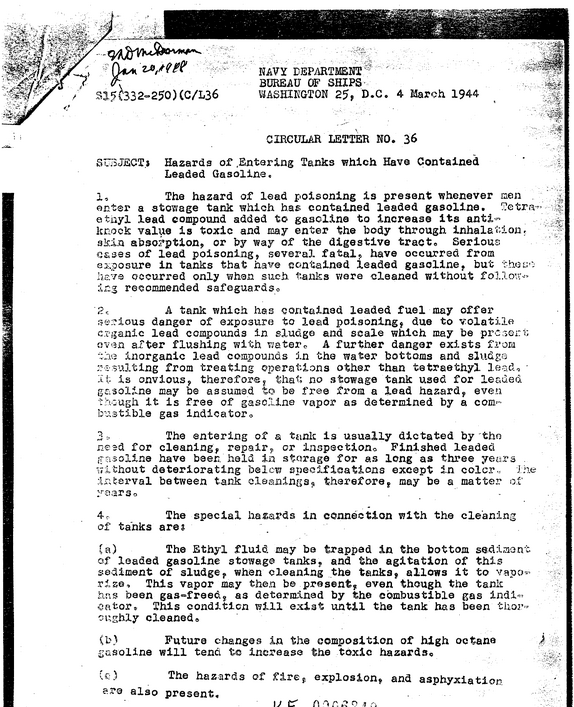
A further danger exists from the inorganic lead compounds in the water bottoms and sludge resulting from treating operations other than tetraethyl lead, It is envious, therefor, that, no stowage tank used for leaded gasoline may be assumed to be free from a lead hazard, even though It is free of gasoline vapor as determined by a com bustible gas indicator. 3.
refid# zoBJ0xVa8yR2Yvmg1zdp2E8La2 pages
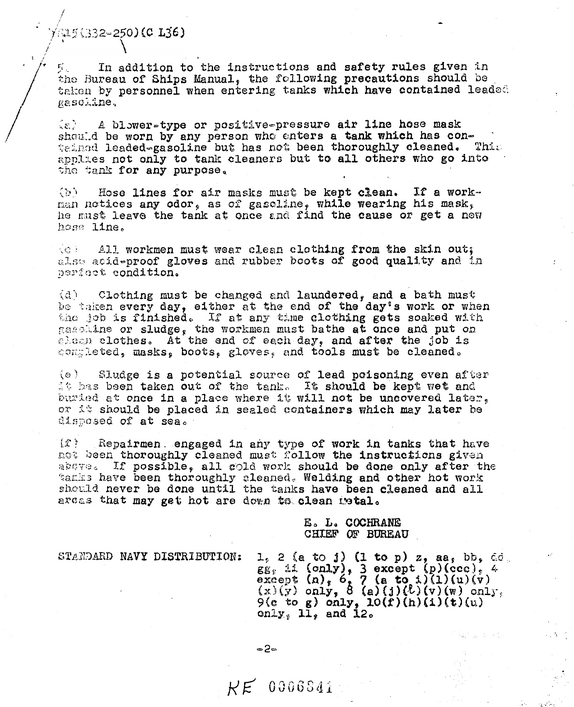
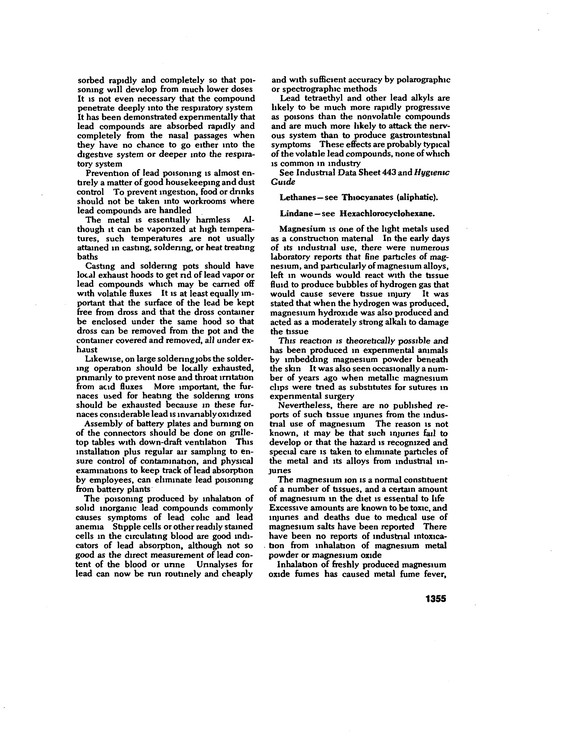
sorbed rapidly and completely so that poi soning will develop from much lower doses It is not even necessary that the compound penetrate deeply into the respiratory system It has been demonstrated experimentally that lead compounds are absorbed rapidly and completely from the nasal passages when they have no chance to go either into the digestive system or deeper into the respira tory system Prevention of lead poisoning is almost en tirely a matter of good housekeeping and dust control To prevent ingestion, food or drinks should not be taken into workrooms where lead compounds are handled The metal is essentially harmless Al though it can be vaporized at high tempera tures, such temperatures are not usually attained in casting, soldering, or heat treating baths Casting and soldering pots should have local exhaust hoods to get nd of lead vapor or lead compounds which may be earned off with volatile fluxes It is at least equally im portant that the surface of the lead be kept free from dross and that the dross container be enclosed under the same hood so that dross can be removed from the pot and the container covered and removed, all under ex haust Likewise, on large soldenngjobs the solder ing operation should be locally exhausted, pnmarily to prevent nose and throat lmtation from acid fluxes More important, the fur naces used for heating the soldenng irons should be exhausted because m these fur naces considerable lead is invariably oxidized Assembly of battery plates and burning on of the connectors should be done on grilletop tables with down-draft ventilation This installation plus regular air sampling to en sure control of contamination, and physical examinations to keep track of lead absorption by employees, can eliminate lead poisoning from battery plants The poisoning produced by inhalation of solid inorganic lead compounds commonly causes symptoms of lead colic and lead anemia Shpple cells or other readily stained cells in the circulating blood are good indi cators of lead absorption, although not so good as the direct measurement of lead con tent of the blood or unne Urinalyses for lead can now be run routinely and cheaply and with sufficient accuracy by polarographic or spectrographic methods Lead tetraethyl and other lead alkyls are likely to be much more rapidly progressive as poisons than the nonvolatile compounds and are much more likely to attack the nerv ous system than to produce gastrointestinal symptoms These effects are probably typical of the volatile lead compounds, none of which is common in industry See Industrial Data Sheet 443 and Hygienic Guide Lethanes --see Thiocyanates (aliphatic).
refid# G63KmXdGn6BB9NdjeVDNz00Nr1 page
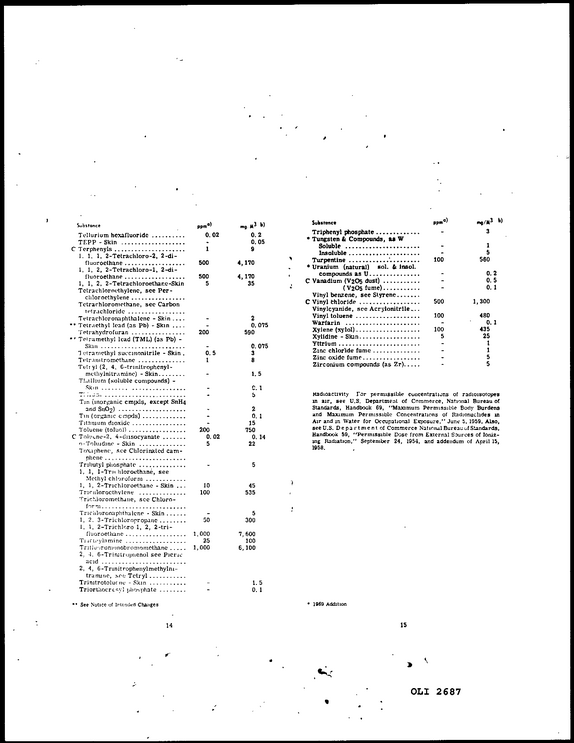
. ** Tetraethyl lead (as Pb) - Skin ....
refid# zz806wKogxVneEd04O6wN7mvz6 pages
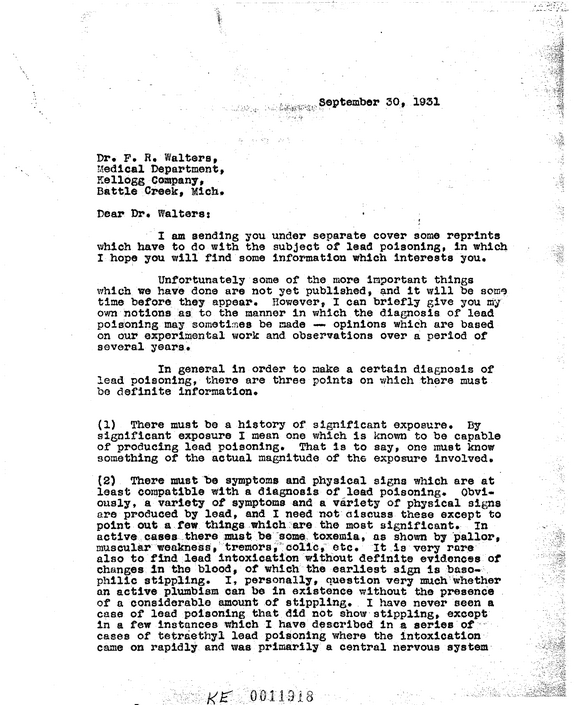
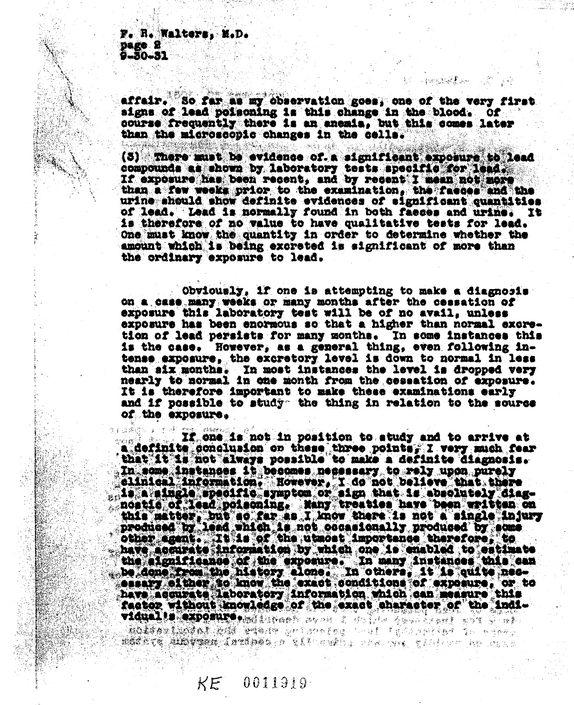
I have never seen a case of lead poisoning that did not show stippling, except In a few instances which I have described in a series of cases of tetraethyl lead poisoning where the intoxication came on rapidly and was primarily a central nervous system 0011318 F.
refid# Bvg1qyJX799Yo67y19qdYV4J3 pages
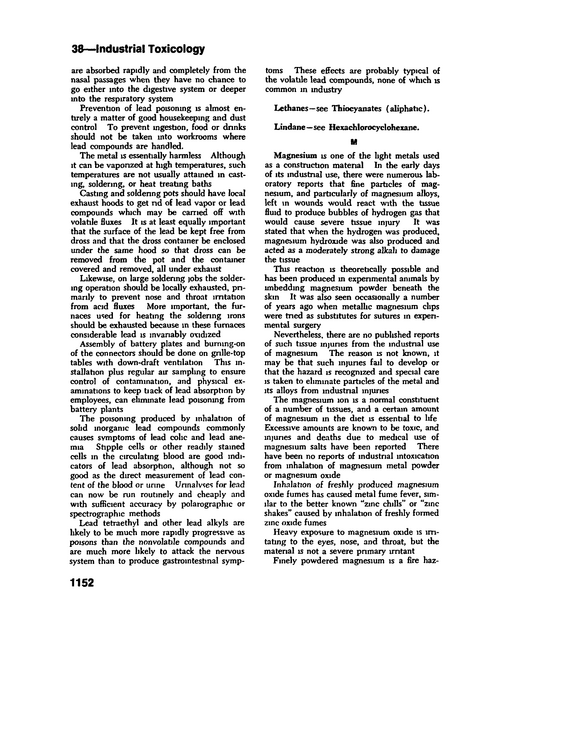
The metal is essentially harmless Although it can be vaporized at high temperatures, such temperatures are not usually attained in cast ing, soldering, or heat treating baths Casting and soldenng pots should have local exhaust hoods to get nd of lead vapor or lead compounds which may be carried off with volatile fluxes It is at least equally important that the surface of the lead be kept free from dross and that the dross container be enclosed under the same hood so that dross can be removed from the pot and the container covered and removed, all under exhaust Likewise, on large soldenng jobs the solder ing operation should be locally exhausted, pnmarily to prevent nose and throat lmtation from acid fluxes More important, the fur naces used for heating the soldenng irons should be exhausted because m these furnaces considerable lead is mvanably oxidized Assembly of battery plates and buming-on of the connectors should be done on gnlle-top tables with down-draft ventilation This in stallation plus regular air sampling to ensure control of contamination, and physical ex aminations to keep tiack of lead absorption by employees, can eliminate lead poisoning from battery plants The poisoning produced by inhalation of solid inorganic lead compounds commonly causes symptoms of lead colic and lead ane mia Stipple cells or other readily stained cells in the circulating blood are good indi cators of lead absorption, although not so good as the direct measurement of lead con tent of the blood or urine Urinalyses for lead can now be run routinely and cheaply and with sufficient accuracy by polarographic or spectrographic methods Lead tetraethyl and other lead alkyls are likely to be much more rapidly progressive as poisons than the nonvolatile compounds and are much more likely to attack the nervous system than to produce gastrointestinal symp 1152 toms These effects are probably typical of the volatile lead compounds, none of which is common in industry Lethanes--see Thiocyanates (aliphatic).
refid# 06VpR8B3ZrO9yVMn3w8vJzQMO1 page
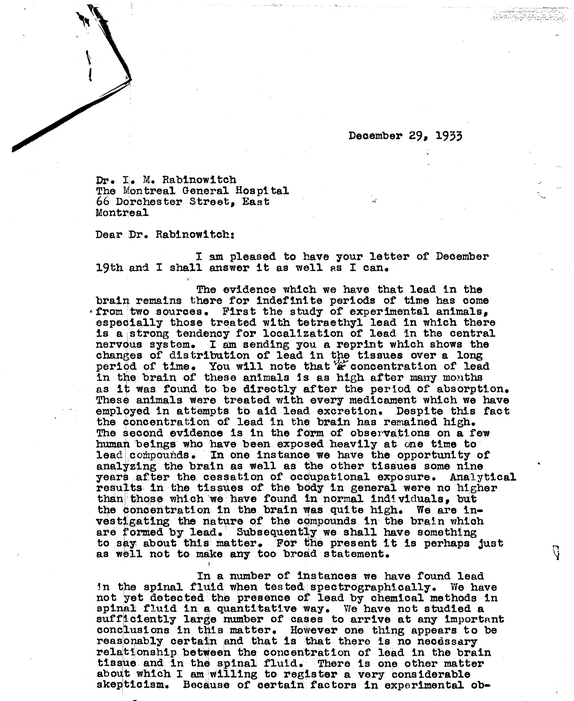
First the study of experimental animals, especially those treated with tetraethyl lead in which there is a strong tendency for localization of lead in the central nervous system.
refid# pp28g33536XYJ4eRG0ZNnvged2 pages