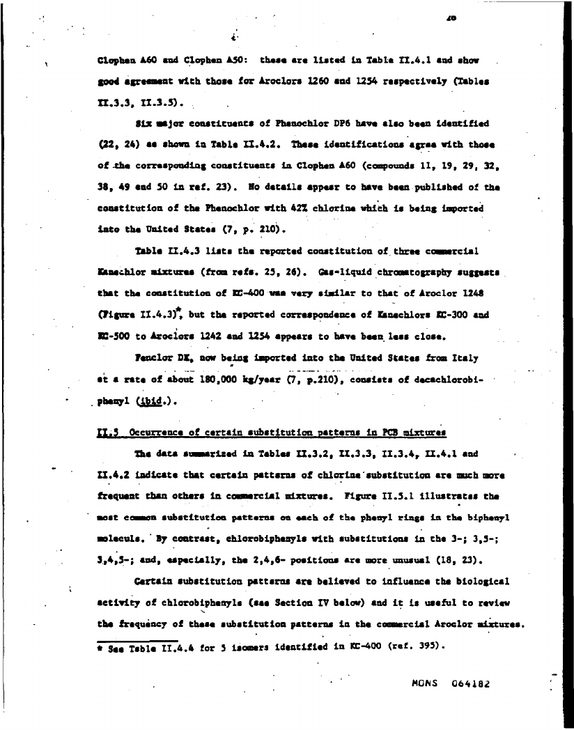
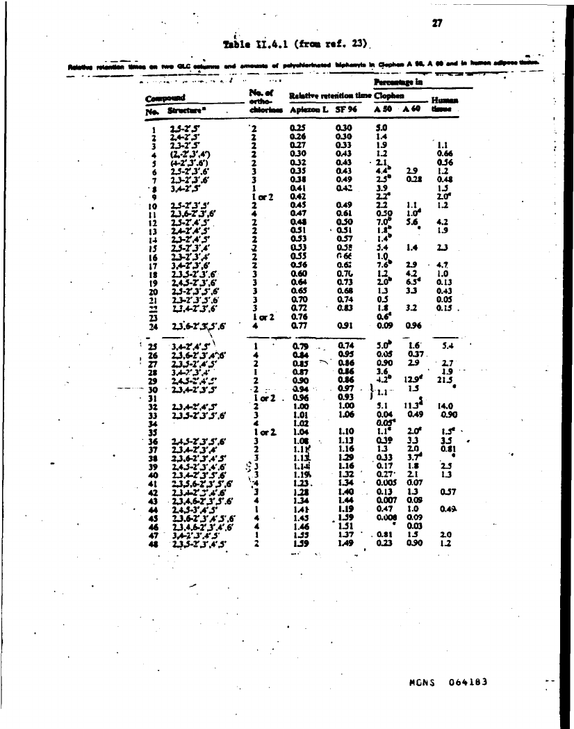
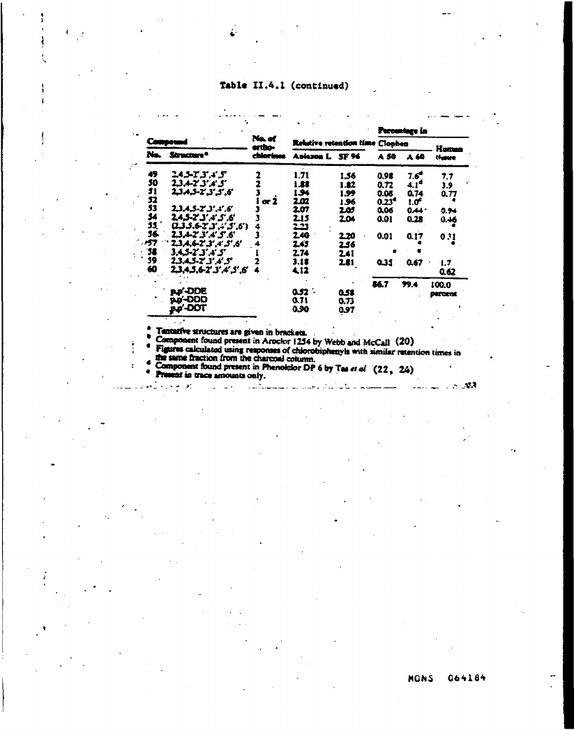
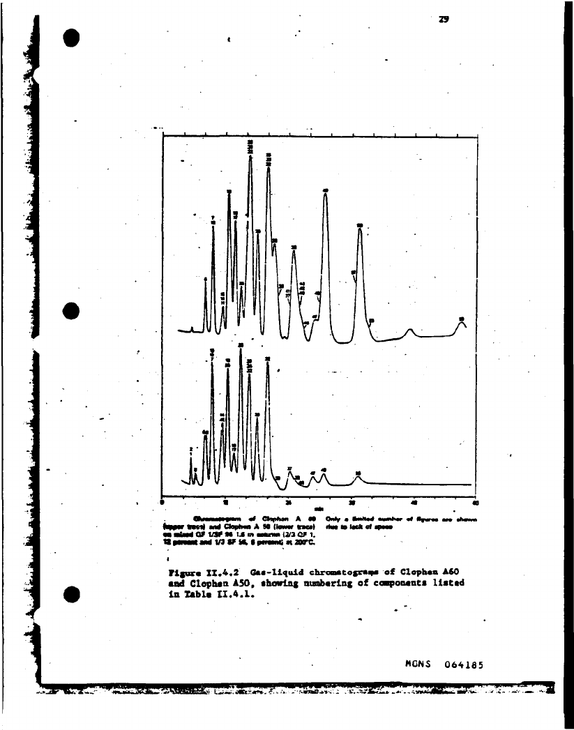
Clophea A60 and Clophen A50: these are Xlaced la Tabla II.4.1 aad ahow good agreement with those for Aroclora 1260 and 1234 respectively (Tablaa XX.3.3, 11.3.3}. .
refid# JryLm3BzZp9qwz4YXDw87N7BO80 pages
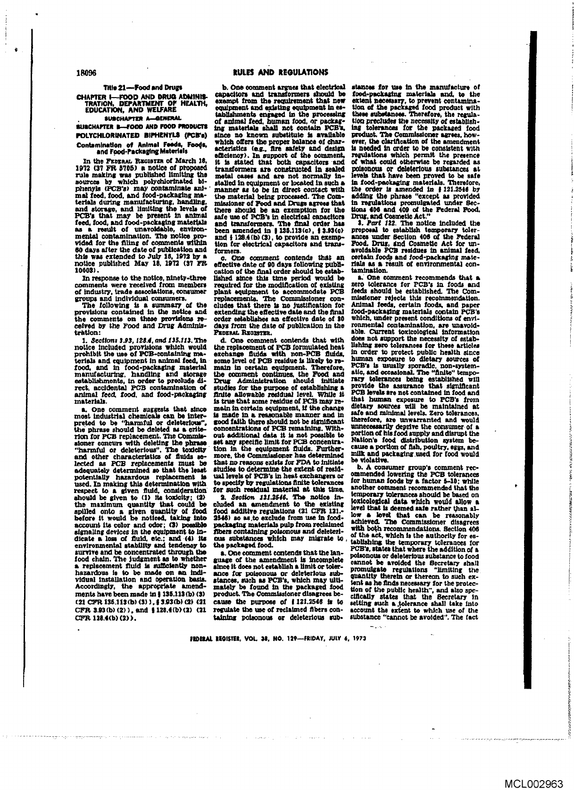
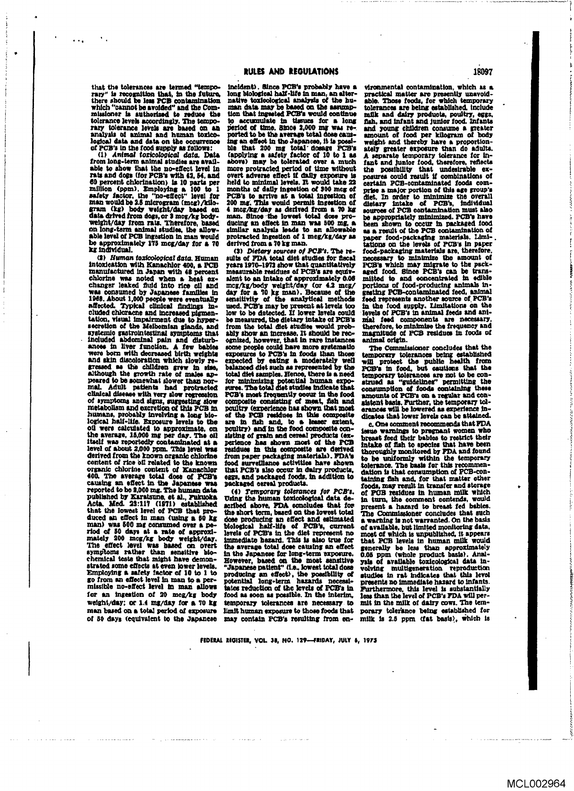
Further cause a portion of fish, poultry, eggs, and more. the Commissioner has determined milk and packaging.used for food would that no reasons exists for FDA to initiate bo violative.
refid# 6LOejQK4b39YeyRg7KekVn6d48 pages
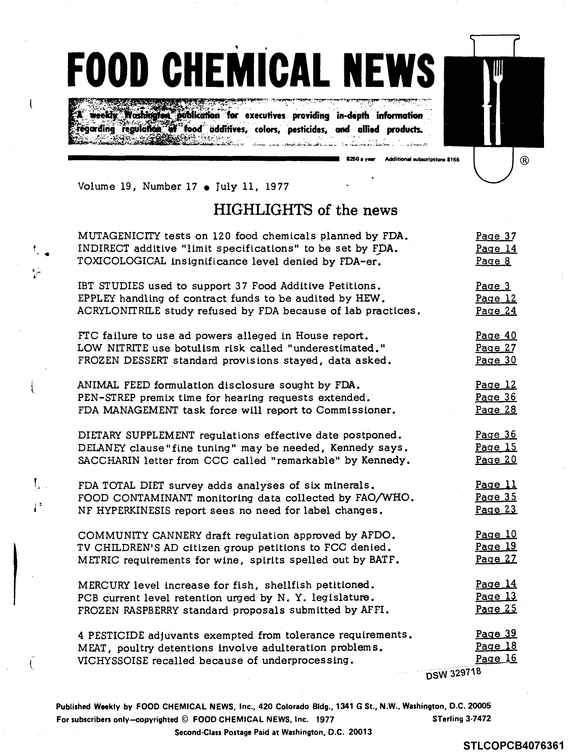
Page 10 Page 19 Page 27 MERCURY level Increase for fish, shellfish petitioned.
refid# NGXg4v2Go7oN2kOdk1Okx3qag42 pages
20 November 1975 Session V: ECONOMICS AND SUBSTITUTES Warren Muir, Ph.D.* Session Chairman S*nior Staff Member for Environmental Health, Council on Environmental Quality.
refid# XOJ0gpdGOVJr2qDp61Vow52mK37 pages
V..1 1.. f ' S-ti .
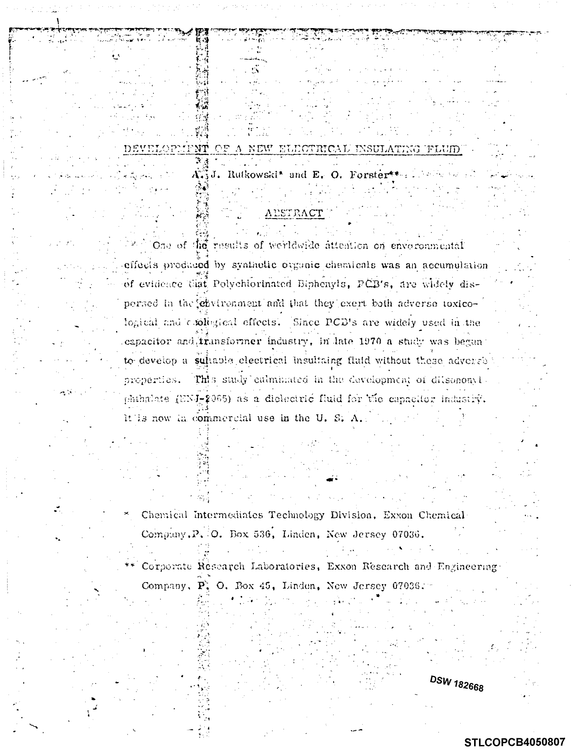
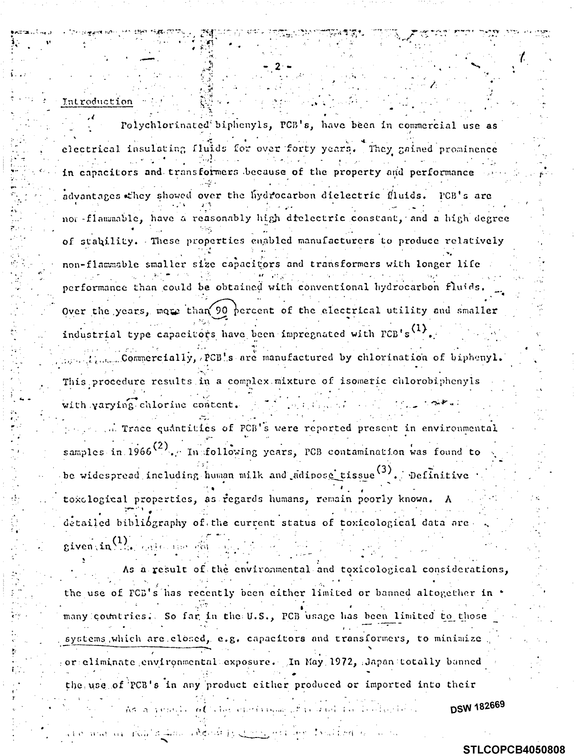
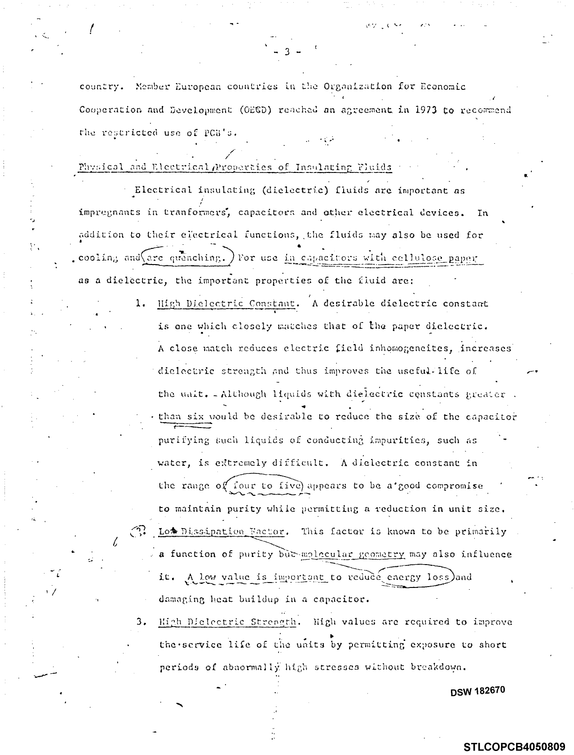
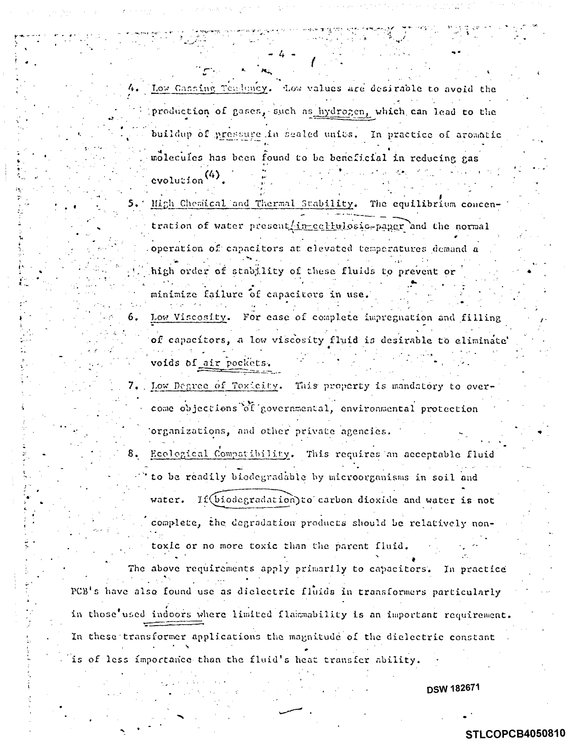
refid# 7OE0J9e59G2R6D64KX30depnB21 pages
y oee-.tr in rie-hwiui-r fish.
refid# GKG08djMNXb5BN2LOxkjyz54n3 pages
With increasing frequency this question has been asked in recent years following detection of the esters in human tissues, in water, air, and fish, in human blood stored in plastic bags, and elsewhere.
refid# mBgN9z7LYjdVvVyZnyxMzedoQ4 pages
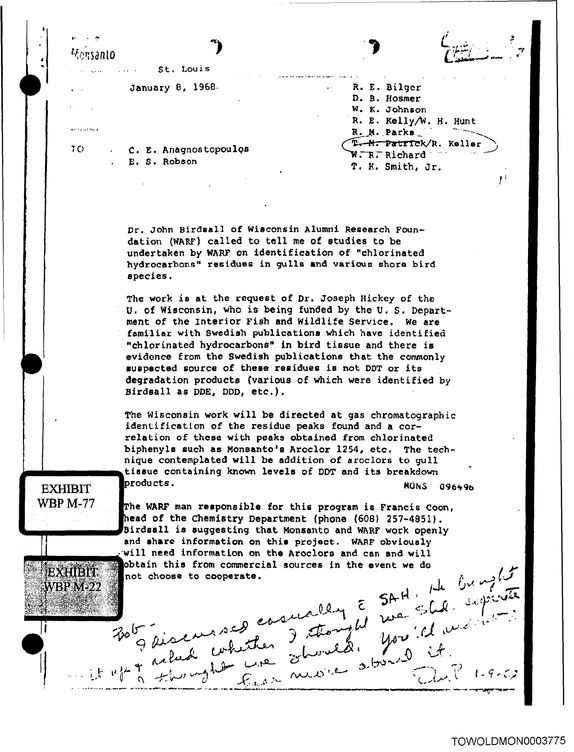
Depart ment of the interior Fish and wildlife Service.
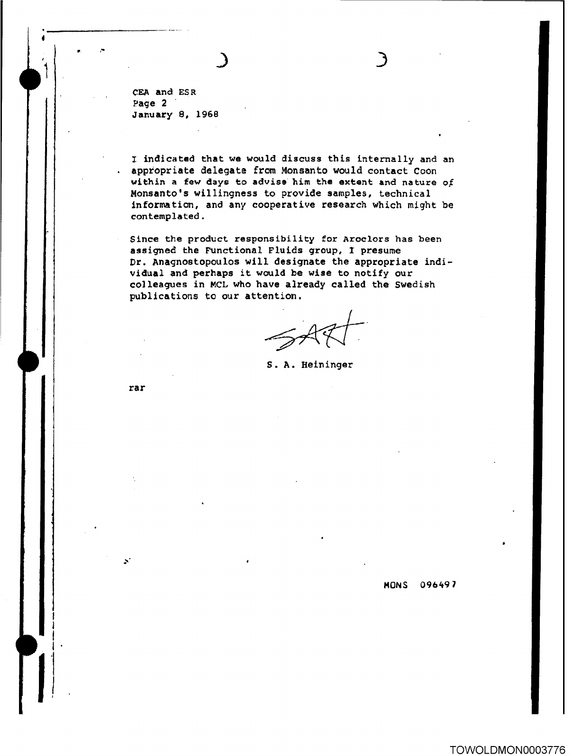
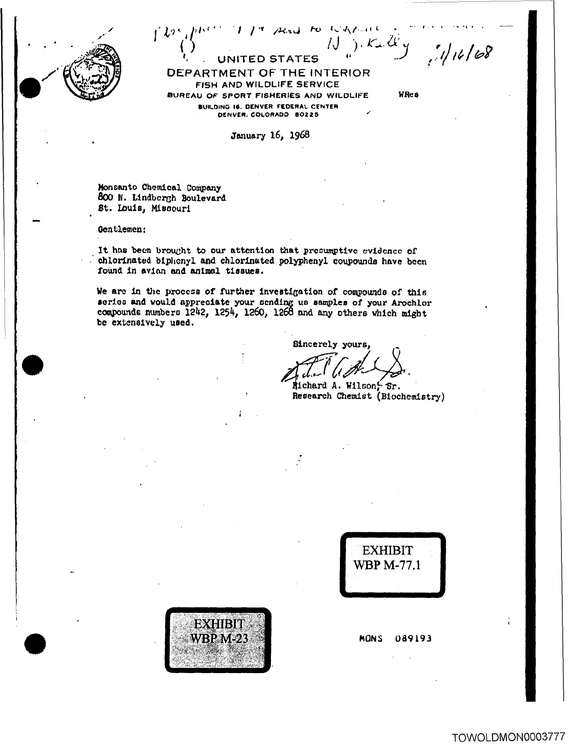
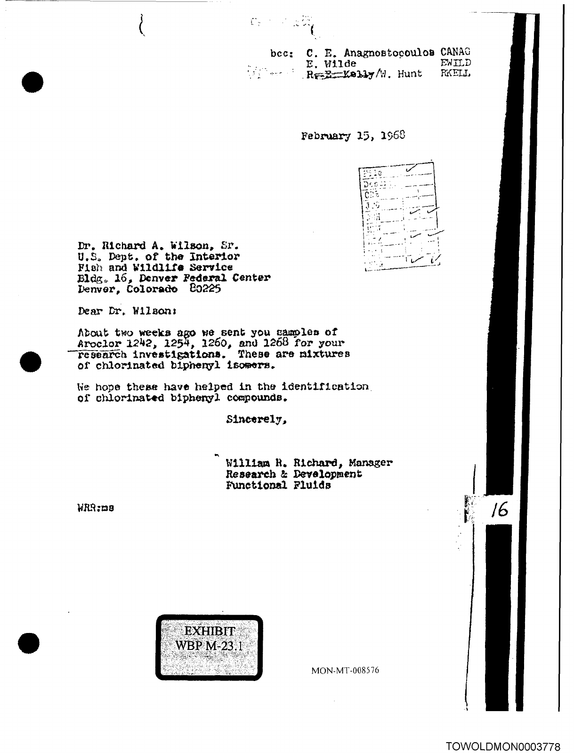
refid# V3K0eDVVXp8Q8vQa6gj4zBn4K30 pages
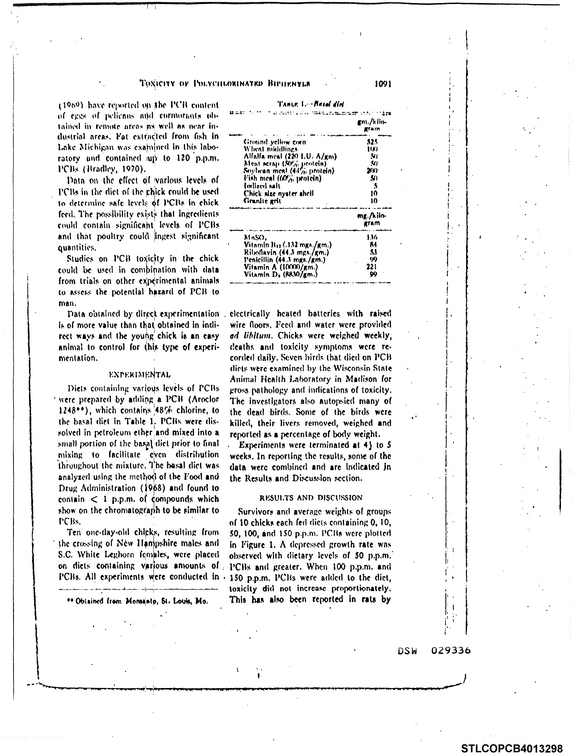
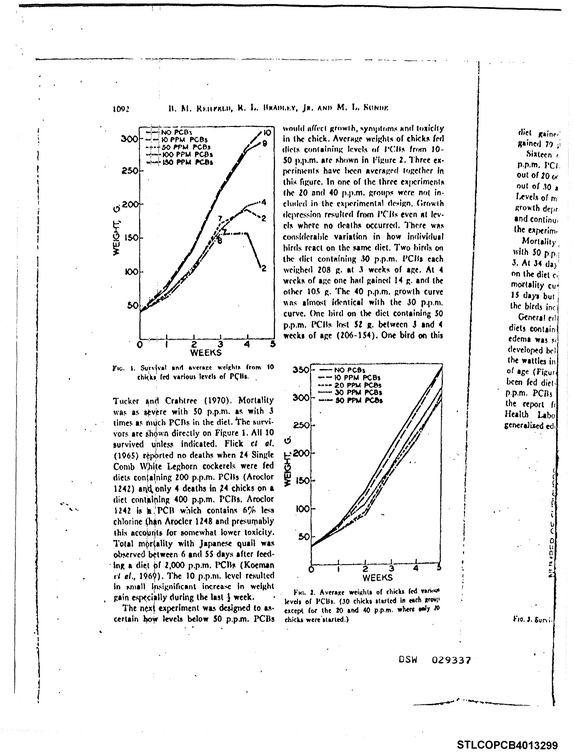
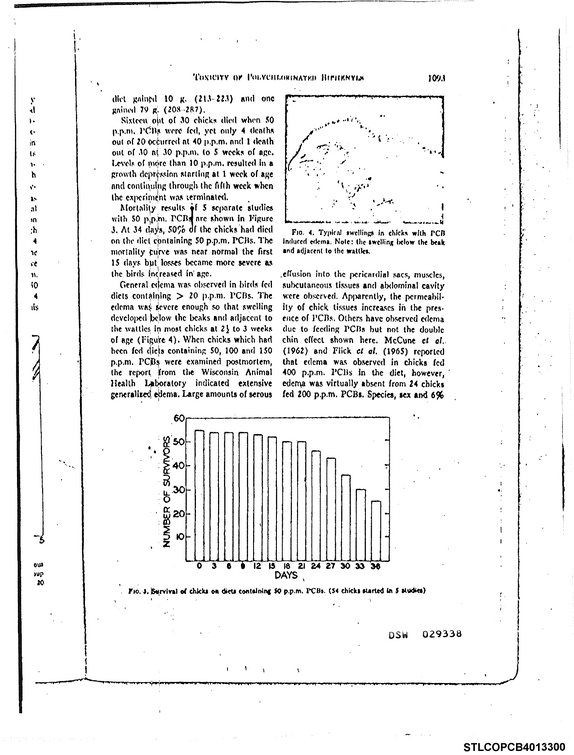
Fat extracted from fish in Lake Michigan was cxahpncd in this labo ratory unci contained lup to 120 p.p.m.
refid# rBnVOxpxMzekEbp48pzRmV6ae7 pages
The most-'itnportarit effects at. present'were in the tastes and odOrB ah the fish and'w'ater - taken'fr-om thc-river
refid# zogY41nbONjykwOyQNp02GNG013 pages
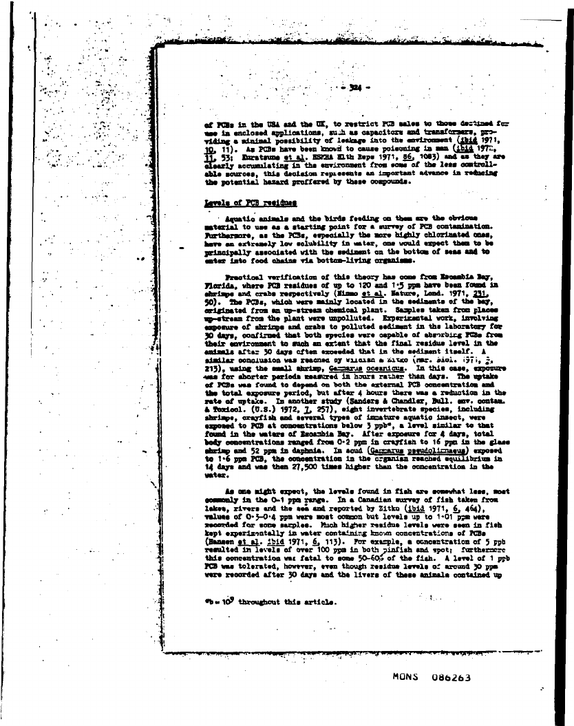
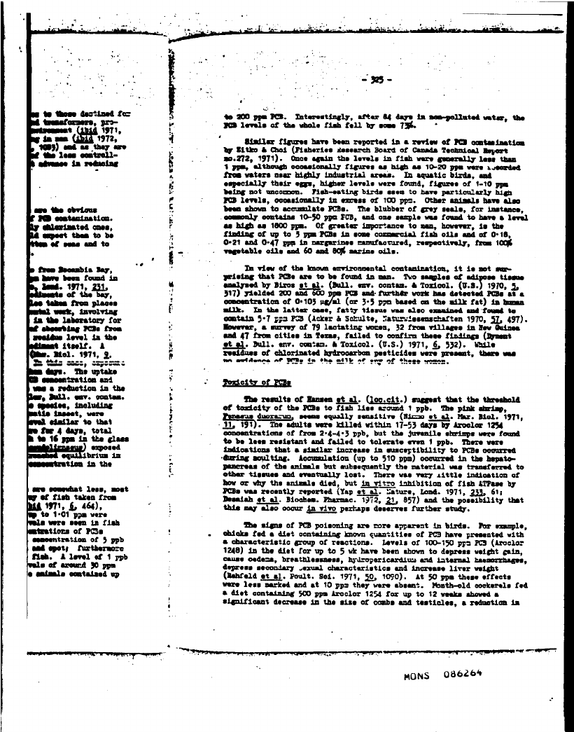
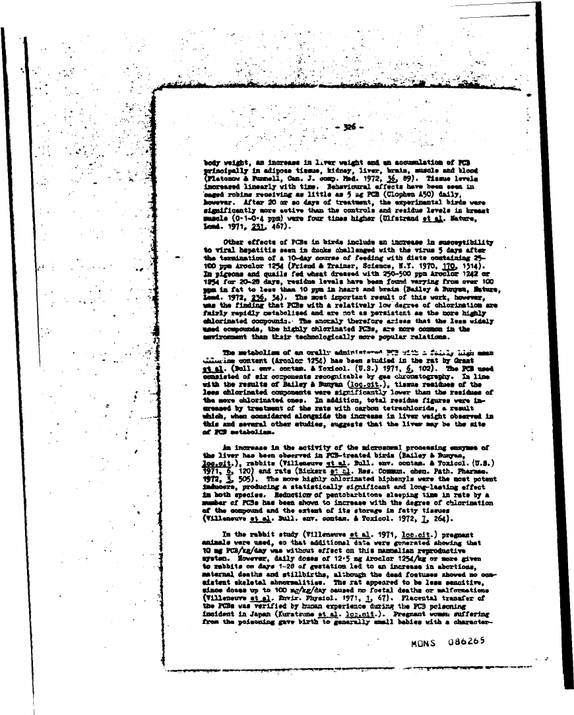
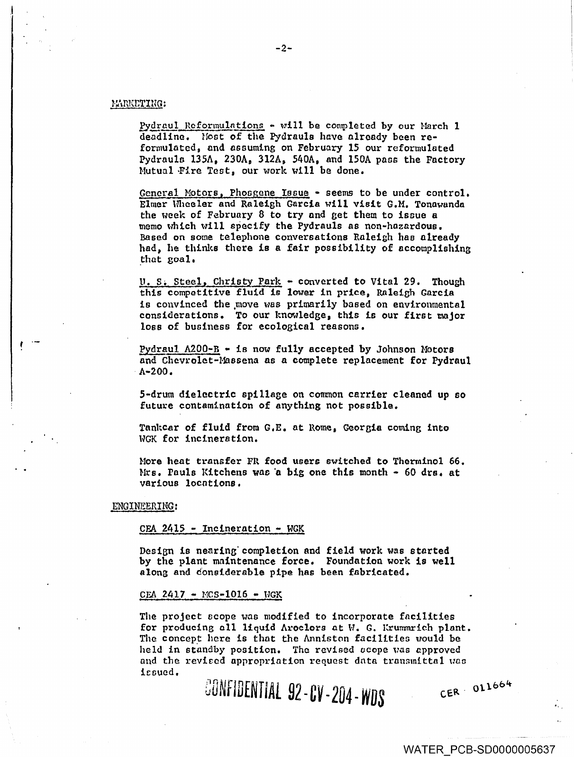
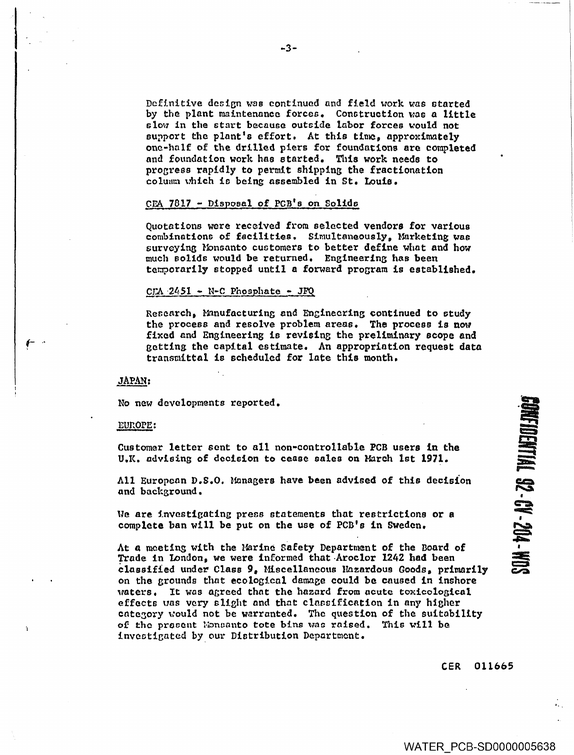
In a Canadian aurvey of fish taken fros lakes, rivers end the sea and reported by Zltko (ibid 1971, 6, 464), values of 0*}-0*4 pps were aoet ootuon but levels up to 1*01 pps were recorded for eoee samples. lfcich higher residue levels were seen in fish kept experimentally in water containing known concentrations of PCBa (Hansen et al. ibid 1971, 6, 113)* For exasple, a ccnoentratlon of 5 ppb resulted in levels of over 100 ppa in both pinfieh end spots furtheraese this ooncentrstlon wac fatal to sobs 50-60/ of the fish.
refid# Byk6yj1LBMvx7MXjRK67zeEkL6 pages
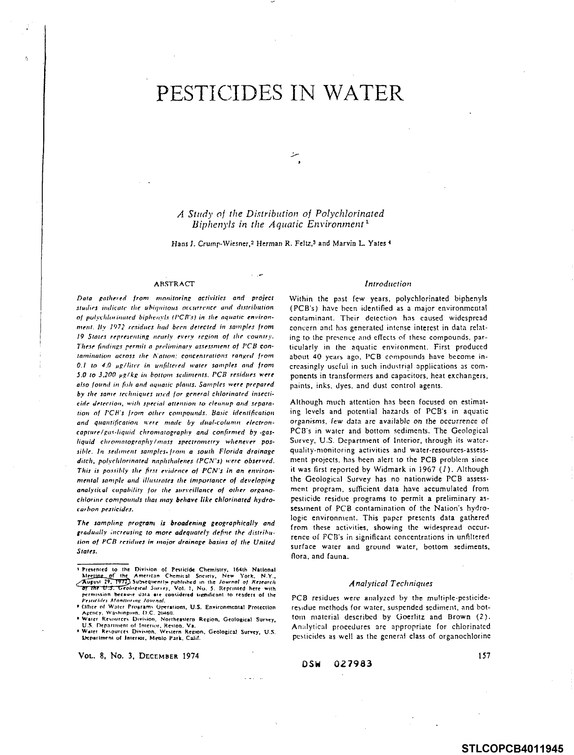
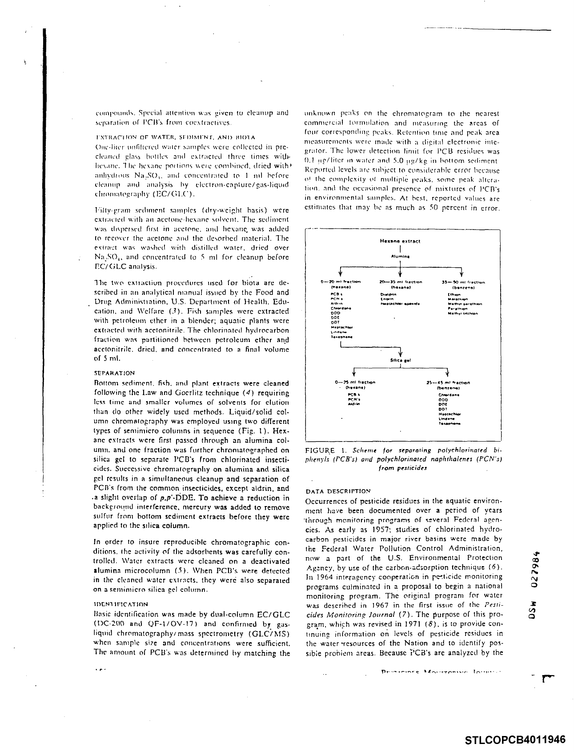
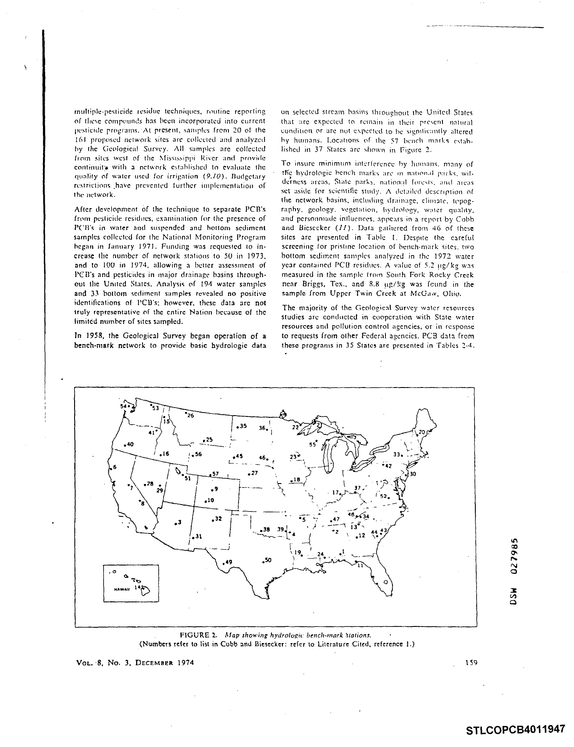
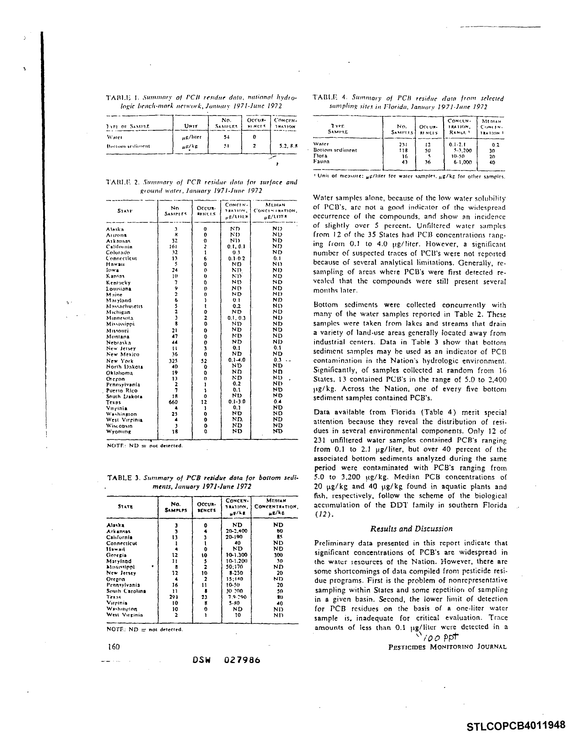
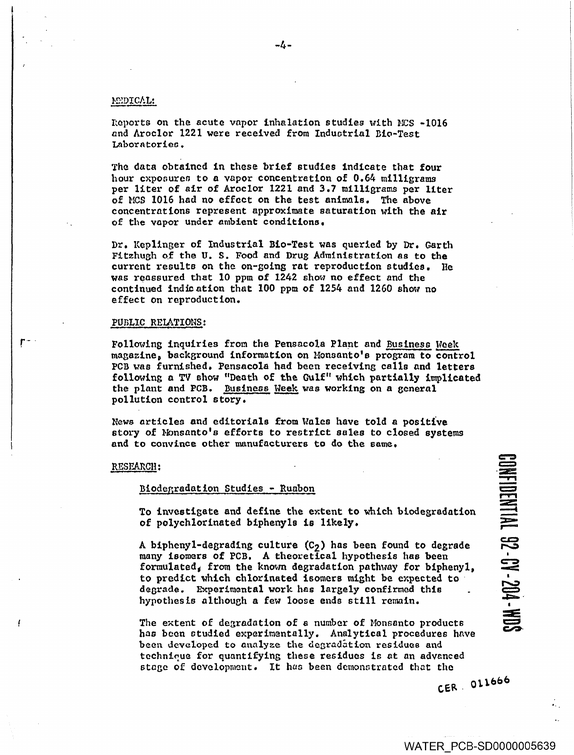
PCB residues were also found in fish and aquatic plants.
refid# z28rDBegd0Emn28p9862dYxg5 pages
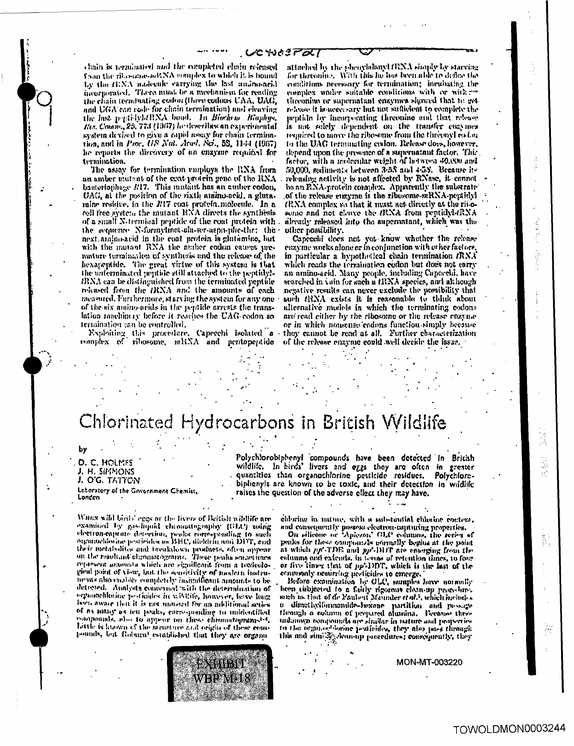
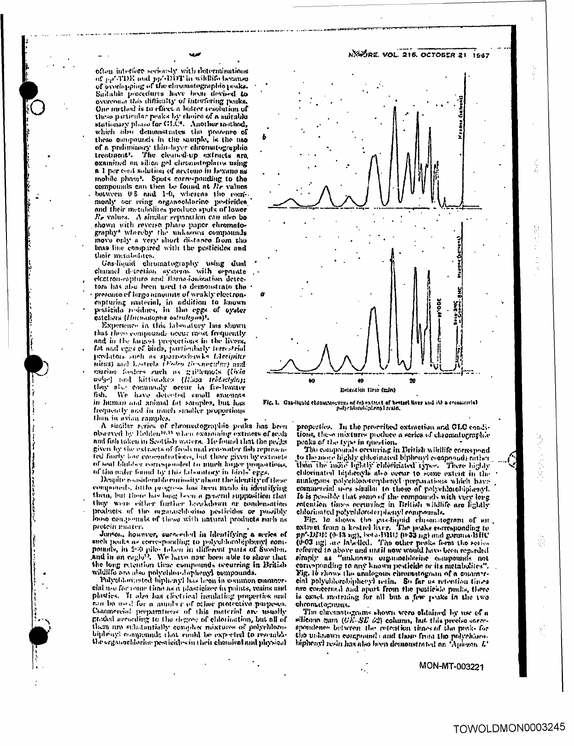
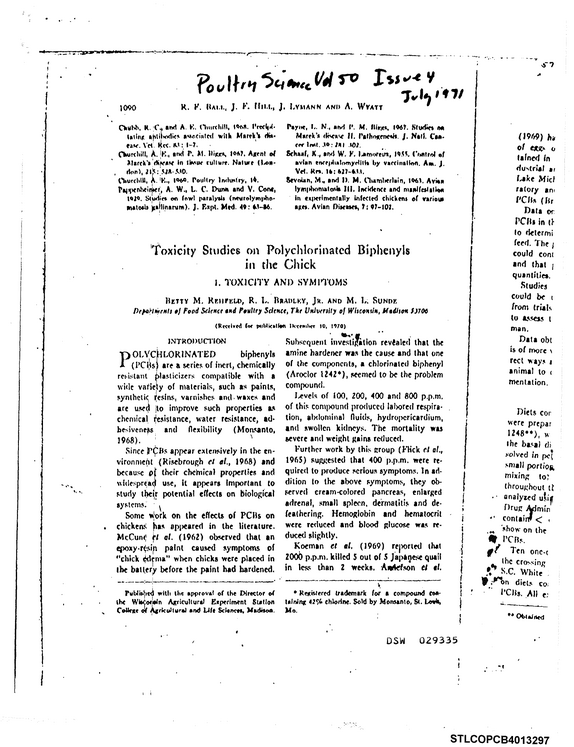
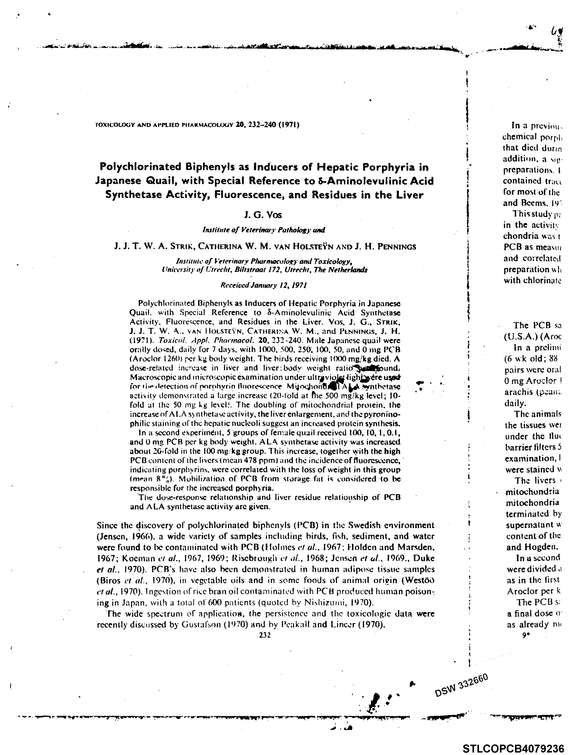
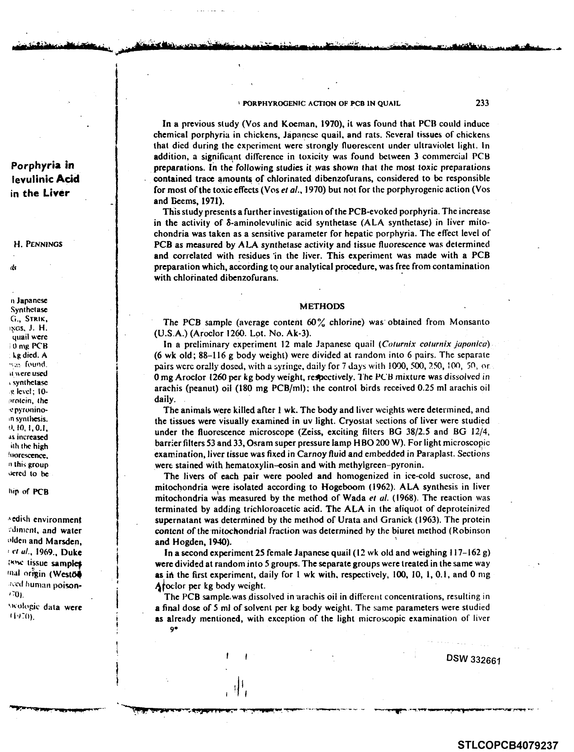
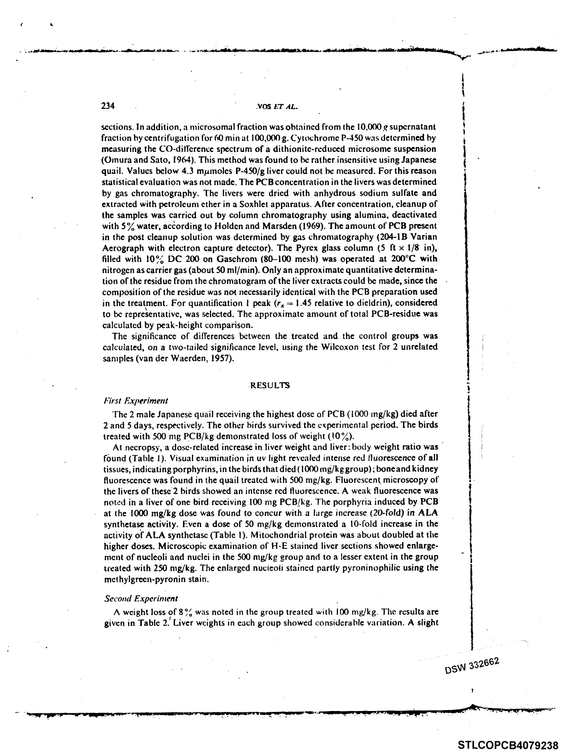
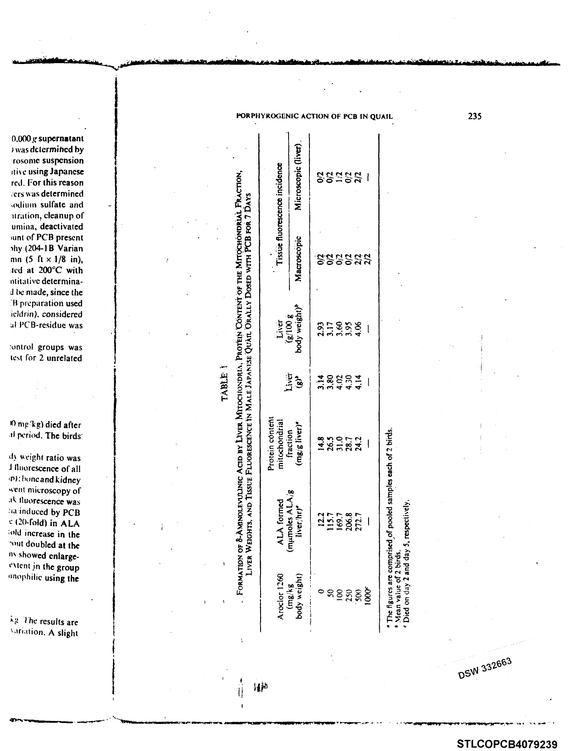
Since the discovery of polychlorinated biphenyls (PCB) in the Swedish environment (Jensen, 1966). a wide variety of samples including birds, fish, sediment, and water were found to be contaminated with PCB (Holmes cl al.. 1967; Holden and Marsden, 1967; Kocmun cl al., 1967, 1969; Riscbrotigh ct at'., 1968; Jensen cl al , 1969., Duke el al.. 1970).
refid# qa0qLp3d2Da988QE7b5nZR3gK9 pages
17.
refid# O7mg56nnzepjJ2ZMQxx5ZNkp13 pages
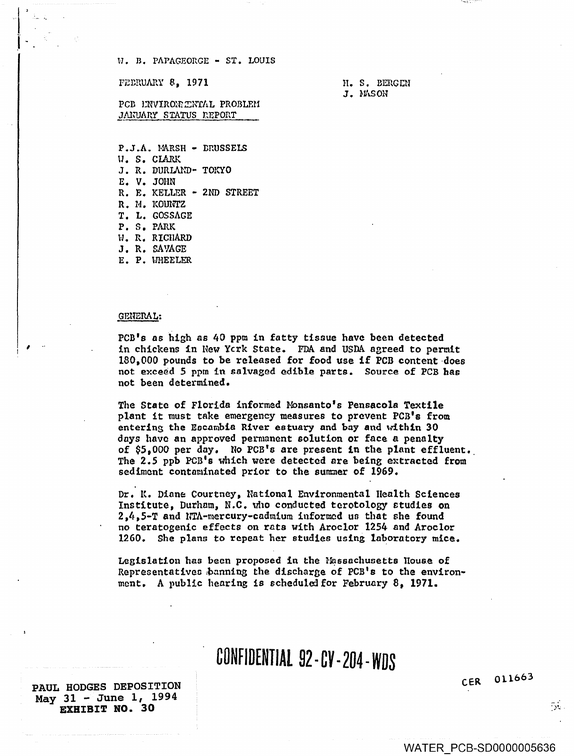
Tho realiaUlon of their porslstsnoo in the environment was reflected last October in an order from the US Department of Agriculture's Pesticides Regulation Division that the ueo of FCBs and polyohlorinAted terphenyla ao aotive or inaotlvo ingredients In pestiolde formulations should be phased out within 6 months, sinos any benefits derived from this application wero "outweighed by the resulting environmental contamination and the possible long ranme advereo effects on fish and wildlife" (Pood Chemical News 1970, _1_2 (35),
refid# K6qwYB3rq6Rg18kX87Z1ZzwNw11 pages