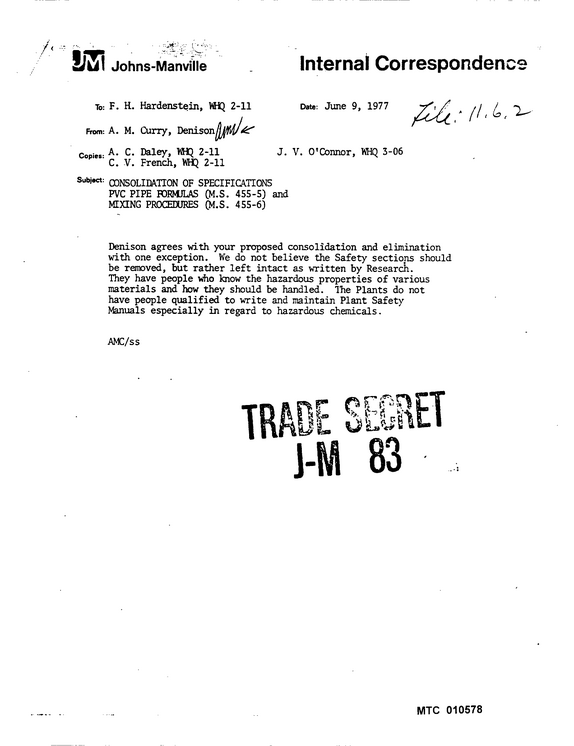
MTC 010577 Internal Correspondenc To: F.

refid# qddbzLEN0D3mykVemVDLxR65M3 pages
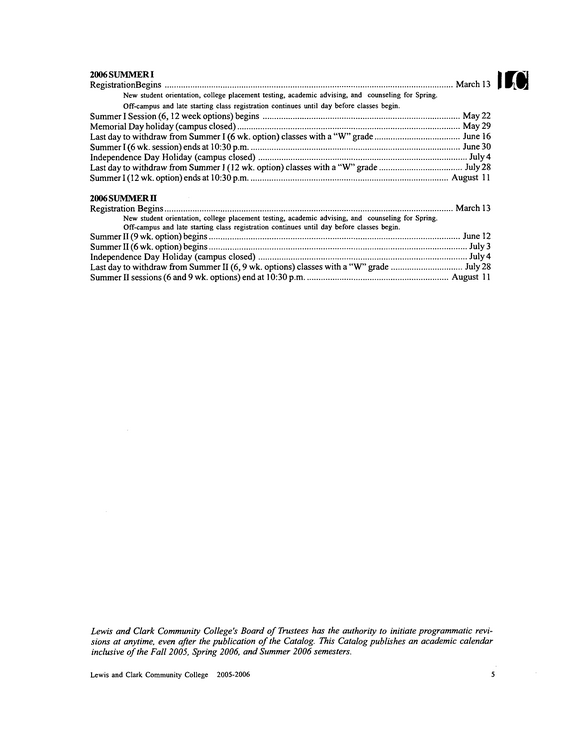
2006 SUMMER I mRegistrationBegins........................................................................................................................................
refid# 86LMm1DOzyLxnGvv6R4JqBZo1 page
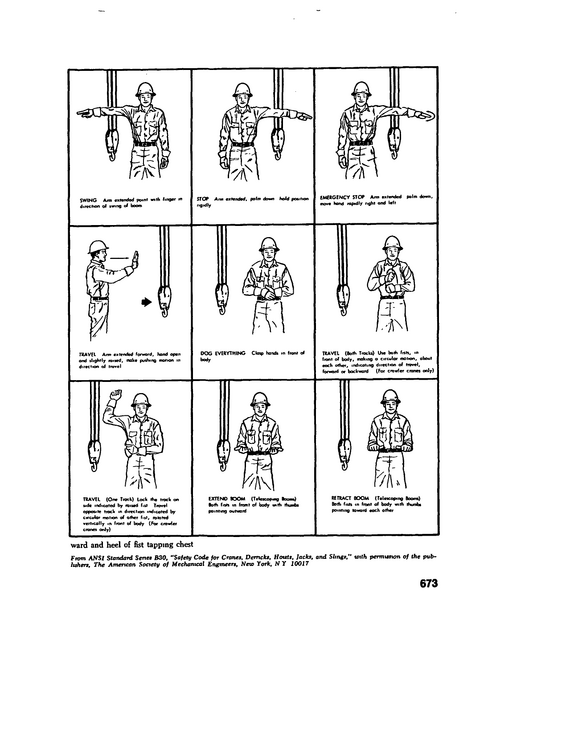
TRAVEL Ann extended forward, hand open end slightly railed, rake pushing motion in direction of travel DOG EVERYTHING Cbsp tends n front of body TRAVEL (Both Tracks) Use both frits, m front of body, making o circular motion, about each other, indicating direction of travel, forvroid or backward (For crawler cranes only) TRAVEL (One Track) Lock the track on side indicated by raised fa!
refid# zzE26j2yqDzbZqy5xke6Lw5E31 page
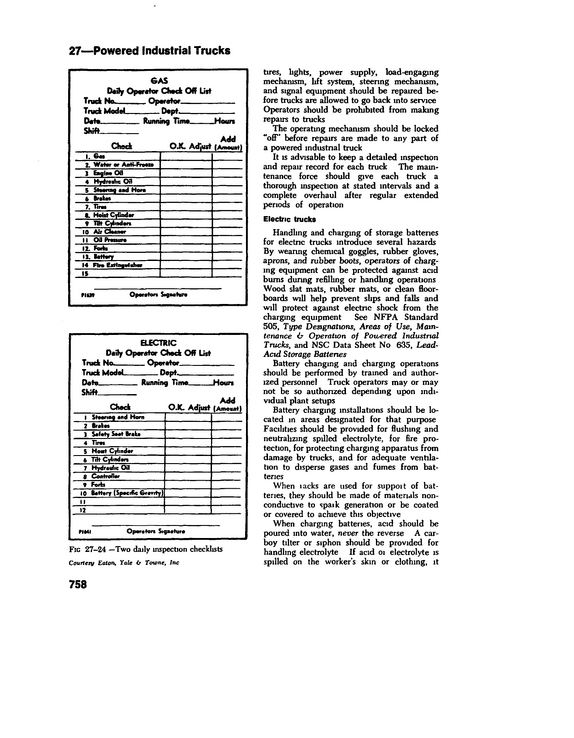
27--Powered Industrial Trucks GAS D*3y Operator Check Off List Truck NoJ______ Operator Truck ModelDept.
refid# VJ51Y5LNBV7xx5xpm4vadz1aN1 page
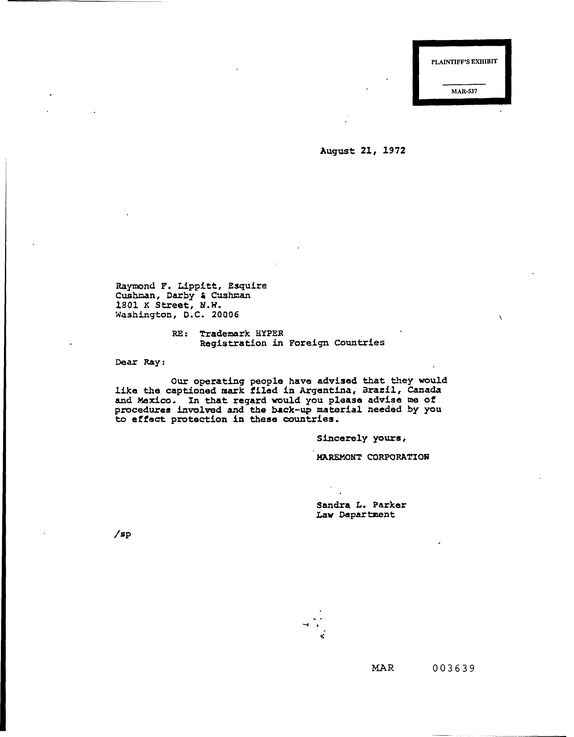
August 21, 1972 Raymond F.
refid# 7Rjz4kNmL9MR86xQqomYBnKoE2 pages
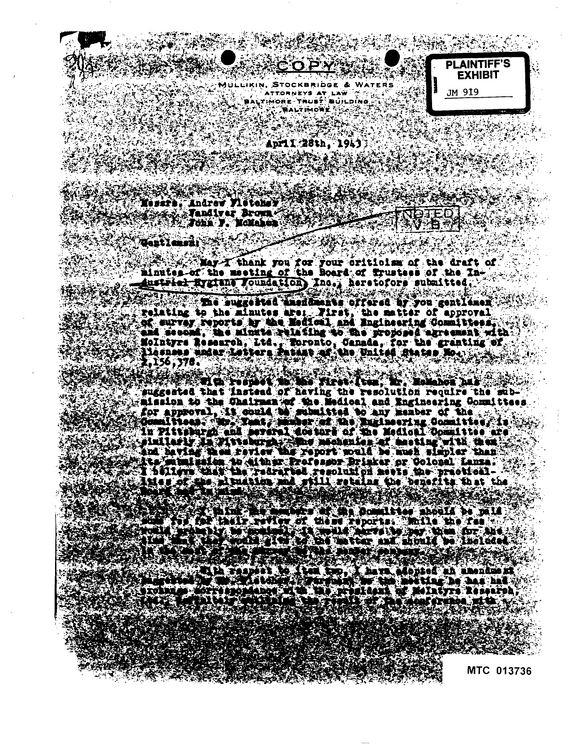
you for.your oritiolw of tfeo draft of.: MnitaA-of' tha Mating of tho BoorA.of. fruataai or \tha In*,' log* Jno,j iorotoforo ittbalttodiv- t MTC 013736
refid# 9J0zpmmeL6o7q3wJRDOr76pr72 pages
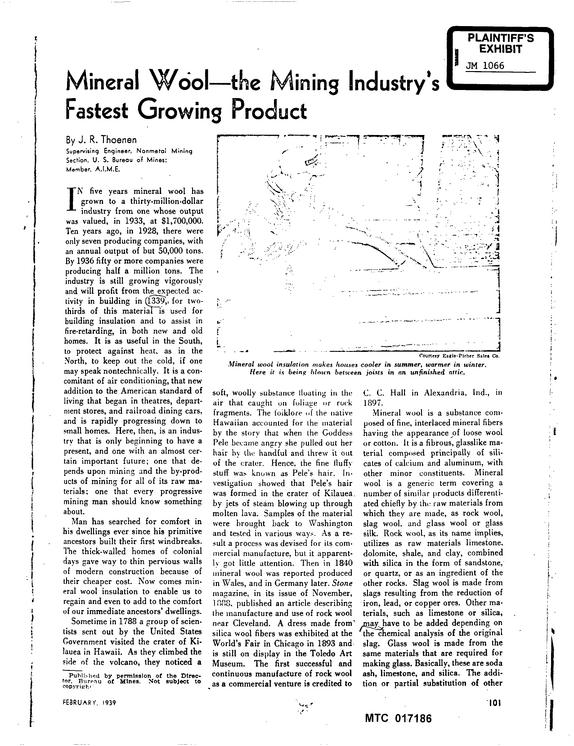
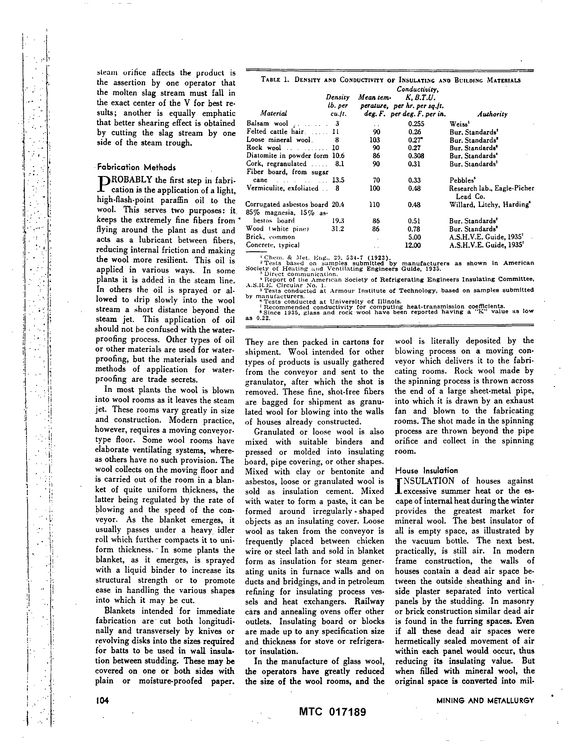
Mineral Wool--the Mining Industry': Fastest Growing Product PLAINTIFFS EXHIBIT JM 1066 By J.
refid# Rpbara8wzgGo4GOJ8OEbr0zpV5 pages
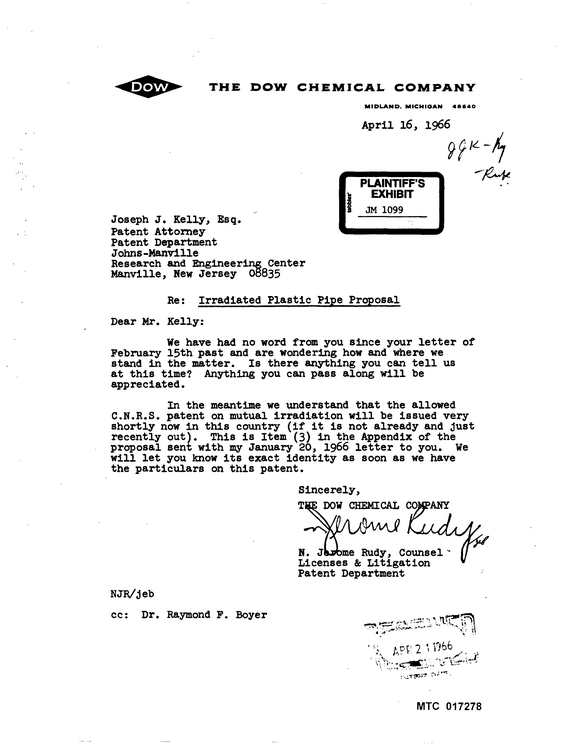
THE DOW CHEMICAL COMPANY MIDLAND.
refid# reeYK8o5w3Z2NwL4ogOpEkx01 page
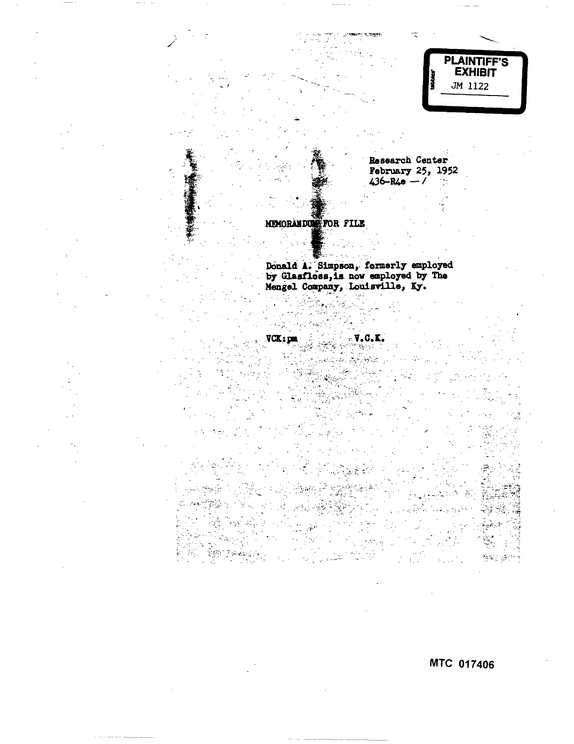
V Research Center February 25, 1952 436-R4* -- / ; HatORiSoApR FILE Donald A.
refid# ZBGRVQJOqjYzvrVpwB20KdGG019 pages
6 Pf 3 0 *0 MTC 017545 V .John:; nanv i i.i.i-; ' .'
refid# NeR16JG0kBYz40qomnNq9605Q2 pages
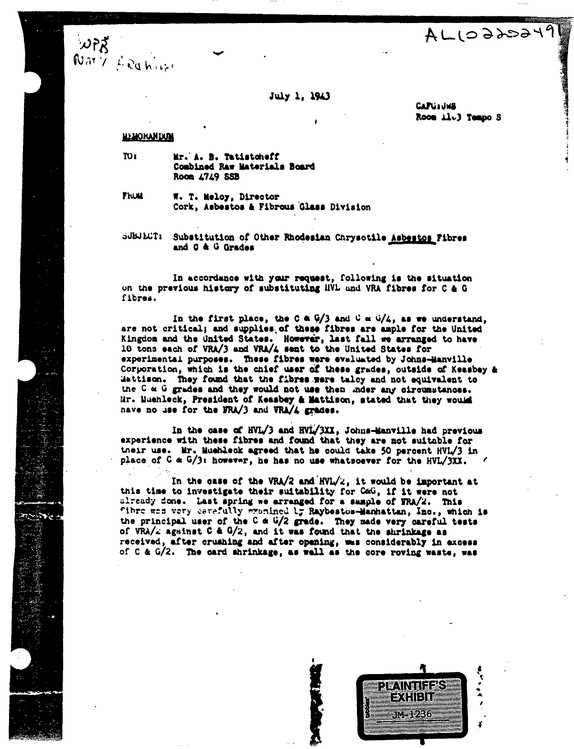
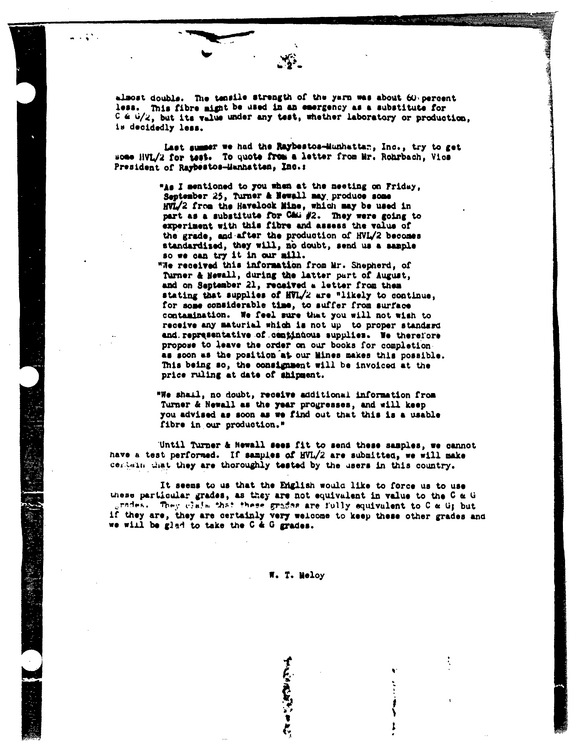
I,.,...KMi (Ont 7 July 1, 190 hUiPHAHbUM TOi Mr.
refid# pNjgxNa22q4nRxvLgZE2woQd2 pages
35--Hand and Portable Power Tools range, especially overhead vines that may catch or deflect his axe It is advisable to wear safety shoes when using an axe Axe blades should be protected with a sheath or metal guard wherever possible When the blade cannot be guarded, it is safer to carry the axe at one's side The blade on a single-edged axe should be pointed down Adzes are hazardous tools m the hands of inexperienced men and should be handled only by those skilled m their use Workmen should straddle the work or, as is necessary at times, stand at the side of the material They should see that the adze is sharp and that the handle is sound and fitted securely m the head Safety shoes and shin guards should be worn When not in use, the adze should be set aside in a safe place with cut ting edge covered or secured to protect passers-by or, temporarily, left stuck in the timber Hatchets are used for many purposes and frequently cause injury For example, when a workman attempts to split a small piece of wood while holding it in his hands, he may cut his fingers To start the cut, it is a good practice to strike the wood lightly with the hatchet, then force the blade through by striking the wood against a solid block of wood Hatchets may not be used for striking hard metal surfaces, since the tempered head may chip or split and flying chips may injure the workman or other workers When using a hatchet for cutting or for driving nails in a crowded area, workmen should take special care to prevent injury to themselves and other workers Using a hatchet to drive nails is a poor practice If used, however, the face of a hatchet used for driving nails should be ground square if it becomes rounded Some companies prefer to use a corrugated face to prevent nails from flying Miscellaneous cutting tools Planes, scrapers, bits, and drawknives should be used only by experienced men These tools should be kept sharp and in good condition When not in use, they should be placed m a rack on the bench, or m a tool box in such a way that will protect the user and prevent damage to the cutting edge Knives are more frequently the source of disabling injuries than any other hand tool In the meatpacking industry, hand knives caused more than 15 percent of all disabling injuries, which is more than caused by any other agency The principal hazard in the use of knives is that the hands may slip from the handle onto the blade or that tbe knife may strike the body or the free hand A handle guard or a finger nng (and swivel) on the handle eliminates these hazaids Adequate guarding is im portant The cutting stroke should be away from the body If that is not possible, then the hands and body should be m the clear, a heavy leather apron or other protective clothing should be worn, and, where possible, a rack or holder should be used for the material to be cut Jerky motions should be avoided to help maintain balance Be sure employees are trained and supervised Belt repairmen and other workmen who must carry knives with them on the job should keep them m sheaths or holders Never carry a sheathed knife on the front part of a belt-- always carry it over the right or left hip, toward the back This will prevent severing a leg artery or vein in case of a fall Knives should never be left lying on benches or in other places where they may cause hand injuries When not m use, they should be kept in racks with the edges guarded Safe placing and storing of knives is important to knife safety (See Fig 35-10 ) Ring knives--small, hooked knives attached to a finger ring--are used where string or twine must be cut frequently Supervisors should make sure that the cutting edge is kept outside the hand, not pointed inside A wallmounted cutter or blunt-nose scissors would be safer Carton cutters are safer than hooked or pocket knives for opening cartons They not only protect the user, but eliminate deep cuts that could damage carton contents Fre quently, damage to contents of soft plastic bottles may not be detected immediately, sub sequent leakage may cause chemical bums, damage other products, or start a fire 986
refid# B8Mq5dY9o1dXZ5QjjVZr9LG141 page
cation for such exposure tests is blood, limited use has been made of biopsy specimens of lung, skin and fat, but these are not very prac tical for penodic sampling The excretory products most frequently analyzed are urine and breath, sweat, the other major excretion product, is not well adapted for exposure tests (Table 38-A) The pulmonary ventilation rate of an aver age worker may be taken as 20 liters per min ute (L/min) or approximately 10,000 L m an eight-hour working day If the air contains one milligram per liter (mg/L) of some harm ful material, the maximum amount that can be absorbed in one day is 10 gm Likewise, the same total dose would result from an ex posure of one hour to a concentration m air of 8 33 mg/L The employee's exposure to gases and va pors is usually limited to his working hours The time spent away from work is usually more than adequate to permit complete elimi nation of the volatile matenal in the body be fore the beginning of the next daily exposure Except for highly soluble substances, such as methyl alcohol, or with reactive gases whose detoxification products are eliminated slowly, there would be no accumulation of gases and vapors from daily exposure Henderson and Haggard's book on noxious . gases (see References) treats the subject of respiration and absorpbon of gases and vapors in great detail, and the reader is urged to con sult this reference for specific details Harmful materials or their detoxification products are eliminated from the body through the respiratory tract, the intestinal tract, the urinary tract, and, in some cases, the sweat glands (Table 38-A) Most volatile organic compounds are elimi nated in a matter of hours or, at most, days Many of the poisonous elements, however, can be stored for long periods of time m vari ous parts of the body Chronic toxicity dam age is unlikely to have an even distribution throughout the body In many cases the organ affected is the hver or kidney, and m a num ber of substances, both the hver and bones In toxicity studies with radioactive isotopes, the organ which suffers the most severe dam age and appears to contribute most to the toxic effect on the body as a whole is called the critical organ The particular organ that shows the largest amount of damage is the one that is chosen for estimating the effect Lead, when taken into the body, may be de posited in the bones When die intake of lead stops, the stored portion is excreted until it is virtually eliminated from the system In chronic poisoning, the excretion rate usually rises until it balances the absorption rate In the case of lead poisoning, biochemical tests performed on the body fluids would in dicate the amount that is being circulated in the blood, excreted m the unne, or stored in the bones if an autopsy was made An important difference between inhalation as route of entry and ingestion or skin ab sorption is that through inhalation the ma tenal enters the artenal blood directly, whereas with ingestion or skin absorption the matenal enters the venous blood and is earned through the nght portion of the heart where it is then diluted by the entire venous system and passed through the lungs and then pumped by the left portions of the heart to the brain and other organs Reactive gases and vapors are altered within the body and are eliminated to a large extent in forms other than those in which they are absorbed The toxicological action may be exerted either by the substance in its ongmal form or by its detoxification products Nonreactive gases and vapors are not al tered to any appreciable extent in the body and are eliminated m Hie same chemical form in which they are absorbed The aliphatic hydrocarbons, such as propane and heptane, are examples of that type Mode of action Industrial poisoning may be classified as one of three types acute, subacute, or chronic The classification is based on the rate of in take of harmful materials, rate of onset of symptoms, and the duration of symptoms Acute poisoning, typically, is characterized by rapid absorption of the offending matenal and the exposure is sudden and severe For example, inhaling high levels of carbon mon oxide or swallowing a large quantity of cya nide compound will produce acute poisoning The death or survival of a victim through the critical penod occurs suddenly Generally, acute poisoning results from a single dose 1113
refid# 6RewYnOjQ9nakZGe9wkMqryJ31 page
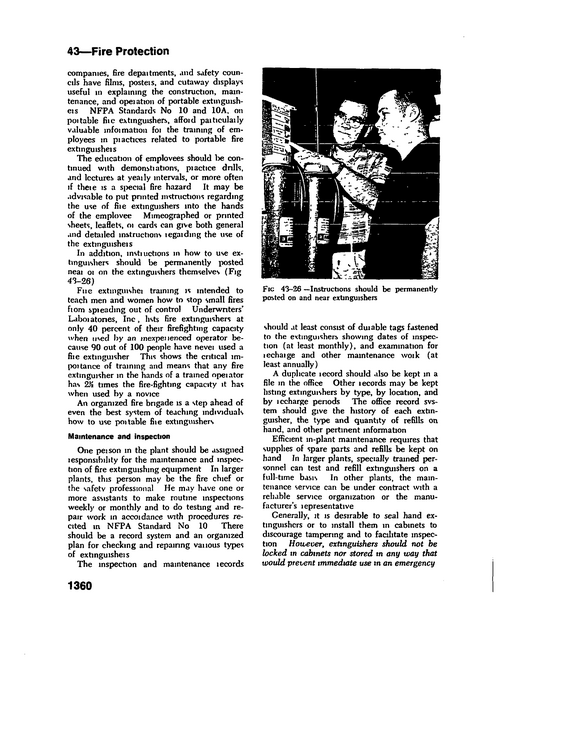
43--Fire Protection companies, fire depaitments, and safety coun cils have films, posteis, and cutaway displays useful m explaining the construction, main tenance, and opeiation of portable extinguish es NFPA Standards No 10 and 10A, on poitable flic extinguishers, affoid paiticulaily valuable mfoimation foi the training of em ployees in piactices related to portable fire extinguishes The education of employees should lie con tinued with demonstiations, piactice drills, and lectures at yeaily intervals, or more often if theie is a special fire hazard It may be advisable to put printed instructions regarding the use of file extinguishes into the hands of the emplovee Mimeographed or printed sheets, leaflets, 01 cards can give both general and detailed instructions tegaiding the use of the extinguishes In addition, instiuctions in how to use ex tinguishers should be permanently posted neai 01 on the extinguishers themselves (Fig 43-26) Fne extinguishei training is intended to teach men and women how to stop small fires ftom spieading out of control Underwaters' Lalxn atones, Inc, lists fire extinguishers at only 40 percent of their firefighting capacity when used by an mexpenenced operator be cause 90 out of 100 people have nevei used a file extinguisher This shows the critical lmpoitance of training and means that any fire extinguisher in the hands of a trained opeiator has 2Ji times the fire-fighting capacity it has when used by a novice An organized fire brigade is a step ahead of even the best system of teaching individuals how to use poi table fiie extinguishers Maintenance and inspection One peison in the plant should be assigned lesponsibihty for the maintenance and inspec tion of fire extinguishing equipment In larger plants, this person may be the fire chief or the safety professional He may have one or more assistants to make routine inspections weekly or monthly and to do testing and re pair work in accoi dance with procedures re cited m NFPA Standard No 10 There should be a record system and an organized plan for checking and repainng vanous types of extinguishei s The inspection and maintenance lecords 1360 Fic 43-26 --Instructions should be permanently posted on and near extinguishers should at least consist of duiable tags fastened to the extinguishers showing dates of inspec tion (at least monthly), and examination for lechaige and other maintenance woik (at least annually) A duplicate lecord should also be kept in a file in the office Other lecords may be kept listing extinguishers by type, by location, and by lccharge penods The office record svstem should give the history of each extin guisher, the type and quantity of refills on hand, and other pertinent information Efficient in-plant maintenance requires that supplies of spare parts and refills be kept on hand In larger plants, specially trained per sonnel can test and refill extinguishers on a full-time basis In other plants, the main tenance service can be under contract with a reliable service organization or the manu facturer's lepresentative Generally, it is desirable to seal hand ex tinguishers or to install them in cabinets to discourage tampering and to facilitate inspec tion However, extinguishers should not be locked in cabinets nor stored in any way that would prevent immediate use in an emergency
refid# 37Jb0rp1GJeV67LeQNNd3L2NE1 page
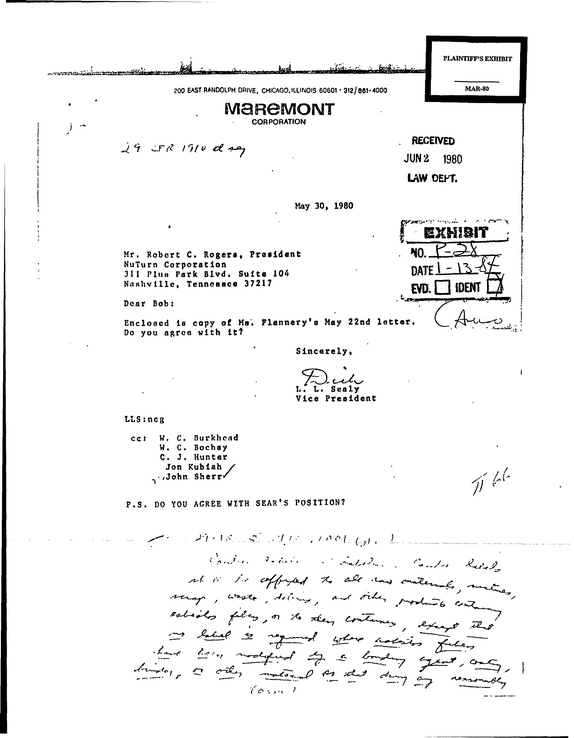
PLAINTIFF'S EXHIBIT 200 EAST RANDOLPH DRIVE, CHICAGO.
refid# rp9BD1Xdgv8LL3vBZvNkz88wE1 page