Refine
Estimated Years UndatedClear
92,592 results foundRefine Search
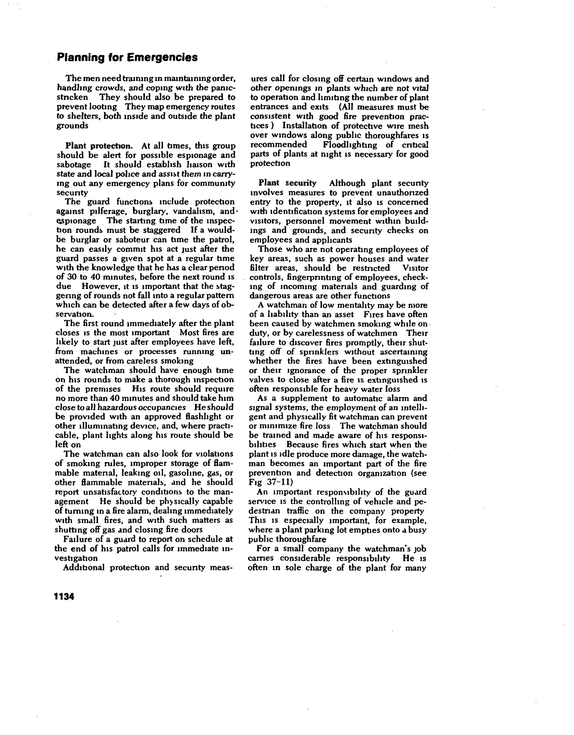
Planning for Emergencies The men need training in maintaining order, handling crowds, and coping with the pamcstncken They should also be prepared to prevent looting They map emergency routes to shelters, both inside and outside the plant grounds Plant protection.
refid# jNmE5yaRQ43xXZ12yv6DpOyV21 page
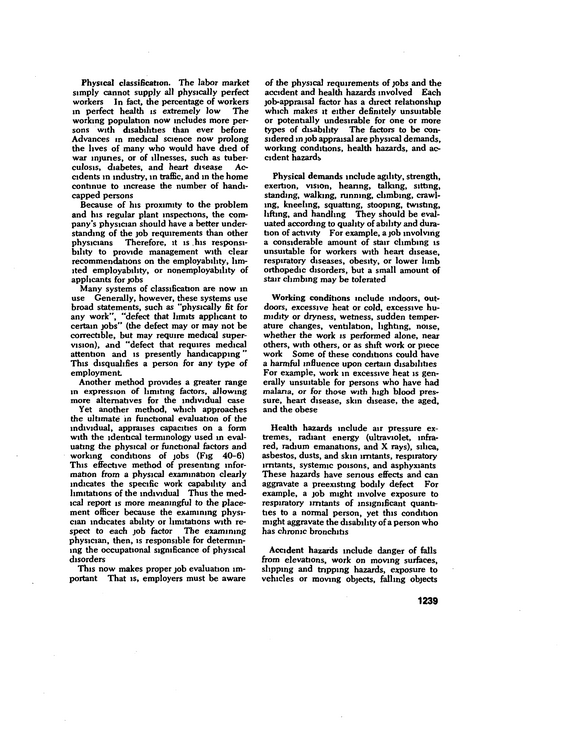
Physical classification.
refid# RaBaBoq7MK9vz3wR3nDokbv2z1 page
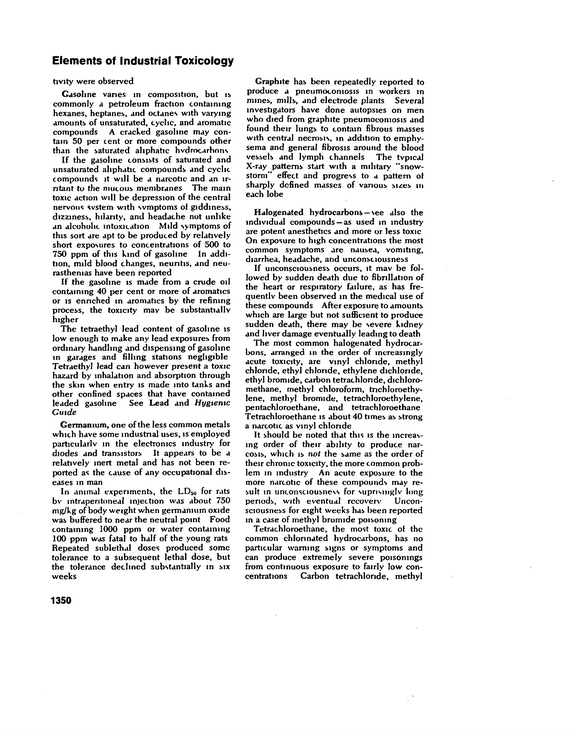
Elements of Industrial Toxicology tivity were observed Gasoline vanes in composition, but is commonly a petroleum fraction containing hexanes, heptanes, and octanes with varying amounts of unsaturated, cyclic, and aromatic compounds A cracked gasoline may con tain 50 per cent or more compounds other than the saturated aliphatic hvdrocarhons If the gasoline consists of saturated and unsaturated aliphatic compounds and cyclic compounds it will be a narcotic and an ir ritant to the mucous membranes The main toxic action will be depression of the central nervous svstem with symptoms of giddiness, dizziness, hilarity, and headache not unlike an alcoholic intoxication Mild symptoms of this sort are apt to be produced by relatively short exposures to concentrations of 500 to 750 ppm of this kind of gasoline In addi tion, mild blood changes, neuritis, and neu rasthenias have been reported If the gasoline is made from a crude oil containing 40 per cent or more of aromatics or is enriched in aromatics by the refining process, the toxicity mav be substantially higher The tetraethyl lead content of gasoline is low enough to make any lead exposures from ordinary handling and dispensing of gasoline in garages and filling stations negligible Tetraethyl lead can however present a toxic hazard by inhalation and absorption through the skin when entry is made into tanks and other confined spaces that have contained leaded gasoline See Lead and Hygienic Guide Germanium, one of the less common metals which have some industrial uses, is employed particularly in the electronics industry for diodes and transistors It appears to be a relatively inert metal and has not been re ported as the cause of any occupational dis eases in man In animal experiments, the LD50 for rats bv intraperitonea!
refid# da3d0OkGaNkrXZ2Oo0K7xan461 page
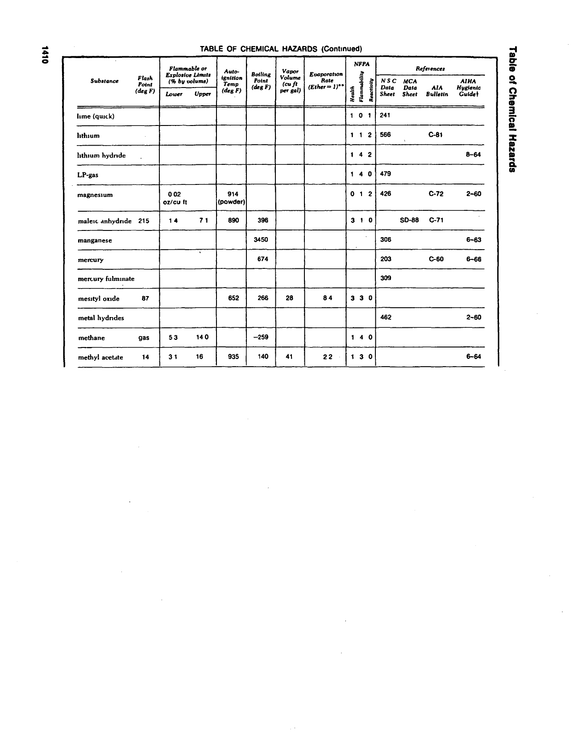
Table of Chemical Hazards 1410 Subttance lime (quick) TABLE OF CHEMICAL HAZARDS (Continued) FJ,h.
refid# OEKy1xVpOr90D0vDp8Xg5jpVw1 page
Stosisis separated'rom, itsiiHdstjrpckL'i la"1 among ihose :,;parich ts wfib ,'';Kadj *Kd -ini ''asbest0S:;;mines;ii`;4iei|:actualj are appeared to have been slight, fay, most cases ;,theisHtngs-JsJiiowtd;; jijofenceofasbestosisbutonlyjafewas^; ojbodiesandfibrcsin theairspaces.

refid# 15JR6n955mpYzL4MRYRvL4evZ1 page
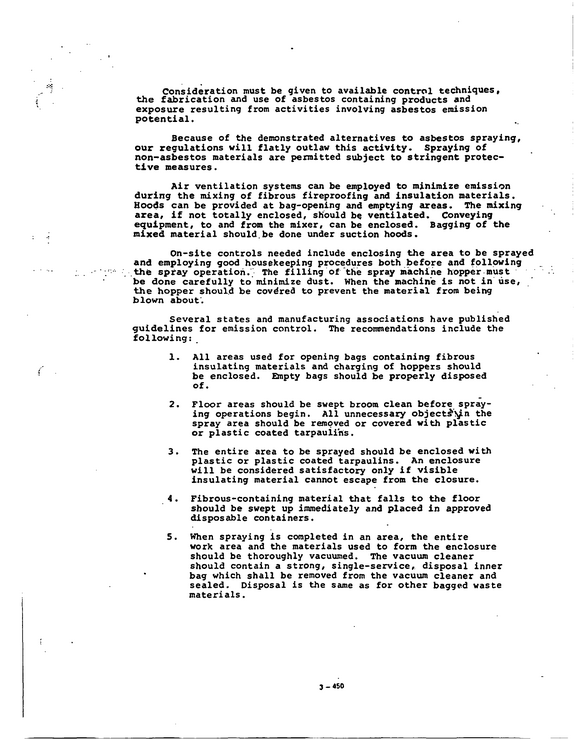
Consideration must be given to available control techniques, the fabrication and use of asbestos containing products and exposure resulting from activities involving asbestos emission potential.
refid# ja3ka8p7mqw4Nx1eD3NwORrZ1 page
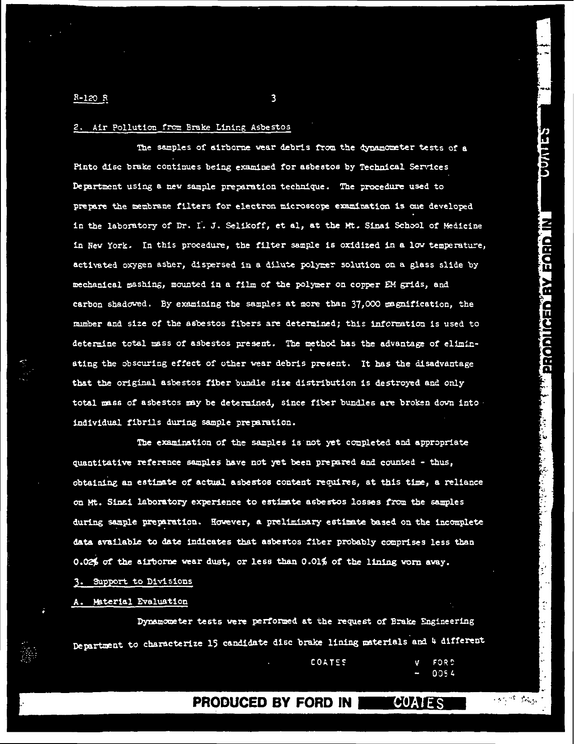
R-120 r 3 2.
refid# 2Jkz6DvZyOxvDakXenoYm5Oba1 page
9 FIGURE NO. 5 OFF-HIGHWAY TRUCK ENCLOSED, OIL COOLED, MULTIDISC BRAKE Figure Ho. 5 *1k ko example of multldlee Brakes vhich are totally V enclosed and Bathed In cooling oil.
refid# NEEwXmxQLY0pOMaZoM7ZQ7ezy1 page
4--Inspection and Control Procedures tection requirements that are applicable to the particular plant should also be known Usu ally codes, federal and state laws, and regula tions set up minimum requirements only It is frequently necessary to exceed these require ments to comply with company policy and secure maximum safety Before making periodic or special inspec tions, it is highly important to make a com plete analysis of company and department accident statistics and accident causes, as out lined early in this chapter under "Inspection of Work Areas " This material should be made available to the inspector by the safety pro fessional Other aids for the inspector may include Inspection checklists Inspection report forms Job safety analysis cards (see the dis cussion in the next chapter) Starting the inspection Three basic steps of how to inspect are (a) contact the department head and solicit his help, (b) observe all conditions for com pliance with established standards (use check lists), and (c) observe all operations for any unsafe acts or violations of safety rules Step 1.
refid# e792ngvRQZZ85zo4yDe3Nd0jg1 page
ployees in invesbgabng an accident, or settling claims arising from it, is charge able to the accident 10 Miscellaneous usual costs.
refid# yn1YX2m3OdLgrg6LNer5L67n1 page
8--Workmen's Compensation Insurance accidents More specifically, the pricing of workmen's compensation should reward good safety practices and penalize dangerous opera tions Employees should also have some in centive to follow safe work practices by shar ing some of the losses Injured workers should have the opportunity and be encour aged to return to work as soon as they are physically able Those who minimize this objective of work men's compensation recognize the importance of safe work places and procedures bur be lieve that workmen's compensation rates and other incentives have little effect upon how employers behave Consequently they favor other approaches, such as public safety in spectors and criminal penalties Proper cost allocation The fourth objective of workmen's compen sation, which has a narrower support than the first three, is to allocate the costs of the pro gram among employers and industries accord ing to the extent to which they are responsible for the losses to employees and other expenses Such an allocation is considered equitable by supporters of this objective because each em ployer and industry pays its fair share of the cost The economic effects are considered de sirable because this allocation tends in the long run in a competitive economy to shift resources from hazardous industries to safe industries and from unsafe employers within an industry to safe employers Higher work men's compensation costs will force employers with hazardous operations to consider raismg their prices To the extent that consumers will not accept the price increase, employer profits and their willingness to commit re sources to this use will decline Critics of this objective argue that work men's compensation costs are such a small part of the cost of production that they have little, if any, effect on resource allocations Consequently, they would avoid the compli cated pricing practices necessary to achieve this objective Major Characteristics Covered employment While most of the state workmen's compen sation laws apply to both pnvate and public employment, none of the laws covers all forms of employment For vanous historical, po litical, economic, or administrative reasons, each of the laws has certain gaps Laws that are elective rather than compulsory permit the employer to reject coverage, but in the event he does, he loses the customary common law defenses assumed nsk of the employment, negligence of a fellow servant, and contribu tory negligence A few states still restrict compulsory cov erage to so-called hazardous occupations Many laws exempt employers having fewer than a specified number of employees The most common exception is for employers having fewer than three employees, the range goes from fewer than two employees in two states to fewer than 15 in one state Most of the laws exclude farmwork, domestic service, and casual employment Many laws also con tain other exemptions, such as employment in charitable or religious institutions Two other major groups outside the cover age of the compensation laws are interstate railroad workers and mantime employees Railroad workers, any part of whose duties involve the furtherance of interstate com merce, are covered by the Federal Employers' Liability Act (FELA) Maritime workers are subject to the Jones Act, which applies pro visions of the FELA to seamen The Federal Employers' Liability Act is not a workmen's compensation law It gives an employee an action m negligence against his employer and provides that the employer may not plead the common law defenses of fellow servant or assumption of nsk, moreover, the pnnciple of comparative negligence is substituted for the common law concept of contnbutory neg ligence As to the state and local employees, the actual number of these employees subject to workmen's compensation or provided with such protection voluntarily is not available All states (as well as Puerto Rico and the Distnct of Columbia) have some coverage of public employees but with marked vanations Some laws specify no exclusions or exclude only such groups as elected or appointed of ficials Others limit coverage to employees of specified political subdivisions or to em ployees engaged m hazardous occupations 176
refid# baEwrrgKwpELyrQdZwvBEDqXo1 page
pipelines, oveihead conveyors, other parts of the structure, and other installations is dis closed m studying the models A vertical dis tance of at least 7 ft generally is specified between passageways and stairways and over head structures to provide ample clearance Overhead cranes and conveyors require at least 24 in of vertical and horizontal clear ance Trucks and other vehicles require enough room for movement without endangenng men and equipment and need space to back and turn near machines Aisles should be wide enough to permit trucks to pass without colliding For one-way traffic, aisles should be not less than 3 ft wider than the widest vehicles Aisles for two-way traffic should be not less than 3 ft wider than twice the width of the widest vehicle These minimum widths are exceeded considerably in some new build ings where, because of anticipated heavy traf fic, aisles from 12 to 20 ft wide have been specified Safe layout of aisles requires that there be no blind comers and that adequate radius be provided to allow for vehicle turns A 6-ft radius is large enough for small industrial trucks Aisles should be clearly defined with ap proved markings of either traffic paint or striping material Follow American Nabonal Standard Z53 1, Safety Color Code for Mark ing Physical Hazards See the recommenda tions on pages 385-386 Plastic buttons that are glued or fastened with metal fasteners to the floor are used by many because of their durability Parking areas for both hand and power trucks should be designated Large plants often provide garages with room for both storage and maintenance See Chapter 27, "Powered Industrial Trucks," in this Manual If building plans include ramps for use by both pedestrians and trucks, a 3-ft wide sec tion should be reserved as a walkway Sharp turns into aisles at the top and bottom of ramps are hazardous and should be avoided Provide an abrasive coating where slippery floor conditions may exist Electrical equipment Complete metal-enclosed unit substations have been developed for industrial plants and are grounded Such rooms, however, are not proof against the hazards of oil-filled trans formers This equipment may give off flam mable gases under certain conditions, which may form an explosive mixture with the at mosphere in the room Nonflammable trans formers should be installed in confined areas and near flammable materials Short circuit protective devices should be large enough to carry the load and should be rated to open without any danger from the maximum short circuit current Circuit break ers, fuses, and safety switches that fail under short circuit current may explode and cause senous damage and injuries The potential of every grounding system should be measured with a meter to de termine whether or not the system is capable of conducting the necessary amount of return When direct current voltage is supplied from batteries, isolate the battery room from the work area Battery room should be well ventilated, no smoking should be permitted.
refid# J3Xab1aQKV15jn92z6vaZYjq21 page
IRIIAINnFRS^ JM-932 ' ; ll NtTC 013845 bM 9 -4 / Research & Engineering Center February 7, 19^6 J.
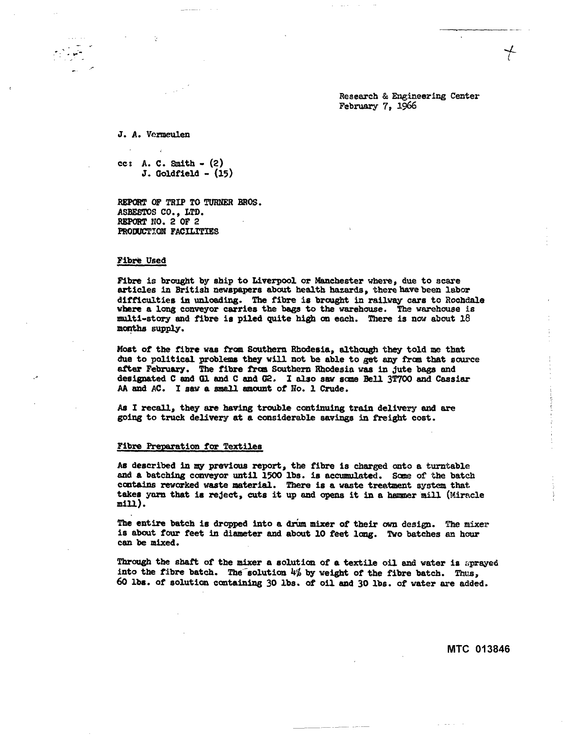
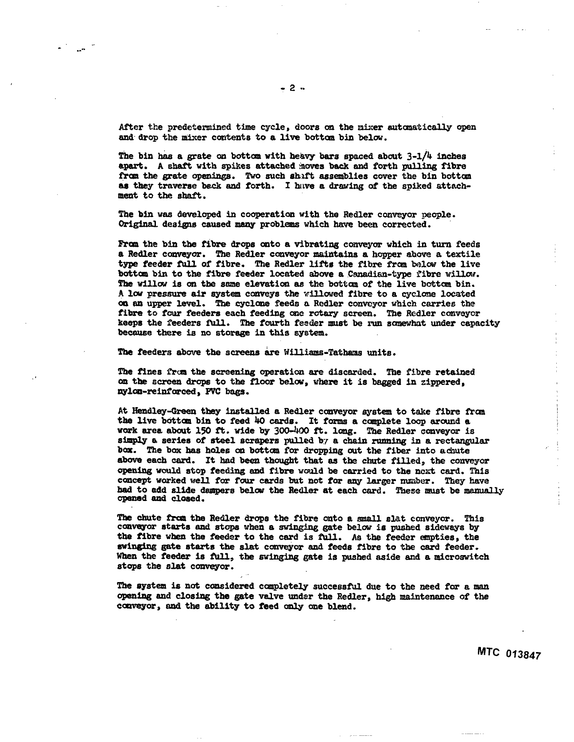
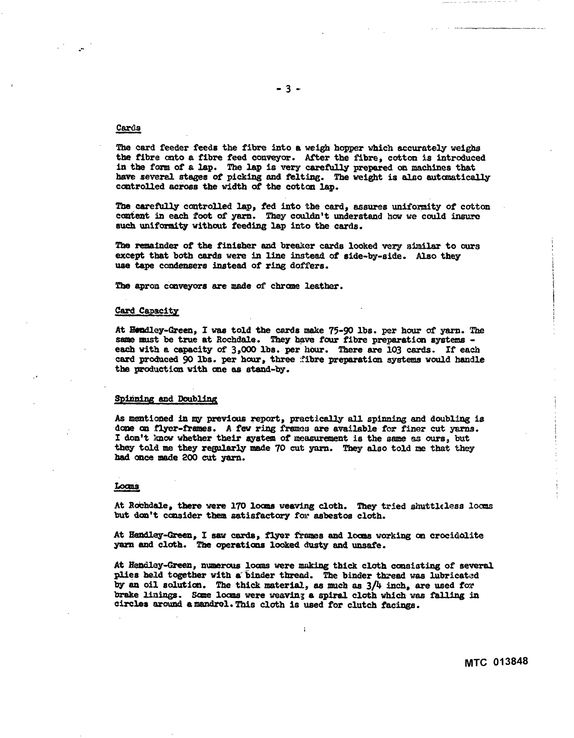
refid# byrdpe98Ng1ZNeowEDqV32xE65 pages
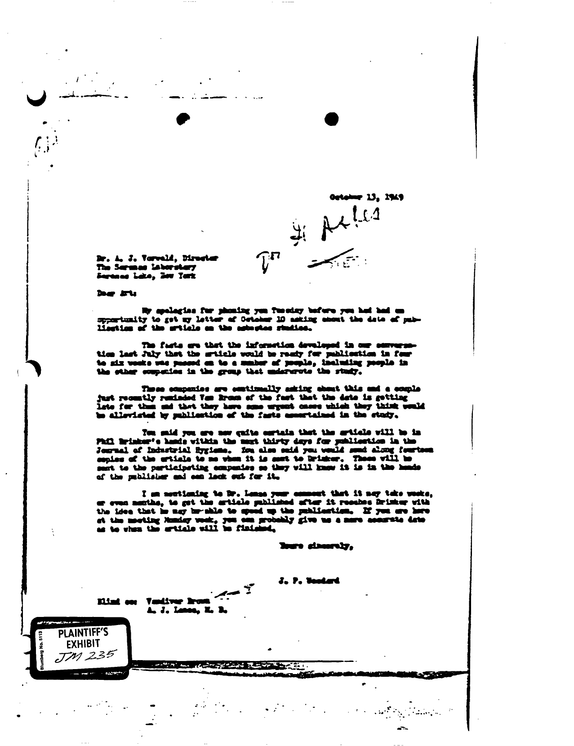
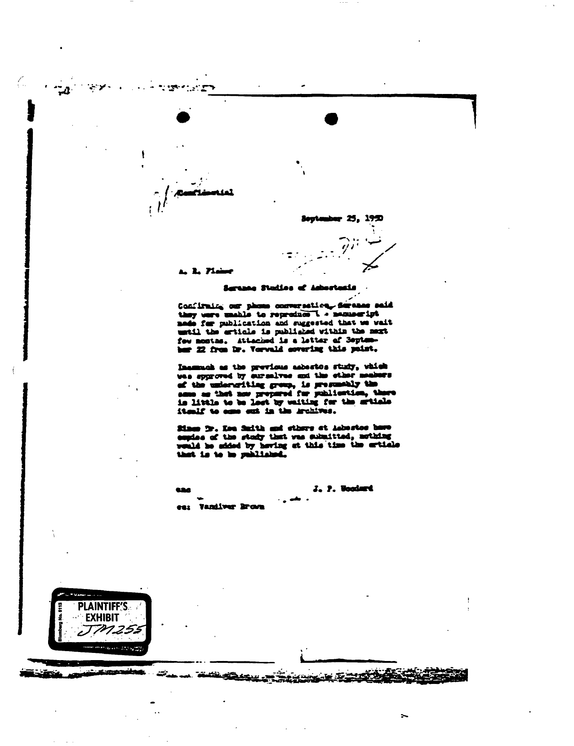
i spp^toaity ta *at *7 lattar af Ort.f 10 aafclag Matt tto data af pato Uaatlaa af tto utiala aa to aatoataa stadias.
refid# R2yRey38QE5aRGqR88NZgJRZk1 page
1 , I 25 19 A.
refid# 3o4Zg1vGvJXwDJ3KxxBjdaJE1 page