Refine
Estimated Years UndatedClear
34,161 results foundRefine Search
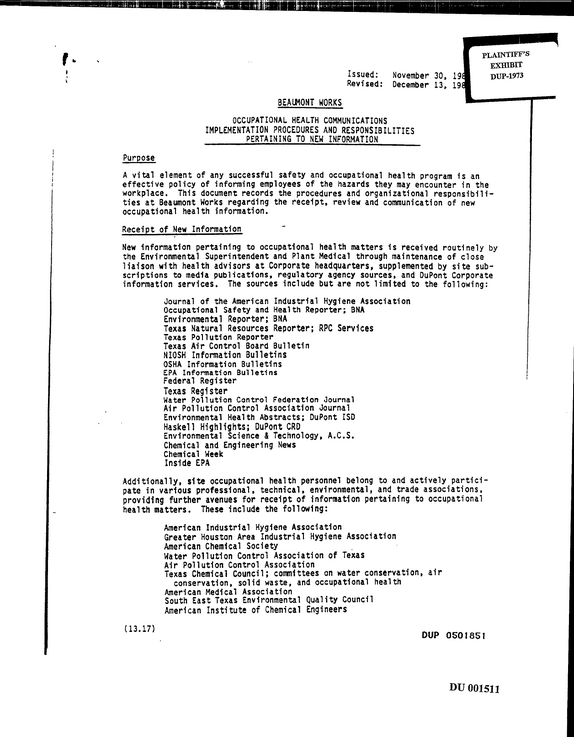
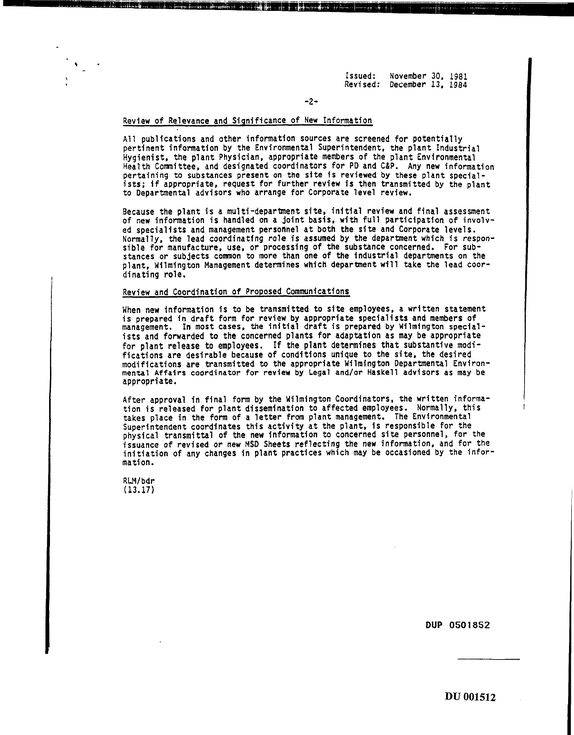
Normally, the lead coordinating role is assumed by the department which is respon sible for manufacture, use, or processing of the substance concerned.
refid# 70E5d1mRpZa4yaXmjpRpxMkVE2 pages
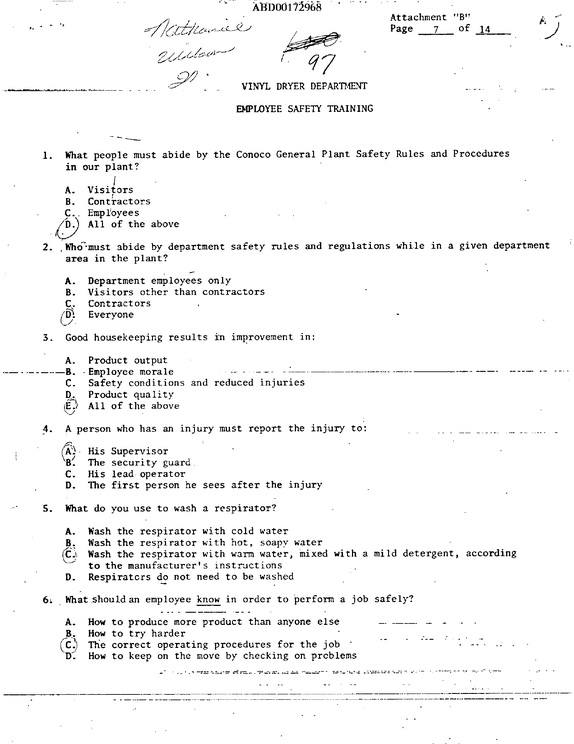
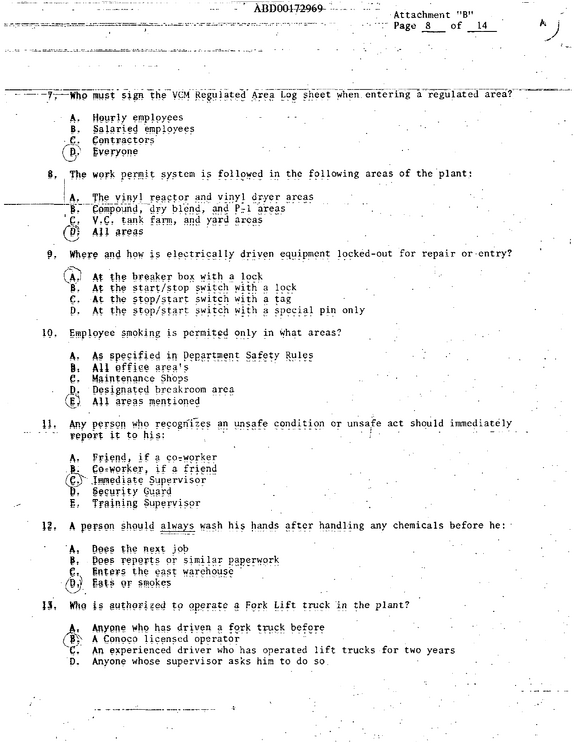
His lead operator D.
refid# ykwxgwMpg6k2YK2GKez71dwNn4 pages
\ Insurance-Related Investigations , Storm-Water Management Lead Testing and Mitigation ..

refid# LJ4JLVyDqXOz7xM10vKQ3EwMb2 pages
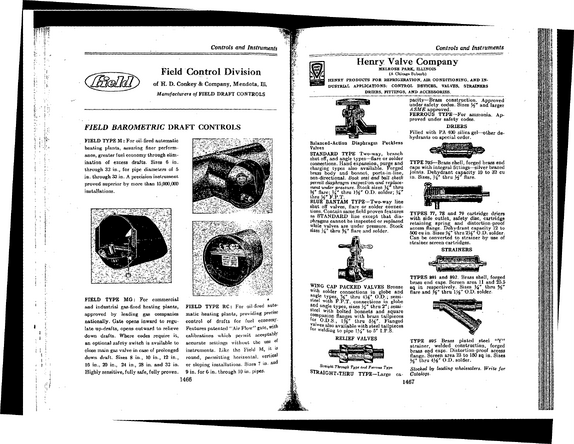
Slocked by leading wholesalers.
refid# gD7paypQYowEMdR2R7jmmX8KL1 page
I LIA08110 ij&a ;l *t*iw LEAD INDUSTRIES ASSOCIATION miicMtfiM; snjtct to WTisiar .
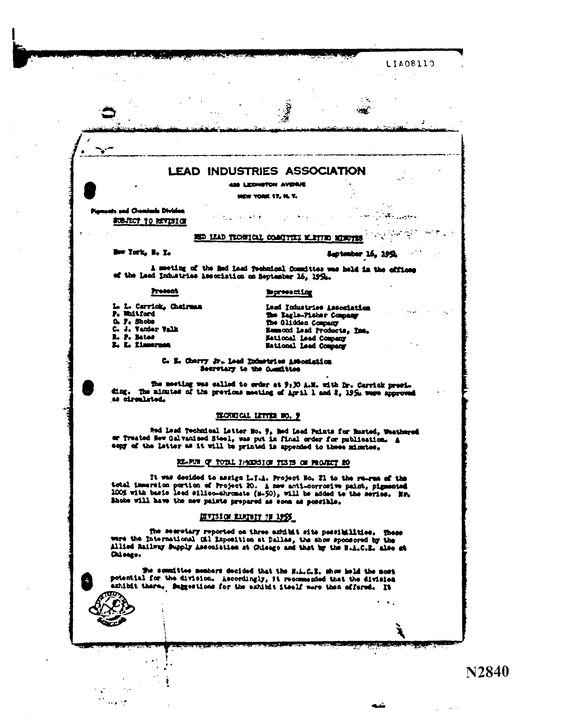
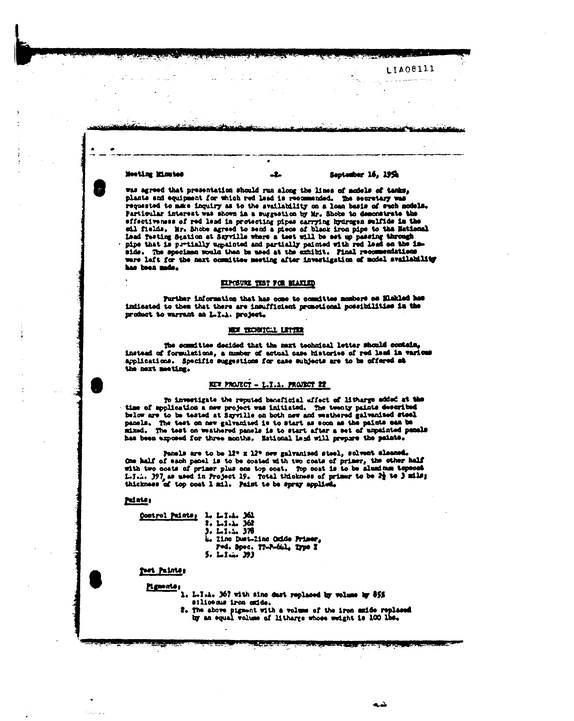
refid# rep3bV7JeeZgy4k2Erjnm15oe3 pages
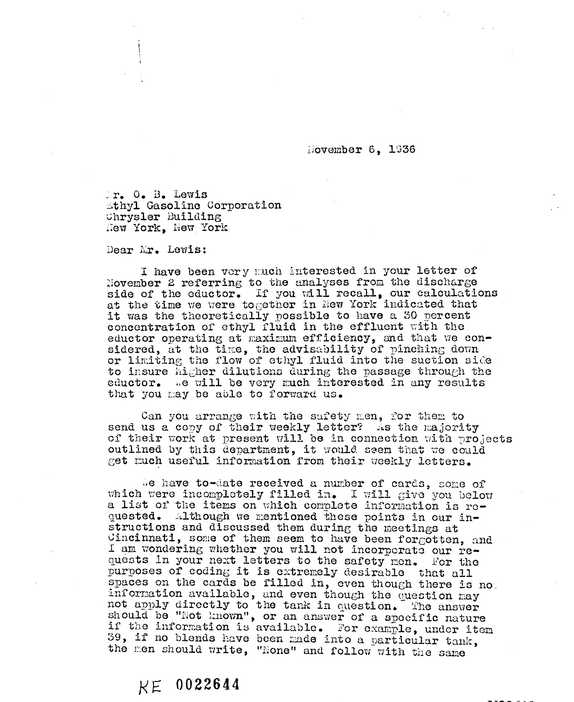
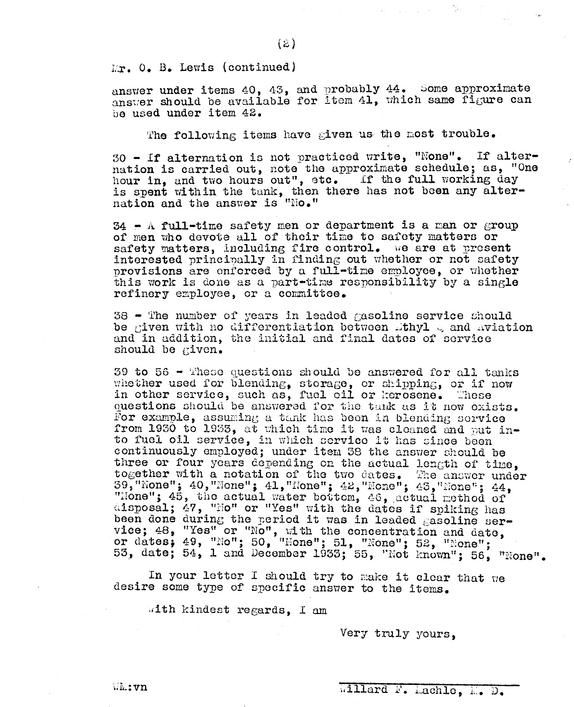
,,""Hnoonnee"";; 422,,"hHonnee"";: 43,"hone"; 44, "Hone" ; 45, the actual water bottom, 46, actual method of disposal; 47, "Ho" or "Yes" with the dates if spiking has been done during the period it was in leaded gasoline ser vice; 48, "Yes" or "Ho", with the concentration and date, or dates; 49, "Ho"; 50, "Hone"; 51, "None"; 52, "Hone"; 53, date; 54, 1 and December 1933; 55, "Hot known": 56, "H In your letter I should try to make it clear that we desire some type of specific answer to the items. ith kindest regards, I am Very truly yours, wL:vn willard F. hachle, A.
refid# Dpz1vj2Q311LmV6NVg59Xby52 pages
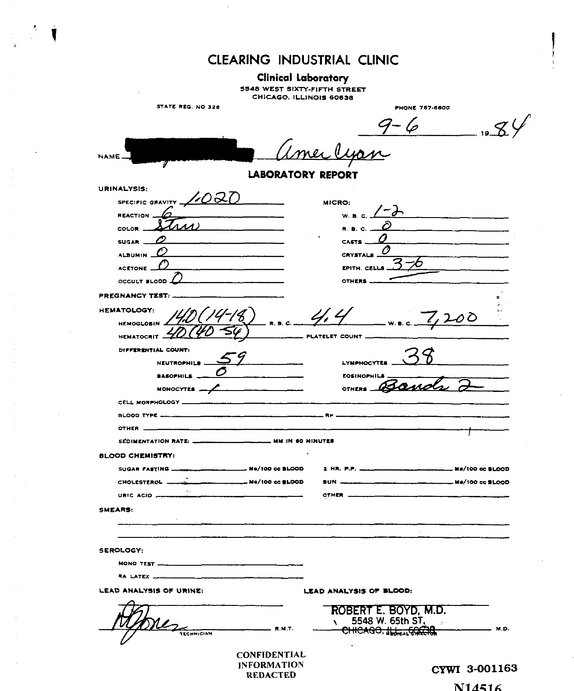
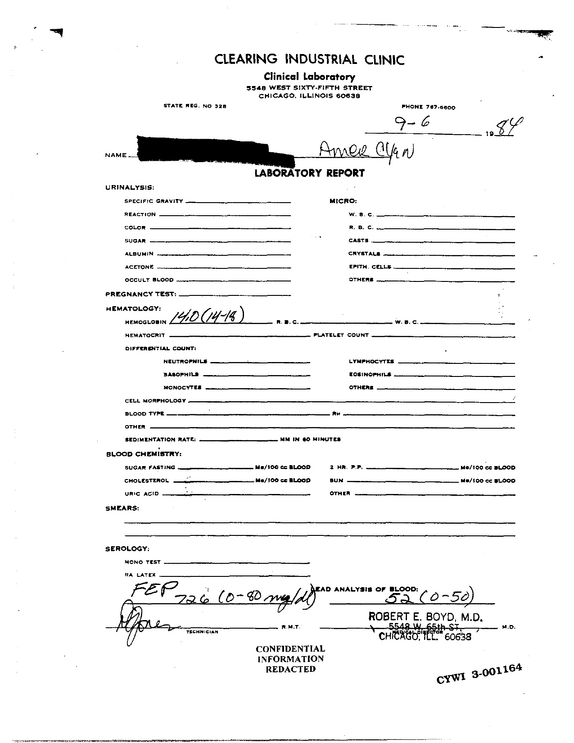
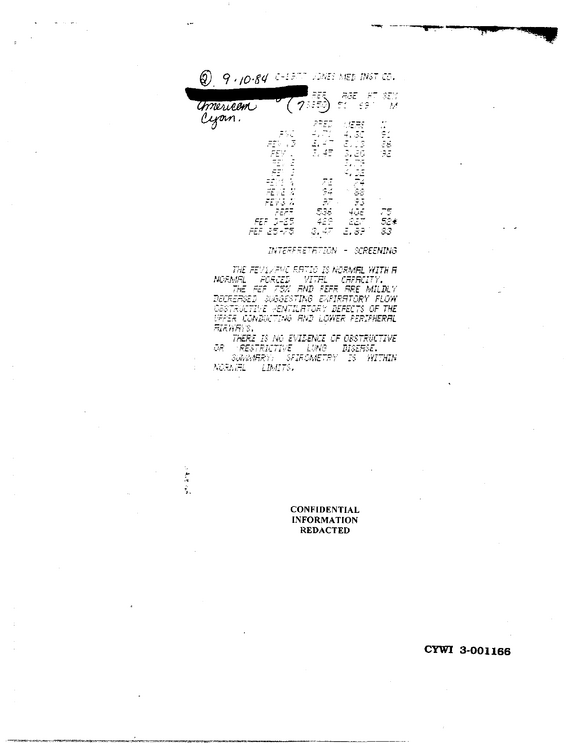
MS/IOO CC BLOOD SMEARS: SEROLOGY: MONO TEST-----RA LATEX ______________________ LEAD ANALYSIS OF URINE: TtCXHlC'AN LEAD ANALYSIS OF BLOOD: ROBERT ETBOYD, M.D. \ 5548 W. 65th ST.
refid# mBkaX6Ovj93ZRxM44RX3o179d7 pages
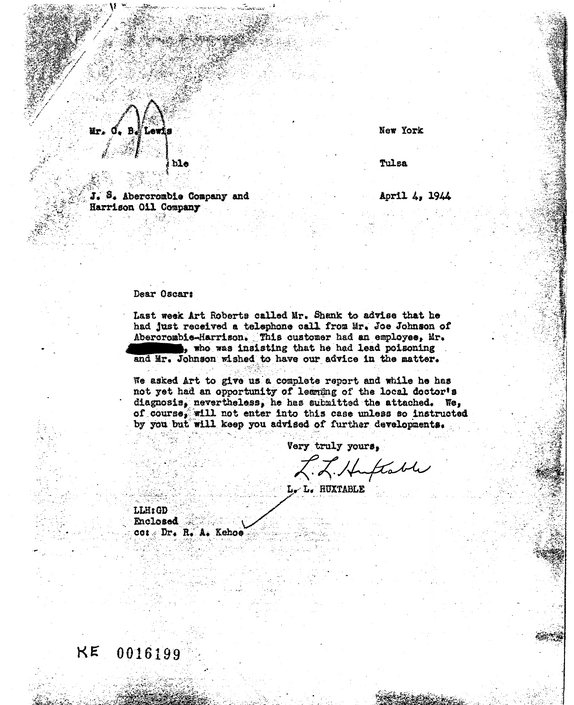
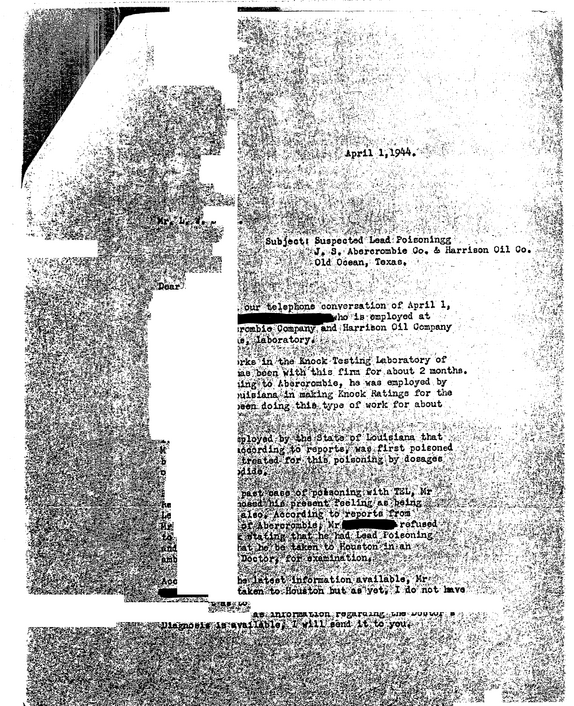
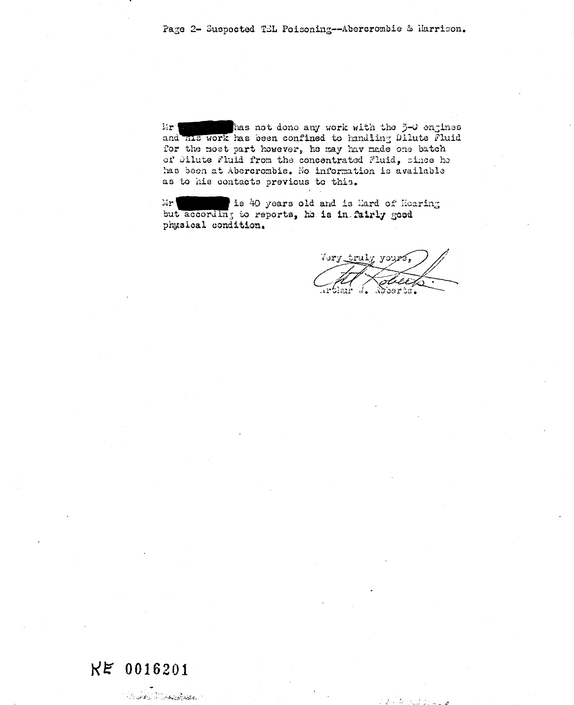
/V--'-''-, .. -_ / ``Subjectl Suspects Lead Poisonings ' *-,
refid# zb9wrbZ6qLx5qjjBjYQqMVE8R3 pages
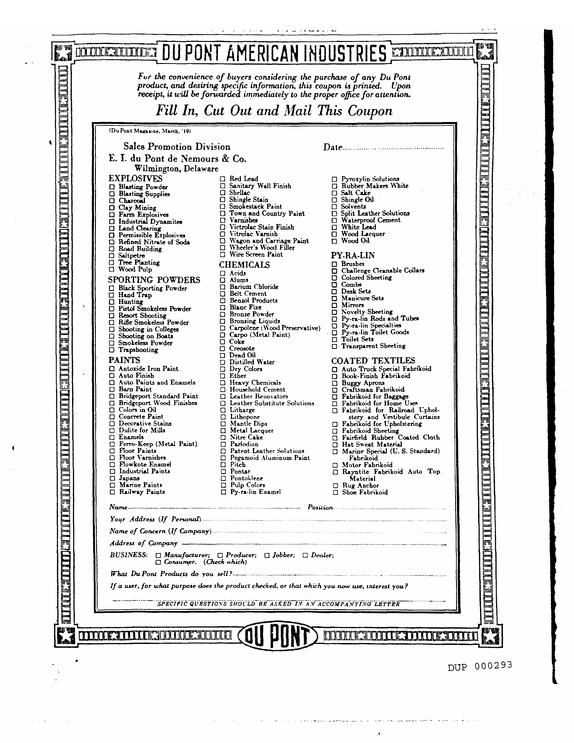
Wilmington, Delaware EXPLOSIVES Blasting Powder Blasting Supplies Charcoal Clay Mining Farm Explosives Industrial Dynamites Land Gearing Permissible Explosives Refined Nitrate of Soda G Road Building O Saltpetre Tree Planting Wood Pulp SPORTING POWDERS Black Sporting Powder Hand Trap G Hunting G Pistol Smokeless Powder G Resort Shooting G Rifle Smokeless Powder G Shooting in Colleges G Shooting on Boats G Smokeless Powder G Trapshooting PAINTS G Antoride Iron Paint Q Auto Finish G Auto Paints and Enamels Bam Paint Q Bridgeport Standard Paint Q Bridgeport Wood Finishes Q Colors in Oil G Concrete Paint O Decorative Stains Dulite for Mills Q Enamels O Ferro-Keep (Metal Paint) Floor Paints Q Floor Varnishes Q Flowkote Enamel G Industrial Paints G Japans G Marine Paints Q Railway Paints Red Lead Q Sanitary Wall Finish G Shellac G Shingle Stain G Smokestack Paint Town and Country Paint Q Varnishes Q Victrolac Stain Finish O Vitrolac Varnish Wagon and Carriage Paint G Wheeler's Wood Killer G Wire Screen Paint CHEMICALS Q Acids Q Alums G Barium Chloride Q Belt Cement G Benzol Products G Blanc Fixe O Bronze Powder G Bronzing Liquids Q Carpolene (Wood Preservative) Q Carpo (Metal Paint) Q Coke G Creosote D Dead Oil Distilled Water Q Dry Colors G Ether Heavy Chemicals Household Cement Q Leather Renovators Q Leather Substitute Solutions G Litharge Q Lithopone O Mantle Dips Q Metal Lacquer Q Nitre Cake Q Parlodion Q Patent Leather Solutions Q Pegamoid Aluminum Paint Q Pitch G Pontar Q Pontoklene Pulp Colors G Py-ra-lin Enamel Q Pyroxylin Solutions O Rubber Makers White G Salt Cake G Shingle Oil G Solvents G Split Leather Solutions G Waterproof Cement Q White Lead G Wood Lacquer Wood Oil PY-RA-LIN G Brushes Challenge Cleanable Collars G Colored Sheeting Q Combs G Desk Sets O Manicure Sets G Mirrors O Novelty Sheeting Q F*y-ra-lin Rods and Tubes O Py-ra-lin Specialties G Py-ra-lin Toilet Goods G Toilet Sets G Transparent Sheeting COATED TEXTILES G Auto Truck Special Fabrikoid O Book-Finish Fabrikoid G Buggy Aprons Q Craftsman Fabrikoid G Fabrikoid for Baggage Fabrikoid for Home Uses Fabrikoid for Railroad Uphol stery and Vestibule Curtains G Fabrikoid for Upholstering Q Fabrikoid Sheeting Fairfield Rubber Coated Cloth Hat Sweat Material Marine Special (U.

refid# x1xQOn8Z4NLX3om8GwVJq7rkE2 pages
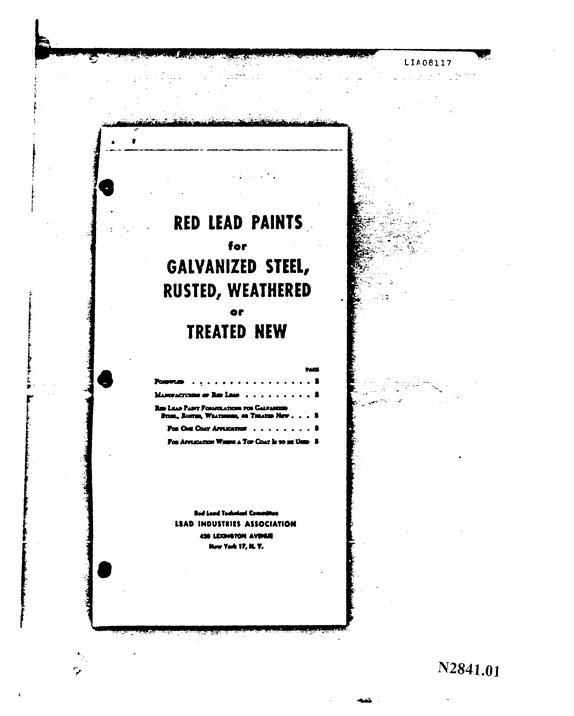
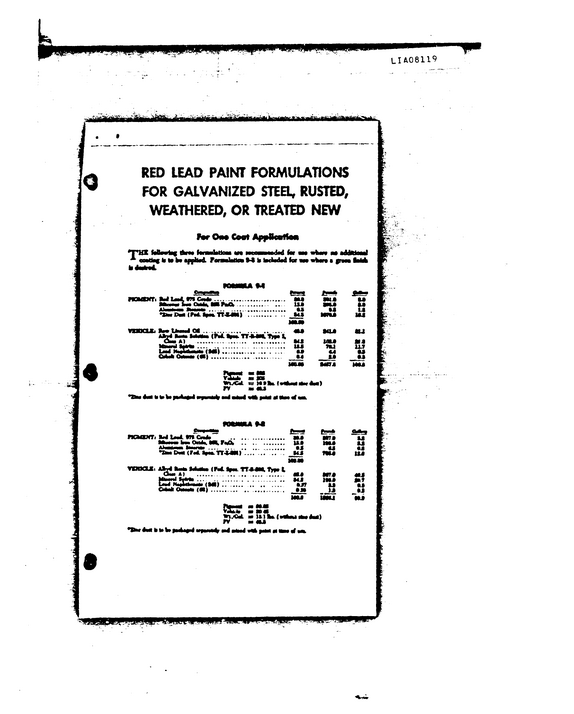
N2841 JMiiTfirtWiBir7i^iirftniirtnfrfrmrn i< trigiMr- in * RED LEAD PAINTS for GALVANIZED STEEL, RUSTED, WEATHERED r TREATED NEW l' UiMfienaw * to Lm . ..............................I to lu fturfmiiaiTiow r P m iw In, Bonn Wluman Tibia Nav. . . > Fob Om Oar Anuonm . ............................ taAmciiwWni*TOMTliwalto I MUWTitoaltiaaiiii LIAO INDUSTiltt ASSOCIATION W UxmTON IVM NawVwttMlV.
refid# YG362wO2END0np4qZ4gY138Kk6 pages
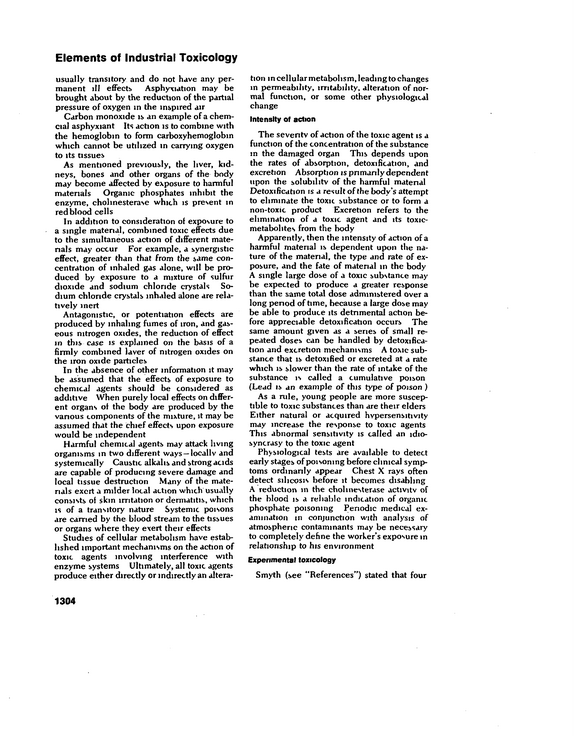
Elements of Industrial Toxicology usually transitory and do not have any per manent ill effects Asphyxiation may be brought about by the reduction of the partial pressure of oxygen m the inspired air Carbon monoxide is an example of a chemcial asphyxiant Its action is to combine with the hemoglobin to form carboxyhemoglobin which cannot be utilized in carrying oxygen to its tissues As mentioned previously, the liver, kid neys, bones and other organs of the body may become affected by exposure to harmful materials Organic phosphates inhibit the enzyme, cholinesterase which is present in red blood cells In addition to consideration of exposure to a single material, combined toxic effects due to the simultaneous action of different mate rials may occur For example, a synergistic effect, greater than that from the same con centration of inhaled gas alone, will be pro duced by exposure to a mixture of sulfur dioxide and sodium chloride crystals So dium chloride crystals inhaled alone are rela tively inert Antagonistic, or potentiation effects are produced by inhaling fumes of iron, and gas eous nitrogen oxides, the reduction of effect m this case is explained on the basis of a firmly combined laver of nitrogen oxides on the iron oxide particles In the absence of other information it may be assumed that the effects of exposure to chemical agents should be considered as additive When purely local effects on differ ent organs of the body are produced by the various components of the mixture, it may be assumed that the chief effects upon exposure would be independent Harmful chemical agents may attack living organisms in two different ways --locally and systemically Caustic alkalis and strong acids are capable of producing severe damage and local tissue destruction Many of the mate rials exert a milder local action which usually consists of skin irritation or dermatitis, which is of a transitory nature Systemic poisons are carried by the blood stream to the tissues or organs where they exert their effects Studies of cellular metabolism have estab lished important mechanisms on the action of toxic agents involving interference with enzyme systems Ultimately, all toxic agents produce either directly or indirectly an altera tion in cellular metabolism, leading to changes in permeability, irritability, alteration of nor mal function, or some other physiological change Intensity of action The seventy of action of the toxic agent is a function of the concentration of the substance m the damaged organ This depends upon the rates of absorption, detoxification, and excretion Absorption is pnmanly dependent upon the solubility of the harmful matenal Detoxification is a result of the body's attempt to eliminate the toxic substance or to form a non-toxic product Excretion refers to the elimination of a toxic agent and its toxicmetabolites from the body Apparently, then the intensity of action of a harmful material is dependent upon the na ture of the material, the type and rate of ex posure, and the fate of matenal in the body A single large dose of a toxic substance may be expected to produce a greater response than the same total dose administered over a long penod of time, because a large dose may be able to produce its detnmental action be fore appreciable detoxification occurs The same amount given as a senes of small re peated doses can be handled by detoxifica tion and excretion mechanisms A toxic sub stance that is detoxified or excreted at a rate which is slower than the rate of intake of the substance is called a cumulative poison (Lead is an example of this type of poison ) As a mle, young people are more suscep tible to toxic substances than are their elders Either natural or acquired hypersensitivity may increase the response to toxic agents This abnormal sensitivity is called an idio syncrasy to the toxic agent Physiological tests are available to detect early stages of poisoning before clinical symp toms ordinarily appear Chest X rays often detect silicosis before it becomes disabling A reduction in the cholinesterase activity of the blood is a reliable indication of organic phosphate poisoning Periodic medical ex amination in conjunction with analysis of atmospheric contaminants may be necessary to completely define the worker's exposure in relationship to his environment Experimental toxicology Smyth (see "References") stated that four 1304
refid# yrOoZDpNYVQ5rMeb61y0BB9wD1 page
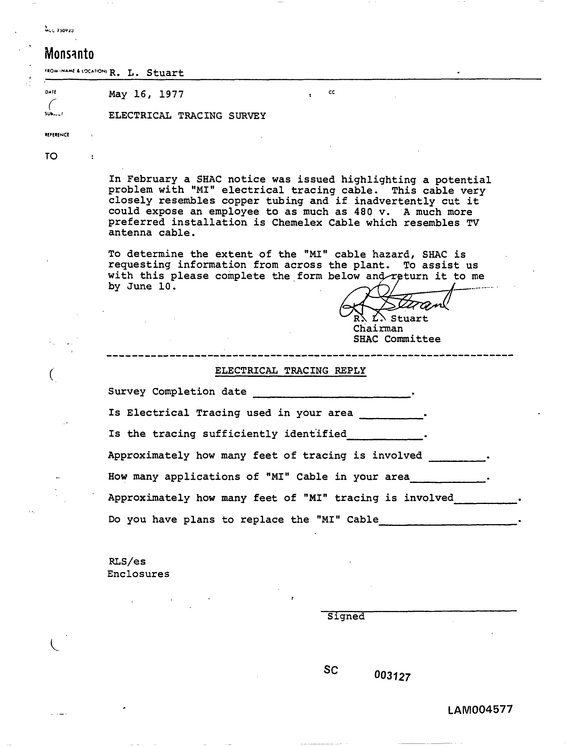
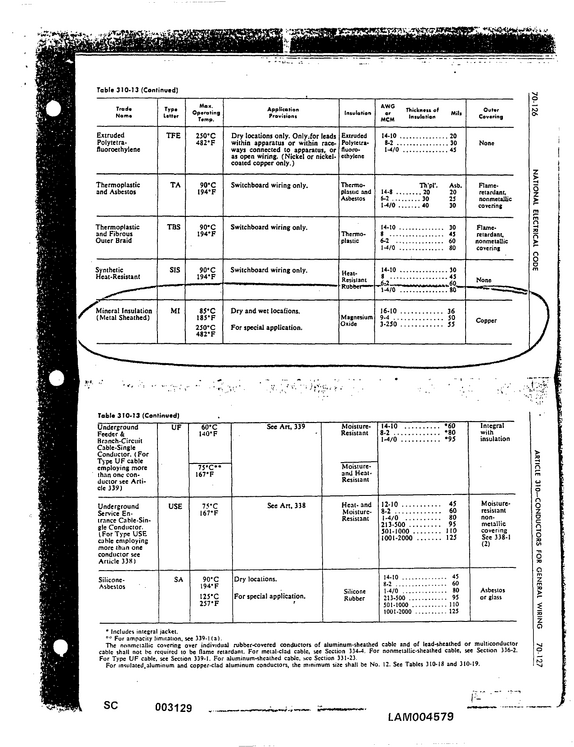
Only.for leads Extruded within apparatus or within race Polytetraways connected to apparatus, or fluoroas open wiring.
refid# RMQ4o4QpDVQN3oGvZrN36pkn4 pages
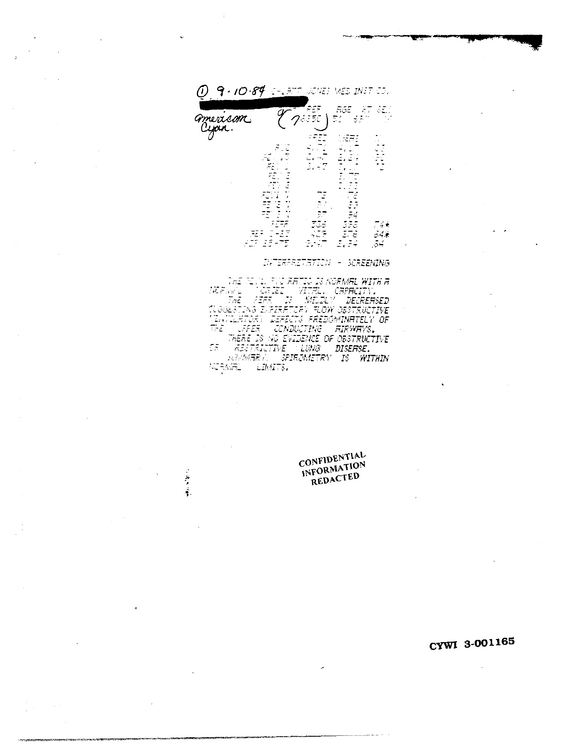
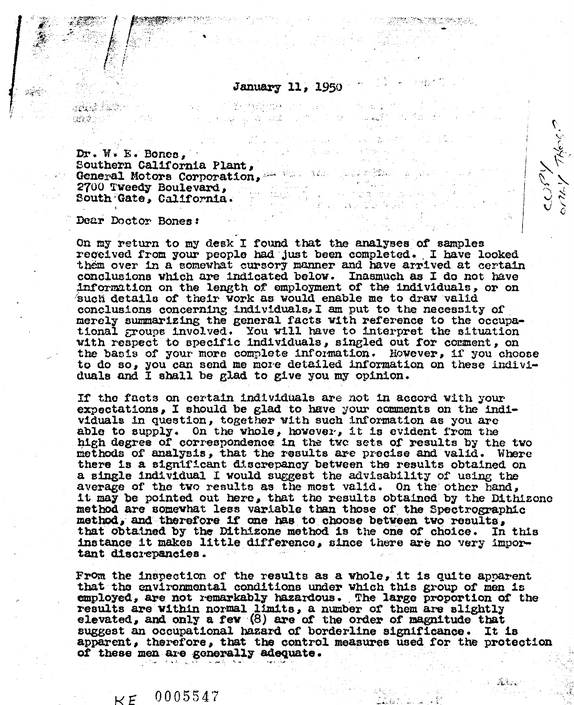
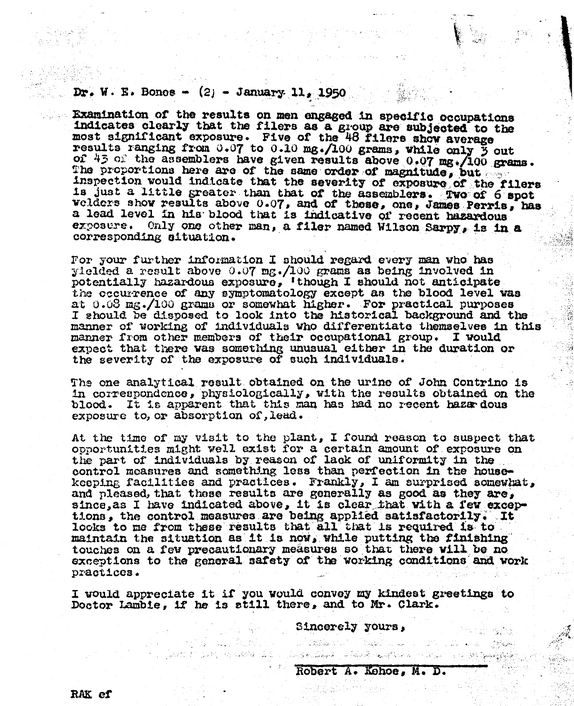
It is apparent that this man has had no recent bazar dous exposure to, or absorption of,lead.
refid# G5j085N8LDe870OLapb3VjzQv2 pages
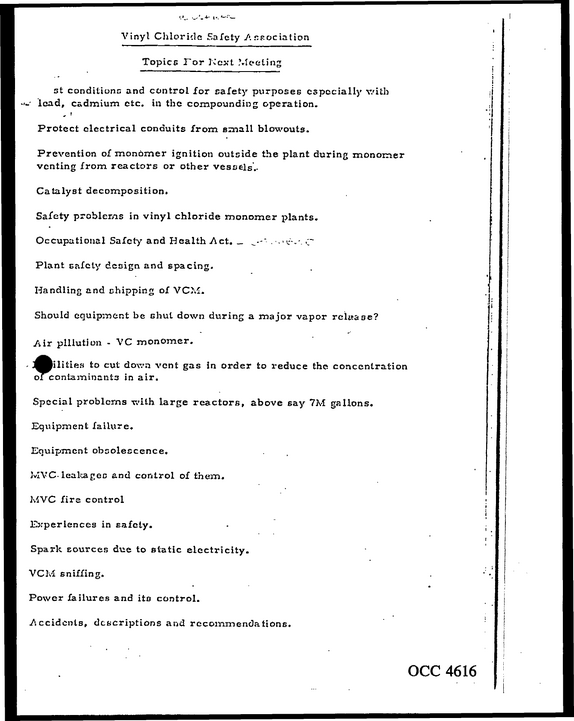
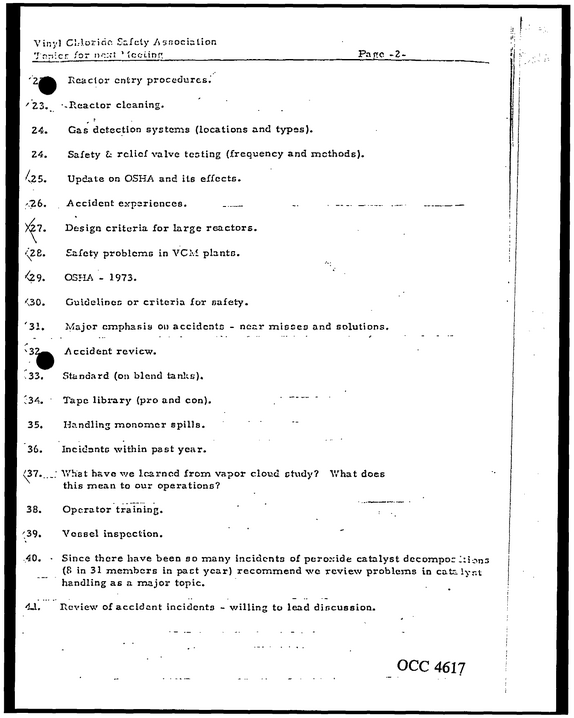
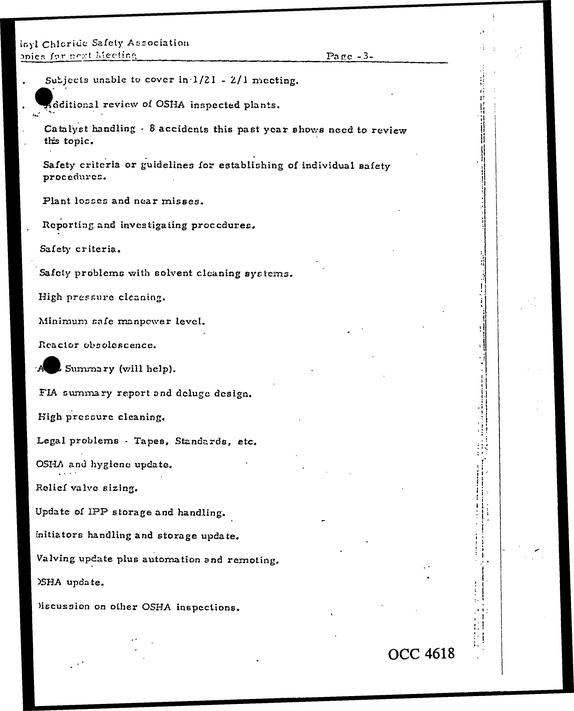
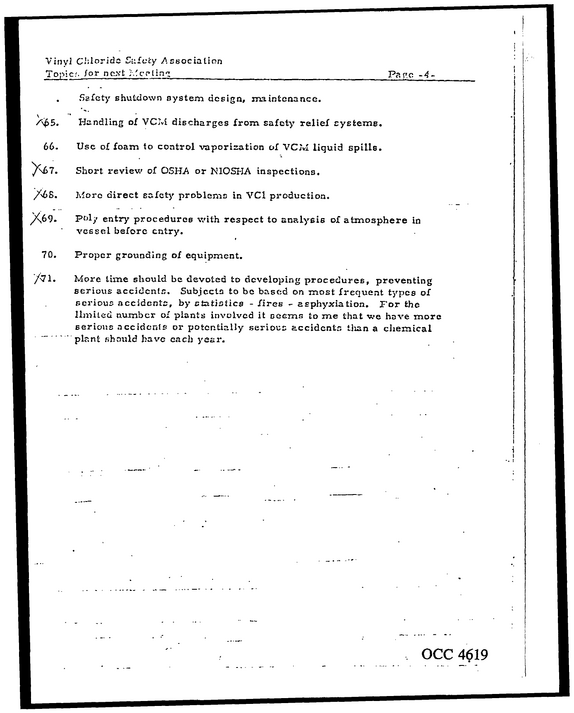
Vinyl Chloride Safety Association Topics Tor Kext Meeting st conditions and control for safety purposes especially v/itb lead, cadmium etc. in the compounding operation.
refid# RpXG258zD0nLyj0ZYYLoMa3az4 pages
(up to 10,000 amp) in resistance welding does not permit the use of plugs except for control circuits, usually 120 volts or less Power lead terminals should be securely and permanently attached with screws or bolts for the duration of service The magnitude of the secondary welding current is such that the cables for a portable welding machine must be heavy Even with sizes from 200,000 to 1,000,000 circular mils, power losses are high and m many instances water cooling is required, especially for high production portable, as well as multiple-spot station, welding machines The length of these cables vanes from 1 to 14 ft, the latter being the maximum considered reasonably economical The covering for the cable used with a portable welding machine is thick, high tensile rubber, or now, more commonly, neoprene These are now commonly concentnc--two cables m one with water cooling Abuse of the cables for resistance welding is severe The production requirements de mand the utmost of the cable materials used, and even the best cables need frequent re placement dunng a production year In use the cables are subjected to electrical pulsation, bendmg, and twisting Electrical pulses at the rate of 3600 per minute cause a continuous whipping of the two cables which leads to fatigue and eventual breakdown This condi tion is minimized by the use of concentric cables The secondary voltage presents little shock hazard, since the maximum voltage is about 30 volts, but the operator can be hurt by a cable blowout caused by steam pressure due to overheating from faulty water cooling cir culation A periodic check for weak spots m the cable covenng is good practice The use of concentric welding cables is now common be cause they do not have the undesirable fea tures of the pulsating cables Portable weld ing machines, including the cables, should have proper weight balance to permit opera tion without undue strain to the operator Electrodes and holders For resistance welding, copper or copper alloy electrodes are m general use Made in various shapes for particular applications, they are, with few exceptions, water cooled Re sistance-welding electrodes, unlike those used in arc welding, are not deposited on the work However, the high current density and con tinuous application of mechanical force finally cause wear and necessitate redressing and re placement Electrodes are placed in holders connected to the secondary circuit The weldmg pres sure is also applied through the holders Their designs cover a multitude of applica tions and vary considerably with the weld ing methods used Electrode holders and electrodes should be water cooled to mini mize softening of the metal from heat and to reduce the chance of heat bums to the operator Machine installation Installation of resistance welding equipment should conform to the NFPA National Elec trical Code, Standard No 70 Some items worthy of special attention are listed below 1 Control circuits should operate on low voltage, not exceeding 24/36 volts max imum for portable spot welders 2 Stored energy equipment (capacitor dis charge or resistance welding) having conbol panels involving high voltage (more than 550 volts) should be completely en closed Doors should have locks and con tacts wned m the control circuit to short circuit the capacitors when door or panel is opened A manually operated switch will serve as an additional safety measure, assuring complete discharge of the capaci tors 3 Back doors of machines and panels should be kept locked or interlocked to prevent tamjienng 4 A fused safety switch or circuit breaker should be located conveniently near the welding machine so that power supply circuits may be opened before a man services the machine and its controls 5 The pomt-of-operation hazard should be eliminated by suitable guards Enclosure guards, gate guards, two-hand controls, and similar standard guards as designed for punch press operations are applicable 6 A flash welding machine should have a 959
refid# b5p7EdoLqxGY3wEMyOqDkwbgZ1 page