Refine
Estimated Years UndatedClear
92,592 results foundRefine Search
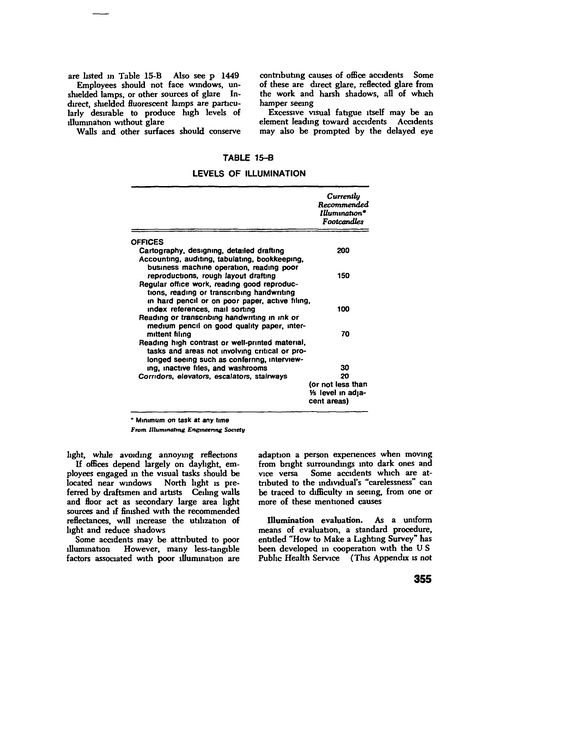
are listed m Table 15-B Also see p 1449 Employees should not face windows, un shielded lamps, or other sources of glare In direct, shielded fluorescent lamps are particu larly desirable to produce high levels of illumination without glare Walls and other surfaces should conserve contributing causes of office accidents Some of these are direct glare, reflected glare from the work and harsh shadows, all of which hamper seeing Excessive visual fatigue itself may be an element leading toward accidents Accidents may also be prompted by the delayed eye TABLE 15-B LEVELS OF ILLUMINATION Currently Recommended Illumination0 Footcandles OFFICES Cartography, designing, detailed drafting 200 Accounting, auditing, tabulating, bookkeeping, business machine operation, reading poor reproductions, rough layout drafting 150 Regular office work, reading good reproduc tions, reading or transcribing handwriting in hard pencil or on poor paper, active filing, index references, mail sorting 100 Reading or transcribing handwriting in ink or medium pencil on good quality paper, inter mittent filing 70 Reading high contrast or well-printed material, tasks and areas not involving critical or pro longed seeing such as confernng, interview ing, inactive files, and washrooms 30 Corridors, elevators, escalators, stairways 20 (or not less than Vs level in adja cent areas) * Minimum on task at any time From Illuminating Engineering Society light, while avoiding annoying reflections If offices depend largely on daylight, em ployees engaged in the visual tasks should be located near windows North light is pre ferred by draftsmen and artists Ceiling walls and floor act as secondary large area light sources and if finished with the recommended reflectances, will increase the utilization of light and reduce shadows Some accidents may be attributed to poor illumination However, many less-tangible factors associated with poor illumination are adaption a person experiences when moving from bnght surroundings into dark ones and vice versa Some accidents which are at tributed to the individual's "carelessness" can be traced to difficulty in seeing, from one or more of these mentioned causes Illumination evaluation.
refid# NER4nEzKe6nXrqaM4mLOxDmVy1 page
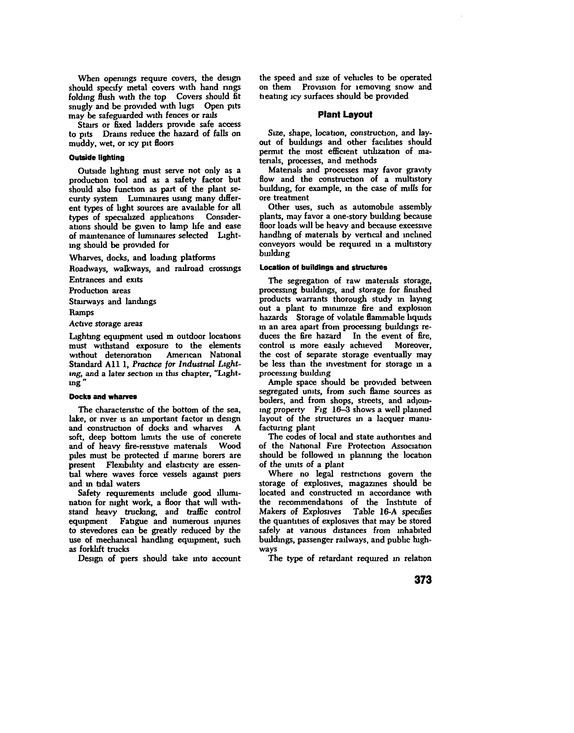
When openings require covers, the design should specify metal covers with hand nngs folding flush with the top Covers should fit snugly and be provided with lugs Open pits may be safeguarded with fences or rails Stairs or fixed ladders provide safe access to pits Drams reduce the hazard of fells on muddy, wet, or icy pit floors Outside lighting Outside lighting must serve not only as a production tool and as a safety factor but should also function as part of the plant se curity system Luminaires using many differ ent types of light sources are available for all types of specialized applications Consider ations should be given to lamp life and ease of maintenance of luminaires selected Light ing should be provided for Wharves, docks, and loading platforms Roadways, walkways, and railroad crossings Entrances and exits Production areas Stairways and landings Ramps Active storage areas Lighting equipment used m outdoor locations must withstand exposure to the elements without deterioration American National Standard All 1, Practice for Industrial Light ing, and a later section m this chapter, "Light ing" Docks and wharves The characteristic of the bottom of the sea, lake, or river is an important factor in design and construction of docks and wharves A soft, deep bottom limits the use of concrete and of heavy fire-resisbve materials Wood piles must be protected if marine borers are present Flexibility and elasticity are essen tial where waves force vessels against piers and in tidal waters Safety requirements include good illumi nation for night work, a floor that will with stand heavy trucking, and traffic control equipment Fatigue and numerous injuries to stevedores can be greatly reduced by the use of mechanical handling equipment, such as forklift trucks Design of piers should take into account the speed and size of vehicles to be operated on them Provision for lemovmg snow and heating icy surfaces should be provided Plant Layout Size, shape, location, construction, and lay out of buildings and other facilities should permit the most efficient utilization of ma terials, processes, and methods Materials and processes may favor gravity flow and the construction of a multistory building, for example, in the case of mills for ore treatment Other uses, such as automobile assembly plants, may favor a one-story building because floor loads will be heavy and because excessive handling of materials by vertical and inclined conveyors would be required in a multistory building Location of buildings and structures The segregation of raw materials storage, processing buildings, and storage for finished products warrants thorough study m laying out a plant to minimize fire and explosion hazards Storage of volatile flammable liquids in an area apart from processing buildings re duces the fire hazard In the event of fire, control is more easily achieved Moreover, the cost of separate storage eventually may be less than the investment for storage in a processing building Ample space should be provided between segregated units, from such flame sources as boilers, and from shops, streets, and adjoin ing property Fig 16-3 shows a well planned layout of the structures in a lacquer manu facturing plant The codes of local and state authorities and of the National Fire Protection Association should be followed in planning the location of the units of a plant Where no legal restrictions govern the storage of explosives, magazines should be located and constructed in accordance with the recommendations of the Institute of Makers of Explosives Table 16-A specifies the quantities of explosives that may be stored safely at various distances from inhabited buildings, passenger railways, and public high ways The type of retardant required m relation 373
refid# 6w4y34jjQBVL3KQRd9GV7a2vg1 page
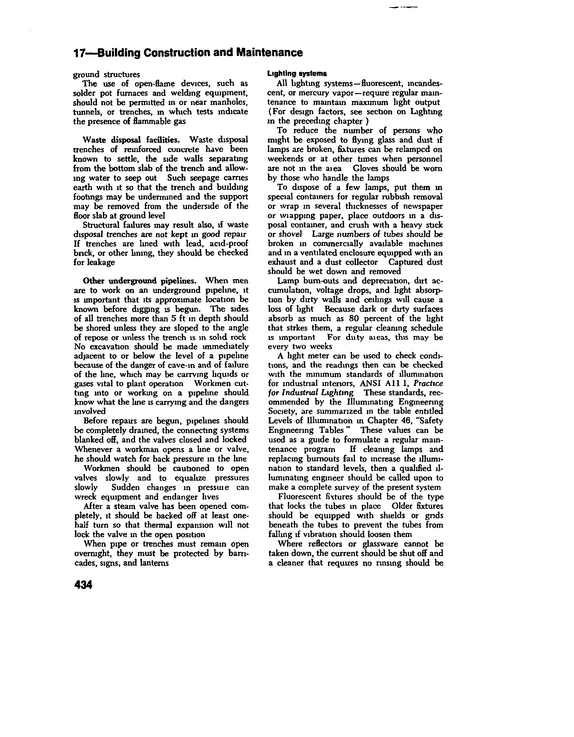
17--Building Construction and Maintenance ground structures The use of open-flame devices, such as solder pot furnaces and welding equipment, should not be permitted in or near manholes, tunnels, or trenches, in which tests indicate the presence of flammable gas Waste disposal facilities.
refid# 6B5k0NeRrmorzodJqMe2kBzzm1 page
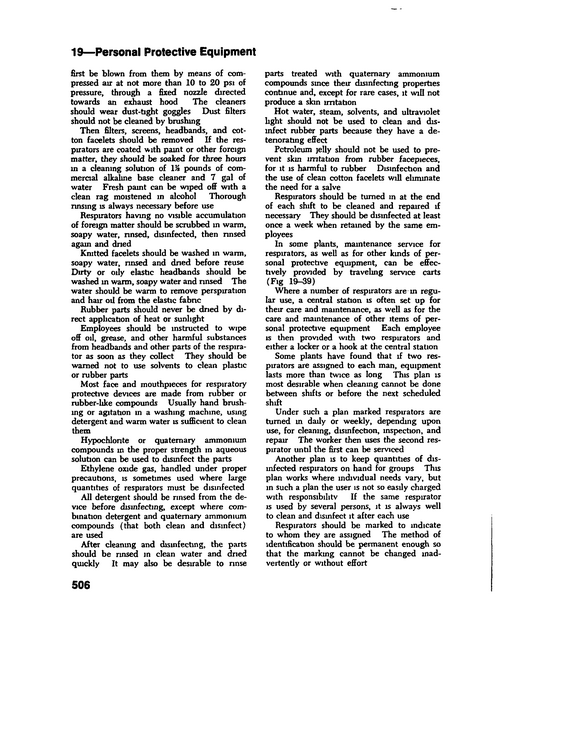
19--Personal Protective Equipment first be blown from them by means of com pressed air at not more than 10 to 20 psi of pressure, through a fixed nozzle directed towards an exhaust hood The cleaners should wear dust-tight goggles Dust filters should not be cleaned by brushing Then filters, screens, headbands, and cot ton facelets should be removed If the res pirators are coated with paint or other foreign matter, they should be soaked for three hours in a cleaning solution of 1J* pounds of com mercial alkaline base cleaner and 7 gal of water Fresh paint can be wiped off with a clean rag moistened in alcohol Thorough nnsing is always necessary before use Respirators having no visible accumulation of foreign matter should be scrubbed in warm, soapy water, nnsed, disinfected, then nnsed again and dried Knitted facelets should be washed in warm, soapy water, nnsed and dned before reuse Dirty or oily elastic headbands should be washed in warm, soapy water and nnsed The water should be warm to remove perspiration and hair oil from the elastic fabnc Rubber parts should never be dned by di rect application of heat or sunlight Employees should be instructed to wipe off oil, grease, and other harmful substances from headbands and other parts of the respira tor as soon as they collect They should be warned not to use solvents to clean plastic or rubber parts Most face and mouthpieces for respiratory protective devices are made from rubber or rubber-hke compounds Usually hand brush ing or agitation in a washing machine, using detergent and warm water is sufficient to clean them Hypochlonte or quaternary ammonium compounds in the proper strength m aqueous solution can be used to disinfect the parts Ethylene oxide gas, handled under proper precautions, is sometimes used where large quantities of respirators must be disinfected All detergent should be nnsed from the de vice before disinfecting, except where com bination detergent and quaternary ammonium compounds (that both clean and disinfect) are used After cleaning and disinfecting, the parts should be rinsed m clean water and dried quickly It may also be desirable to nnse parts treated with quaternary ammonium compounds since their disinfecting properties continue and, except for rare cases, it will not produce a skin untabon Hot water, steam, solvents, and ultraviolet light should not be used to clean and dis infect rubber parts because they have a de teriorating effect Petroleum jelly should not be used to pre vent skin irritation from rubber facepieces, for it is harmful to rubber Disinfection and the use of clean cotton facelets will eliminate the need for a salve Respirators should be turned m at the end of each shift to be cleaned and repaired if necessary They should be disinfected at least once a week when retained by the same em ployees In some plants, maintenance service for respirators, as well as for other kinds of per sonal protective equipment, can be effec tively provided by traveling service carts (Fig 19-39) Where a number of respirators are in regu lar use, a central station is often set up for their care and maintenance, as well as for the care and maintenance of other items of per sonal protective equipment Each employee is then provided with two respirators and either a locker or a hook at the central station Some plants have found that if two res pirators are assigned to each man, equipment lasts more than twice as long This plan is most desirable when cleaning cannot be done between shifts or before the next scheduled shift Under such a plan marked respirators are turned in daily or weekly, depending upon use, for cleaning, disinfection, inspection, and repair The worker then uses the second res pirator until the first can be serviced Another plan is to keep quantities of dis infected respirators on hand for groups This plan works where individual needs vary, but in such a plan the user is not so easily charged with responsibility If the same respirator is used by several persons, it is always well to clean and disinfect it after each use Respirators should be marked to indicate to whom they are assigned The method of identification should be permanent enough so that the marking cannot be changed inad vertently or without effort 506
refid# Moo7Y1nz7OKkjdEnD3ZQwZrna1 page
20--Industrial Sanitation and Personnel Facilities contaminants (a) those which usually have no toxicologic effect, but may give an unde sirable taste or appearance to the water, and (b) those which constitute a health hazard and, if present, are grounds for rejecting the water supply Standards under consideration for limiting mercury as a contaminant, pro pose values between 0 002 and 0 005 mg/L (See EPA reference at end of chapter) A limit of 0 5 mgAg of fish is used currently Criteria for asbestos fibers, if present as a discharge from an industrial process m the surrounding area, may be less than those present in already treated or natural water Information on proposed fibers testing and standards are available from the American Waterworks Assn , see References Temperature cntena which affect the lim iting concentrations of fluoride m drinking water are given m Table 20-B Other factors influencing the limiting concentrations of these contaminants, particularly m combination with other substances, are given in the USPHS Drinking Water Standards, published in 42 C F R , part 72 These Standards also serve as a guide to radioactive substances m water supplies if the degree of contamination from the substances previously discussed is within rec ommended limits, the water supply source may be used, provided its bacteriological quality is acceptable Standards for bacterio logical quality are specified in the USPHS Manual of Recommended Water-Sanitation Practice The equipment necessary to treat water and make it potable depends on the degree of contamination and the likelihood that the source will become more heavily contami nated later These factors can be evaluated only on the basis of a thorough sanitary survey of the water source Such a survey will determine not only the type of treatment necessary, but also the nature and fiequency of periodic laboratory tests of the source wa ter and the treated water (Fig 20-1) Wells The safest source of water is often a drilled well whose intake is well below the water table Such wells show a reliable yield and are reasonably free from bacterial contamina tion and finely suspended fibers If both well and city water are used, there should be no cross-connection between the two systems Be sure to check the local code The wellhead should be carefully located away from sewage lines, septic tanks, and sewage drainage fields or process waste dis posal systems The following distances are often considered adequate for separation sewers, pit pnvies, and septic tanks, 50 ft, seepage pits and disposal fields, 100 ft, cess pools, 150 ft Process waste disposal systems require special consideration As soil and drainage conditions vary from one location to another, approval by local health authorities is recommended The USPHS Manual of Individual Water Supply Systems recommends that the casing for such wells be made of wrought iron or steel with threaded couplings or welded joints "Stovepipe" or sheet metal casings are not recommended To prevent contamination of the under ground water by seepage of surface waters, the space between the casing and the sur rounding area should be sealed with a cement grout to a minimum depth of 10 ft below the finished ground level or floor As a further precaution, the casing should be grout-sealed to the lowest impervious stratum it passes through The well casing should extend 6 in above the pump platform, which should be of rein forced, waterproof concrete at least 4 in thick and continuous with the grout seal which sur rounds the well casing The platform should be designed so that water spilled at the well head will drain away from the casing The joint between the casing and the concrete pump platform should be sealed with an as phalt caulking compound The top of the well casing should be at least 2 ft above the highest known floodwater mark The pump should be self-pruning and designed so that it makes a watertight seal with the well casing The wellhead should not be covered over by paving or other ma terial which would make access difficult Both submersible and turbine pumps must be considered Submersibles are located in the well and do not requne a pumphouse A safety factor is provided by two wells and two pumps An automatic alternator can take effect if either unit fails 532
refid# Dd88k421BD8VYaEbwo6oq2ZGQ1 page

refid# 4oNaK8nnvqpK9n3EyQbv51JR1 page
refid# dY9rQXKMLnekBZeXD1rV1nLj61 page
refid# rx2G8JM7pG0L511qDj8DMbNaV1 page
Z3-i (6 :m-3 ii.
refid# emZ3ED8zG35meZ4w5VXgLL1jy14 pages
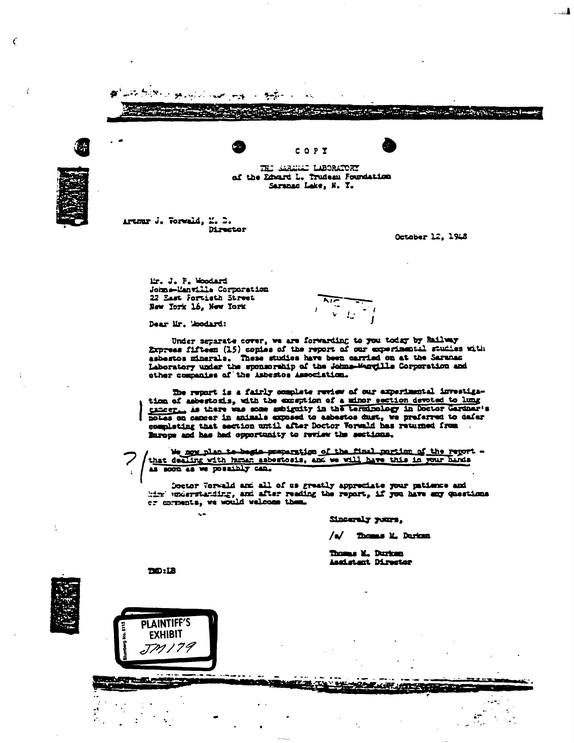
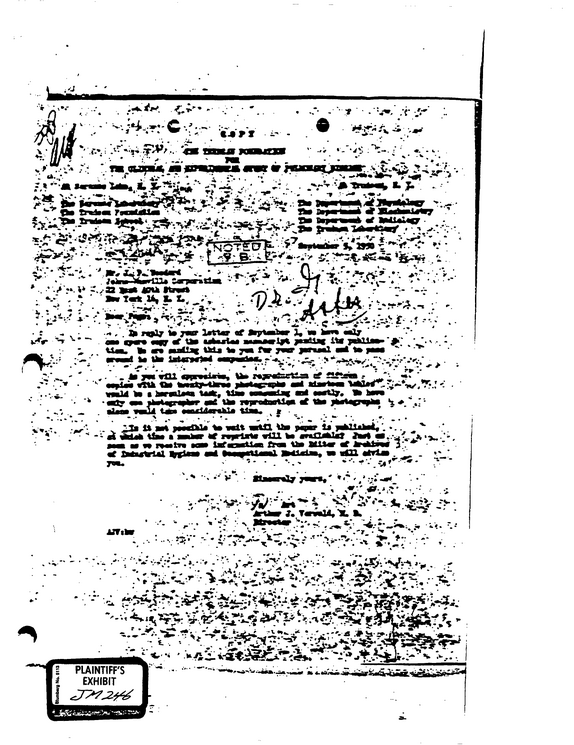
1 c C0PI ^ te; laboratort of the Idward L.
refid# vM0LY8RxEyL2O5R3rKq5ynyw1 page
.
refid# bBVxOV6aRkXzJkQGJ0JB1bn0k1 page
mtv rm HP W a J3 _ J !!
refid# LorqaRoY418d53rNqKZn1KGN72 pages
copy i roll BOX NUMBER S' IbYT NOTES /7}/YUACtft INITIALS DATE REQUESTING PARTY MTC 001607 i MTC 001609 Letter to Stockholders. .

refid# DMKdG6kv1Xj3B5YMmZJ6g1GG535 pages
IXjr-v lX -T 3 c T^ (_d,, ^ i* A J"* *-- <fCr>J Sc^lc-^ ' U^- r f'--`^*1-^--k-Jt-^. "" Oxv (^ Sfe lC;CxMlt\_ x<_nU?



refid# b5q08y5EQ1xRRZpp6g0K0N3Mo4 pages
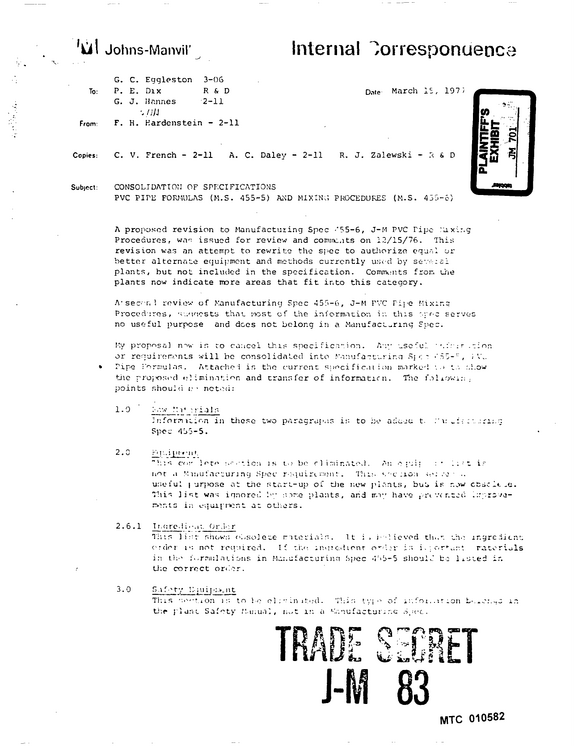
'ul johns-Manvir To: From: G. c.


refid# rpyb7GOorNaOnQRRp05O6p48V4 pages