Refine
Estimated Years UndatedClear
92,592 results foundRefine Search
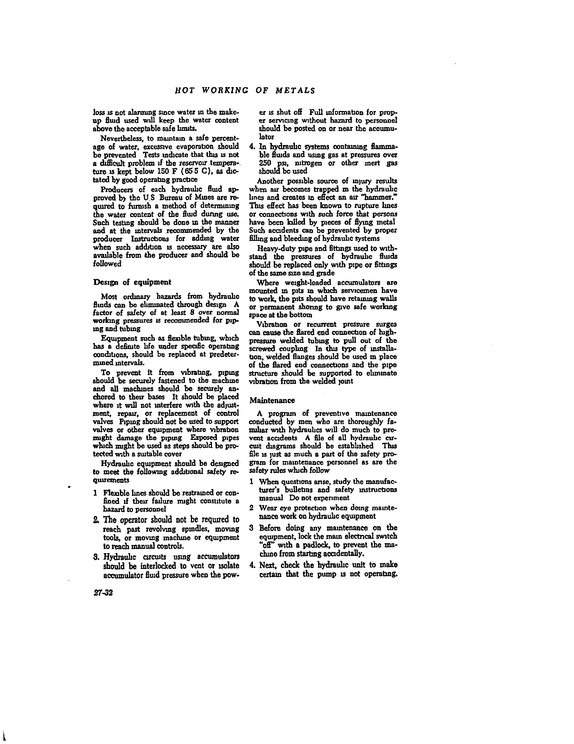
HOT WORKING OF METALS loss is not alarming since water in the make up fluid used will keep the water content above the acceptable safe limits.
refid# 8dLQoz349GEQ6jXo32yrv8rK1 page
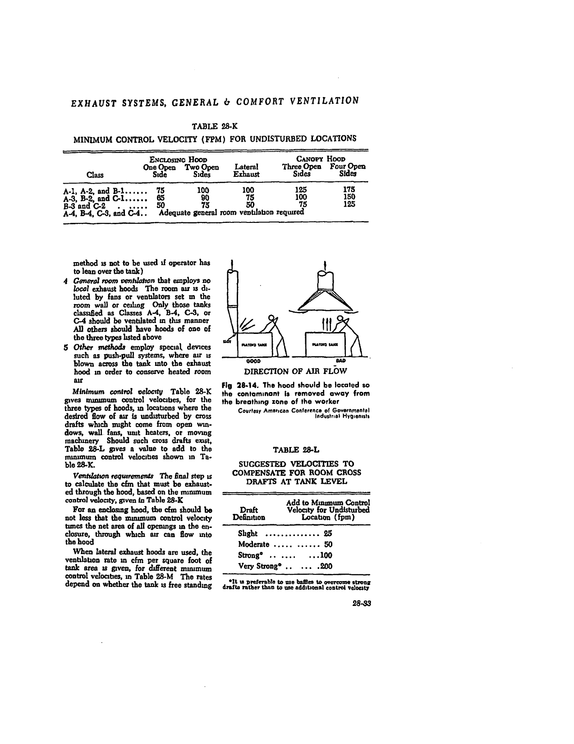
EXHAUST SYSTEMS, GENERAL 6 COMFORT VENTILATION TABLE 28-K MINIMUM CONTROL VELOCITY (FPM) FOR UNDISTURBED LOCATIONS Class Enclosing Hood One Open Two Open Side Sides Lateral Exhaust Canopy Hood Three Open Four Open Sides Sides A-l, A-2, and B-l...........
refid# O3wOr44ZVRZ28XJ3xL1e6MMYQ1 page
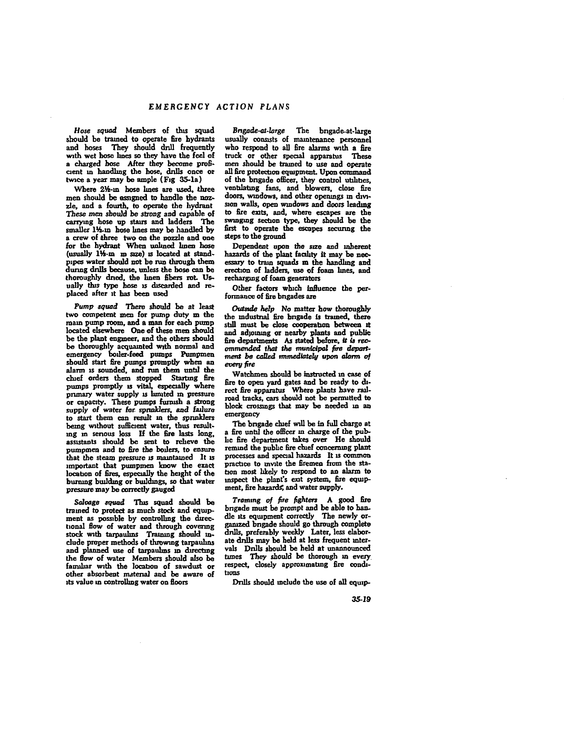
EMERGENCY ACTION PLANS Hose squad Members of this squad should be trained to operate Ere hydrants and hoses They should drill frequently with wet hose lines so they have the feel of a charged hose After they become profi cient in handling the hose, drills once or twice a year may be ample (Fig 35-la) Where 2V4-m hose lines are used, three men should be assigned to handle the noz zle, and a fourth, to operate the hydrant These men should be strong and capable of carrying hose up stairs and ladders The smaller lVfi-in hose lines may be handled by a crew of three two on the nozzle and one for the hydrant When unhned linen hose (usually lV4-m m size) is located at stand pipes water should not be run through them during drills because, unless the hose can be thoroughly dned, the linen fibers rot Us ually this type hose is discarded and re placed after it has been used Pump squad There should be at least two competent men for pump duty m the main pump room, and a man for each pump located elsewhere One of these men should be the plant engineer, and the others should be thoroughly acquainted with normal and emergency boiler-feed pumps Pumpmen should start fire pumps promptly when an alarm is sounded, and run them until the chief orders them stopped Starting fire pumps promptly is vital, especially where primary water supply is limited in pressure or capacity.
refid# wrJYXQ9K8kMMKwpJRBD3or5BJ1 page
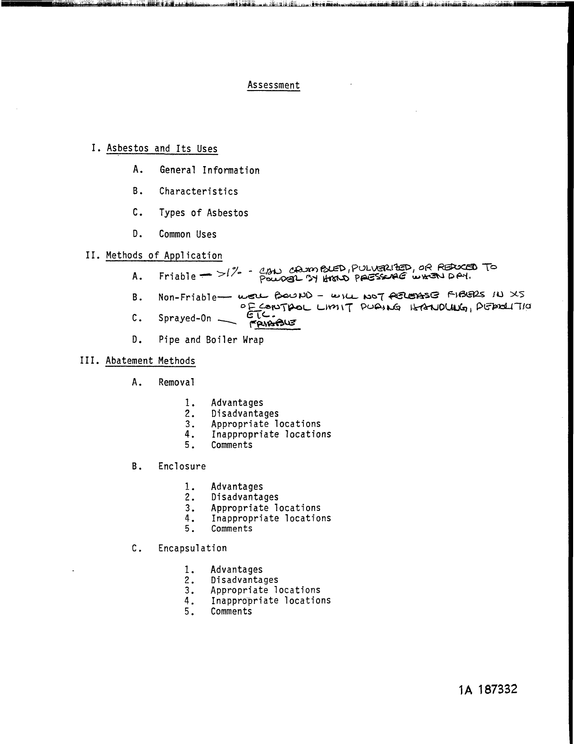
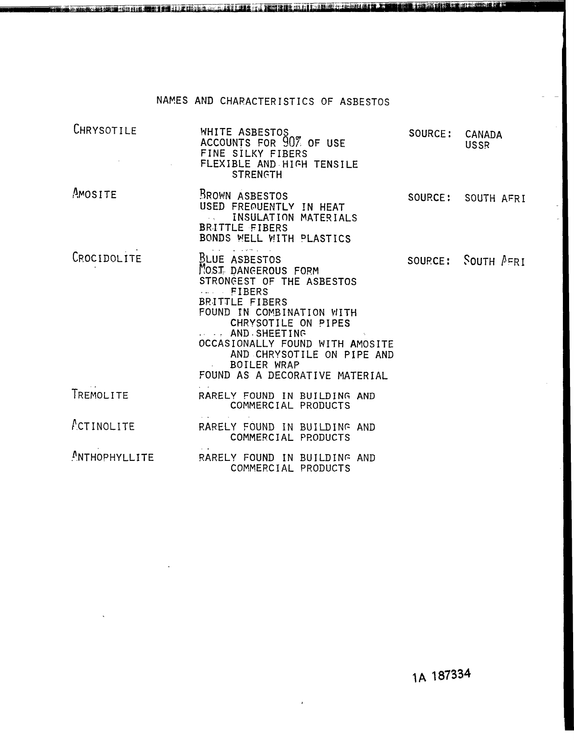
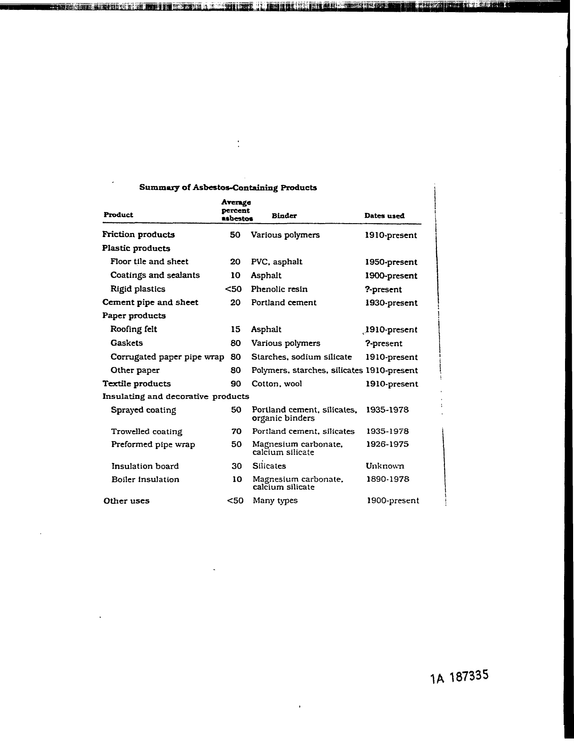
-..AMlaiMt Jii.aiaam,U3iUfcUiaL aou 31012 Ml 00 a u> ASSESSMENT PLAINTIFF'S EXHIBIT KRC-228a IB.
refid# D251QbGo4051MNJjJvbpnGGO12 pages
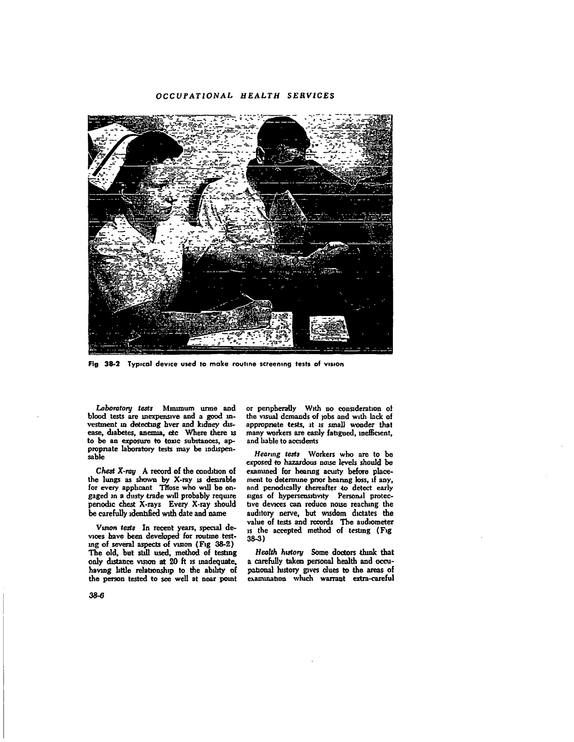
OCCUPATIONAL HEALTH SERVICES Fig 38-2 Typicol device used to make routine screening tests of vision laboratory tests Minimum unne and blood tests are inexpensive and a good in vestment in detecting hver and kidney dis ease, diabetes, anemia, etc Where there is to be an exposure to toxic substances, ap propriate laboratory tests may be indispen sable Chest X-ray A record of the condition of the lungs as shown by X-ray is desirable for every applicant TWose who will be en gaged m a dusty trade will probably require periodic chest X-rays Every X-ray should be carefully identified with date and name Vision tests In recent years, special de vices have been developed for routine test ing of several aspects of vision (Fig 38-2) The old, hut still used, method of testing only distance vision at 20 ft is inadequate, having little relationship to the ability of the person tested to see well at near point or peripherally With no consideration of the visual demands of jobs and with lack of appropriate tests, it is small wonder that many woikers are easily fatigued, inefficient, and liable to accidents Hearing tests Workers who are to be exposed to hazardous noise levels should be examined for hearing acuity before place ment to determine pnor hearing loss, if any, and periodically thereafter to detect early signs of hypersensitivity Personal protec tive devices can reduce noise reaching the auditory nerve, but wisdom dictates the value of tests and records The audiometer is the accepted method of testing (Fig 38-3) Health history Some doctors think that a carefully taken personal health and occu pational history gives dues to the areas of examination which warrant extra-careful 38-6
refid# DvMbr3qXdkqX29Q4b6aR52oxB1 page
-.'
refid# 0LKYEp5rGab23B9Nq1EmBEL3M150 pages
MOTORIZED EQUIPMENT stable and do not injure the skin are ob tainable The likelihood of a Ere m a shop also can be reduced by good housekeeping, es pecially the disposal of oily waste and simi lar materials in metal receptacles Crease rack operations In greasing operations, employees may slip and fall because of grease and oil on the floor, injure their hands on sharp or rough edges on the vehicle, incur strains In trying to rock the vehicle to make grease penetrate into stiff bearings or springs, in hale sprayed or atomized oils used for spring lubrication, or suffer band and head injuries from high pressure guns Floors should be kept dean of grease and oil to prevent slips and falls Spills which occur during the working day should be immediately covered with an oil-absorbent compound Workers should be constantly reminded to keep their hands away from sharp or rough edges and to obtain immediate firstaid treatment for all cuts and scratches Workers should be warned against put ting their hands in front of the grease gun nozzle when the handle is pulled Cases have been reported m which quantities of grease have been forced under the skm of workers by high pressure grease guns Tops of grease cylinders should be screwed or clamped into place with great care, otherwise, covers may blow off and seriously injure the operator or nearby workers All equipment should be inspected week ly and repairs should be made when needed Men should be warned of the hazard of inhaling sprayed or atomized oils during lubrication of springs The men should stand clear of the lubricant spray, which settles quickly, and should not direct the spray at other employees Wash rack operations When washing can, men may slip and fall because floors are wet, incur cuts or abrasions from the sharp or rough edges of the vehicle, or suffer bums if bet water or steam is used The concrete floor of the wash rack should be rough troweled to produce a non slip surface While washing cars, em ployees should wear safety toe rubber boots, preferably with nonslip soles and heels, and a rubber coat or apron Workers should be warned never to point the high velocity streams of hot or cold water at one another because senous in jury may result Men should use the hose, particularly under the vehicle, in such a way as not to be struck by a backlashing stream of water and dirt.
refid# B5m4B89voKq32a2DmnMb88B3X1 page
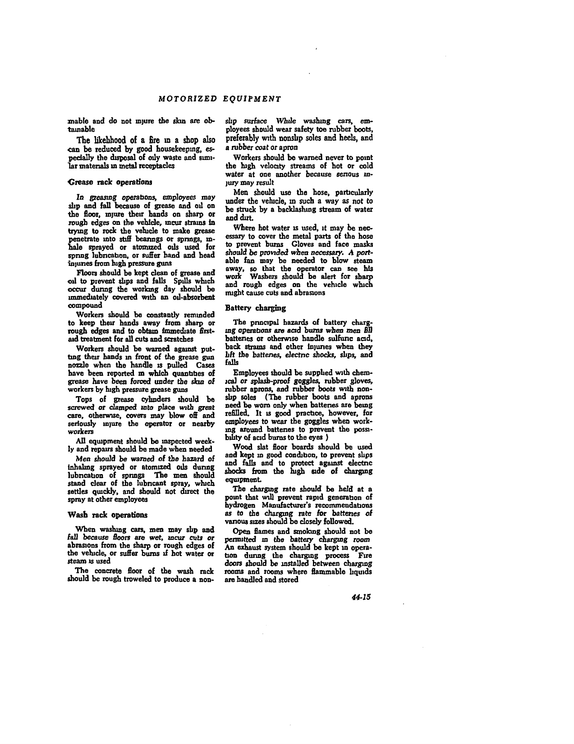
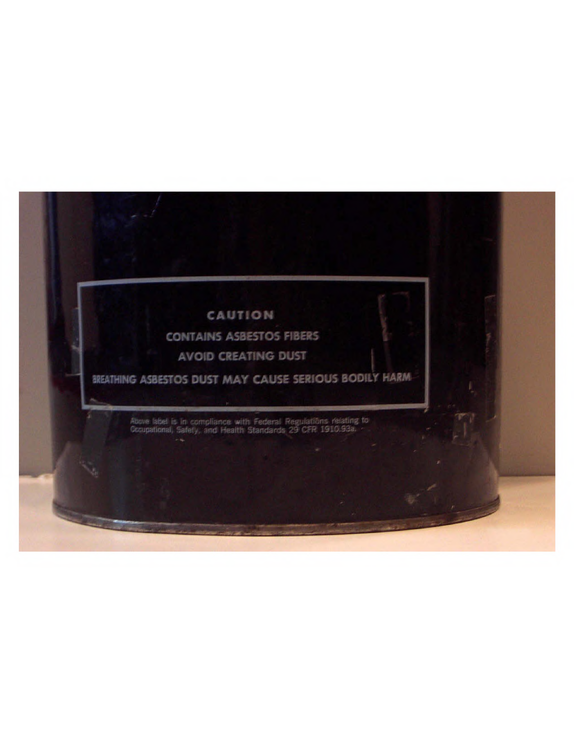
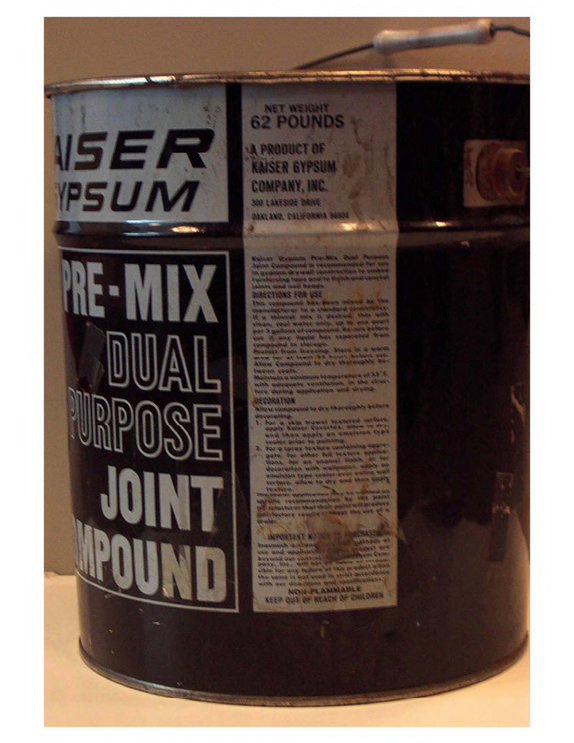
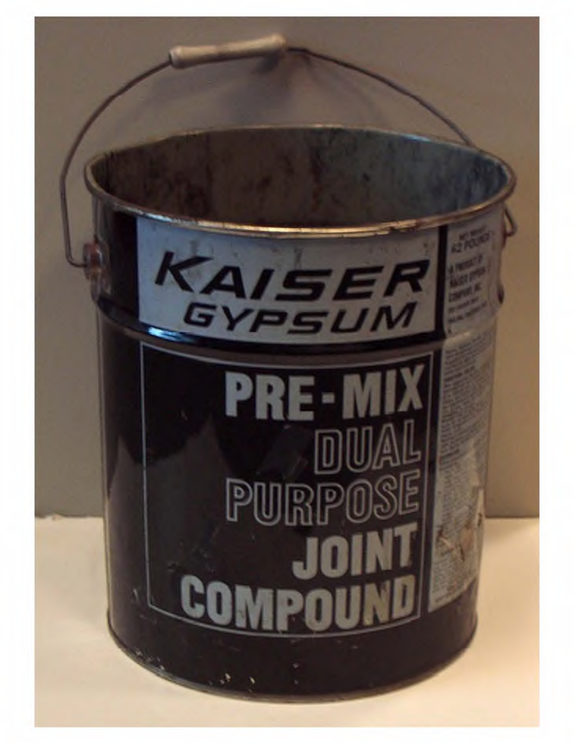
KAISER GYPSUM COMPANY, INC.
refid# 4qx5nXD06GKG1b8yo38nEKVj1 page
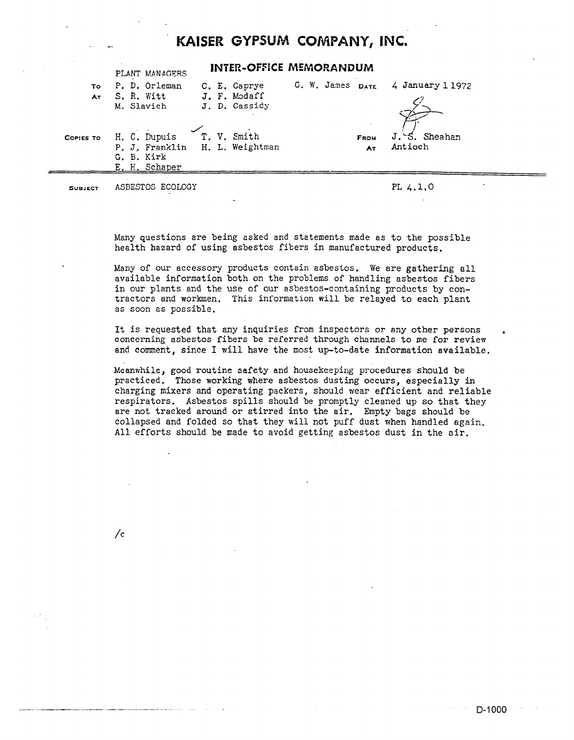
D-1017
refid# aBg9VRJOykGNJJpBQ33DJXqZa1 page
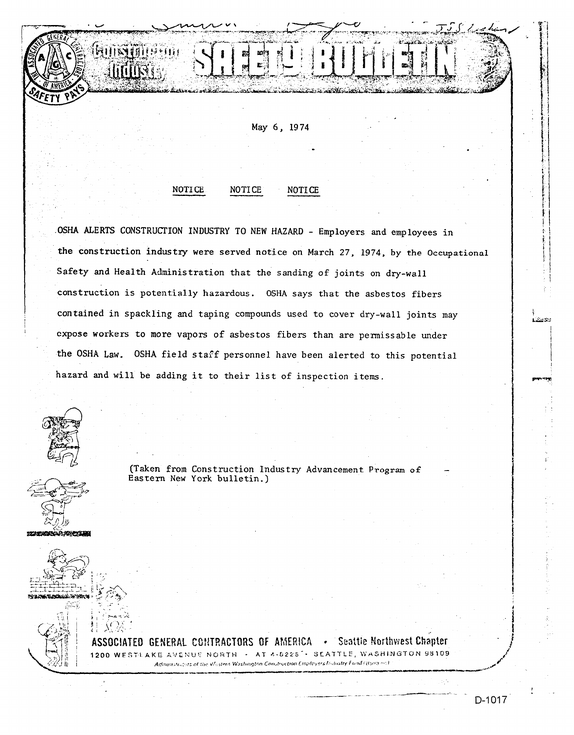
D-1056
refid# XQVQmeGZQL7VB6Gb6Ea66v1J4 pages
1.
refid# kbrO2aM8R5Re1aExj2woVKLn1 page
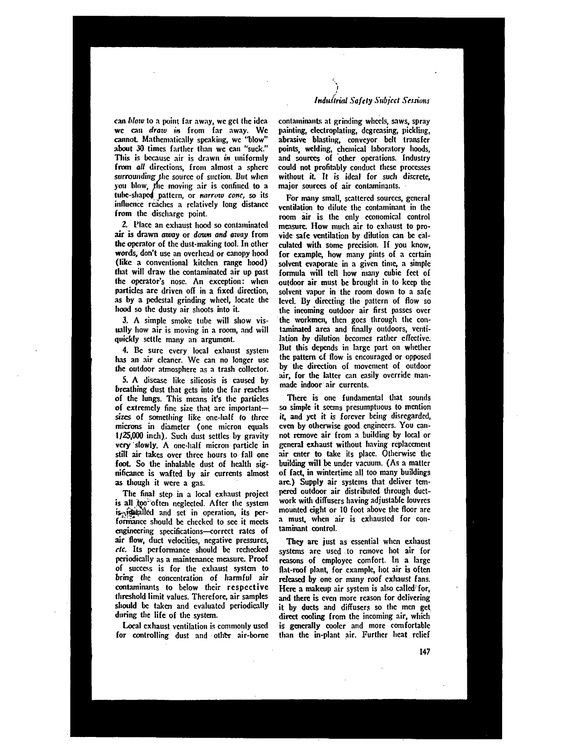
\ Industrial Safety Subject Sessions can blow to a point far away, wc get tfic idea we can draw in from far away.
refid# 6b5ajNyaeJdo9zgYeBvg47D591 page
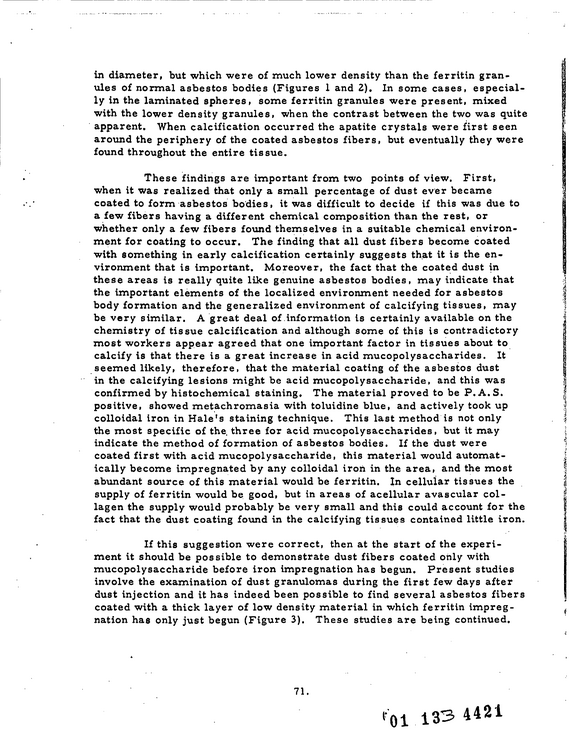
in diameter, but which were of much lower density than the ferritin gran ules of normal asbestos bodies (Figures 1 and 2).
refid# 4v5QEDXkJzKp3NyjXrq9qXy111 page
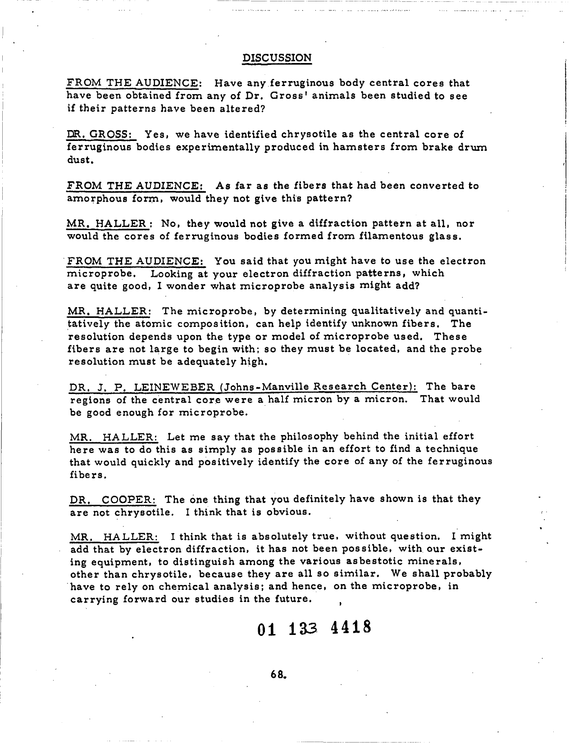
DISCUSSION FROM THE AUDIENCE: Have any ferruginous body central cores that have been obtained from any of Dr.
refid# jyqwDb3qqzgNZnygnKydNmBD21 page
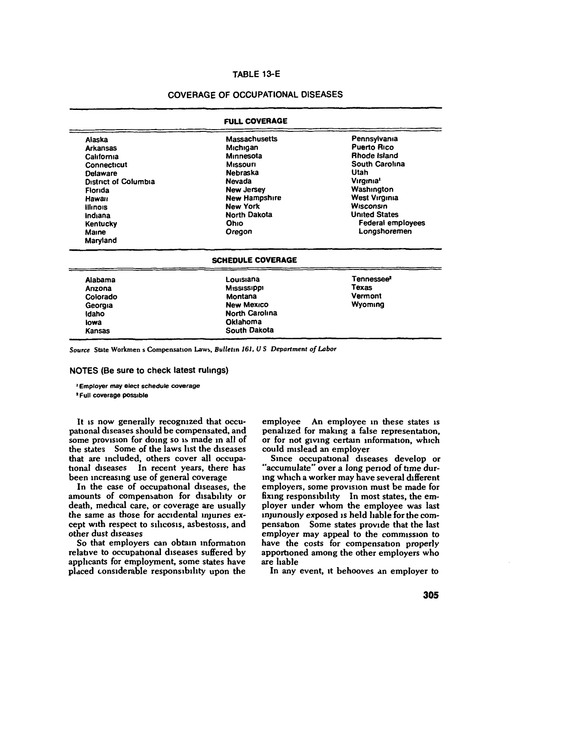
TABLE 13-E COVERAGE OF OCCUPATIONAL DISEASES Alaska Arkansas California Connecticut Delaware District of Columbia Florida Hawaii Illinois Indiana Kentucky Maine Maryland FULL COVERAGE Massachusetts Michigan Minnesota Missouri Nebraska Nevada New Jersey New Hampshire New York North Dakota Ohio Oregon Pennsylvania Puerto Rico Rhode Island South Carolina Utah Virginia1 Washington West Virginia Wisconsin United States Federal employees Longshoremen SCHEDULE COVERAGE Alabama Anzona Colorado Georgia Idaho Iowa Kansas Louisiana Mississippi Montana New Mexico North Carolina Oklahoma South Dakota Tennessee* Texas Vermont Wyoming Source State Workmen s Compensation Laws, Bulletin J61, U S Department of Labor NOTES (Be sure to check latest rulings) 1 Employer may elect schedule coverage 'Full coverage possible It is now generally recognized that occu pational diseases should be compensated, and some provision for doing so is made in all of the states Some of the laws list the diseases that are included, others cover all occupa tional diseases In recent years, there has been increasing use of general coverage In the case of occupational diseases, the amounts of compensation for disability or death, medical care, or coverage are usually the same as those for accidental injuries ex cept with respect to silicosis, asbestosis, and other dust diseases So that employers can obtain information relative to occupational diseases suffered by applicants for employment, some states have placed considerable responsibility upon the employee An employee in these states is penalized for making a false representation, or for not giving certain information, which could mislead an employer Since occupational diseases develop or "accumulate" over a long period of time dur ing which a worker may have several different employers, some provision must be made for fixing responsibility In most states, the em ployer under whom the employee was last injuriously exposed is held liable for the com pensation Some states provide that the last employer may appeal to the commission to have the costs for compensation properly apportioned among the other employers who are liable In any event, it behooves an employer to 305
refid# a23vXX4bVGLLangdMQObBr0N1 page