Refine
Estimated Years UndatedClear
92,592 results foundRefine Search
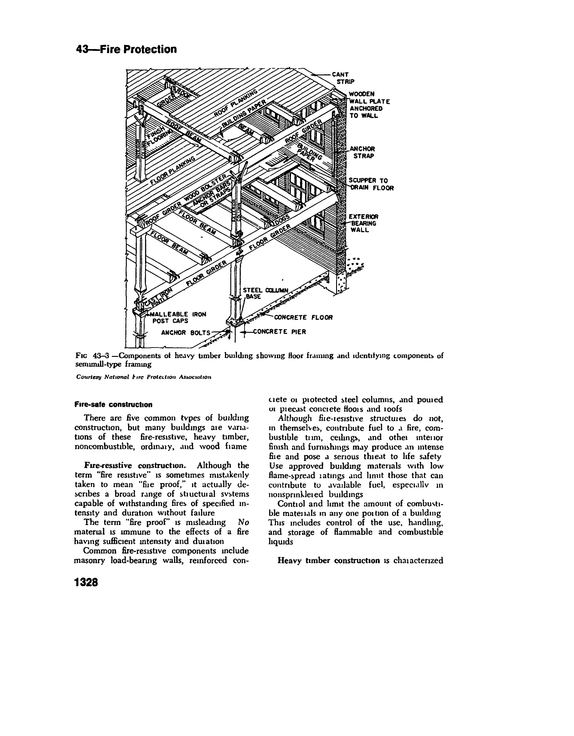
43--Fire Protection Fic 43-3 --Components ot hejvy timber building showing floor framing and identifying components of semimill-type framing Courtesy National tire Protection Association Fire-safe construction There are five common types of building construction, but many buildings aie varia tions of these fire-resistive, heavy timber, noncombustible, ordinaly, and wood fiame Fire-resistive construction.
refid# x51BNDXOZ4w1NbLj1OxkRMBKG1 page
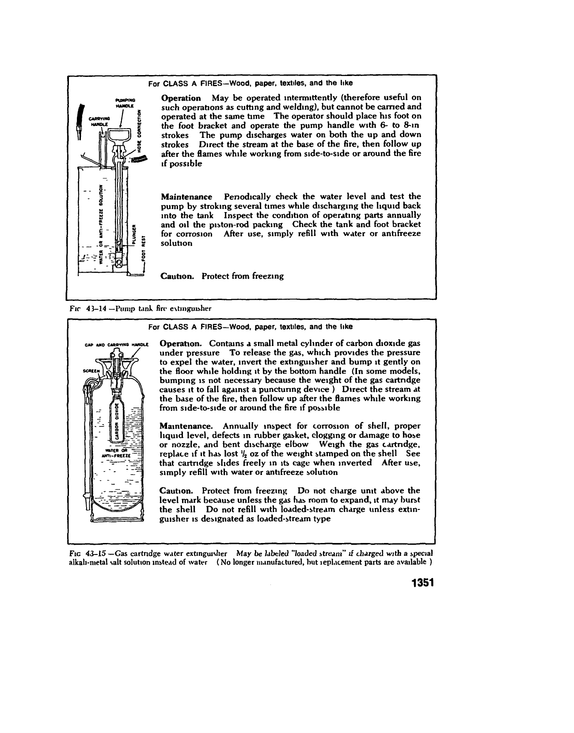
tWPIKO For CLASS A FIRES--Wood, paper, textiles, and the like Operation May be operated intermittently (therefore useful on such operations as cutting and welding), but cannot be earned and operated at the same time The operator should place his foot on the foot bracket and operate the pump handle with 6- to 8-m strokes The pump discharges water on both the up and down strokes Direct the stream at the base of the fire, then follow up after the flames while working from side-to-side or around the fire if possible Maintenance Penodically check the water level and test the pump by stroking several times while discharging the liquid back into the tank Inspect the condition of operating parts annually and oil the piston-rod packing Check the tank and foot bracket for corrosion After use, simply refill with water or antifreeze solution Caution.
refid# n9ZnmqVDO112EMXzZwKyvy9161 page
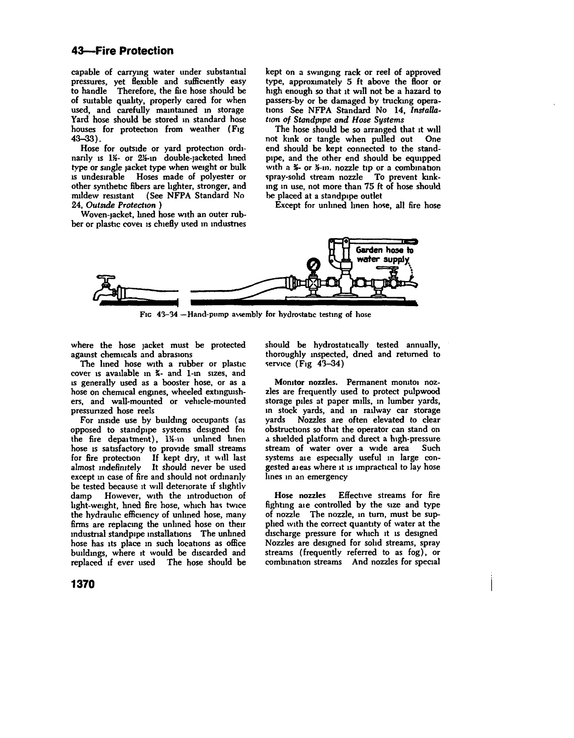
43--Fire Protection capable of carrying water under substantial pressures, yet flexible and sufficiently easy to handle Therefore, the fiie hose should be of suitable quality, properly cared for when used, and carefully maintained m storage Yard hose should be stored m standard hose houses for protection from weather (Fig 43-33).
refid# baZG2J3BXNdb7KONjGoq2Gp7g1 page
The ASME Code contains eleven sections Section Title I II III IV V VI VII VIII IX X XI Power Boilers Material Specifications Nuclear Vessels Heating Boilers Non-Destructive Examination Recommended Rules for Care and Opera tion of Heating Boders Unfired Pressure Vessels Division I--Pressure Vessels Division II--Pressure Vessels (Alternate Rules) Welding Qualifications Fiberglass-Reinforced Plastic Vessels Rules for Inservice Inspection of Nuclear Reactor Coolant Systems Any or all of these sections may be obtained by application to the American Society of Mechanical Engmeeis When pressure vessels are to be put in, it is usually advisable to secuie the sei vices of a competent boiler 01 unfited piessuie vessel engineering consultant He will survey the plant or operation to deteimme the re quirements, design a system that wdl sahsfv them, and supervise installation and testing If he arranges for the purchase of second hand boileis or pressure vessels, he should have them inspected by authorized code in spectors who will ieport on repairs necessary before pm chase Anangements for inspectors can usually be made thiough the user's in surance agent Also, the government inspec tion department that has jurisdiction is listed m the Synopsis previously mentioned In geneial, installation and maintenance should be m accordance with manufacturers' instructions Operating personnel should be trained, not only to operate equipment pioperly, but also to make loutme safetv checks and to know when to call in qualified main tenance personnel Some common causes of failure in pressure \essels which should be anticipated and avoided insofar as possible are 1 Errors m design, construction, and installa tion 2 Improper operation, human failure, and 1mpioper education of opeiators 3 Corrosion oi erosion of the metal 4 Mechanical breakdown, failure or block ing of safety devices, and failure or block ing of automatic control devices 5 Watei hammei, oi carryover of processed material 6 Failure to inspect thoroughly piopeilv, and frequently 7 Impropei application of equipment 8 Lack of planned preventive maintenance In addition to hazards presented by the possibility of then explosion, heating service boileis also present fire hazards They are a significant factor m hotel, store, apartment house, and religious institution fires Partic ularly, oil-fired equipment is at fault, al though losses from explosion of gas-fired equipment have occasionally been cata strophic The majority of boilers m use are auto matically fired, and they operate unattended for long periods Many are not maintained regularlv, and their condition is less than pei feet Because the boilers are unattended, fires that do stait can gam considerable head way unless adequate precautions are installed against them The means for conhollmg and containing fires from boilers include 1 Pi ovide a fullv enclosed boiler room of fire-resistive construction (% in gypsum wallboaid oi bettei) (Be sure to leave sufficient space for maintenance, includ ing pulling of tubes ) 2 Piovide a fire-resistive ceiling over the boilei, with diaft curtains at the penmetei of the ceiling and automatic sprinkler pro tection 3 Piovide pioper cleaiance around extenors of boiler loom walls so that combustible materials are not stored against the walls In order to minimize low-pressure boiler fires and explosions caused by faulty controls and safety devices 1 Establish a test and servicing program whereby operating controls, safety controls, and safety and relief valves will be tested and maintained at regular intervals 1389
refid# 5bx7xBvMY1m473MEEEOQaDXk51 page
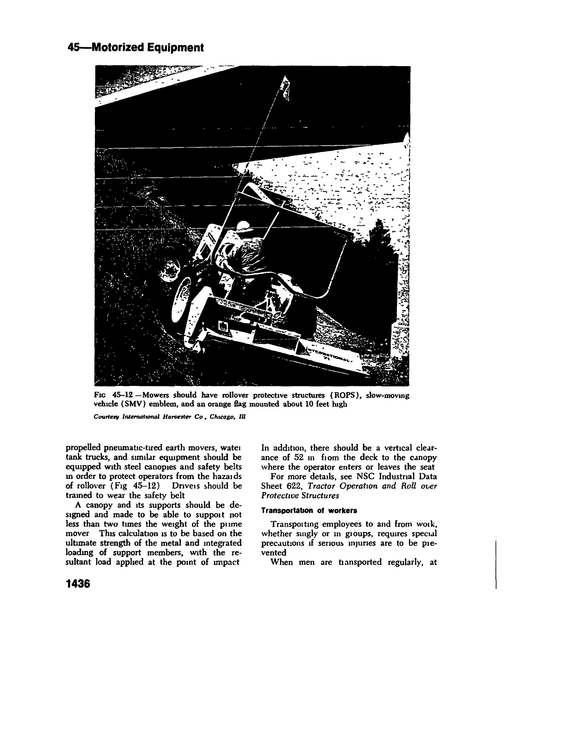
45--Motorized Equipment Fig 45-12--Mowers should have rollover protective structures (HOPS), slow-moving vehicle (SMV) emblem, and an orange flag mounted about 10 feet high Courtesy International Harvester Co, Chicago, III propelled pneumatic-tired earth movers, watei tank trucks, and similar equipment should be equipped with steel canopies and safety belts in order to protect operators from the hazaids of rollover (Fig 45-12) Dnveis should be trained to wear the safety belt A canopy and its supports should be de signed and made to be able to suppoit not less than two tunes the weight of the pume mover This calculation is to be based on the ultimate strength of the metal and integrated loading of support members, with the re sultant load applied at the point of impact 1436 In addition, there should be a vertical clear ance of 52 in fiom the deck to the canopy where the operator enters or leaves the seat For more details, see NSC Industrial Data Sheet 622, Tractor Operation and Roll over Protective Structures Transportation of workers Transporting employees to and from woik, whether singly or in gioups, requires special precautions if serious injuries are to be pievented When men are tiansported regularly, at
refid# rpyjYbK2BLyKyRBdRZv4Lrz6J1 page
the precautions discussed next will help pre vent accidents to the public, employees, and equipment Traffic should be warned of danger ahead by barrier signs at both ends of the section of road undergoing construction or repairs Primary warning signs, such as Road Under Construction or Barricade Ahead, should be placed 1500 ft from the end point of op eration Orange flags or markers at the ends of blades, which may project beyond the tread of a machine, serve to warn persons and other equipment An oiange flag on a staff that will project the flag at least 6 ft above the rear wheel of a blade grader is recommended for operation in hilly countrv (See Fig 45-12 ) Operators of motor graders should keep to the right side of a roadway When blading against traffic is necessary, flags and barri cades should be used to wain traffic Warn ing signs should be placed at a considerable distance from the work aiea This distance mci eases as the "speed" of the highway mci eases Suggestions are given in NSC Data Sheet 614, Surface Surveying, and DOT Man ual on Uniform Traffic Control Devices for Stieets and Highways, ANSI D6 1 Where operations aie extensive, flagmen should be placed at each end of the working aiea so that thev aie visible to oncoming tiaffic for at least 500 ft Where earth-moving equipment is stopping, turning, or backing at cuives, ciests of hills, and similar dangerous locations, flagmen should be stationed Such movements geneially lequire a cleai view of appioaching traffic for a distance of about 1000 ft for safety Flagmen should also be used where the working area is congested by other equip ment, workmen, buildings, excavations, and similai hazaids See Fig 45-15 for hand signaling piocedures Coupling and towing equipment An op erator should not back up to couple a tractoi to a scraper, sheepsfoot iollei, oi othei equip ment unless he has fiist checked to make suie that evervone is m the clear If the opeiator is assisted bv a ground man. he should not move Ins equipment until signaled Before an employee is allowed to couple the trailing equipment, the tractor should be stopped, the shift lever put m neutral, and the brakes set The wheels of equipment being coupled should be blocked All equipment being towed should be se cured by a safety chain attached to the pull ing unit, m addition to the regular hitch or drawbar, since drawbar failure can result m a serious accident When a scrapei is towed fiom one job to another, the operator should use a scraper bowl safety latch, or place a safety bolt in the beam to give maximum clearance for load projections such as crossings This pre caution prevents the bowl fiom staking the ground or pavement and injuring persons or damaging equipment Clearing work.
refid# G69NRxD3jeZRYjJXdpw0EMOr41 page
Hazards--Continued office, 350-352 recognition of, 573-575, 576 reducing through safe design, 106, 366-367, 396, 579-582 Head protection, 469-476 maintenance, 476 safety hats, 469-473 for women, 473-474 Health, Education, and Welfare, U S Dept of, NIOSH, 23-24 Health hazards, 8 biological agents, 1065-1067 dusts, 1043-1048 energy stresses, 223-224, 1051-1059 foundry, 899-902 hot areas, 1053-1054 industrial hygiene, see Industrial hygiene NFPA definitions, 1204-1205 recognition of, 43, 1200 seventy, 1201-1202 skin diseases, 1067-1075 solvents, organic, 1048-1051 table of, 1212-1231 woodworking areas, 812 Health, occupational, see Occupational safety and health see also Industrial hygiene Hearing, see Auditory perception Heat body, 1051 load, measurement, 1053-1054 radiant, 1052 -resistant clothing, see Clothing stress, 1051-1054 index, 1053-1054 TLV's, 1095-1099 venting, 1331-1332 Heating process high-frequency, 1279-1280 layout, 377-378 Heatmg, temporary, 408-409, 1335 Heights of working surfaces, 812 Heinrich ratio, 96 Helium, 1054 Heptane, 1148, 1200 Herzberg theory, 248-250 Hexachlorocyclohexane, 1148 Hexamethylenetetramine, 901-902 Hexane, 1148 Hierarchial motivation, 245 High-pressure systems, safety in, 1410-1412 High-visibihty clothing, 526 History of the safety movement, 3-13, 18-19, 21 Hitches, lifeline, 423-424, 716 Hoists, 424-427, 664-665 chain, 668, 1431 engines for, 427 foundry, 906 material, 424-425 Hoists--Continued pneumatic, 665-668 portable, 695-698 ropes, 773, 776 safety factors, 720-721 tiering, 696 Hoistways, elevator, 766, 775 Hold-harmless, 573 Hoods, exhaust, 1010-1014 Hoods (personal protective) acid, 485-487 air supplied, 501 Hook and loop boards, 338 Hooks, 675, 732,1441 hand, 640, 988 Horseplay, 987 Hose masks (air line), 497--499 maintenance, 508 Hoses air, 904, 1001 fire, 1369-1371 maintenance, 1371 squad, 457 welding, 955-956 Hospitalization, 139-140 Hot industries, comfort in, 1053-1054 clothing, 517-520 Hot work permits, 1382-1383 cleaning storage tanks, 1315-1316 Housekeeping, 580 contests, 283-284 construction, 402-403 fire prevention, 1337-1338 foundries, 902-903 inspection, 77 janitorial service, 542 occupational health protection, 1088 HTW safety, 1402 Human behavior, 240-257 Human factors engineering, 109-110, 218-237 anthropometric considerations, 224 applications, 222-224 clothing, see Clothing evaluation, 228 man-machine systems, 218-222 physical capacities form, 565-567 stresses, physical, 223-224 Human interest, getting, 268 maintaining, 264-299 Humidity, air, 1007, 1052 Humor and human interest, 305 Hurricanes, planning for, 445 Hydrants, fire, 1369 Hydraulic elevators, 765 power took, 1002 presses, 860-861, 869 Hydrazine, 1148 Hydrides, metal, 1154 1507

refid# R224EopYe6V6v2aNoJE7nyVpa1 page
eoasuti or m ontn mm aoon or ttmimuivu conumi or sopcatios up imob OOCOmZTYBB 00 LASOft itASDAADP ssaaxso o* ms mifuci or uinvoi-uum piiuiu xa umcu nonm aso ms uam up aosqoacy nti razes ms rxcrxas or msss occorsnoua txssasts ui rssssmr corrsrsAmo. mnssrr sr rxiror e. urxrsoar I.I., ock., O.I.S., aror#. cosroum ksoxcao dxssctos baysbstos xuuma xtcoatosatsd morsvu.
refid# 0a8eDZ12KGBXoR7bkj9ReQKb38 pages
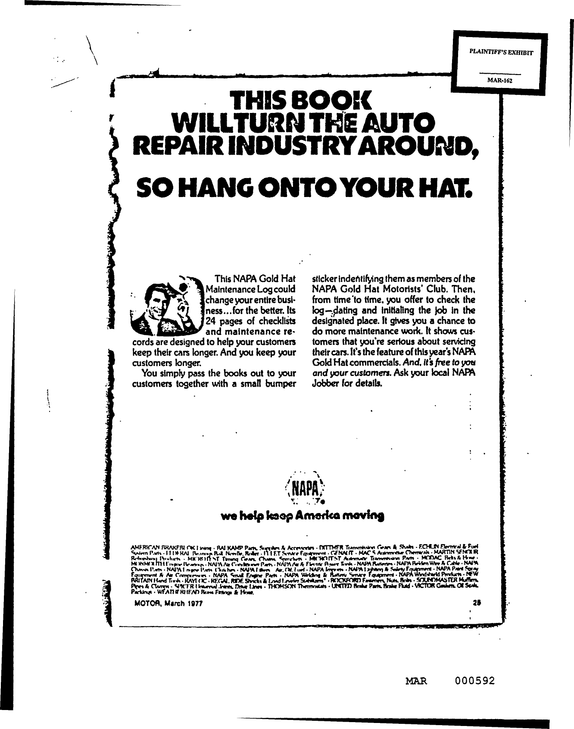
PLAINTIFF'S EXHIBIT \ THIS BOOK WILLTURN THE AUTO REPAIR INDUSTRYAROUND, SO HANC ONTO YOUR HAT.
refid# MM9XLevadVmq1O0OEv12QoMa71 page
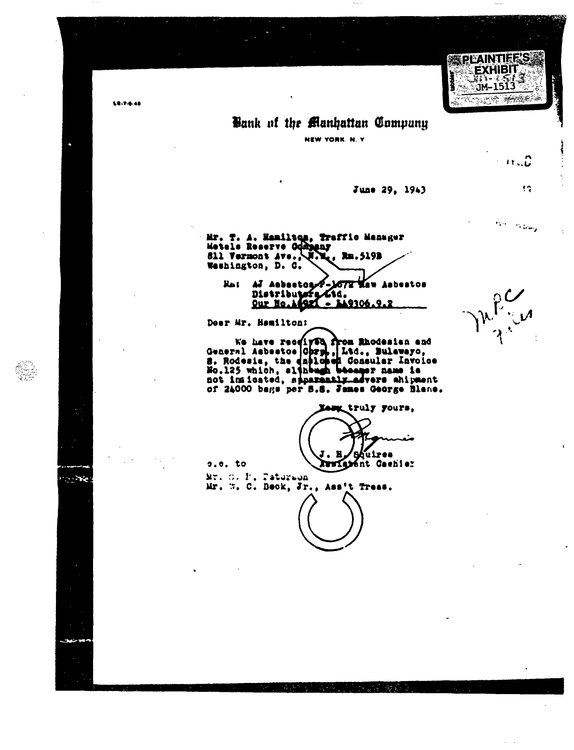
1 NCW YORK N.
refid# DGk1obe40LgBJ88VDpQB0NMen1 page
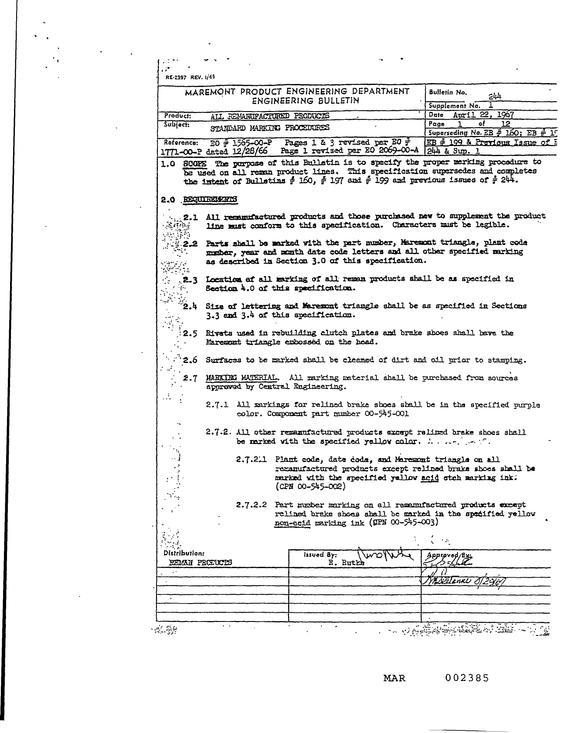
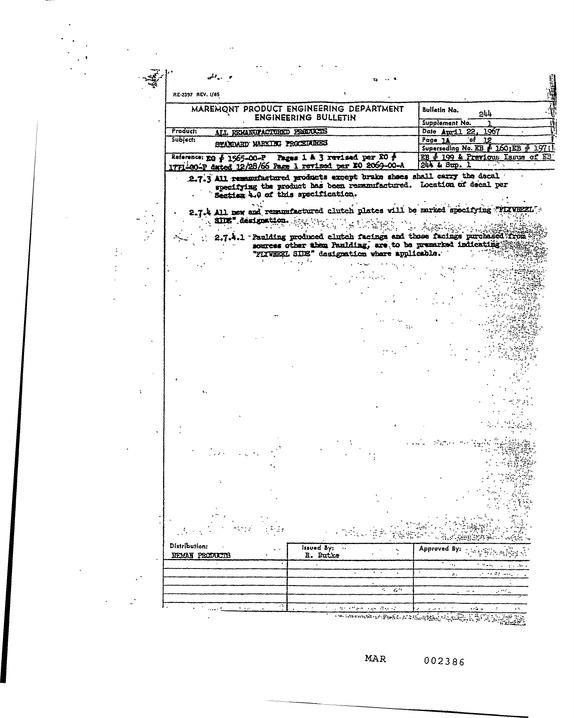
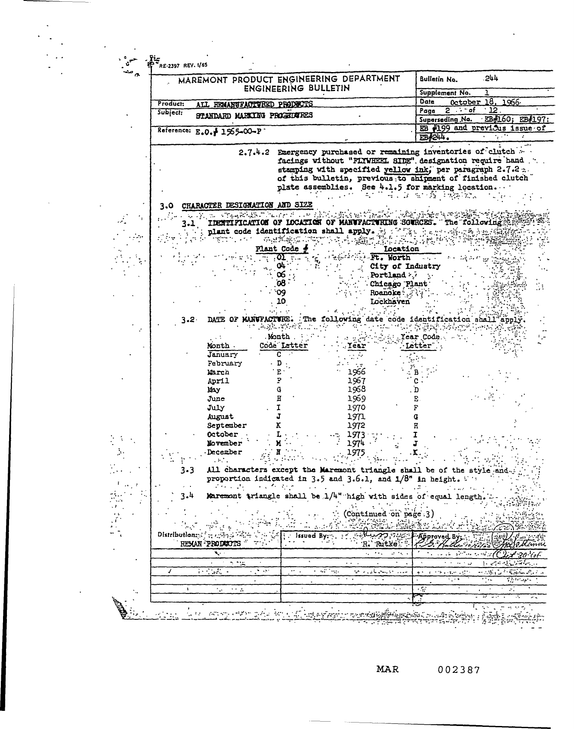
* MAR 002384 maremont product engineering department ENGINEERING BULLETIN Product: iu!
refid# zBKgYYOxgMxdpe1Nq0Zn3oQa13 pages
V.
refid# wn4pKgnRJmgoBKoEJ9KY8DwD1 page
0% i v- ^ o XL r.
refid# 0eRMGbLx09GXR3d0GYYbdKeb2 pages
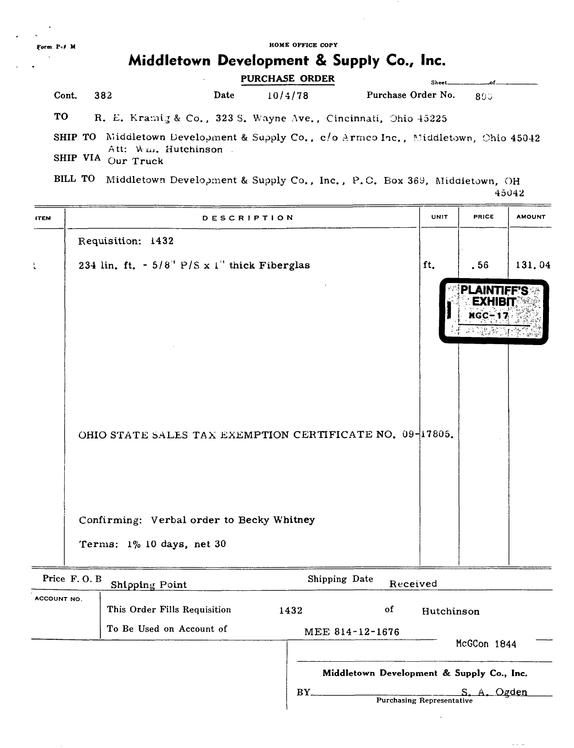
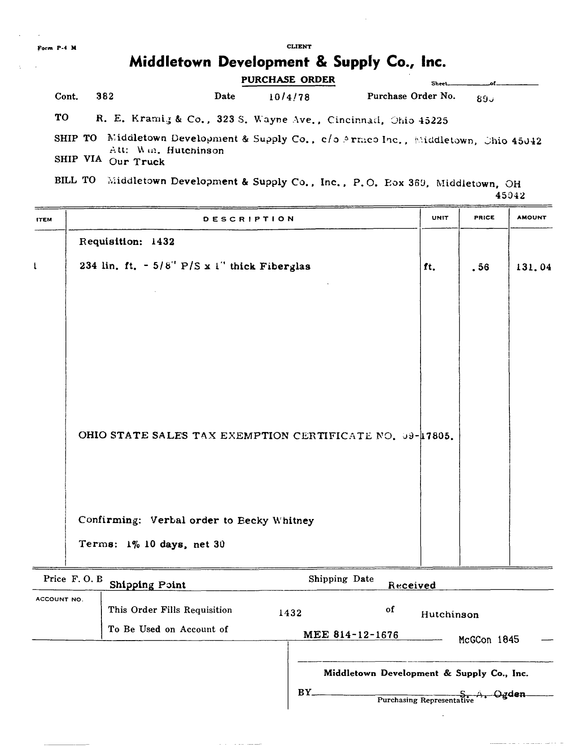
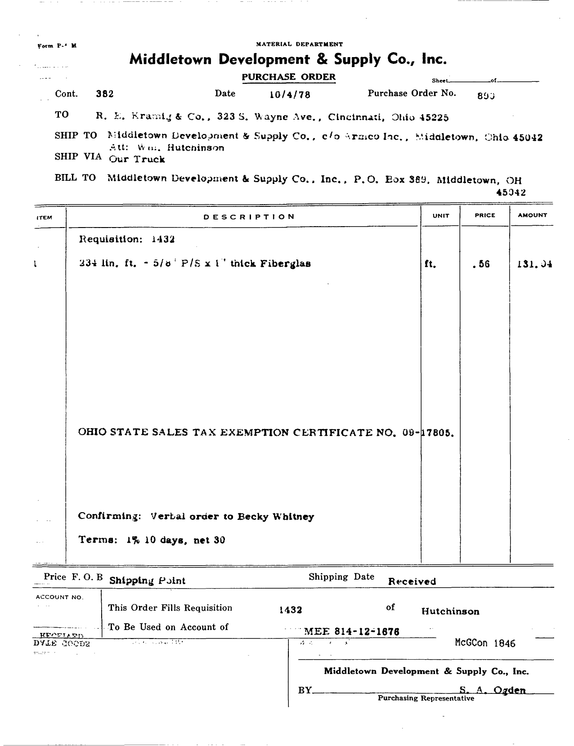
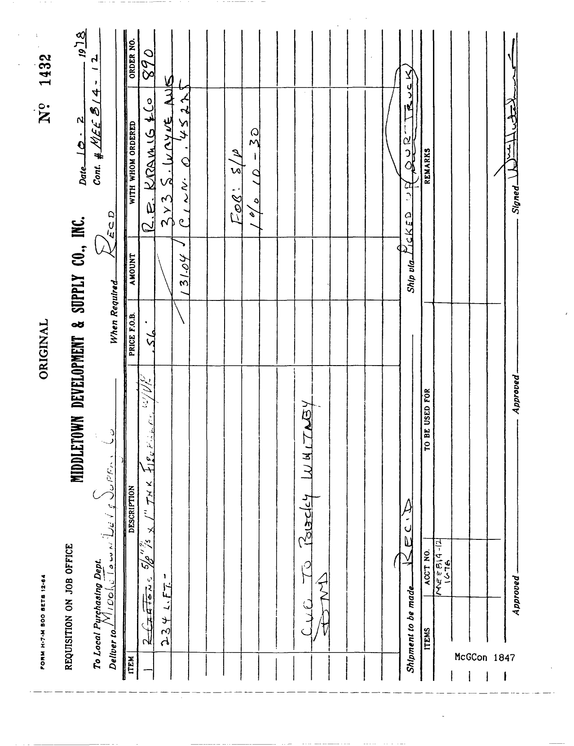
orm P-f M HOME OFFICE COPY Middletown Development & Supply Co., Inc.
refid# ypMV8R0B2KE1LVYmQD5911nO613 pages
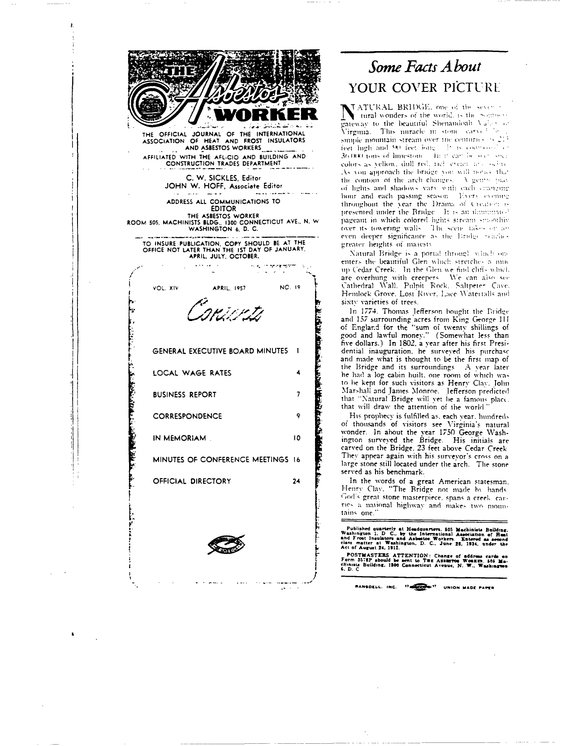
THE OFFICIAL JOURNAL OF THE INTERNATIONAL association of heat and frost insulators AND ASBESTOS WORKERS___ ________ AFFILIATED with the afl-cio and BUILDING AND CONSTRUCTION TRADES DEPARTMENT ___ C. w.
refid# 2qvELvBbR4RKj8N0X4Ebwznb532 pages