Refine
Estimated Years UndatedClear
92,592 results foundRefine Search
A \> MTC 011596 :>-w\;;:s.
refid# np70NL5d10jebOgaBrqzMLvv834 pages
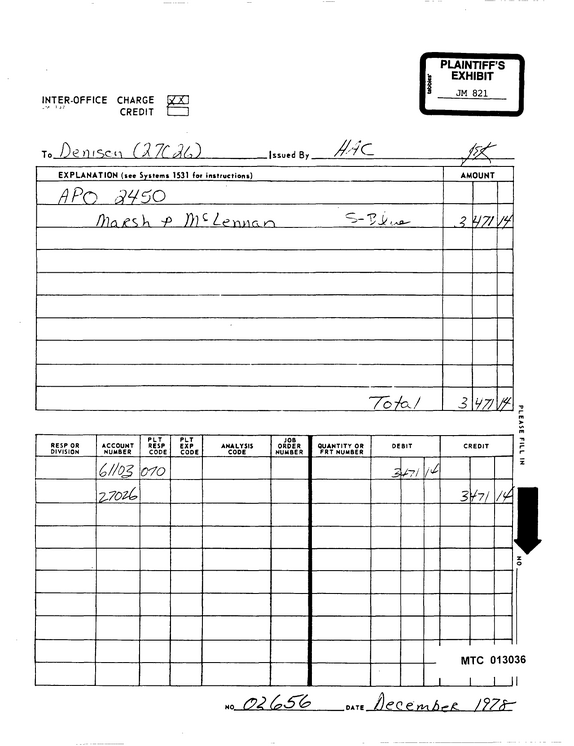
INTER-OFFICE CHARGE EX3 CREDIT in To Pen ISC n (27C3L') _.Issued By EXPLANATION (see Systems 1531 for instructions) ftPo m$o fh& %Vi 'P J)]^ Ley\rtc^v-\ /^/C AMOUNT 7 V7l /Y P LE A S E F IL L IN 7ro'h^/ 3 77/ / RESP OR DIVISION ACCOUNT NUMBER PLT RESP CODE C//03 070 PLT EXP CODE 270ZC ANALYSIS CODE JOB ORDER NUMBER QUANTITY OR FRT NUMBER DEBIT 3 /7/ // CREDIT 3 /7/ M TO C 130 _______ 1 1J NO.
refid# 3NZm9zv0vaXN28Ey8Mea47K433 pages
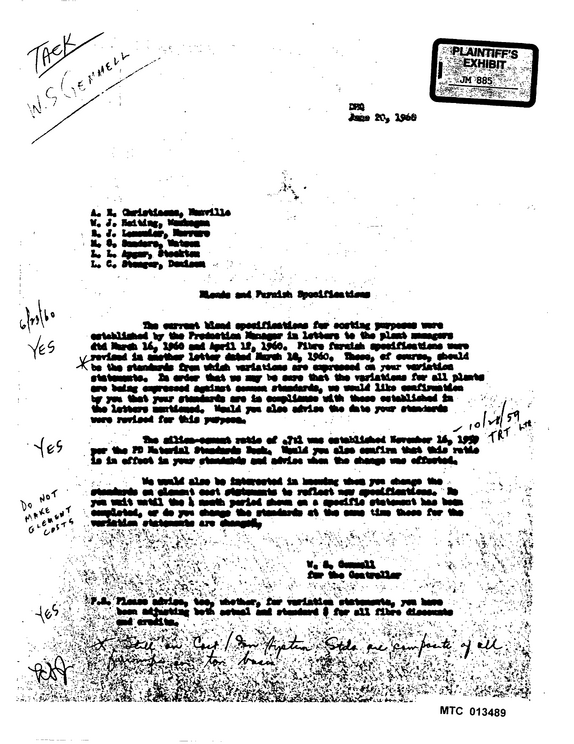
MTC 013489
refid# MJEXkM3yJb5XORQBvyL7OnpKM1 page
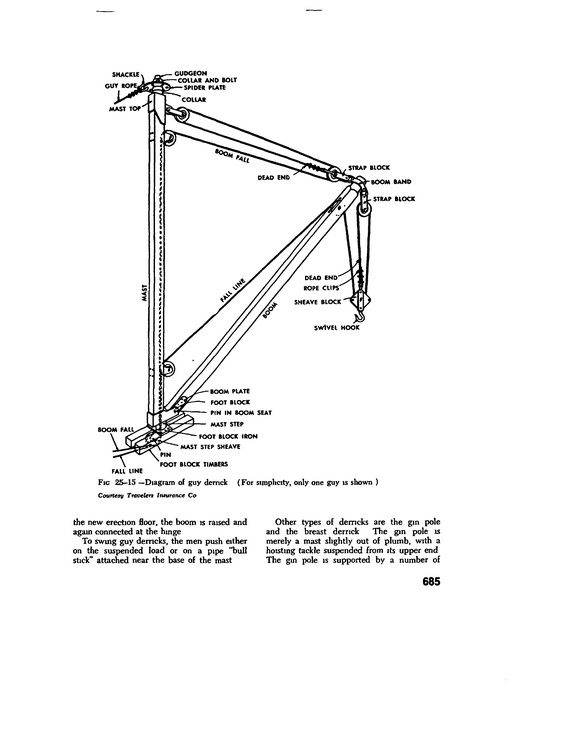
SHACKLE, GUY ROPE .
refid# k6MjV2eEoJxOgGnwBRBavzQ01 page
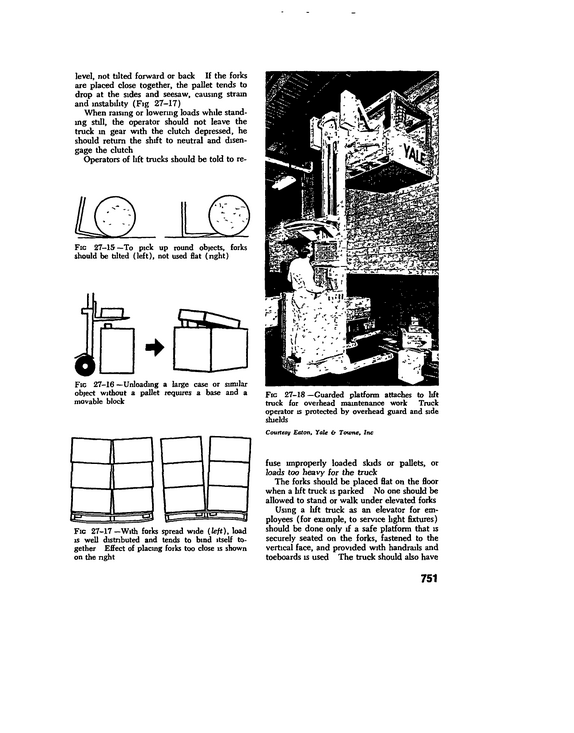
level, not tilted forward or back If the forks are placed close together, the pallet tends to drop at the sides and seesaw, causing strain and instability (Fig 27-17) When raising or lowering loads while stand ing still, the operator should not leave the truck in gear with the clutch depressed, he should return the shift to neutral and disen gage the clutch Operators of lift trucks should be told to re- Fic 27--15--To pick up round objects, forks should be tilted (left), not used flat (nght) Fic 27-16 --Unloading a large case or similar object without a pallet requires a base and a movable block Fic 27-18 --Guarded platform attaches to lift truck for overhead maintenance work Truck operator is protected by overhead guard and side shields Courtesy Eaton, Yale 6 Towns Inc c uj,b--a Fic 27-17 --With forks spread wide (left), load is well distributed and tends to bind itself to gether Effect of placing forks too close is shown on the nght fuse improperly loaded skids or pallets, or loads too heavy for the truck The forks should be placed flat on the floor when a lift truck is parked No one should be allowed to stand or walk under elevated forks Using a lift truck as an elevator for em ployees (for example, to service light fixtures) should be done only if a safe platform that is securely seated on the forks, fastened to the vertical face, and provided with handrails and toeboards is used The truck should also have 751
refid# 2N2gp8yN8gJLnd2b3dgaw8kgb1 page
33--Hot Working of Metals castings onto another conveyor, which takes them to the tumbling barrels Empty flasks are brought back to the molding section by still another conveyor This is a complete system for mass pro duction where each man has one job to do rather than several In the installation of such a system, shear points, crush points, and moving parts must be effectively guarded Where conveyor systems run over passage ways and working areas, the employees be neath should be protected by screens, grilles, or guards strong enough to resist the impact of the heaviest piece handled by the convevor Where chain conveyors operate at various levels, other than m a fixed horizontal plane, a mechanism of safety dogs should be installed m accordance with applicable standards on both the upgrade and the downgrade In case of chain failure, the safety dogs will hold the chain and prevent the load from piling up at the bottom of the incline Elevators and monorails Elevator openings at floor levels should be protected by manually or mechanically op erated elevator gates at least 6 ft high Slots should be no more than 1 in wide, and the gates should extend as close to the floor as practicable The drive mechanism should be electrically or mechanically interlocked with the gates so that the elevator cannot be started until the gate is closed and so that the gate cannot be opened until the elevator is at floor level Elevators, except for those that are hy draulically operated, should be equipped with safety blocks controlled by a speed governor that will hold the elevator in case of cable failure or overspeeding All types of elevators should have upper and lower travel limit devices Monorail svstems should be provided with stops or interlocks that will prevent the trolley equipment from running off at open switches Permanent rail stops should be installed at the ends of all sucb equipment Scrap breakers Shears should be guarded to protect op erators and passersby from flying particles The working floor should be clear and level Use of a drop to break castings or scrap 908 inside the foundry buddings during working hours should be prohibited unless such op erations are performed within a permanent enclosure of planking or equivalent strong enough to withstand the most severe impacts from the demolition weight or flying scrap The enclosure should be high enough to pro tect workmen m the vicinity from flying frag ments of metal If a rope is used, it should extend over pulleys to a point clear of the breaking area to assure that the operator will be at a safe distance and to prevent entanglement Storage Foundry materials and equipment not in regular use should be stored m the space provided in a safe, orderly manner on level and substantial foundations When workmen remove materials from bins located at floor level or from storage piles, they should not undermine the piles and thereby cause cave-ms Hopper bins containing material which is fed out at the bottom, either by hand or by mechanical means, should be covered with a grating which will prevent workmen from entering the bin No one should be allowed to get on the rails of a bin nor to enter a hopper to break down bndged material A worker who must enter a bin should wear a safety belt with attached lifeline, tended by a man similarly equipped Pattern storage buddings should have racks and shelves substantial enough to hold the loads placed upon them The floors and stairways should be well designed and kept m good condition The storage area should be well lighted The pattern keeper should be provided with a sound ladder so that he can safely reach the patterns The pattern keeper, who is likely to be alone in the pattern storage area, should re port at regular intervals to the molding floor supervisor Flammable liquids should be stored in ac cordance with National Fire Protection Associ ation Standard No 30, Flammable ir Com bustible Liquids Code See Chapter 42, "Flammable and Combustible Liquids " Slag disposal Furnaces and pits should be designed to
refid# BvG4rw1nNEEJ293OekNpVrNzj1 page
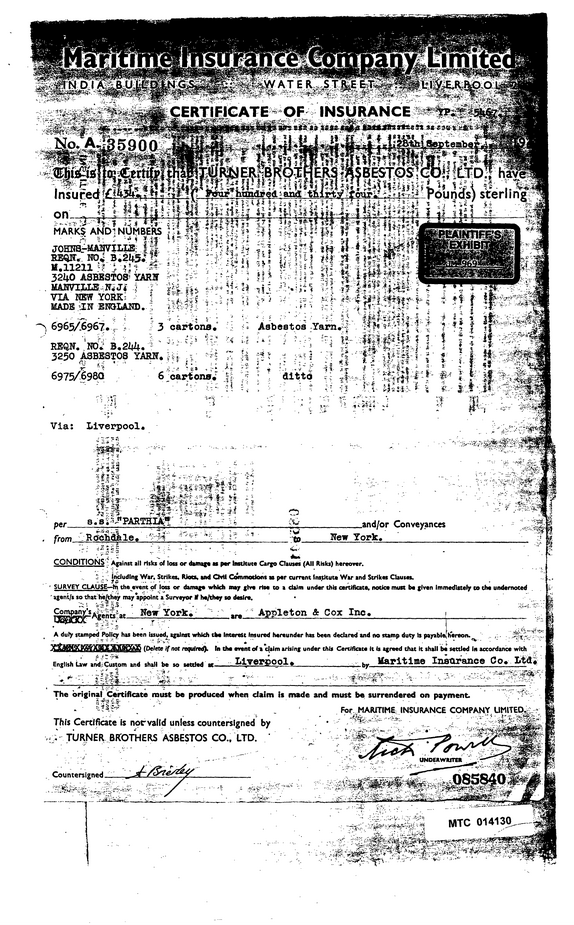
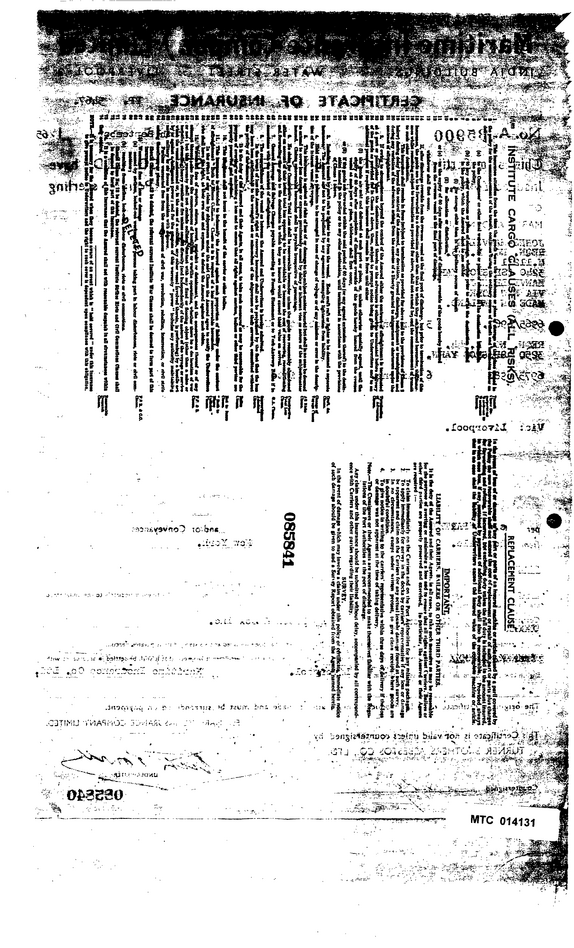
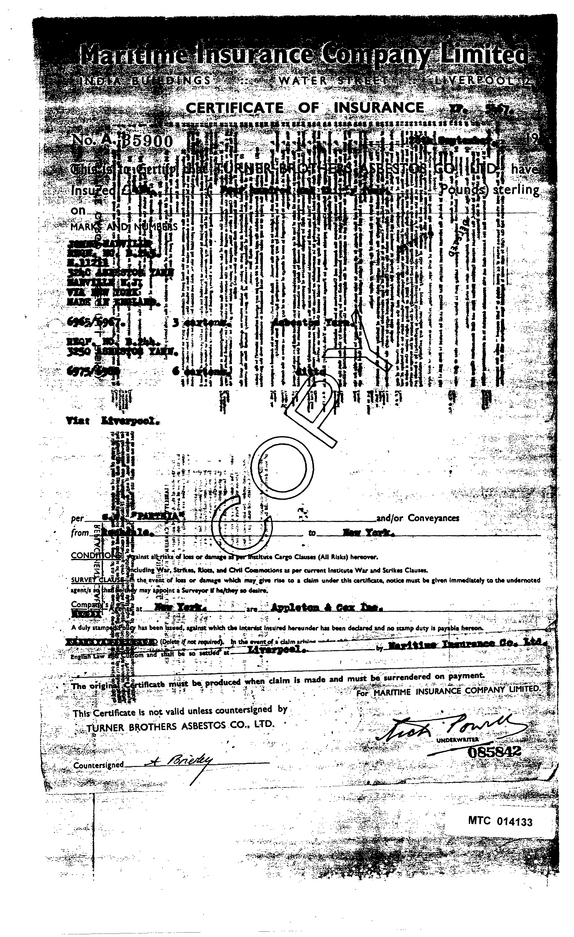
from Rochflfele If CONDITIONS ;.
refid# 2RwLOyN2a3MLdk5wdB5vMByxN12 pages
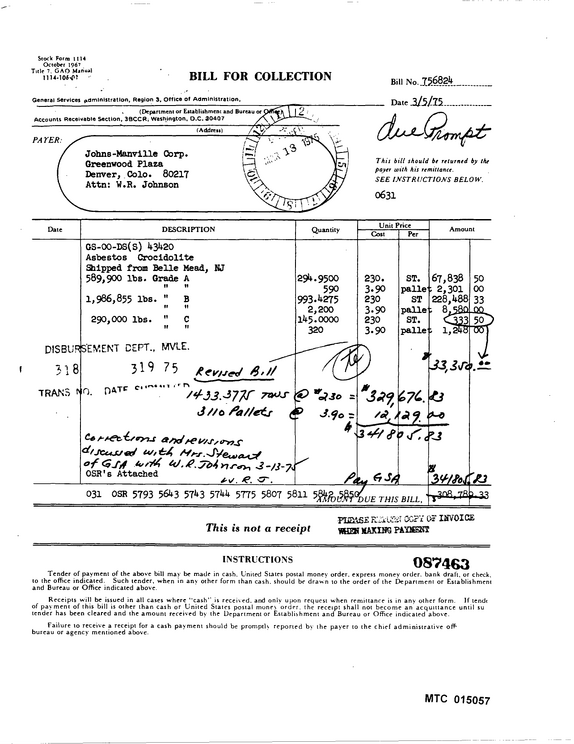
J Stock Form 1114 October 1967 Title 7, GAO Manual 1114-106*?

refid# gaJaDnzKDLn443rQ4VOGmp83L601 pages
worn when woodworking or cutting tools, such as chisels, brace and bits, planes, scrap ers, and saws, are used head-high or over head, with the chance of particles falling or flying into the eyes Occasionally, the need for eye protection is overlooked on such jobs as cutting wire and cable, striking wrenches, using hand drills, chipping concrete, removing nails from scrap lumber, shoveling material head-high or work ing on the leeward side of a job, and using wrenches and hammers overhead, and on other jobs where particles of materials or de bris may fall References American National Standards Institute, 1430 Broadway, New York, N Y 10018 Safety Code for the Use, Care, and Protection of Abrasive Wheels, B7 1 Safety Requirements for Powder Actuated Fastening Systems, A10 3 Grinding Wheel Institute, 2130 Keith Bldg, Cleveland, Ohio 44115 McMahan, E L and B T Wray Aluminum Paint on Hot Surfaces Aluminum Research Laboratories, New Kensington, Pa National Safety Council, 444 North Michigan Ave, Chicago, 111 60611 Accident Prevention Program for School Shops and Laboratories Industrial Data Sheets Air-Powered Hand Tools, 392 Brush Cutting Tools, 427 Electric Hand Saws (Circular Blade Type), 344 Ground Fault Circuit Interrupters for Personnel Protection, 636 Grounding Portable Electric Equipment, 299 Hand Knives, 369 Hand Soldering and Brazing, 445 Portable Power Cham Saws, 320 Powder-Actuated Hand Tools, 236 Meat Industry Safety Guidelines Powder Actuated Tool Manufacturer's Institute, 331 Madison Ave, New York, N Y 10017 Basic Training Manual Underwriters Laboratories Inc, 207 East Ohio St, Chicago, 111 60611 Underwriters' Reports UL 45, Electric Tools U S Department of Commerce, Office of Technical Services, Washington, D C 20234 Sparking Characteristics and Safety Hazards of Metallic Materials, Technical Report No NCF-T-1-57, PB 131131 U S Department of Labor, Washington, D C 20210 Safe Use of Hand and Portable Power Tools, Bulletin 293 U S Government Printing Office, Superintendent of Documents, Washington, D C 20402 Maintenance and Care of Hand Tools TM-9-867 Federal Specifications for Hammers, Mauls, and Sledges GGG-H-86 1005
refid# KDp269634apwMkoY5jyQbEK1 page
nose and throat m concentrations higher than 200 ppm Workmen exposed to about 100 ppm complained of headache and nausea but a tolerance developed dunng the working week Repeated or prolonged skm contact may cause drying of the skm with primary irritation resulting Prolonged or repeated contact with the skin should be avoided Methyl isobutyl ketone should be handled only in areas having adequate ventilation Methyl mercaptan (methyl sulfide) is the hydrogen sulfide ester of methanol Since it is readily hydrolyzed to the parent compounds, it has practically the same toxicity, both quali tatively and quantitatively, as hydrogen sulfide Methylcydohexane is similar m its effects to cyclohexane although it is slightly less toxic and has a lower vapor pressure Methylcyclohexanone seems to be somewhat less toxic than cyclohexanone, but the differ ences are not enough to be of practical im portance and the two substances are alike in their quahtabve effects Methylene chloride (dichloromethane) is one of the least toxic of the chlorinated hydro carbons However, because of its low boiling point, high concentrations of the vapor can be easily developed Its action is usually simply narcotic, although, when inhaled in high con centration, it is capable of producing liver damage Mica is a silicate mineral extensively mined for its high value as an electrical insulator and for a wide variety of other uses There is con siderable evidence that people working under excessive exposure to its dust suffer from a disabling pneumoconiosis See the discus sions in Chapter 37, "Industrial Hygiene " Molybdenum is considered an essenbal trace element m plants and possibly m mammals Its health hazard is described as moderate to low There is no evidence of acute or chronic industrial poisoning Pathological findings from animal experiments have been limited to such effects as bronchial and alveolar irritation with moderate fatty changes in liver and kidneys N Naphtha (coal tar) is mainly a mixture of toluene and xylene and should be treated like those compounds Naphtha (petroleum) is a rather indefinite term for any one of a number of solvent mix tures derived from petroleum oil One should define it more carefully before attempting to assess the hazard Naphthalene is a volable solid Vapors, given off when naphthalene is heated, form explosive mixtures with air Reports m the literature indicate that the mhalabon of naph thalene vapors may cause headache, loss of appebte, nausea, and kidney damage Ingesbon of naphthalene in relabvely large amounts has reportedly caused severe hemolybc anemia and hemoglobinuria A hypersuscepbbihty, probably genebcally based, is recognized Contact deimabbs may result from primary untabon or allergic hypersensibvity, or both Eye untabon may result from exposure to naphthalene vapor Prolonged exposure to high concentrabons of vapor can produce opacity of lens Opbcal neunbs and injuries to the cornea have also been reported The threshold limit value of 10 parts per million is recommended as a threshold limit to prevent ocular effects, but possibly not blood changes in hypersuscepbble individuals Naphthalene is not a senous industrial hazard providing that ordinary precaubons are observed to prevent contact with molten ma terial or excessive exposure to dust or high vapor concenbabons Nickel.
refid# km6gDN1ByXKgMN0w2dOB78rzB1 page
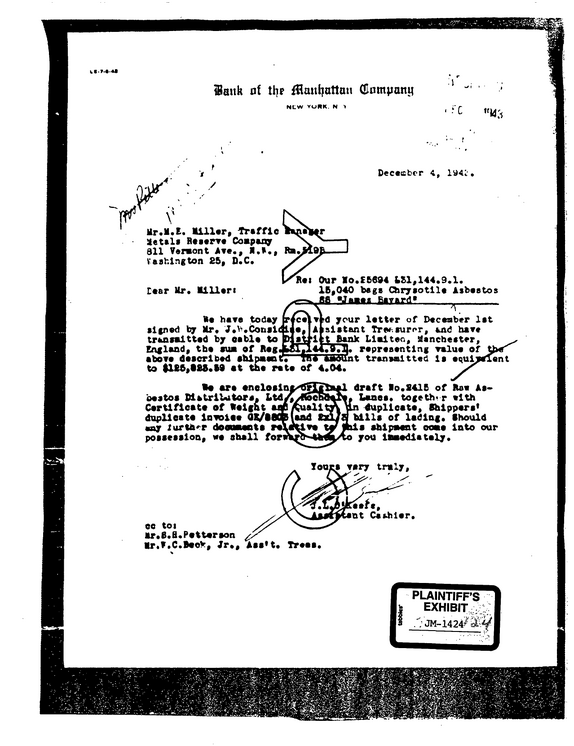
Sauk of thr fflmtljattau Qlnmyani} NLW yuPIK.
refid# MMXwmRvE6qLz7492YgDzJOXv91 page
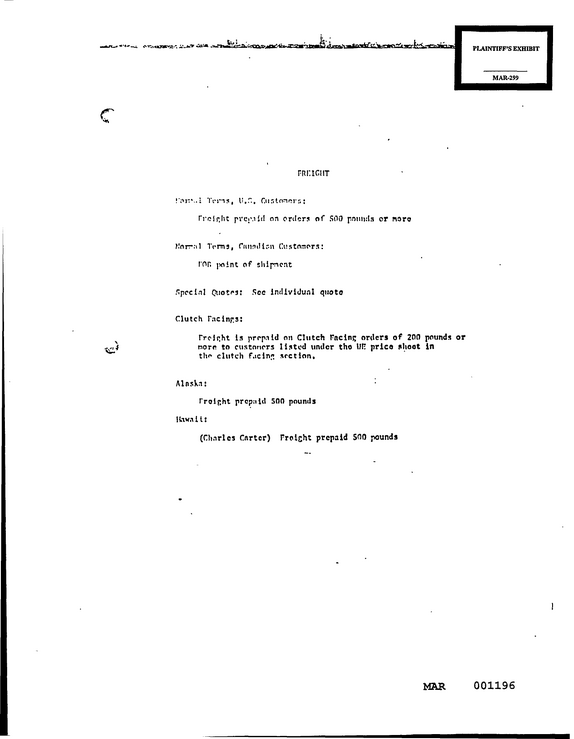
PLAINTIFF'S EXHIBIT MAR-299 r rRCICIIT lai-v.i Tens, U.r..
refid# OEv1GDjJpnBoL0wYq6X2w785e1 page
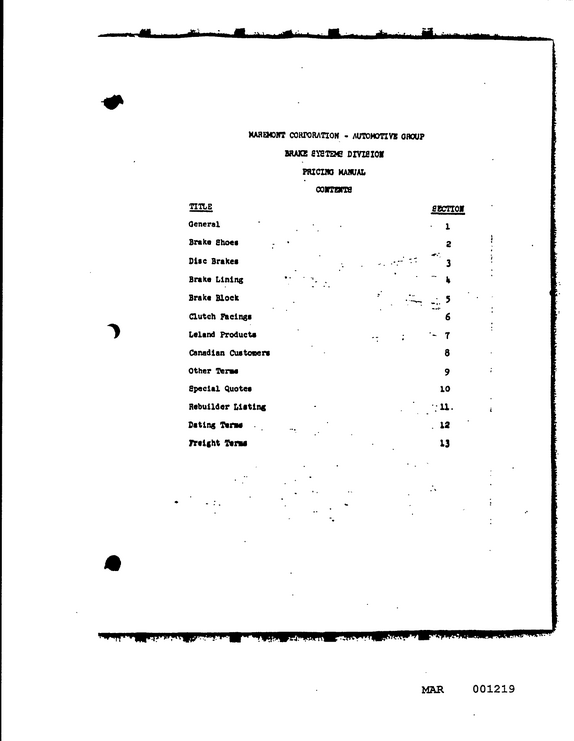
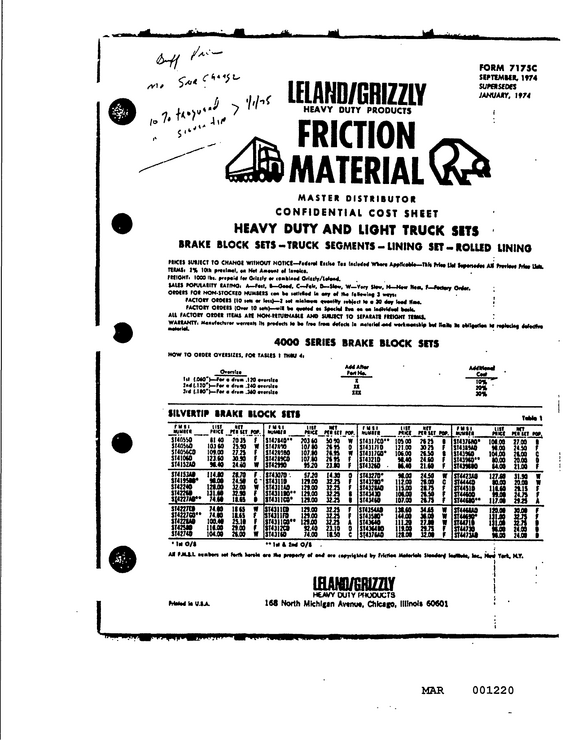
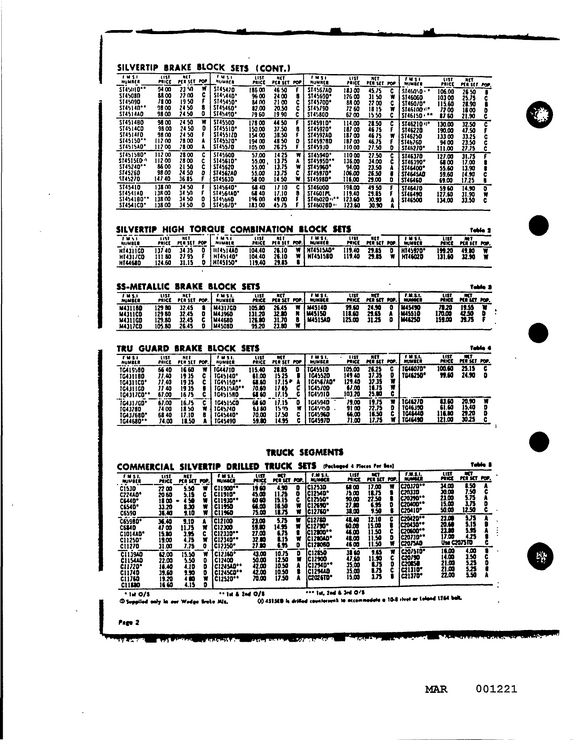
CM PT^ PLAINTIFF'S EXHIBIT MAR-302 *7 MAR 001218 KAREMOJIT COHTORATION - AUTOMOTIVE GROUP BRAKE SYSTEM?
refid# wqj3ZJo8VYRyzVK0EeaYXVVmJ26 pages
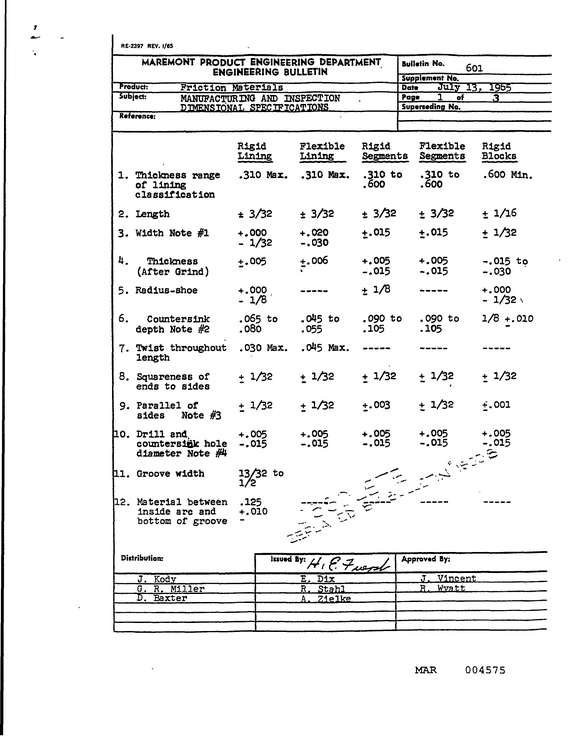
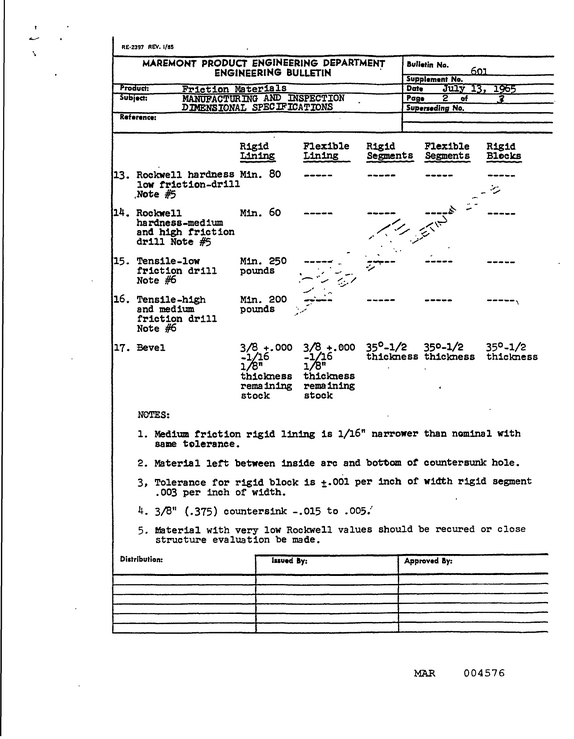
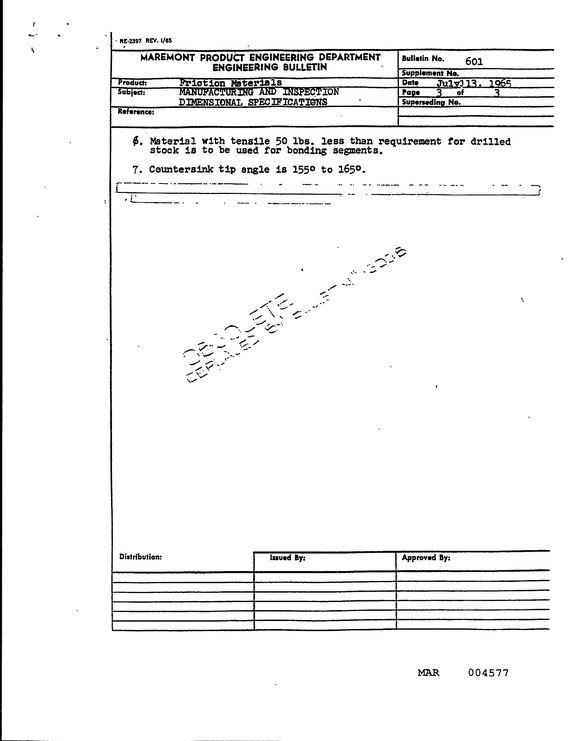
PLAINTIFF'S EXHIBIT MAR-412 :N i M&B. 004574 RE-2397 REV. 1/65 MAREMONT PRODUCT ENGINEERING DEPARTMENT ENGINEERING BULLETIN Product: 5ubi#et: Reference: Friction Materials MANUFACTURING AND INSPECTION DIMENSIONAL SPECIFICATIONS Bulletin No.
refid# V75BV742EvQdB4ELRGK4zpNq4 pages
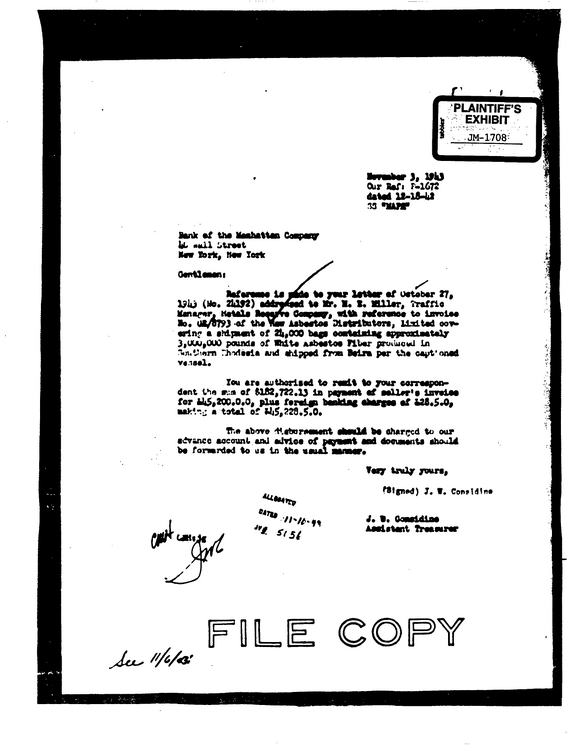
PLAINTIFFS EXHIBIT > JM-1708 3, Ifli3 Our Safi F-1672 dated 1S-10-U 13 mur Bank af tea Maahattan Coapangr lib nail btraot Haw Cork, Hea lock Oontlaaant / Bafaraaae U jfete te your latter af oatabar 27, l?
refid# 6Bknaznq7Rbv95Qkm4deBO7kg1 page