Refine
Estimated Years UndatedClear
92,592 results foundRefine Search
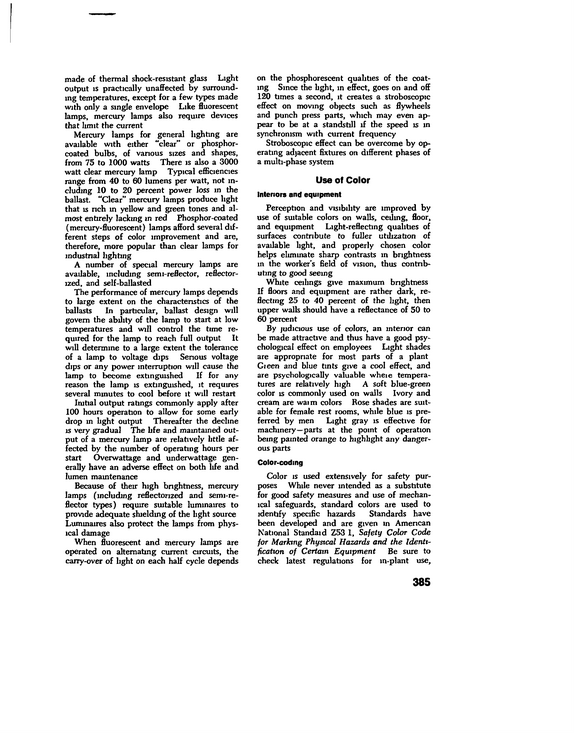
made of thermal shock-resistant glass Light output is practically unaffected by surround ing temperatures, except for a few types made with only a single envelope Like fluorescent lamps, mercury lamps also require devices that limit the current Mercury lamps for general lighting are available with either "clear" or phosphorcoated bulbs, of various sizes and shapes, from 75 to 1000 watts There is also a 3000 watt clear mercury lamp Typical efficiencies range from 40 to 60 lumens per watt, not in cluding 10 to 20 percent power loss in the ballast.
refid# xL1epx7DdOqprz95VbR1YX8b1 page
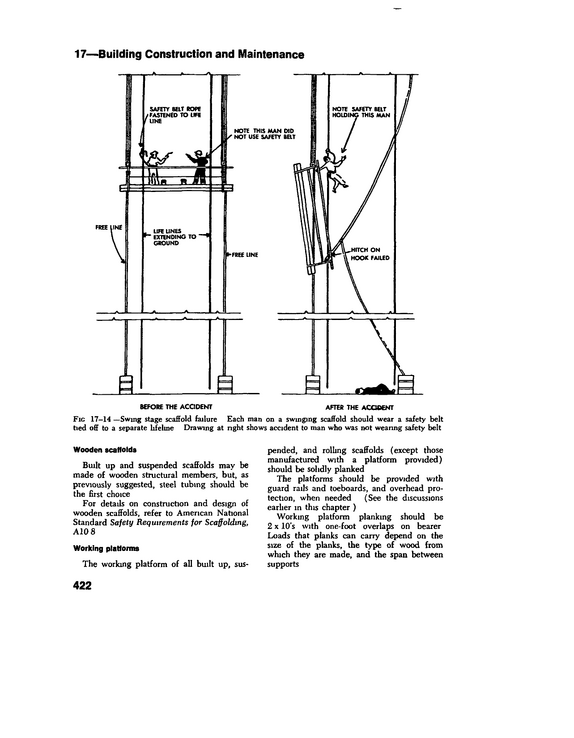
17--Building Construction and Maintenance Fic 17-14 --Swing stage scaffold failure Each man on a swinging scaffold should wear a safety belt tied off to a separate lifeline Drawing at nght shows accident to man who was not wearing safety belt Wooden scaffolds Built up and suspended scaffolds may be made of wooden structural members, but, as previously suggested, steel tubing should be the first choice For details on construction and design of wooden scaffolds, refer to American National Standard Safety Requirements for Scaffolding, A10 8 Working platforms The working platform of all built up, sus 422 pended, and rolling scaffolds (except those manufactured with a platform provided) should be solidly planked The platforms should be provided with guard rails and toeboards, and overhead pro tection, when needed (See the discussions earlier m this chapter ) Working platform planking should be 2 x 10's with one-foot overlaps on bearer Loads that planks can carry depend on the size of the planks, the type of wood from which they are made, and the span between supports
refid# 8VXrw5kOgRoyKz623nM9RjVyB1 page
18--Planning for Emergencies a safeguard fails?
refid# zz2Oaag4q4yrY1waVwg4y5Zgz1 page
PLAINTIFFS EXHIBIT JM 660 MTC 007827 Location.


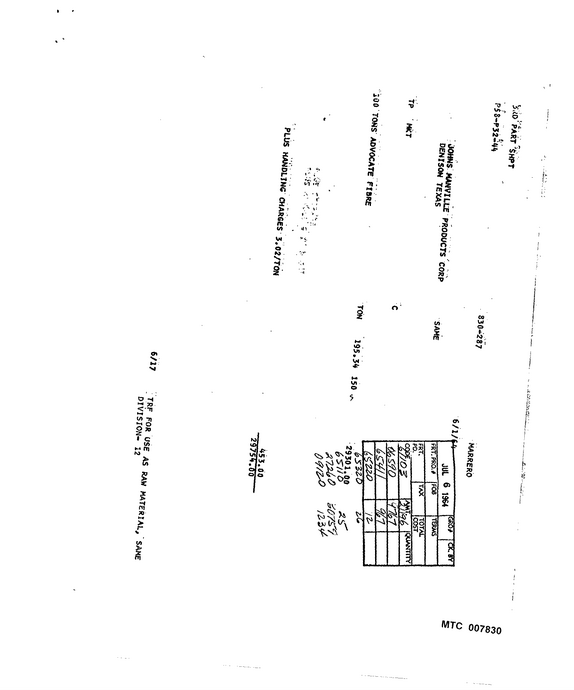
refid# MGQwppKKJYBb90gXYdLOLxD8y710 pages
t**-*^ la oopy af lottar fra* Sr.
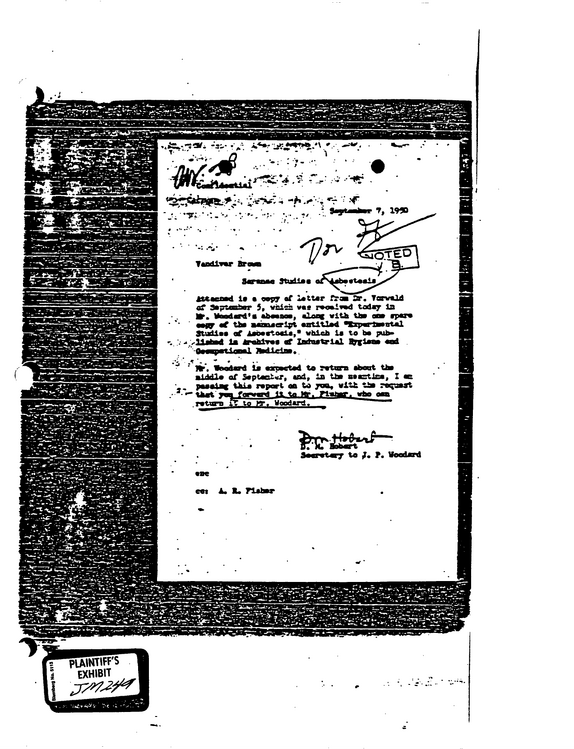
refid# 10M6X9OxxeBjgO5qmX2jJoYGq1 page
Johr.
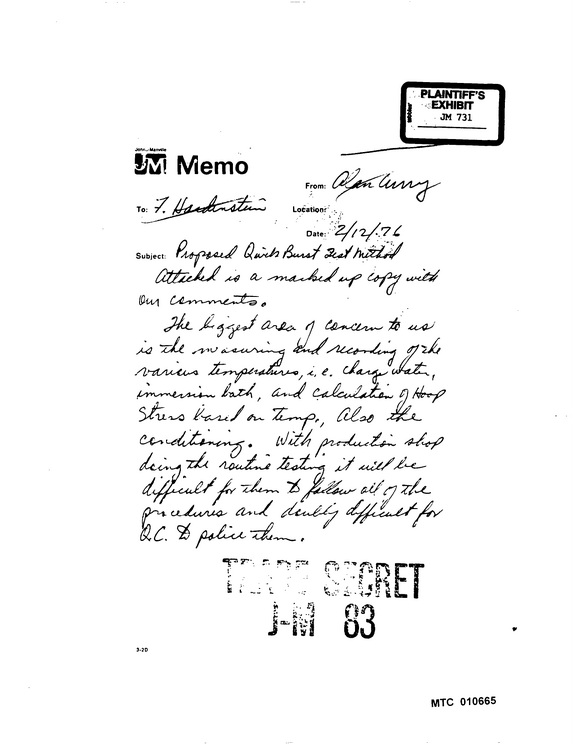

refid# 06ND3xYq3v20wJzLeEdLr56oM2 pages
COVER SHEET FOR B-LEVEL DOCUMENTS REMOVED IN PRIVILEGE REVIEW ORIGINAL B-LEVEL BOX NO.

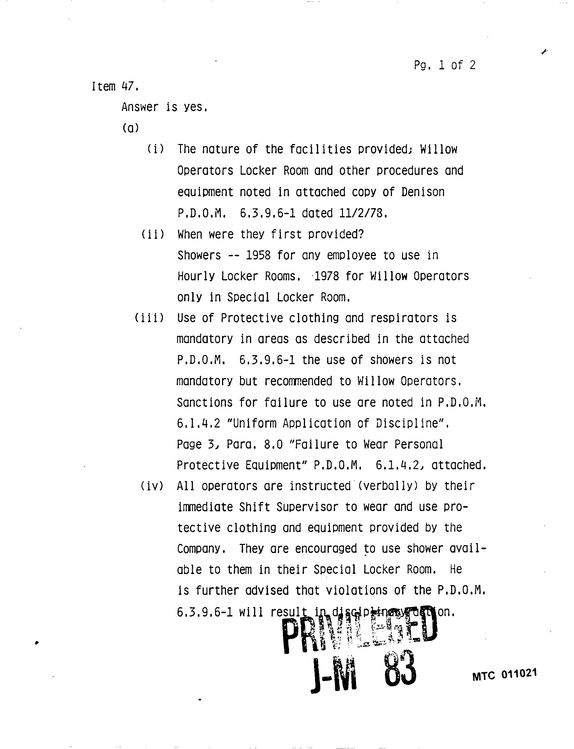
refid# jBk0q0ykMKyp1bmZ8bMG1ZdLO4 pages
MTC 011104 I MTC 011105 PRIVILEGE BOX _ felSP 0PRODUCTION BOX I /?


refid# gD8BoarxbDnroX6q24Xm0KBba6 pages
-{^X Q.V^*?
refid# wgn9kqm2ynr1dNQ2YnJORmJ8D13 pages
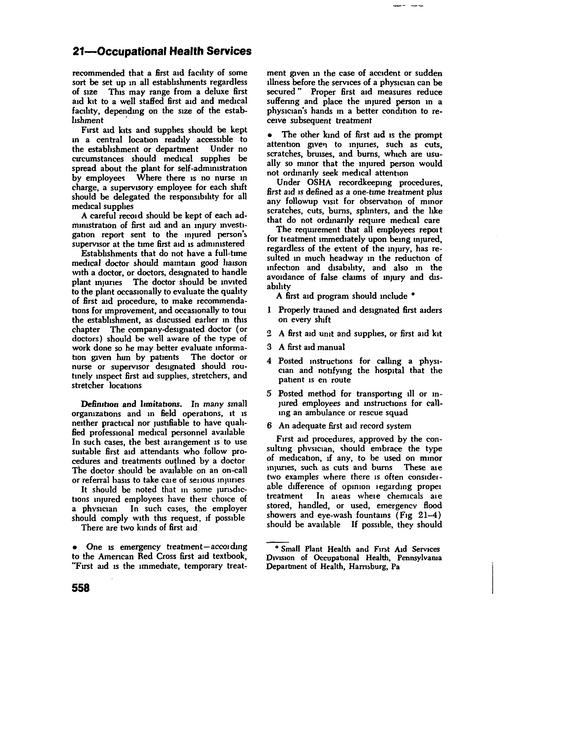
21--Occupational Health Services recommended that a first aid facility of some sort be set up in all establishments regardless of size This may range from a deluxe first aid kit to a well staffed first aid and medical facility, depending on the size of the estab lishment First aid kits and supplies should be kept in a central location readily accessible to the establishment or department Under no circumstances should medical supplies be spread about the plant for self-administration by employees Where there is no nurse in charge, a supervisory employee for each shift should be delegated the responsibility for all medical supplies A careful recoid should be kept of each ad ministration of first aid and an injury investi gation report sent to the injured person's supervisor at the time first aid is administered Establishments that do not have a full-time medical doctor should maintain good liaison with a doctor, or doctors, designated to handle plant injuries The doctor should be invited to the plant occasionally to evaluate the quality of first aid procedure, to make recommenda tions for improvement, and occasionally to toui the establishment, as discussed earlier in this chapter The company-designated doctor (or doctors) should be well aware of the type of work done so he may better evaluate informa tion given him by patients The doctor or nurse or supervisor designated should rou tinely inspect first aid supplies, stretchers, and stretcher locations Definition and limitations.
refid# ykb0bOnL7v1eO7YjQnZ1E0vbr1 page
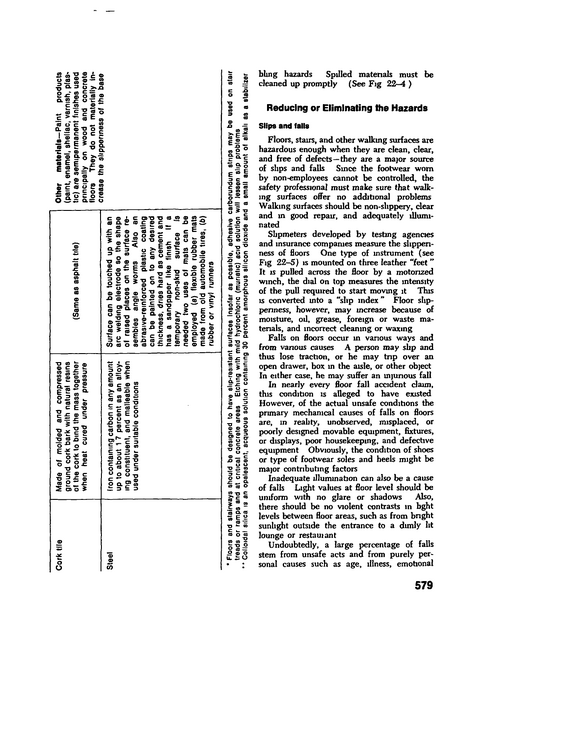
(0 o bling hazards Spilled materials must be a * cleaned up promptly (See Fig 22-4 ) 3 Reducing or Eliminating the Hazards P io l" r i*- c3 CD ^ O E = end HgE o2 " 0= a 5 * -o ->2 ^u rH8.-2oBO"'JO2< ^Q o Co aO c w^a (oQ2UOe O c"cco .c O _ 5S^?
refid# 8Vw43aqJ63D6DnnOb3G50nM3e1 page
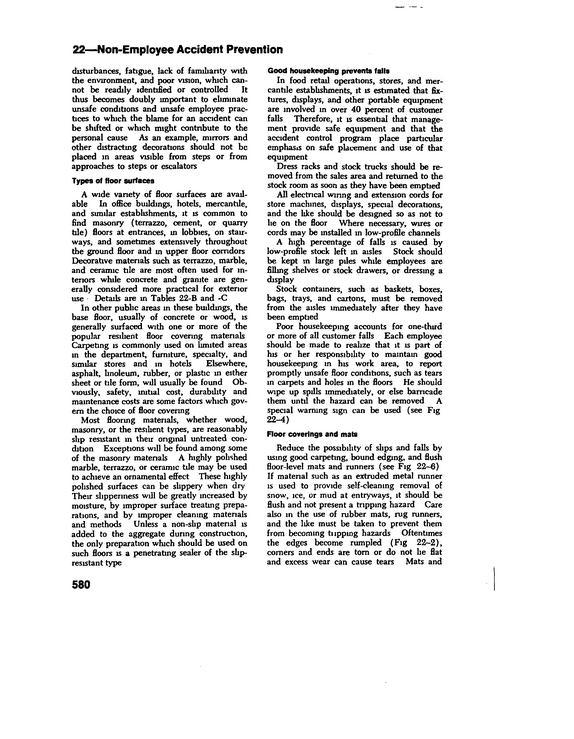
22--Non-Employee Accident Prevention disturbances, fatigue, lack of familiarity with the environment, and poor vision, which can not be readily identified or controlled It thus becomes doubly important to eliminate unsafe conditions and unsafe employee prac tices to which the blame for an accident can be shifted or which might contribute to the personal cause As an example, mirrors and other distracting decorations should not be placed in areas visible from steps or from approaches to steps or escalators Types of floor surfaces A wide variety of floor surfaces are avail able In office buildings, hotels, mercantile, and similar establishments, it is common to find masonry (terrazzo, cement, or quarry tale) floors at entrances, in lobbies, on stair ways, and sometimes extensively throughout the ground floor and in upper floor corridors Decorative materials such as terrazzo, marble, and ceramic tale are most often used for in teriors while concrete and granite are gen erally considered more practical for exterior use ' Details are m Tables 22-B and -C In other public areas in these buildings, the base floor, usually of concrete or wood, is generally surfaced with one or more of the popular resilient floor covering materials Carpeting is commonly used on limited areas m the department, furniture, specialty, and similar stores and in hotels Elsewhere, asphalt, linoleum, rubber, or plastic in either sheet or tile form, wdl usually be found Ob viously, safety, initial cost, durability and maintenance costs are some factors which gov ern the choice of floor covering Most flooring materials, whether wood, masonry, or the resilient types, are reasonably slip resistant in their original untreated con dition Exceptions will be found among some of the masonry materials A highly polished marble, terrazzo, or ceramic tde may be used to achieve an ornamental effect These highly polished surfaces can be slippery when dry Their slipperiness will be greatly increased by moisture, by improper surface treating prepa rations, and by improper cleaning materials and methods Unless a non-slip material is added to the aggregate during construction, the only preparation which should be used on such floors is a penetrating sealer of the slip- resistant type Good housekeeping prevents falls In food retail operations, stores, and mer cantile establishments, it is estimated that fix tures, displays, and other portable equipment are involved in over 40 percent of customer falls Therefore, it is essential that manage ment provide safe equipment and that die accident control program place particular emphasis on safe placement and use of that equipment Dress racks and stock trucks should be re moved from the sales area and returned to the stock room as soon as they have been emptied All electrical wiring and extension cords for store machines, displays, special decorations, and the like should be designed so as not to lie on the floor Where necessary, wires or cords may be installed in low-profile channels A high percentage of falls is caused by low-profile stock left m aisles Stock should be kept m large piles while employees are filling shelves or stock drawers, or dressing a display Stock containers, such as baskets, boxes, bags, trays, and cartons, must be removed from the aisles immediately after they have been emptied Poor housekeeping accounts for one-third or more of all customer falls Each employee should be made to realize that it is part of his or her responsibility to maintain good housekeeping m his work area, to report promptly unsafe floor conditions, such as tears in carpets and holes in the floors He should wipe up spills immediately, or else barricade them until the hazard can be removed A special warning sign can be used (see Fig 22-4) Floor coverings and mats Reduce the possibility of slips and falls by using good carpeting, bound edging, and flush floor-level mats and runners (see Fig 22-6) If material such as an extruded metal runner is used to provide self-cleaning removal of snow, ice, or mud at entryways, it should be flush and not present a tripping hazard Care also in the use of rubber mats, rug runners, and the like must be taken to prevent them from becoming tupping hazards Oftentimes the edges become rumpled (Fig 22-2), comers and ends are tom or do not he flat and excess wear can cause tears Mats and 580
refid# Dvj7qBoegnmBmODOOMRRMov0B1 page
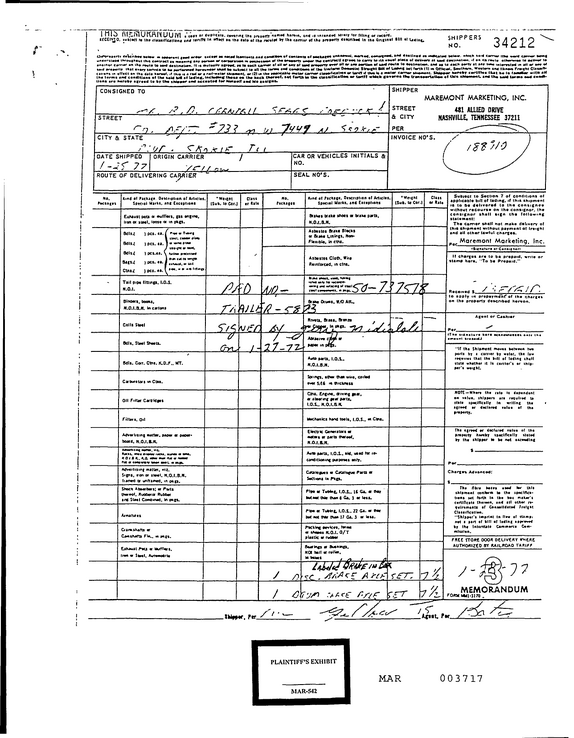
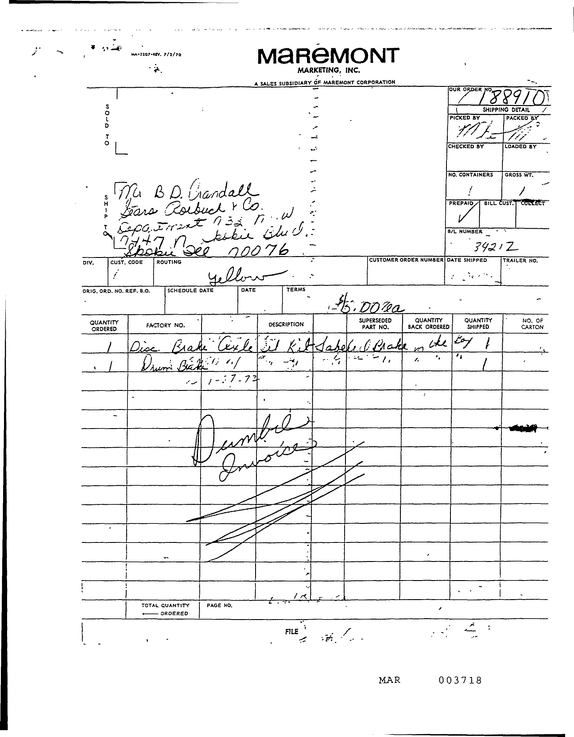
1 Hi ^ IVIUM U KAH U U IYI ree 9r <ue"cnt. covering tn jraaertT n*m#* hstwm. and <a tntensed u'r 'or tiling or recordsfCEIV'O. lusiect la the classifications and lenfft I* fleer an ihe tale / tf,* nc%H* by the camtr f ihe property described In Ida Qngtnal I1H l Lading.
refid# 3J569K6v1GEdEQnmzxJBvjVZa3 pages
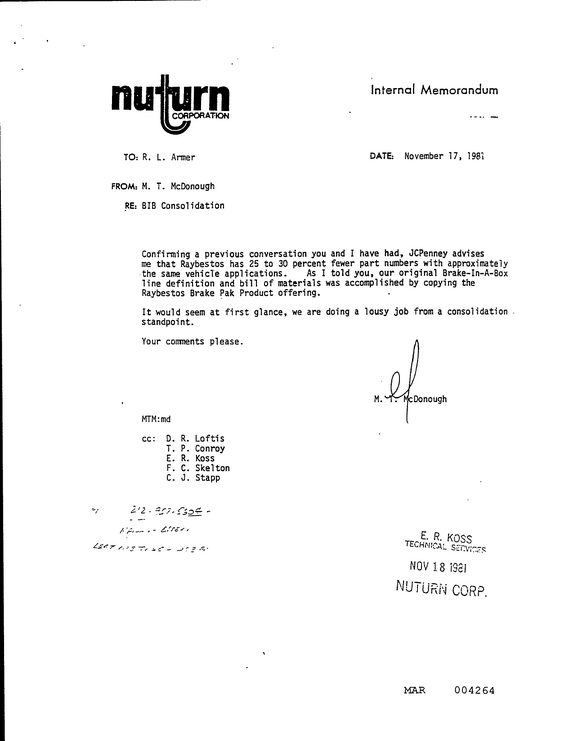
PLAINTIFF'S EXHIBIT V MAR 004053 2< -/- MAR 004054 nuilurn II CORPORATION TO: R.

refid# ZB38bq9vN8vegmnXwDLaVaojJ7 pages
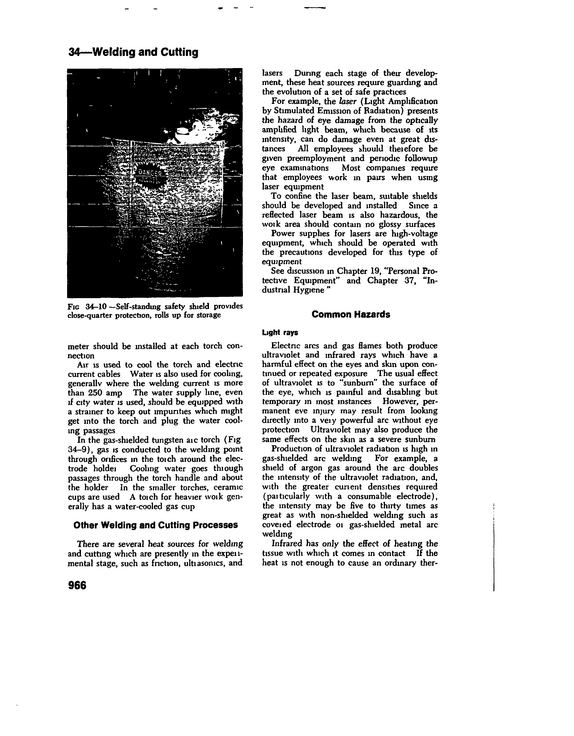
34--Welding and Cutting Fig 34--10 --Self-standing safety shield provides close-quarter protection, rolls up for storage meter should be installed at each torch con nection Air is used to cool the torch and electric current cables Water is also used for cooling, generally where the welding current is more than 250 amp The water supply line, even if city water is used, should be equipped with a strainer to keep out impurities which might get into the torch and plug the water cool ing passages In the gas-shielded tungsten aic torch (Fig 34--9), gas is conducted to the welding point through orifices in the toich around the elec trode holdei Cooling water goes thiough passages through the torch handle and about the holder In the smaller torches, ceramic cups are used A toich for heavier woik gen erally has a water-cooled gas cup Other Welding and Cutting Processes There are several heat sources for welding and cutting which are presently m the expenmental stage, such as friction, ultiasonics, and 966 lasers During each stage of their develop ment, these heat sources require guarding and the evolution of a set of safe practices For example, the laser (Light Amplification by Stimulated Emission of Radiation) presents the hazard of eye damage from the optically amplified light beam, which because of its intensity, can do damage even at great dis tances All employees should theiefore be given preemployment and periodic followup eye examinations Most companies require that employees work m pairs when using laser equipment To confine the laser beam, suitable shields should be developed and installed Since a reflected laser beam is also hazardous, the woik area should contain no glossy surfaces Power supplies for lasers are high-voltage equipment, which should be operated with the precautions developed for this type of equipment See discussion in Chapter 19, "Personal Pro tective Equipment" and Chapter 37, "In dustrial Hygiene " Common Hazards Light rays Electric arcs and gas flames both produce ultraviolet and infrared rays which have a harmful effect on the eyes and skin upon con tinued or repeated exposure The usual effect of ultraviolet is to "sunburn" the surface of the eye, which is painful and disabling but temporary in most instances However, per manent eve injury may result from looking directly into a veiy powerful arc without eye protection Ultraviolet may also produce the same effects on the skin as a severe sunburn Production of ultraviolet radiation is high in gas-shielded arc welding For example, a shield of argon gas around the arc doubles the intensity of the ultraviolet radiation, and, with the greater cunent densities required (paiticulariy with a consumable electrode), the intensity may be five to thirty times as great as with non-shielded welding such as coveied electrode oi gas-shielded metal arc welding Infrared has only the effect of heating the tissue with which it comes m contact If the heat is not enough to cause an ordinary ther-
refid# Xz6V0L33aBZbkJNXmrzrMdxkJ1 page