Refine
Estimated Years 2020-2029Clear
15 results foundRefine Search
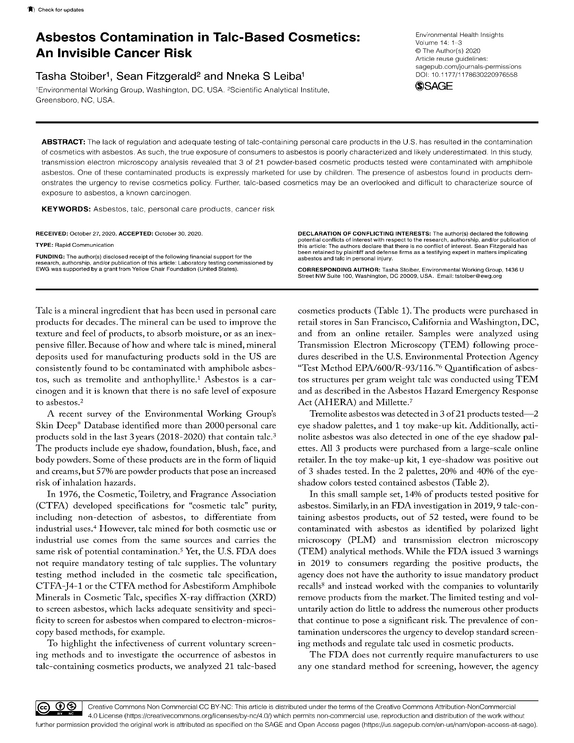
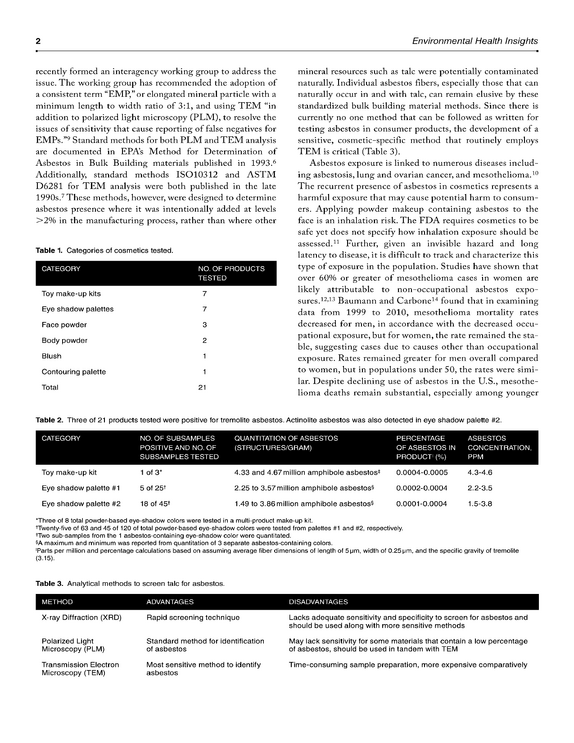
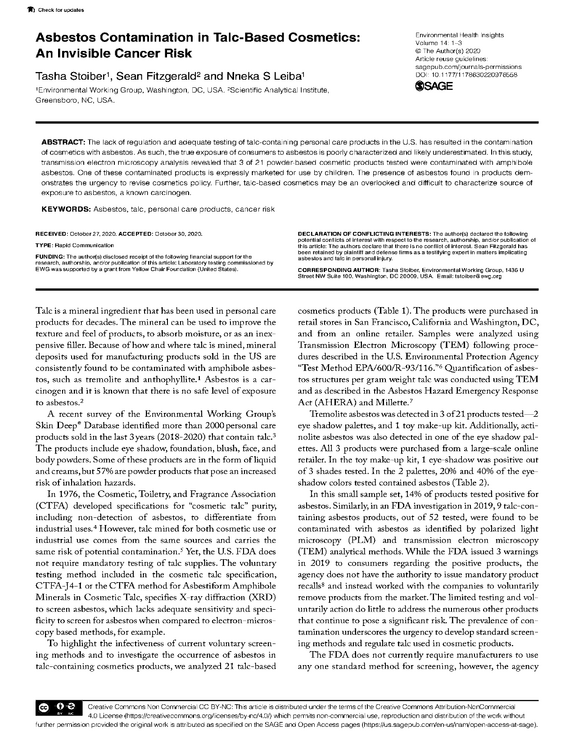
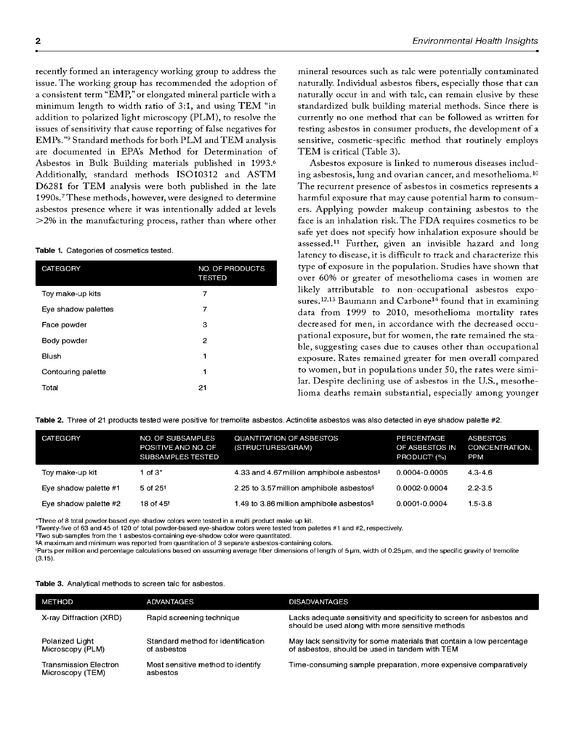
The products include eye shadow foundation blush face and body powders Some of these products are in the form of liquid and creams but 57 are powder products that pose an increased risk of inhalation hazards In 1976 the Cosmetic Toiletry and Fragrance Association CTFA developed specifications for cosmetic talc purity including detection of asbestos to differentiate from industrial uses However talc mined for both cosmetic use or industrial use comes from the same sources and carries the same risk of potential contamination.5 Yet the U.S.
refid# 91RbvYmX12djKzqwobRKRrvv34 pages
The products include eye shadow foundation blush face and body powders Some of these products are in the form of liquid and creams but 57 are powder products that pose an increased risk of inhalation hazards In 1976 the Cosmetic Toiletry and Fragrance Association CTFA developed specifications for cosmetic talc purity including detection of asbestos to differentiate from industrial uses However talc mined for both cosmetic use or industrial use comes from the same sources and carries the same risk of potential contamination.5 Yet the U.S.
refid# zQDKy5b1q7dZn7o52BQZYXrpm4 pages
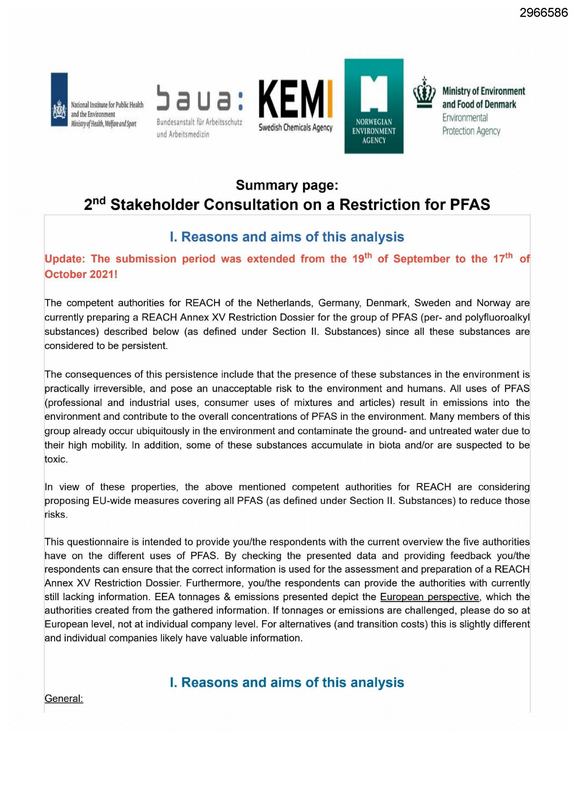
Target group of this questionnaire Questions are addressed to the whole supply chain including industry associations, importers, distributors and downstream users.
refid# VJgpg5aL0oKxB1E8vYnjNeo9o29 pages
Target group of this questionnaire Questions are addressed to the whole supply chain including industry associations, distributors and downstream users.
refid# dQDL2X7gXdjmKy01oBL3jw0Ee53 pages
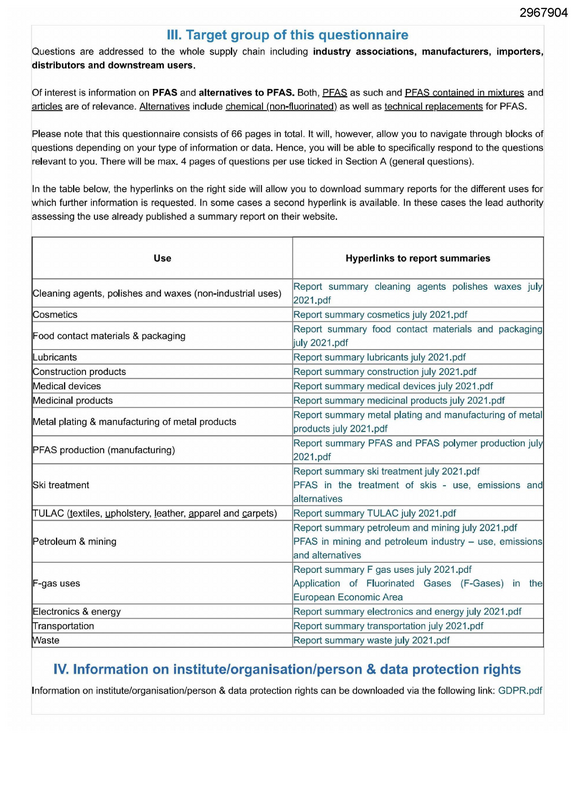
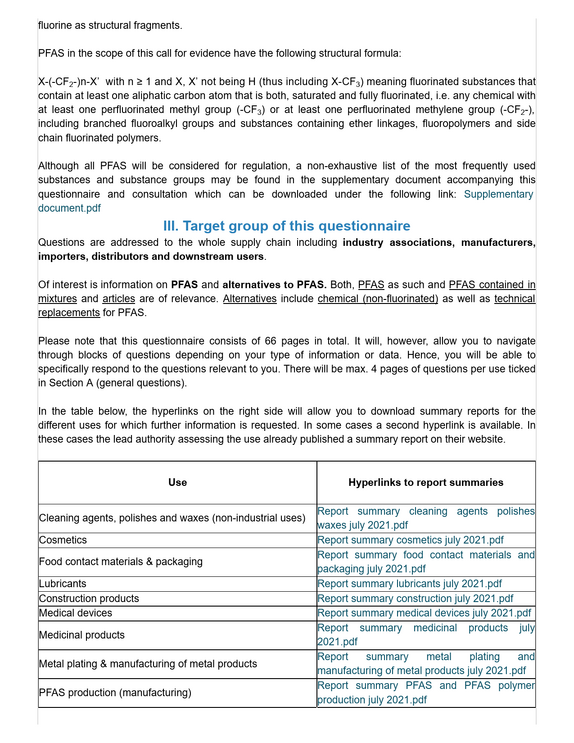
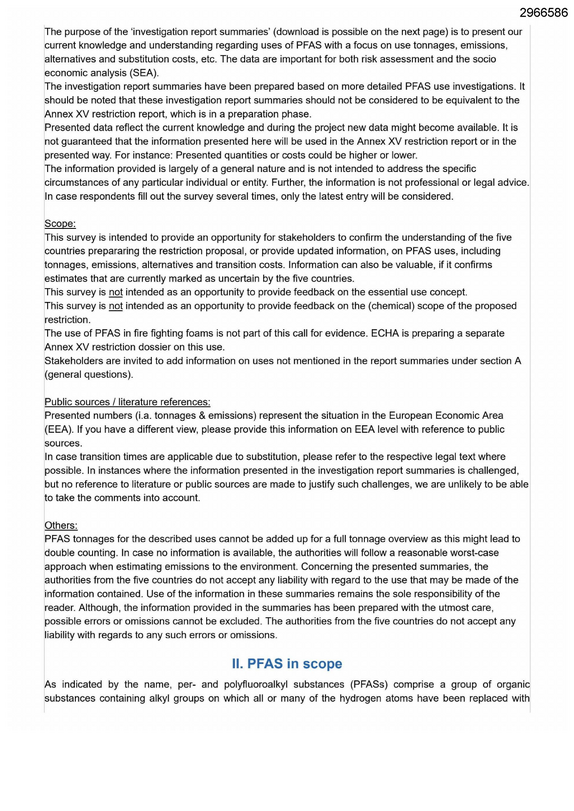
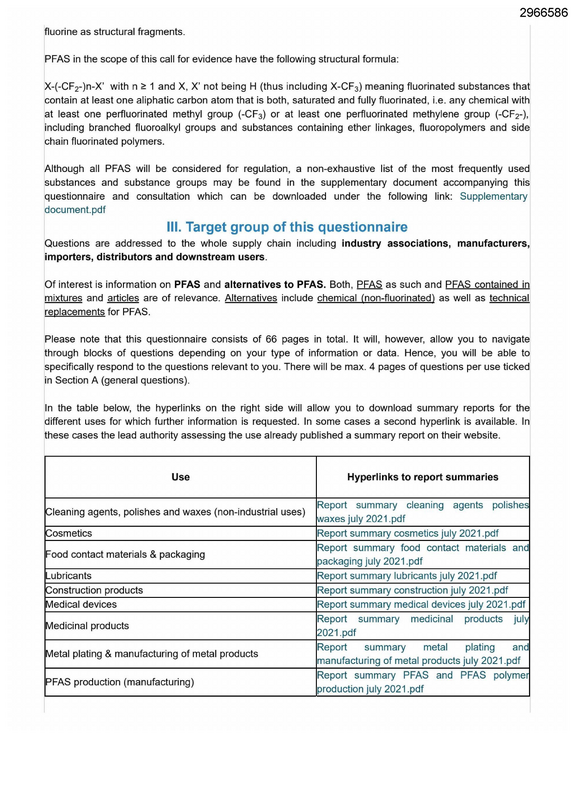
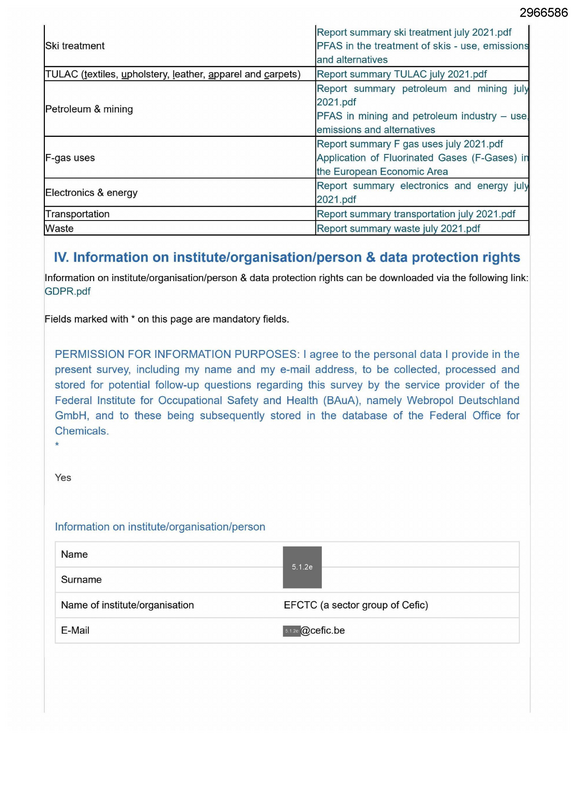
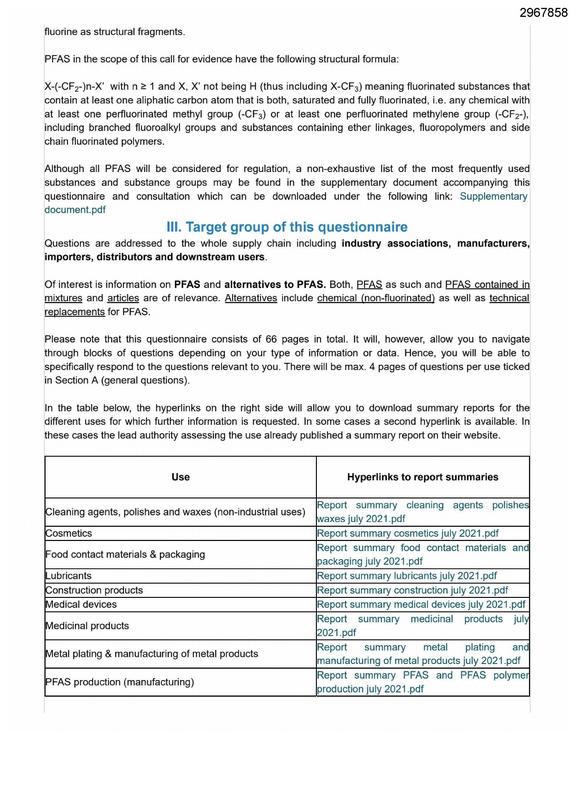
Target group of this questionnaire Questions are addressed to the whole supply chain including industry associations, manufacturers, importers, distributors and downstream users.
refid# 8OGpOpJZkw0wwYnrXrOwbKVyo59 pages
Target group of this questionnaire Questions are addressed to the whole supply chain including industry associations, importers, distributors and downstream users.
refid# mpyQmOK5N9zOZDGKQRz6m7KzB59 pages
Target group of this questionnaire Questions are addressed to the whole supply chain including industry associations, importers, distributors and downstream users.
refid# 0gKOyL3OnjMpbNdVQpVdb6mdm81 pages
Annex II - Honeywell submissions within the 2nd Call for Evidence (CfE) on PFAS restriction Honeywell Europe N.V.
refid# J35D2Qm8v3NVY3meL8MbXw4ye78 pages
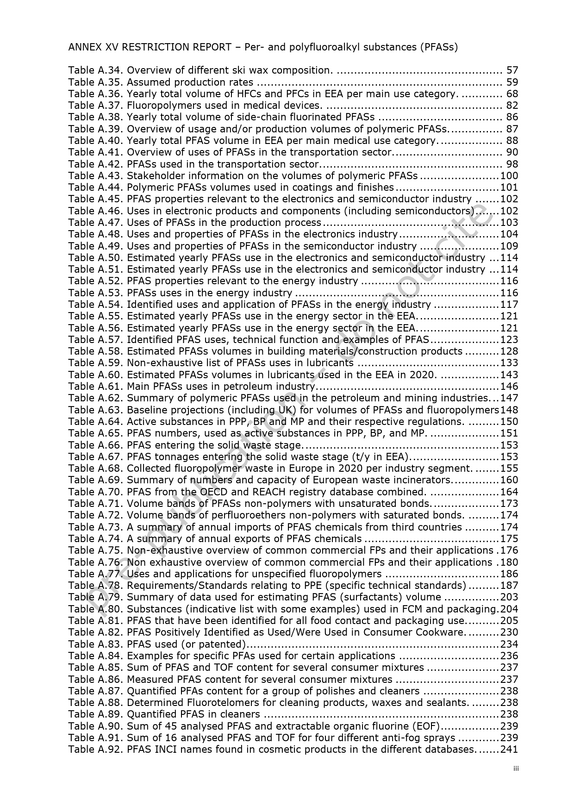
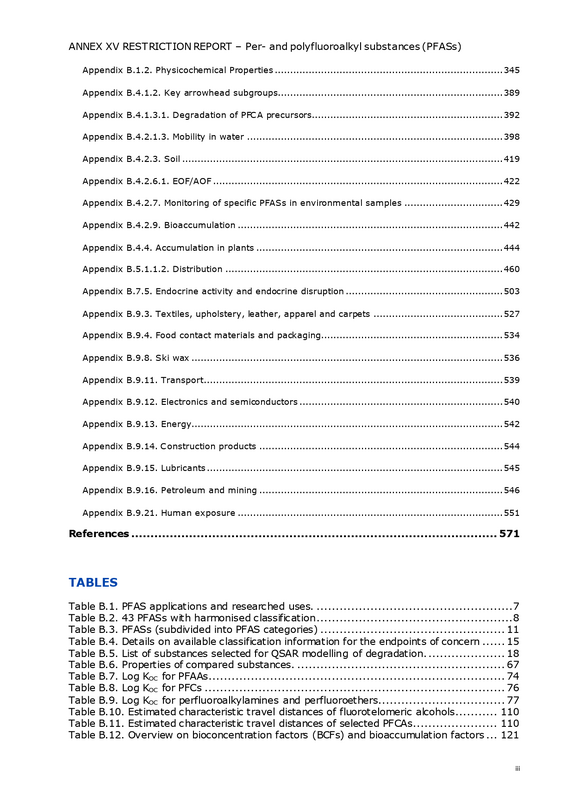
Share of cosmetic products and product versions containing PFAS*. ............. 53 Table A.31.
refid# ppZGkNn1VKzvyoGXRywoQ4daE302 pages
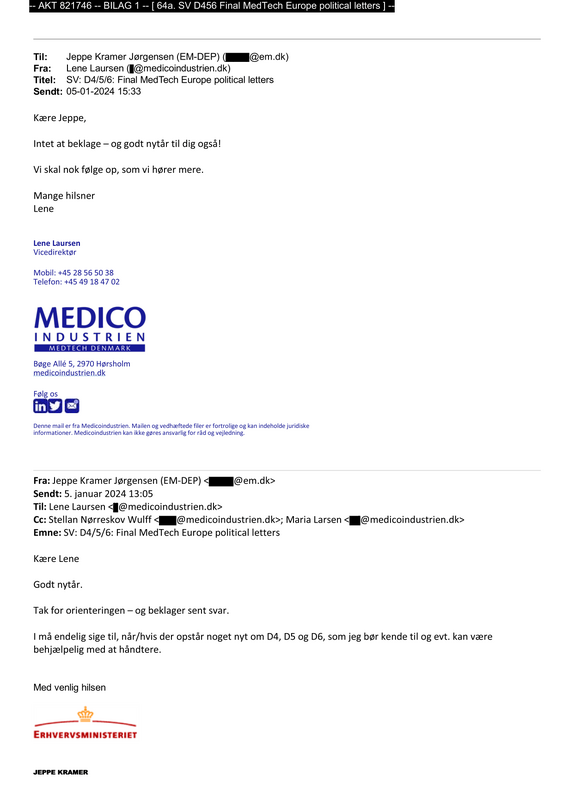
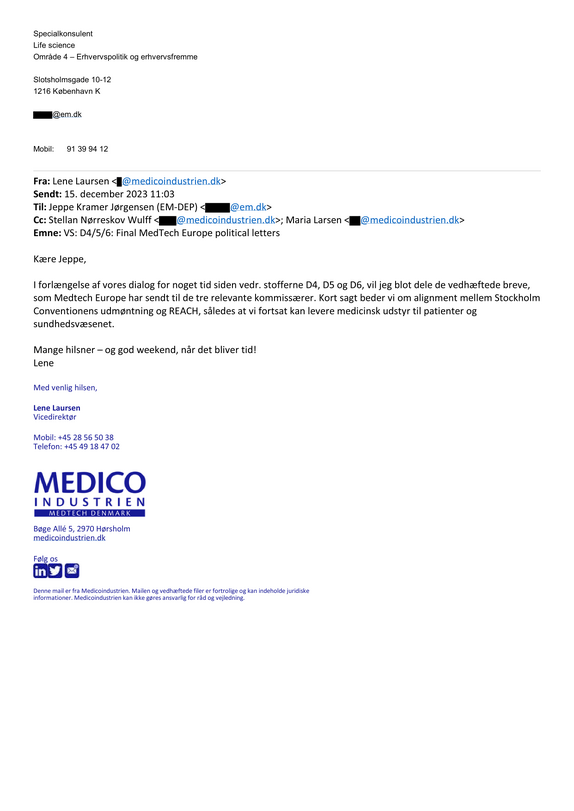
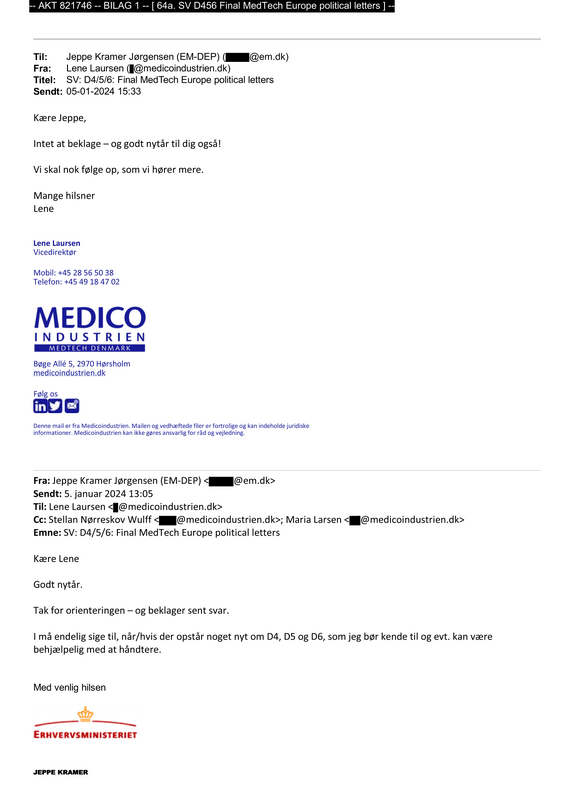
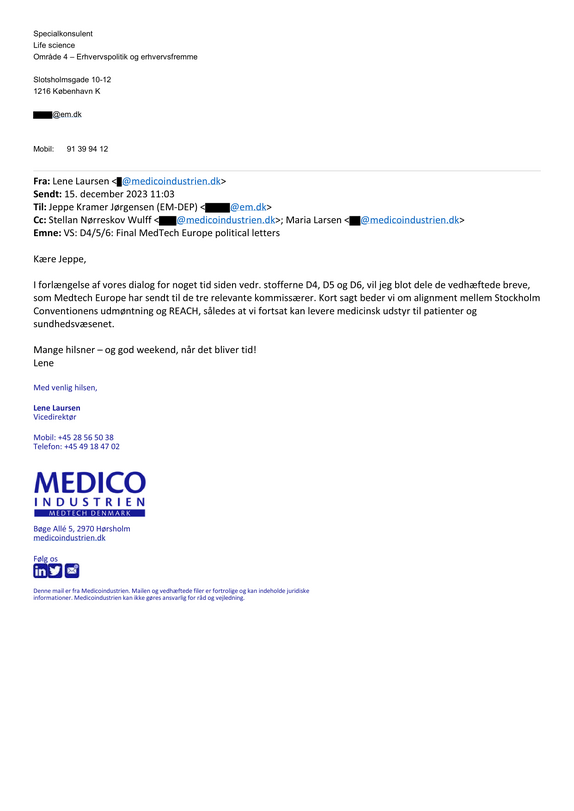
Til: Jeppe Kramer Jrgensen (EM-DEP) ( @em.dk) Fra: Stellan Nrreskov Wulff (ffi@medicoindustrien.dk) Titel: SV: Mde ml.
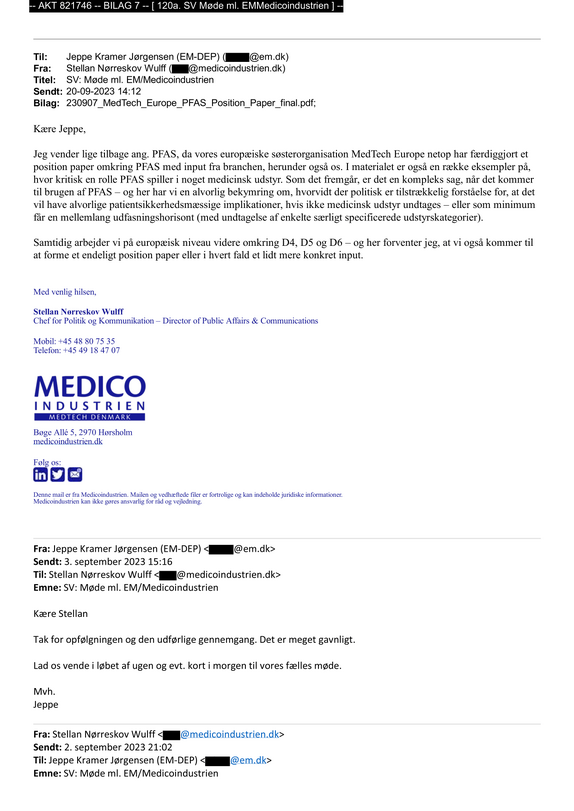
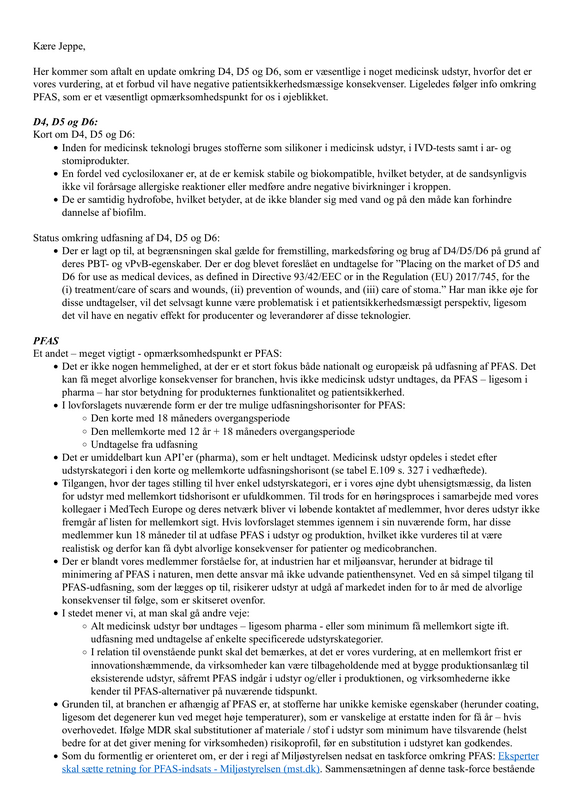
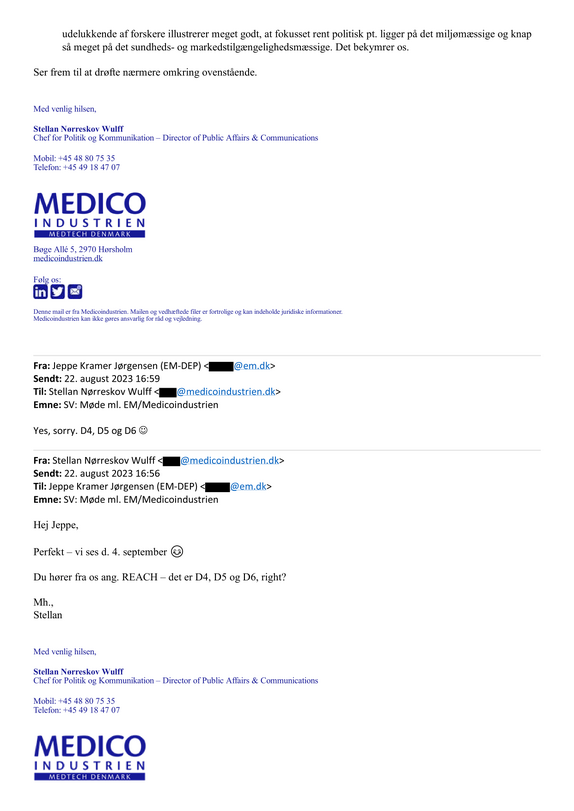
refid# jRG1odVrzVj7GRRj8m2XN9bZ597 pages
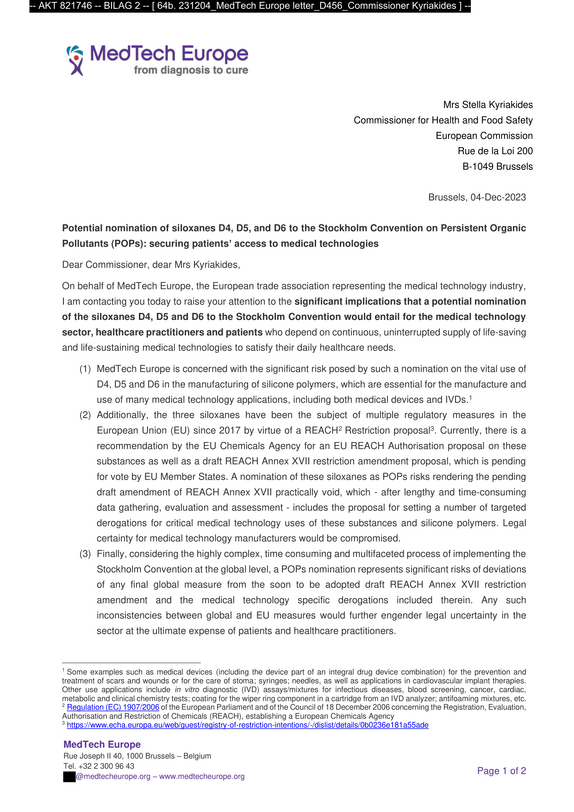
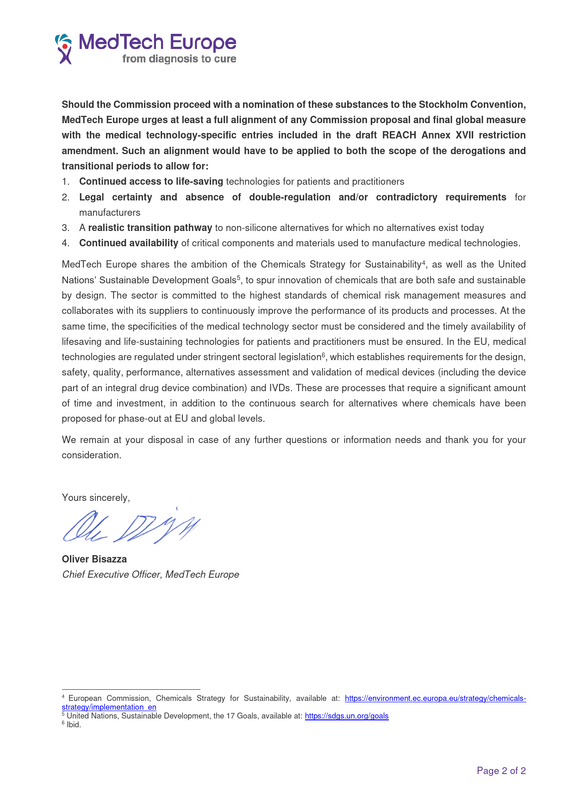
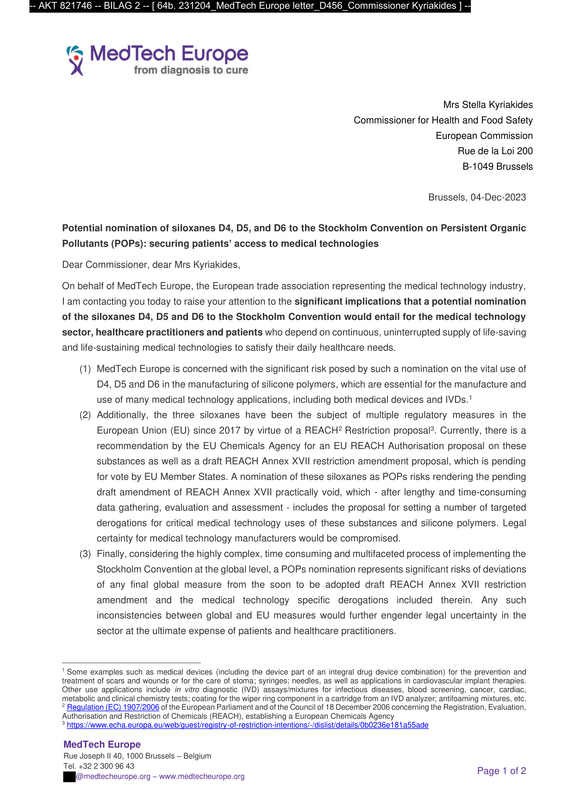
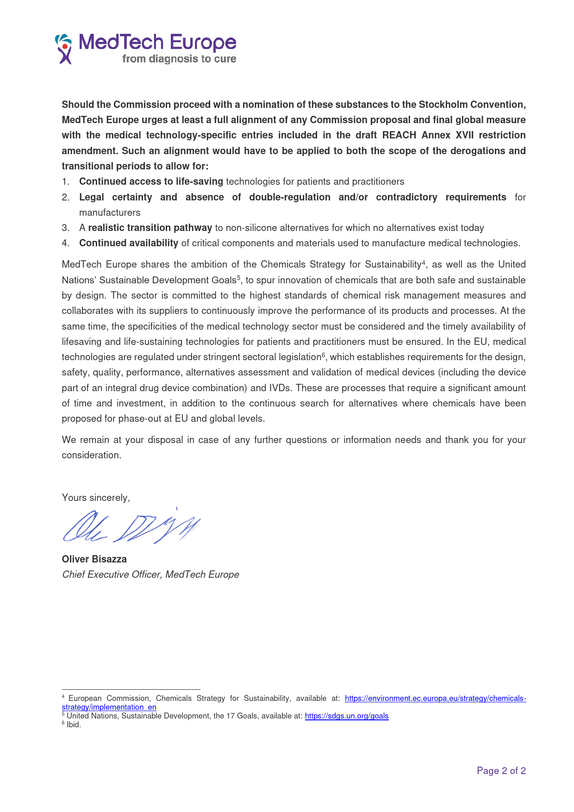
. (\' i MedTech Europe from diagnosis to cure A Mrs Stella Kyriakides Commissioner for Health and Food Safety European Commission Rue de la Loi 200 B-1049 Brussels Brussels, 04-Dec-2023 Potential nomination of siloxanes D4, D5, and D6 to the Stockholm Convention on Persistent Organic Pollutants (POPs): securing patients' access to medical technologies Dear Commissioner, dear Mrs Kyriakides, On behalf of MedTech Europe, the European trade association representing the medical technology industry, I am contacting you today to raise your attention to the significant implications that a potential nomination of the siloxanes D4, D5 and D6 to the Stockholm Convention would entail for the medical technology sector, healthcare practitioners and patients who depend on continuous, uninterrupted supply of life-saving and life-sustaining medical technologies to satisfy their daily healthcare needs. (1) MedTech Europe is concerned with the significant risk posed by such a nomination on the vital use of D4, D5 and D6 in the manufacturing of silicone polymers, which are essential for the manufacture and use of many medical technology applications, including both medical devices and IVDs.1 (2) Additionally, the three siloxanes have been the subject of multiple regulatory measures in the European Union (EU) since 2017 by virtue of a REACH2 Restriction proposal3.
refid# mmw5p58QozeqVv6rwRERyLY0b705 pages
. (\' i MedTech Europe from diagnosis to cure A Mrs Stella Kyriakides Commissioner for Health and Food Safety European Commission Rue de la Loi 200 B-1049 Brussels Brussels, 04-Dec-2023 Potential nomination of siloxanes D4, D5, and D6 to the Stockholm Convention on Persistent Organic Pollutants (POPs): securing patients' access to medical technologies Dear Commissioner, dear Mrs Kyriakides, On behalf of MedTech Europe, the European trade association representing the medical technology industry, I am contacting you today to raise your attention to the significant implications that a potential nomination of the siloxanes D4, D5 and D6 to the Stockholm Convention would entail for the medical technology sector, healthcare practitioners and patients who depend on continuous, uninterrupted supply of life-saving and life-sustaining medical technologies to satisfy their daily healthcare needs. (1) MedTech Europe is concerned with the significant risk posed by such a nomination on the vital use of D4, D5 and D6 in the manufacturing of silicone polymers, which are essential for the manufacture and use of many medical technology applications, including both medical devices and IVDs.1 (2) Additionally, the three siloxanes have been the subject of multiple regulatory measures in the European Union (EU) since 2017 by virtue of a REACH2 Restriction proposal3.
refid# 93O3mLvZ5gwJnN1ZOv08vm2V6705 pages
The conditions proposed under RO2 are as follows: transitional period of 18 months for entry into force; a series of derogations limited in time (from 5 to 12 years); the only unlimited derogations concern active substances in biocidal products, plant protection products and human and veterinary medicinal products; anything that does not fall within the two previous cases and not expressly specified in the proposed derogations, will be banned at the end of the transitional period (e.g. food contact material for consumer use, non-stick pans, cosmetics, household products, etc.); As indicated by the authorities that prepared the restriction dossier, RO2 is considered the most proportionate and balanced scenario (p. 3 PFAS Restriction Report).
refid# 2jVrMmObjvbKQ7N19349NoNmN35 pages
The conditions proposed under RO2 are as follows: transitional period of 18 months for entry into force; a series of derogations limited in time (from 5 to 12 years); the only unlimited derogations concern active substances in biocidal products, plant protection products and human and veterinary medicinal products; anything that does not fall within the two previous cases and not expressly specified in the proposed derogations, will be banned at the end of the transitional period (e.g. food contact material for consumer use, non-stick pans, cosmetics, household products, etc.); As indicated by the authorities that prepared the restriction dossier, RO2 is considered the most proportionate and balanced scenario (p. 3 PFAS Restriction Report).
refid# 3JKejd9O1zdb4RXqpYjKyaYmO36 pages
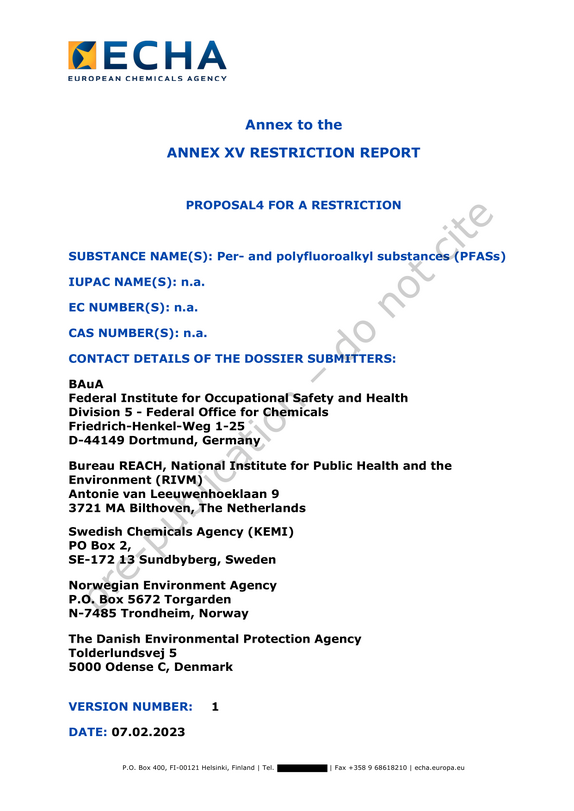
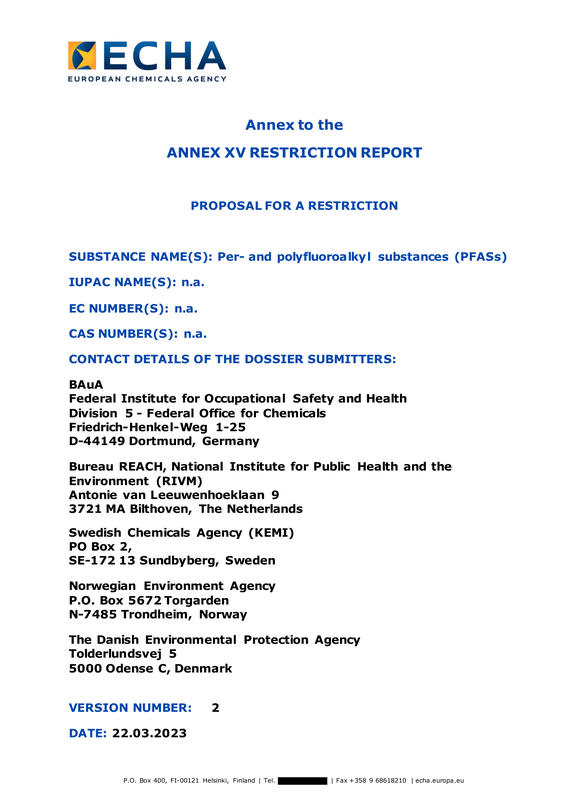
CECHA EUROPEAN CHEMICALS AGENCY Annex to the ANNEX XV RESTRICTION REPORT PROPOSAL FOR A RESTRICTION SUBSTANCE NAME(S): Per- and polyfluoroalkyl substances (PFASs) IUPAC NAME(S): n.a.
refid# NeGRqgazDBmw0wbj5VpYaR16V714 pages