Refine
Estimated Years 2020-2029Clear
5,451 results foundRefine Search
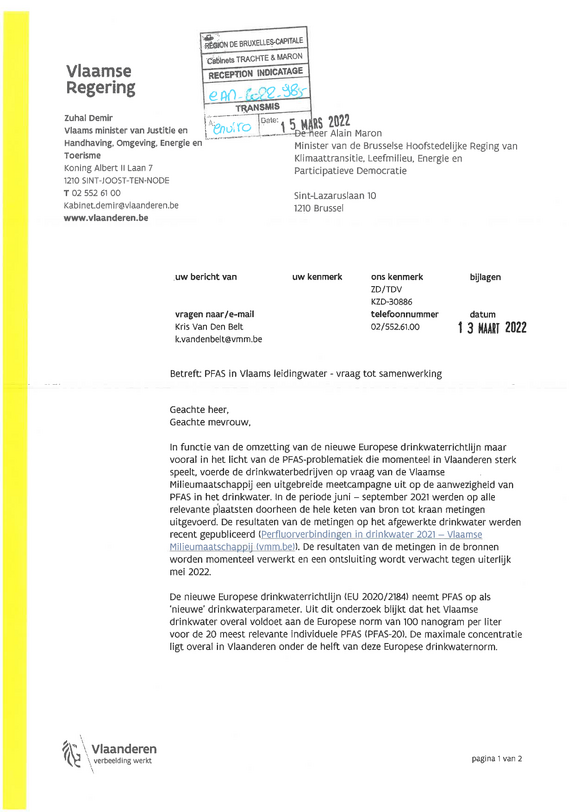
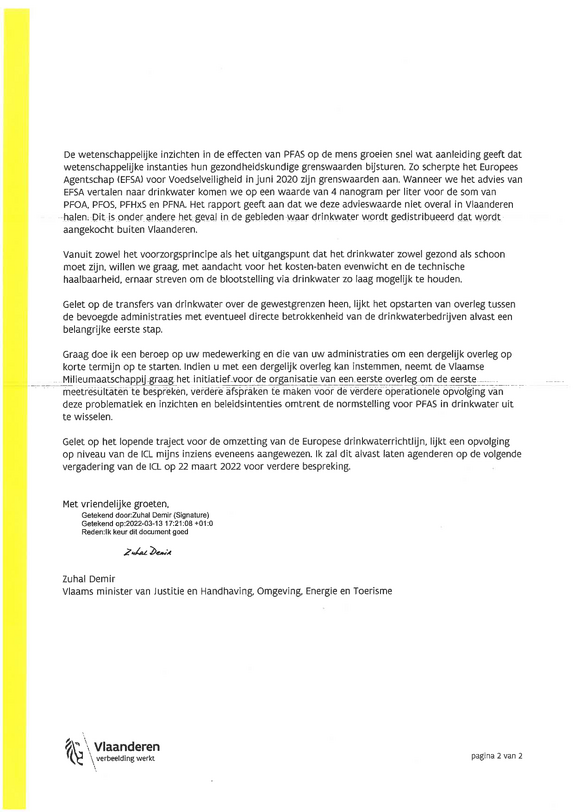
Vlaamse RECEPTION INDIGATAGE Regering on). (00. 38s TRANSHIS V2uihasleDmemiir nivasn stteeren | o0T0JoseASUS W2L THoaenrdhiasvmieng, Omgeving, Energie en KMiinmiasatteerrvaannsidiee,BeruesfsmeillsleeuH,ooEfnstregdleeliejnke Reging van 1K2o0n0iSngNTA-lbIe0r0tSlTi-TaEnN7NODE Participatieve Democratie K7a0b2i5n5et2e6m1i0r0auisanderente a SintLa: zarusiaan 10 www viaanderen.be uw bericht van vragen naar/emil kKryisaVnadneDnebneBtelatvbmem uw kenmerk xm`oanpos-k3ve0n8m86erk toleoonnummer 0215526100 bijlagen datum 13 Wn 2022 Betref: FAS in Visams leidingwater - vraagtotsamenwerking GGeeaacchhttee mheeevr,rouw vInoofruanlctiinehveatnidcehovmaenetdteiPnFgAvSapnrodbelneimeautwieekEudrioepmeosmeednrtienekwlatinerVriiacahntdjenremnasatrerk Wspielelke,umvaosetrsdcehdaeppdiricennkwiattgeerbbreedirdeiemneoeptcvarmapaaggvnaenvdiet oVipadaemsaeanwerigheid van rPeAlSevianntheptladartisntkevinadtoe.orIhneedne pdeerihoedeeJkuentien-vsaenptbermobnetrot20k2r1awaenrmdeetninogpenalle uitgevoerd.


refid# jgry6eX1naDv7JLJVGdMo7LYO4 pages
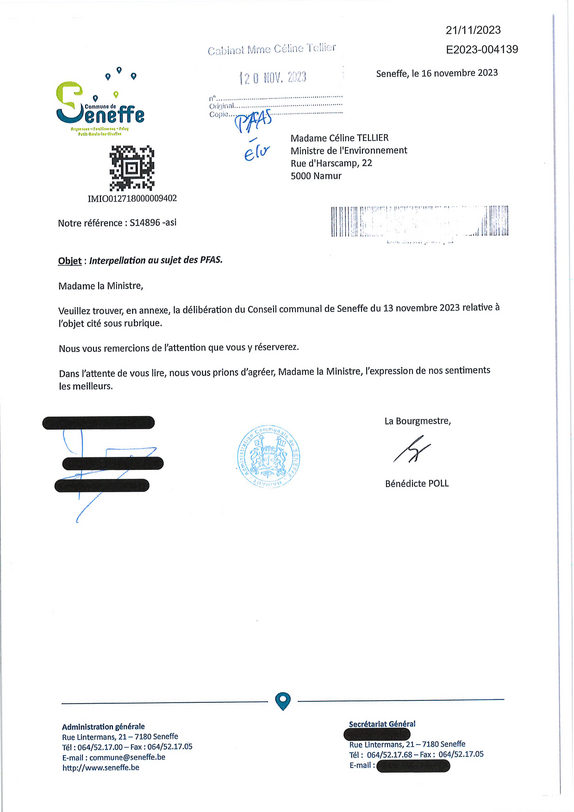
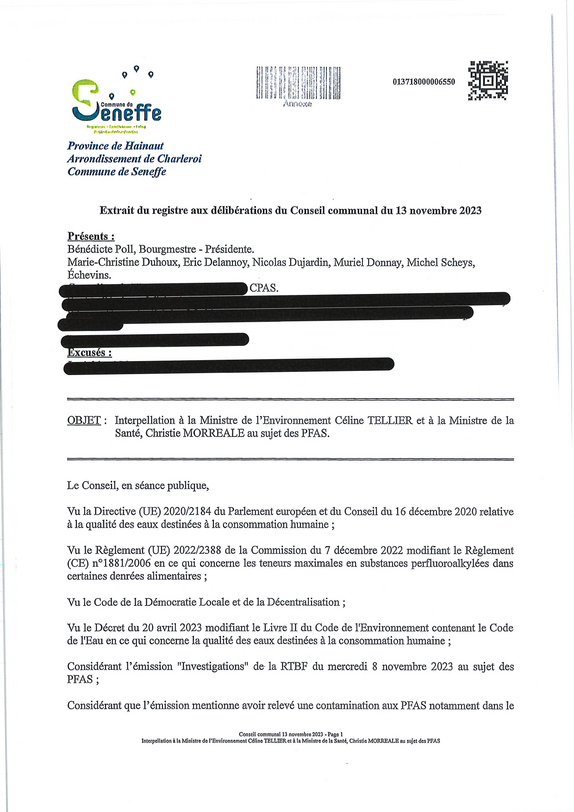
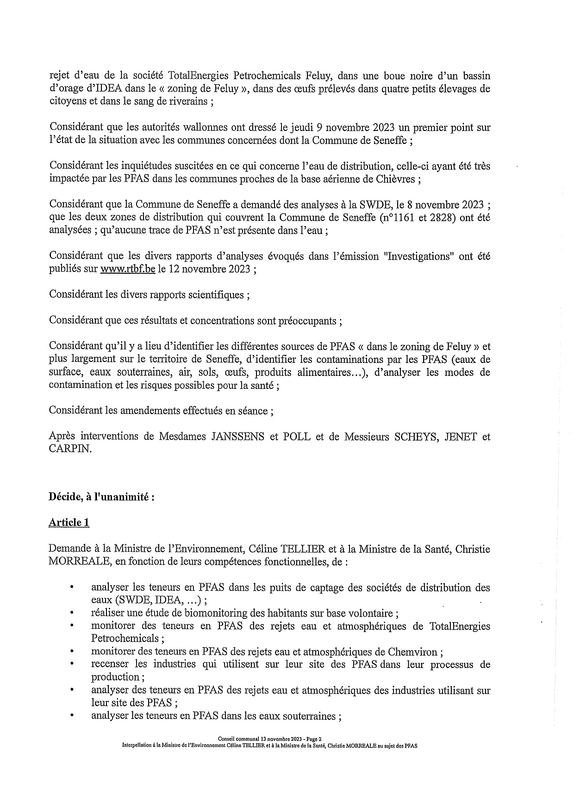
[A] C Oenlffe me ilHhaEs E IMIOh 271500005402 Note erence 514896 251 21/11/2023 Cabinet Mme Cline 120 10V. : RS Tellier 23 E2023-004139 Selne16enovfembere2,023 - Madame Cline TELLIER el 5MRi0un0ei0sdNtHraaemrdsuecraEmnpv,ir2o2nnement rE lJiit:| " alih ba Obje:t Interpellation au sujet des PFAS.

refid# 2q1MoRzEm6DYmq6V9RvMLx2dN6 pages
06/02/2024 E2024-000563 Ville d'Ath Val de Dendre Cabinet du Bourgmestre Bruno LEFEBVRE Rue de Pintamont 54 7800 Ath T. 068 6810 10 M. 0477 7610 98 bruno@ath.be wweath.be inure Madame Clinge Tellier t I le ov.wallonle.be Ath, le ter fvrier 2024 Madame la Ministre, Nous avons eu l'occasion de nous runir entre les Bourgmestres de YVAN concerns par la problmatique du dpassement des seuils de PFAS dans l'eau de distribution entre octobre 2021 et mars 2023.
refid# ExE45EkJdwMXbe74xBjndJZL02 pages
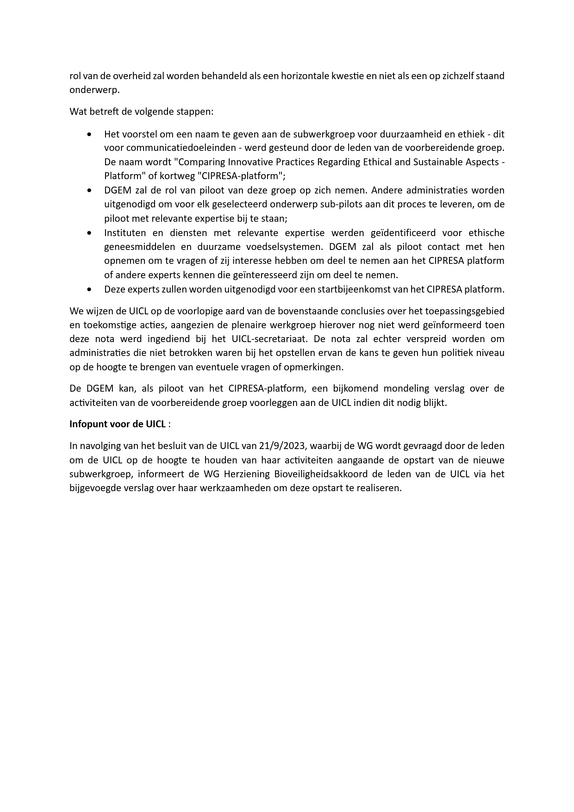
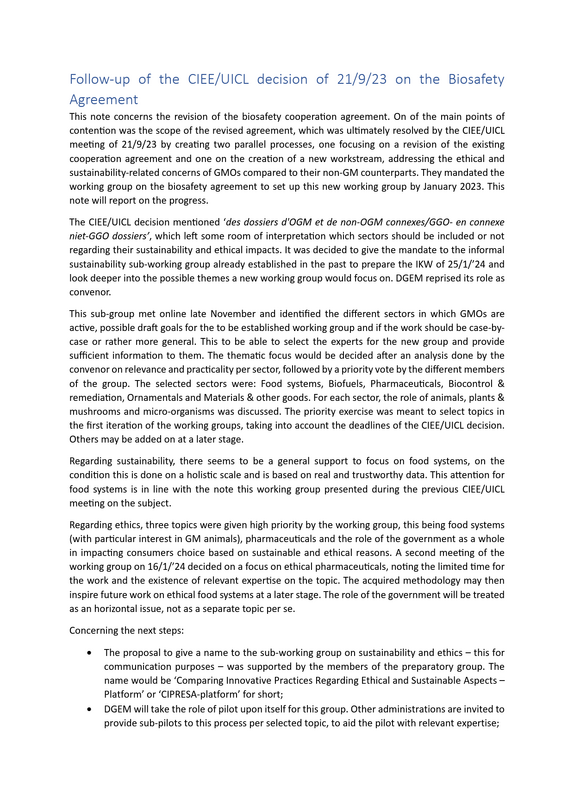
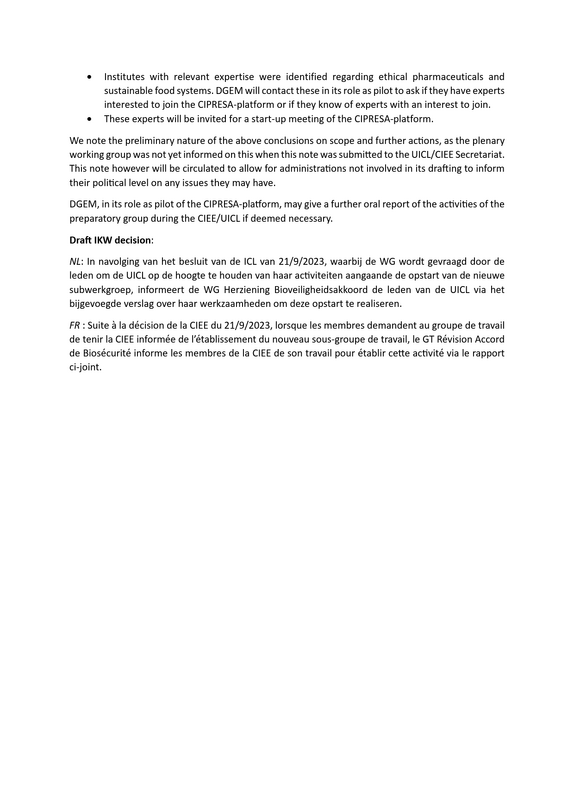
Opvolging van de UICL beslissing van 21/9/23 betreffende het Bioveiligheidsakkoord (English below.
refid# QJgREeaye8BZyZ0jr1po8eYo74 pages
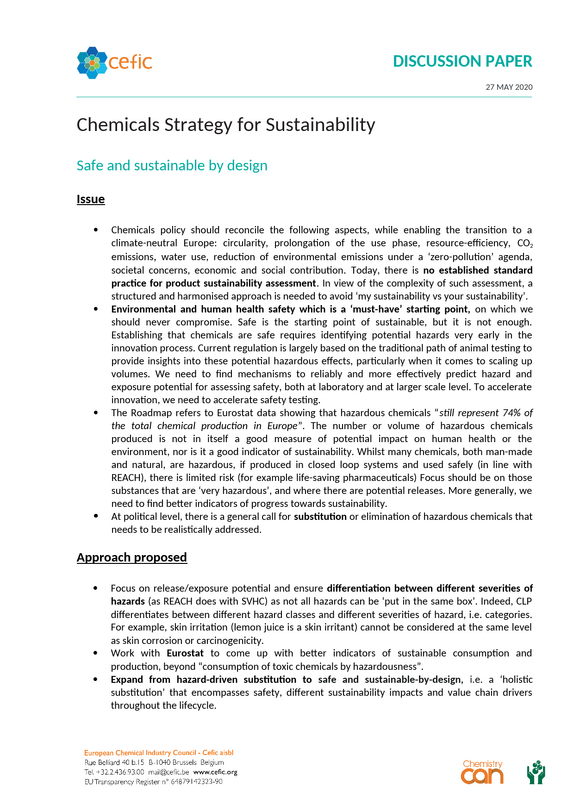
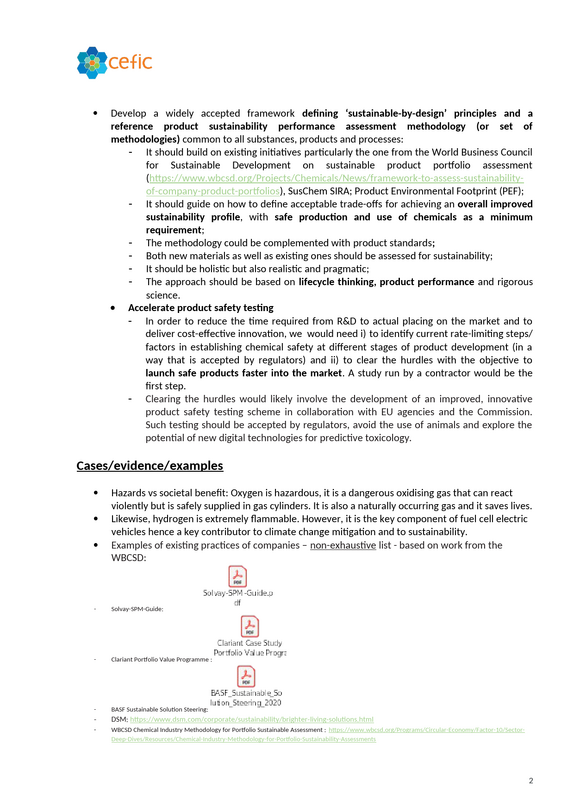
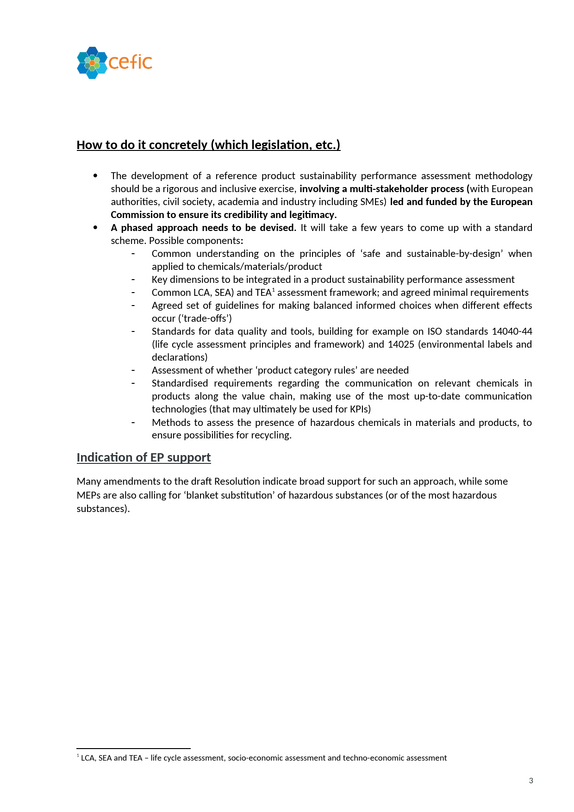
DISCUSSION PAPER 27 MAY 2020 Chemicals Strategy for Sustainability Safe and sustainable by design Issue Chemicals policy should reconcile the following aspects, while enabling the transition to a climate-neutral Europe: circularity, prolongation of the use phase, resource-efficiency, CO2 emissions, water use, reduction of environmental emissions under a `zero-pollution' agenda, societal concerns, economic and social contribution.
refid# EvDvrZb4qv7w7E546ZkoeBGMN3 pages
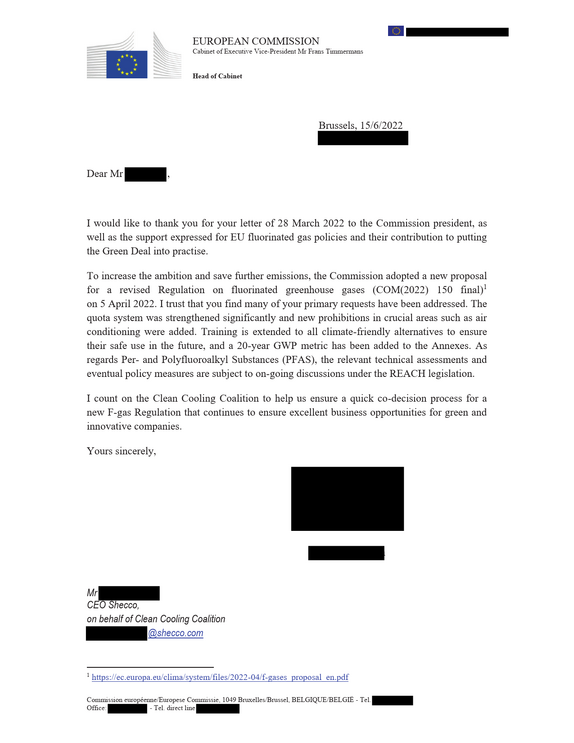
EUROPEAN COMMISSION Cabinet of Executive Vice-President Mr Frans Timmermans Head of Cabinet Dear Mr , Brussels, 15/6/2022 I would like to thank you for your letter of 28 March 2022 to the Commission president, as well as the support expressed for EU fluorinated gas policies and their contribution to putting the Green Deal into practise.
refid# 3N96YYeQ8oG7Q9zeaJ6kMVmQa1 page
Ref.
refid# ByRvk8an64JG5VYNyNDnaD10X1 page
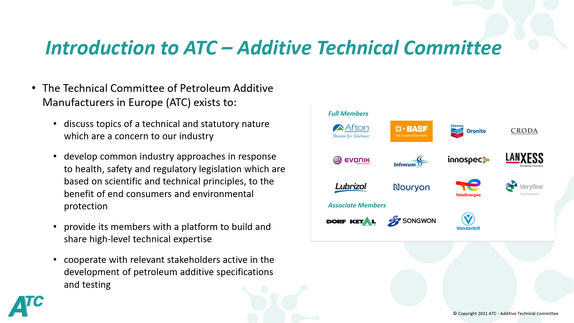
Copyright 2021 ATC - Additive Technical Committee Introduction to ATC Copyright 2021 ATC - Additive Technical Committee Introduction to ATC - Additive Technical Committee The Technical Committee of Petroleum Additive Manufacturers in Europe (ATC) exists to: discuss topics of a technical and statutory nature which are a concern to our industry develop common industry approaches in response to health, safety and regulatory legislation which are based on scientific and technical principles, to the benefit of end consumers and environmental protection provide its members with a platform to build and share high-level technical expertise cooperate with relevant stakeholders active in the development of petroleum additive specifications and testing Copyright 2021 ATC - Additive Technical Committee Fuel and Lubricant Additive Industry Copyright 2021 ATC - Additive Technical Committee Fuel and Lubricant Additive Industry in Europe The petroleum additive industry is a research and development intensive industry World-wide the industry has a turnover of about 11700 million of which the European market is about 3600 million The industry employs directly about 3800 people in Europe and about 12000 globally The industry operates more than 35 research and development establishments and manufacturing sites in Europe, and more than 100 globally World-wide the industry spends about 600 million/annum on research and development, of which 240 million is spent in Europe All lubricants on the market contain additives to improve their stability and performance Over 95% of road retail fuels are treated with performance additives All European refineries use additives in some capacity The petroleum additive industry in Europe is a major exporter Copyright 2021 ATC - Additive Technical Committee Lubricant Additives as Enablers Lubricant additives have enabled OEMs to achieve the emissions reductions needed in moving from Euro I to Euro VI engines Significant reduction in damaging pollutants As Fuel Economy requirements have increased, lubricant additives have enabled Lower viscosity oils Friction modified oils Engineering changes to lower friction in engines Additives enable longer oil drain intervals by improved oil protection Extending lifetime of engine hardware Significantly reducing oil consumption Generating less waste oil Copyright 2021 ATC - Additive Technical Committee Fuel Additives Fuel additives are essential to meet requirements of latest fuel specifications and standards covering refineries, terminals, all sectors of transportation, heating and power generation Cover a broad spectrum of applications, including improved safety, storage, handling, operation and end use performance of fuels reduced exhaust pollutant levels increased combustion efficiency increased specific power output increased fuel efficiency increased service interval duration greater reliability increased stability, handling and safety Copyright 2021 ATC - Additive Technical Committee Additives R&D cycle Petroleum additive manufacturers develop chemistry and formulate additives with desired performance for fuel and lubricant manufacturers Formulating high-performance fuels and lubricants is very complex Must balance numerous ingredients to maintain optimal performance demands Not possible to simply switch one substance for another without negatively impacting performance of additive and consequently the fuel or lubricant Extensive performance qualification testing required by equipment, vehicle manufacturers and fuel producers The substitution of a single substance can easily take 5-10 years and require very significant investments (R&D costs, tox testing, equipment testing, sourcing new raw materials, OPEX) Copyright 2021 ATC - Additive Technical Committee ATC Position On Essential Uses Copyright 2021 ATC - Additive Technical Committee The EU Chemical Strategy for Sustainability ATC embraces the spirit of the EU Green Deal and the EU Chemical Strategy for Sustainability (CSS) and fully recognises that industry has a role to play in tackling the societal and environmental challenges we face and in achieving the objectives set out by the EU Commission We also believe that regulatory actions should be taken following a holistic approach, balancing the several trade-offs at play and considering the interdependencies that characterise a complex society For example, a restriction of a chemical based on hazard properties alone could lead to the adoption of different chemistry with potential sustainability deficits, when the whole lifecycle of the chemical is taken into account Copyright 2021 ATC - Additive Technical Committee ATC Concerns A potential shift of focus towards hazard-based regulatory processes under the "generic approach to risk management" In order to invest, industry needs regulations and process that are predictable, science-based and guided by the proportionality principle enshrined in the EU treaties Hazardous substances should not be restricted or banned without due consideration of the societal benefits derived and the availability of technically/economically viable alternatives An acceleration of substitution of hazardous substances purely on the basis of "nonessentiality" as judged against overly simplistic criteria should be avoided This could lead to "regrettable substitution".


refid# QRmgEzZVnrnxdbGpkQ7xvBO514 pages
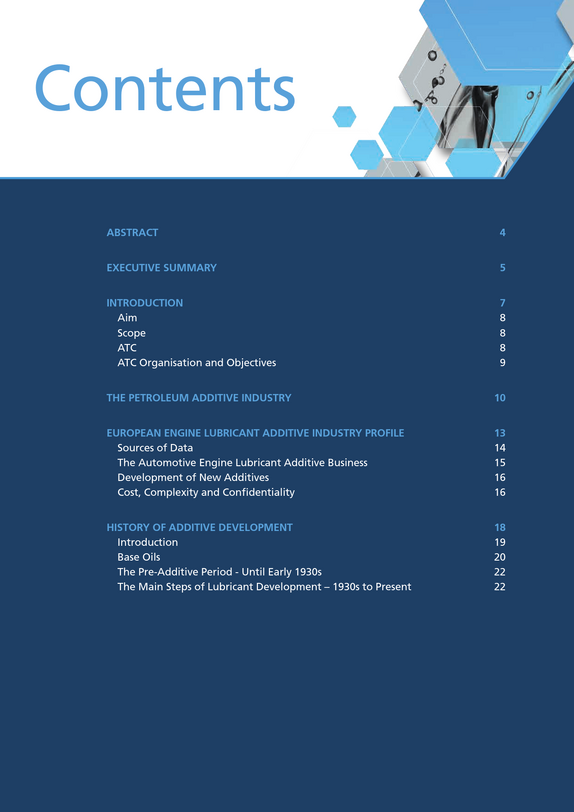
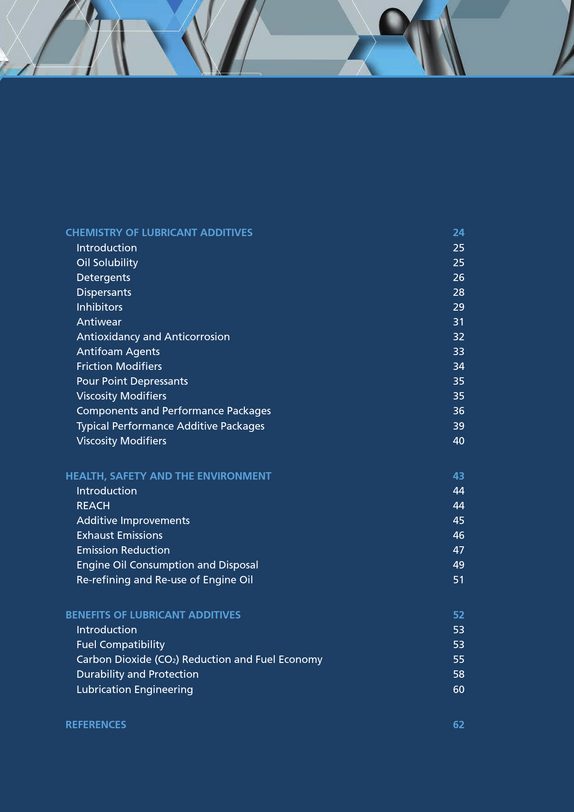
Lubricant Additives: Use and Benefits AUGUST 2016 / ATC DOCUMENT 118 Technical Committee of Petroleum Additive Manufacturers in Europe Contents ABSTRACT 4 EXECUTIVE SUMMARY 5 INTRODUCTION 7 Aim 8 Scope 8 ATC 8 ATC Organisation and Objectives 9 THE PETROLEUM ADDITIVE INDUSTRY 10 EUROPEAN ENGINE LUBRICANT ADDITIVE INDUSTRY PROFILE 13 Sources of Data 14 The Automotive Engine Lubricant Additive Business 15 Development of New Additives 16 Cost, Complexity and Confidentiality 16 HISTORY OF ADDITIVE DEVELOPMENT 18 Introduction 19 Base Oils 20 The Pre-Additive Period - Until Early 1930s 22 The Main Steps of Lubricant Development - 1930s to Present 22 CHEMISTRY OF LUBRICANT ADDITIVES 24 Introduction 25 Oil Solubility 25 Detergents 26 Dispersants 28 Inhibitors 29 Antiwear 31 Antioxidancy and Anticorrosion 32 Antifoam Agents 33 Friction Modifiers 34 Pour Point Depressants 35 Viscosity Modifiers 35 Components and Performance Packages 36 Typical Performance Additive Packages 39 Viscosity Modifiers 40 HEALTH, SAFETY AND THE ENVIRONMENT 43 Introduction 44 REACH 44 Additive Improvements 45 Exhaust Emissions 46 Emission Reduction 47 Engine Oil Consumption and Disposal 49 Re-refining and Re-use of Engine Oil 51 BENEFITS OF LUBRICANT ADDITIVES 52 Introduction 53 Fuel Compatibility 53 Carbon Dioxide (CO2) Reduction and Fuel Economy 55 Durability and Protection 58 Lubrication Engineering 60 REFERENCES 62 Abstract The Technical Committee of Petroleum Additive Manufacturers in Europe (ATC) has carried out an analysis of the size and nature of the engine lubricants market in the 28 countries of the European Community (EU-28).
refid# 7OJe4GLaYwdwmgBkwe8xNy7je64 pages
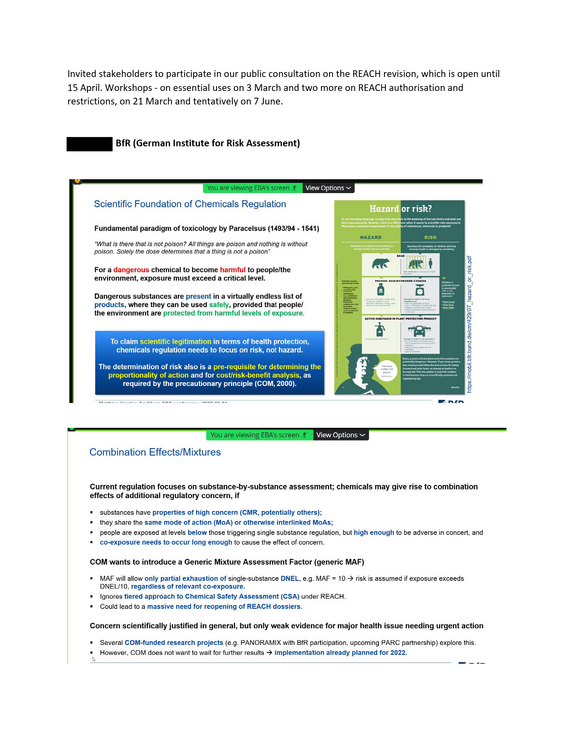
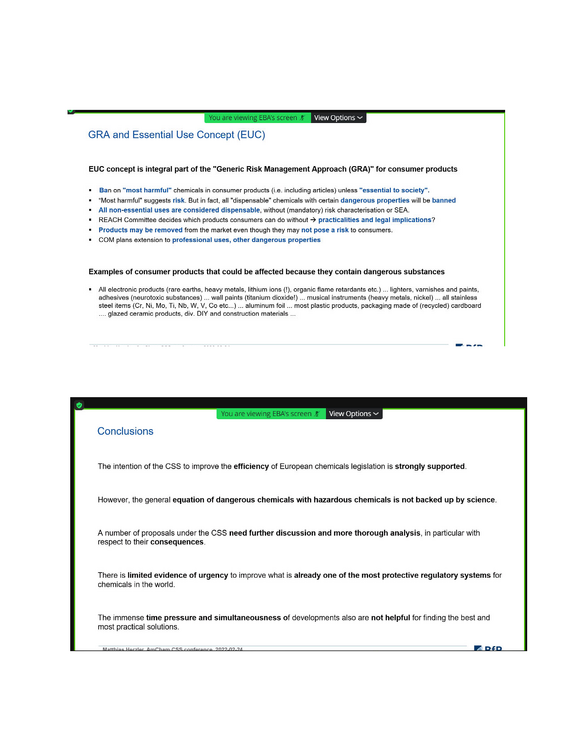
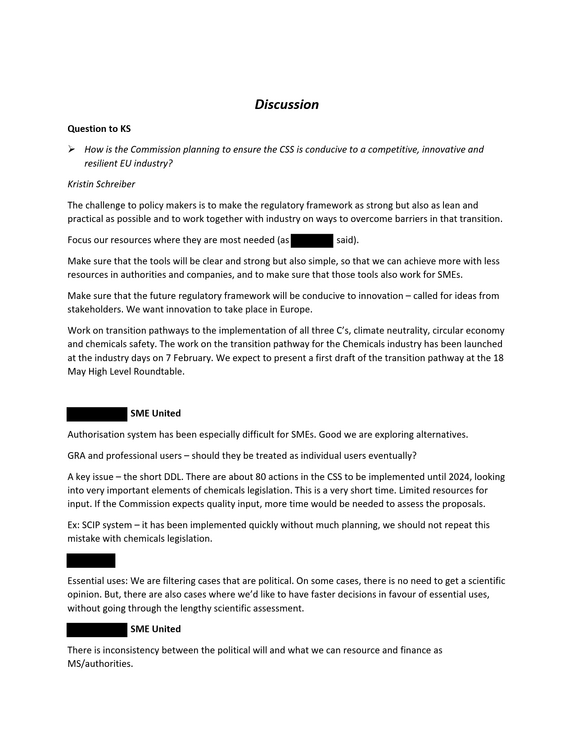
AmCham event 24 February The future of risk management in EU chemicals policy Kristin Schreiber, DG GROW MS have unanimously supported the ambition of the strategy - they are also very much behind the calls for strengthening the generic approach to risk management, the introduction of a mixture assessment factor and limiting the use of endocrine disruptors and persistent substances to essential uses.
refid# mB2nb8VKXRara2x7MQeVrjqmk6 pages
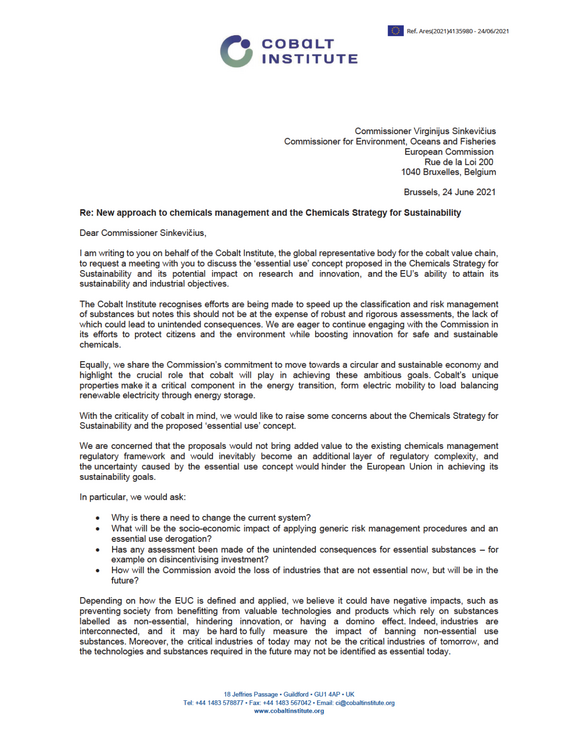
coBaLT INSTITUTE IB nin. senses CommforCEoinmvmiirssonsmieosnnte,EriOuVcrierogpaoiennaisjnauCnsnoSdminFmeikiseshvseiirrcioienuss `Ruedo a Loi200 1040Bruxelles, Belgium Brus2s4Jeunle2s02,1 Re:Newapproachtochemicalsmanagementandthe Chemicals Strfoar Sutstaeinagbilyty DearCommissionerSinkeviiu, 11armeuqrueisntgameyeotuinognwbiehhaylofouftotdhieCscaubsastlhnes`teustseen,ttihaelglsoeb'aclornecperepstepntraotpiovseebdodiytfhoerCthheemciocbaallstSvtalruaetcehgayinfo,r `Sustainability and its potential impact on research and innovation, andtheEU's ability toattain its `sustaanidinnduastbriailolbjeicttiveys.
refid# 6wx6krX8NoB204j5VVdj22r9m2 pages
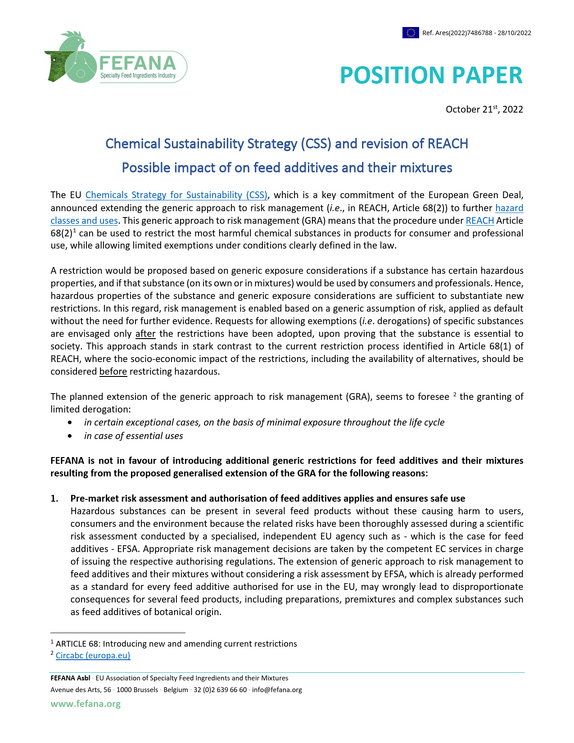
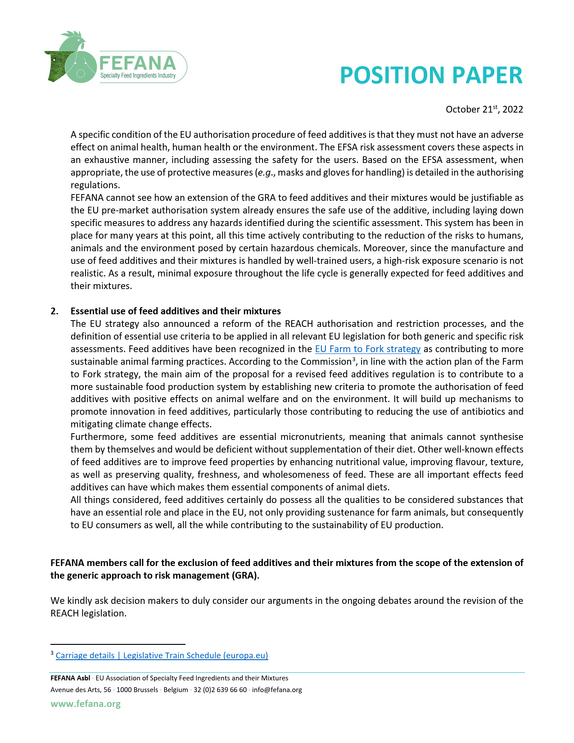
Ref.
refid# rp7LerrG0JkOrYov8L7nkkxJV2 pages
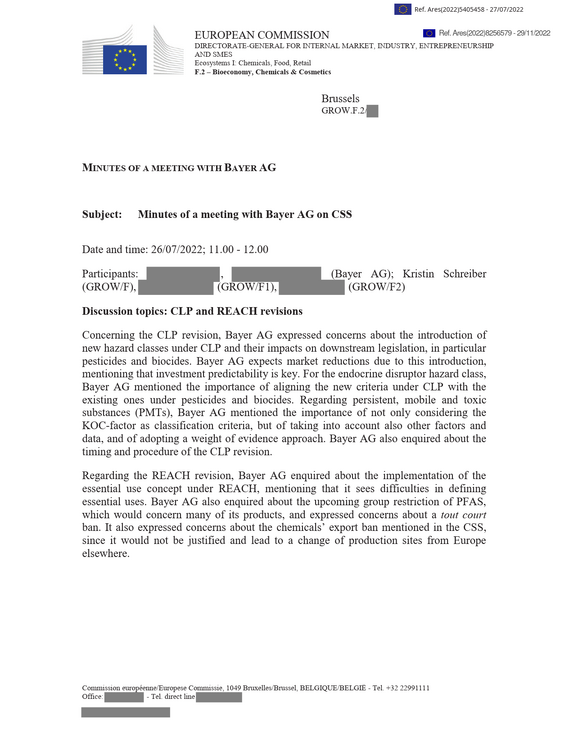
EUROPEAN COMMISSION Ref.
refid# 5bq61968wjdzGgoEy0Br6wwV81 page
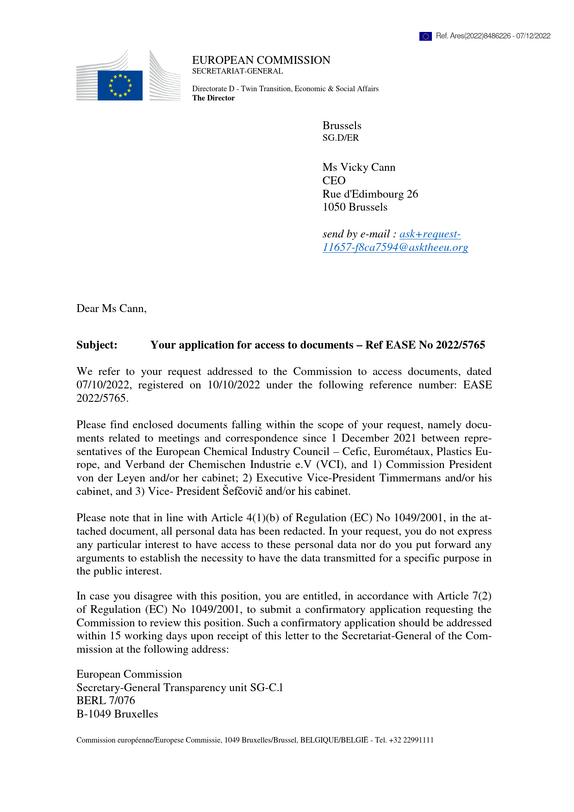
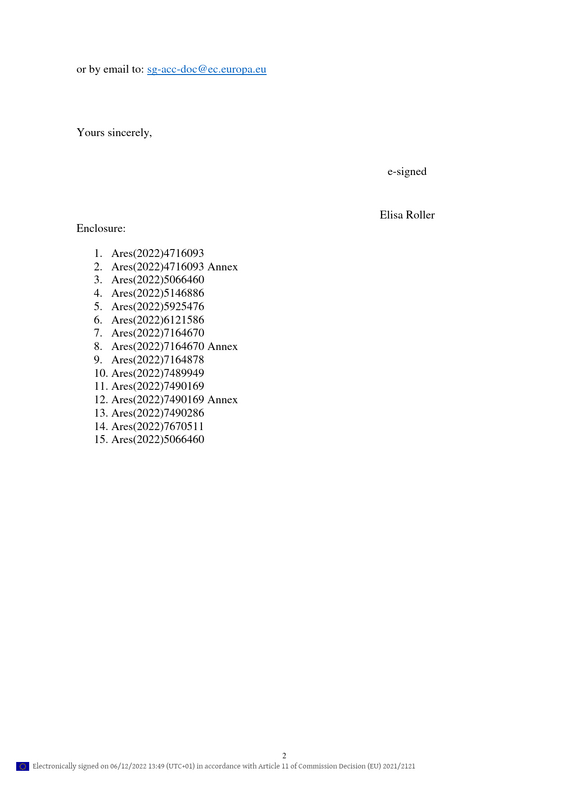
EUROPEAN COMMISSION SECRETARIAT-GENERAL Directorate D - Twin Transition, Economic & Social Affairs The Director Ref.
refid# V37Q3MG6VrEBV7mD5G10zMDLZ2 pages
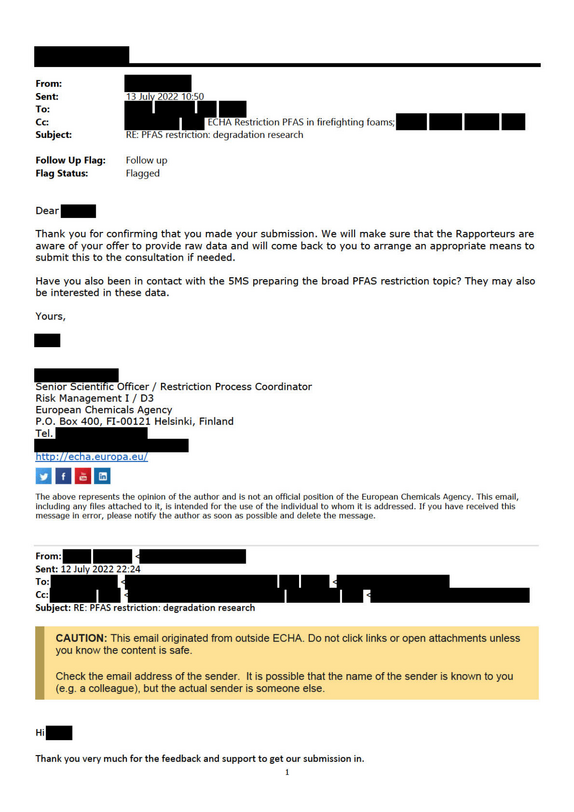
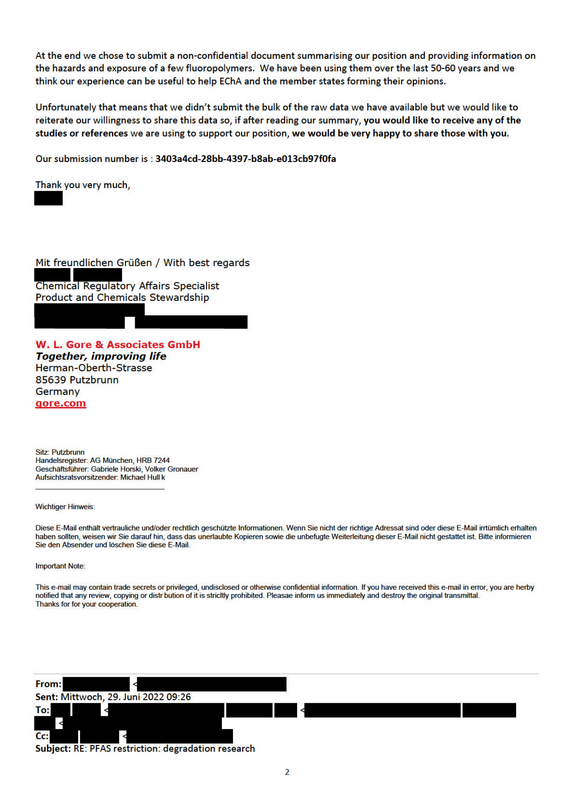
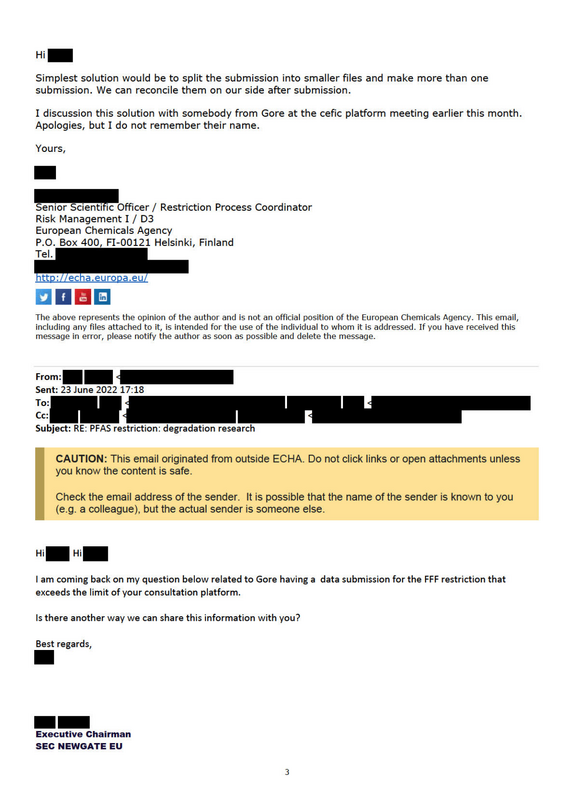
saFrnotm: Sobjoce: FFoalgloswtUaptsFig: mp RE-N Pecion 5 in reign oars I depsdmianoseae Froilglgoewdup IEEE EEI oerI Thank you or confirming that you made your submission.
refid# DGbLGKpVagDr091LE29j8apyN5 pages