Refine
Estimated Years 2000-2009Clear
6,589 results foundRefine Search
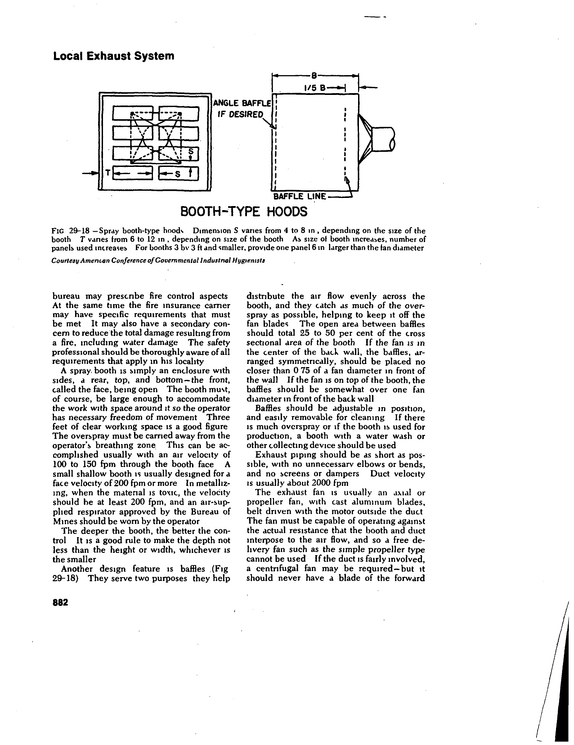
Local Exhaust System BOOTH-TYPE HOODS FlG 29-18 --Spray booth-type hoods Dimension S vanes from 4 to 8 in , depending on the size of the booth T vanes from 6 to 12 in , depending on size of the booth As size of booth increases, number of panels used increases For booths 3 bv 3 ft and smaller, provide one panel 6 in larger than the fan diameter Courtesy American Conference ofGovernmental Industrial Hygienists bureau may prescribe fire control aspects At the same time the fire insurance earner may have specific requirements that must be met It may also have a secondary con cern to reduce the total damage resulting from a fire, including water damage The safety professional should be thoroughly aware of all requirements that apply in his locality A spray booth is simply an enclosure with sides, a rear, top, and bottom --the front, called the face, being open The booth must, of course, be large enough to accommodate the work with space around it so the operator has necessary freedom of movement Three feet of clear working space is a good figure The overspray must be earned away from the operator's breathing zone This can be ac complished usually with an air velocity of 100 to 150 fpm through the booth face A small shallow booth is usually designed for a face velocity of 200 fpm or more In metalliz ing, when the material is toxic, the velocity should be at least 200 fpm, and an air-supplied respirator approved by the Bureau of Mines should be worn by the operator The deeper the booth, the better the con trol It is a good rule to make the depth not less than the height or width, whichever is the smaller Another design feature is baffles (Fig 29-18) They serve two purposes they help distribute the air flow evenly across the booth, and they catch as much of the over spray as possible, helping to keep it off the fan blades The open area between baffles should total 25 to 50 per cent of the cross sectional area of the booth If the fan is m the center of the back wall, the baffles, ar ranged symmetrically, should be placed no closer than 0 75 of a fan diameter in front of the wall If the fan is on top of the booth, the baffles should be somewhat over one fan diameter in front of the back wall Baffles should be adjustable m position, and easily removable for cleaning If there is much overspray or if the booth is used for production, a booth with a water wash or other collecting device should be used Exhaust piping should be as short as pos sible, with no unnecessary elbows or bends, and no screens or dampers Duct velocity is usually about 2000 fpm The exhaust fan is usually an axial or propeller fan, with cast aluminum blades, belt driven with the motor outside the duct The fan must be capable of operating against the actual resistance that the booth and duct interpose to the air flow, and so a free de livery fan such as the simple propeller type cannot be used If the duct is fairly involved, a centrifugal fan may be required--but it should never have a blade of the forward 882
refid# 3LbbwRZNBXeByYQ60qg469vx1 page
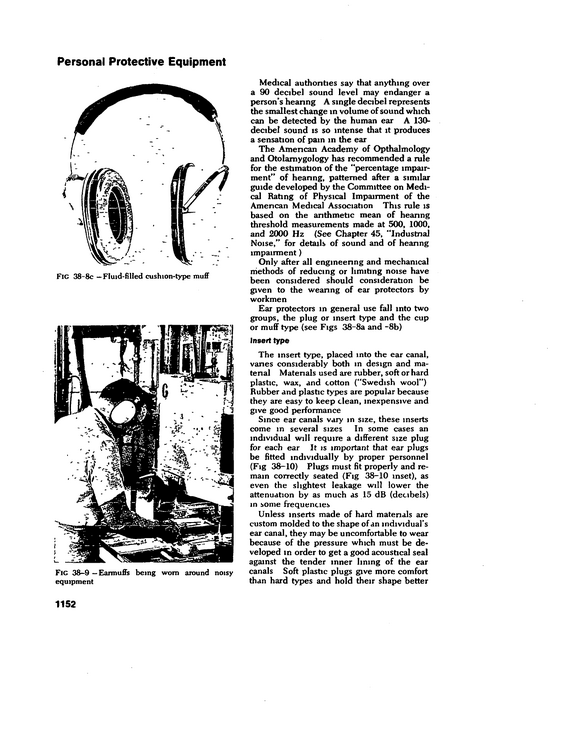
Personal Protective Equipment FlC 38-8c -Fluid-filled cushion-type muff Fic 38-9 -- Earmuffs being worn around noisy equipment Medical authorities say that anything over a 90 decibel sound level may endanger a person's hearing A single decibel represents the smallest change in volume of sound which can be detected by the human ear A 130decibel sound is so intense that it produces a sensation of pain in the ear The American Academy of Opthalmology and Otolamygology has recommended a rule for the estimation of the "percentage impair ment" of hearing, patterned after a similar guide developed by the Committee on Medi cal Rating of Physical Impairment of the American Medical Association This rule is based on the arithmetic mean of hearing threshold measurements made at 500, 1000, and 2000 Hz (See Chapter 45, "Industrial Noise," for details of sound and of hearing impairment) Only after all engineering and mechanical methods of reducing or limiting noise have been considered should consideration be given to the wearing of ear protectors by workmen Ear protectors in general use fall into two groups, the plug or insert type and the cup or muff type (see Figs 38-8a and -8b) Insert type The insert type, placed into the ear canal, vanes considerably both in design and matenal Matenals used are rubber, soft or hard plastic, wax, and cotton ("Swedish wool") Rubber and plastic types are popular because they are easy to keep clean, inexpensive and give good performance Since ear canals vary m size, these inserts come m several sizes In some cases an individual will require a different size plug for each ear It is important that ear plugs be fitted individually by proper personnel (Fig 38-10) Plugs must fit properly and re main correctly seated (Fig 38-10 inset), as even the slightest leakage will lower the attenuation by as much as 15 dB (decibels) in some frequencies Unless inserts made of hard matenals are custom molded to the shape of an individual's ear canal, they may be uncomfortable to wear because of the pressure which must be de veloped in order to get a good acoustical seal against the tender inner lining of the ear canals Soft plastic plugs give more comfort than hard types and hold their shape better 1152
refid# 6B2NzEJvYnbOMGXpydeRR49mo1 page
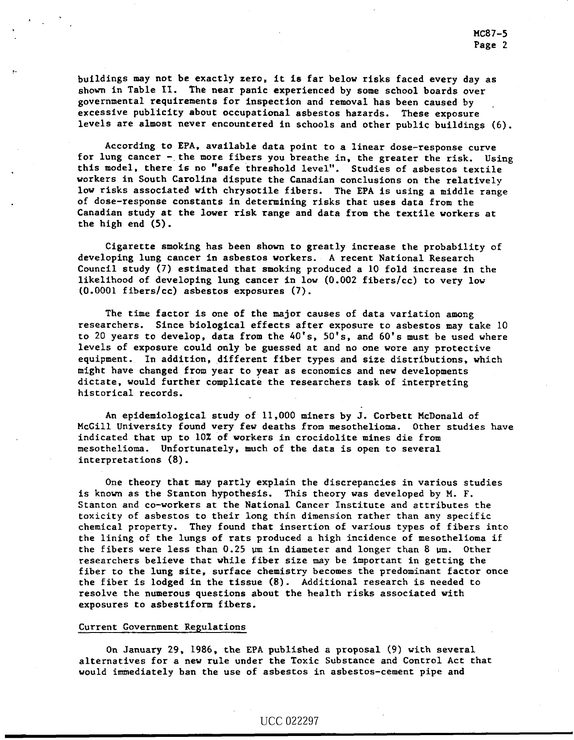
)5Z 1 j :NATIONAL PETROLEUMIREFINERS ASSOCIATION SUITE lOOO te9 L STREET, N.W.

refid# jybZYx4yNvBmMNDp2O3mxpBy512 pages
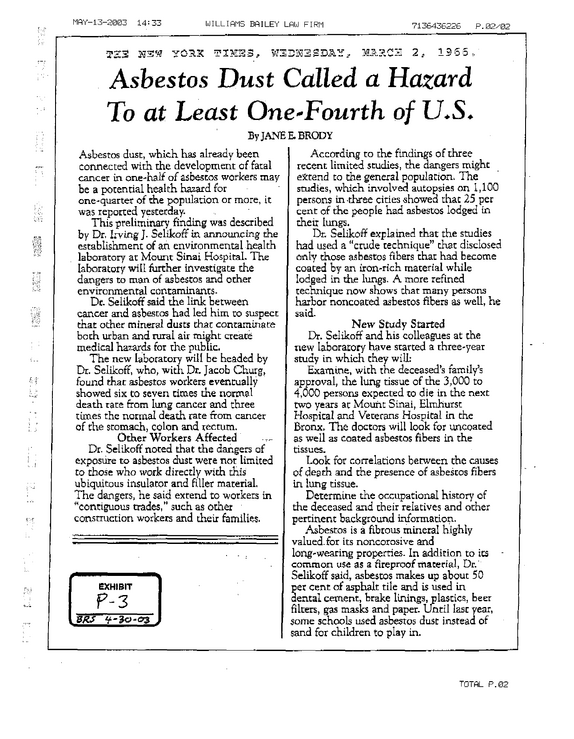
MAY-13-2003 14=33 WILLIAMS BAILEY LAW FIRM 7136436226 P.02/02 Asbestos Dust Called a Hazard To at Least One-Fourth of U*S* ' By JANE E, BRODY Asbestos dust, which, has already been connected with the development of fatal cancer in one-half of asbestos workers may be a potential health hazard for one-quarter of the population or more, it was reported yesterday
refid# nGQBxMYamDNe14QVLn2Bx3B61 page
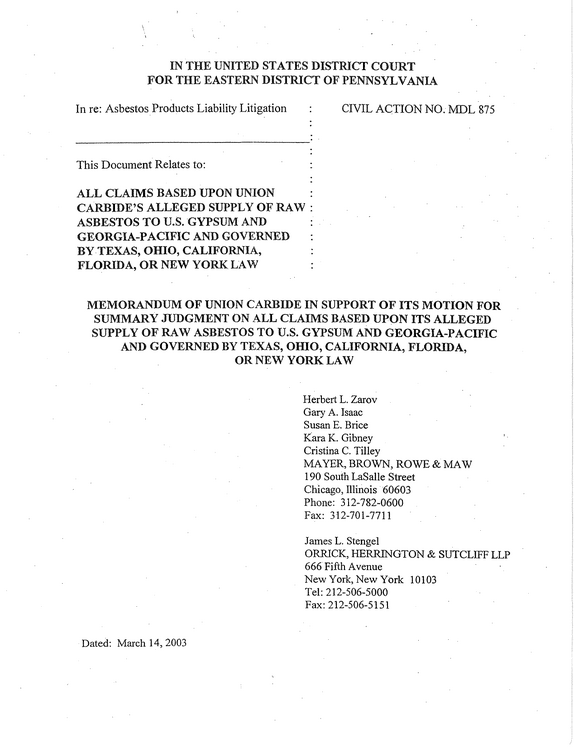
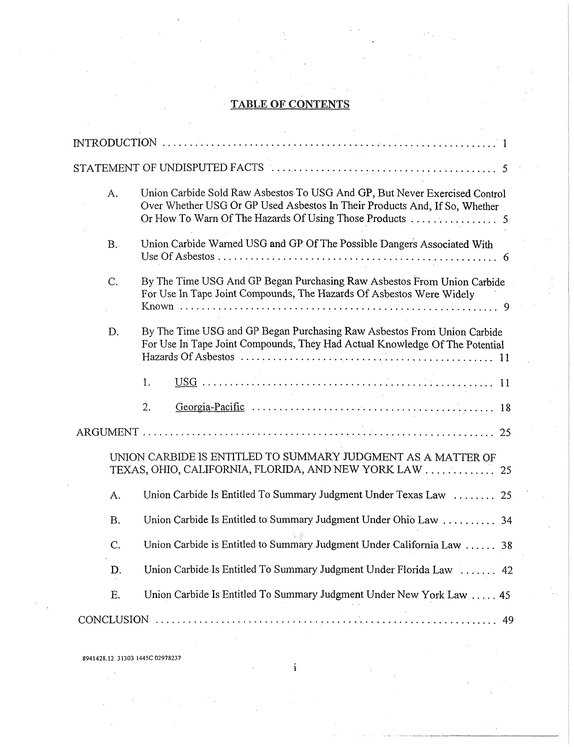
IN THE UNITED STATES DISTRICT COURT FOR THE EASTERN DISTRICT OF PENNSYLVANIA In re: Asbestos Products Liability Litigation CIVIL ACTION NO.
refid# LpKYez5JnBkq7zome87LOewGq54 pages
Texas Department of Licensing and Regulation Legal Services Division P.O.




refid# 06g79dbVKZ3a2VQDdvv6B7Bom25 pages
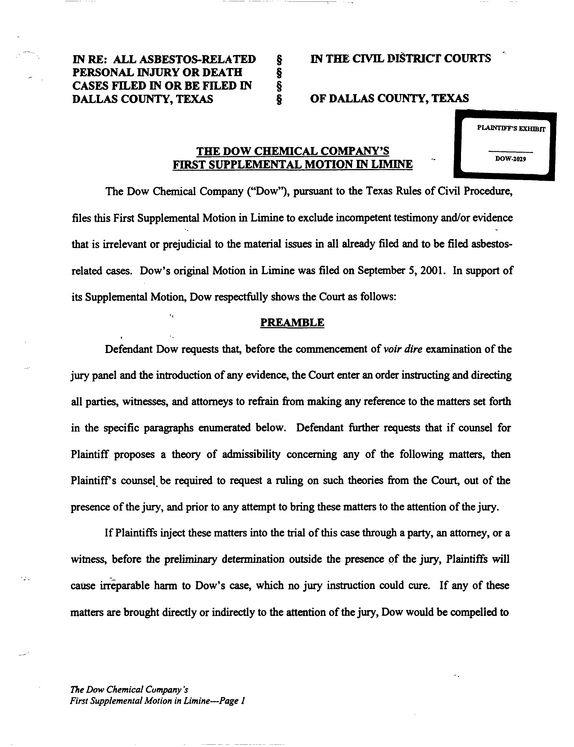
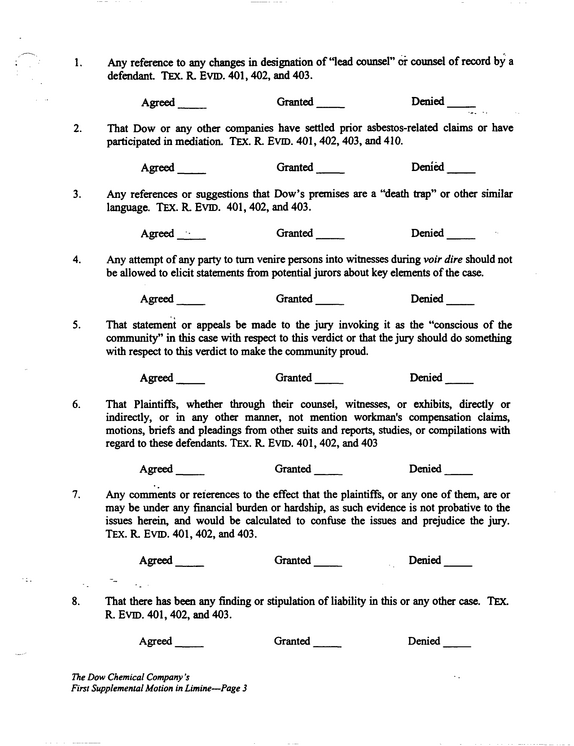
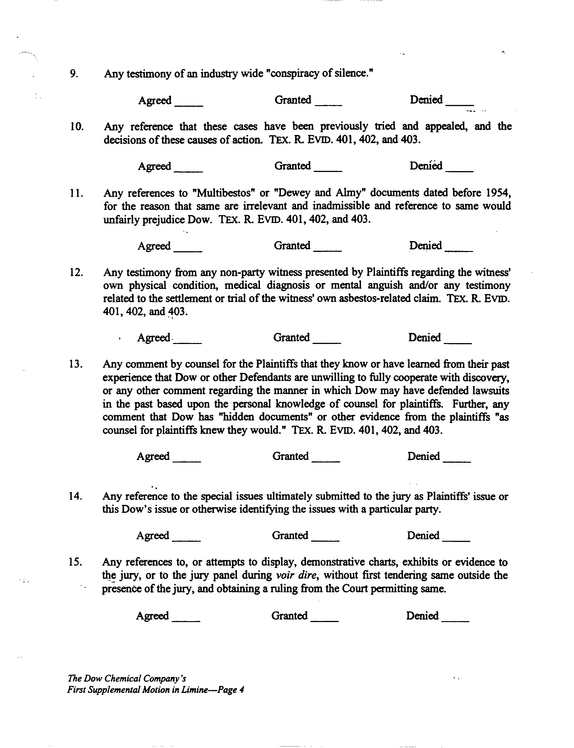
IN RE: ALL ASBESTOS-RELATED PERSONAL INJURY OR DEATH CASES FILED IN OR BE FILED IN DALLAS COUNTY, TEXAS IN THE CIVIL DISTRICT COURTS OF DALLAS COUNTY, TEXAS THE DOW CHEMICAL COMPANY'S FIRST SUPPLEMENTAL MOTION IN LIMINE The Dow Chemical Company ("Dow"), pursuant to the Texas Rules of Civil Procedure, files this First Supplemental Motion in Limine to exclude incompetent testimony and/or evidence that is irrelevant or prejudicial to the material issues in all already filed and to be filed asbestosrelated cases.
refid# xdw27VaN1yzvN3vamzxB2Qmb13 pages
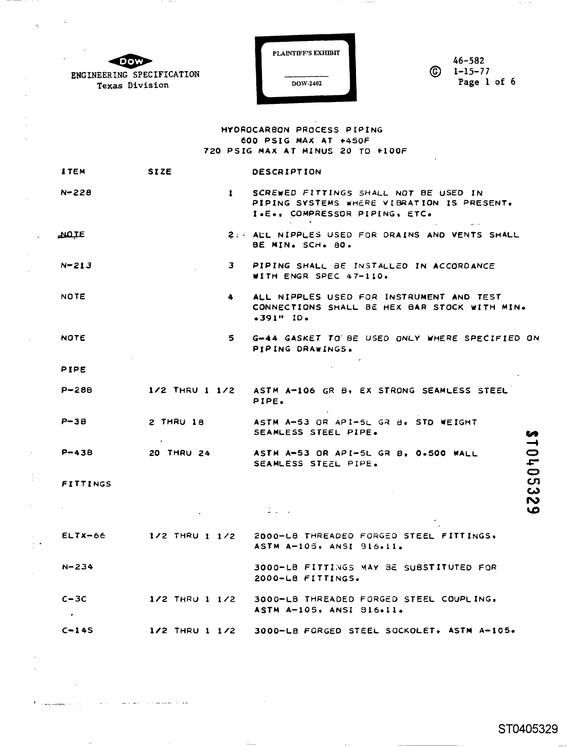
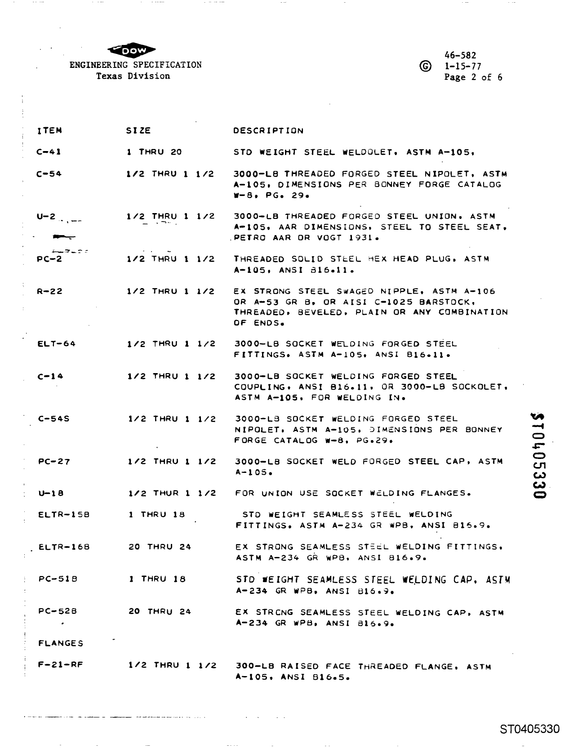
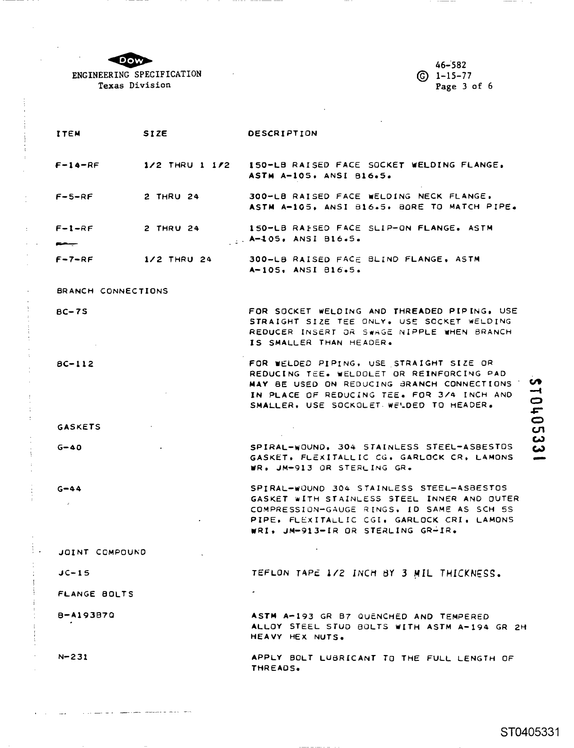
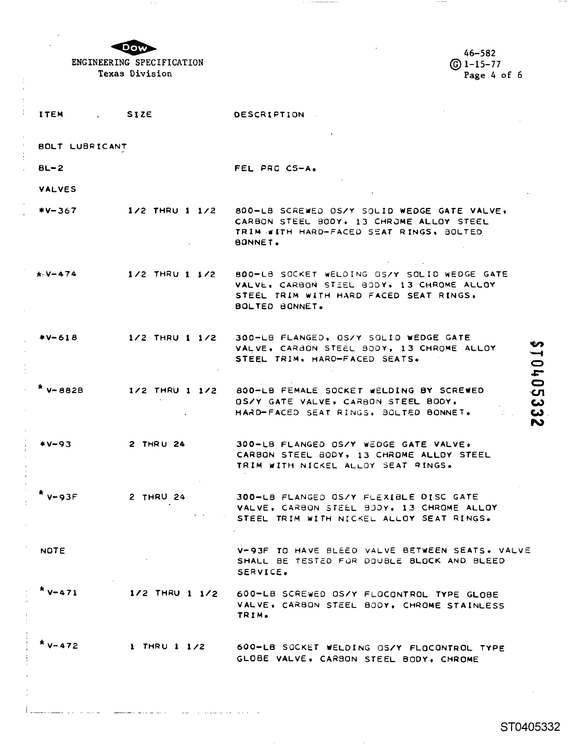
ENGINEERING SPECIFICATION Texas Division PLAINTIFF'S EXHIBIT DOYV-2402 46-582 1-15-77 Page 1 of 6 ITEM N--228 rNQTE N--213 NOTE NOTE PIPE P--288 P--3 8 P--438 FITTINGS SIZE hydrocarbon process piping 600 PSIG MAX AT 4-450F 720 PSIG MAX AT MINUS 20 TO HOOF DESCRIPTION I SCREWED FITTINGS SHALL NOT BE USED IN PIPING SYSTEMS WHERE VIBRATION IS PRESENT.
refid# YjJORKG0NkMag1ZwOeryR05bN6 pages
distinguishing between commodity products;'ahd:prbductsthat can' -' **& support premium prices.

refid# Z1rq6zpgxrkaxv9J23nkd6BJ1 page
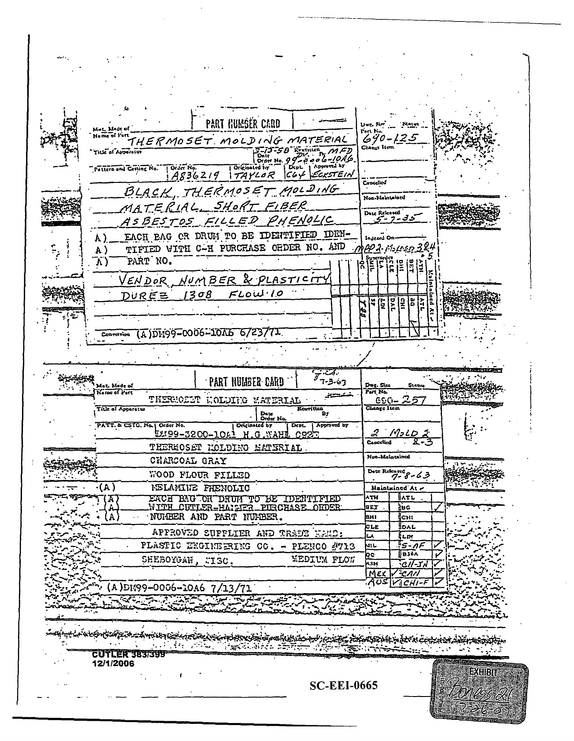
f PART \mm CARO fhl.1?
refid# j85ro0N9JnGR9Y33v4nx74aZ1 page
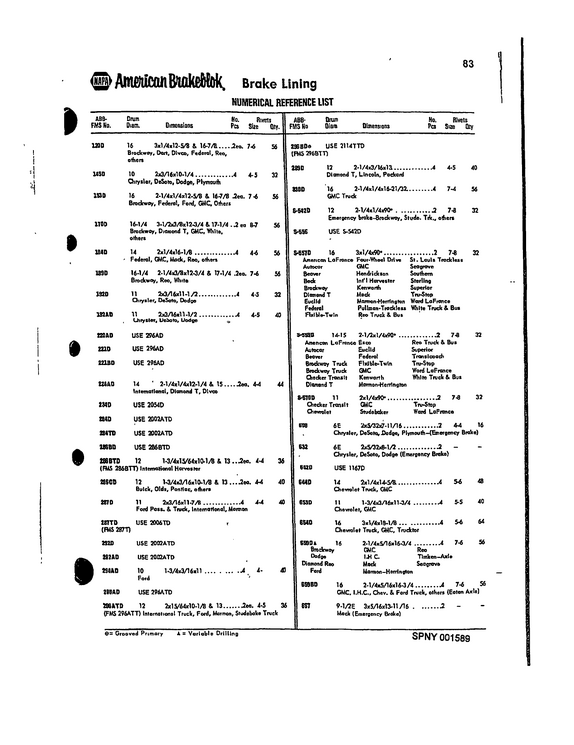
AmMcanWttMok.
refid# reVEzB8yQB4yLzGojdGE9GjE1 page
< Robert G.

refid# MMKe9DwLdn9pKDzwMvykg8XOV1 page
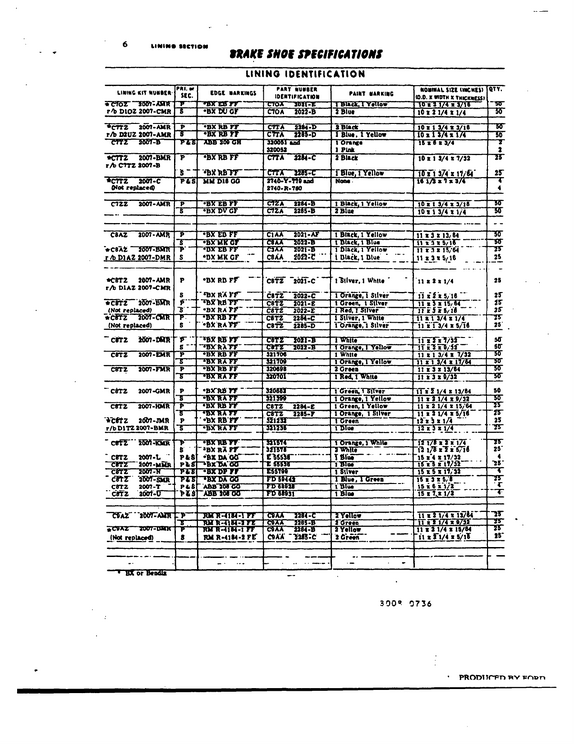
9XAKC SHOt SPCCIFICATIONS LINING IDENTIFICATION PHI. w LINING KIT NUMBER see.
refid# J3pVxqLgv4ONmJ2DDppD4zpL61 page
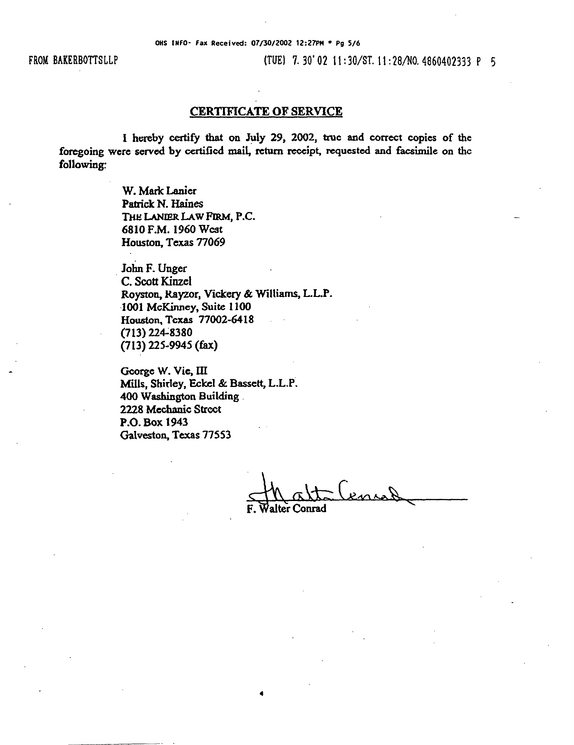
FROM BAKERBOTTS LLP OHS INFO- Fax Received: 07/30/2002 12:27PM * Pg 5/6 (TUE) 7.30` 02 11:30/ST. 11:28/NO. 4860402333 P 5 CERTIFICATE OF SERVICE i hereby certify that on July 29, 2002, true and correct copies of the foregoing were served by certified mail, return receipt, requested and facsimile on the following: W.
refid# xzvB5R7Vmm19G9wqQwdnZ8eE61 page
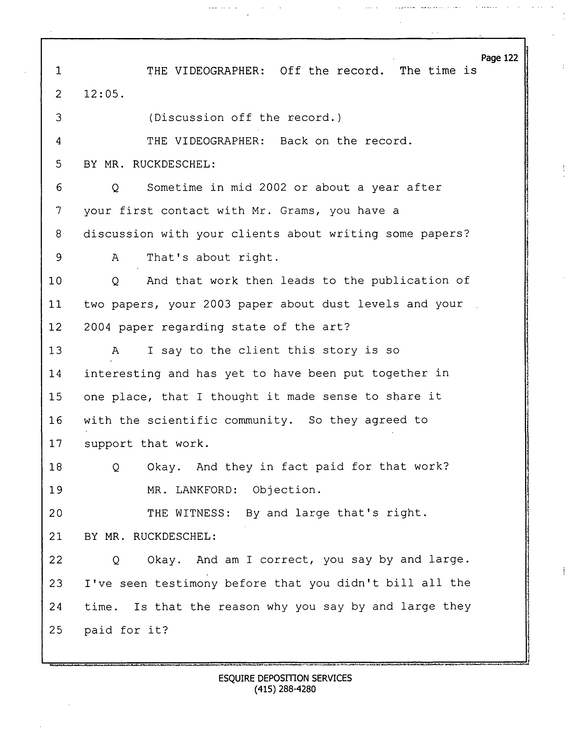
Page 122 1 THE VIDEOGRAPHER: Off the record.
refid# M41Z8enLELDZegjj0eL4wDvV1 page