Refine
Estimated Years 2000-2009Clear
18,679 results foundRefine Search
IN THE UNITED STATES DISTRICT COURT FOR THE WESTERN DISTRICT OF PENNSYLVANIA SANDRA E.
refid# 93EJMQrvpvvbg8pNZE3Lo0Qjp1 page
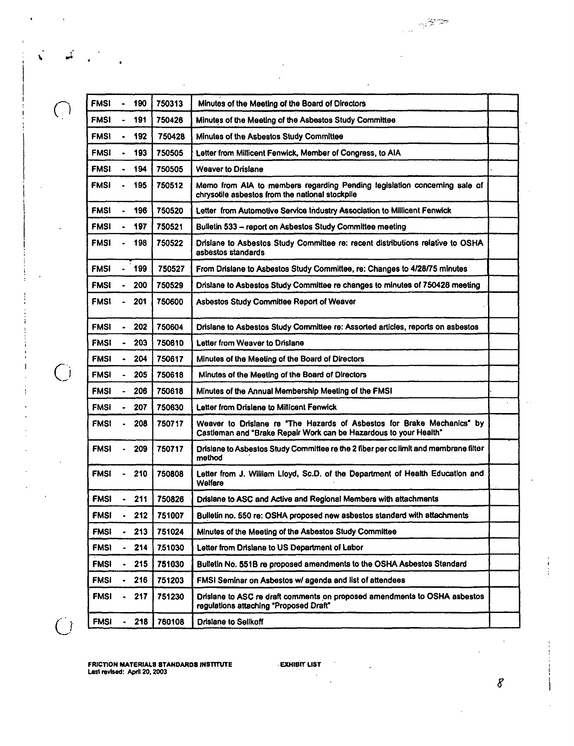
FMSI - 190 750313 Minutes of the Meeting of the Board of Directors FMSI - 191 750426 Minutes of the Meeting of the Asbestos Study Committee FMSI - 192 750428 Minutes of the Asbestos Study Committee FMSI - 193 750505 Letter from Millicent Fenwick, Member of Congress, to AIA FMSI - 194 750505 Weaver to Drislane FMSI - 195 750512 Memo from AIA to members regarding Pending legislation concerning sale of chrysotile asbestos from the national stockpile FMSI - 196 750520 Letter from Automotive Service Industry Association to Millicent Fenwick FMSI - 197 750521 Bulletin 533 - report on Asbestos Study Committee meeting FMSI - 198 750522 Drislane to Asbestos Study Committee re: recent distributions relative to OSHA asbestos standards FMSI - 199 750527 From Drislane to Asbestos Study Committee, re: Changes to 4/28/75 minutes FMSI - 200 750529 Drislane to Asbestos Study Committee re changes to minutes of 750428 meeting FMSI - 201 750600 Asbestos Study Committee Report of Weaver FMSI FMSI FMSI FMSI FMSI FMSI FMSI FMSI FMSI FMSI FMSI FMSI FMSI FMSI FMSI FMSI FMSI 202 750604 - 203 750610 - 204 750617 - 205 750618 - 208 750618 - 207 750630 - 208 750717 - 209 750717 - 210 750808 - 211 750826 - 212 751007 - 213 751024 - 214 7.51030 - 215 751030 - 216 751203 - 217 751230 - 218 760108 Drislane to Asbestos Study Committee re: Assorted articles, reports on asbestos Letter from Weaver to Drislane Minutes of the Meeting of the Board of Directors Minutes of the Meeting of the Board of Directors Minutes of the Annual Membership Meeting of the FMSI Letter from Drislane to Millicent Fenwick Weaver to Drislane re 'The Hazards of Asbestos for Brake Mechanics* by Castleman and `Brake Repair Work can be Hazardous to your Health' Drislane to Asbestos Study Committee re the 2 fiber per cc limit and membrane filter method Letter from J.
refid# jBOJbG8poGKBOdoZpppdnjrGp1 page
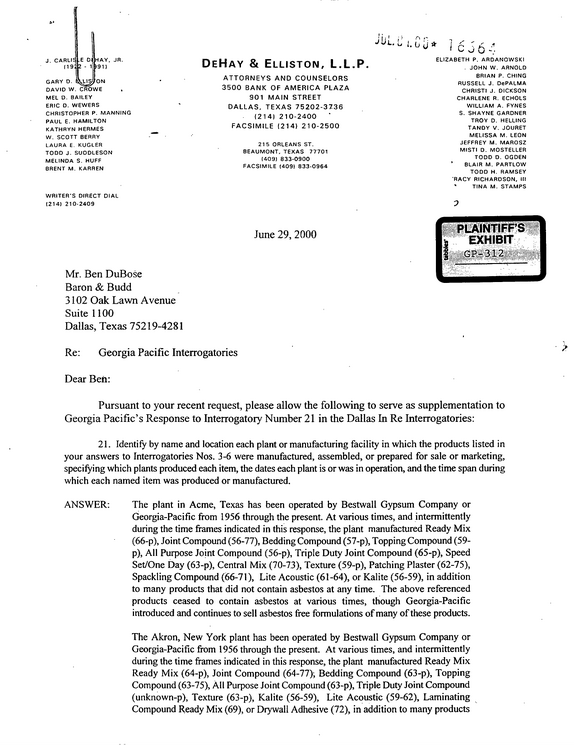
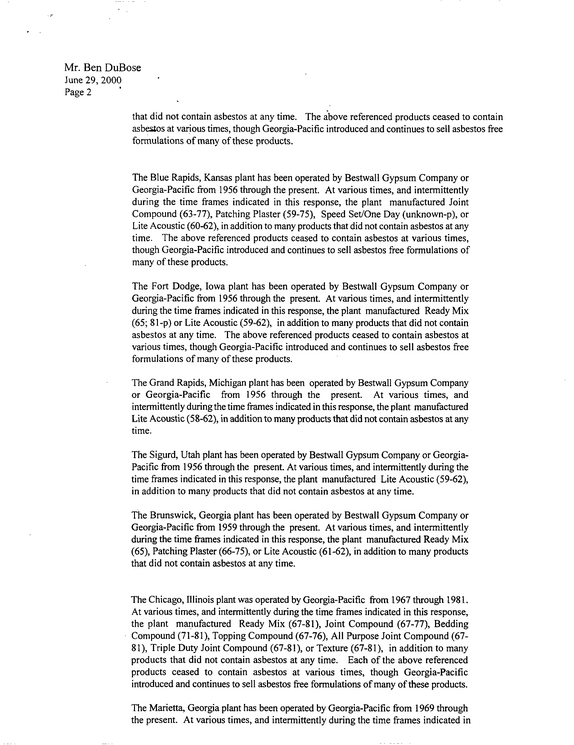
J.
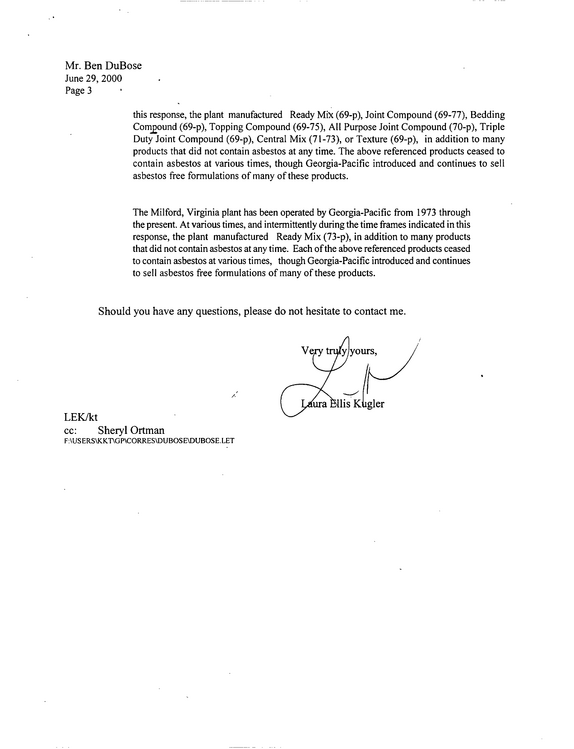
refid# g23KQEExMZ4xVbX9eXjnBqw5G3 pages
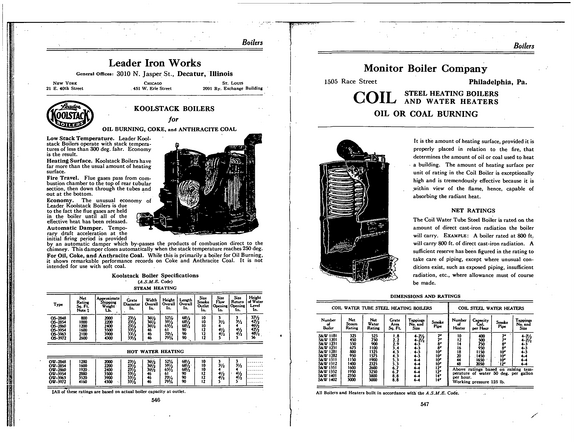
Boilers Leader Iron Works General offices: 3010 N.
refid# V3B0XxzMd6Gjjdz1Dopxm0vrK1 page
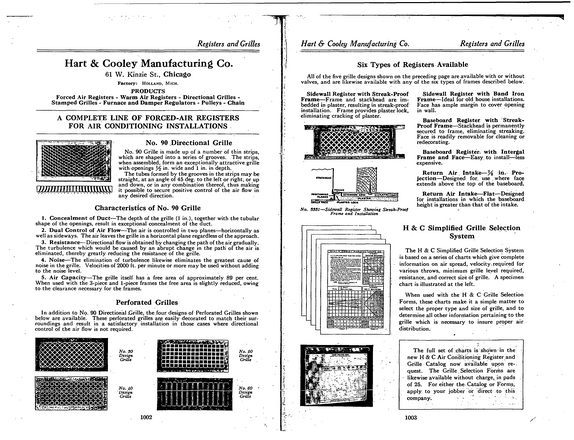
Registers and Grilles Hart & Cooley Manufacturing Co. 61 W.
refid# G6Kr8YpyGNEyOjwjDkqeEV3Qv1 page
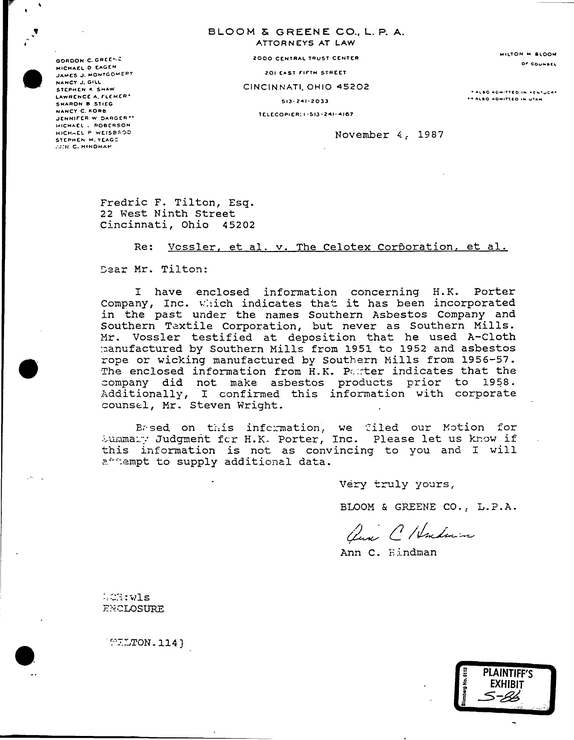
GORDON C. 0CC*-w MICHAEL O CAGE* JAMES J.
refid# Mo76mv1OrDd23pZwpqgEqZza97 pages
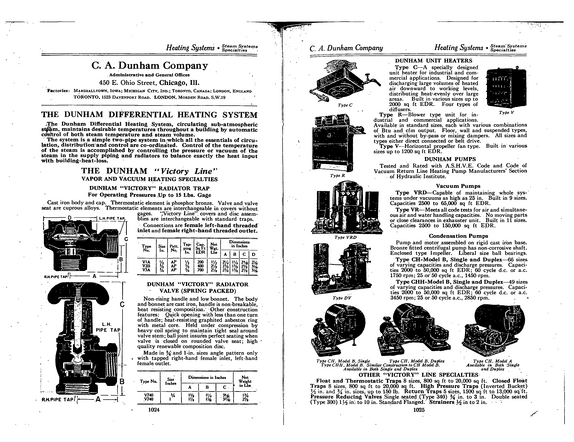
Heating Systems Steam Systems Specialties C.
refid# Dvny1voMNvKnnaM5M1gn7zGOQ1 page
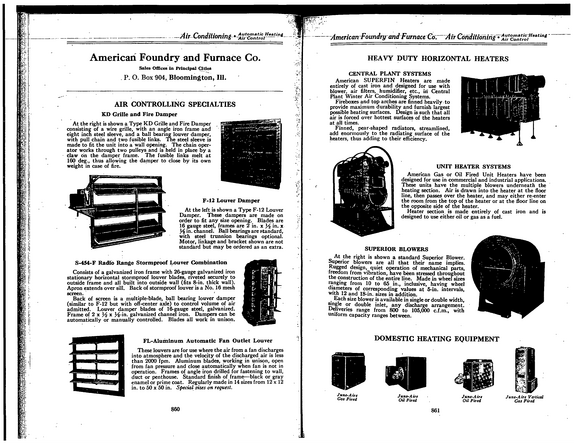
--------------- AirConditioning American Foundry and Furnace Co.
refid# DGJarDmE2Qq1dek9N0OXy5dEB1 page
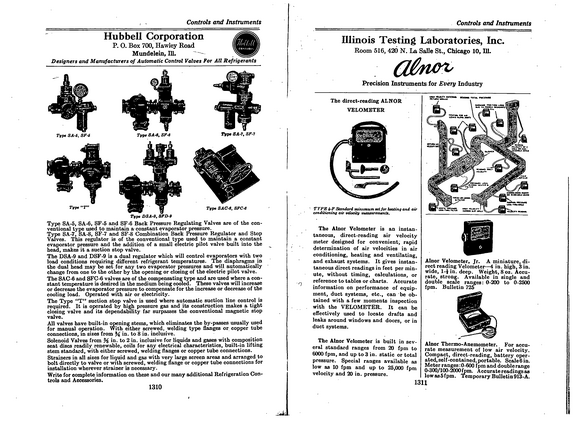
Controls and Instruments Hubbell Corporation P. 0.
refid# rxmdeGKzQygKd2pKdv3D071q71 page
CHICAGO WASHINGTON.
refid# BRoJRXkpErOG14wvav8KGBv9m1 page
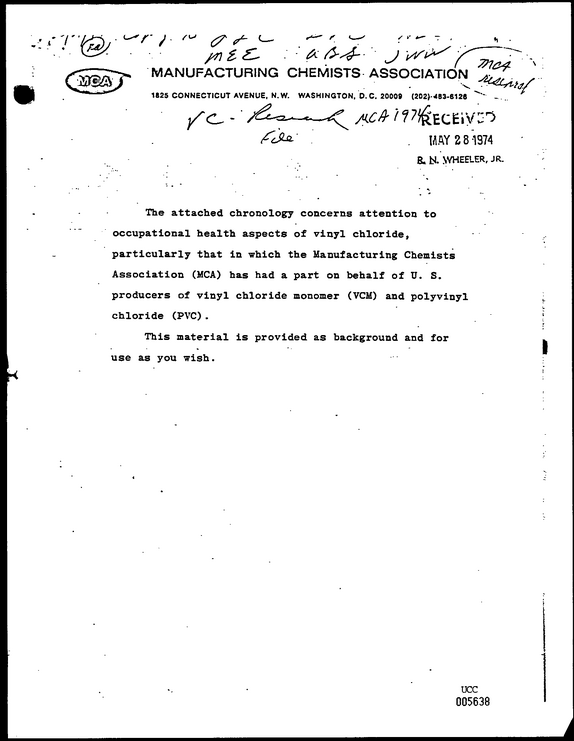
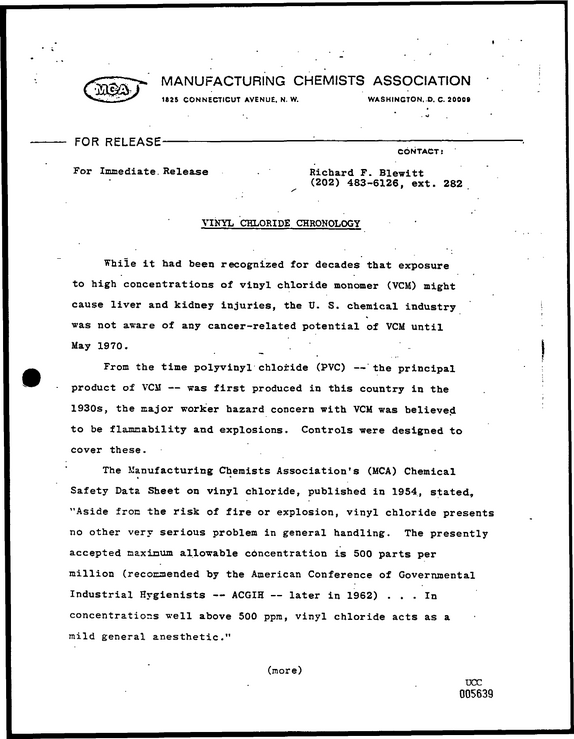
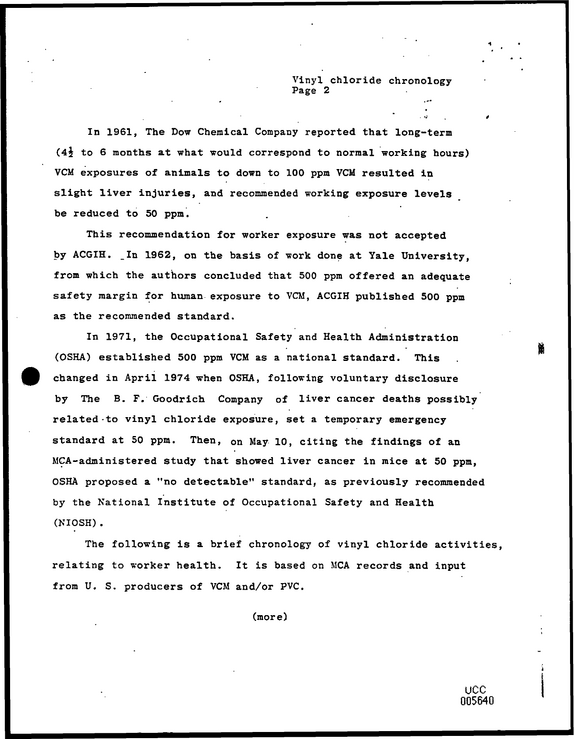
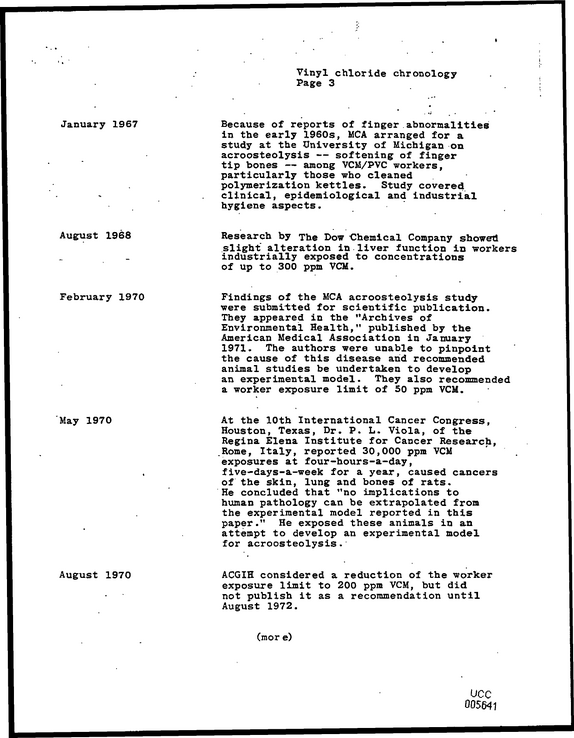
** *-- i MANUFACTURING CHEMISTS ASSOCIATION 1825 CONNECTICUT AVENUE, N.W.
refid# xjn2q7e5Ky4VaGd50Yqrm2YvQ13 pages
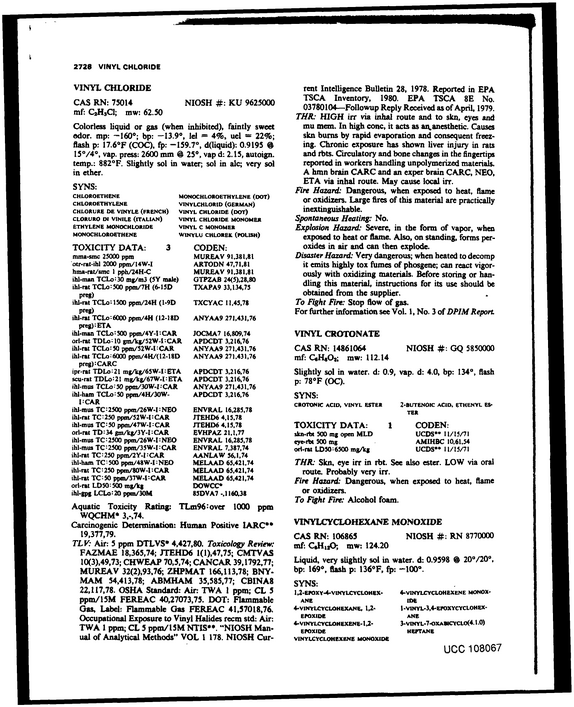
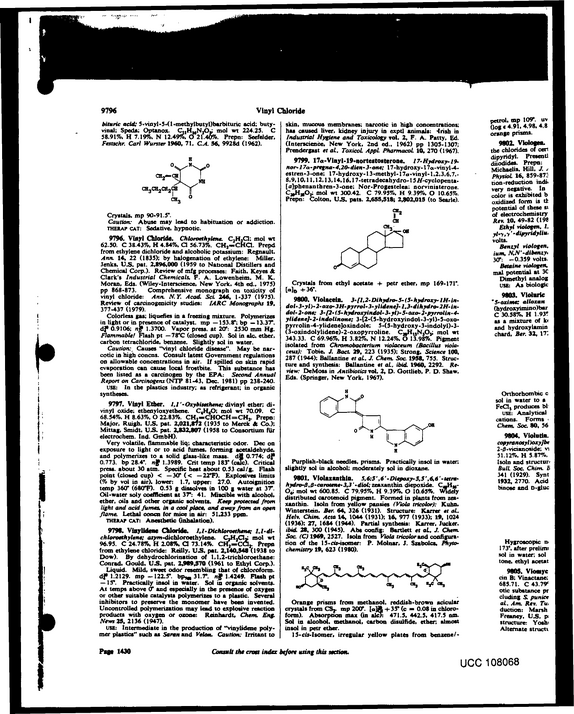
2728 VINYL CHLORIDE VINYL CHLORIDE CAS RN: 75014 mf: CjHjCl; mw: 62.50 NIOSH #: KU 9625000 Colorless liquid or gas (when inhibited), faintly sweet odor, mp: -160; bp: -13.9, lei = 4%, uel = 22%; flash p: 17.6F (COC), fp: -159.7, d(liquid): 0.9195 @ 15/4, vap. press: 2600 mm @ 25, vap d: 2.15, autoign. temp.: 882F.
refid# 6BEZKeRR5Q8aLZBO1grQ4Jkao2 pages
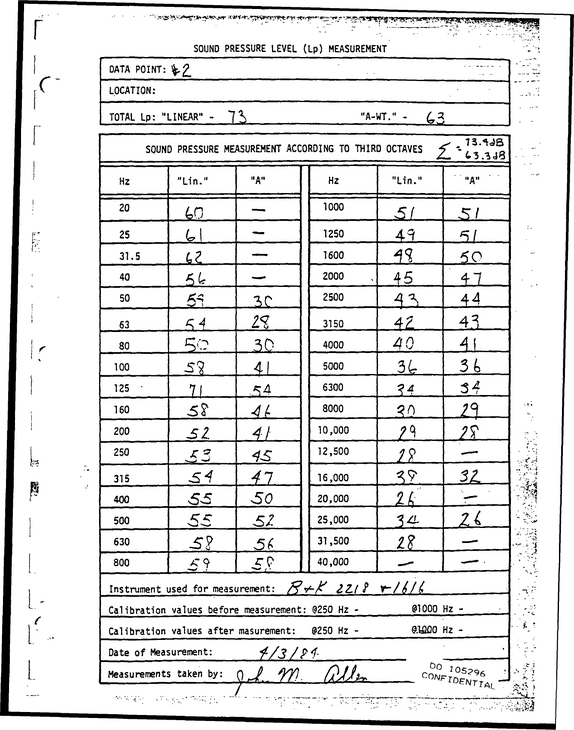
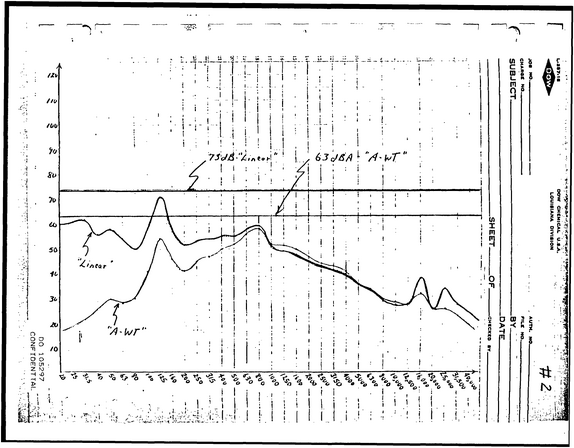
i' ' * '------ *- --"~ ^ ' ~f"-'"'' ~ DATA POINT: LOCATION: SOUNO PRESSURE LEVEL (Lp) MEASUREMENT .. ------------ TOTAL Lp: "LINEAR" - "A-WT." - -------------- - - --- LI SOUND PRESSURE MEASUREMENT ACCORDING TO THIRD OCTAVES j4 - Hz "Lin."
refid# b5GNaeQpL7qwVVj6VNqeGbqp12 pages
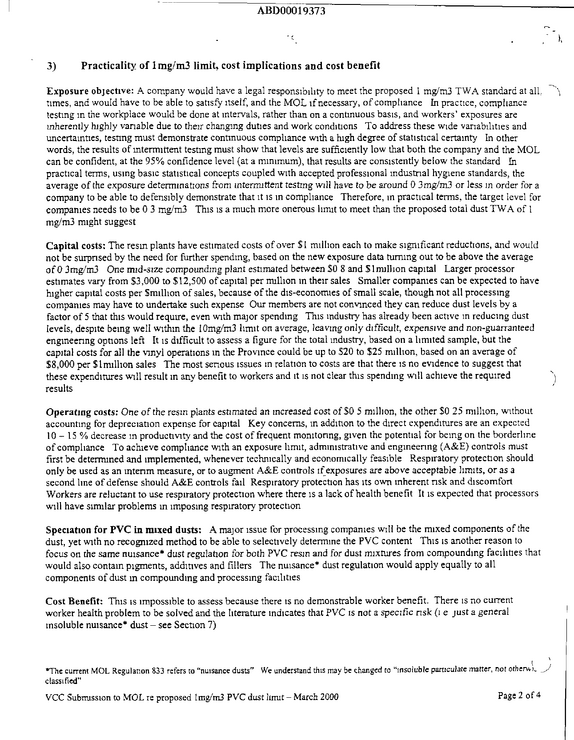
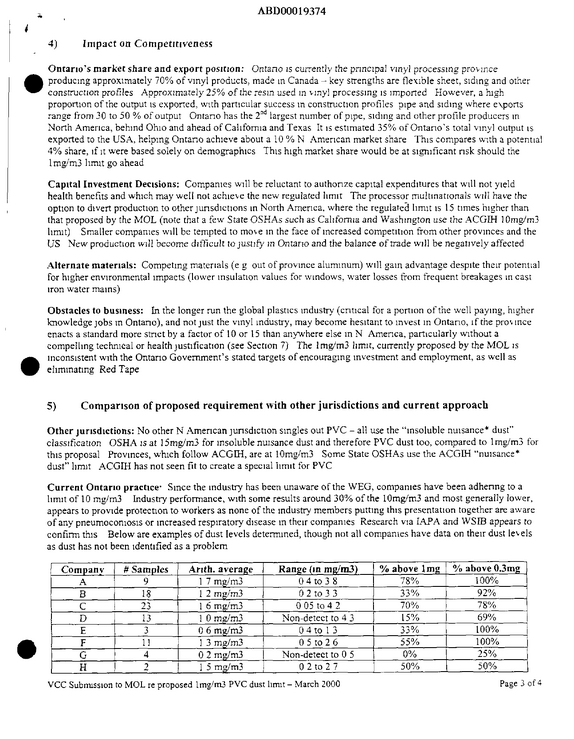
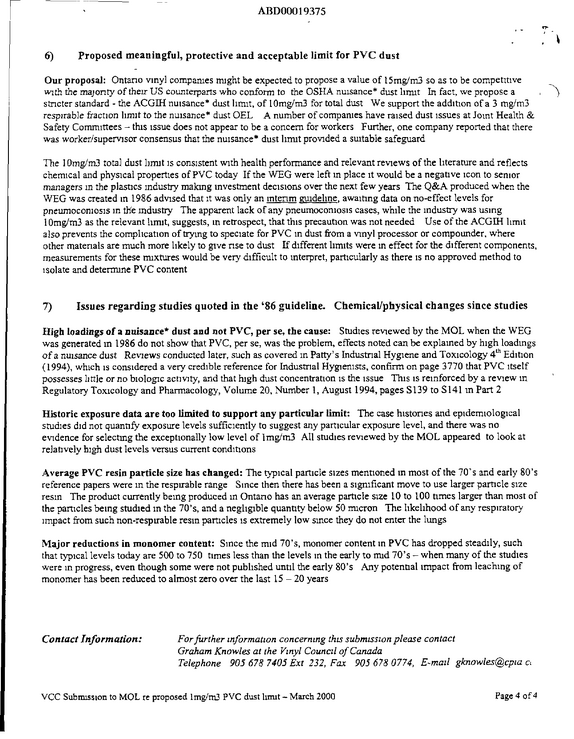
ABDOOO19372 VCC Submission to MOL on lmg/m3 PVC Dust OEL Proposal - March 16, 2000 1) The Ontario Vinyl Industry Responsible Industry: This industry is concerned about worker health and is committed to ensuring that any exposures are minimized for any materials which would have an adverse effect on health, and supports MOL initiatives to improve worker health where this would flow from reduced exposure As evidence of this commitment the Vmyl Council has recently introduced an Environmental Management Program (EMP) modeled on the principles of Responsible Care and compatible with ISO 14001 The ethic of the EMP, combined with the good business sense of maintaining a healthy workforce, clearly encourages the vinyl industry to protect workers from any health hazards posed by dust It is with this mmd-set that the industry approaches the issue of limits for vmyl dust Vinyl Council of Canada (VCC): The VCC is an operating council of the Canadian Plastics Industry Association VCC's 23 members work together, to protect our environment during the manufacturing, use, recycling and disposal of vinyl products VCC produces educational materials about the safety and performance of vinyl and promotes the benefits of vinyl products The VCC is leading the industry's participation m the current OEL consultative process Structure: The industry in Ontario consists of two polymer resin plants, several separate compounding facilities and -150 sites where vinyl is processed into products such as pipe, siding, flexible and ngid sheet, film, window and door profiles, flooring, wire and cable etc The larger processors have their own compounding facilities The industry is growing at ~5% per annum Some larger processors are branch plants of multinational companies, whereas the smaller companies are generally Canadian o'vned Sales: The sales value of the monomer, polymer and processing operations is estimated at S2 5 to 3 billion Based on US research, the full economic value to Ontario, of this industry and its peripheral activities, amounts to S5+ billion Employees' The labour intensity per unit of sales grows through the chain It is estimated that ~10,000 work in the resin and processing components of the industry Eco-efficiency: Vmyl products are eco-efficient due to their durability and resulting long life, high strength to weight ratio, low maintenance, low rate of failure and minimal consumption of non-renewable resources 2) Sources of PVC dust The three distinct steps in producing most vmyl products, such as pipes, siding, window profiles or sheet, are polymerization, compounding and processing Certain items will require a further fabrication or converting step Polymerization is done in the presence of water so dust is only possible towards the end of the process, after the dryer Potential sources could be the flanges, seals and valves from the pneumatic transfer system, as well as the bag-houses that filter out the transport air The screens and bulk loading areas are sources of dust, which is why these are usually equipped with dust extractors Compounding can be done at a stand-alone facility or be part of a large processor's operation When PVC resin is moved pneumatically from bulk transport to the storage silos, as well as from storage to dry blending, the PVC resin and any associated dust is contained, so the only sources of dust are possible leaks from flanges etc and filtering of transport air However PVC is also moved in 1000kg Super Sacs, which can create dust on filling and emptying Dry blending can be open, though with dust extraction usuaPy in place During compounding the lighter filler, pigment and impact modifier particles, added manually from bags, are more likely contributors to dust than PVC For long runs m large processing facilities, the compound<s often pneumatically transported either as pellets or powder, to the shape making equipment, such as an extruder or injection moulding machine For smaller runs, and smaller operations, compound is contained in 600kg boxes or 25 kg bags and introduced manually or by vacuum Pellets offer minimal dust generation for the compound The processing step does not give rise to any dust, but subsequent cutting, tnmming and fabricating can generate dust, which should be extracted away and reprocessed VCC Submission to MOL re proposed lmg/m3 PVC dust limit - March 2000 Page 1 of 4 ABDOOO19373 3) Practicality of lmg/m3 limit, cost implications and cost benefit Exposure objective: A company would have a legal responsibility to meet the proposed 1 mg/m3 TWA standard at all, times, and would have to be able to satisfy itself, and the MOL if necessary, of compliance In practice, compliance testing in the workplace would be done at intervals, rather than on a continuous basis, and workers' exposures are inherently highly variable due to their changing duties and work conditions To address these wide variabilities and uncertainties, testing must demonstrate continuous compliance with a high degree of statistical certainty In other words, the results of intermittent testing must show that levels are sufficiently low that both the company and the MOL can be confident, at the 95% confidence level (at a minimum), that results are consistently below the standard In practical terms, using basic statistical concepts coupled with accepted professional industrial hygiene standards, the average of the exposure determinations from intermittent testing will have to be around 0 3mg/m3 or less m order for a company to be able to defensibly demonstrate that it is m compliance Therefore, m practical terms, the target level for companies needs to be 0 3 mg/m3 This is a much more onerous limit to meet than the proposed total dust TWA of 1 mg/m3 might suggest Capital costs: The resin plants have estimated costs of over $ 1 million each to make significant reductions, and would not be surprised by the need for further spending, based on the new exposure data turning out to be above the average of 0 3mg/m3 One mid-size compounding plant estimated between $0 8 and $ 1 million capital Larger processor estimates vary from $3,000 to $12,500 of capital per million in their sales Smaller companies can be expected to have higher capital costs per $million of sales, because of the dis-economies of small scale, though not all processing companies may have to undertake such expense Our members are not convinced they can reduce dust levels by a factor of 5 that this would require, even with major spending This industry has already been active in reducing dust levels, despite being well within the 10mg/m3 limit on average, leaving only difficult, expensive and non-guarranteed engineering options left It is difficult to assess a figure for the total industry, based on a limited sample, but the capital costs for all the vinyl operations in the Province could be up to $20 to $25 million, based on an average of $8,000 per $lmillion sales The most serious issues m relation to costs are that there is no evidence to suggest that these expenditures will result in any benefit to workers and it is not clear this spending will achieve the required results Operating costs: One of the resin plants estimated an increased cost of $0 5 million, the other SO 25 million, without accounting for depreciation expense for capital Key concerns, in addition to the direct expenditures are an expected 10-15 % decrease m productivity and the cost of frequent monitoring, given the potential for being on the borderline of compliance To achieve compliance with an exposure limit, administrative and engineering (A&E) controls must first be determined and implemented, whenever technically and economically feasible Respiratory protection should only be used as an interim measure, or to augment A&E controls if exposures are above acceptable limits, or as a second line of defense should A&E controls fail Respiratory protection has its own inherent nsk and discomfort Workers are reluctant to use respiratory protection where there is a lack of health benefit It is expected that processors will have similar problems in imposing respiratory protection Speciation for PVC in mixed dusts: A major issue for processing companies will be the mixed components of the dust, yet with no recognized method to be able to selectively determine the PVC content This is another reason to focus on the same nuisance* dust regulation for both PVC resin and for dust mixtures from compounding facilities that would also contain pigments, additives and fillers The nuisance* dust regulation would apply equally to all components of dust in compounding and processing facilities Cost Benefit: This is impossible to assess because there is no demonstrable worker benefit.
refid# zQwRz3mEJDY3qgVpxn27BD4374 pages
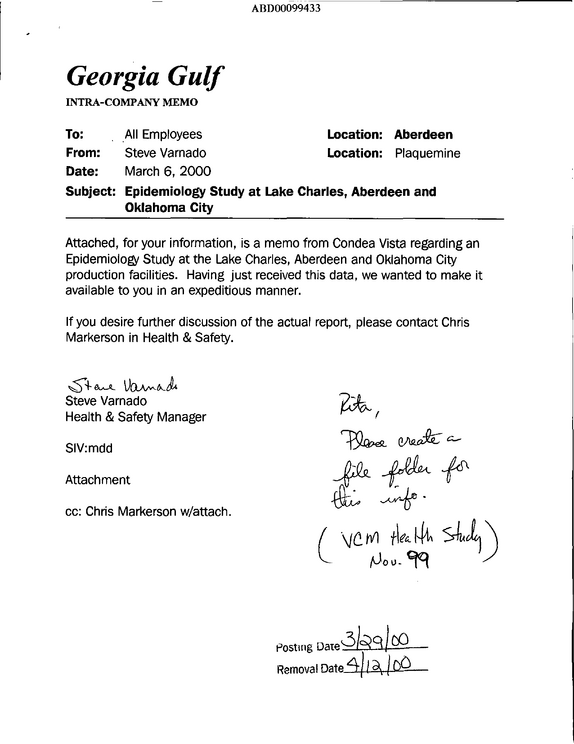
ABD00099433 Georgia Gulf INTRA-COMPANY MEMO To: All Employees Location: Aberdeen From: Steve Varnado Location: Plaquemine Date: March 6, 2000 Subject: Epidemiology Study at Lake Charles, Aberdeen and Oklahoma City Attached, for your information, is a memo from Condea Vista regarding an Epidemiology Study at the Lake Charles, Aberdeen and Oklahoma City production facilities.
refid# jBekL4Gy4XmLDEX6ED57JLkwk1 page