Refine
Estimated Years 1990-1999Clear
21,210 results foundRefine Search
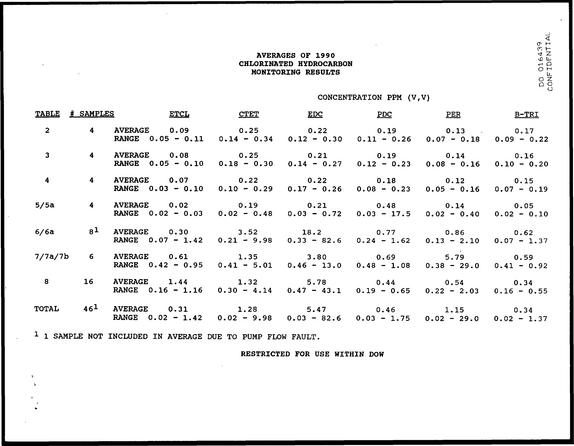
AVERAGES OF 1990 CHLORINATED HYDROCARBON MONITORING RESULTS TABLE # SAMPLES ETCL 2 4 AVERAGE 0.09 RANGE 0.05 - 0.11 3 4 AVERAGE 0.08 RANGE 0.05 - 0.10 4 4 AVERAGE 0.07 RANGE 0.03 - 0.10 5/5a 4 AVERAGE 0.02 RANGE 0.02 - 0.03 CTET 0.25 0.14 - 0.34 0.25 0.18 - 0.30 0.22 0.10 - 0.29 0.19 0.02 - 0.48 CONCENTRATION PPM (V,V) EDC PDC PER 0.22 0.12 - 0.30 0.19 0.11 - 0.26 0.13 0.07 - 0.18 0.21 0.14 - 0.27 0.19 0.12 - 0.23 0.14 0.08 - 0.16 0.22 0.17 - 0.26 0.18 0.08 - 0.23 0.12 0.05 - 0.16 0.21 0.03 - 0.72 0.48 0.03 - 17.5 0.14 0.02 - 0.40 6/6a 7/7a/7b 8 81 6 16 AVERAGE 0.30 RANGE 0.07 - 1.42 AVERAGE 0.61 RANGE 0.42 - 0.95 AVERAGE 1.44 RANGE 0.16 - 1.16 3.52 0.21 - 9.98 1.35 0.41 - 5.01 1.32 0.30 - 4.14 18.2 0.33 - 82.6 3.80 0.46 - 13.0 5.78 0.47 - 43.1 0.77 0.24 - 1.62 0.69 0.48 - 1.08 0.44 0.19 - 0.65 0.86 0.13 - 2.10 5.79 0.38 - 29.0 0.54 0.22 - 2.03 TOTAL 461 AVERAGE 0.31 RANGE 0.02 - 1.42 1.28 0.02 - 9.98 5.47 0.03 - 82.6 0.46 0.03 - 1.75 1.15 0.02 - 29.0 1 1 SAMPLE NOT INCLUDED IN AVERAGE DUE TO PUMP FLOW FAULT.
refid# yrqVzYj4Zp4KXG2ZEk27XeRpX2 pages
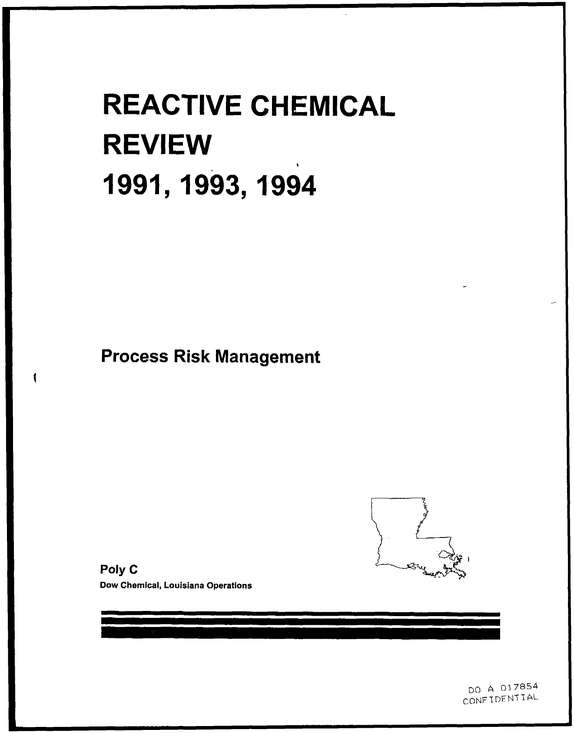
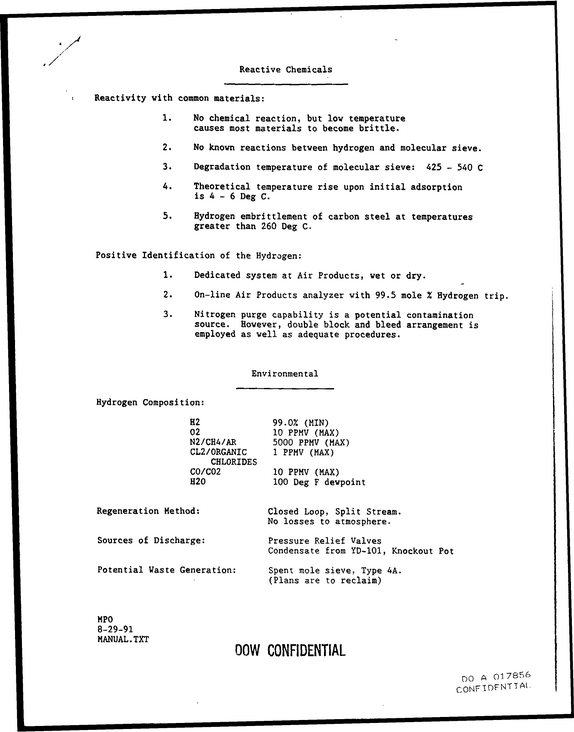
REACTIVE CHEMICAL REVIEW 1991,1993,1994 Process Risk Management Poly C Dow Chemical, Louisiana Operations DO A 017854 CONFIDENTIAL.
refid# G5L0zZr46MVm3o5VBROdw32Xn3 pages
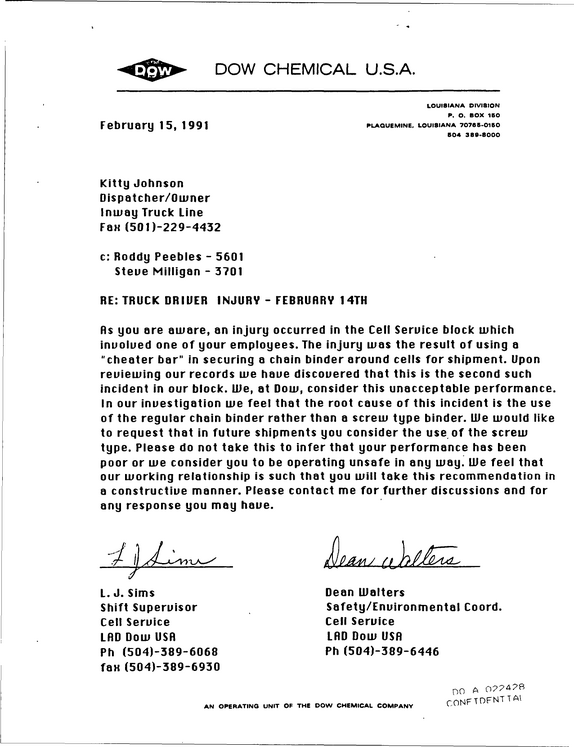
DOW CHEMICAL U.S.A.
refid# 8RrJG4KN2w4GOwwp1LgQL6G7d3 pages
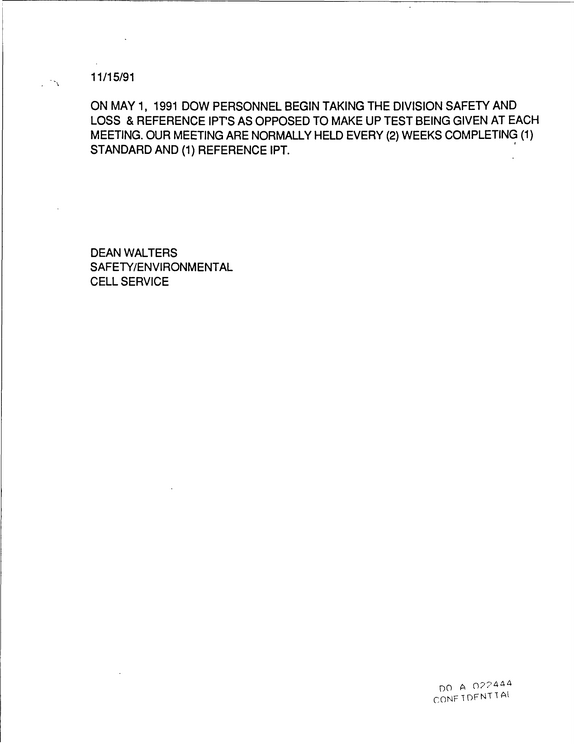
11/15/91 ON MAY 1, 1991 DOW PERSONNEL BEGIN TAKING THE DIVISION SAFETY AND LOSS & REFERENCE IPTS AS OPPOSED TO MAKE UP TEST BEING GIVEN AT EACH MEETING.
refid# wDeNJ7mObzJ8rRzmjRMXvN1861 page
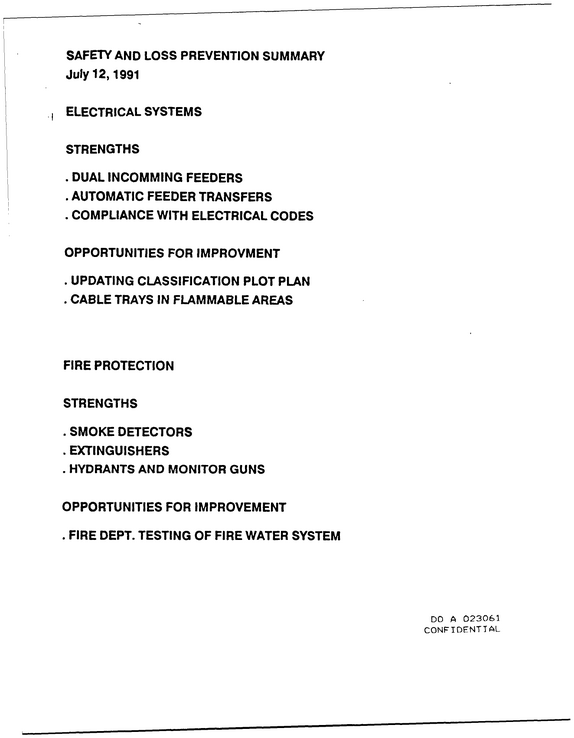
SAFETY AND LOSS PREVENTION SUMMARY July 12,1991 ELECTRICAL SYSTEMS STRENGTHS .
refid# v1KezaBqEnbgpNM9dYJdad12q1 page
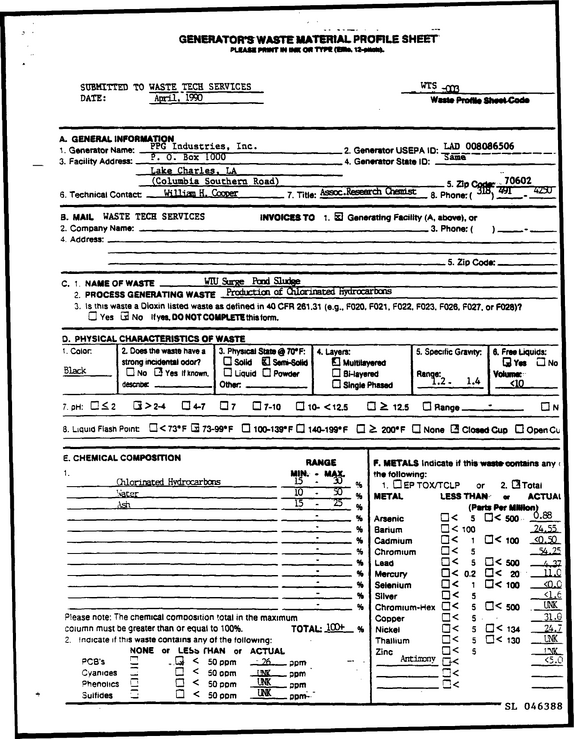
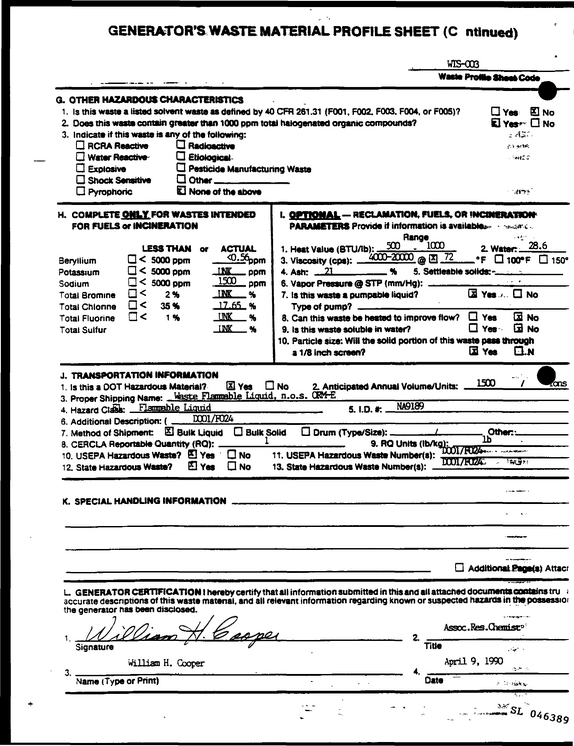
GENERATOR'S WASTE MATERIAL PROFILE SHEET PUMtt HWir M MK OHTVF (MBs. 12-***).
refid# JN09g5j3zpzGXN2ZN9aMxwnDZ14 pages
Paul.
refid# e7xyba2ox3w63NOede0zBqaqp2 pages
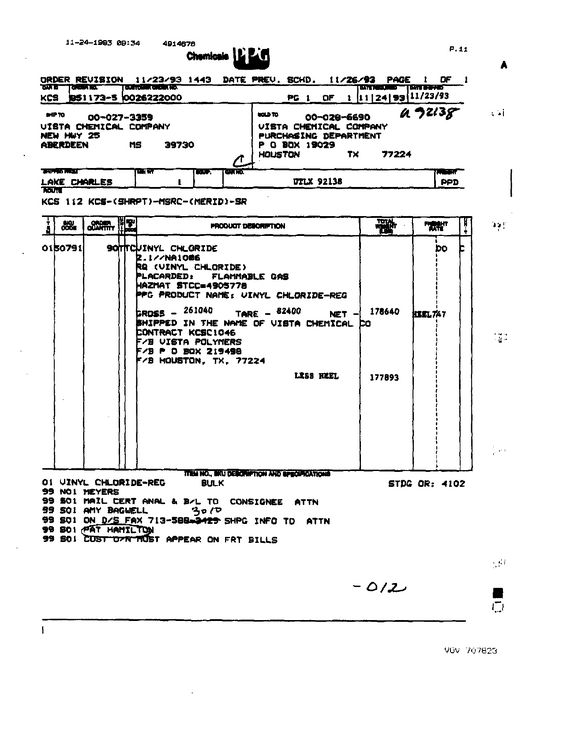
31-24-1993 99:34 4914676 Chamlealt ms P.tl ORDER REVISION Tssunr IB* 11^23^93 1443 W DATE PREU.
refid# aJZjMaE9Zj8ZJMe3kXd68Qr1y1 page
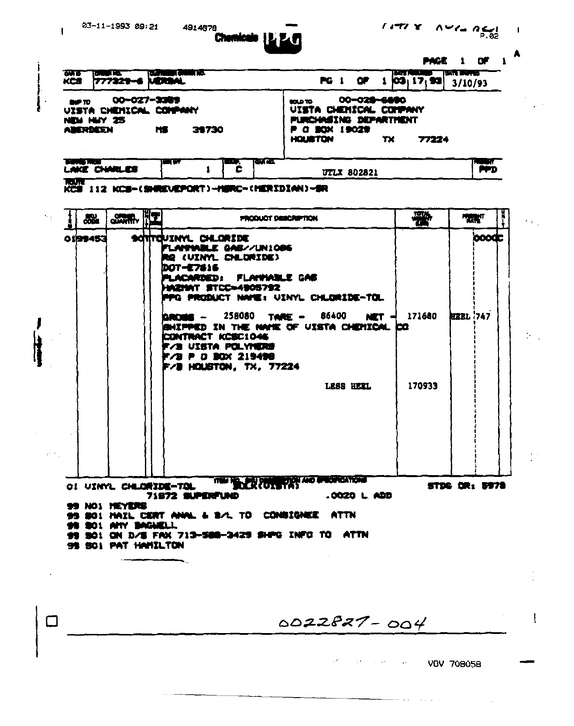
03-11-1993 09:21 4914678 Chmkak mg r i-n y n<^\ P.02 SKT KCS m29-< wr pace i or i PC 1 OP 1 03|I7|W| 3/10/93 #*> 00-027-2269 VISTA CHEMICAL COMPANY NBU HUY 25 ABERDEEN MS 29720 OUTO 00-029-0990 VISTA CHEMICAL COMPANY PURCHASING DEPARTMENT P O SON 1*029 HOUSTON TN 77224 LANE CHARLES msrar 1 DTU 802821 k7 12 KCB-CSHREVEPORT) MSRC-tMKRIDlAN)-SR i s& oSSfftv ppoouor vmtcmntM -39ML w 01 99453 9C1 Tt VINYL CHLORIDE FLAMMABLE OAS'VUNIOS* 99 <VINYL CHLORIDE) D0T-C7S1S PLACARDED* PLAMMASLE CAE HA2MAT STCC*4S0S7S2 PPG PRODUCT NAME* VINYL CHLORIDE-TQL MOSS - 258080 TARE - 86400 NET - 171680 SHIPPED IN THE NAME OP VISTA CHEMICAL 30 CONTRACT KC8C104S PSS VISTA POLYMERS F/*8 P 0 BON 219496 F^S HOUSTON* TX* 77224 LESS HEEL 170933 "BT T \ ; oooq c J2BL 747 .
refid# 5kMjy5d6x9mn4kg11RwQNp9Lz1 page
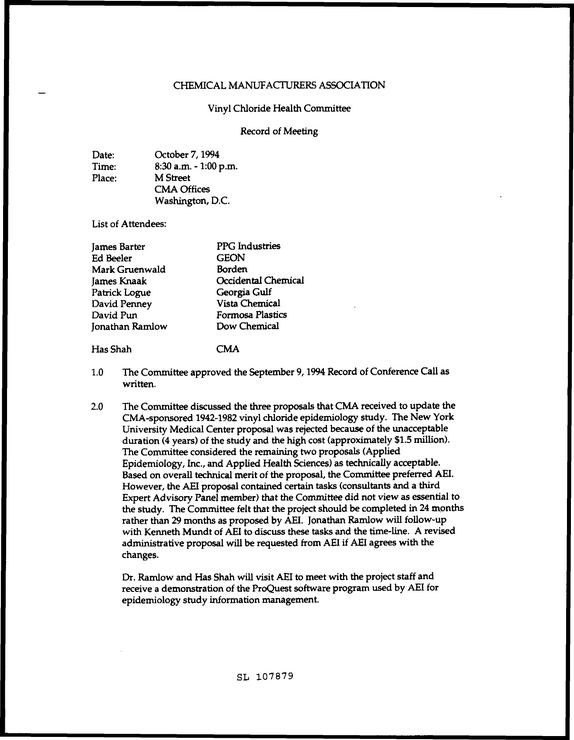
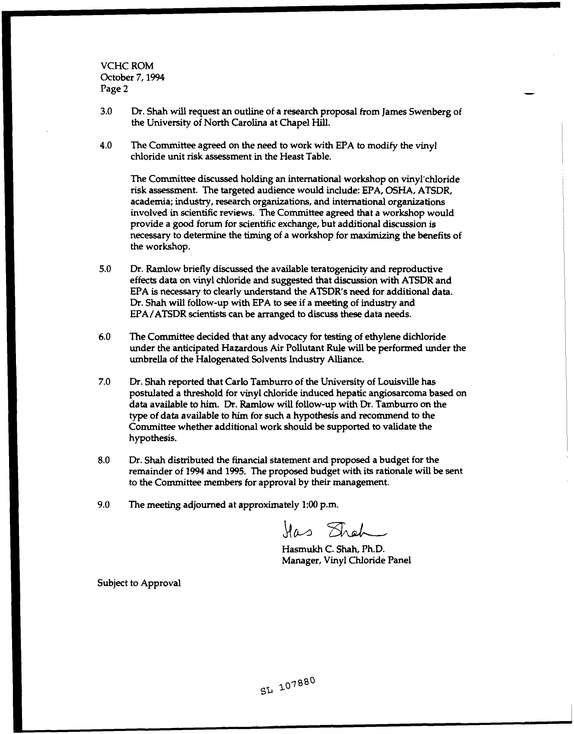
CHEMICAL MANUFACTURERS ASSOCIATION Vinyl Chloride Health Committee Record of Meeting Date: Time; Place: October 7,1994 8:30 a.m. -1:00 p.m.
refid# y3mqZrE7BD3919BypoxrrDon2 pages
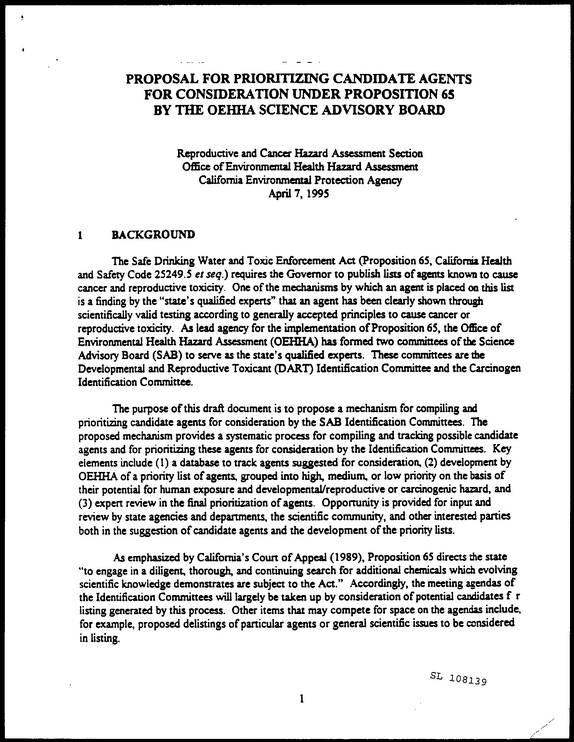
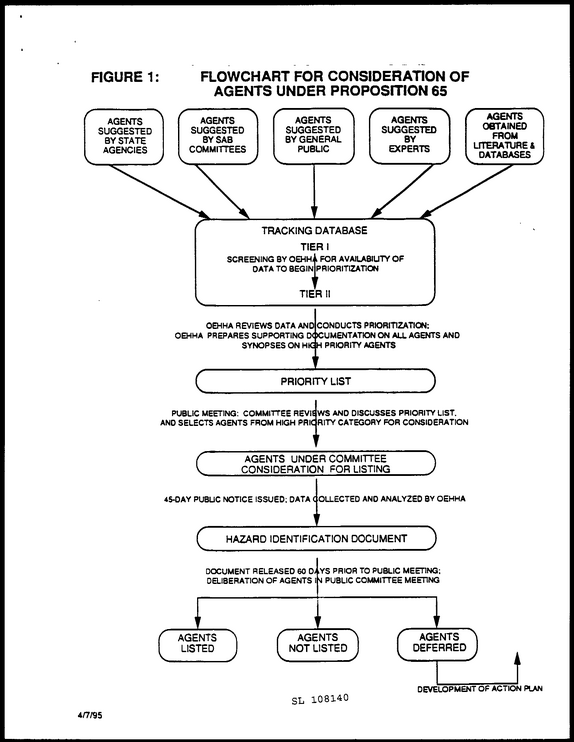
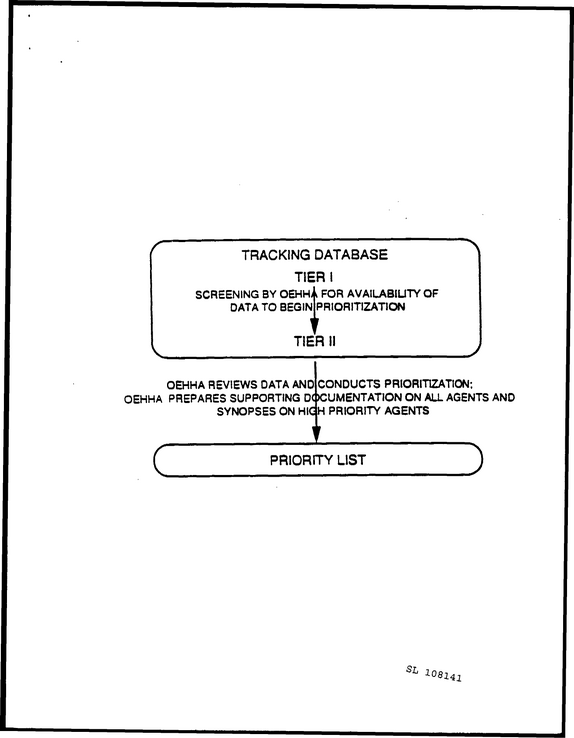
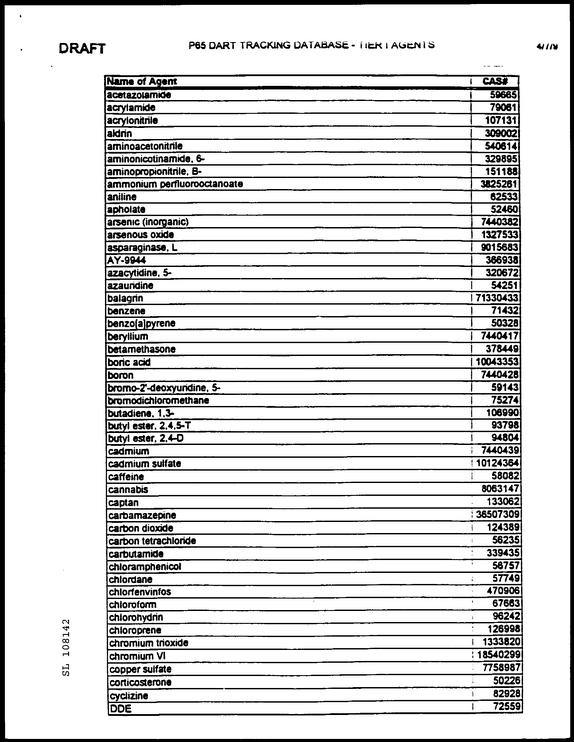
PROPOSAL FOR PRIORITIZING CANDIDATE AGENTS FOR CONSIDERATION UNDER PROPOSITION 65 BY THE OEHHA SCIENCE ADVISORY BOARD Reproductive and Cancer Hazard Assessment Section Office ofEnvironmental Health Hazard Assessment California Environmental Protection Agency April 7, 1995 1 BACKGROUND The Safe Drinking Water and Toxic Enforcement Act (Proposition 65, California Health and Safety Code 25249.5 et seq.) requires the Governor to publish lists of agents known to cause cancer and reproductive toxicity.
refid# oDVponKLXVBJzDMqJ54Mnd1bo11 pages
-x .. ismiiffm.
refid# rxaEeaEzOr7enBdKXre7yyqJG2 pages
Dr.
refid# RJVEbQJG151nDrwEoDyXq60Lz8 pages
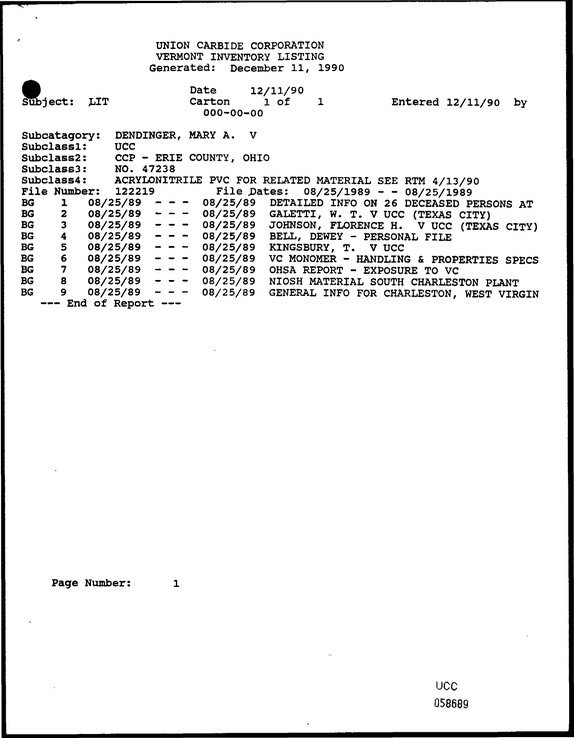
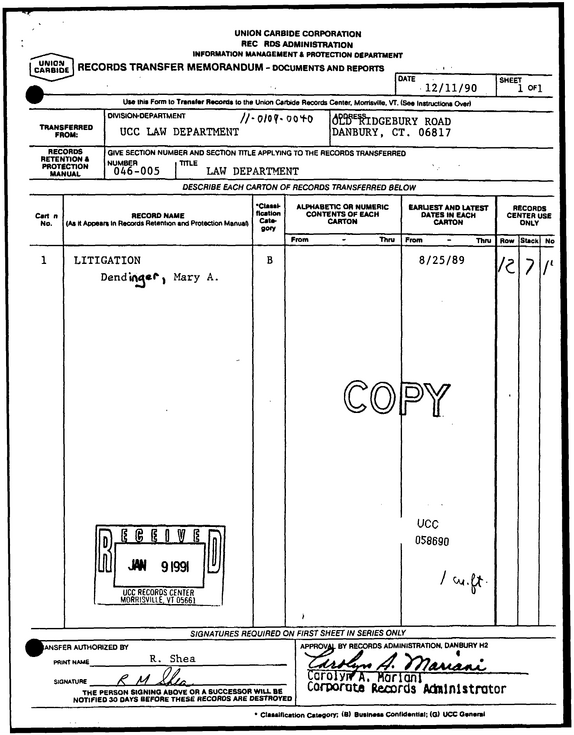
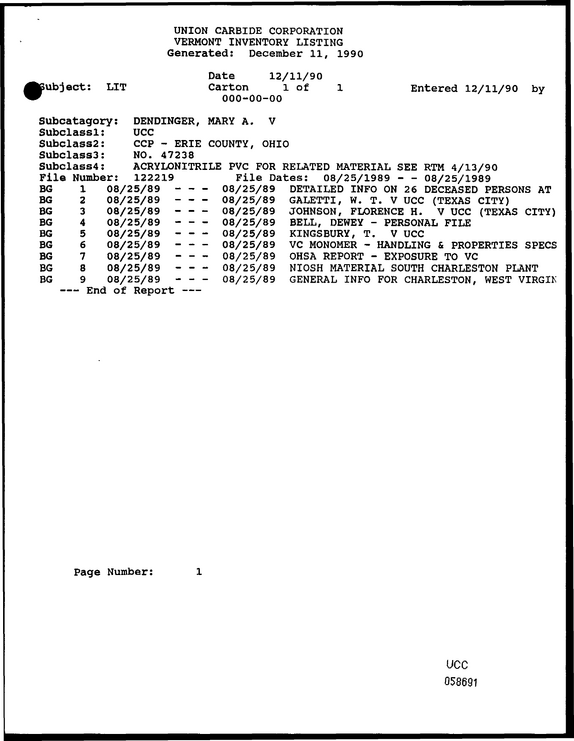
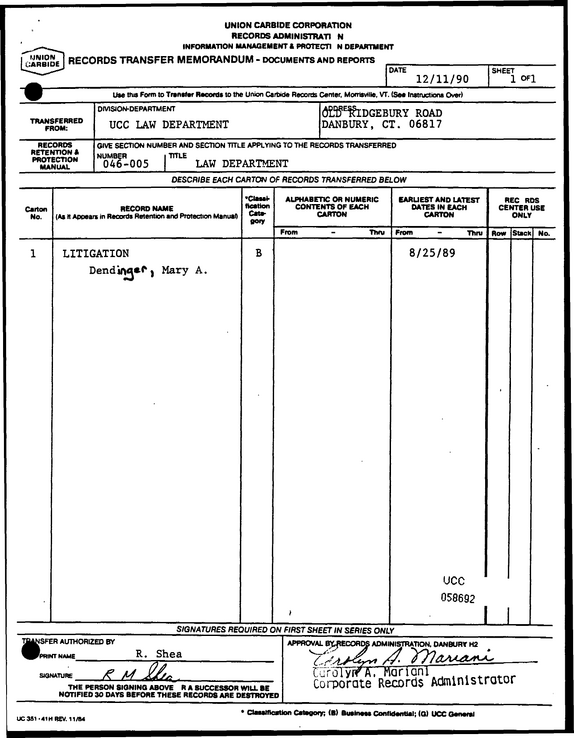
UNION CARBIDE CORPORATION VERMONT INVENTORY LISTING Generated: December 11, 1990 ject: LIT Date 12/11/90 Carton 1 of 1 000-00-00 Entered 12/11/90 by Subcatagory: DENDINGER, MARY A.
refid# 1gdpRn4RwyOa6Q8en5zK3bQwE5 pages
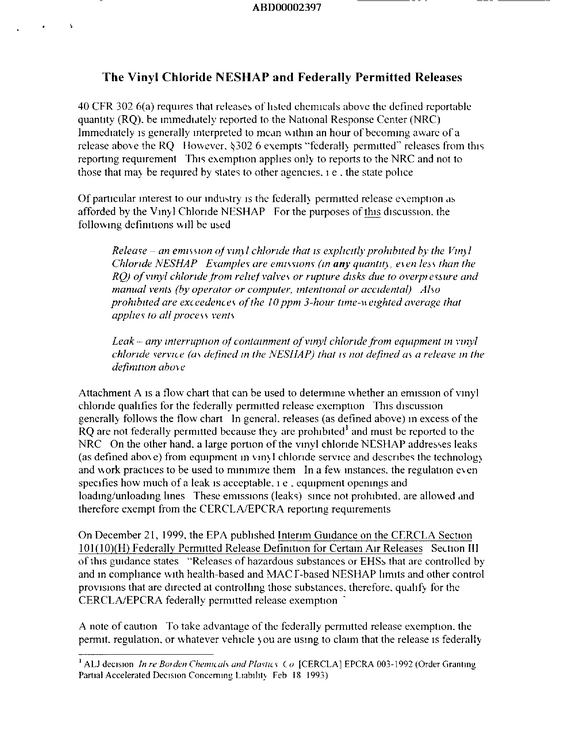
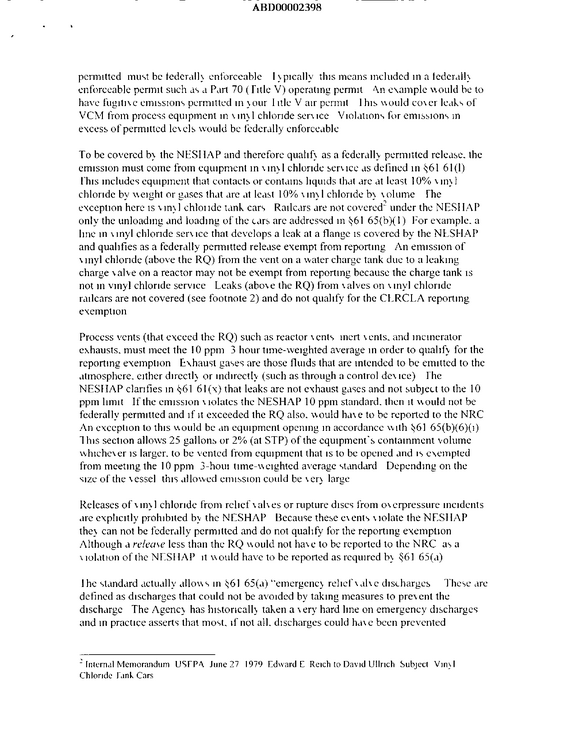
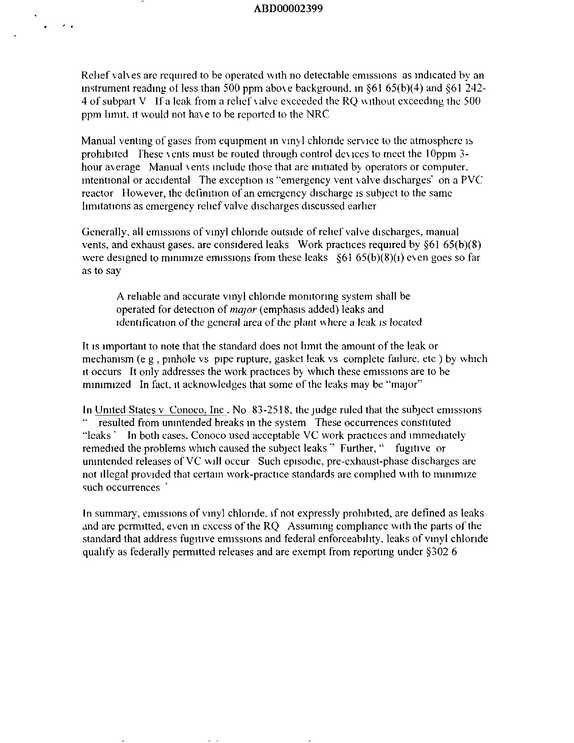
ABD00002397 s The Vinyl Chloride NESHAP and Federally Permitted Releases 40 CFR 302 6(a) requires that releases of listed ehcmicals above the defined reportable quantity (RQ). be immediately reported to the National Response Center (NRC) Immediately is generally interpreted to mean within an hour of becoming aware of a release above the RQ However. ^302 6 exempts "federallv permitted'' releases from this reporting requirement This exemption applies only to reports to the NRC and not to those that mav be required by states to other agencies, i e . the state police Of particular interest to our industry is the federalh permitted release exemption as afforded by the Vinyl Chloride NESHAP For the purposes of this discussion, the following definitions will be used Release - an emission oj vinyl chloride that is explicitly prohibited by the Vinyl Chloride NESHAP Examples are emissions (in any quantity, exen less than the RQ) ofvinyl chlorideJrom relief valves or rupture disks due to overpressure and manual vents (by operator or computer, intentional or accidental) Also prohibited are exceedences ofthe 10 ppm 3-hour time-x\ eighted average that applies to all process vents Leak - any interruption of containment ofvinyl chloride from equipment in vinyl chloride service (as defined in the NESHAP) that is not defined as a release in the definition above Attachment A is a flow chart that can be used to determine whether an emission of vinyl chloride qualifies for the federally permitted release exemption This discussion generally follows the flow chart In general, releases (as defined above) in excess of the RQ are not federally permitted because the> are prohibited5 and must be reported to the NRC On the other hand, a large portion of the vinyl chloride NESHAP addresses leaks (as defined abo\e) from equipment in vm\I chloride service and describes the technologv and work practices to be used to minimize them In a few instances, the regulation even specifies how much of a leak is acceptable, i e . equipment openings and loading/unloading lines These emissions (leaks) since not prohibited, are allowed and therefore exempt from the CERCLA/EPCRA reporting requirements On December 21, 1999, the EPA published Interim Guidance on the CERCLA Section 101(10)(H) Federally Permitted Release Definition for Certain Air Releases Section III of this guidance states "Releases of hazardous substances or EHSs that are controlled by and in compliance with health-based and MAC T-based NESHAP limits and other control provisions that are directed at controlling those substances, therefore, qualify for the CERCLA/EPCRA federally permitted release exemption A note of caution To take advantage of the federally permitted release exemption, the permit, regulation, or whatever vehicle \ou are using to claim that the release is federally 1 ALJ decision In re Borden Chemicals unci Plastics Co [CERCLA] EPCRA 003-1992 (Order Granting Partial Accelerated Decision Concerning Liability Feb 18 1993) ABD00002398 permitted must be federally enforceable I \pically this means included in a lederulh enforceable permit such as a Part 70 ( Title V) operating permit \n example would be to have fugitive emissions permitted m your 1 itle V air permit 1 his would co\er leaks of VCM from process equipment in vinyl chloride sen ice Violations for emissions in excess of permitted levels would be federally enforceable To be covered by the NESHAP and therefore qualify as a federally permitted release, the emission must come from equipment in vinyl chloride service as defined in 61 61(1) This includes equipment that contacts or contains liquids that are at least 10% vinvl chloride by weight or gases that are at least 10% vinvl chloride bv volume The exception here is vinv 1 ehlotide tank cars Railcars are not covered' under the NESI1AP only the unloading and loading of the cars are addressed in 61 65(b)(1) for example, a line in vinyl chloride service that develops a leak at a flange is covered by the NLSHAP and qualifies as a federally permitted release exempt from reporting An emission of v inyl chloride (above the RQ) from the vent on a water charge tank due to a leaking charge valve on a reactor may not be exempt from reporting because the charge tank is not in vmyl chloride service Leaks (above the RQ) from valves on vinvl chloride railcars are not covered (see footnote 2) and do not qualify for the CLRCLA reporting exemption Process vents (that exceed the RQ) such as reactor vents inert vents, and incinerator exhausts, must meet the 10 ppm 3 hour time-weighted average in order to quahfv for the reporting exemption Exhaust gases are those fluids that are intended to be emitted to the atmosphere, either directly or indirectly (such as through a control dev ice) The NESIIAP clarifies in 61 61(x) that leaks are not exhaust gases and not subject to the 10 ppm limit If the emission v lolates the NESHAP 10 ppm standard, then it would not be federally permitted and if it exceeded the RQ also, would have to be reported to the NRC An exception to this would be an equipment opening in accordance with 61 65(b)(6)(i) 1 his section allows 25 gallons or 2% (at STP) of the equipment's containment volume whichever is larger, to be vented from equipment that is to be opened and is exempted from meeting the 10 ppm 3-houi time-weighted average standard Depending on the size of the vessel this allowed emission could be ver> large Releases of vinvl chloride from relief valves or rupture discs from overpressure incidents are explicitly prohibited by the NESHAP Because these events violate the NESIIAP they can not be federally permitted and do not qualify for the reporting exemption Although a release less than the RQ would not have to be reported to the NRC as a v lolation of the NESHAP it would have to be reported as required by 61 65(a) lhc standard actually allows in 61 65(a) "emergency rehefvalve discharges These are defined as discharges that could not be avoided by taking measures to prevent the discharge The Agency has historically taken a very hard line on emergency discharges and in practice asserts that most, if not all. discharges could have been prevented " Internal Memorandum USTPA June 27 1979 Ildward Z Reich to David Ullrich Subject Vinvl Chloride Tank Cars ABD00002399 Relief vahes are required to be operated with no detectable emissions as indicated by an instrument reading of less than 500 ppm abo\e background, in 61 65(b)(4) and 61 2424 of subpart V If a leak from a relief\alve exceeded the RQ without exceeding the 500 ppm limit, it would not ha\e to be reported to the NRC Manual venting of gases from equipment in vinyl chloride service to the atmosphere is prohibited These \ents must be routed through control devices to meet the lOppm 3hour average Manual vents include those that are initiated by operators or computer, intentional or accidental The exception is "emergency vent valve discharges" on a PVC reactor However, the definition of an emergency discharge is subject to the same limitations as emergency relief valve discharges discussed earlier Generally, all emissions of vinyl chloride outside of relief valve discharges, manual vents, and exhaust gases, are considered leaks Work practices required by 61 65(b)(8) were designed to minimize emissions from these leaks 61 65(b)(8)(i) even goes so far as to say A reliable and accurate vinyl chloride monitoring system shall be operated for detection of major (emphasis added) leaks and identification of the general area of the plant where a leak is located It is important to note that the standard does not limit the amount of the leak or mechanism (e g , pinhole vs pipe rupture, gasket leak vs complete failure, etc ) by which it occurs It only addresses the work practices by which these emissions are to be minimized In fact, it acknowledges that some of the leaks may be "major" In United States v Conoco.
refid# DG0j8q7KdjyZJvq6NooE5kG4d3 pages