Refine
Estimated Years 1970-1979Clear
27,937 results foundRefine Search
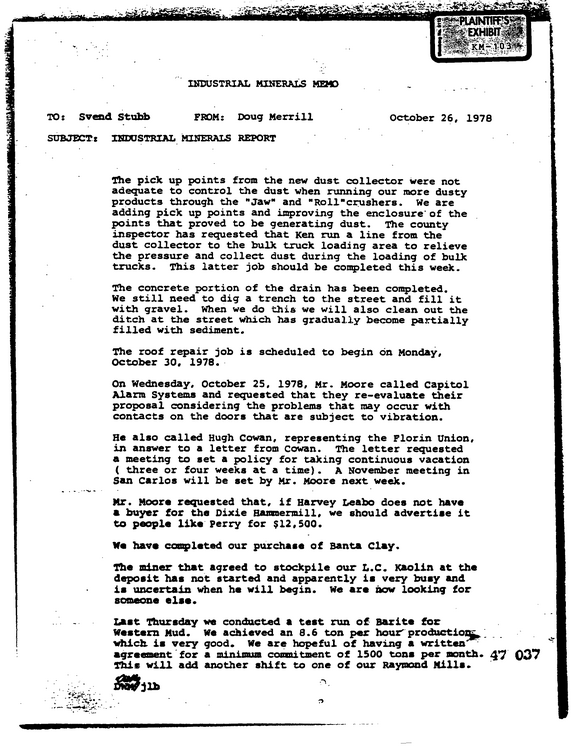
INDUSTRIAL MINERALS MEMO TO: Svead Stubb FROM: Doug Merrill SUBJECT: INDUSTRIAL MINERALS REPORT October 26, 1978 The pick up points from the new dust collector were not adequate to control the dust when running our more dusty products through the "Jaw" and "Roll"crushers.
refid# 2q77m8yL8kZwOjG6VNm5RJ84b1 page
llAl INfOttMAfIQN NO!
refid# 10zBnQk1GjYonwD0qeZJk3nJK4 pages
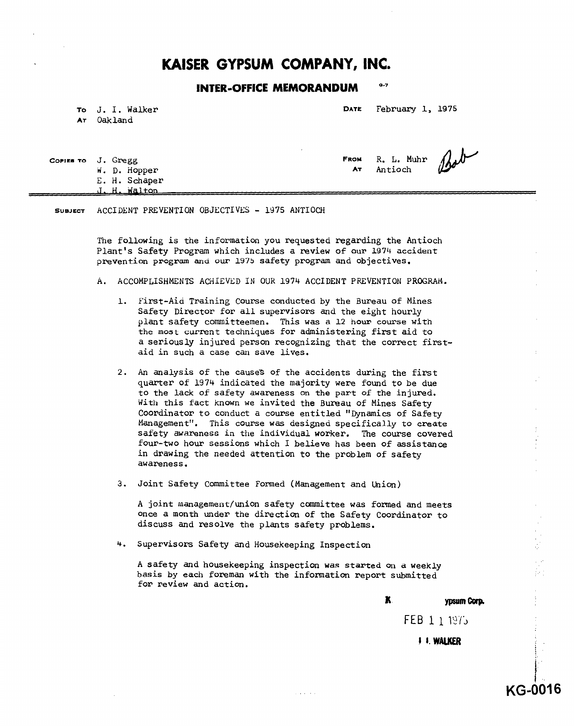
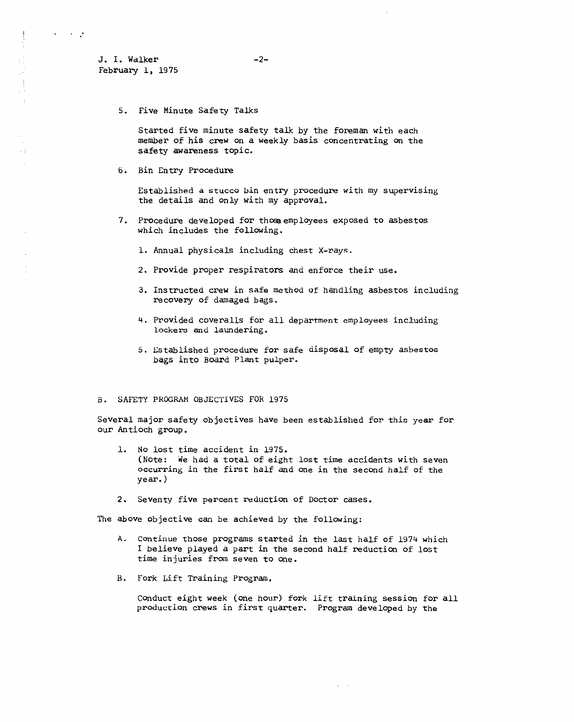
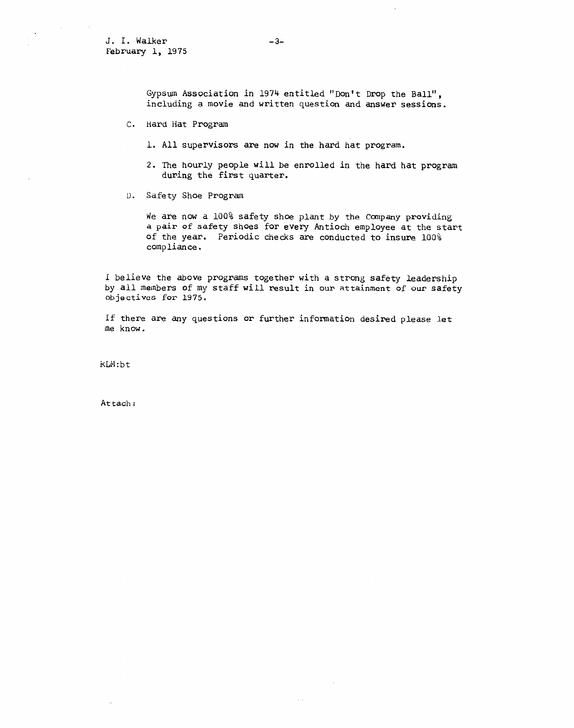
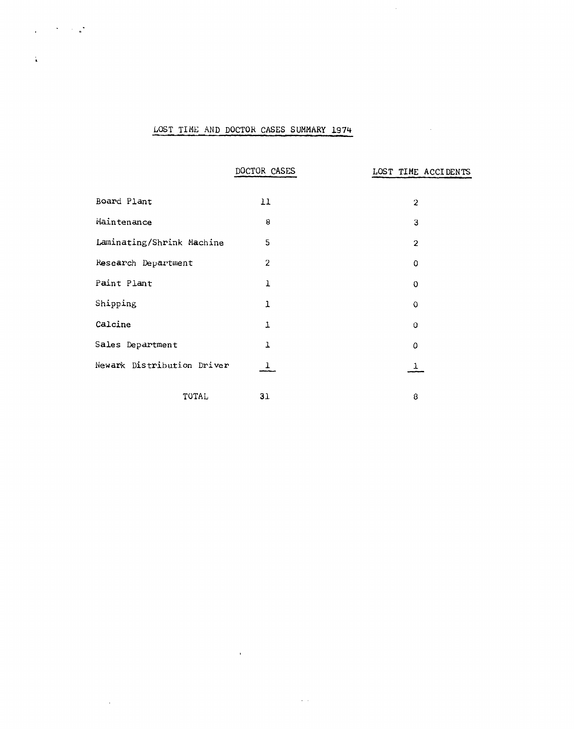
KAISER GYPSUM COMPANY, INC INTER-OFFICE MEMORANDUM " 7 TO J.
refid# mmbgY1wE0ervrrgmOE8vjEo2Q4 pages
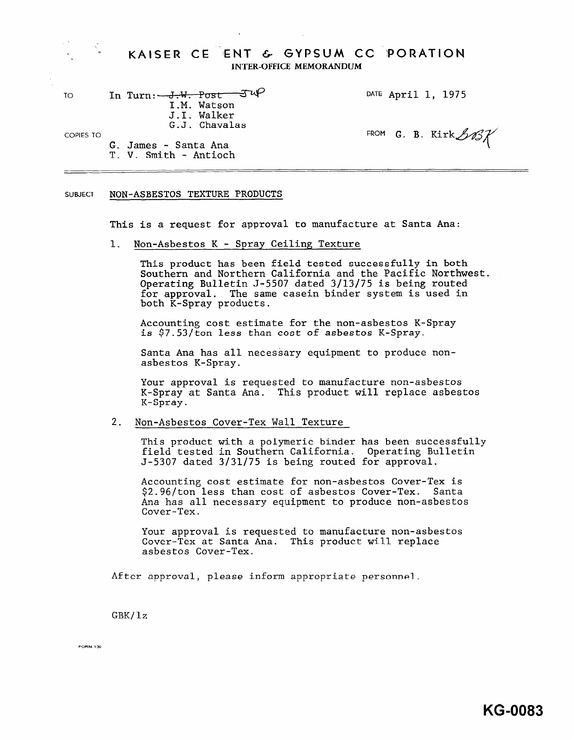
KAISER CE ENT GYPSUM CC PORATION INTER OFFICE MEMORANDUM to COPIES TO In Turn:--Jr-Wr-f^usrt-----SP^sP I.M.
refid# e7XbDddrGV266KLXwakJZ3apG1 page
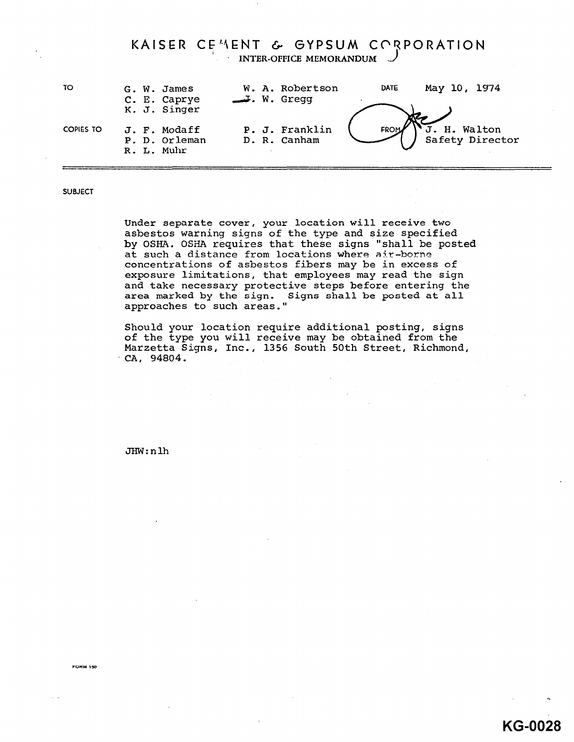
KAI SER CEi HENT 6- GYPSUM CORPORATION JINTER-OFFICE MEMORANDUM TO COPIES TO G.
refid# 0qLad83GrpBRMQ7oqm1D3kQpJ1 page
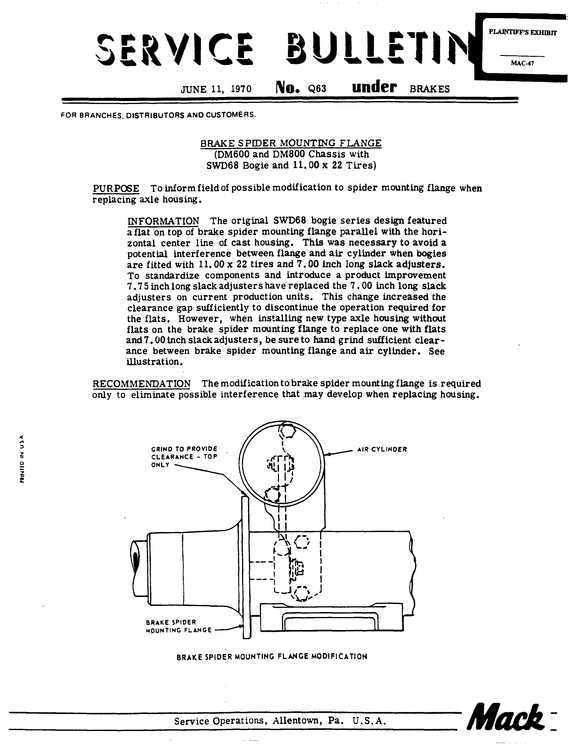
JUNE 11, 1970 No.
refid# ppqdXZMKdYRy9mX7v3pyDpbnD1 page
<5?.
refid# Rokjazvyex3804LdMjQKkmBB1 page
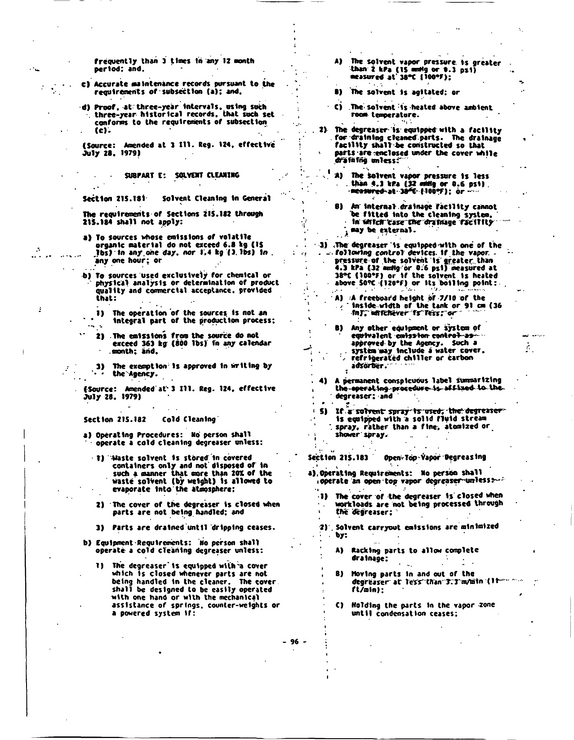
frequently then 3 tines in any 12 nonth period: and. e) Accurate Maintenance records pursuant to the requirements of subsection (a); and. 4) Proof, at three-year Intervals, using such . three-year historical records, that such set conforms to the requirements of subsection ()' (Source: Amended at 2 111.
refid# rxxokzXQXkvG68vxymEM42wda1 page
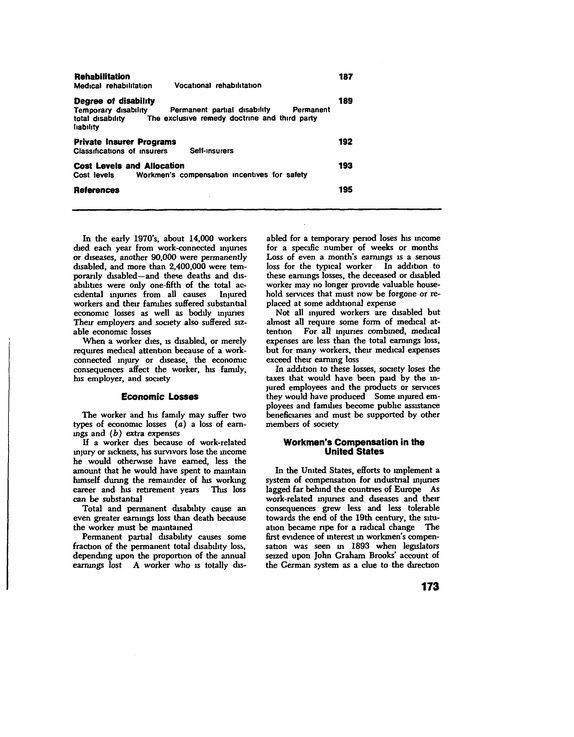
Rehabilitation Medical rehabilitation Vocational rehabilitation 187 Degree of disability Temporary disability Permanent partial disability Permanent total disability The exclusive remedy doctrine and third party liability 189 Private Insurer Programs Classifications of insurers Self-insurers 192 Cost Levels and Allocation Cost levels Workmen's compensation incentives for safety 193 References 195 In the early 1970's, about 14,000 workers died each year from work-connected injuries or diseases, another 90,000 were permanently disabled, and more than 2,400,000 were tem porarily disabled--and these deaths and dis abilities were only one-fifth of the total ac cidental injuries from all causes Injured workers and their families suffered substantial economic losses as well as bodily injuries Their employers and society also suffered siz able economic losses When a worker dies, is disabled, or merely requires medical attention because of a workconnected injury or disease, the economic consequences affect the worker, his family, his employer, and society Economic Losses The worker and his family may suffer two types of economic losses (a) a loss of earn ings and (b) extra expenses If a worker dies because of work-related injury or sickness, his survivors lose the income he would otherwise have earned, less the amount that he would have spent to maintain himself during the remainder of his working career and his retirement years This loss can be substantial Total and permanent disability cause an even greater earnings loss than death because the worker must be maintained Permanent partial disability causes some fraction of the permanent total disability loss, depending upon the proportion of the annual earnings lost A worker who is totally dis abled for a temporary period loses his income for a specific number of weeks or months Loss of even a month's earnings is a senous loss for the typical worker In addition to these earnings losses, the deceased or disabled worker may no longer provide valuable house hold services that must now be forgone or re placed at some additional expense Not all injured workers are disabled but almost all require some form of medical at tention For all injuries combined, medical expenses are less than the total earnings loss, but for many workers, their medical expenses exceed their earning loss In addition to these losses, society loses the taxes that would have been paid by the in jured employees and the products or services they would have produced Some injured em ployees and families become public assistance beneficiaries and must be supported by other members of society Workmen's Compensation in the United States In the United States, efforts to implement a system of compensation for industrial injuries lagged far behind the countries of Europe As work-related injuries and diseases and their consequences grew less and less tolerable towards the end of the 19th century, the situ ation became npe for a radical change The first evidence of interest in workmen's compen sation was seen in 1893 when legislators seized ujpon John Graham Brooks' account of the German system as a clue to the direction 173
refid# R27V1pGdE7g9xG8ZxYVjx9Xea1 page
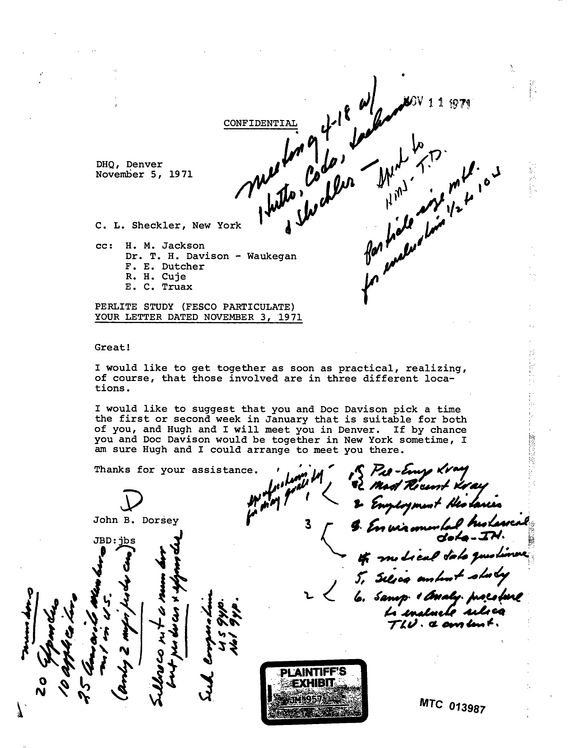
CONFIDENTIAL . } jsov 11 DHQ, Denver November 5, 1971 /rd>\.r I C.
refid# q6EQ0p1ZVxqpL5LeQG5mERNM1 page
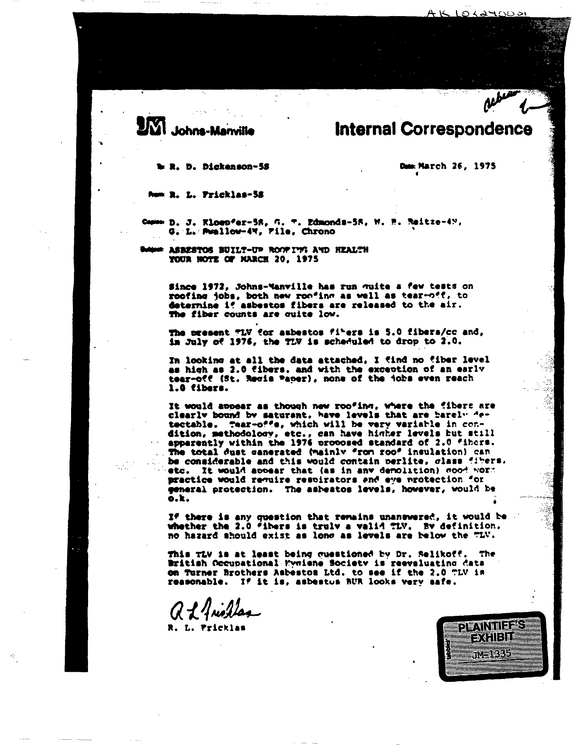
m Johns-ManvOI* Internal Correspondence k R.
refid# p2QGDpB9R138Dkga4nLnOrn8D1 page
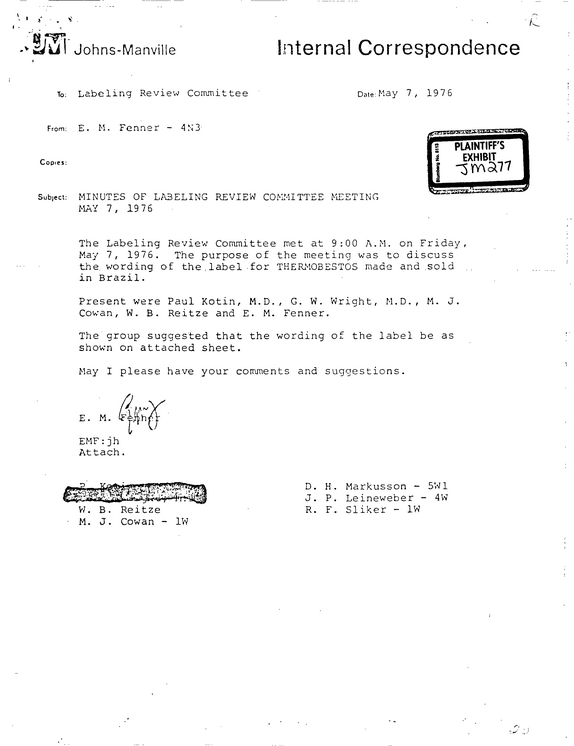
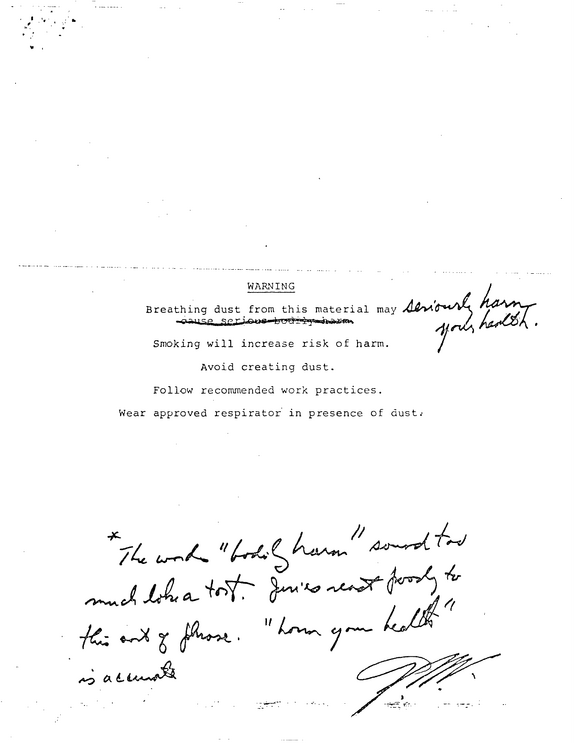
Johns-Manville Internal Correspondence To: Labeling Review Committee Date: May 7, 19 7 6 From-.
refid# DMnGzmo3L3pqex9M1ZDyLwN2M2 pages
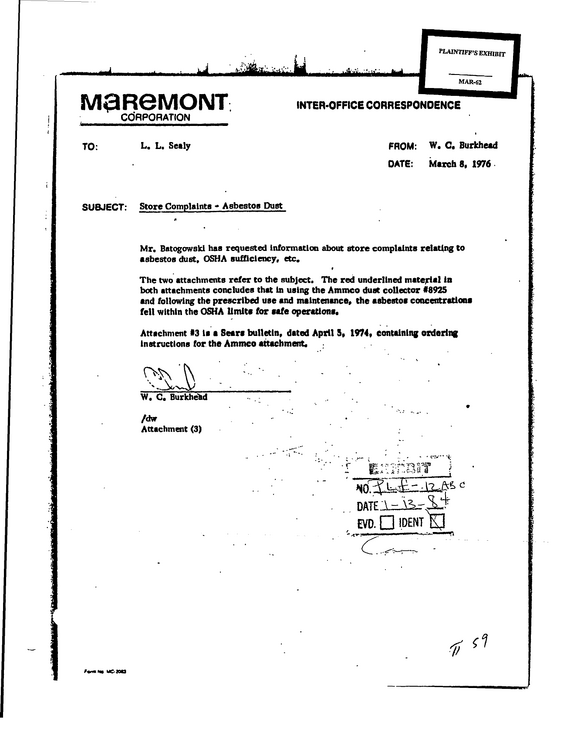
k M0 ReMONT CORPORATION TO: L.
refid# Z8JGG6Mwa6k1vjyD5Dy05jgjO3 pages
Personal protective equipment All individuals m machine areas should wear safety glasses or face shields All workers should wear close-fitting ap parel without rings, bracelets, or other jewelry which may become entangled m moving ma chinery Loose sleeves or other loose clothing also possess the same danger Hair nets or caps should be worn to keep long hair out of moving parts, and gloves or hand pads can be worn to protect hands from splinters and rough lumber However, gloves should not be wom where there is any chance of being caught by the moving parts of ma chines, the rotating stock, etc Safety shoes should be wom when handling heavy material or when there is danger of foot injury See Chapter 19, "Personal Protective Equip ment," for details Sources There are a number of specific OSHA stand ards which require safety features on some woodworking machmes Most of these stand ards are based on American National Standard 01 1-1971, Safety Requirements for Wood working Machinery In addition, some states and other jurisdictions have codes which specify certain requirements All of these sources should be consulted The National Safety Council publishes data sheets on a number of woodworking machines See Ref erences Specific Safety Principles Circular saws There are two principal types of accidents involving circular power saws (a) blade cuts or abrasions, and (b) kickbacks These two kinds of accidents can be minimized by proper guarding and by establishing and enforcing safe work procedures Power saw operators are most frequently injured when their hands slip off the stock, while pushing it into the saw, or when hold ing the hands too close to the blade during the cutting opeiations Helpers and take-away men are mjuied by coming into contact with the blade while re moving scrap or the finished pieces from the table Poor housekeeping practices and sbppery floors are another source of accidents involv ing circular saws Circular saws are designed to permit a wide range of operations Therefore, as is the case with most multiple-use equipment, it is dif ficult to design one type of guard for maxi mum protection for all types of operations Contact with the saw blade can be prevented through use of the proper type of spreader, hood guard, jigs, fixtures, combs, or other devices Kickbacks.
refid# MGew7Veyr3Ov75ponqBJ5wrJk1 page
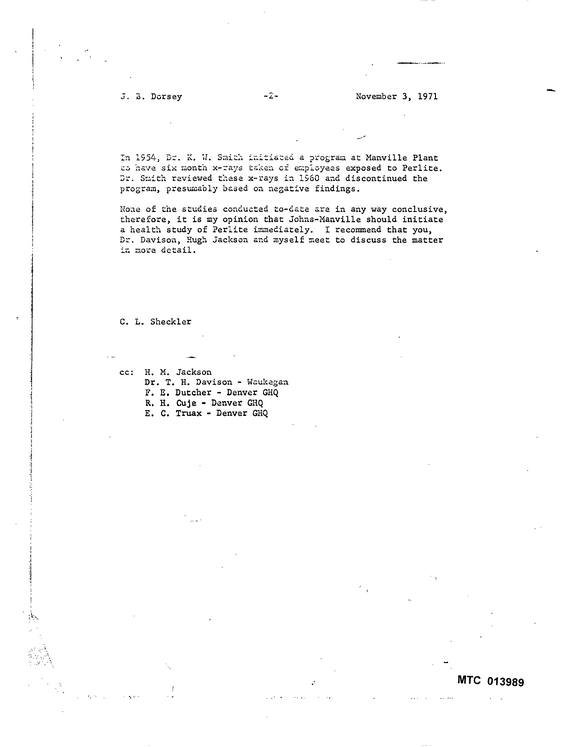
November 3, 1971 J.
refid# 50EMOzxvNrDBMgvwBEm2KMvqN2 pages