Refine
Estimated Years 1960-1969Clear
16,810 results foundRefine Search
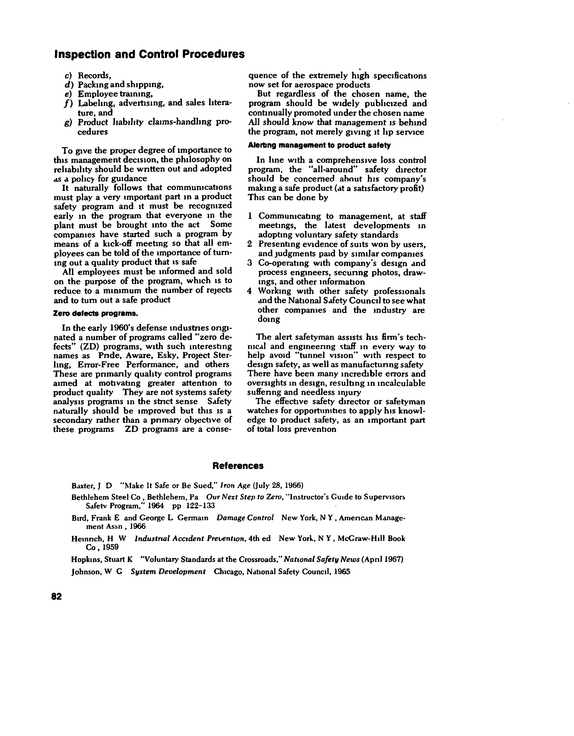
Inspection and Control Procedures c) Records, d) Packing and shipping, e) Employee training, /) Labeling, advertising, and sales litera ture, and g) Product liability claims-handlmg pro cedures To give the proper degree of importance to this management decision, the philosophy on reliability should be written out and adopted as a policy for guidance It naturally follows that communications must play a very important part in a product safety program and it must be recognized early in the program that everyone in the plant must be brought into the act Some companies have started such a program by means of a kick-off meeting so that all em ployees can be told of the importance of turn ing out a quality product that is safe All employees must be informed and sold on the purpose of the program, which is to reduce to a minimum the number of rejects and to turn out a safe product Zero defects programs.
refid# 7Q9zEeNoxdndqRpm5Db89VE61 page
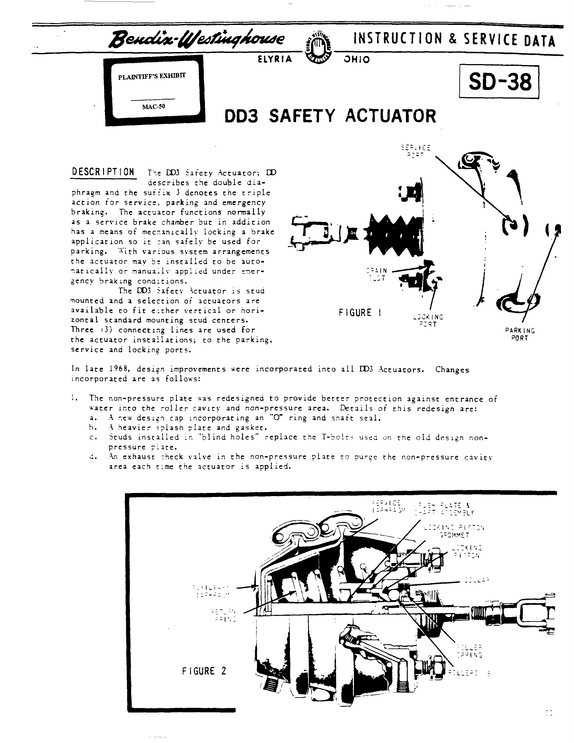
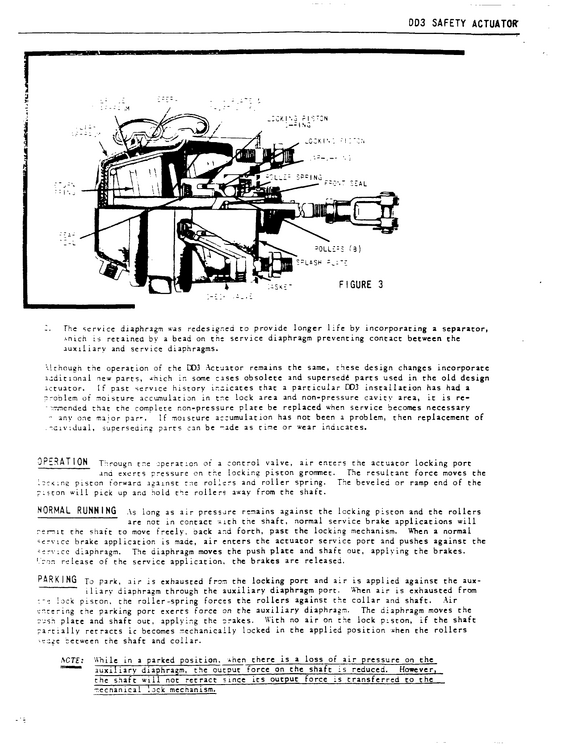
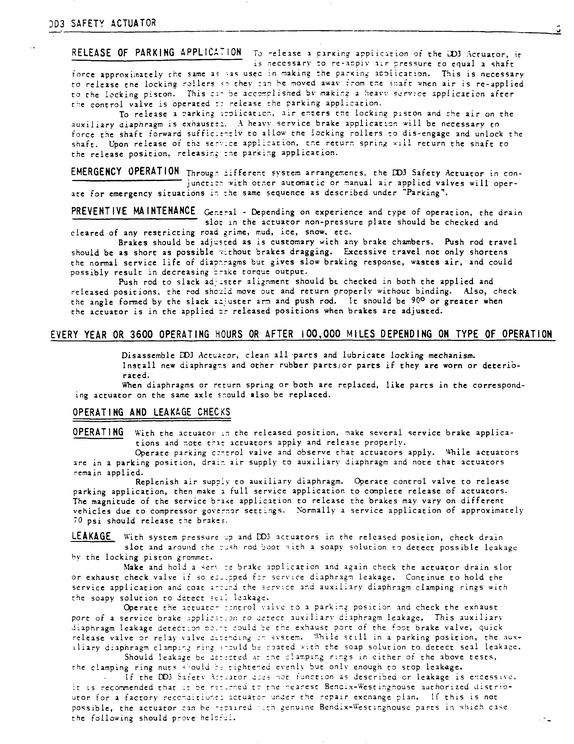
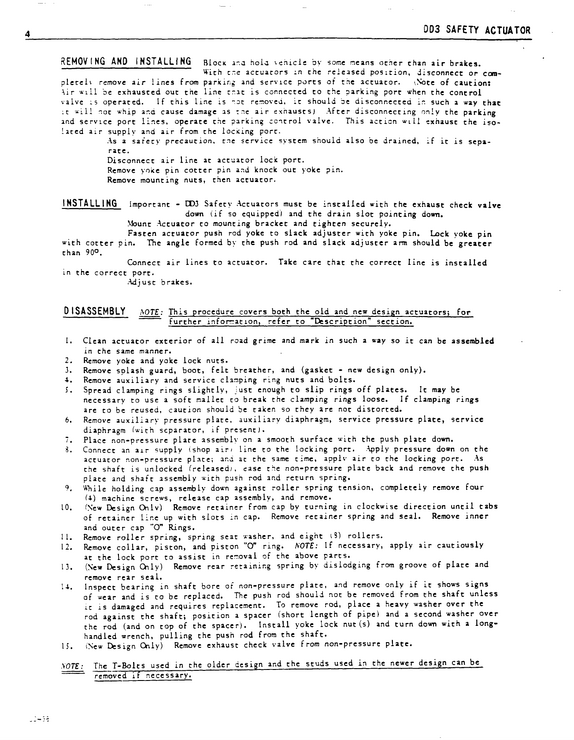
A INSTRUCTION & SERVICE DATA --' ELYRIA OHIO ZZZZZZZT""'' DD3 SAFETY ACTUATOR DESCRIPTION The CD3 Safety Actuator; CD* 1 describes the double dia phragm and the suffix 3 denotes the triple action for service, parking and emergency braking.
refid# pexDjb13Qz0LdwXdN8NK5ZwKj6 pages
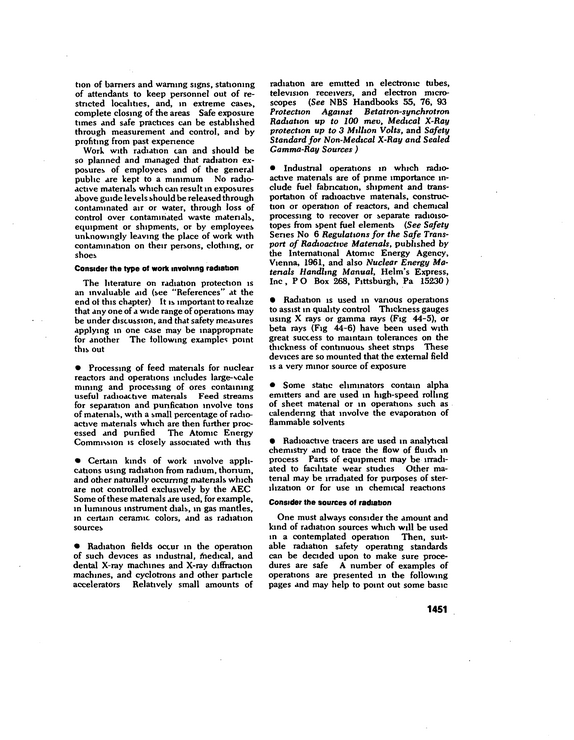
tion of barriers and warning signs, stationing of attendants to keep personnel out of re stricted localities, and, in extreme cases, complete closing of the areas Safe exposure times and safe practices can be established through measurement and control, and by profiting from past experience Work with radiation can and should be so planned and managed that radiation ex posures of employees and of the general public are kept to a minimum No radio active matenals which can result in exposures above guide levels should be released through contaminated air or water, through loss of control over contaminated waste materials, equipment or shipments, or by employees unknowingly leaving the place of work with contamination on their persons, clothing, or shoes Consider the type of work involving radiation The literature on radiation protection is an invaluable aid (see "References" at the end of this chapter) It is important to realize that any one of a wide range of operations may be under discussion, and that safety measures applying in one case may be inappropriate for another The following examples point this out Processing of feed matenals for nuclear reactors and operations includes large-scale mining and processing of ores containing useful radioactive matenals Feed streams for separation and punfication involve tons of matenals, with a small percentage of radio active matenals which are then further proc essed and punfied The Atomic Energy Commission is closely associated with this Certain kinds of work involve appli cations using radiation from radium, thonum, and other naturally occurring matenals which are not controlled exclusively by the AEC Some of these matenals are used, for example, in luminous instrument dials, in gas mantles, in certain ceramic colors, and as radiation sources Radiation fields occur in the operation of such devices as industrial, fnedical, and dental X-ray machines and X-ray diffraction machines, and cyclotrons and other particle accelerators Relatively small amounts of radiation are emitted in electronic tubes, television receivers, and electron micro scopes (See NBS Handbooks 55, 76, 93 Protection Against Betatron-synchrotron Radiation up to 100 men.
refid# 6Rne6wVO7Yje1QN99EpemRbqd1 page
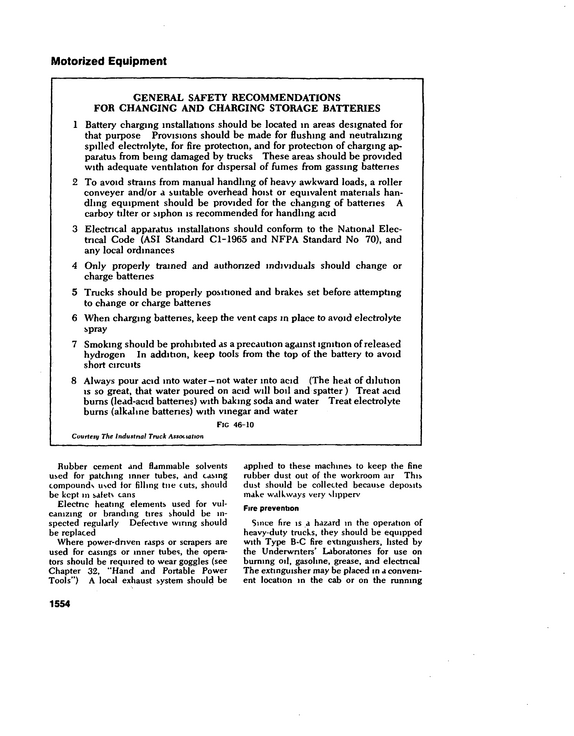
Motorized Equipment GENERAL SAFETY RECOMMENDATIONS FOR CHANGING AND CHARGING STORAGE BATTERIES 1 Battery charging installations should be located m areas designated for that purpose Provisions should be made for flushing and neutralizing spilled electrolyte, for fire protection, and for protection of charging ap paratus from being damaged by trucks These areas should be provided with adequate ventilation for dispersal of fumes from gassing batteries 2 To avoid strains from manual handling of heavy awkward loads, a roller conveyer and/or a suitable overhead hoist or equivalent materials han dling equipment should be provided for the changing of batteries A carboy tilter or siphon is recommended for handling acid 3 Electrical apparatus installations should conform to the National Elec trical Code (ASI Standard Cl-1965 and NFPA Standard No 70), and any local ordinances 4 Only properly trained and authorized individuals should change or charge batteries 5 Trucks should be properly positioned and brakes set before attempting to change or charge batteries 6 When charging batteries, keep the vent caps m place to avoid electrolyte spray 7 Smoking should be prohibited as a precaution against ignition of released hydrogen In addition, keep tools from the top of the battery to avoid short circuits 8 Always pour acid into water--not water into acid (The heat of dilution is so great, that water poured on acid will boil and spatter) Treat acid bums (lead-acid batteries) with baking soda and water Treat electrolyte burns (alkaline batteries) with vinegar and water Fig 46-10 Courtesy The Industrial Truck Association Rubber cement and flammable solvents used for patching inner tubes, and casing compounds used tor filling tne cuts, should be kept in satets cans Electnc heating elements used for vul canizing or branding tires should be in spected regularly Defective winng should be replaced Where power-dnven rasps or scrapers are used for casings or inner tubes, the opera tors should be required to wear goggles (see Chapter 32, "Hand and Portable Power Tools") A local exhaust system should be applied to these machines to keep the fine rubber dust out of the workroom air This dust should be collected because deposits make walkways very shpperv Fire prevention Since fire is a hazard m the operation of heavy-duty trucks, they should be equipped with Type B-C fire extinguishers, listed by the Underwriters' Laboratories for use on burning oil, gasoline, grease, and electrical The extinguisher may be placed in a conveni ent location in the cab or on the running 1554
refid# O153bJKR9JzygkjdLK67oD3KX1 page
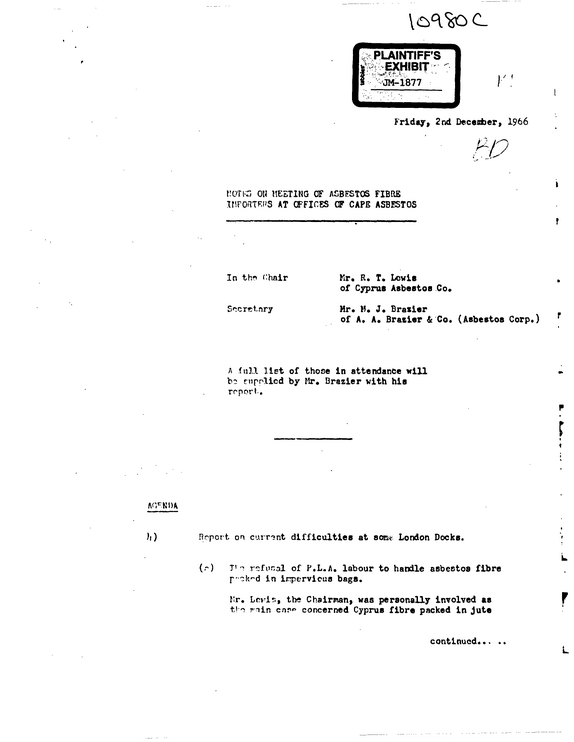
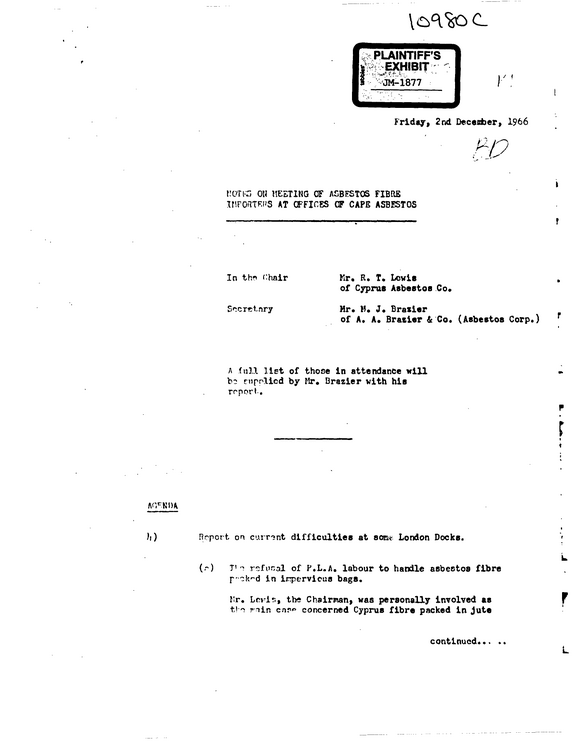
Friday, 2nd Decanter, 1966 NOTES ON MEETING OF ASBESTOS FIBRE IMPORTERS AT OFFICES GF CAPE ASBESTOS In the chair Secretary Mr.
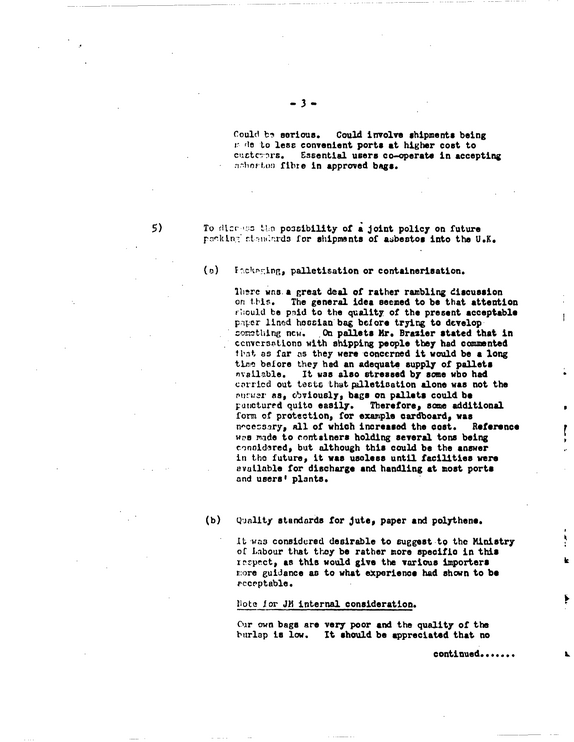
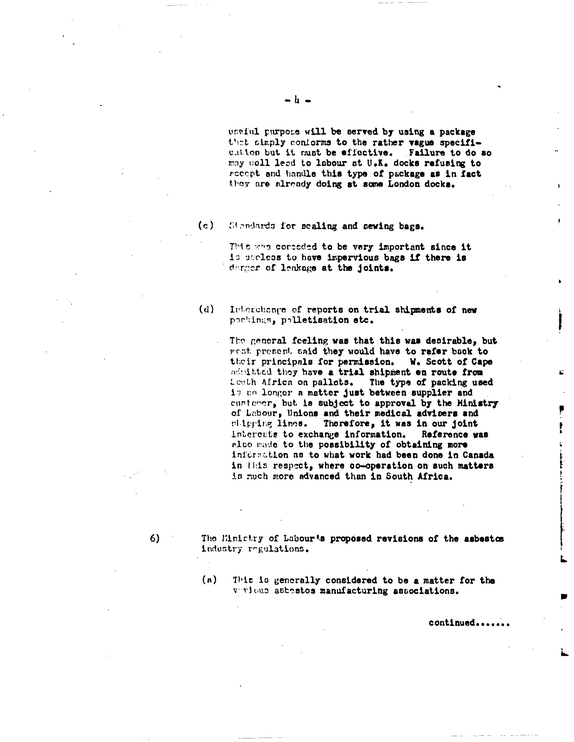
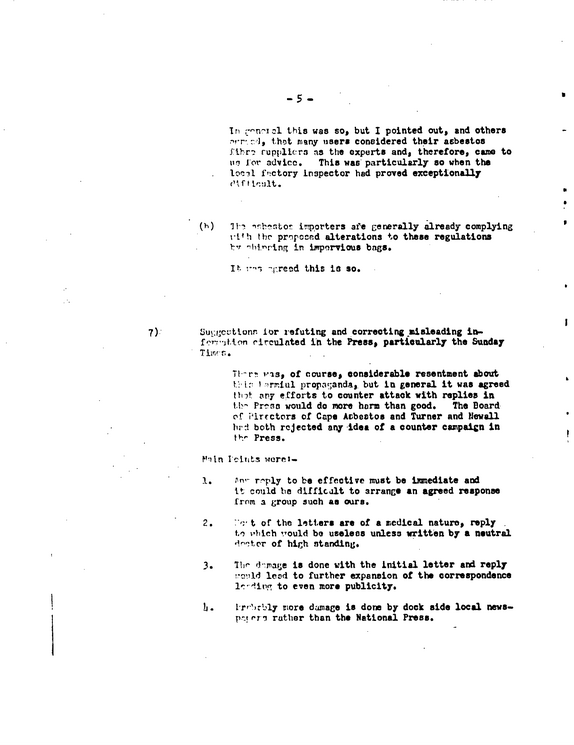
refid# OE2v99Jk4Q584GgEN03Gax2YM5 pages
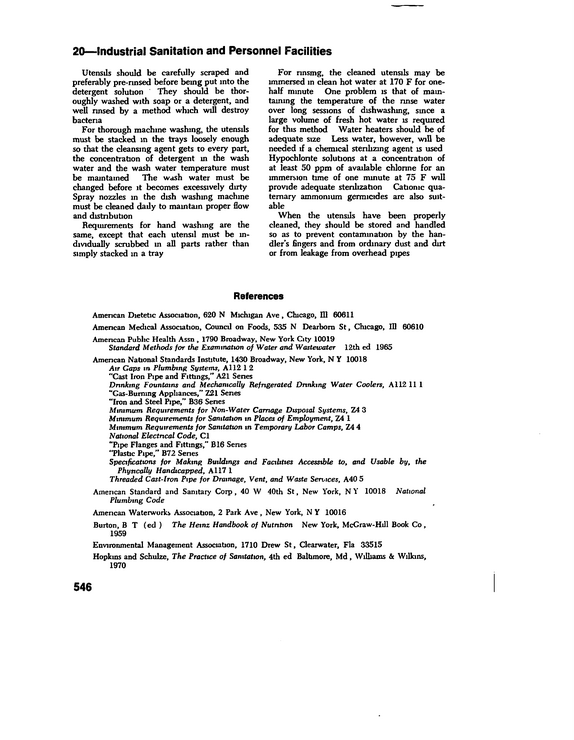
20--Industrial Sanitation and Personnel Facilities Utensils should be carefully scraped and preferably pre-rinsed before being put into the detergent solution ' They should be thor oughly washed with soap or a detergent, and well rinsed by a method which will destroy bactena For thorough machine washing, the utensils must be stacked m the trays loosely enough so that the cleansing agent gets to every part, the concentration of detergent m the wash water and the wash water temperature must be maintained The wash water must be changed before it becomes excessively dirty Spray nozzles in the dish washing machine must be cleaned daily to maintain proper flow and distribution Requirements for hand washing are the same, except that each utensil must be in dividually scrubbed in all parts rather than simply stacked in a tray For nnsmg, the cleaned utensils may be immersed in clean hot water at 170 F for onehalf minute One problem is that of main taining the temperature of the rinse water over long sessions of dishwashing, since a large volume of fresh hot water is required for this method Water heaters should be of adequate size Less water, however, will be needed if a chemical sterilizing agent is used Hypochlonte solutions at a concentration of at least 50 ppm of available chlonne for an immersion time of one minute at 75 F will provide adequate sterilization Cabonic qua ternary ammonium germicides are also suit able When die utensils have been properly cleaned, they should be stored and handled so as to prevent contamination by the han dler's fingers and from ordinary dust and dirt or from leakage from overhead pipes References American Dietetic Associabon, 620 N Michigan Ave, Chicago, 111 60611 American Medical Association, Council on Foods, 535 N Dearborn St, Chicago, 111 60610 American Public Health Assn , 1790 Broadway, New York City 10019 Standard Methods for the Examination of Water and Wastewater 12th ed 1965 American Nabonal Standards Insbtute, 1430 Broadway, New York, N Y 10018 Air Gaps in Plumbing Systems, A112 1 2 "Cast Iron Pipe and Fittings," A21 Senes Drinking Fountains and Mechanically Refrigerated Drinking Water Coolers, A112 11 1 "Gas-Burning Appliances," Z21 Senes "Iron and Steel Pipe," B36 Senes Minimum Requirements for Non-Water Carnage Disposal Systems, Z4 3 Minimum Requirements for Sanitation in Places of Employment, Z4 1 Minimum Requirements for Sanitation in Temporary Labor Camps, TA 4 National Electncal Code, Cl "Pipe Flanges and Fittings," B16 Senes "Plasbc Pipe," B72 Senes Specifications for Making Buddings and Facilities Accessible to, and Usable by, the Physically Handicapped, A117 1 Threaded Cast-Iron Pipe for Drainage, Vent, and Waste Services, A40 5 American Standard and Sanitary Corp, 40 W 40th St, New York, N Y 10018 National Plumbing Code Amencan Waterworks Associabon, 2 Park Ave , New York, N Y 10016 Burton, B T (ed ) The Heinz Handbook of Nutation New York, McCraw-Hill Book Co , 1959 Environmental Management Associabon, 1710 Drew St, Clearwater, Fla 33515 Hopkins and Schulze, The Practtce of Sanitation, 4th ed Baltimore, Md, Williams & Wilkins, 1970 546
refid# MMxzJdJbmMnB6o1Zq6dOp3q3L1 page
Friday, 2nd Decanter, 1966 NOTES ON MEETING OF ASBESTOS FIBRE IMPORTERS AT OFFICES GF CAPE ASBESTOS In the chair Secretary Mr.
refid# 447gE57G458gvoqR72bx3pydN5 pages
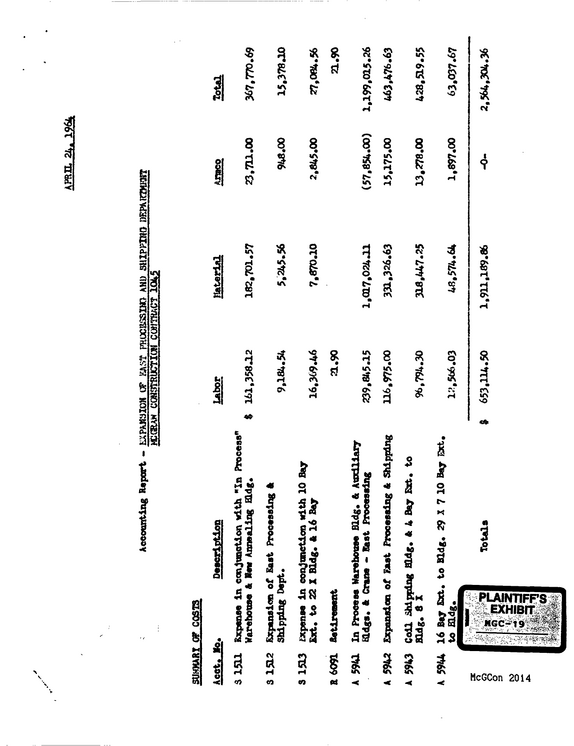
OTP. 24. 1961 g a e i ft $a sce 8 *4 r: 5 to 1U 73 0-> 2s t s i i 3 s m * o(V vO m 8 4 MiOr\\' G* 5 r- 8 * i rAt fHc *~T C-(fVO A 'O m CM 888 i i n 8 88 8 8 j rHin- CO fc in m- a scIA-* w% 1.# I tf in H 3 o<3 in re 3 o c- 3 in ftm t?
refid# gmxZ6jerGV3z57xBYnk4zNd98 pages
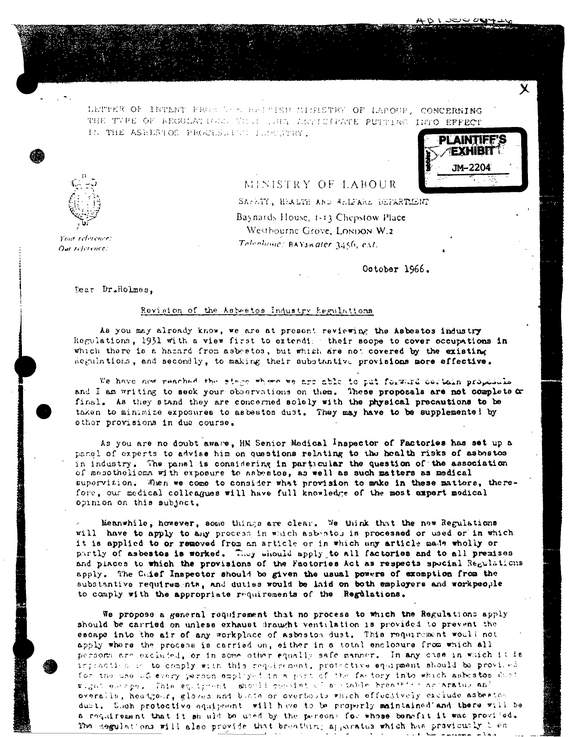
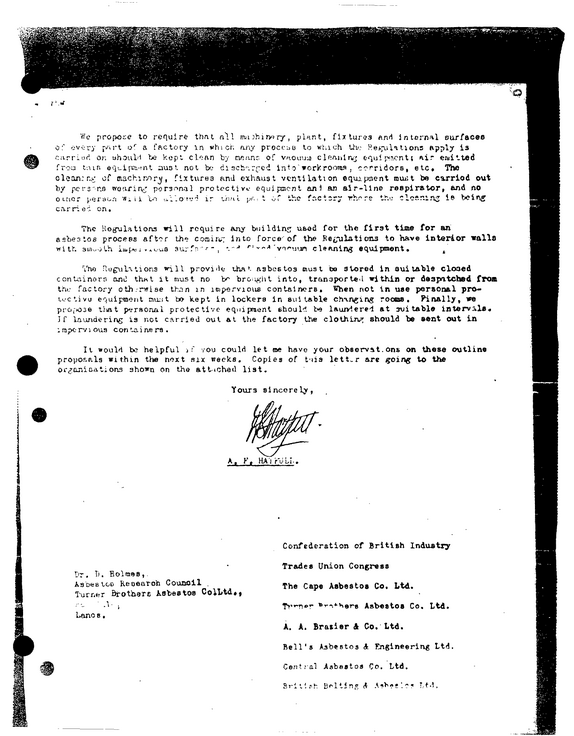
FETTER 01- 1 NT!
refid# garvYE2ag7OY6yrmzD9Jm22Ze2 pages
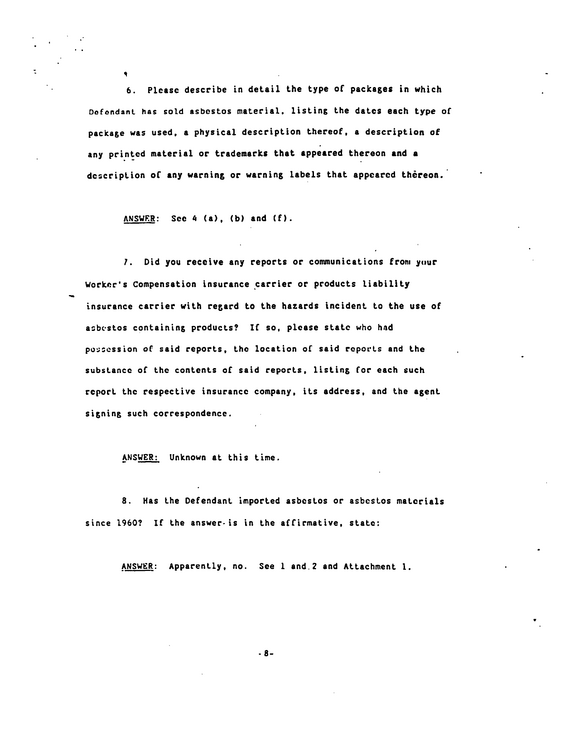
* 6.
refid# Yj32Jdryv6dyvXLM7YErK27bV1 page
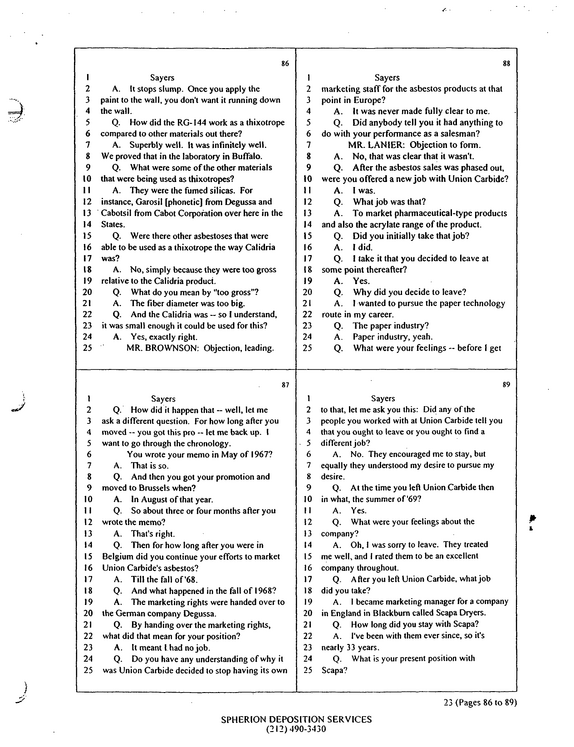
s 86 1 Sayers 2 A.
refid# 0q4K1G84Mav0B1qeyze5kDKwV1 page
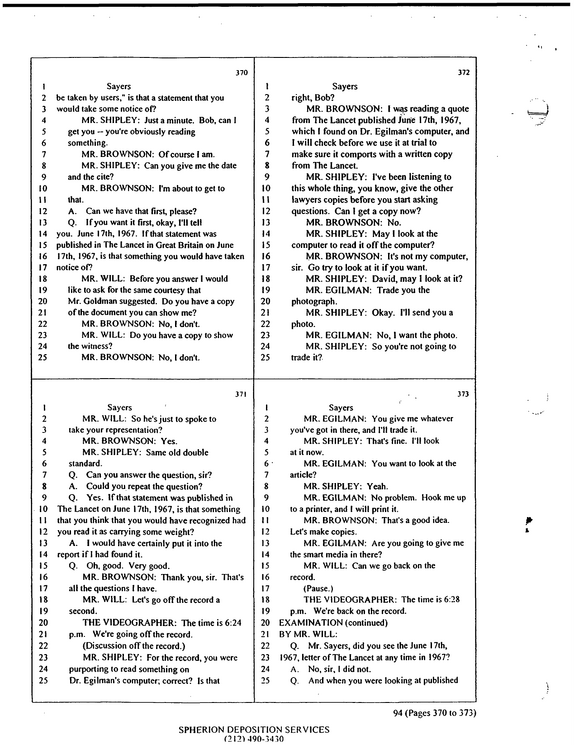
370 1 Sayers 2 be taken by users," is that a statement that you 3 would take some notice of?
refid# 8D2jJZY71KYyDoB5Jb9k4Gzk1 page
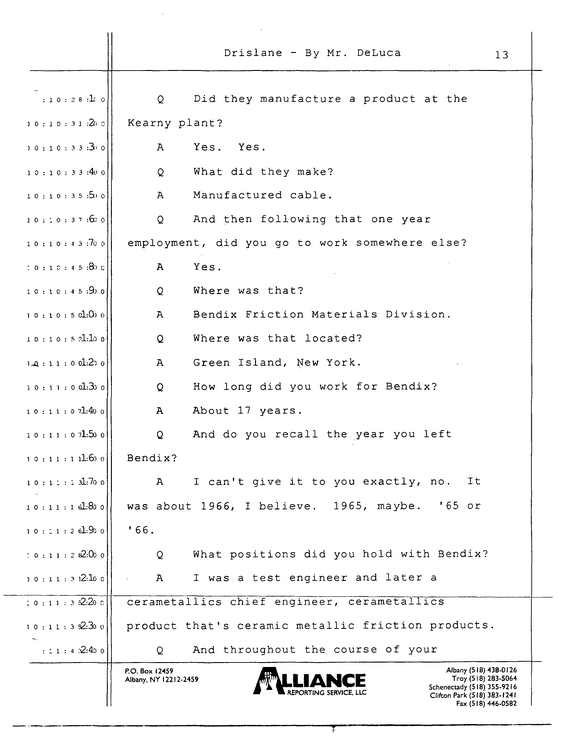
Drislane - By Mr.
refid# Y8w2B97YogXBV38LLQjnzOvk1 page
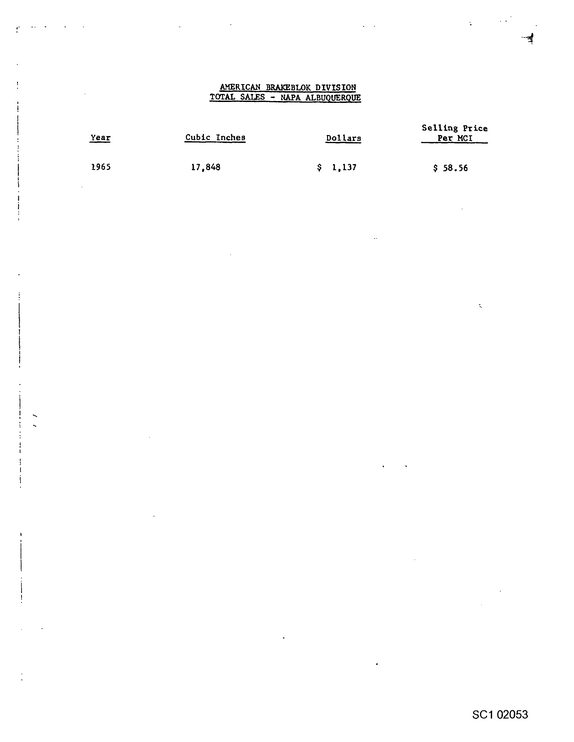
Year 1965 AMERICAN BRAKEBLOK DIVISION TOTAL SALES - NAPA ALBUQUERQUE Cubic Inches 17,848 Dollars 1,137 Selling Price Per MCI $ 58.56 SCI 02053
refid# XRj78NOXMRDXxDBkVR2nqzKvR1 page
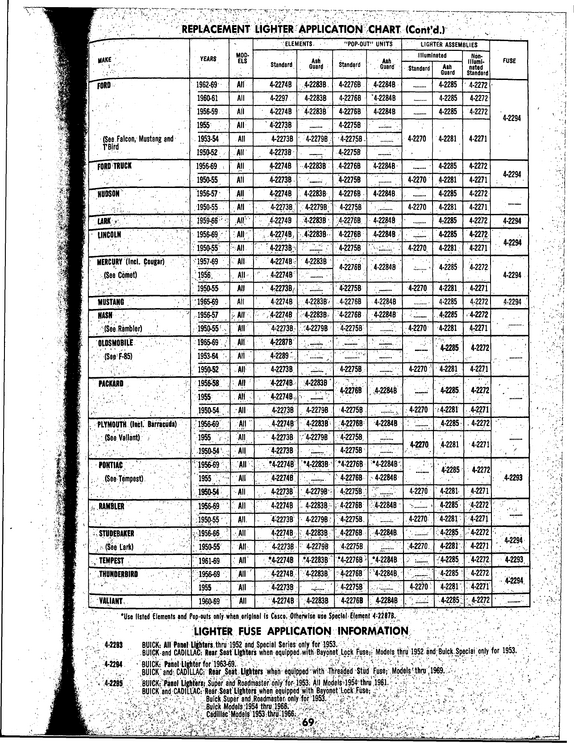
REPLACEMENT LIGHTER APPLICATION CHART (Cont'd.)
refid# wDpJ5LV4ZQKrQzXvGQZKeQDgQ1 page