Refine
Estimated Years 1960-1969Clear
16,810 results foundRefine Search
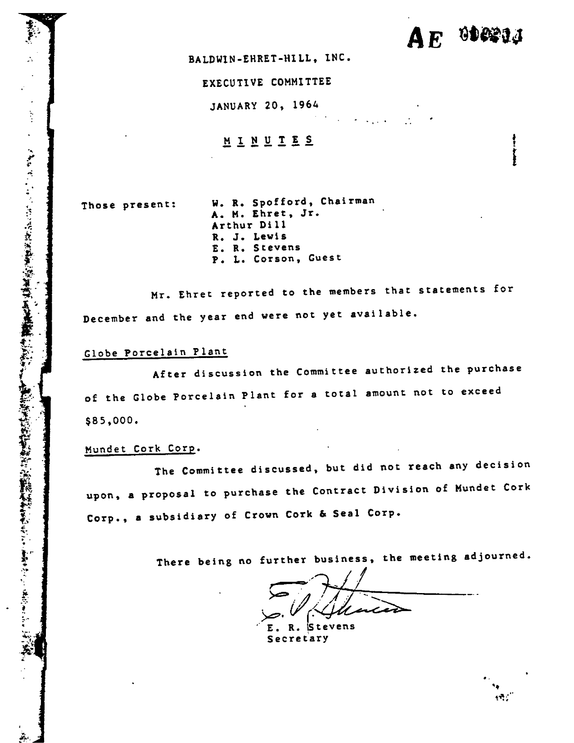
FILE NAME Keene KNE DATE 1964 Jan 20 DOC KNE013 DOCUMENT DESCRIPTION Baldwin Inc.
refid# MJ3XO5qabQV63qLZG1RRnw9Nk2 pages
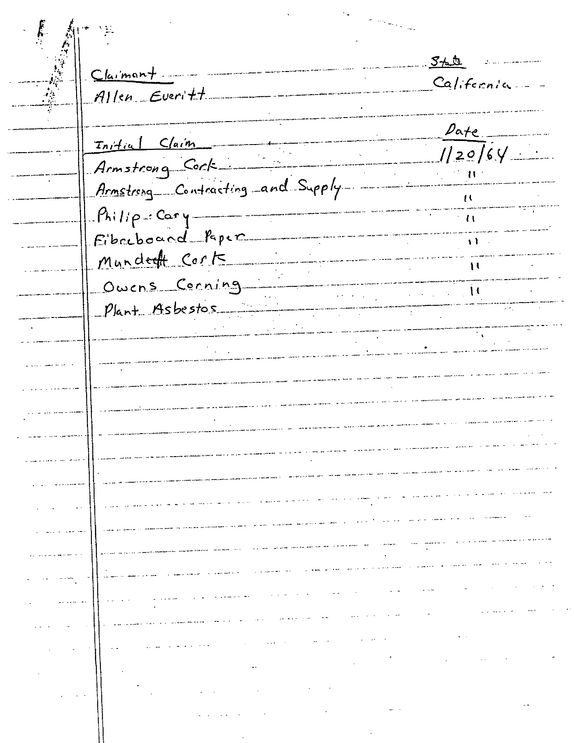
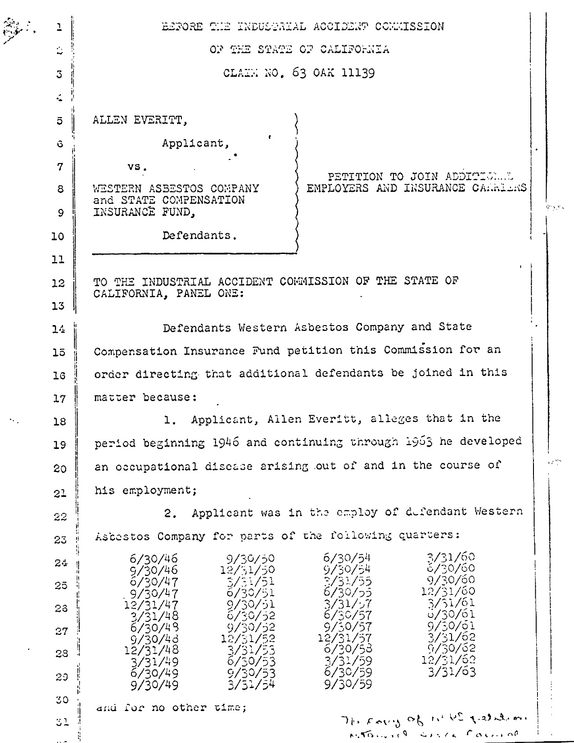
FILE NAME Mundet Cork MCK DATE 1964 DOC MCK132 DOCUMENT DESCRIPTION WC Claim of Everitt Pt 2 is ten ae s,% . ee eee Pome 7 Peg .

refid# gaLKJ8QzkQDXOz70aD2v5BmGq69 pages
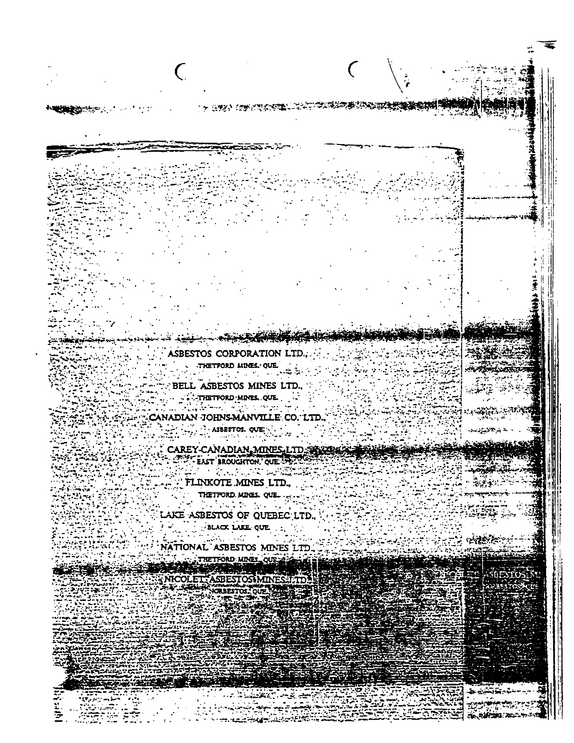
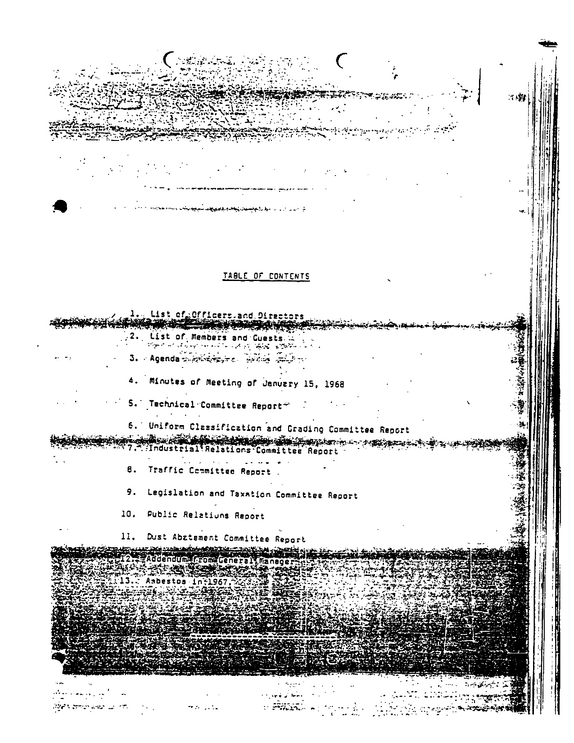
FILE NAME Quebec Asbestos Mining Association QAMA DATE 1968 Mar 27-30 DOC QAMA117 DOCUMENT DESCRIPTION Minutes from the QAMA Special Winter Meeting + Fr Te We \ . " . .
refid# k6e9nZgLBag0okoVM5QGj9wQE68 pages
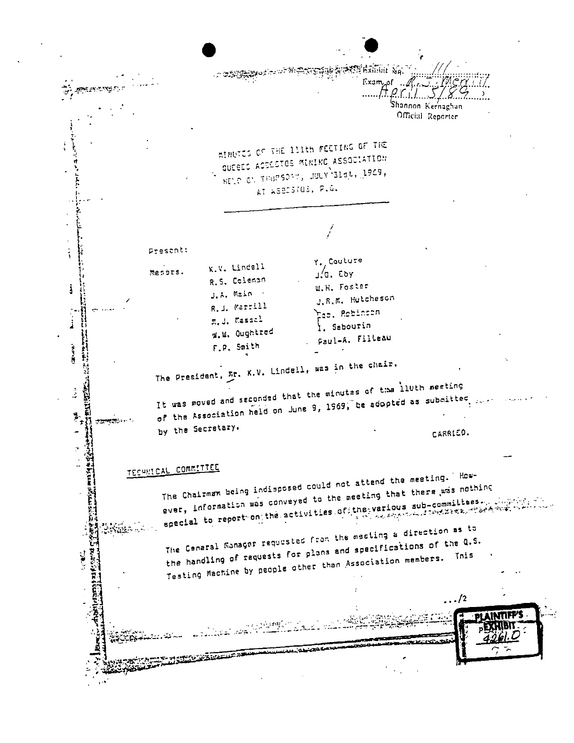
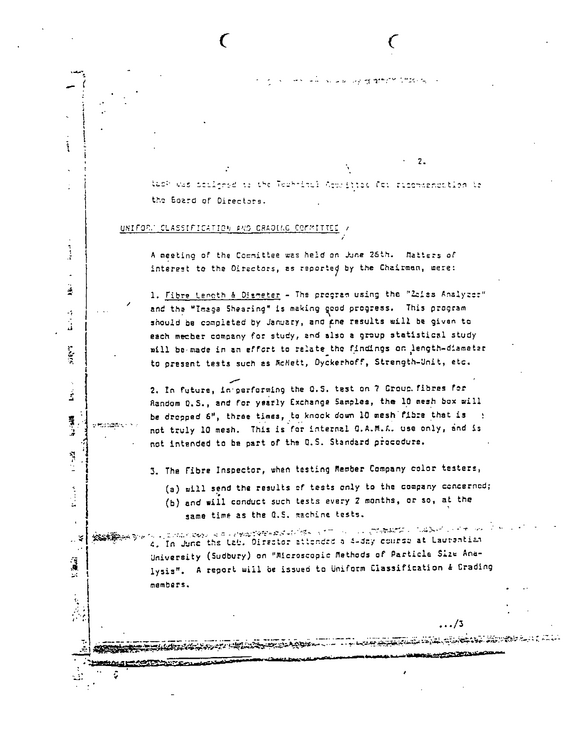
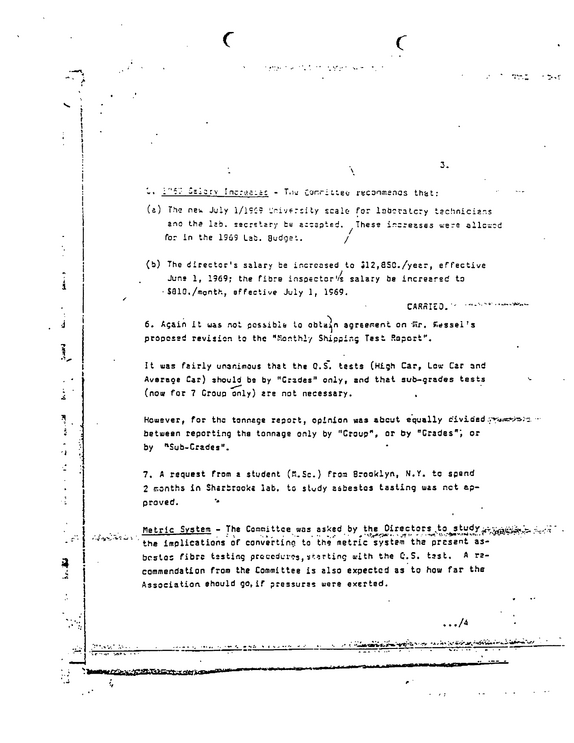
FILE NAME Quebec Asbestos Mining Association QAMA DATE 1969 July 31 DOC QAMA124 DOCUMENT DESCRIPTION Minutes of 111th Meeting of the QAMA 4 et, TI ret ENR TP cere a t 4 Ni Ps j. yt ft _ NN i i 7 ', : san hg eg MWh SOA SRS gale a ' ret co ae .
refid# yrwKVQqwjaZO2Q69X3nyM8yoD14 pages
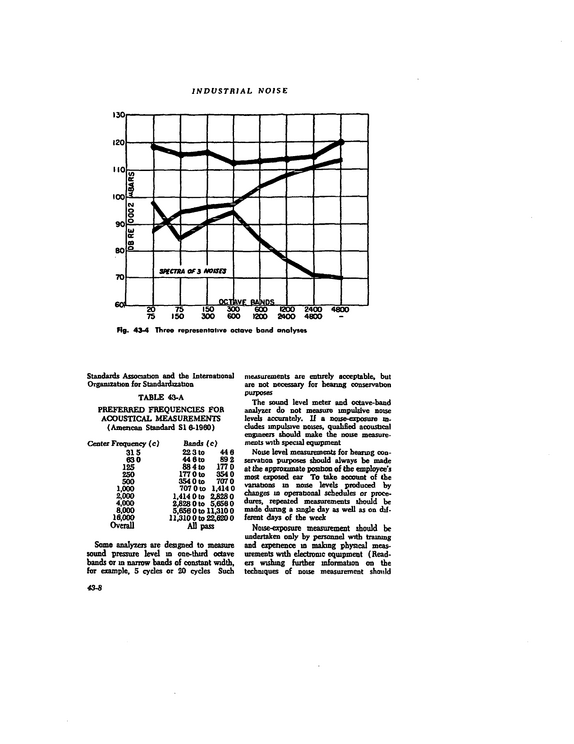
INDUSTRIAL NOISE Standards Association and the Internationa] Organization for Standardization TABLE 43-A PREFERRED FREQUENCIES FOR ACOUSTICAL MEASUREMENTS (American Standard SI 6-1960) Center Frequency (c) 315 630 125 250 500 1,000 2,000 4.000 8.000 16,000 Overall Bands (c) 22 3 to 446 44 6 to 89 2 884to 1770 1770 to 3540 3540 to 707 0 707 0 to 1,414 0 1,414 0 to 2280 2,828 0 to 5,6560 5,656 0 to 11,3100 11.3100 to 22,620 0 All pass Some analyzers are designed to measure sound pressure level in one-third octave bands or in narrow bands of constant width, for example, 5 cycles or 20 cycles Such measurements are entirely acceptable, but are not necessary for hearing conservation purposes The sound level meter and octave-band analyzer do not measure impulsive noise levels accurately.
refid# nBoBXOZL5ay1L461Nrv4ROYR1 page
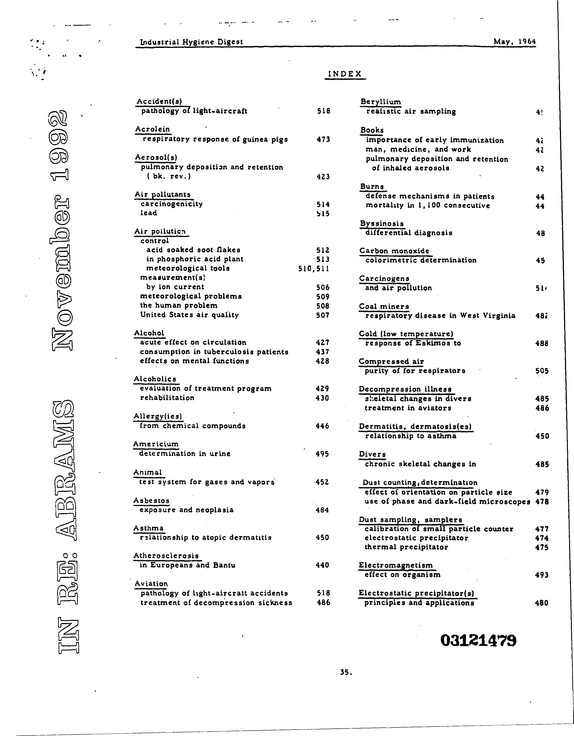
i 1 "Ffl g=3 C=3 Industrial Hygiene Digest May, 1964 INDEX Accident(s) pathology of light.aircraft 518 Acrolein respiratory response of guinea pigs 473 Aerosol(s) pulmonary deposition and retention ( bk. rev.) 423 Air pollutants carcinogenicity lead 514 515 Air pollution control acid soaked soot Hakes in phosphoric acid plant meteorological tools measurements) by ion current meteorological problems the human problem United States air quality 512 513 510,511 506 509 508 507 Alcohol acute effect on circulation consumption in tuberculosis patients effects on mental functions 427 437 428 Alcoholics evaluation of treatment program rehabilitation 429 430 Allergy(ies) from chemical compounds 446 Americium determination in urine 495 Animal test system for gases and vapors 452 Asbestos exposure and neoplasia 484 Asthma relationship to atopic dermatitis 450 Atherosclerosis in Europeans and Bantu 440 Aviation pathology of light-aircrait accidents treatment of decompression sickness 518 486 Beryllium realistic air sampling 4< Books importance of early immunization man, medicine, and work pulmonary deposition and retention of inhaled aerosols 42 42 42 Burns defense mechanisms in patients mortality in 1,100 consecutive 44 44 Byssinosis differential diagnosis 48 Carbon monoxide colorimetric determination 45 Carcinogens and air pollution 51' Coal miners respiratory disease in West Virginia 482 Cold (low temperature) response of Eskimos to 488 Compressed air purity of for respirators 505 Decompression illness skeletal changes in divers treatment in aviators 485 486 Dermatitis, dermatosls(es) relationship to asthma 450 Divers chronic skeletal changes in 485 Dust counting (determination effect of orientation on particle size 479 use of phase and dark.field microscopes 478 Dust sampling, samplers calibration ot small particle counter electrostatic precipitator thermal precipitator 477 474 475 Electromagnetism effect on organism 493 Electrostatic precipitator(s) principles and applications 480 03121479 35.
refid# x1RDdZaBb8N5baQD1a8mNX45b1 page
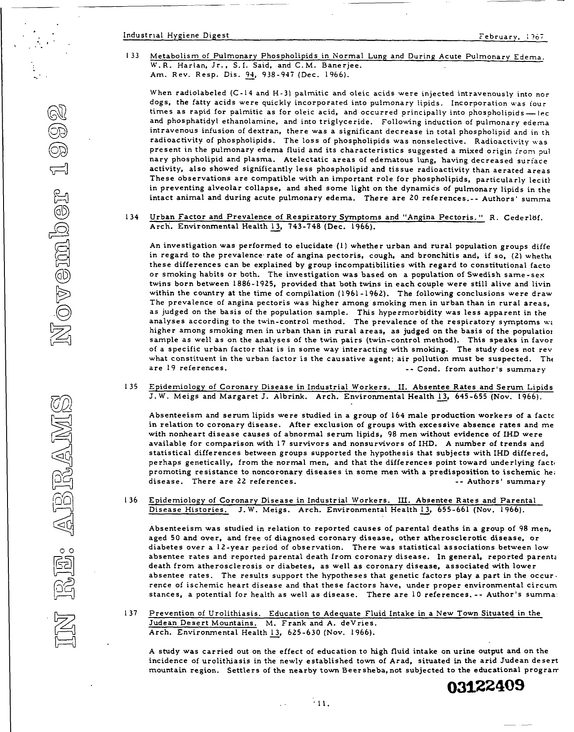
40 oo Industrial Hygiene Digest rebruarv. 1 ?
refid# EvM8a7bKZ2QE2NeyY9RrY03Dx1 page
Industrial Hygiene Digest February, i 96T rats fed on diets containing aldrin and dieldrin for a period of two years was of the same order of magnitude as that observed in control animals.
refid# Ex68pXyXRkD07D7OnbGzmD3GR1 page
< Industrial Hygiene Digest February, I Q6~ 7.
refid# 15ao6Le6znGMkoG6kr4bGV4Qa1 page
Industrial Hygiene Digest August, I 9( CHEMICAL HAZARDS ~| 762 Glue Sniffing and Heroin Abuse.
refid# J37RmDnRBBDK2O3JqpzqL566e1 page
Occupational Health Nursing Committee control in laser production and use; also the use of epoxy resins and, as you will recall, the recent apprehension regarding x-radia tion from color TV sets.
refid# MMJjdLRDb1yLgKpM3rqzN7OJk1 page
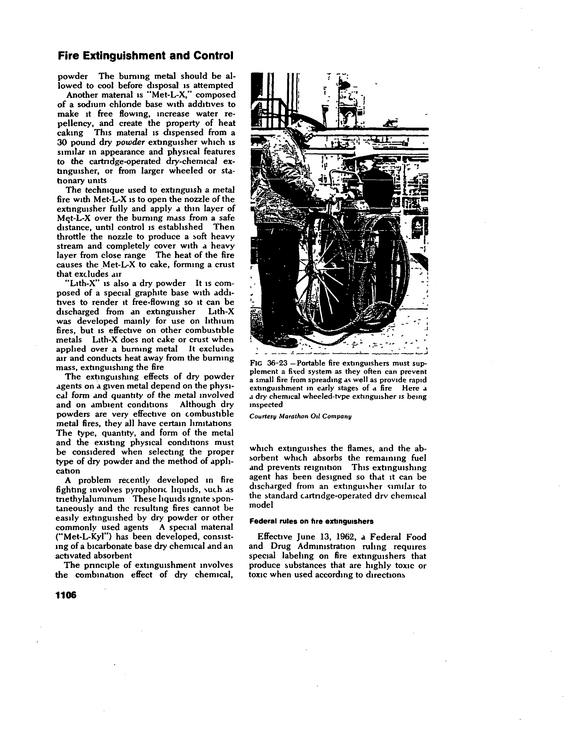
Fire Extinguishment and Control powder The burning metal should be al lowed to cool before disposal is attempted Another matenal is "Met-L-X," composed of a sodium chloride base with additives to make it free flowing, increase water repellency, and create the property of heat caking This matenal is dispensed from a 30 pound dry powder extinguisher which is similar in appearance and physical features to the cartndge-operated dry-chemical ex tinguisher, or from larger wheeled or sta tionary units The technique used to extinguish a metal fire with Met-L-X is to open the nozzle of the extinguisher fully and apply a thin layer of Met-L-X over the burning mass from a safe distance, until control is established Then throttle the nozzle to produce a soft heavy stream and completely cover with a heavy layer from close range The heat of the fire causes the Met-L-X to cake, forming a crust that excludes air "Lith-X" is also a dry powder It is com posed of a special graphite base with addi tives to render it free-flowing so it can be discharged from an extinguisher Lith-X was developed mainly for use on lithium fires, but is effective on other combustible metals Lith-X does not cake or crust when applied over a burning metal It excludes air and conducts heat away from the burning mass, extinguishing the fire The extinguishing effects of dry powder agents on a given metal depend on the physi cal form and quantity of the metal involved and on ambient conditions Although dry powders are very effective on combustible metal fires, they all have certain limitations The type, quantity, and form of the metal and the existing physical conditions must be considered when selecting the proper type of dry powder and the method of appli cation A problem recently developed m fire fighting involves pyrophoric liquids, such as tnethylaluminum These liquids ignite spon taneously and the resulting fires cannot be easily extinguished by dry powder or other commonly used agents A special matenal ("Met-L-Kyl") has been developed, consist ing of a bicarbonate base dry chemical and an activated absorbent The pnnciple of extinguishment involves the combination effect of dry chemical.
refid# wD2kwdKxXdM1NQ7JwzGgoRn2V1 page
Requirements for simple alarm units for use with automatic sprinkler systems are con tained m NFPA No 13, Sprinkler Systems, Installation The open circuit alarm system is not recommended because if the power fails or if the circuit is broken, no warning is given Plants in areas where municipal fire de partments are available usually have a mu nicipal alarm box close to the plant entrance or in one of the buildings Others may have auxiliary alarm box areas, connected to the municipal fire alarm system, at various points in the plant Another system often used is a direct connection to the nearest fire station which may register by a water alarm on the sprinkler system or be set off manually If possible, the fire alarm system should be connected with the local fire fighting alarm, and have an independent power supply In large cities private central station ser vices are available and provide excellent protection These central stations receive signals from plant fire alarm boxes, watch men, sprinkler head operations, and other hazard control points m the plant Being able to give undivided attention to matters of plant security, they can relay information to fire or police departments without delay The signal received at the fire department or assistance agency should locate specifically the site of the fire, or at least the building or area, so the fire can be found quickly Automatic sending stations (thermostatic detectors) may be used, but should not in terfere with the sending of the manual alarm Regular checks should be made on the alarm system All stations should be in spected on a monthly basis by a responsible person, and the overall system should have a daily test to ensure it is m proper operating condition These daily tests should be con ducted at a prearranged time and under a variety of wind and weather conditions to determine whether the signal can be heard m all parts of the plant at all times is a major reason for not adapting existing programing or paging systems to be used as fire alarm systems, for not using fire alarm systems for other purposes, and for not com bining fire alarm elements, during installa tion, with those of devices used for other purposes The type of signal must be suit able to the circumstances in which it is used audible signals cannot warn the deaf, nor can visual signals effectively warn the blind The alarm must be seen or heard by all occupants for whom the warning is intended Location and type of alarms and their sound intensity must be carefully planned If an alarm system is used for evacuation purposes only, it is unnecessary and may be confusing to sound a coded signal A continuous one is preferable The system must be arranged so that it can be tested periodically Tests are best conducted in connection with evacuation drills, and alarms sounded in the tests should be the same as those used for emergency conditions Equipment should be designed and in stalled so that malicious operation is, at least, difficult In general the operation of a station should show that the station has been op erated, such as by requiring a glass to be broken before the alarm can be activated The probable reaction of people in a protected premises must be considered when deciding whether a general (public) alarm shall be given (which may induce panic) or whether the alarm should be recognizable only by selected personnel who can promptly handle the evacuation Electrical industrial signals.
refid# 8ORo8722eZpGQ0dVQg6R05QLZ1 page
able where a vendor comes into the plant with a trailer completely equipped and stocked to fit and sell safety shoes These shoes are normally offered at an industrial price It is difficult to determine when manage ment should pay the cost of personal pro tective equipment and when workers should Factors are the probability and expected severity of injury, the willingness of work ers to wear the equipment, its length of life, and the degree to which it may be depreci ated by nonoccupational use For example, the welder's helmet is almost universally supplied by management, for the job could not be performed at all without it Work gloves sometimes must be purchased by the user On the other hand, welder's or other special purpose gloves are usually considered as being a necessary part of the job work tools and are issued free No matter what decision is made, it remains management's responsibility to develop and enforce the program This is one of the mam themes in the first eight chapters of this Manual Head Protection Although every worker should be encour aged to use his head to absorb knowledge-- he should not use it to absorb blows Men exposed to head hazards must be provided with head protection Safety hats Safety hats (or helmets) are ngid headgear of varying matenals designed to protect the workman's head--not only from impact but from flying particles and electric shock or any combination of the three Helmets (see Fig 38-2) have been classi fied into two types (a) full bnmmed, and (b) brimless with peak The types have been further broken down into four classes Class A, limited voltage resistance for general ser vice, Class B, high voltage resistance, Class C, no voltage protection (metallic helmets).
refid# oL5n87G5NLnpbxvy9yqB25wE1 page
attachments such that the dust created is arrested at the source and collected in filter hags.
refid# 6BeRLyNKBME2n0kXz2m4JjLrg1 page