Refine
Estimated Years 1960-1969Clear
7,161 results foundRefine Search
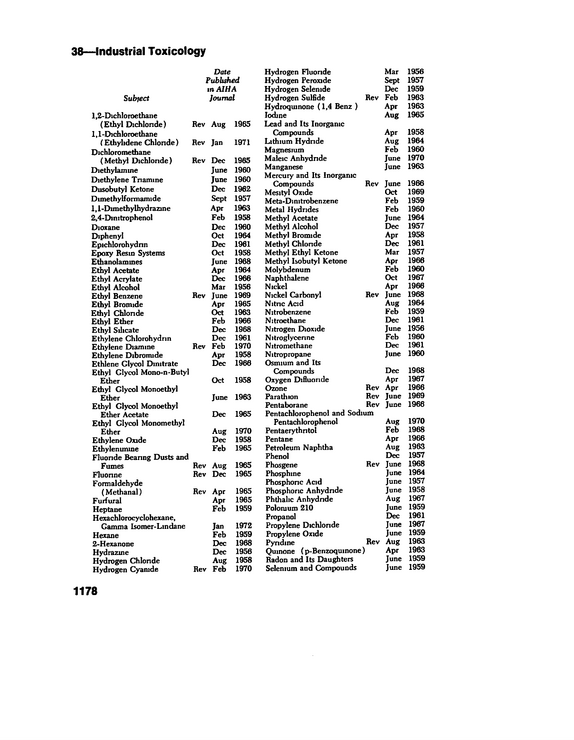
38--Industrial Toxicology Subject Date Published xnAlHA Journal 1,2-Dichloroethane (Ethyl Dichlonde) Rev Aug 1,1-Dichloroethane (Ethyhdene Chlonde) Rev Jan Dichloromethane (Methyl Dichlonde) Rev Dec Diethylamine June Diethylene Tnamine June Dusobutyl Ketone Dec Dimethylformannde Sept 1,1-Dunethylhydrazine Apr 2,4-Dmitrophenol Feb Dioxane Dec Diphenyl Oct Epichlorohydnn Dec Epoxy Resin Systems Oct Ethanolammes June Ethyl Acetate Apr Ethyl Acrylate Dec Ethyl Alcohol Mar Ethyl Benzene Rev June Ethyl Bromide Apr Ethyl Chlonde Oct Ethyl Ether Feb Ethyl Silicate Dec Ethylene Chlorohydrin Dec Ethylene Diamine Rev Feb Ethylene Dibromide Apr Ethlene Glycol Dinitrate Dec Ethyl Glycol Mono-n-Butyl Ether Oct Ethyl Glycol Monoethyl Ether June Ethyl Glycol Monoethyl Ether Acetate Dec Ethyl Glycol Monomethyl Ether Aug Ethylene Oxide Dec Ethylenunme Feb Fluonde Beanng Dusts and Fumes Rev Aug Fluonne Rev Dec Formaldehyde (Methanal) Rev Apr Furfural Apr Heptane Feb Hexachlorocyclohexane, Gamma Isomer-Lindane Jan Hexane Feb 2-Hexanone Dec Hydrazine Dec Hydrogen Chlonde Aug Hydrogen Cyanide Rev Feb 1965 1971 1965 1960 1960 1962 1957 1963 1958 1960 1964 1961 1958 1968 1964 1966 1956 1969 1965 1963 1966 1968 1961 1970 1958 1966 1958 1963 1965 1970 1958 1965 1965 1965 1965 1965 1959 1972 1959 1968 1956 1958 1970 Hydrogen Fluonde Mar 1956 Hydrogen Peroxide Sept 1957 Hydrogen Selemde Dec 1959 Hydrogen Sulfide Rev Feb 1963 Hydroquinone (1,4 Benz ) Apr 1963 Iodine Aug 1965 Lead and Its Inorganic Compounds Apr 1958 Lithium Hydnde Aug 1964 Magnesium Feb 1960 Maleic Anhydnde June 1970 Manganese June 1963 Mercury and Its Inorganic Compounds Rev June 1966 Mesityl Oxide Oct 1969 Meta-Dinitrobenzene Feb 1959 Metal Hydrides Feb 1960 Methyl Acetate June 1964 Methyl Alcohol Dec 1957 Methyl Bromide Apr 1958 Methyl Chlonde Dec 1961 Methyl Ethyl Ketone Mar 1957 Methyl Isobutyl Ketone Apr 1966 Molybdenum Naphthalene Feb 1960 Oct 1967 Nickel Apr 1966 Nickel Carbonyl Rev June 1968 Nitnc Acid Aug 1964 Nitrobenzene Nitroethane Feb 1959 Dec 1961 Nitrogen Dioxide Nitroglycenne Nitromethane June 1956 Feb 1960 Dec 1961 Nitropropane June 1960 Osmium and Its Compounds Oxygen Difluoride Dec 1968 Apr 1967 Ozone Parathion Rev Apr 1966 Rev June 1969 Pentaborane Rev June 1966 Pentachlorophenol and Sodium Pentachlorophenol Aug 1970 Pentaerythntol Pentane Petroleum Naphtha Phenol Phosgene Phosphine Phosphonc Acid Rev Feb Apr Aug Dec June June June 1968 1966 1963 1957 1968 1964 1957 Phosphoric Anhydnde Phthalic Anhydnde Polonium 210 Propanol Propylene Dichlonde Propylene Oxide Pyndine Rev Quinone (p-Benzoquinone) Radon and Its Daughters June Aug June Dec June June Aug Apr June 1958 1967 1959 1961 1967 1959 1963 1963 1959 Selenium and Compounds June 1959 1178
refid# mb99yJ76qaBJppj1JEQznqr4J1 page
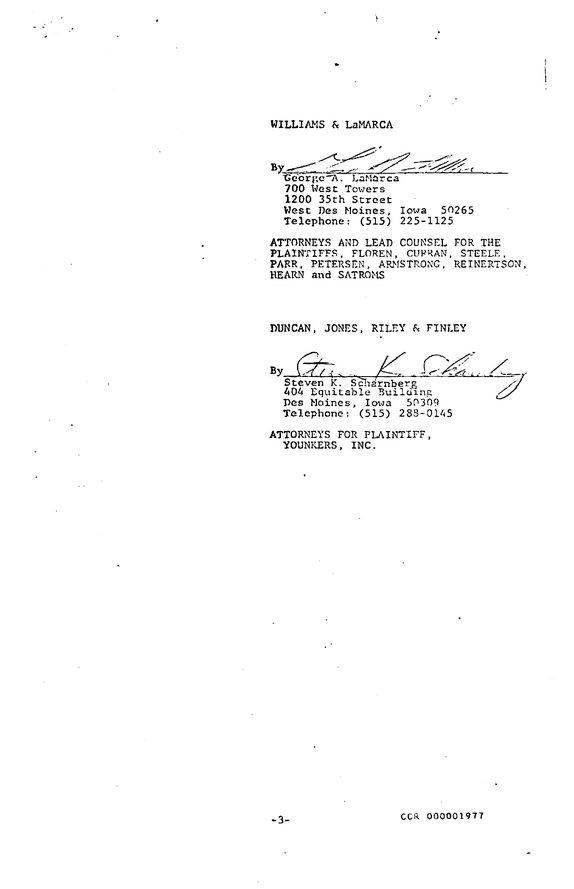
LaMarca 700 West Towers 1200 35th Street West Des Moines, Iowa 50265 Telephone: (515) 225-1125 ATTORNEYS AND LEAD COUNSEL FOR THE PLAINTIFFS, FLOREN, CURRAN, STEELE, PARR, PETERSEN, ARMSTRONG, REINERTSON, HEARN and SATROMS DUNCAN, JONES, RILEY & FINLEY Steven K.
refid# ZJaO7z63NknkDbOdeKN2oOn173 pages
LEAD AND ERES SILICA DOTH PEESENT in low trace quantities :

refid# mbbKjoZdrvxvOgxd9KOQDVmmB5 pages
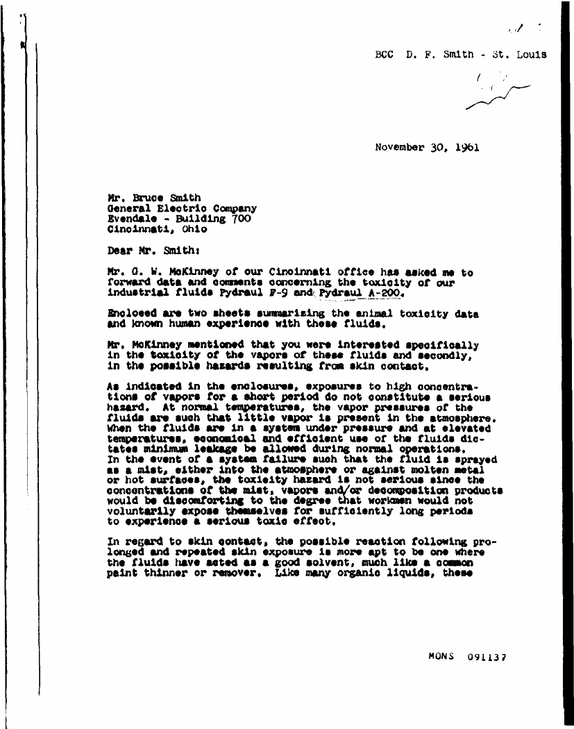
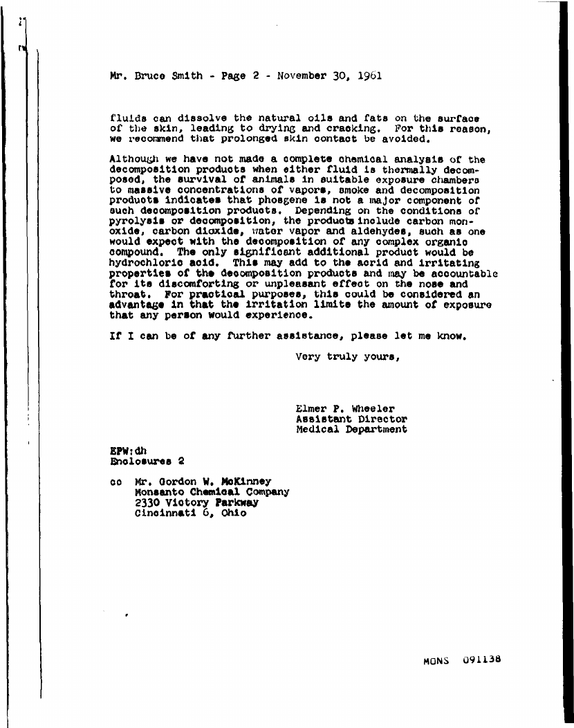
Bruco Smith - Page 2 - November 30, 1961 fluids can dissolve the natural oils and fats on the surfaoe of the skin, leading to drying and craoklng.
refid# 82d7027exrJz6J3JyedjN6qq52 pages
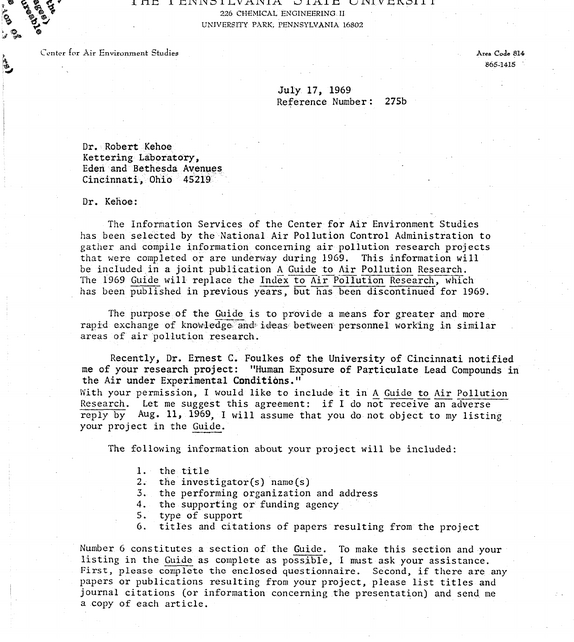
Foulkes of the University of Cincinnati notified me of your research project: "Human Exposure of Particulate Lead Compounds in the Air under Experimental Conditions."
refid# 45pqv01RqOYZmQwXgGLGYBx2 pages
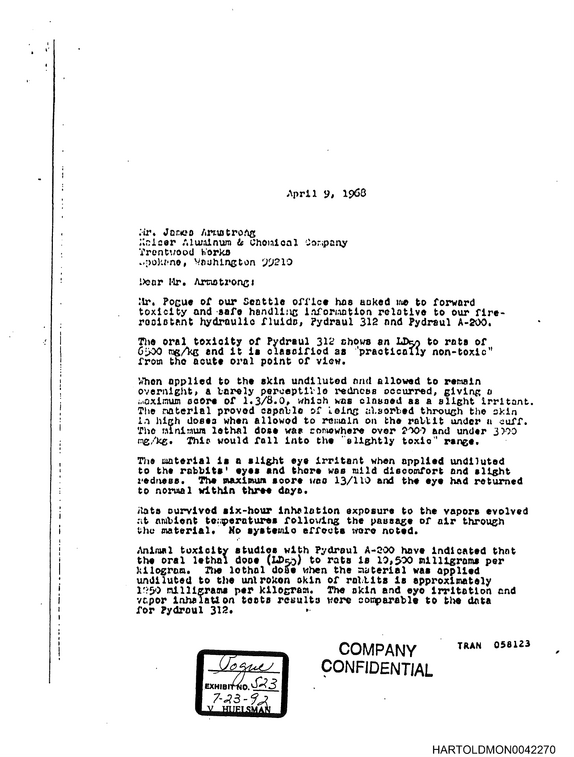
In addition* prolonged and ropoated skin contact may lead to skin irritation.
refid# 2j552a0EEe4OD3xRz72QkYGBg2 pages
Abex supplies landing gear, fluid controls, actuators and other components--as well as the braking materials, to manufacturers of the leading military and commercial aircraft.
refid# G5EewVDqbznLqq5GJwX0rQD6V1 page
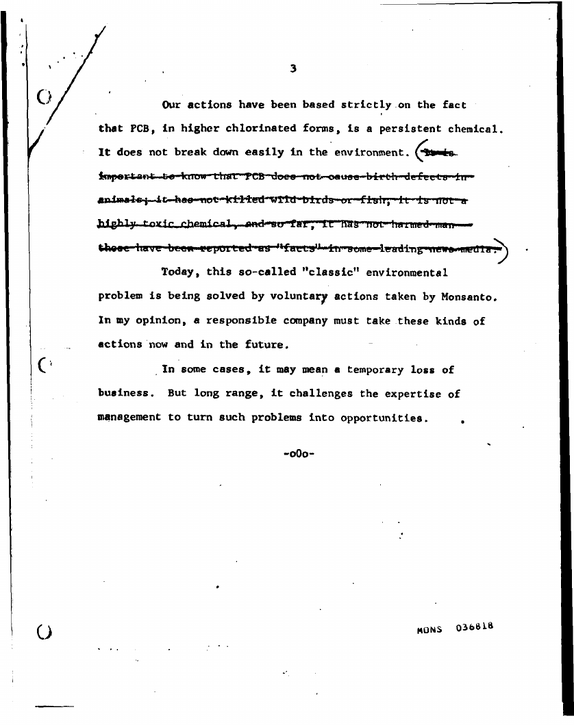
Important Lo lurow 1 LlmV" TCB does not> oauag-birfclvdefccfcs-liT* hlghly-Xmii thwsc. liarvc bLew"Siported'*n8-,t,fagUgu""lTi'*soiiie--leading imwoim!
refid# x1yRL7Q923Q8vDo4zDGLqmRD13 pages
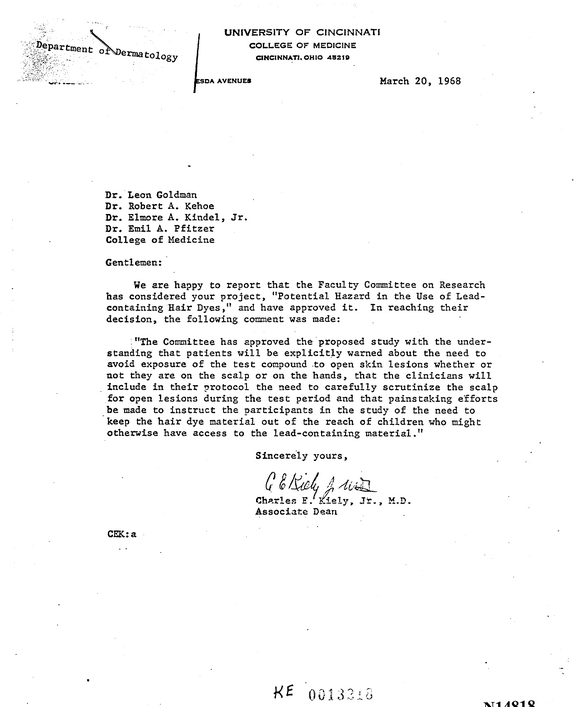
P f itz e r C ollege o f M edicine Gentlem en: We a r e hap p y to r e p o r t t h a t th e F a c u l ty C om m ittee on R e se a rc h has co n sid ere d your p r o je c t, " P o te n tia l H azard in th e Use o f Lead- co n tain in g H air D yes," and have approved i t .
refid# 44MeoeO5qZbQOnqQ6zrxK1JpG1 page
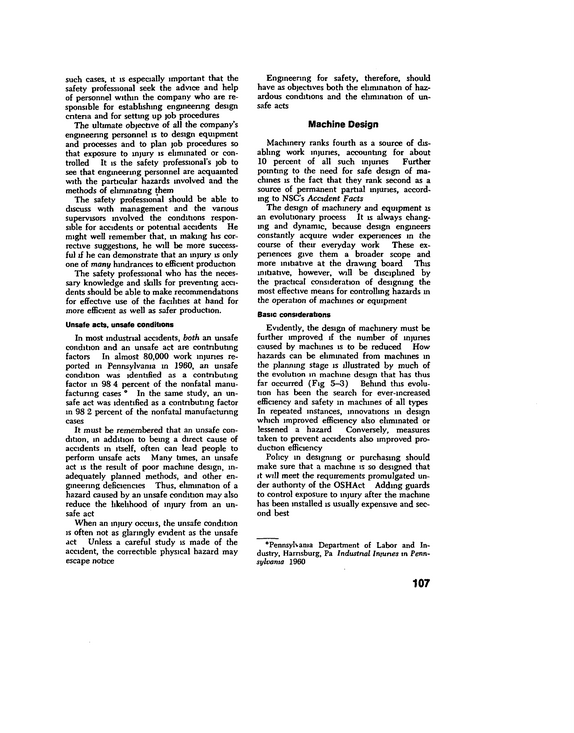
Unsafe acts, unsafe conditions In most industrial accidents, both an unsafe condition and an unsafe act are contributing factors In almost 80,000 work injuries re ported in Pennsylvania in 1960, an unsafe condition was identified as a contributing factor m 98 4 percent of the nonfatal manu facturing cases * In the same study, an un safe act was identified as a contributing factor in 98 2 percent of the nonfatal manufacturing cases It must be remembered that an unsafe con dition, in addition to being a direct cause of accidents m itself, often can lead people to perform unsafe acts Many times, an unsafe act is the result of poor machine design, in adequately planned methods, and other en gineering deficiencies Thus, elimination of a hazard caused by an unsafe condition may also reduce the likelihood of injury from an un safe act When an injury occuis, the unsafe condition is often not as glaringly evident as the unsafe act Unless a careful study is made of the accident, the correctible physical hazard may escape notice Engineenng for safety, therefore, should have as objectives both the elimination of haz ardous conditions and the elimination of un safe acts Machine Design Machinery ranks fourth as a source of dis abling work injuries, accounting for about 10 percent of all such injuries Further pointing to the need for safe design of ma chines is the fact that they rank second as a source of permanent partial injuries, accord ing to NSC's Accident Facts The design of machinery and equipment is an evolutionary process It is always chang ing and dynamic, because design engineers constantly acquire wider experiences in the course of then everyday work These ex periences give them a broader scope and more initiative at the drawing board This initiative, however, will be disciplined by the practical consideration of designing the most effective means for controlling hazards m the operation of machines or equipment Basic considerations Evidently, the design of machinery must be further improved if the number of injuries caused by machines is to be reduced How hazards can be eliminated from machines in the planning stage is illustrated by much of the evolution m machine design that has thus far occurred (Fig 5-3) Behind this evolu tion has been the search for ever-increased efficiency and safety in machines of all types In repeated instances, innovations in design which improved efficiency also eliminated or lessened a hazard Conversely, measures taken to prevent accidents also improved pro duction efficiency Policy in designing or purchasing should make sure that a machine is so designed that it will meet the requirements promulgated un der authority of the OSHAct Adding guards to control exposure to injury after the machine has been installed is usually expensive and sec ond best "Pennsylvania Department of Labor and In dustry, Harrisburg, Pa Industrial Injuries tn Penn sylvania 1960 107
refid# 3N7ndRQkxk2Z9jOokxXJR9XQy1 page
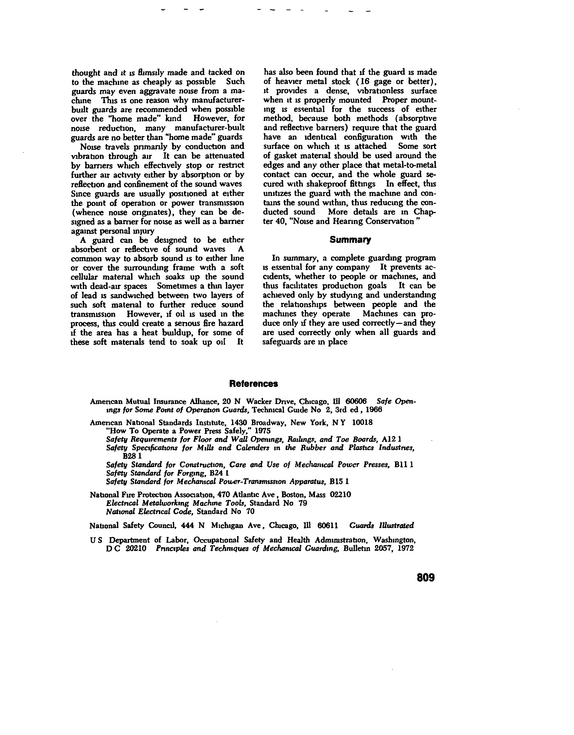
thought and it is flimsily made and tacked on to the machine as cheaply as possible Such guards may even aggravate noise from a ma chine This is one reason why manufacturerbuilt guards are recommended when possible over the "home made" kind However, for noise reduction, many manufacturer-built guards are no better than "home made" guards Noise travels primarily by conduction and vibration through air It can be attenuated by barriers which effectively stop or restrict further air activity either by absorption or by reflection and conflnement of the sound waves Since guards are usually positioned at either the point of operation or power transmission (whence noise originates), they can be de signed as a barrier for noise as well as a barrier against personal injury A guard can be designed to be either absorbent or reflective of sound waves A common way to absorb sound is to either line or cover the surrounding frame with a soft cellular material which soaks up the sound with dead-air spaces Sometimes a thin layer of lead is sandwiched between two layers of such soft material to further reduce sound transmission However, if oil is used in the process, this could create a senous fire hazard if the area has a heat buildup, for some of these soft materials tend to soak up oil It has also been found that if the guard is made of heavier metal stock (16 gage or better), it provides a dense, vibrationless surface when it is properly mounted Proper mount ing is essential for the success of either method, because both methods (absorpbve and reflective barriers) require that the guard have an identical configuration with the surface on which it is attached Some sort of gasket material should be used around the edges and any other place that metal-to-metal contact can occur, and the whole guard se cured with shakeproof fittings In effect, this unitizes the guard with the machine and con tains the sound withm, thus reducing the con ducted sound More details are in Chap ter 40, "Noise and Hearing Conservation " Summary In summary, a complete guarding program is essential for any company It prevents ac cidents, whether to people or machines, and thus facilitates production goals It can be achieved only by studying and understanding the relationships between people and the machines they operate Machines can pro duce only if they are used correctly--and they are used correctly only when all guards and safeguards are in place References American Mutual Insurance Alliance, 20 N Wacker Drive, Chicago, 111 60606 Safe Open ings for Some Point of Operation Guards, Technical Guide No 2, 3rd ed , 1966 American National Standards Institute, 1430 Broadway, New York, N Y 10018 "How To Operate a Power Press Safely," 1975 Safety Requirements for Floor and Wall Openings, Railings, and Toe Boards, A12 1 Safety Specifications for Mills and Calenders in the Rubber and Plastics Industries, B28 1 Safety Standard for Construction, Care and Use of Mechanical Power Presses, Bll 1 Safety Standard for Forging, B24 1 Safety Standard for Mechanical Power-Transmission Apparatus, B15 1 National Fire Protection Association, 470 Atlantic Ave, Boston, Mass 02210 Electrical Metalworking Machme Tools, Standard No 79 National Electrical Code, Standard No 70 National Safety Council, 444 N Michigan Ave, Chicago, 111 60611 Guards Illustrated U S Department of Labor, Occupational Safety and Health Administration, Washington, DC 20210 Principles and Techniques of Mechanical Guarding, Bulletin 2057, 1972 809
refid# pejkpY28wK2MMo1bMM6ZoK2jE1 page
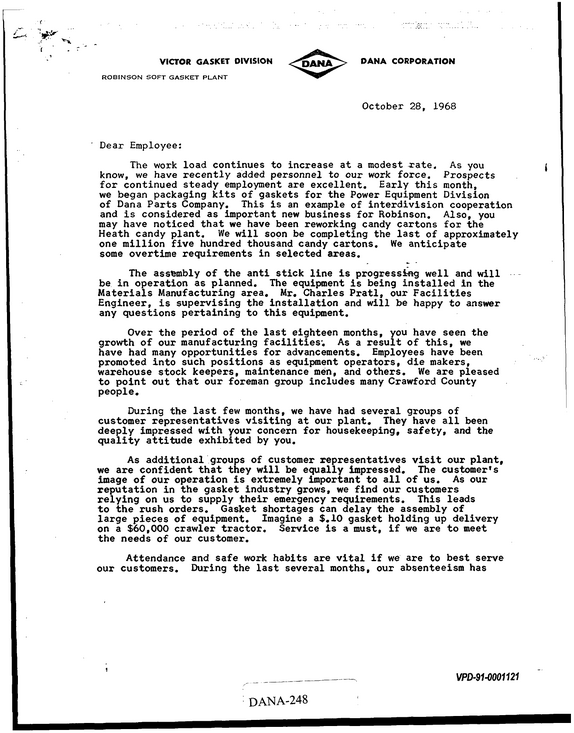
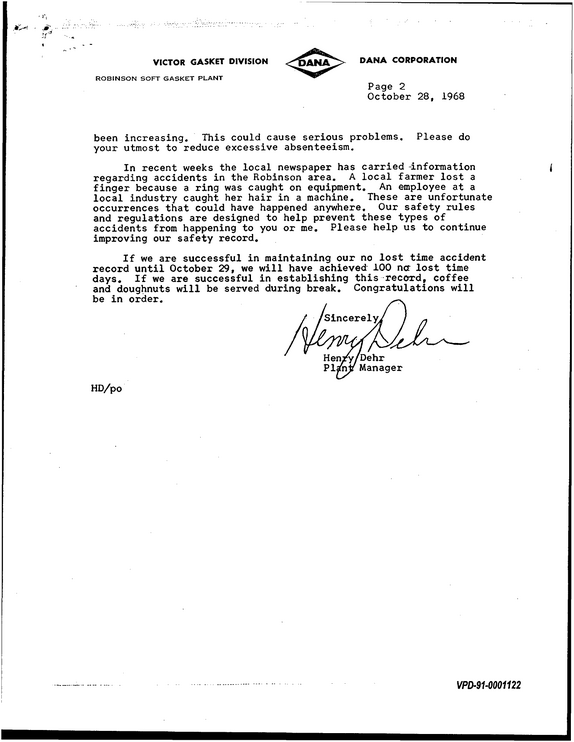
This leads to the rush orders.
refid# GmVJVn9MeBJGandZDxyxb908n2 pages
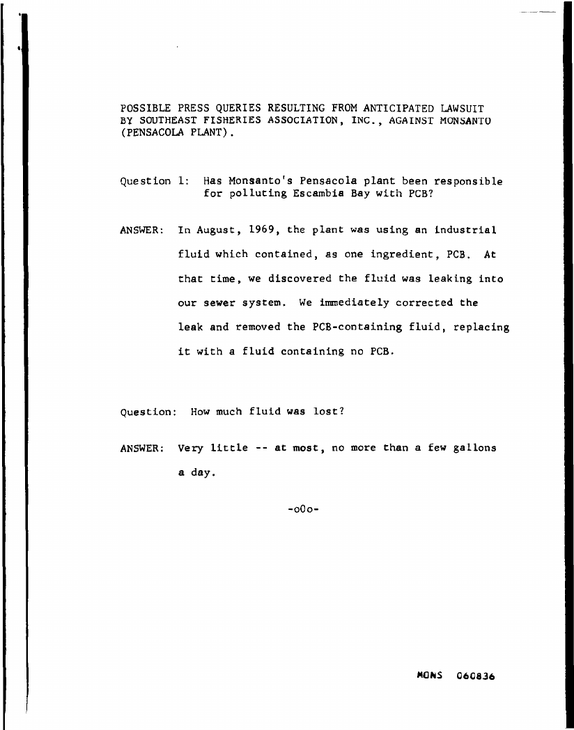
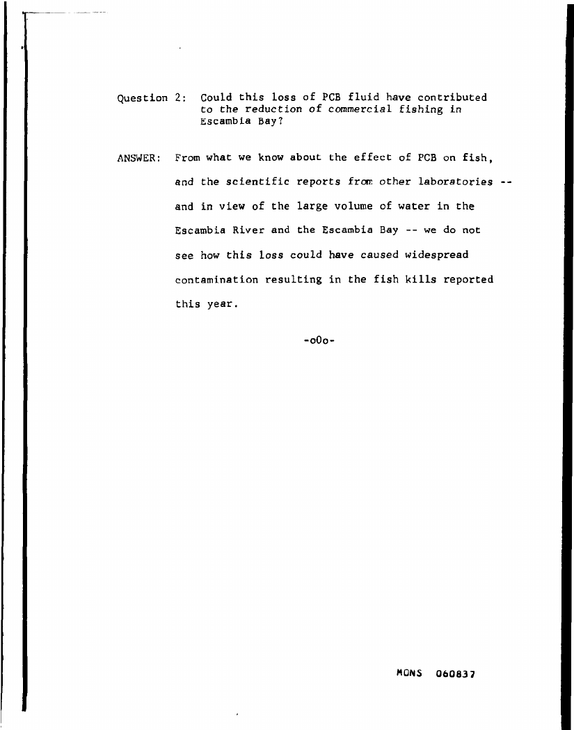
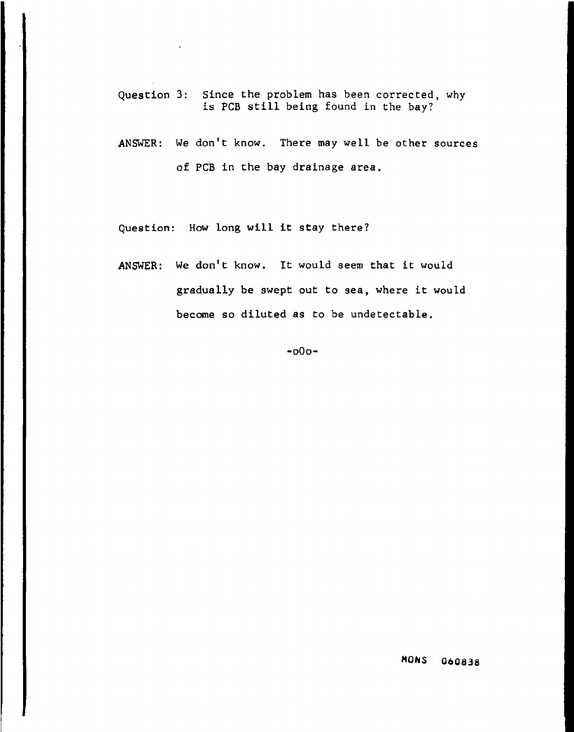
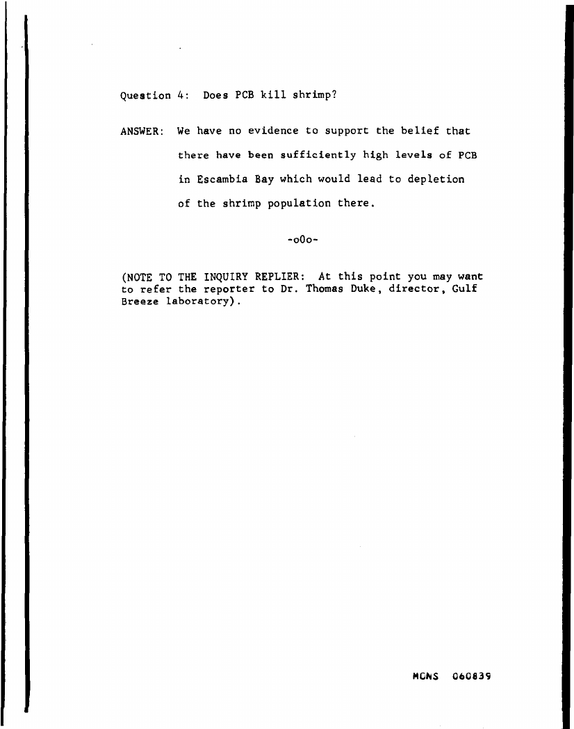
ANSWER: We have no evidence to support the belief that there have been sufficiently high levels of PCB in Escambia Bay which would lead to depletion of the shrimp population there. -0O0(NOTE TO THE INQUIRY REPLIER: At this point you may want to refer the reporter to Dr.
refid# O5Evm3ZxvOEjD3m7neVkMqye6 pages
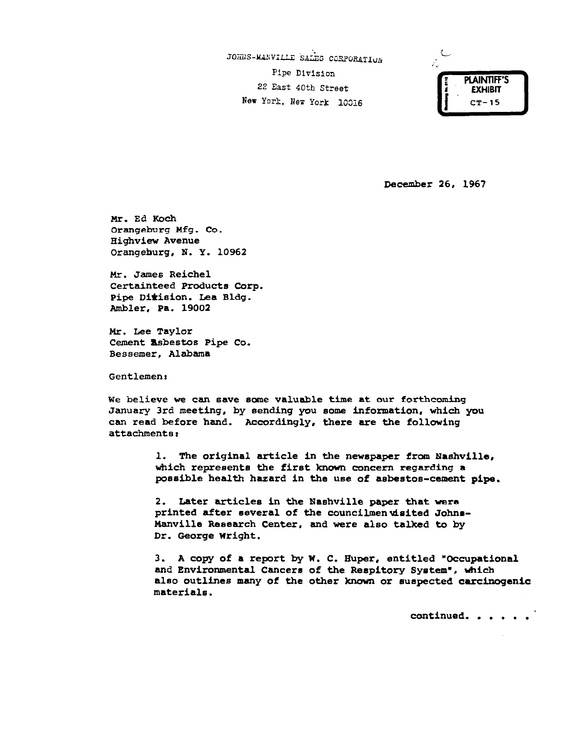
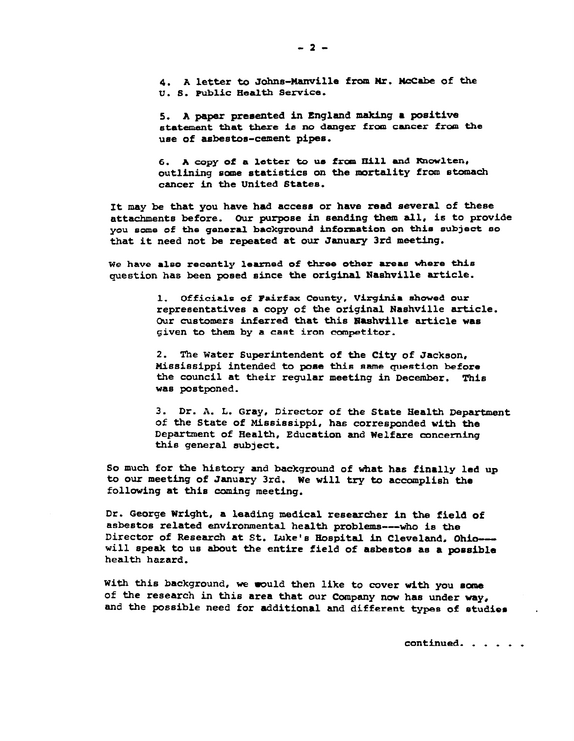
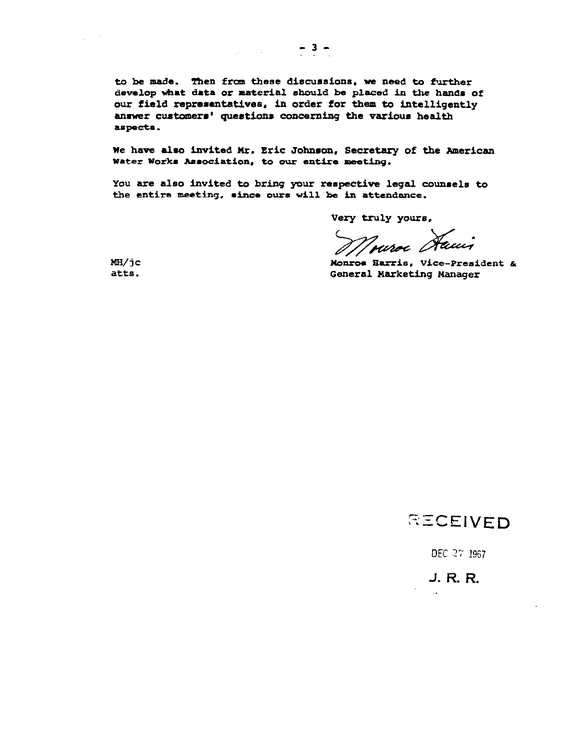
George Wright, a leading medical researcher in the field of asbestos related environmental health problems--who is the Director of Research at St.
refid# k6vo9Xn1xEODqr898dM98BGkD3 pages
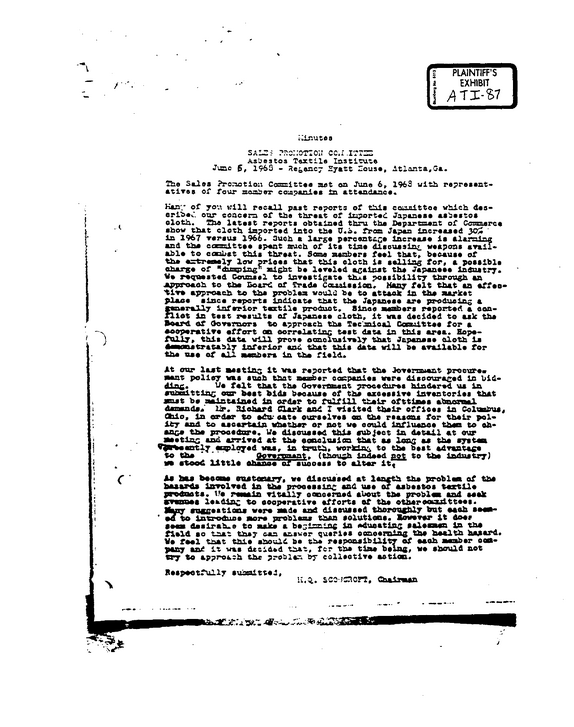
e r--sin vitally concerned about ths problem and seek avenues leading to ooeperative efforts of ths otheroosuittees.
refid# NERz2xv4ryLm49zLpzNYKQ7jb1 page