Refine
Estimated Years 1960-1969Clear
7,161 results foundRefine Search
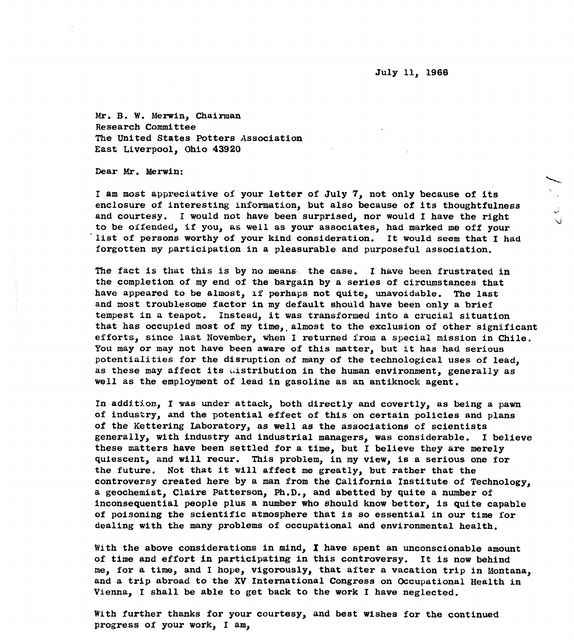
You may or may not have been aware of this matter, but it has had serious potentialities for the disruption of many of the technological uses of lead, as these may affect its distribution in the human environment, generally as well as the employment of lead in gasoline as an antiknock agent.
refid# Z4aNQgrEv6nJk267M5xMnyn281 page
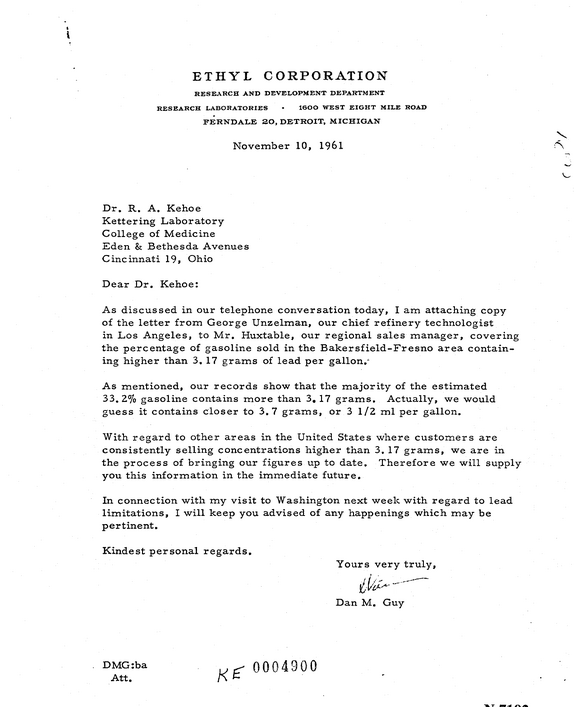
In connection with my visit to Washington next week with regard to lead limitations, I will keep you advised of any happenings which may be pertinent.
refid# 5kRea1mGEqrz48O2jL52Nr1M82 pages
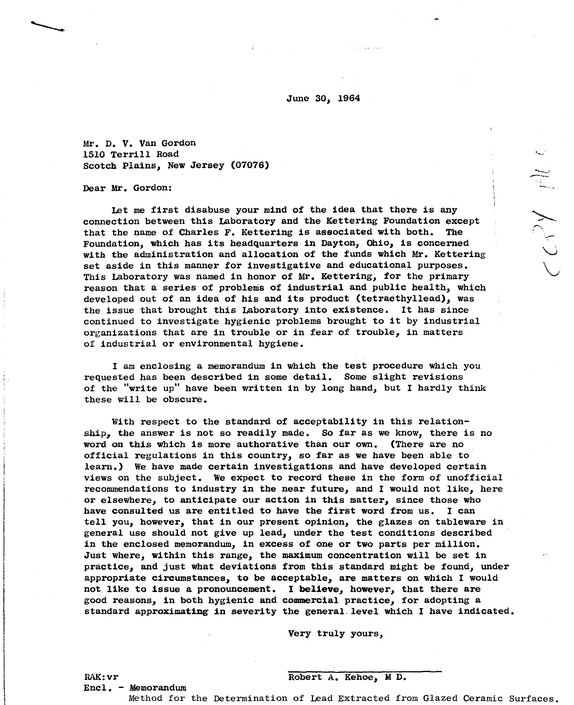
Enel. - Memorandum Method for the Determination of Lead Extracted from Glazed Ceramic Surfaces.
refid# wKrX9z33pV8KgK3NBarqBNbyE1 page
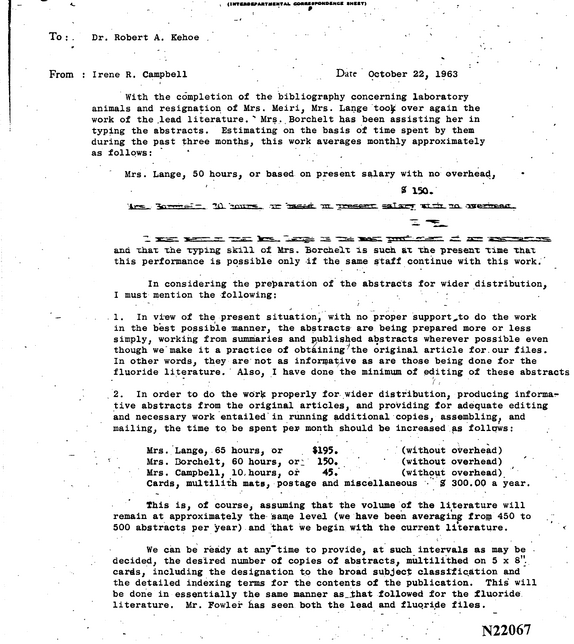
Fowler has seen both the lead and fluqride files.
refid# Jrz219w7jkVvwrMO61MeOXn622 pages
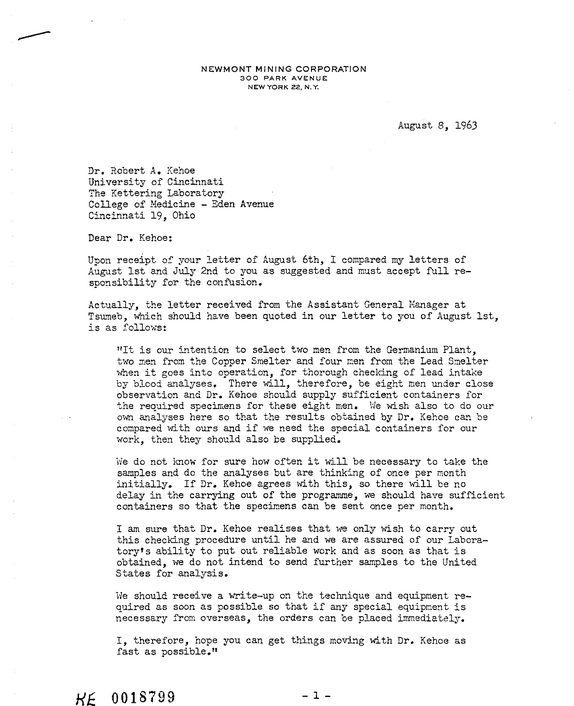
Actually, the letter received from the Assistant General Manager at Tsurneb, which should have been quoted in our letter to you of August 1st, is as follows: "It is our intention to select two men from the Germanium Plant, two men from the Copper Smelter and four men from the Lead Smelter when it goes into operation, for thorough checking of lead intake by blood analyses.
refid# ZnZrpxv4D1VomYJRYw19yy4V02 pages
AWWA C603-64T American Water Works Association TENTATIVE AWWA STANDARD for INSTALLATION OF ASBESTOS-CEMENT WATER PIPE This "Standard for Installation of AsbestosCement Water Pipe" is based on a consensus of AWWA Committee 8340 D on the minimum prac tice consistent with good, economical service under normal conditions.
refid# OENxJRmY55BjG43onmz5V53Dp16 pages
IMPORTANT NOTE: The designation given on page 1 of this document is in error.
refid# mEd1MbY2Jbaqy1Q5ZLBKGYgk16 pages
LEGISLATIVE HISTORY of LEAD-BASED FAINT fOISONING PREVENTION ACT (Public Low 91-495) Early in the 91t Congress (March, 1969), Rep, William F.


refid# ExNnyyM6jbxjwwzbo5jKgGJEL7 pages
National Lead G.


refid# zzjm4MNaX8bz4Eao1b7B15Zq610 pages
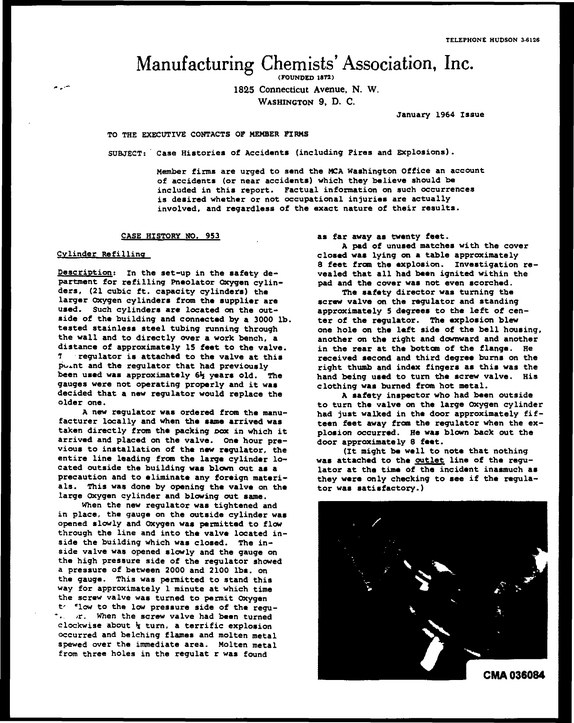
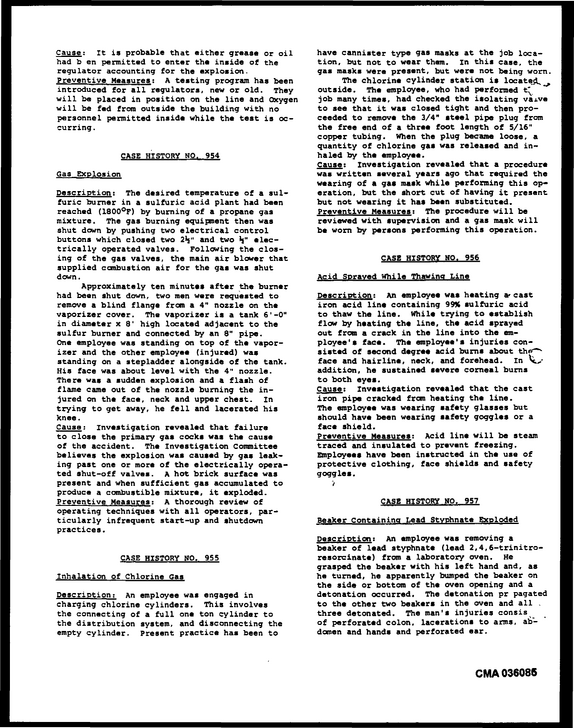
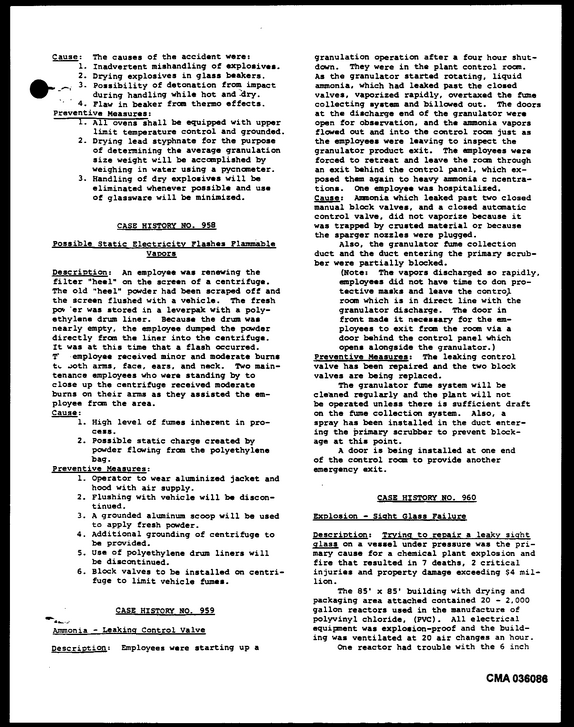
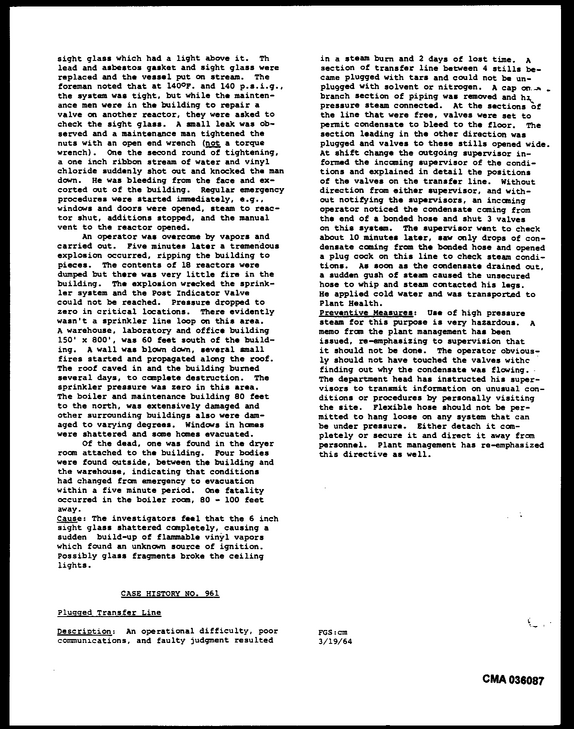
Employees have been instructed in the use of protective clothing, face shields and safety goggles. > CASE HISTORY HO. 957 Beaker Containing Lead Stvphnate Exploded Description: An employee was removing a beaker of lead styphnate (lead 2,4,6-trinitroresorcinate) from a laboratory oven.
refid# badMLOdzNr9NgBwNj8dmNpoao4 pages
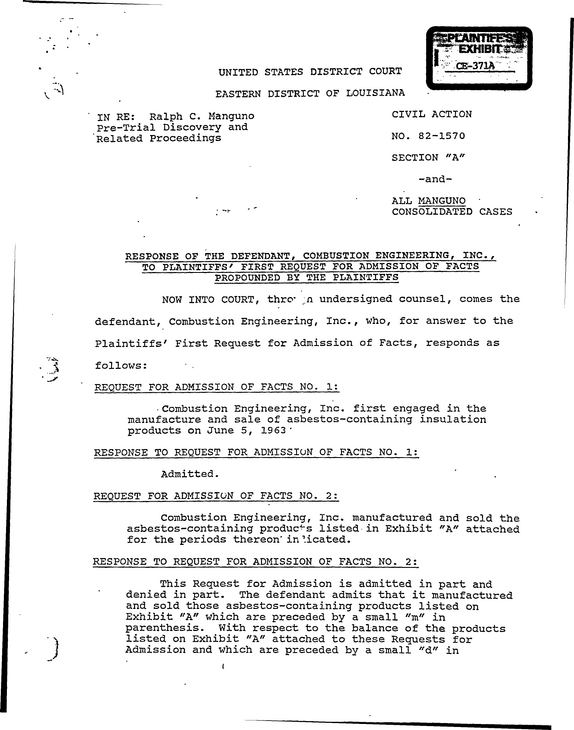
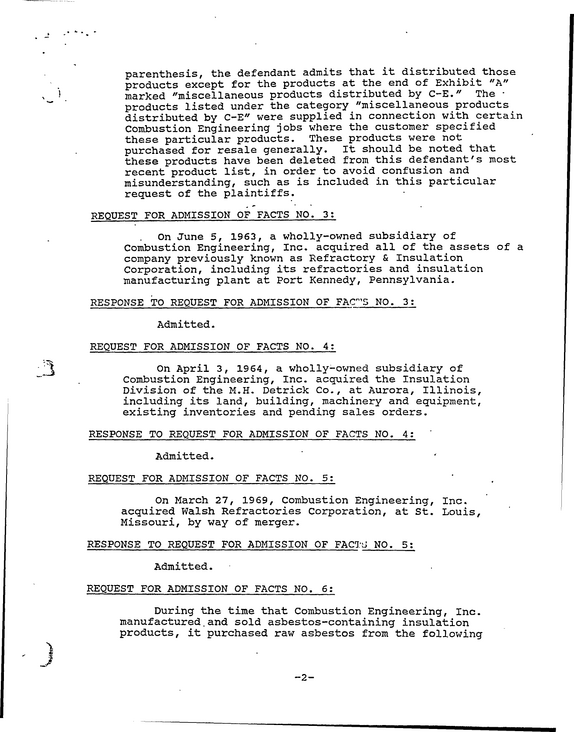
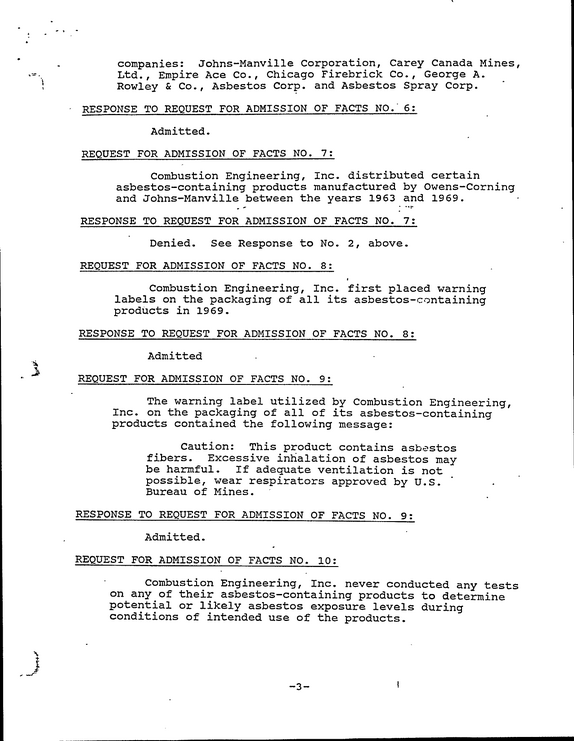
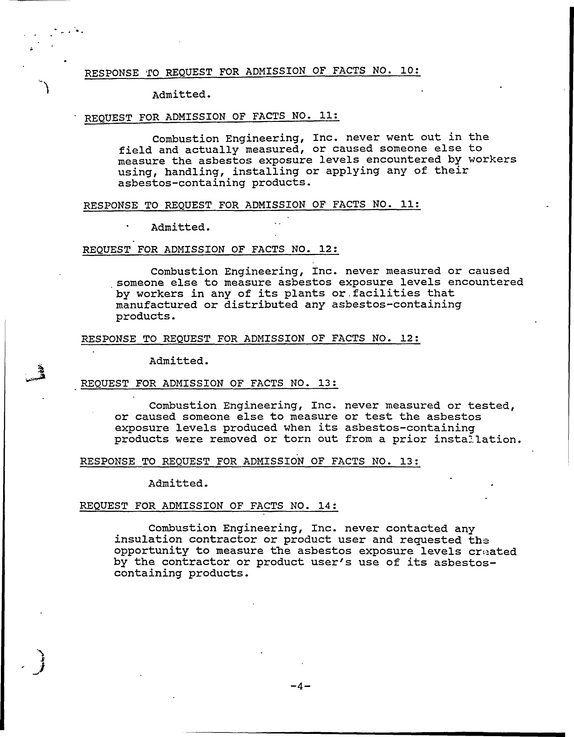
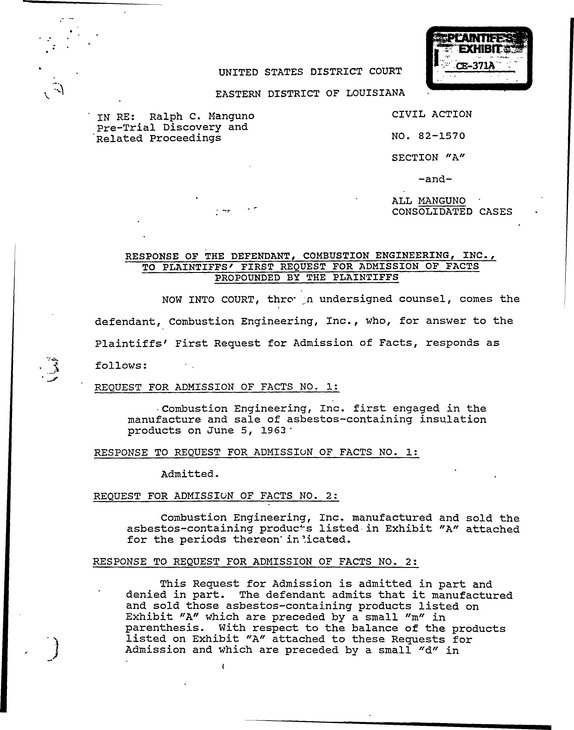
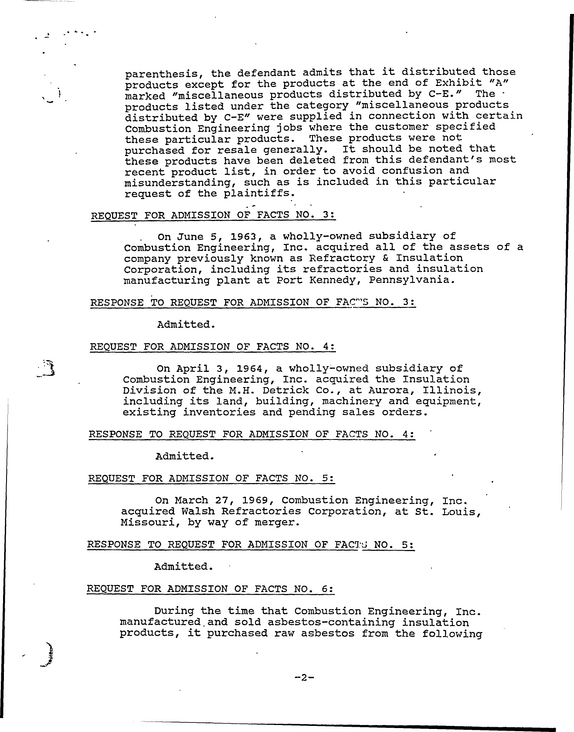
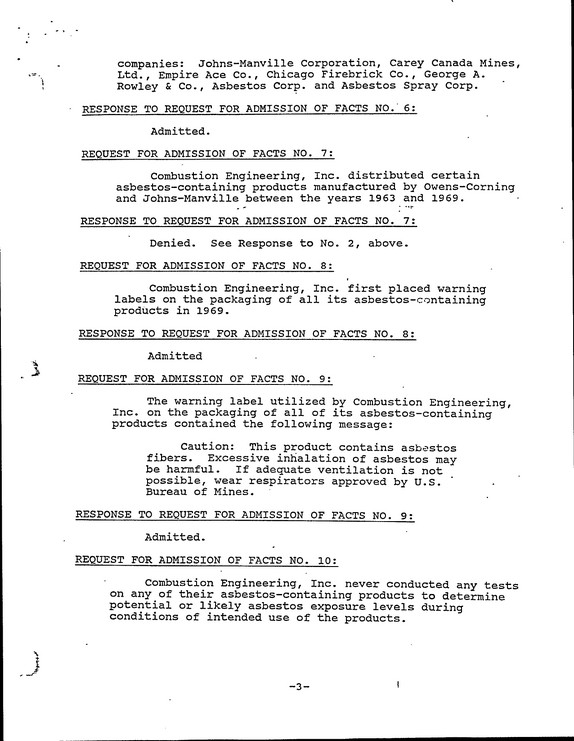
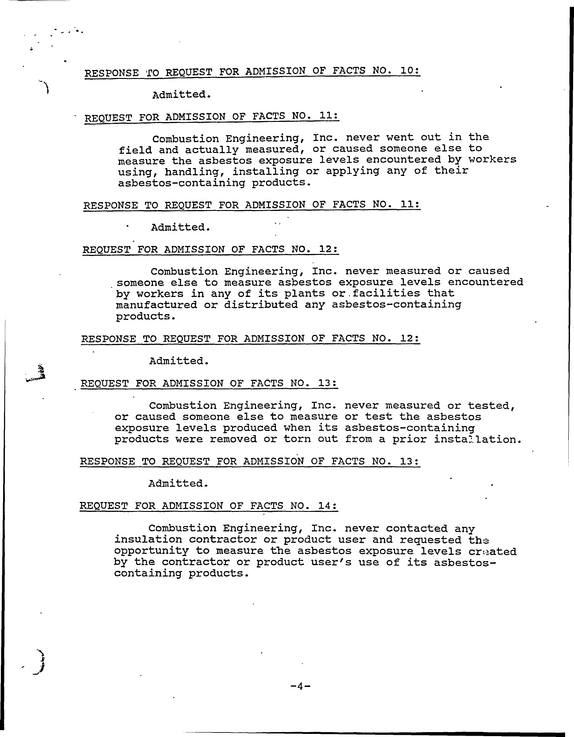
UNITED STATES DISTRICT COURT EASTERN DISTRICT OF LOUISIANA IN RE: Ralph C.
refid# QkELe7G0j3mKJMJj8Yn008Rx618 pages
National Lead G.


refid# ZB9GMEd3m1z3Zx2j0jeBy817p10 pages
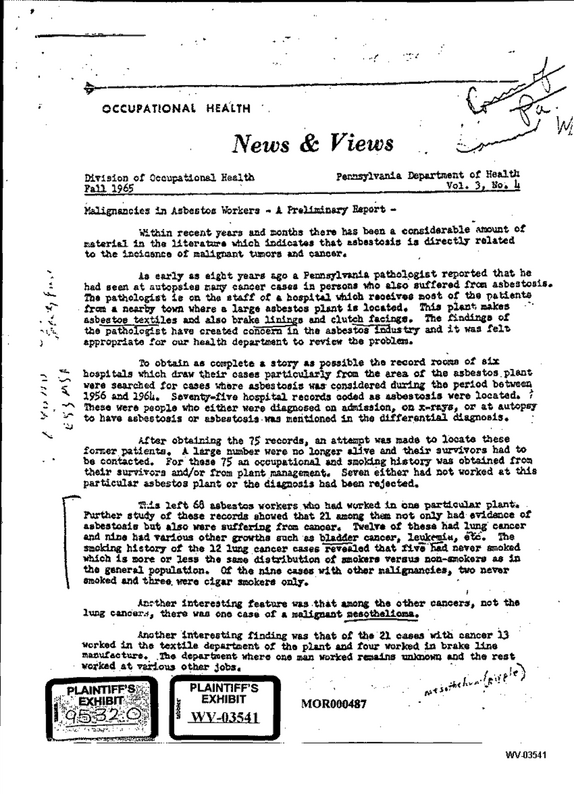
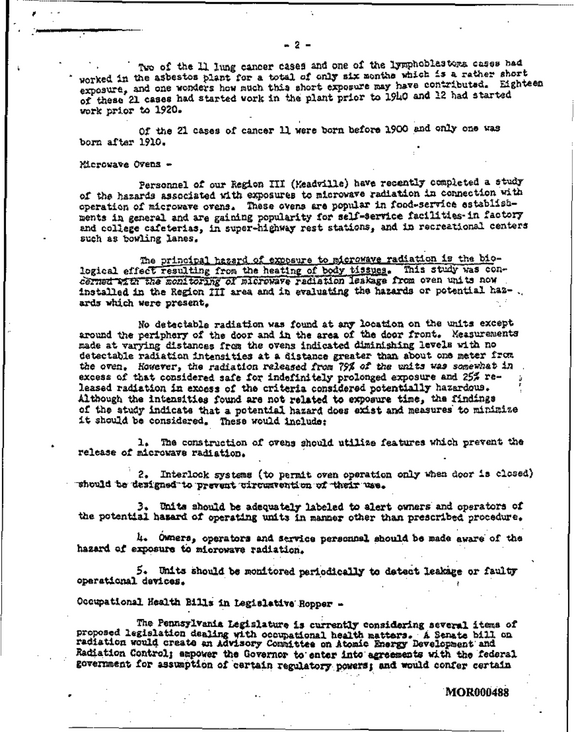
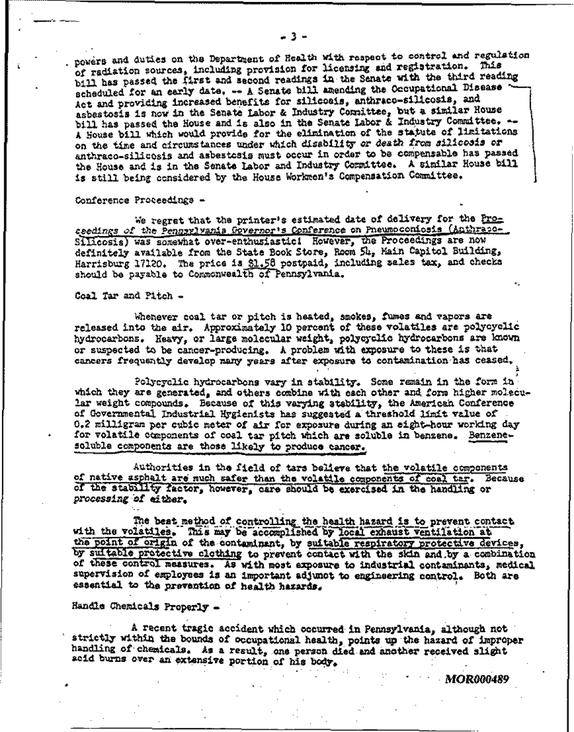
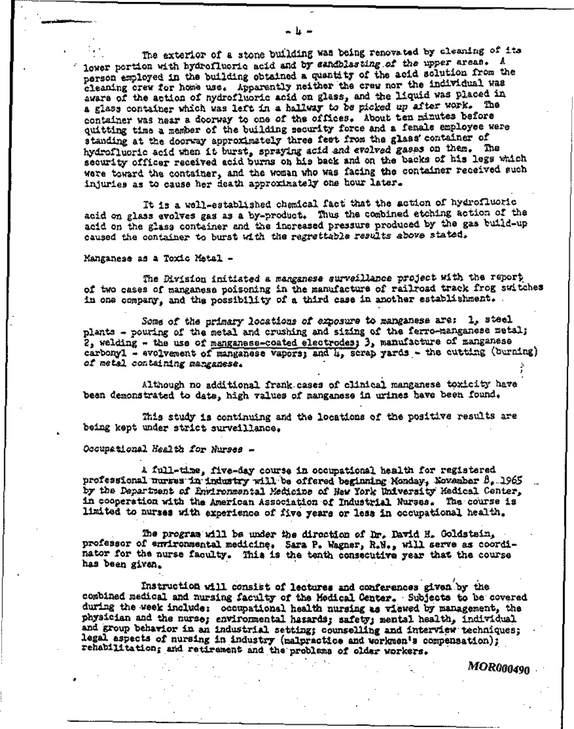
f fi f / <'A Dinsion of Occupational Health Fall 1965 ___________ ___ Pennsylvania Department or Health Voi. 3, Ho* U Malignancies in Asbestos Workers - A Preliminary Eeport - Within recent years and months there has been a considerable aaiat or material in the literate# which indicates that aebeatosis is directly related to the incidence of malignant tumors and cancer is early as eight years ago a Pennsylvania pathologist reported that be had seen at autopsies nary canoer esses in persons vh also sufrered frco asbesteals, The pathologist is on the staff or a hospital wbioh receives most or the patients y t*m a nearby town where a large asbestos plant le located* Shis plant makes 4 asbestos textiles and also brake linings and clutch facing*.
refid# revxk9q16j8oqnBwxaBXmjnE06 pages
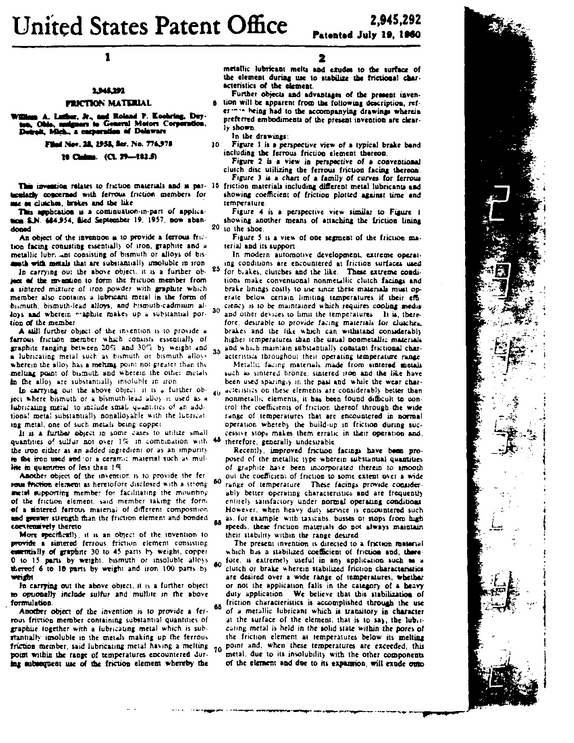
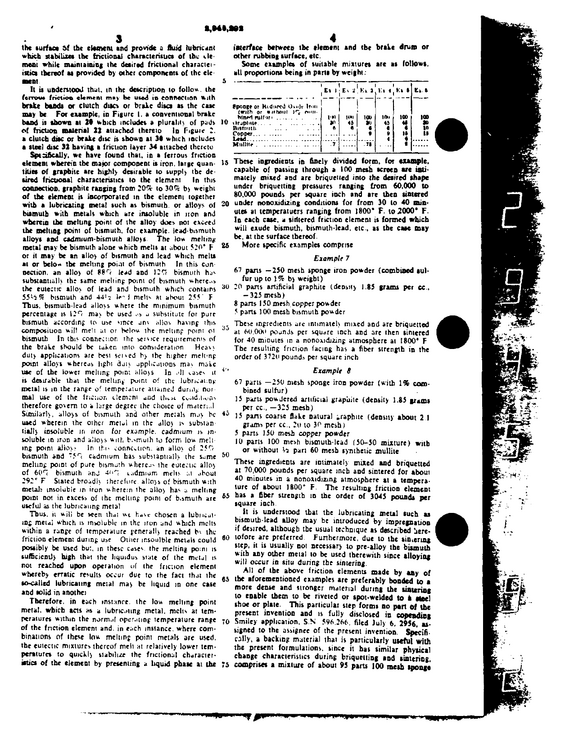
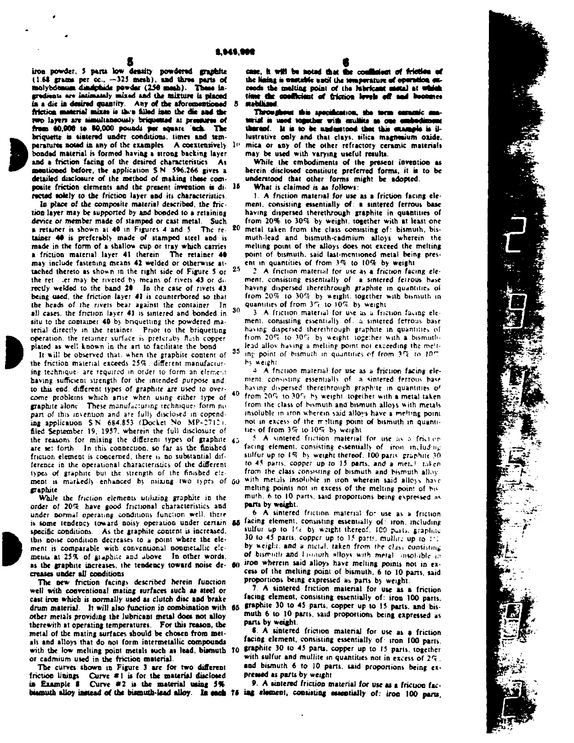
Cl 19 182.5 This invention relates to friction materials and ^ par- tacularly concerned with ferrous friction members for , ase as clutches brakes and the like This application usa usa cominuation of application S.N. 684,954 filed September 19 1957 now aban- doned An object of the invention w to provide a ferrous frice tion facing consisting essentially of iron graphite and a metallic lubr ant consisting of bismuth or alloys of bismuth with metals that are substantially insoluble in iron In carrying out the above object it is a further ob ject of the movention to form the fricuon member from a sintered mixture of iron powder with graphite which member also contains a lubricant metal in the form of bismuth bismuth alloys and cadmium al- Joys and wherein sraphite makes up a substantial por tion of the member will further object of the invention is to provide a farrous friction member which consish essentially of graphite ranging between 20 and 30 by weight and lubricating metal such as bismuth or bismuth alloys wherein the alloy has a mehm point not greater that the melung point of blsmult and wherein the other metals in the alloy are substantially insoluble in iron In carrying out the above object at is o further ob ject where bismuth or a bismuth alloy is used as a lubricating metal to include small quantities of an addr tional metal substantially nonalloyable with the lubricati ing metal one of such metals being coppei It a further object in some cases to utilize small quantities of sulfur not over % in combination with the iron either as an added ingredient or as an impurity in the iron used and or a cerami lite in quantitres of less than 1 Another object of the invention matemal such is to provide as multhe fer- rous friction element as heretofore disclosed with a strong metal supporting member for facilitating the mounting of the friction element said member taking the form of a sintered ferrous material of different composition and greater strength than the friction element and bonded coextensively thereto More specifically it is an object of the invention to provide a sintered ferrous friction element consisting ementially of graphne 30 to 45 parts by weight copper 0 to 15 parts by weight bismuth or insoluble alloys thereof 6 to 10 parts by weight and iron 100 parts by weight In carrying to opuonally out the include above object it is a sulfur and mullite further in the object above formulation _ Another object of the invention is to provide a fer- rous friction member containing substantial quantities of graphie together with a lubricating metal which is substantially insoluble in the metals making up the ferrous friction member said lubricating metal having a melting poim within the range of temperatures encountered during subsequent use of the friction elemem whereby the metallic lubricant melts and exudes to the surface of the element during use to stabilize the frictional char acteristics of the element Further objects and advantages of the present invention will be apparent from the following description referaman heing had to the accompanying drawings wherein preferred embodiments of the present invention are clearly shown In the drawings 20 Figure 1 is a perspective view of a typical brake band including the ferrous friction element thereon Figure 2 is a view in perspective of a conventional clutch disc utilizing the ferrous friction facing therean Figure 3 is a chart of a family of curves for ferrous 15 friction materials including different metal lubricants and showing coefficient of friction plotted against time and temperature Figure 4 is a perspective view similar to Figure 1 showing another means of attaching the friction lining to the shoe Figure 5 is a view of one segment of the fricton ma- terial and its support In modern automotive development extreme operating conditions are encountered at friction surfaces used 25 for b.akes clutches and the like These extreme condi tion make convenuonal nonmetallic clutch facings and brake linings costly to use since these materials musi operate below certain limiting temperatures if their eff^ ciency is 10 be maintained which requires cooling medis 30 and other devices to limit the temperatures 11 is there fore desirable to provide facing materials for cluiches brakes and the like which can withstand considerably higher temperatures than the usual nonmetallic materiali and which maintain substadually constant frictional char 35 acteristics throughout their operating temperature range Metallic facing matenals made from sintered metals such as sintered bronze sintered iron and the like have been used sparingly in the past and while the wear char- 40 acteristics acteristics on these elements are considerably better than nonmetallic elements it has been found difficult to control the coefficients of friction thereof through the wide range of temperatures that are encountered in normal operation whereby the build in friction during successive stops makes them erratic in their operation and therefore generally undesirable Recently improved friction facings have been pro- posed of the metallic type wherein substantial quantities of graphite have been incorporated therein to smooth out the coefficient of friction to some extent over a wide range of temperature These facings provide consider ably better operating characteristics and are frequently entirely sausfactory under normal operating conditions However when heavy duty service is encountered such as for example with taxicabs busses or stops from high speeds these friction materials do not always maintain their stability within the range desired The present invention is directed to a friction material which has a stabilized coeficient of friction and there fore is extremely useful in any application such as a clutch or brake wherein stabilized friction characteristics are desired over a wide range of temperatures whether or not the application falls in the category of a heavy duty application We believe that this stabilization of friction characteristics is accomplished through the use of a metallic lubricant which is transitory in character at the surface of the element that is to say the lub.cating metal is held in the solid state within the pores of the friction element at temperatures below its melting point and when these temperatures are exceeded this 70 metal due to its insolubility with the other components of the element and due to its expansion will exude amo Tr cee vege nie 6 Ea Pegg er = ew rayne mee ay e ge 8,046,303 . 3 the surface of the element and provide a fluid lubricant which stabilizes the frictional characterisues of the cle meat while maintaining the desired frictional character-charcter- istics thereof as provided by other components of the ele- ment It is understood that in the description to follow the ferrous frictioa element may be used in connection with brake bands or clutch discs or brake discs as the case may be For example in Figure 1. a conventional brake band is shown at 20 which includes a plurality of pads of friction material 22 attached thereto In Figure 2 a clutch disc or brake disc is shown at 30 which includes a steel disc 32 having a friction layer 34 attached thereto Specifically we have found that in a ferrous friction element wherein the major component is iron large quantities of graphite are highly desirable to supply the de- sired frictional characteristics to the element = In this connection graphite ranging from 20 to 30 by weight of the element is incorporated in the elemen~fl together with a lubricating metal such as bismuth or alloys of bismuth with metals which are insoluble in iron and wherein the melting point of the alloy does not exceed the melting point of bismuth for example bismuth alloys and cadmium alloys The low melting metal may be bismuth alone which melts at about 520 F. or it may be an alloy of bismuth and lead which melts or below the melting point of bismuth = In this con section an alloy of 889 lead and 120 bismuth has substantially the same melting point of bismuth whereas the eutectic alloy of lead and bismuth which contains 55 bismuth and 44's lead melts at about 255 F Thus bismuth alloys where the minimum bismuth percentage is 129 may be used as a substitute for pure bismuth according to use since any allos having this compositon will melt at or below the melting point of bismuth = In this connection the brake should be taken the service requirements of into consideration Heavy duty applications are best served by the higher melting point alloys whereas light duty applications may make use of the lower melting point alloys In all cases It is desirable that the melting point of the lubricating metal is in the range of temperature attained during nor mal use of the friction clement and thex condibois condibois therefore govern to a large degree the choice of material Similarly alloys of bismuth and other metals may be used wherein the other metal in the alloy is substan- tially insoluble in iron for example cadmium is in soluble in iron and alloys with bismuth to form low melt- ing point alloy In this connection an alloy of 257 bismuth and 75 cadmium has substantially the same melting point of pure bismuth whereas the eutectic alloy of 607 bismuth and 40 Ladmium melts at shout 292 F Stated broadly therefore alloys of bismuth with metals insoluble in iron wherein the alloy has a melting point not in excess of the melting point of bismuth are useful as the lubricaung metal Tbus it will be seen that we have chosen a lubrisal ing metal which is insoluble in the iron and which melts within a range of temperature generally reached by
refid# wDZdbw2DMMELMj4LgV3xNbpNE7 pages
UNITED STATES DISTRICT COURT EASTERN DISTRICT OF LOUISIANA IN RE: Ralph C.
refid# pV8RN4BnnQEbd63NnX4y8dJj18 pages