Refine
Estimated Years 1950-1959Clear
14,527 results foundRefine Search
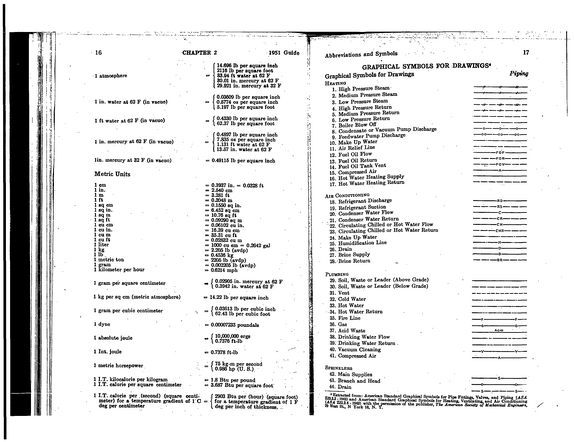
16 CHAPTER 2 1951 Guide 1 atmosphere 1 in. water at 62 F (in vacuo) 1 ft water at 62 F (in vacuo) 1 in. mercury at 62 F (in vacuo) lin. mercury at 32 F (in vacuo) 14.626 lb per square inch 2116 lb per square foot 83.64 ft water at 62 F 80.01 in. mercury at 62 F 29.921 in. mercury at 32 F {0.03609 lb per square inch 0.6774 oz per square inch 6.167 lb per square foot ( 0.4330 lb per square inch \ 62.37 lb per square foot (0.4897 lb per square inch 7.835 oz per square inch 1.131 ft water at 62 F 13.57 in. water at 62 F 0.49116 lb per square inch Metric Units 1 cm 1 in. 1m 1 ft 1 sq cm 1 sq in. 1 sq m 1 sq ft 1 cu cm 1 cu in. 1 cu m 1 cu ft 1 liter 1 metric ton 1 gram 1 kilometer per hour 1 gram per square centimeter 1 kg per sq cm (metric atmosphere) 1 gram per cubic centimeter 1 dyne 1 absolute joule 1 Int. joule 1 metric horsepower 1 I.T. kilocalorie per kilogram 1 I.T. calorie per square centimeter = 0.3937 in. = 0.0328 ft = 2.640 cm = 3.281 ft = 0.3048 m = 0.1660 sq in. = 6.452 sq cm = 10.76 sq ft => 0.09290 sq m = 0.06102 cu in. -- 16.39 cu cm = 35.31 cu ft = 0.02832 cu m = 1000 cu cm = 032642 gal = 2.205 lb (avdp) = 0.4636 kg -- 2205 lb (avdp) = 0.002205 lb (avdp) = 0.6214 mph / 0.02905 in. mercury at 62 F \ 0.3942 in. water at 62 F = 14.22 lb per square inch / 0.03613 lb per cubic inch \ 62.43 lb per cubic foot = 0.00007233 poundals _ / 10,000,000 ergs \ 0.7376 ft-lb = 0.7378 ft-lb / 75 kg-m per second \ 0.986 hp (U.
refid# 6bX2OjNE9rox200vk8mN95K6d1 page
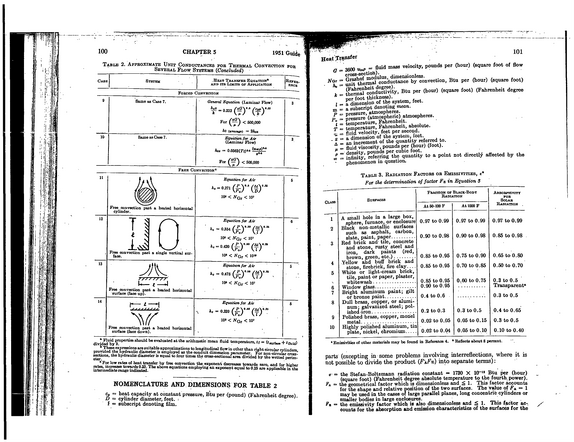
100 CHAPTER 5 1951 Guide Table 2.
refid# Qked1593YapRJrD8mMweKjXn41 page
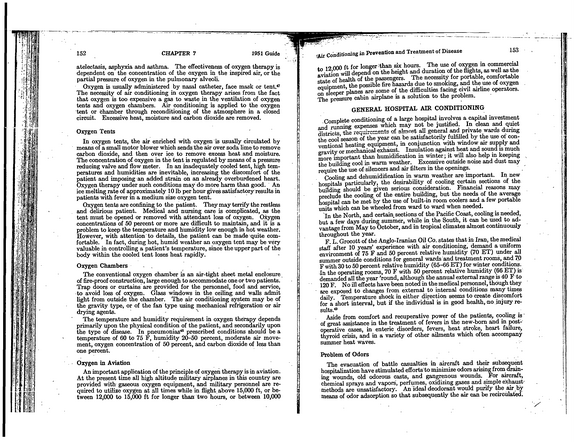
152 CHAPTER 7 1951 Guide atelectasis, asphyxia and asthma.
refid# eNq13b4yE90gvy1EDQo2dEby1 page
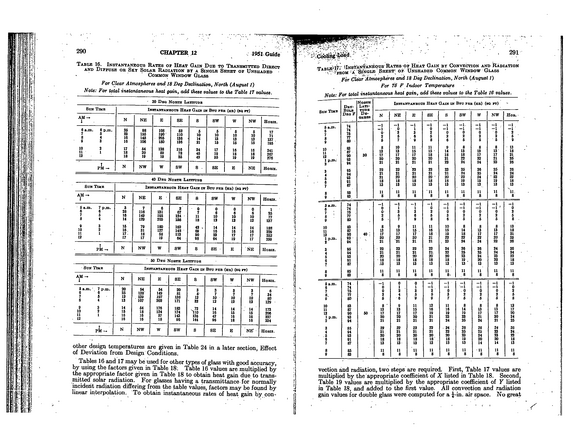
290 CHAPTER .12 1951, Guide Table 16.
refid# zd0pE9e2ko1d9vkX60YxvEpbz1 page
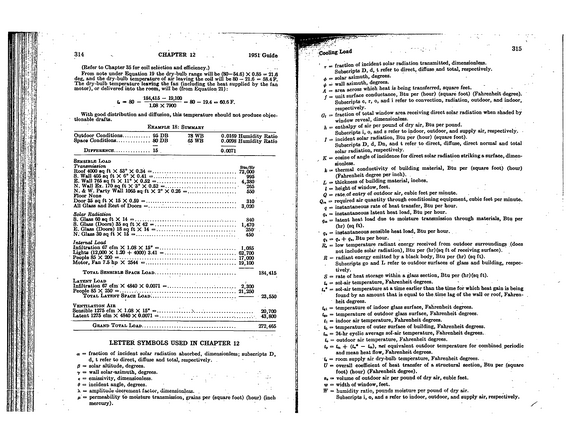
314 CHAPTER 12 1951 Guide (Refer to Chapter 35 for coil selection and efficiency.)
refid# 15YGe4J0x9jK5zb1v6xek00xd1 page
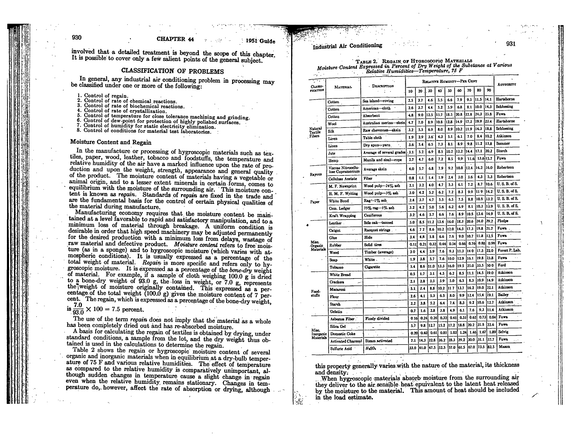
930 CHAPTER 44 1951 Guide involved that a detailed treatment is beyond the scope of this chapter.
refid# RGjNEzydn1jO8DkRXbQOej3a1 page
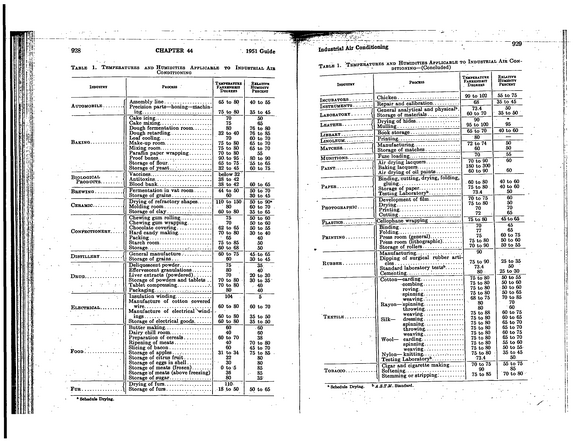
mm 928 CHAPTER 44 . 1951 Guide Table 1.
refid# 7Oz0o6mm79N3RDNZGYLOMvXLj1 page
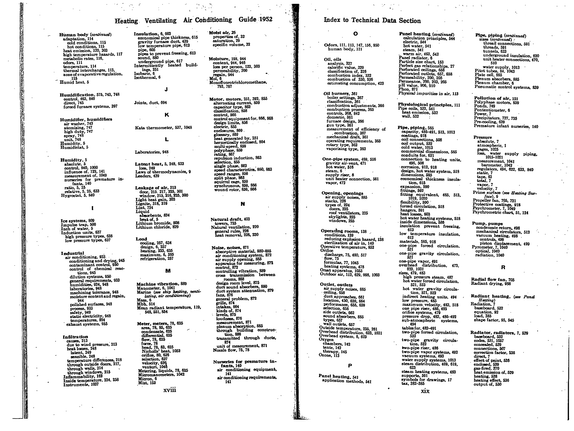
Heating Ventilating Air Conditioning Guide 1952 Human body (continued) adaptation, H4 cold conditions, 115 hot conditions, 115 heat emission, 120, 303 high temperature hazards, 117 metabolic-rates, 116, odors, 111 temperature, 114 thermal interchanges, 113, gone of evaporative regulation, 115 Humid heat, 5 Humidification, 575, 743, 748 control, 463, 840 direct, 745 forced furnace systems, 397 Humidifier, humidifiers air washer, 743 atomising, 747 high duty, 747 spray, 748 unit, 748 Humidity, 5 Humidistat, 5 Humidity, 5 absolute, 5 control, 840, 1000 influence of, 122, 141 measurement of, 1049 nurseries for premature in fants, 140 ratio, 5, 25 relative, 5. 25, 633 Hygrostat, 5, 840 I Ice systems, 809 Impulse trap, 500 Inch of water, 5 Induction units, 637 high pressure types, 638 low pressure types, 637 Industrial air conditioning, 933. conditioning and drying, 945 contaminant control, 950 control of chemical reac tions, 945 dilution systems, 950 general requirements, 933 humidities, 924, 946 laboratories, 948 machining tolerance. 948 moisture content ana regain, 944 polished surfaces, 948 process, 933 safety, 949 static electricity, 948 temperatures, 924 ' exhaust systems, 955 filtration auses, 213 lue to wind pressure, 213 ieat losses, 248 latent, 249 sensible, 248 temperature differences, 218 through outside doors, 217, through walls, 214 through windows, 215 flammability, 162 side temperature, 234, 258 atmmanta. 1037 Insulation, 6,603 economical pipe thickness, 615 gravity furnace duct, 439 low temperature pipe, 612 pipe, 605 pipes to prevent freezing, 613 sound, 880 underground pipe, 617 Intermittently heated build ings, 251 Isobanc, 6 Isothermal, 6 J Moist air. 25 properties of, 32 saturation, 29 specific volume, 32 Moisture, 198, 944 content, 944, 946 loss per person, 122, 303 permeability, 200 regain. 944 * .
refid# 6REa6D2GOV5w376DG9bR59L3g1 page
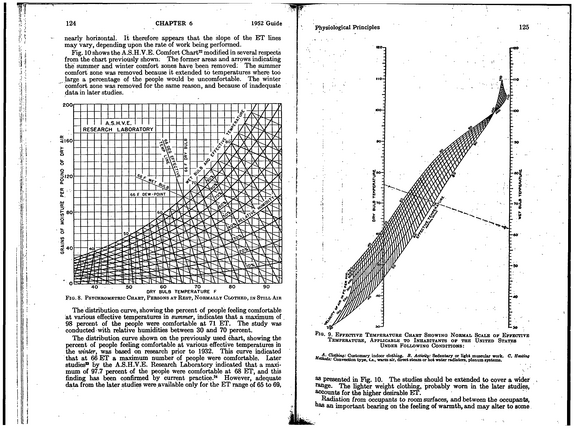
i 124 CHAPTER 6 1952 Guide Physiological Principles nearly horizontal.
refid# 44gK8gpR7XD8zVdyeaYYrGL0a1 page
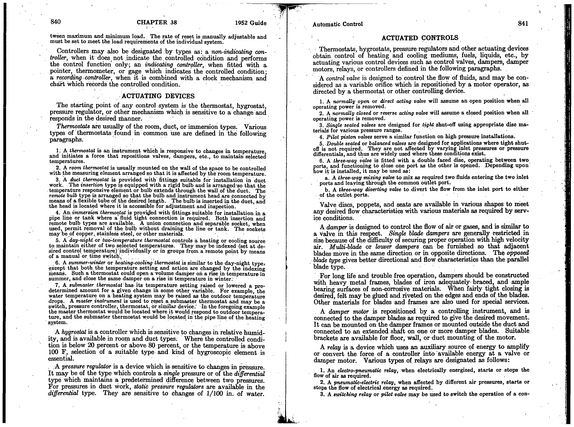
840 CHAPTER 38 1952 Guide tween maximum and minimum load.
refid# by7Nk2E9NEaZ6qBVEVw0ZnrY11 page
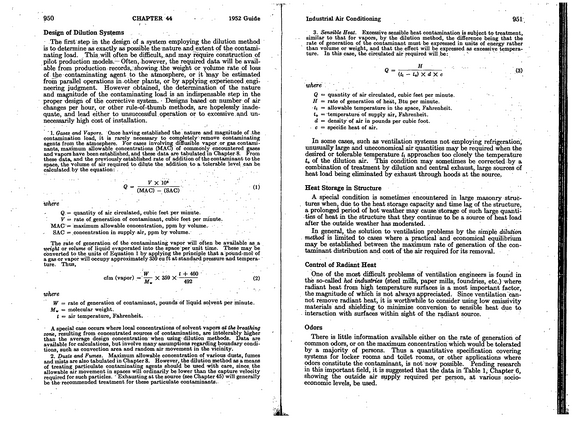
950 CHAPTER 44 1952 Guide Design of Dilution Systems The first step in the design of a system employing the dilution method is to determine as exactly as possible the nature and extent of the contami nating load. .This will often be difficult,.and may require construction of pilot production models.
refid# 0gv0JV24Vg28ZwX26z7vzQkzJ1 page
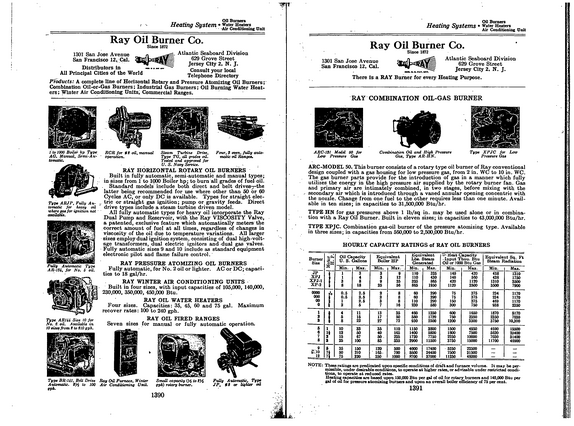
Oil Burners Heating System wt Heaters 9* -Air Conditioning Unit Ray Oil Burner Co.
refid# LgoaO7zy29Vo6kLGDRqO89pq51 page
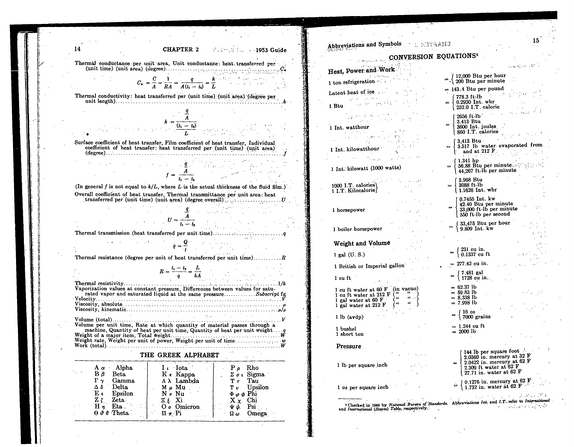
14 CHAPTER 2 - 1953 Guide Thermal conductance per unit area, Unit conductance: heat>transferred per . , (unit time) (unit area) (degree)................ ... .........................
refid# 6wY2Y2ygYa3zjQ3y6YRrvyQg31 page
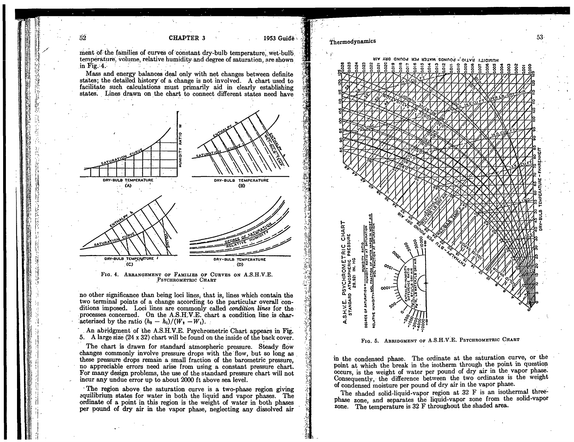
52 CHAPTER 3 1953 Guide ment of-the families of curves of constant dry-bulb temperature,, wet-bulb, temperature, volume, relative humidity and degree of saturation, are shown in Fig. 4.
refid# B8B99pGJGV6OgYBRr48GM0ppm1 page
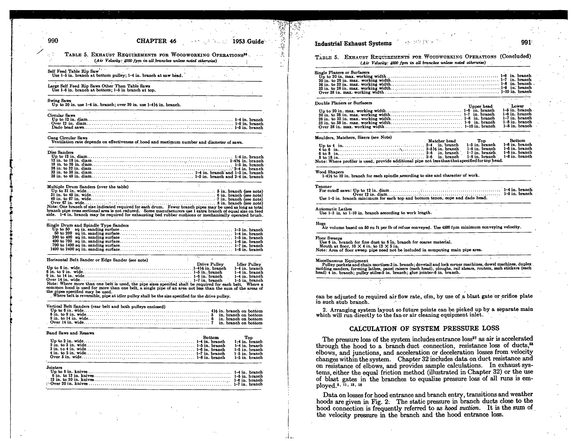
990 CHAPTER 46 1953 Guide Industrial' Exhaust Systems 99 T V l< Table 5.
refid# bBZB1Q6nBo2GvRyXgJBJqqGpy1 page