Refine
Estimated Years 1950-1959Clear
14,527 results foundRefine Search
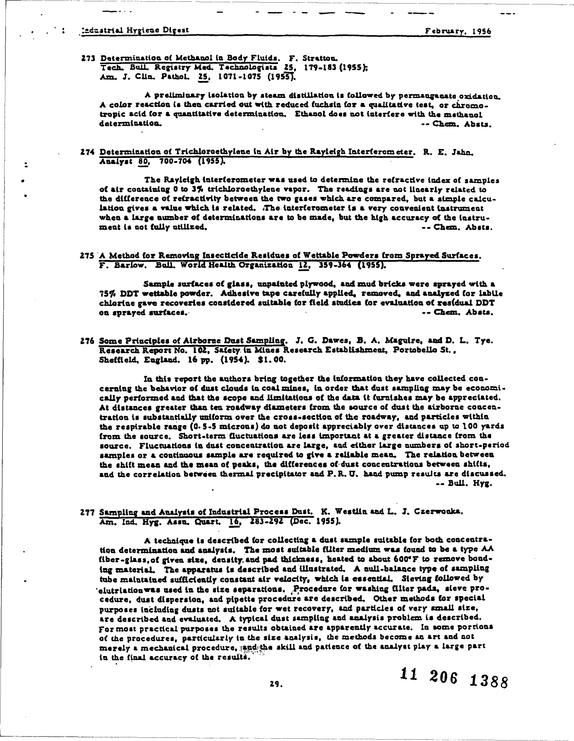
Industrial Hygiene Digest February, 1956 273 Determination of Methanol in Body Ftutda.
refid# rxNrb00Z1rLLq3zkJRmk4eypq1 page
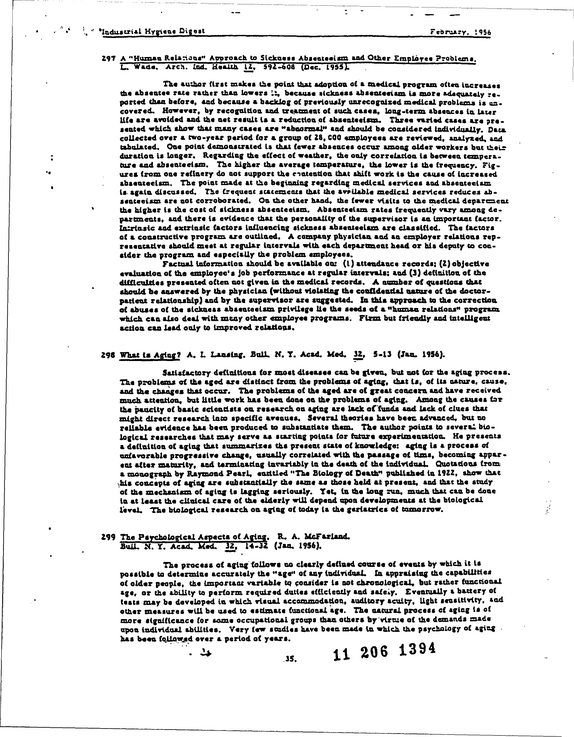
'Industrial Hygiene Digest February, 19S6 297 A "Hunts Relations" Approach to Sickness Absenteeism and Other Employee Problems.
refid# gZG1vOx14RZ81g8Zj3NQpjrG1 page
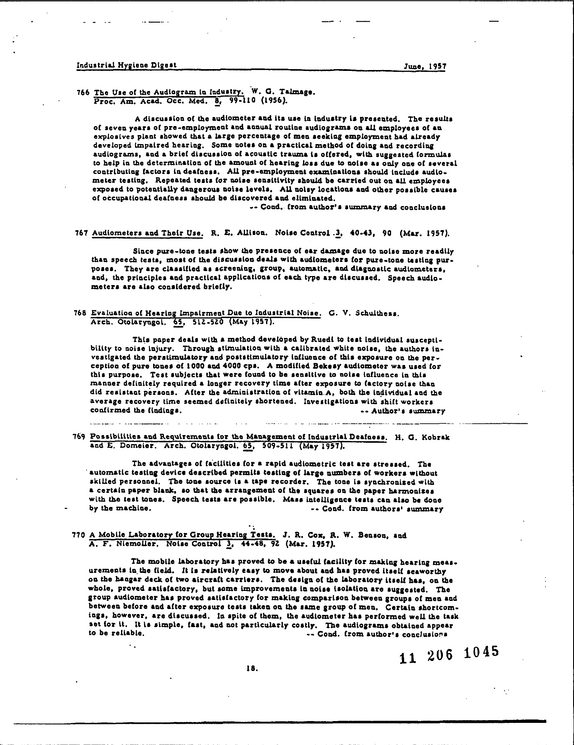
Industrie Hygiene Digest June, 1957 766 The Use of the Audiogram la Industry.
refid# RJ3x1b0KK2GQNkxNOQEVbEXnv1 page
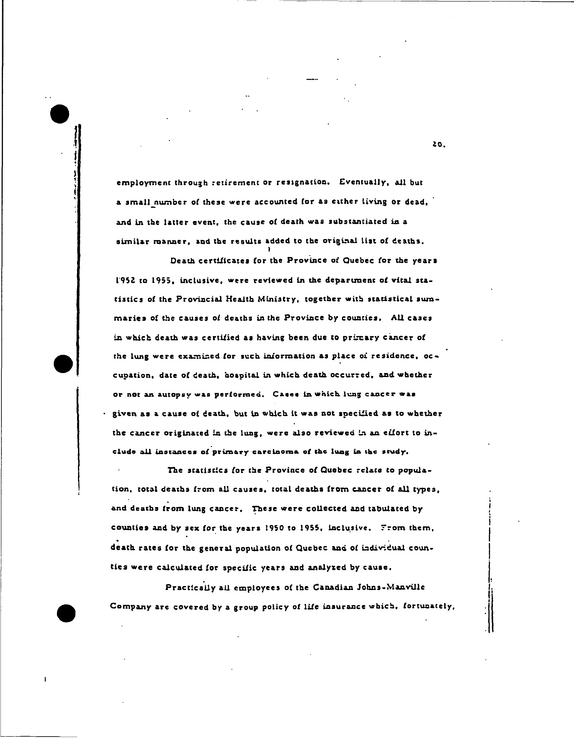
.10 employment through retirement or resignation, eventually, ail but a small number of these were accounted (or as either living or dead, and in the latter event, the cause of death was substantiated in a similar manner, and the results added to the original list of deaths.
refid# ymvyGZKbER7Xxap9q2j5mxXYD1 page
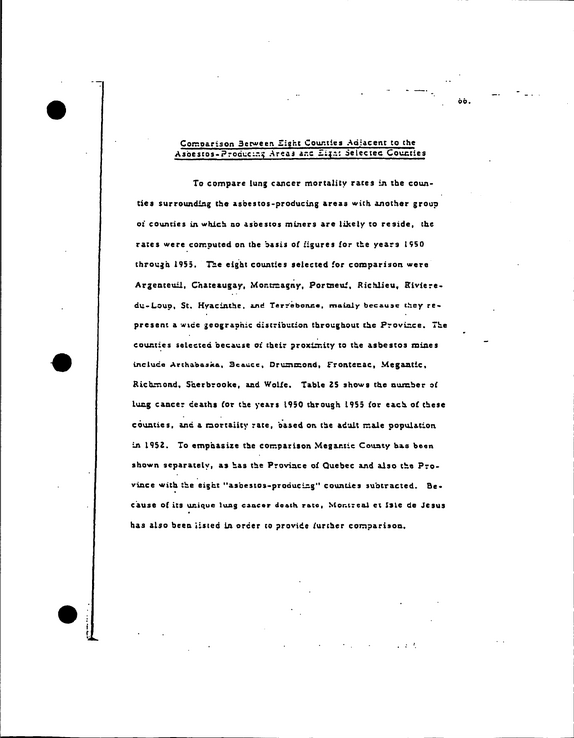
Comparison 3erween Right Counties Adjacent to che Asbestos-Producing Areal a.-.c ;?
refid# 5LQDb9OODwwo55KvM4mb9OQJD1 page
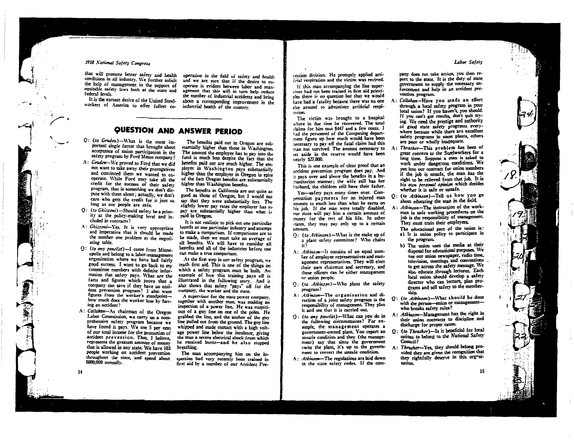
1958 National Safety Congress that wii] promote better safety and health conditions in all industry-.
refid# bB9YbnjE8NJnDbJRGjLwqYdv61 page
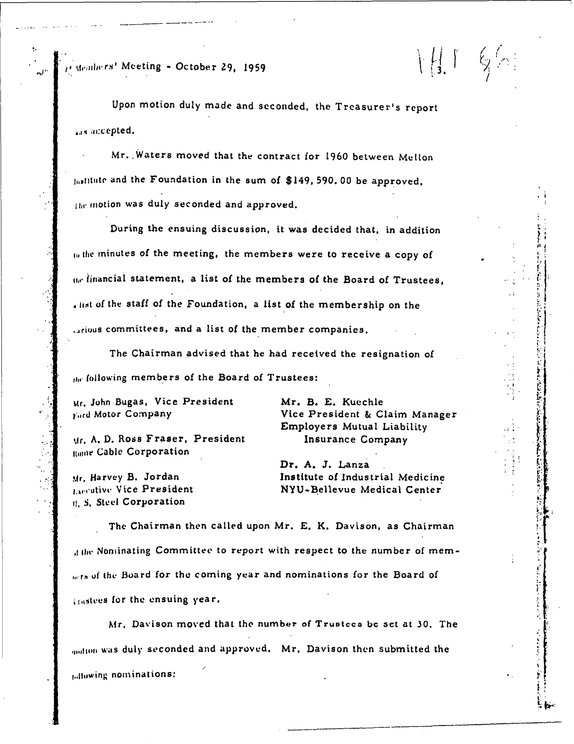
, m.miI/itV Meeting - October 29, 1959 Upon motion duly made and seconded, the Treasurer's report 4,i*t accepted.
refid# jN8eDp1ZNY4B49ebJD7aoaaxp1 page
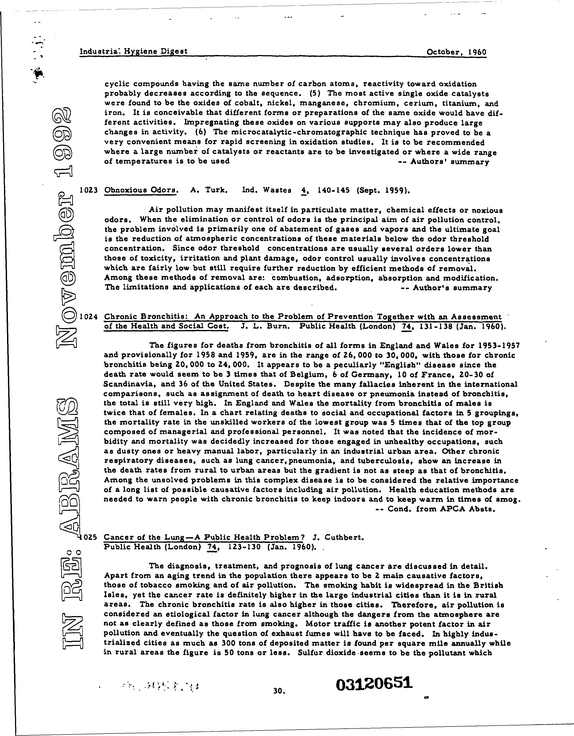
Industrial Hygiene Digest October, I960 cyclic compounds having the same number of carbon atoms, reactivity toward oxidation probably decreases according to the sequence, (5) The most active single oxide catalysts were found to be the oxides of cobalt, nickel, manganese, chromium, cerium, titanium, and iron.
refid# yrn1Y5QadREow8qbpZZpxarmV1 page
-[1^1 WALLS BY THE MILE The story of plaster, lath and wallboard manufacture at the Long Beach Harbor plant of Kaiser Gypsum Company. ^ Reprinted from the Summer, 1956, issue oj "Harbor Highlights" the jL, quarterly magazine of the Port of Long Beach, California.


refid# v1jwzgDG0mOwBEJKRpxy21G766 pages
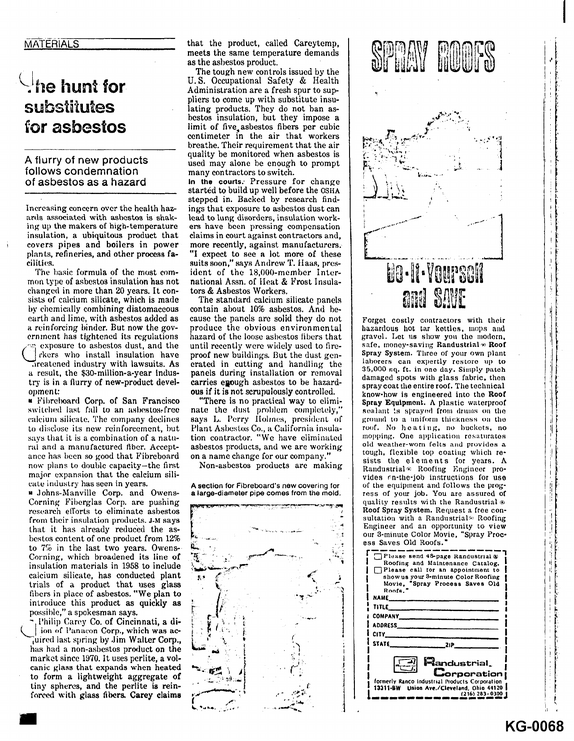
MATERIALS that the product, called Careytemp, meets the same temperature demands as the asbestos product.
refid# npRYaqOVvv8MvkNpo90kDkzj12 pages
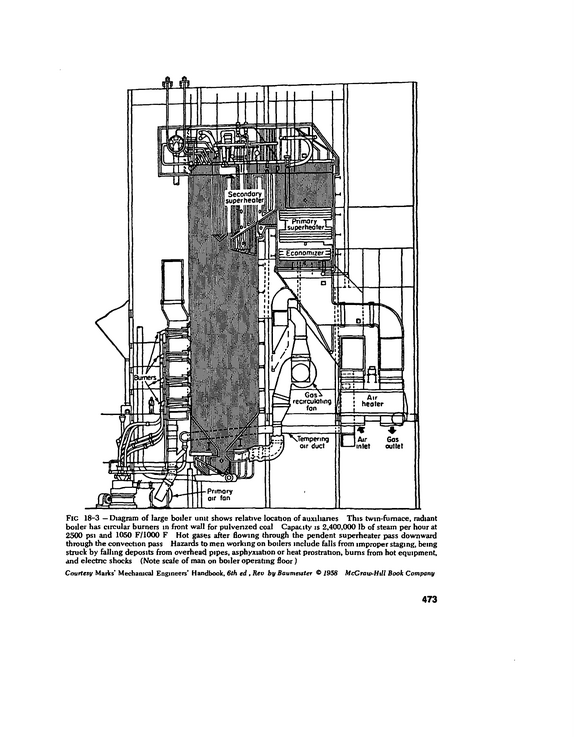
Fic 18-3 -- Diagram of large boiler unit shows relative location of auxiliaries This twin-fumace, radiant boiler has circular burners m front wall for pulverized coal Capacity is 2,400,000 lb of steam per hour at 2500 psi and 1050 F/1000 F Hot gases after flowing through the pendent superheater pass downward through the convection pass Hazards to men working on boilers include falls from improper staging, being struck by falling deposits from overhead pipes, asphyxiation or heat prostration, bums from hot equipment, and electric shocks (Note scale of man on boiler operating floor) Courtesy Marks' Mechanical Engineers' Handbook, 6th ed , Rev by Baumetster 1958 McCraw-Hill Book Company 473
refid# gDvrrxNByEkZdvYYLY8rBr1ML1 page
engineenng methods for eliminating or mini mizing them The Industrial Hygienist Definitions The following definitions have been ap proved by the Amencan Industrial Hygiene Association "Industrial hygiene is that science and art devoted to the recognition, evaluation and control of those environmental factors or stresses, arising in or from the workplace, which may cause sickness, impaired health and well-being, or significant discomfort and inefficiency among workers or among the citi zens of the community "An industrial hygienist is a person hav ing a college or university degree or degrees in engineering, chemistry, physics, or medi cine or related biological sciences who, by virtue of special studies and training, has acquired competence in industrial hygiene Such special studies and training must have been sufficient in all of the above cognate sciences to provide the abilities (a) to rec ognize the environmental factors and stresses associated with work and work operations and to understand their effect on man and his well-being, (b) to evaluate, on the basis of experience and with the aid of quantitative measurement techniques, the magnitude of these stresses m terms of ability to impair man's health and well-being, and (c) to pre scribe methods to eliminate, control or re duce such stresses when necessary to allevi ate their effects " Scope Recognition of environmental factors and stresses which influence health requires that the industrial hygienist be familiar with work operations and processes The categories of stresses that interest him are (a) chemical -- liquid, dust, fume, mist, vapor, or gas, (b) physical --electromagnetic and ionizing radi ations, noise, vibration, and extremes of tem perature and pressure, (c) biological --insects, mites, molds, yeasts, fungi, bacteria, and viruses, and (d) ergonomic--body position in relation to task, monotony, boredom, re petitive motion, worry, work pressure, and fatigue The industrial hygienist recognizes that such stresses may immediately endanger life and health, accelerate the aging process, or cause only significant discomfort and in efficiency Evaluation of the magnitude of the en vironmental factors and stresses arising in or from the workplace is done by the industrial hygienist, aided by his training, experience, and quantitative measurement of the chem ical, physical, biological, or ergonomic stresses He can thus give an expert opinion as to the general healthfulness of the environ ment, either for short periods or for a lifetime of exposure Prescription of corrective procedures, when necessary to protect health, is based on the industrial hygienist's experience and know ledge and on the quantitative data he has ob tained He can prescribe control measures such as isolation of a work process, substitu tion of a less harmful material, or any of the other measures discussed later m this chapter Function The industrial hygienist 1 Directs the industrial hygiene program 2 Examines work environment, environs a) Studies work operations and processes to get full details of the nature of the work, materials and equipment used, products and byproducts, number and sex of employees, and hours of work b) Measures the magnitude of exposure or nuisance to workers and the public In doing so, he must (1) select or devise methods and in struments suitable for such meas urements, (2) personally or through others un der his direct supervision conduct such measurements, and (3) study and test material associated with the work operation c) Studies and tests biological materials, Amencan Industrial Hygiene Association Jour nal, 20 428-430 (Oct 1959) 1245
refid# 44m0dmEp273XDOnq8JL3gaa0x1 page
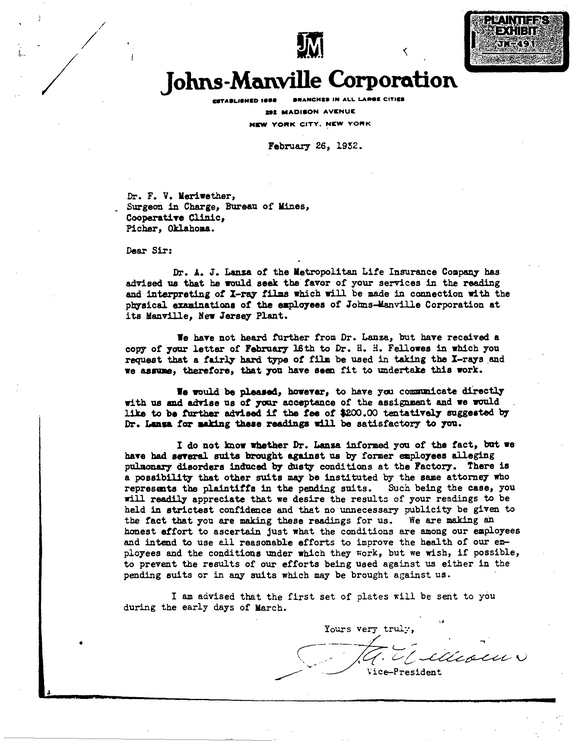
/ Johns-Maivville Corporation STARLIRMRO MM IHANCMfl IN ALL.
refid# ExxOZM5g36DvOKkdoMK5ddOMx2 pages
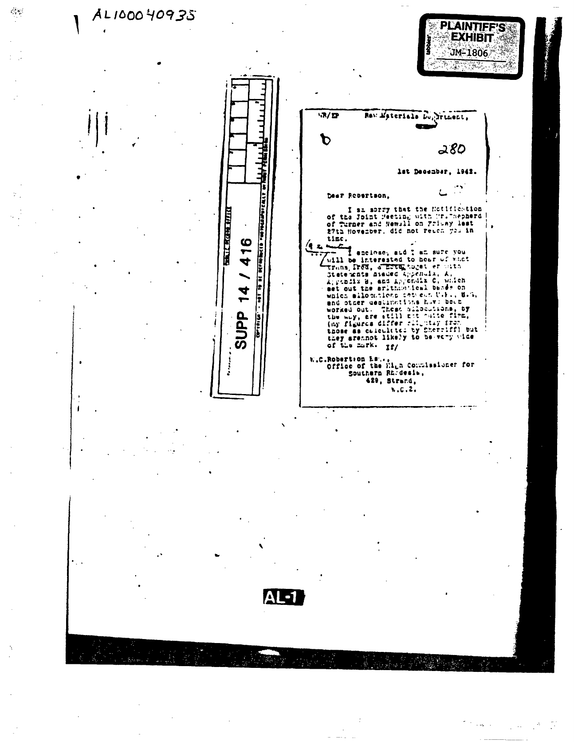
LI60CH093S K/ff Pev .k^ttrlal* , JlSO lat Daoaaber, 194!.
refid# MMZvmNND5eg3a991JxbemYNra2 pages
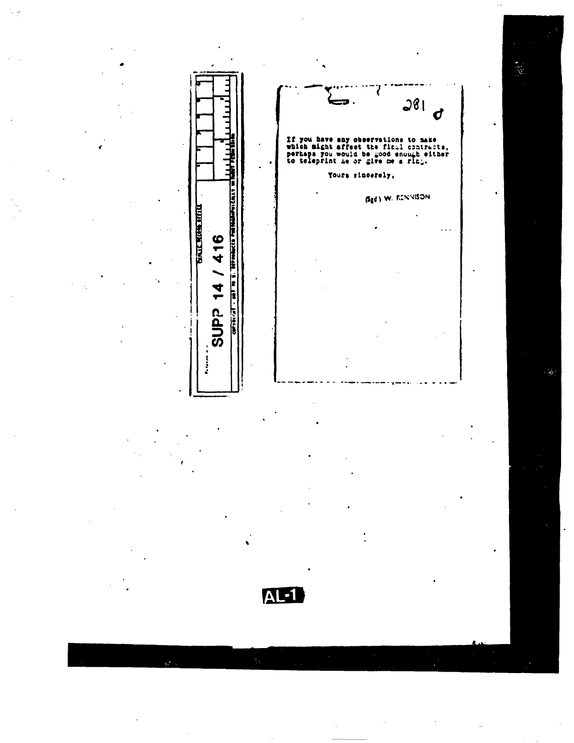
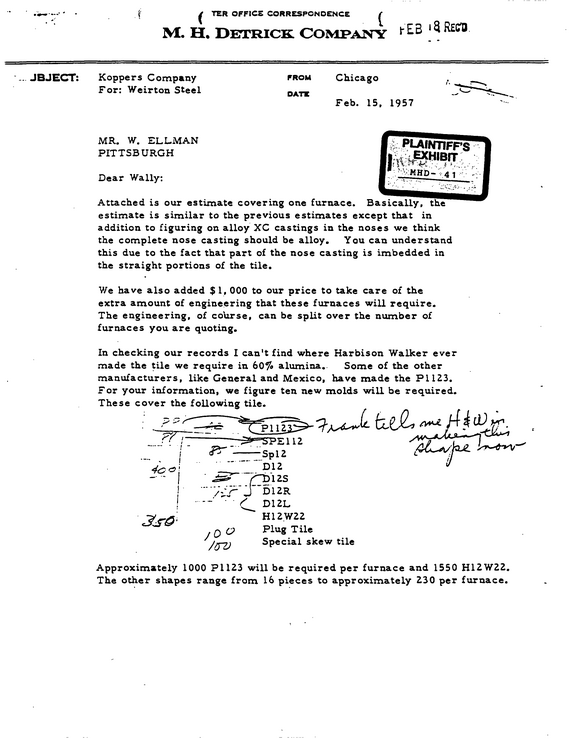
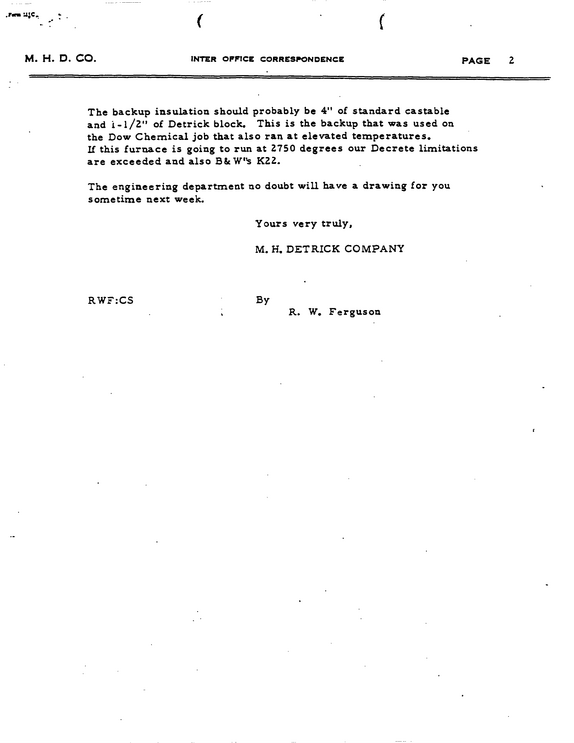
^ TER OFFICE CORRESPONDENCE M.
refid# 2JGwV7v08NBRMRrY4x40R38572 pages