Refine
Estimated Years 1950-1959Clear
492 results foundRefine Search
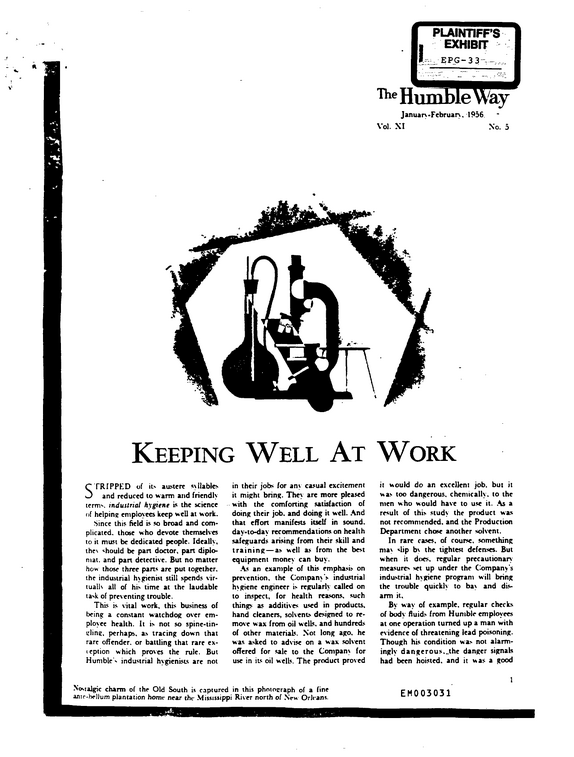
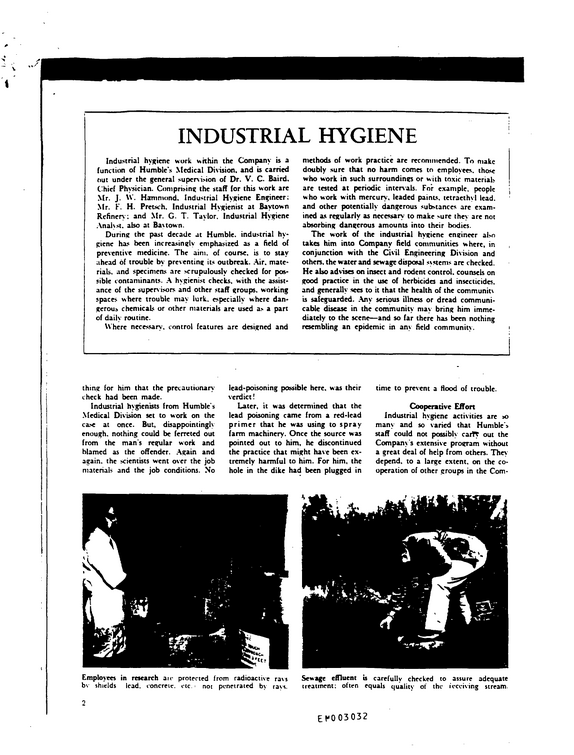
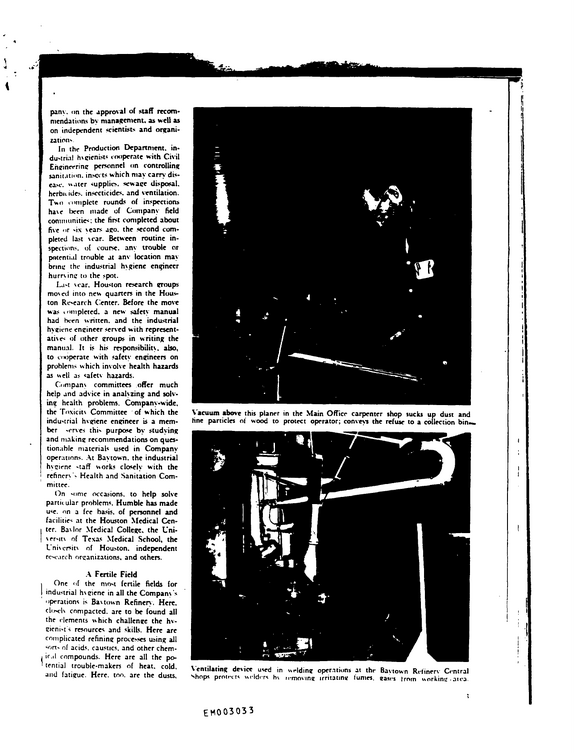
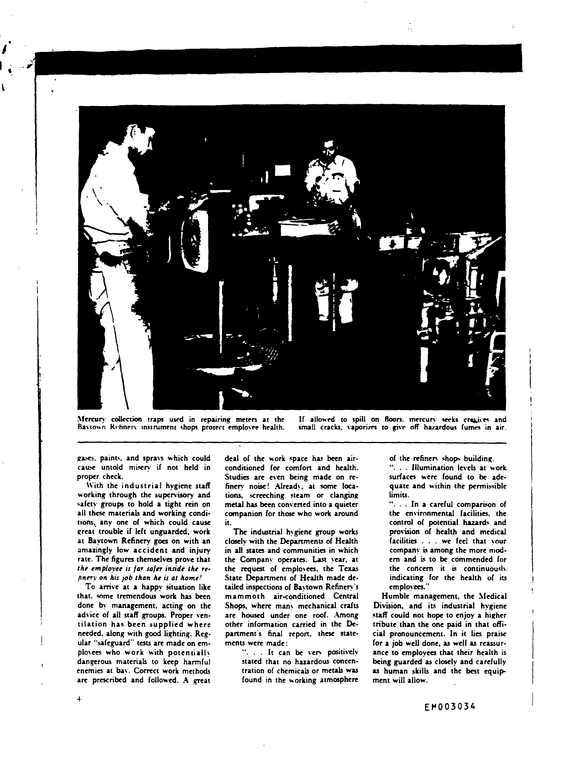
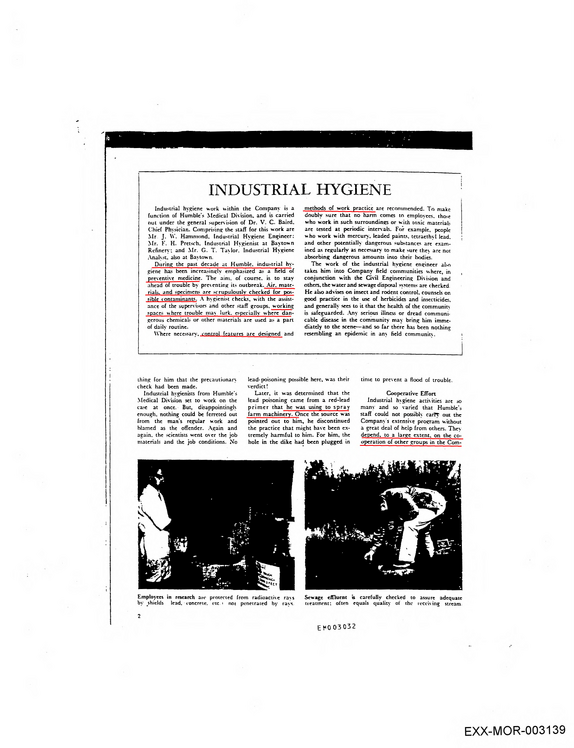
For example, people who work with mercury, leaded paints, tetraethyl lead, and other potentially dangerous substances are exam ined as regularly as necessary to make sure they are not absorbing dangerous amounts into their bodies.
refid# Mg3M7DMgB9yERzB35L3O7zmx4 pages
For example, people who work with mercury, leaded paints, tetraethyl lead, and other potentially dangerous substances arc exam ined as regularly as necessary to make sure they are not absorbing dangerous amounts into their bodies..
refid# b5DKNmKjXm5ByBwaXg7rY3bm34 pages
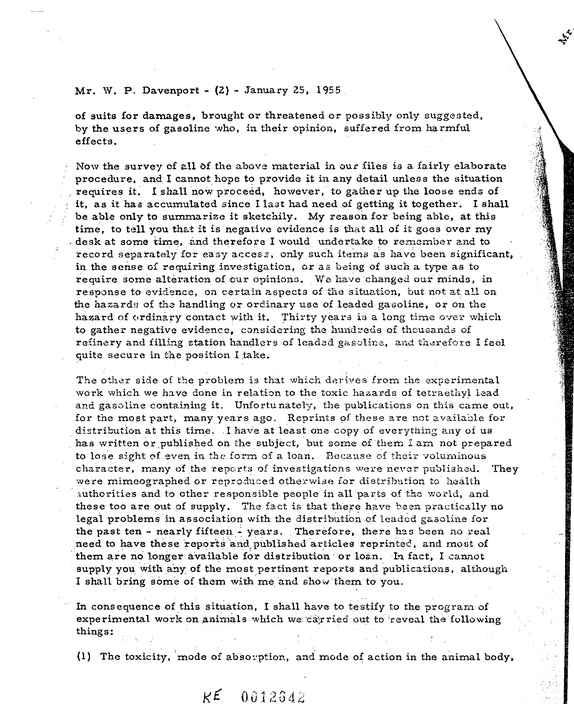
The oth er sid e of the problem is that which d e r iv es from the ex p erim en ta l work which we have done in relation to the toxic hazards of tetraethyl lead and gasolin e containing it.
refid# 91wwZgv90QDvYrmdbQ7evDvBe16 pages
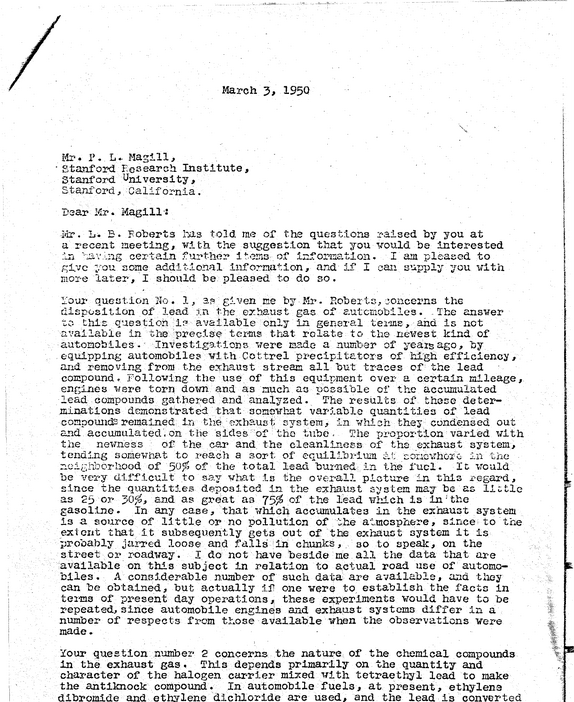
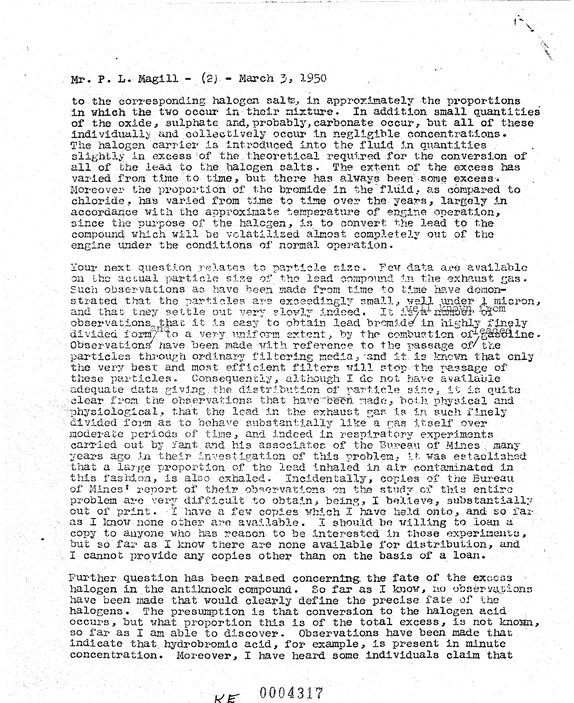
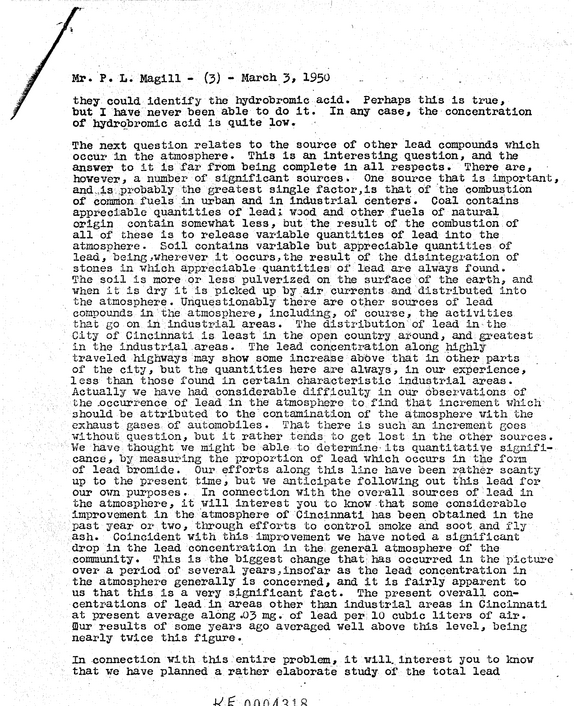
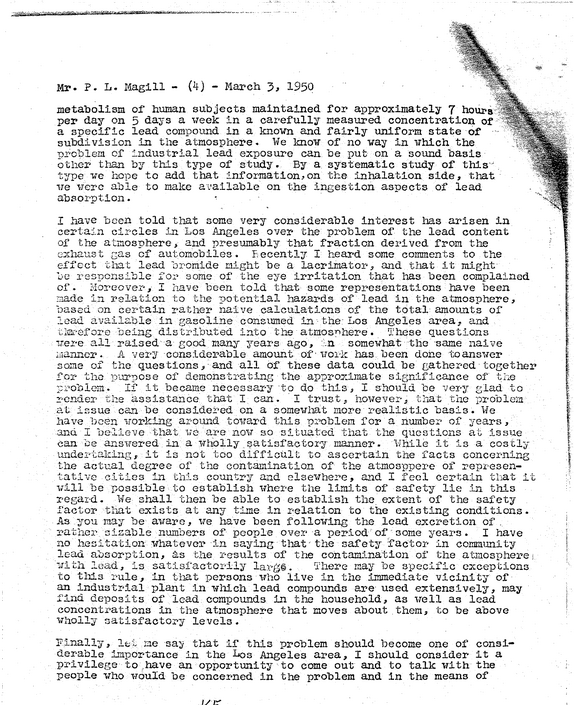
This depends primarily on the quantity and character of the halogen carrier mixed with tetraethyl lead to make the antiknock compound.
refid# YDvNpmmrezBnXjqdxM4RzvrkD5 pages
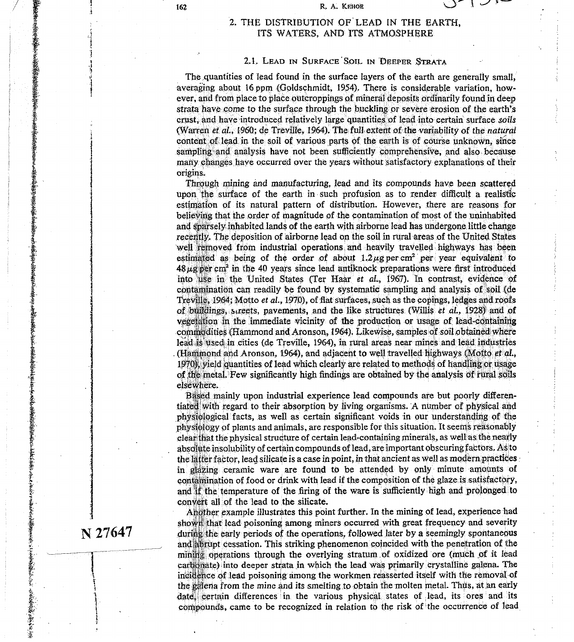
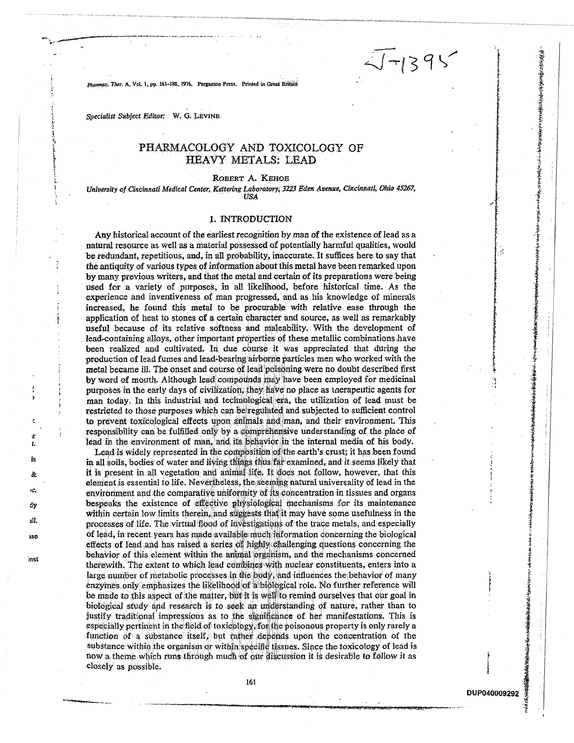
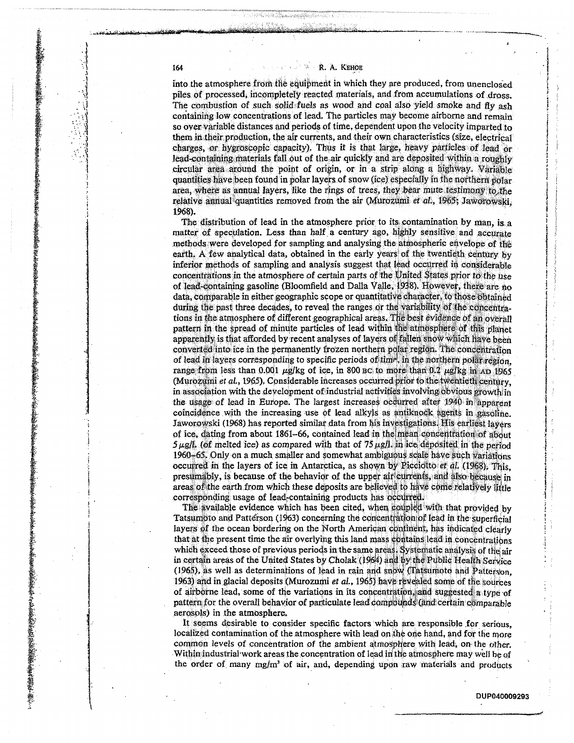
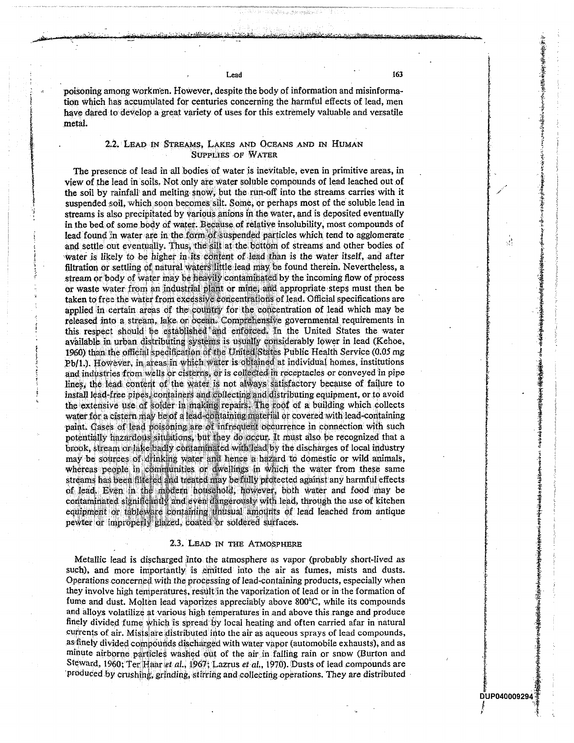
Likewise, samples of soil obtained where lead is used in cities (de Trevilie, 1964), in rural areas near mines and lead industries .
refid# 0qxJazO4D5Z8jRybMw1mp1Z6V28 pages
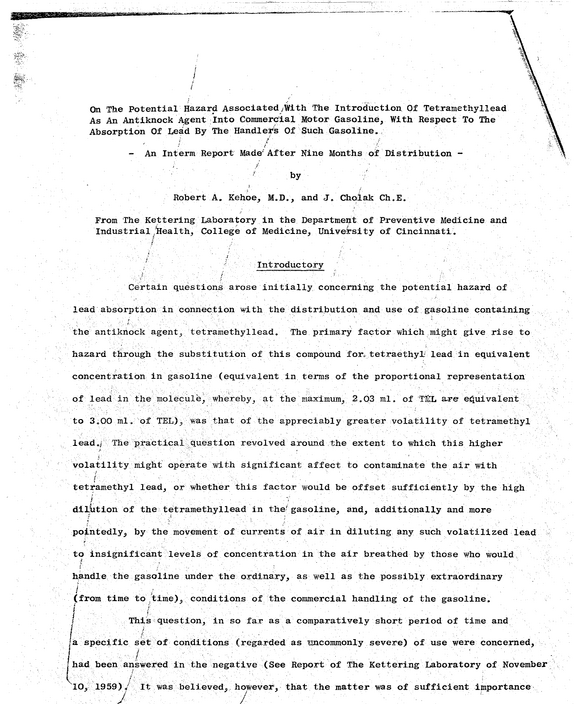
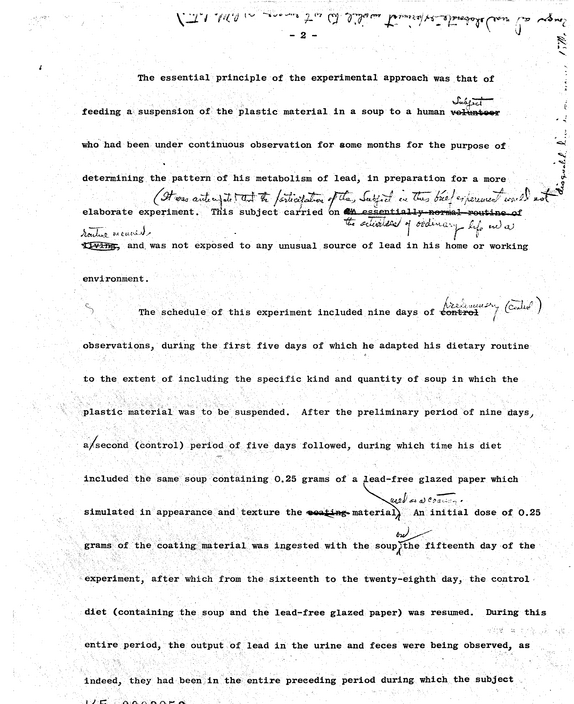
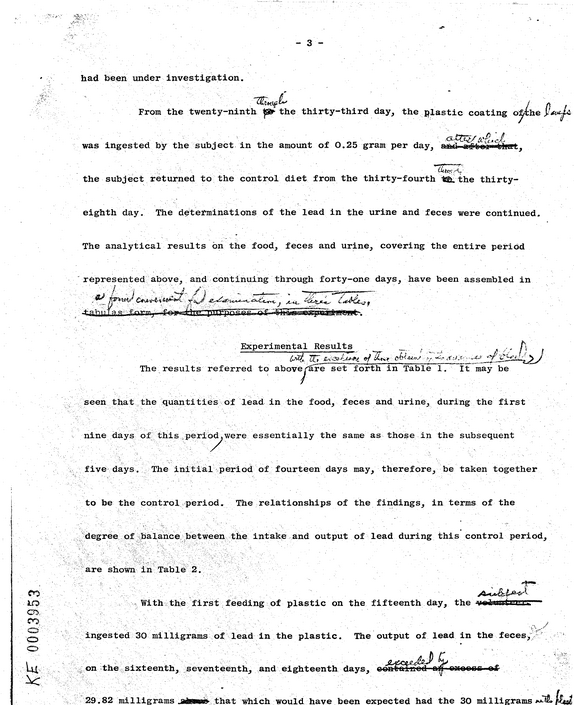
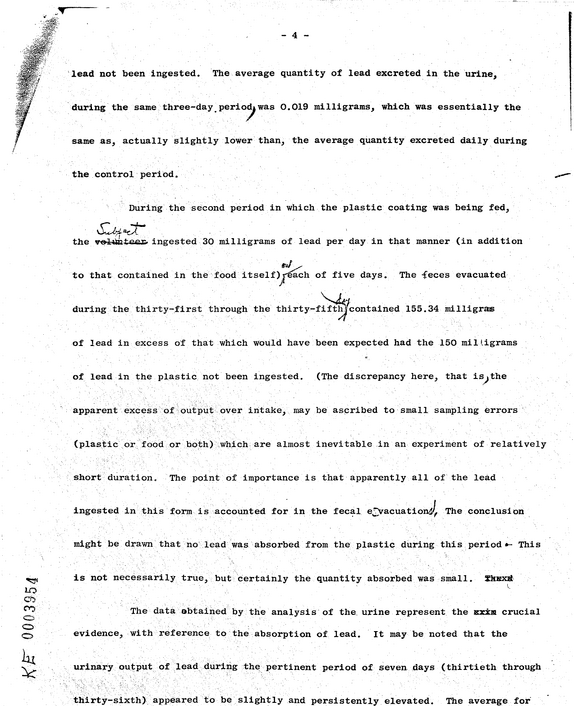
The primary factor which might give rise to hazard through the substitution of this compound for. tetraethyl lead in equivalent concentration in gasoline (equivalent in terms of the proportional representation of lead in the molecule, whereby, at the maximum,. 2.03 ml. of TEL are equivalent to 3.00 ml. of TEL), was that of the appreciably greater volatility of tetramethyl lead./ The practical question revolved around the extent to which this higher volatility might operate with significant affect to contaminate the air with '" >' . :
refid# 5b4BGZkxwLwBjXNaXR7ZoYga810 pages
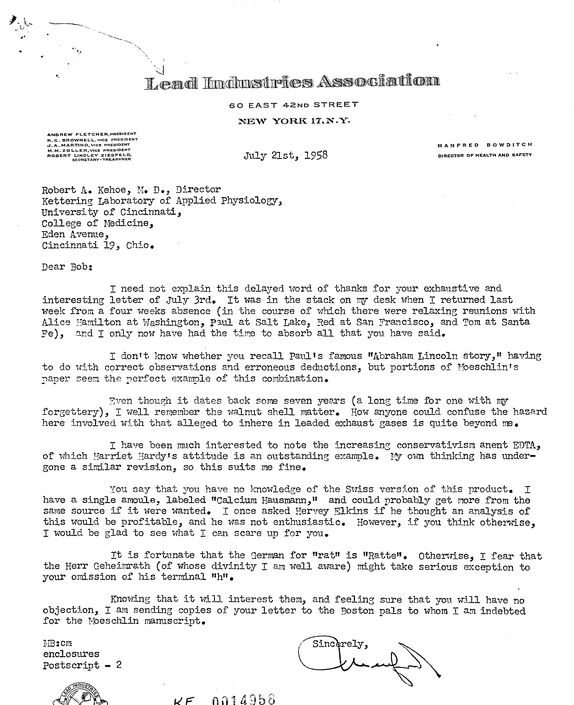
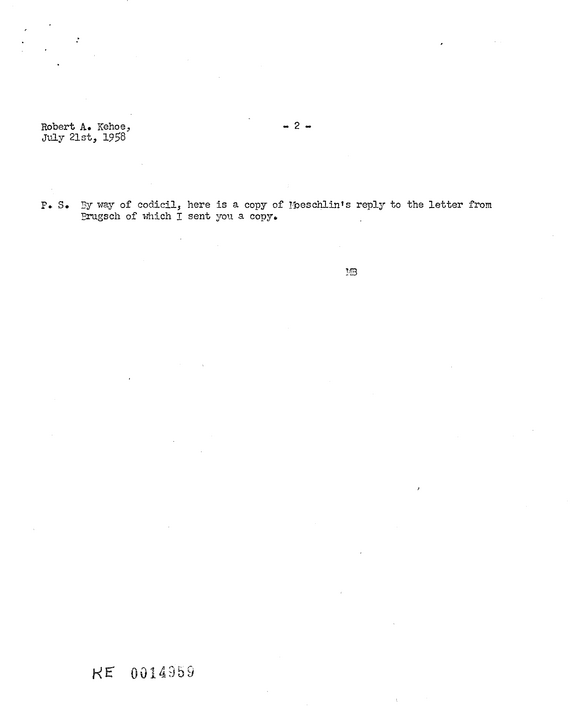
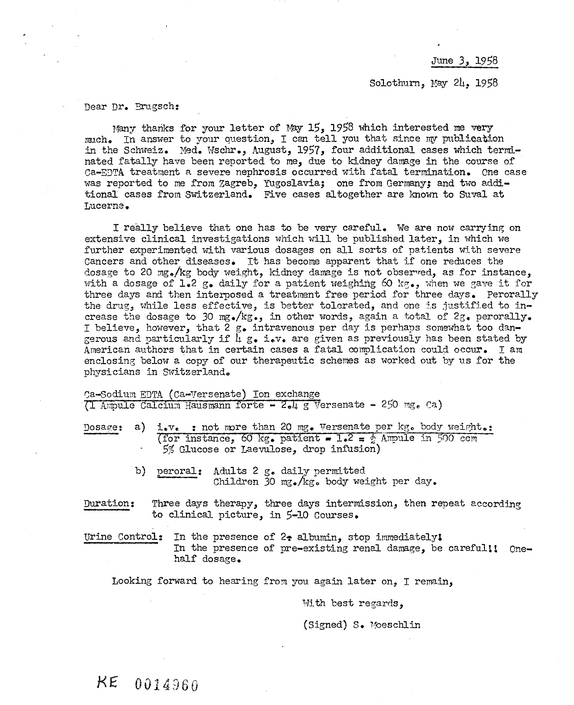
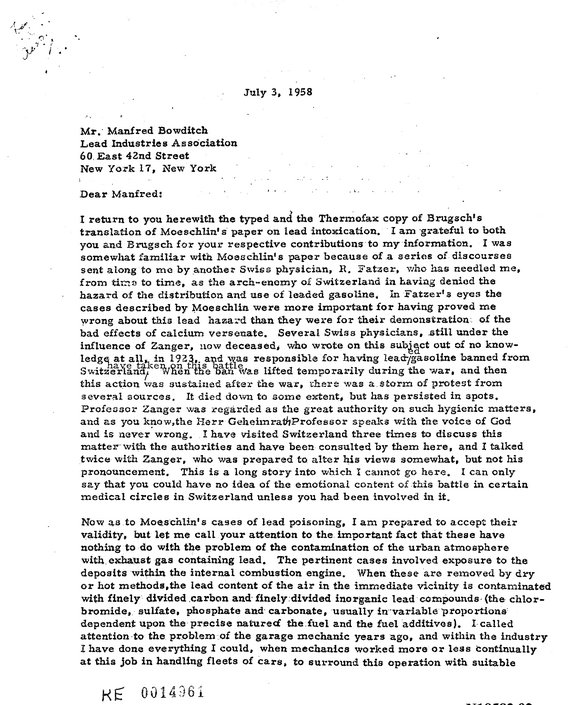
Th total effect is to differentiate garage m echanics, as a class, from the handlers and Users of leaded gasoline, by reason of a barely significant in crease in the m ean level of th e ir U rinary lead excretion, and by a somewhat le ss pronounced in c re a se in the lead concntrtion in th e ir blood (the u rin a ry v alu e is about 0, 05 m
refid# nNprep5m8G0kLykrY6YQBZgn27 pages
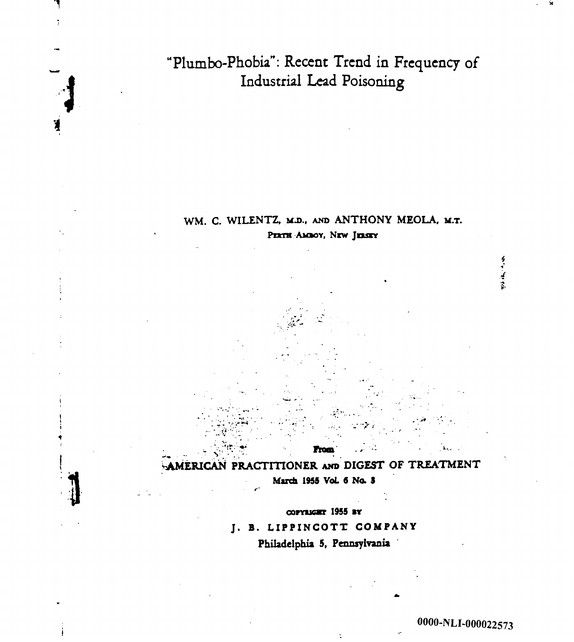
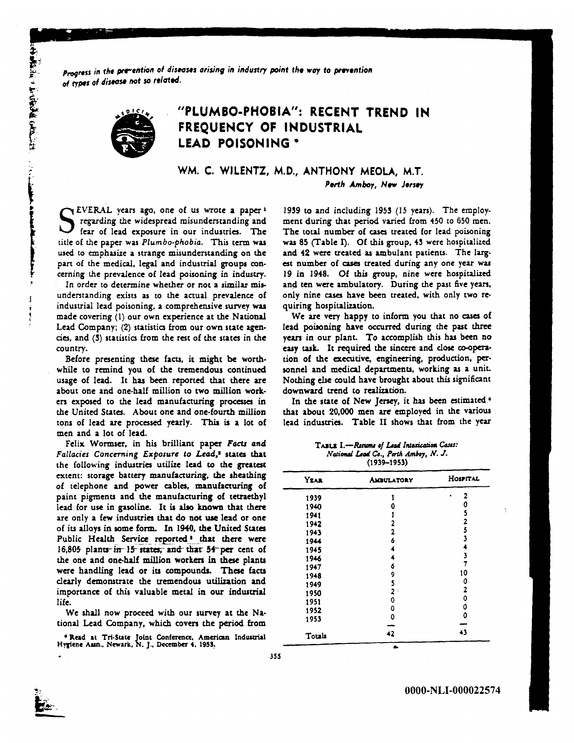
J. (1939-1953) extent: storage battery manufacturing, the sheathing of telephone and power cables, manufacturing of Ye a * Ams u l at o s y Ho s p it a l paint pigments and the manufacturing of tetraethyl lead for use in gasoline.
refid# xz8Ygq7R1j7kN4pB72ojgm2M04 pages
"Tetraethyl Lead" "Lead in Construction" "Lead Compounds in Industry-A Review" "Storage Batteries" "Problems in Plucfeism" "Ccctoating Atomic Radiation" "Lead in Ceramics" "Lead Cable Sheathing" "Current Market Outlook-Lead & Zinc" "World Supply-Lead & Zinc" 'World Consumption-Lead & Zinc" Dr.
refid# dQBkDnn5L5MkQbD2QmeM593355 pages
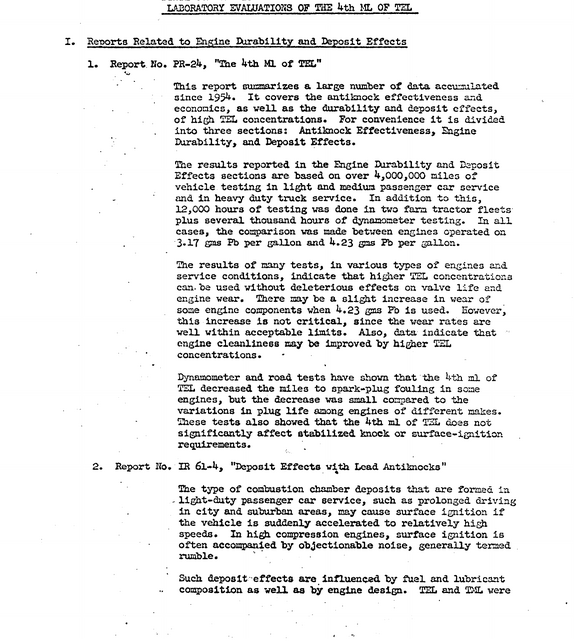
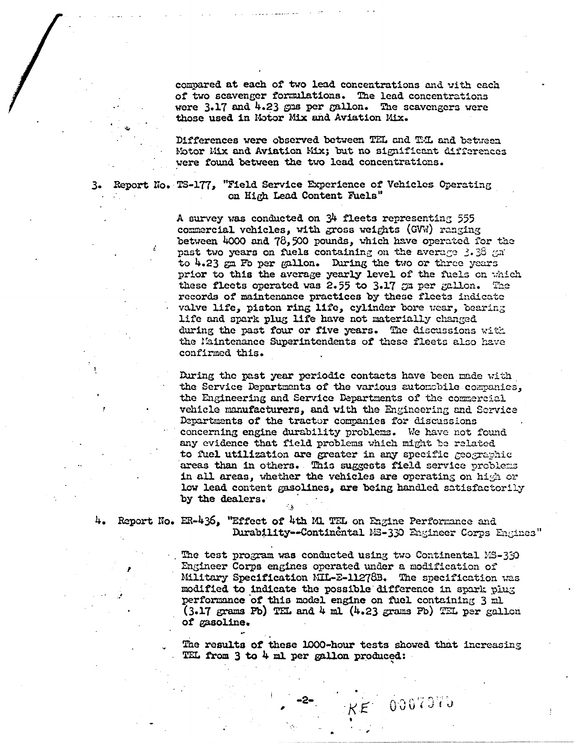
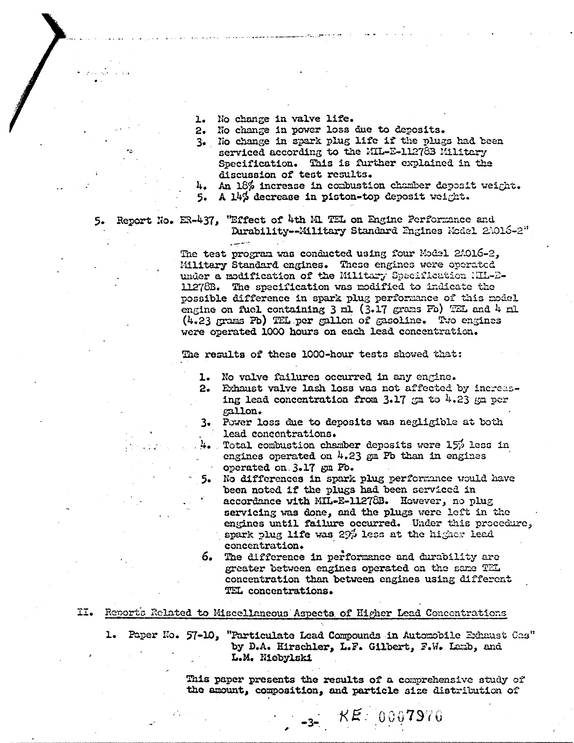
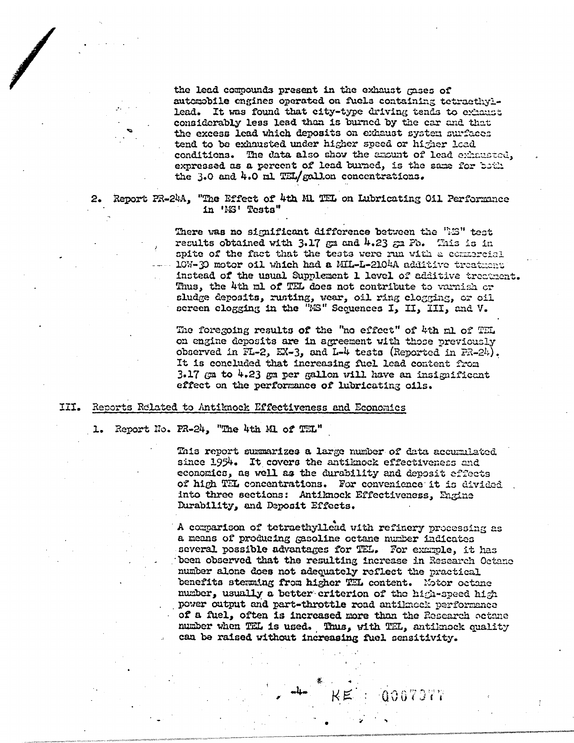
Kiebylski This paper presents the results of a comprehensive study of the amount, composition, and particle sise distribution of _3_ K: 00v 73y G the lead compounds present in the exhaust gases of automobile engines operated on fuels containing tetraethyl lead* It was found that city-type driving tends to exhaust considerably less lead than is burned by the car and that the excess lead which deposits on exhaust system surfaces tend to bo exhausted under higher speed or higher load conditions.
refid# rp2KjQM5jnG3V0wp1dXwp2EL06 pages
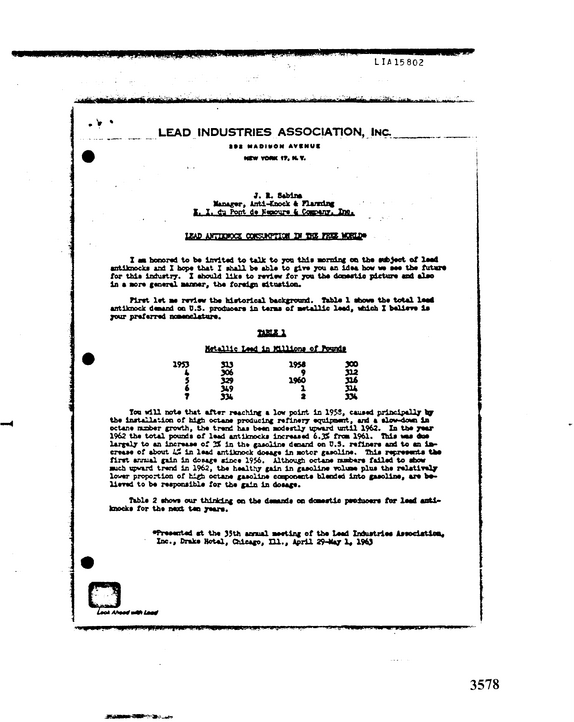
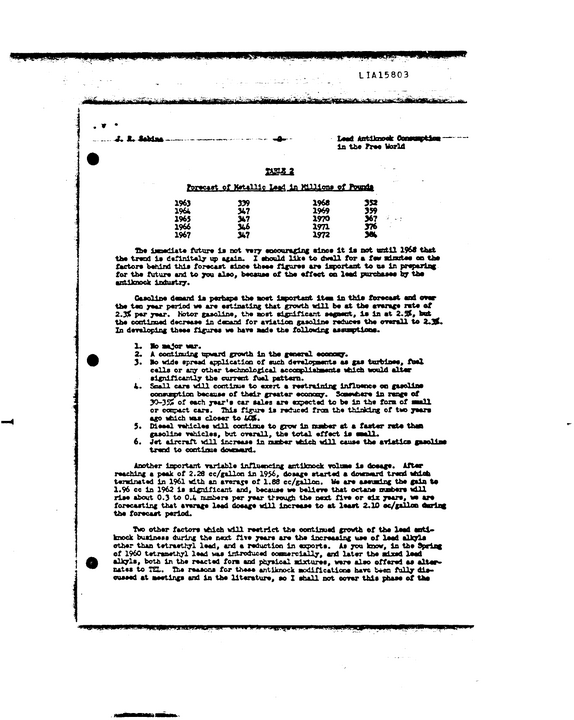
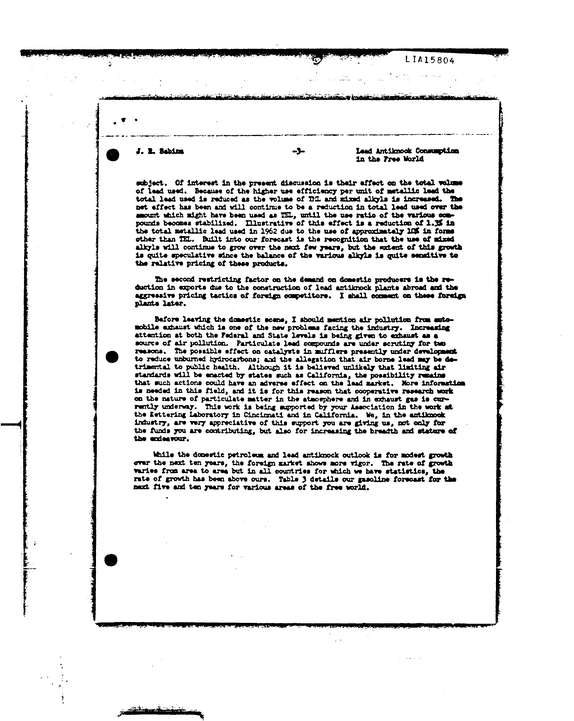
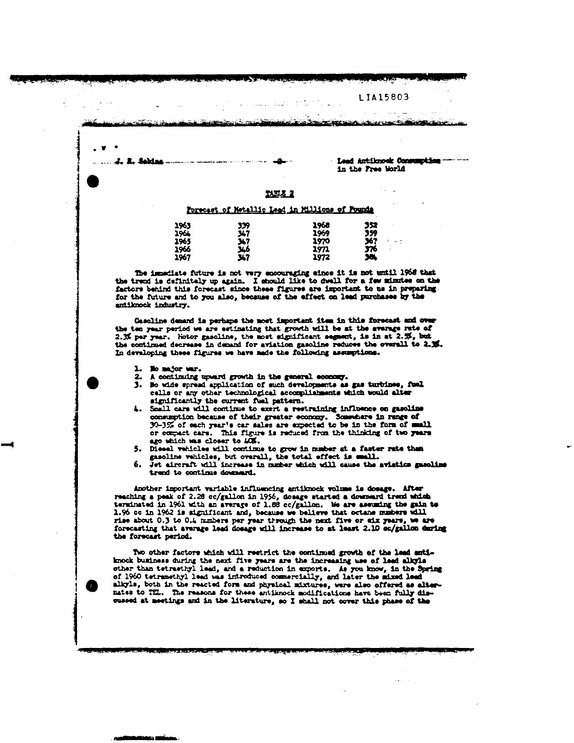
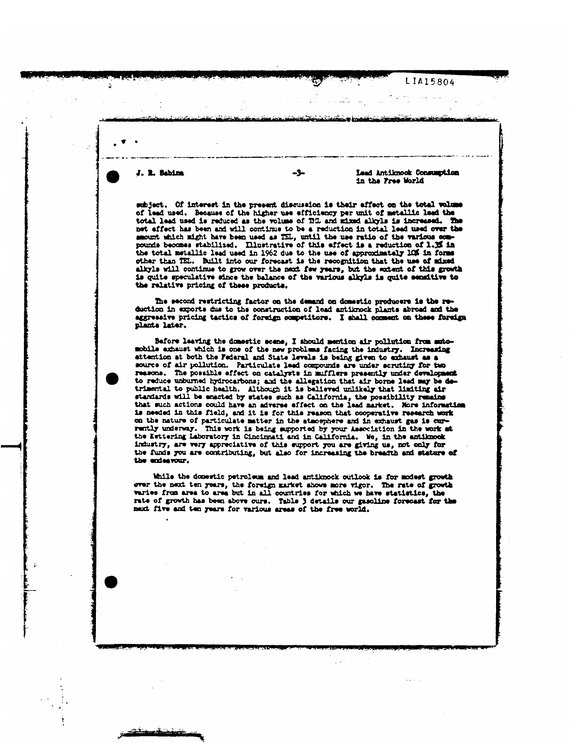
Two other factor* vfclch will restrict th* continued growth of tb* laad anti knock business during th* next five years are th* Increasing use of load alibis other than tetraethyl lead, and a reduction in exports.
refid# dY2zBy6Y619yvpNb4ygYbRZB06 pages
Two other factor* vfclch will restrict th* continued growth of tb* laad anti knock business during th* next five years are th* Increasing use of load alibis other than tetraethyl lead, and a reduction in exports.
refid# 37LJjYER8dyEqO3ozDxJVrMyD6 pages
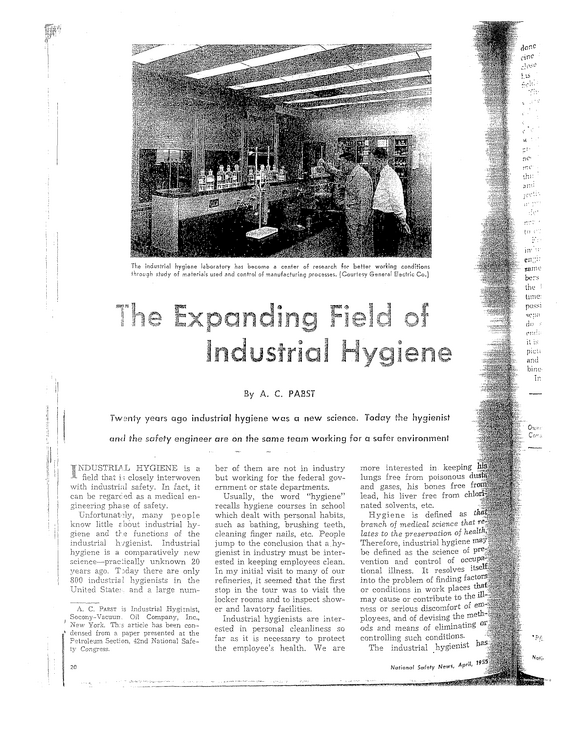
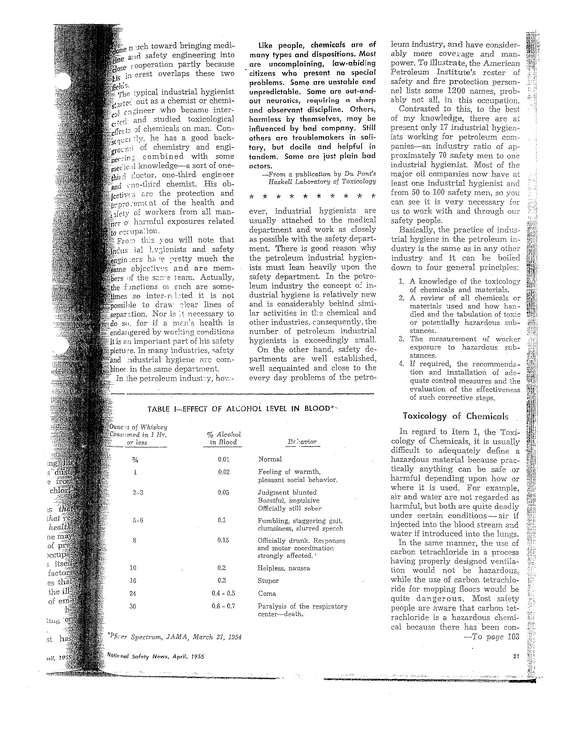
We are more interested in keeping lungs free from poisonous ^ and gases, his bones free lead, his liver free from chlod nated solvents, etc.
refid# ga4yEvzEk1Y78wqX5LK220jMJ13 pages
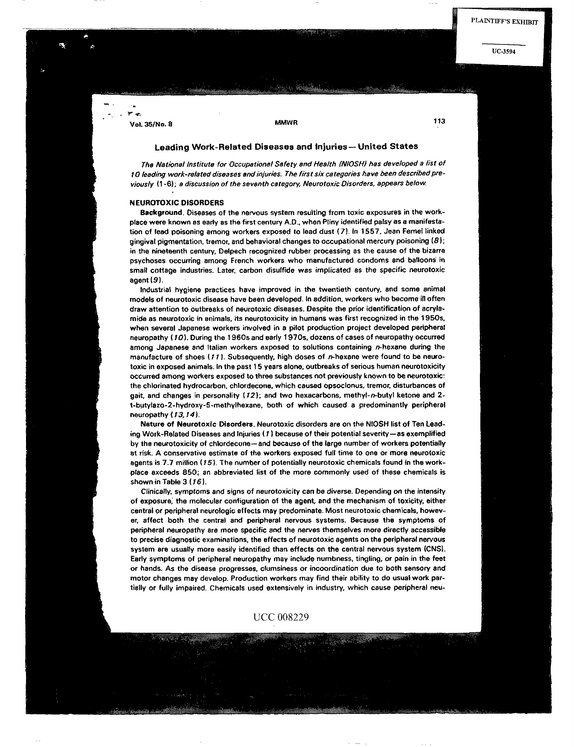
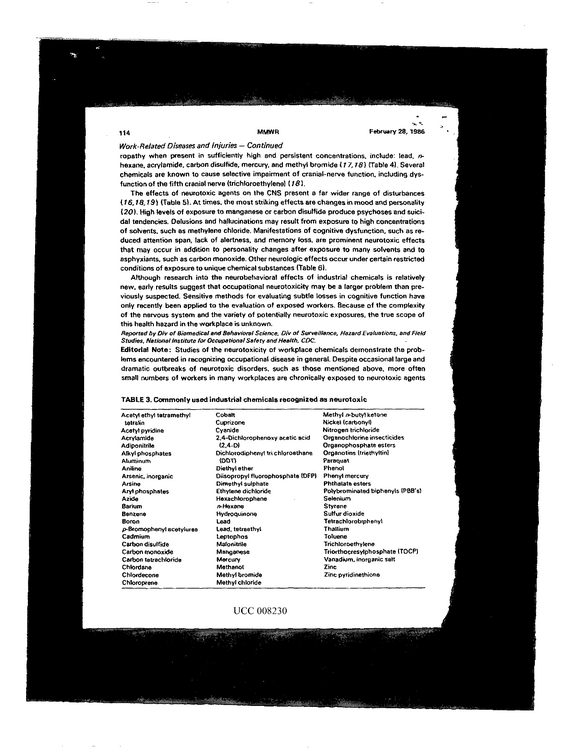
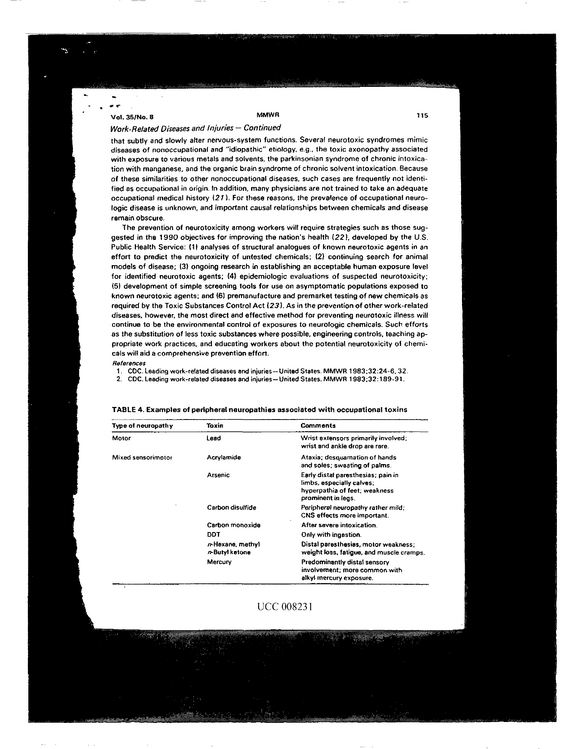
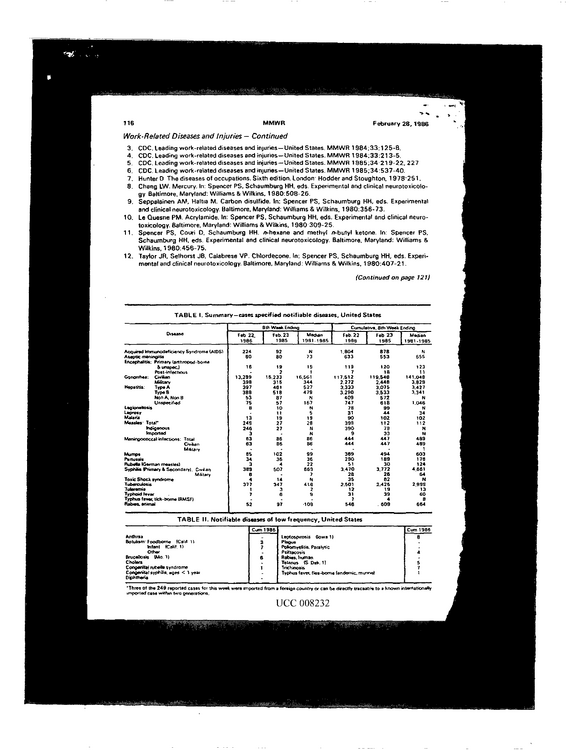
Leading work-related diseases and injuries--United States.
refid# Eq58Gp9214RXrMoLqNvjZMJn04 pages
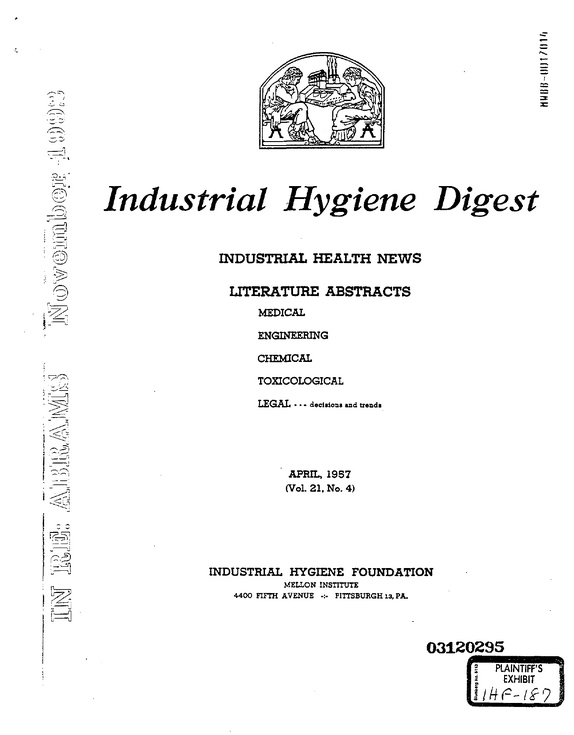
0 Z--:-- rp [=3 INDUSTRIAL HEALTH NEWS LITERATURE ABSTRACTS MEDICAL ENGINEERING CHEMICAL TOXICOLOGICAL LEGAL decisions and trends APRIL, 1957 (VoL 21, No. 4) INDUSTRIAL HYGIENE FOUNDATION MELLON INSTITUTE 4400 FIFTH AVENUE PITTSBURGH 13, PA.
refid# o90v81K59nybdZmqNpraV3qjR38 pages