Refine
Estimated Years 1930-1939Clear
8,921 results foundRefine Search
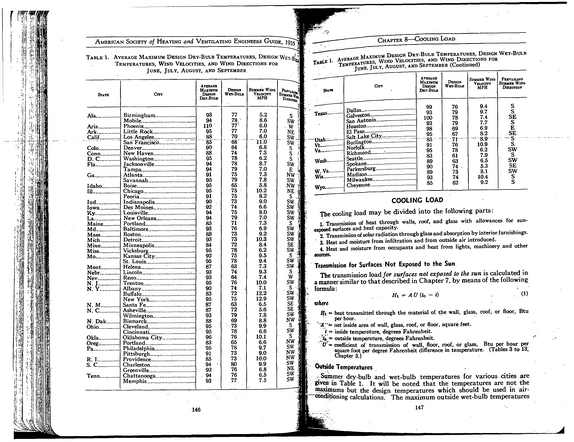
American Society of Heating and Ventilating Engineers Guide, 1933^ Table 1.
refid# NEka0qgRq3JeM37494YJBO8Zp1 page
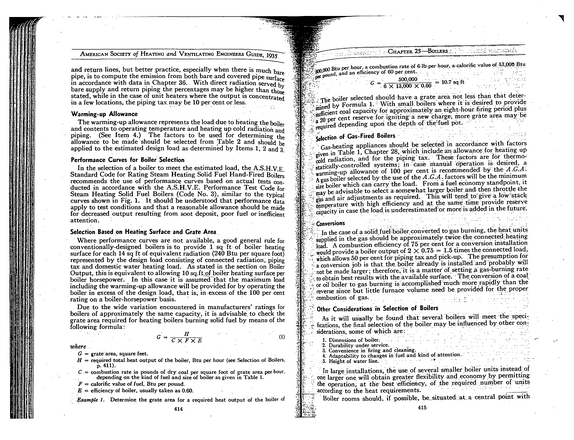
American Society of Heating and Ventilating Engineers Guide, 1935 and return lines, but better practice, especially when there is much ba pipe, is to compute the emission from both bare and covered pipe surface in accordance with data in Chapter 36.
refid# ym5EJ44Z4jKBKp7O9xX1vvdzX1 page
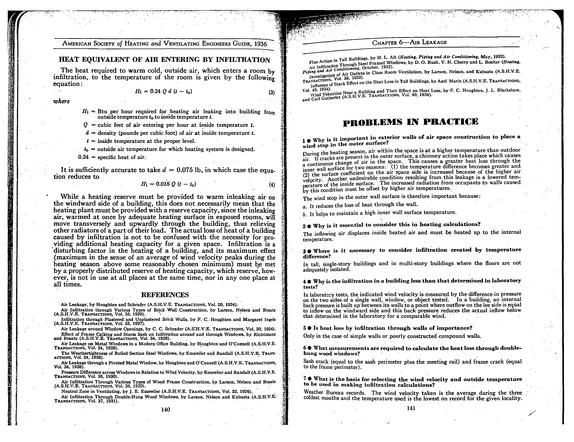
American Society of Heating and Ventilating Engineers Guide, 1936 -a HEAT EQUIVALENT OF AIR ENTERING BY INFILTRATION The heat required to warm cold, outside air, which enters a room by infiltration, to the temperature of the room is given by the following equation: Hi = 0.24 Qd (/ -- t0) (3) where Hi = Btu per hour required for heating air leaking into building from outside temperature t0 to inside temperature t.
refid# NEn4D8Ope4nYe2oG12NYXgoBD1 page
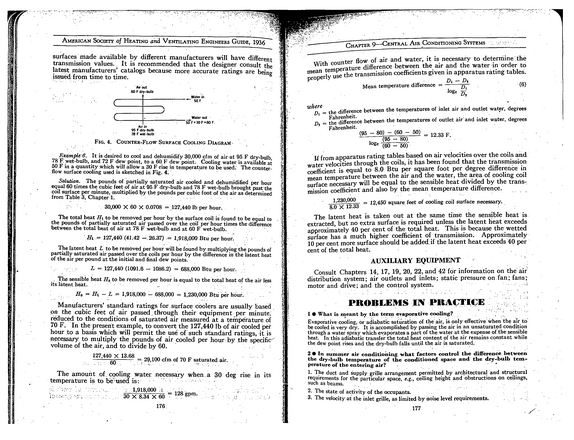
American Society of Heating and Ventilating Engineers Guide, 1936 surfaces made available by different manufacturers will have different transmission values.
refid# J34e205BjxV6pk77oVxLryxR21 page
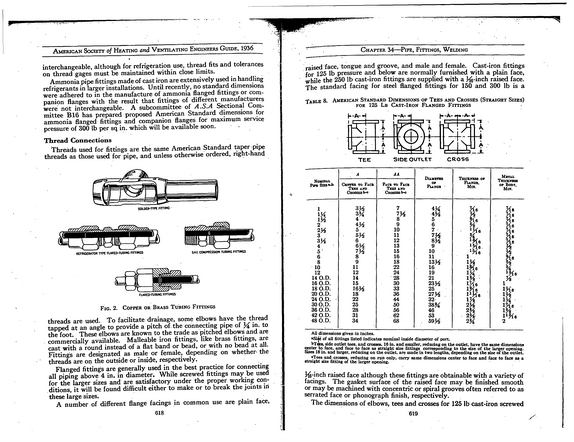
American Society of Heating and Ventilating Engineers Guide, 1936 interchangeable, although for refrigeration use, thread fits and tolerances on thread gages must be maintained within close limits.
refid# 6546GOdbbwd8aX6QKLnxz390R1 page
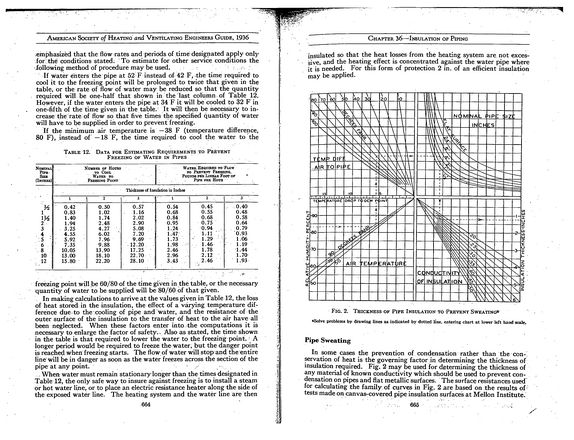
American Society of Heating and Ventilating Engineers Guide, 1936 emphasized that the flow rates and periods of time designated apply only for: the conditions stated; To estimate for other service conditions the following method of procedure may be used. !
refid# 1e6E2Vbje3L6zdB1G266GwY51 page
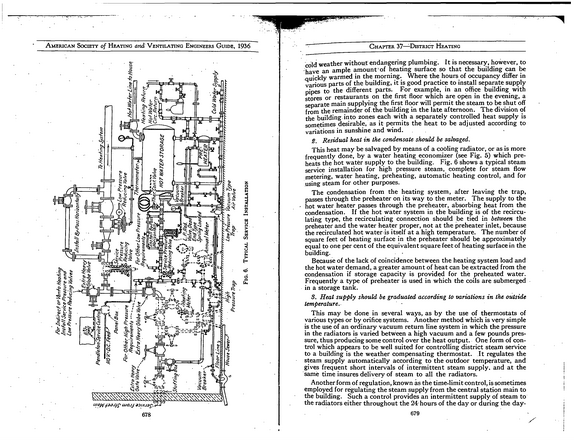
In s ta ll Service Pressure and Low Pressure Reducing Va/ves Fig . 6.
refid# XO4JzyNBNLagRarZ5nybLkmNd1 page
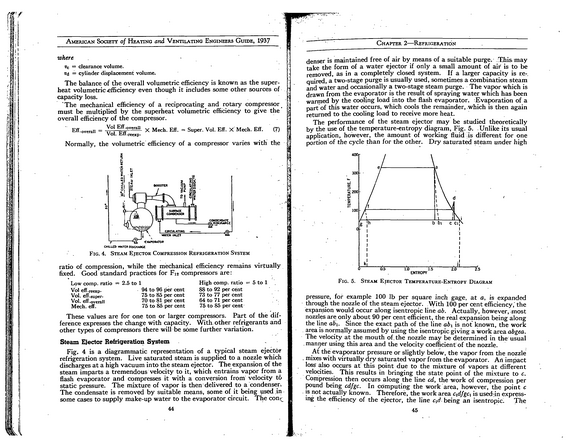
American Society of Heating and Ventilating Engineers Guide, 1937 where c = clearance volume. t>d = cylinder displacement volume.
refid# jyVxdE60LNRpvMMxakxKjEpky1 page
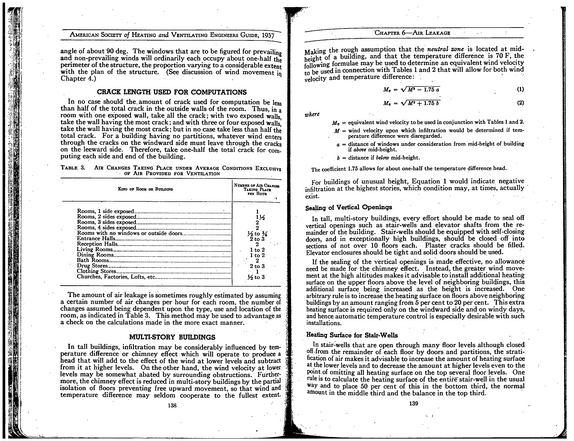
American Society of Heating and Ventilating Engineers Guide, 1937 angle of about 90 deg.
refid# gDvoambMEvdBbvL58RbRqV3Ve1 page
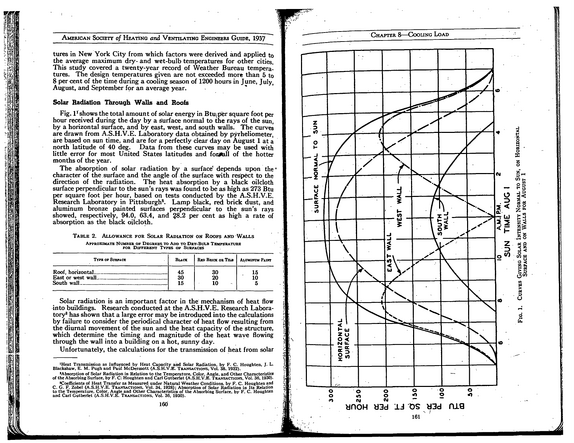
of and 1937American Society Heating Ventilating Engineers Guide, tures in New York City from which factors were derived and applied to the average maximum dry- and wet-bulb temperatures for other cities.
refid# g2BJ9B5JRGdBwQEo0QY84d7ge1 page
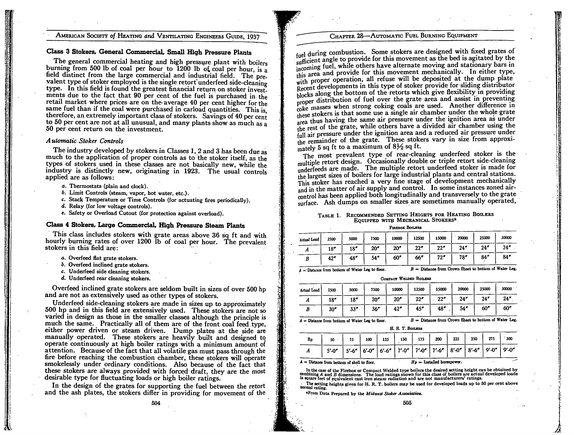
American Society of Heating and Ventilating Engineers Guide, 1937 Class 3 Stokers, General Commercial, Small High Pressure Plants The general commercial heating and high pressure plant with boilers burning from 500 lb of coal per hour to 1200 lb of, coal per hour, is a field distinct from the large commercial and industrial field.
refid# wr3wYKVEmxB8r7Dr6naMYLoGB1 page
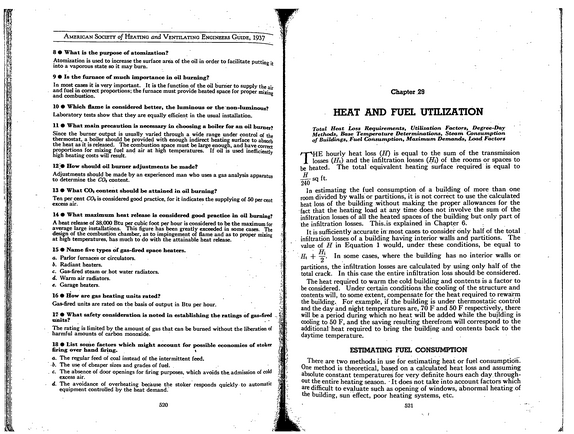
American Society of Heating and Ventilating Engineers Guide, 1937 8 What is the purpose of atomization?
refid# pm93nBE2xpw9XpJK23G2N82aX1 page
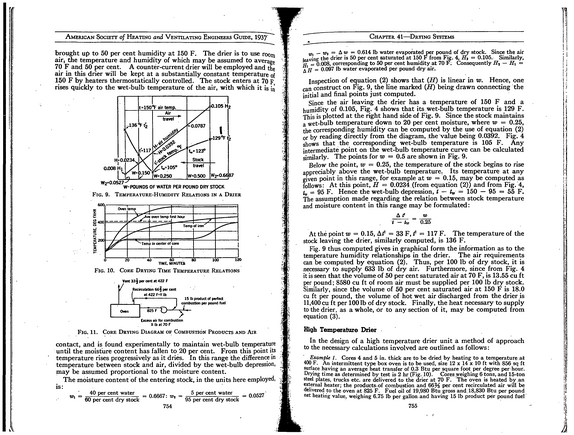
American Society of Heating and Ventilating Engineers Guide, 1937 brought up to 50 per cent humidity at 150 F.
refid# ZBQKZq4wKMzNv2zOq81yR8zpd1 page
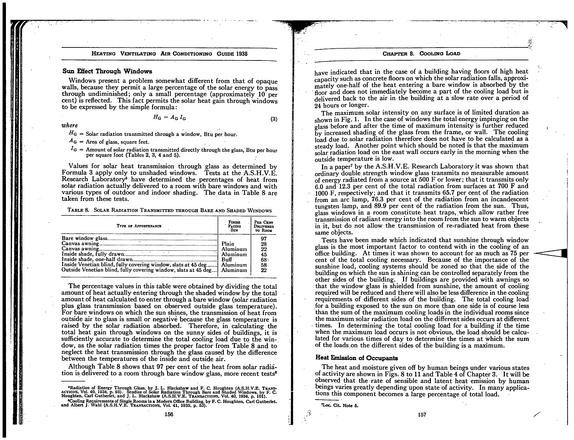
Heating Ventilating Air Conditioning Guide 1938 Sun Effect Through Windows Windows present a problem somewhat different from that of opaque walls, because they permit a large percentage of the solar energy to pass through undiminished; only a small percentage (approximately 10 per cent) is reflected.
refid# jKrvVwZ0n37a8X4vGd2xj1NN1 page
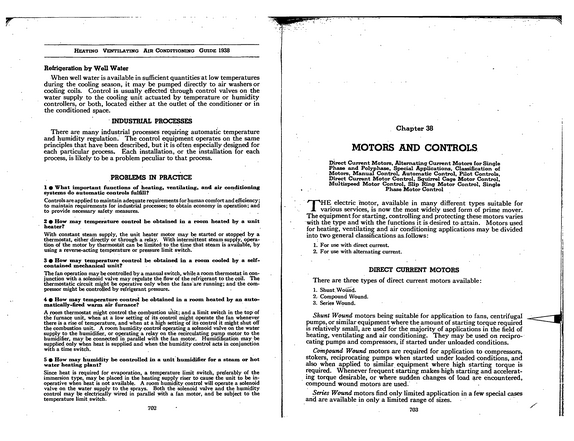
Heating Ventilating Air Conditioning Guide 1938 Refrigeration by Well Water When well water is available in sufficient quantities at low temperatures during the cooling season, it may be pumped directly to air washers or cooling coils.
refid# wgxZykVpRoreqZ6owdQwNOmnJ1 page