Refine
Estimated Years 1930-1939Clear
14,210 results foundRefine Search
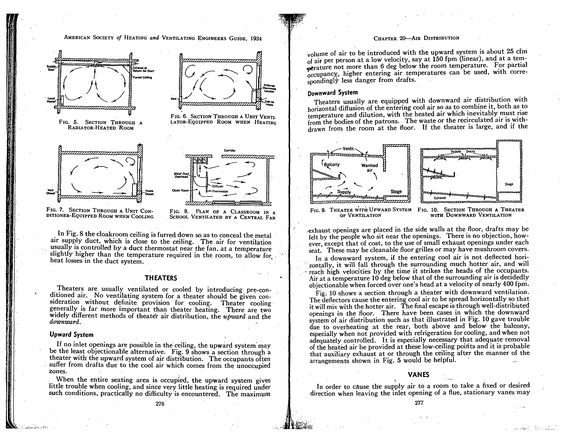
American Society of Heating and Ventilating Engineers Guide, 1934 Fig. 5.
refid# emERMJaYaB1kb9ggDgzykV7Zg1 page
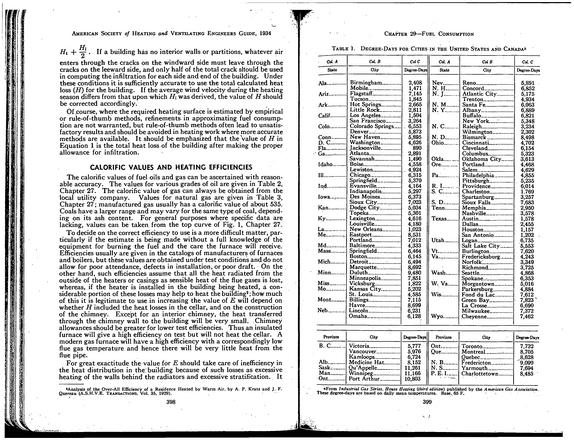
American Society of Heating and Ventilating Engineers Guide, 1934 H 4-Hi Ht + T If a building has no interior walls or partitions, whatever air enters through the cracks on the windward side must leave through the cracks on the leeward side, and only half of the total crack should be used in computing the infiltration for each side and end of the building.
refid# ByrZZxYb8GL3NErwBL0bNy22L1 page
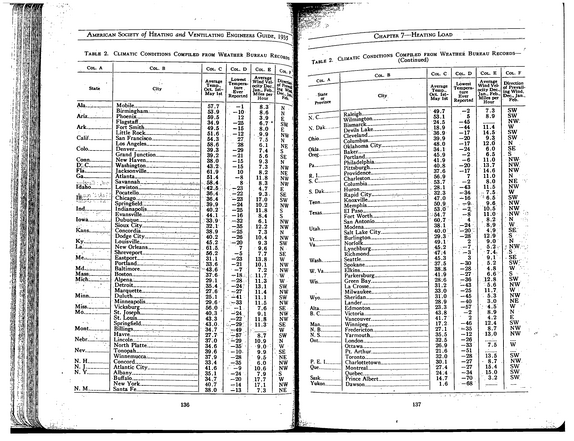
American Society of Heating and Ventilating Engineers Guide, 1935' Table 2.
refid# 4agJRra00M2qDBw1beL300yqe1 page
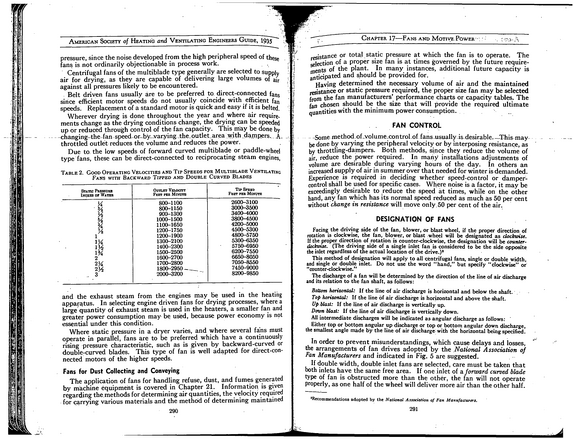
American Society of Heating and Ventilating Engineers Guide, 1935 pressure, since the noise developed from the high peripheral speed of these fans is not ordinarily objectionable in process work.
refid# wDayN3qvL3dgQMYJ93MYEM2y61 page
American Society of Heating and Ventilating Engineers Guide7i935-- 2.
refid# omZyaKgvJpb9pKXrMRoLDzn4g1 page
American Society of Heating and Ventilating Engineers Guide, 1935 Chapter 26 -Chimneys and Draft Calculations chimney sizes based only on boiler horsepowers.
refid# LpneexRLwmK49wDZQOVnYwqzb1 page
of andAmerican Society Heating Ventilating Engineers Guide, 1935 easily and burn freely; the length of flame varies with different coals, but it is long.
refid# X8zk7Y3BYXemyjbQ2oVd69Mxd1 page
and Engineers Guide, 1935 Table 3.
refid# wD9zR5dV9dM3dNRqErQgKyD2o1 page
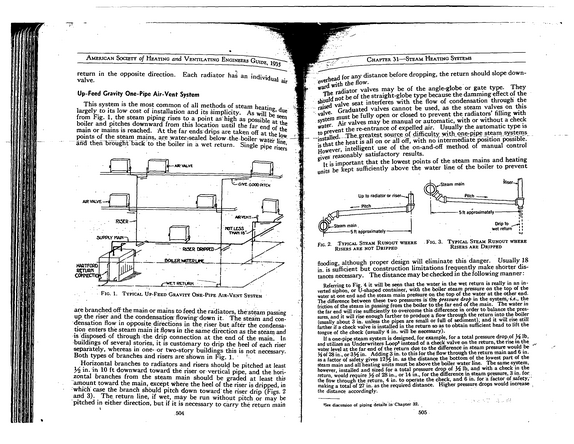
American Society of Heating and Ventilating Engineers Guidi ^1935 return in the opposite direction.
refid# yrqp7QN1a1q3oR6L2DNqb4qD31 page
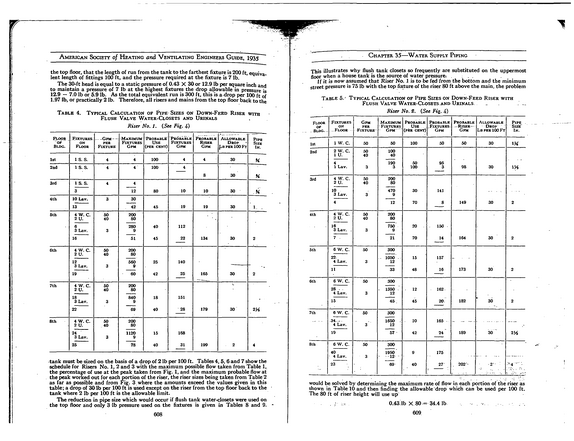
American Society of Heating and Ventilating Engineers Guide, 1935 the top floor, that the length of run from the tank to the farthest fixture is 200 ft, equiva lent length of fittings 100 ft, and the pressure required at the fixture is 7 lb.
refid# raVaJkrBoqpKBYB7nvNN1G6V1 page
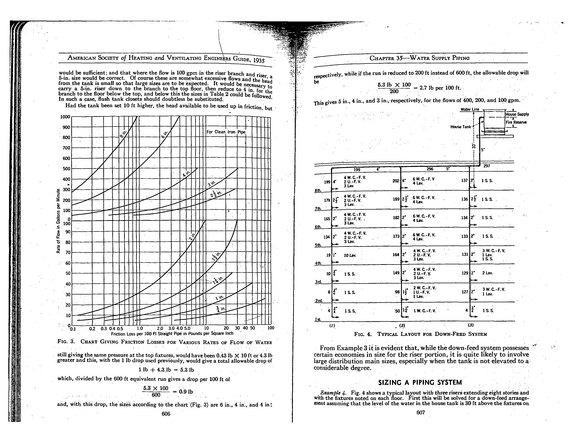
American Society of Heating and Ventilating Engineers Guide, 1935 would be sufficient; and that where the flow is 100 gpm in the riser branch and rise 5-in. size would be correct.
refid# zdYp4q9xvVkdjmwYjyVQj1OQ71 page
American Society of Heating and Ventilating Engineers Guide, 1935 Hoyt.
refid# b52gJ4ELnx080djM3Zgz6oM9D1 page
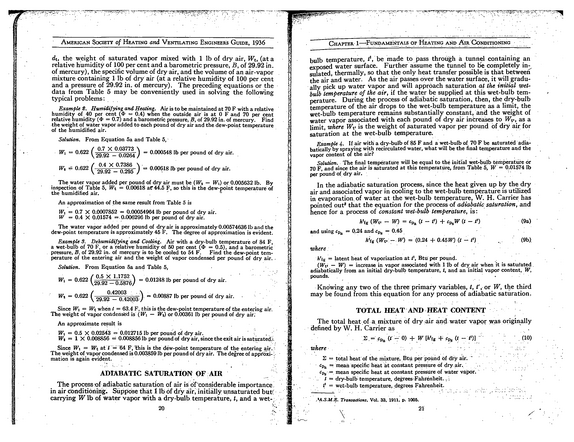
American Society of Heating and Ventilating Engineers Guide, 1936 dt, the weight of saturated vapor mixed with 1 lb of dry air, Wt, (at a relative humidity of 100 per cent and a barometric pressure, B, of 29.92 in. of mercury), the specific volume of dry air, and the volume of an air-vapor mixture containing 1 lb of dry air (at a relative humidity of 100 per cent and a pressure of 29.92 in. of mercury).
refid# ZB7wOdR5Ga8MVLgnMwVj48NZL1 page
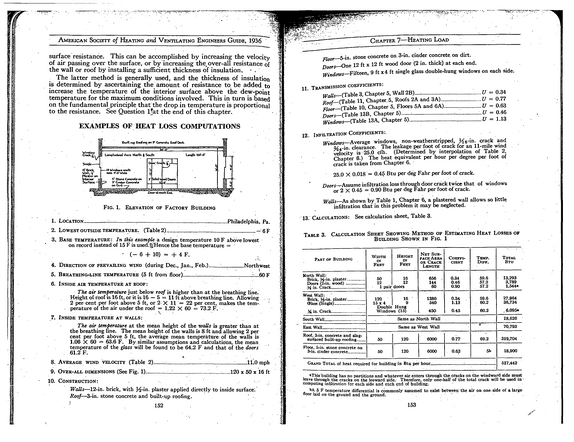
American Society of Heating and Ventilating Engineers Guide, 1936 surface resistance.
refid# 315jEQR3yebbRoEYdapy3mZ31 page
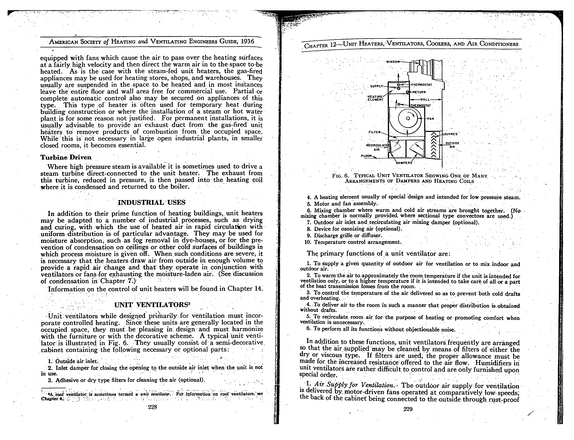
American Society of Heating and Ventilating Engineers Guide, 1936 equipped with fans which cause the air to pass over the heating surfaces at a fairly high velocity and then direct the warm air in to the space to-be heated.
refid# 3bkoopw8gwpeegZ5N3xrmmja1 page