Refine
Estimated Years 1930-1939Clear
8,921 results foundRefine Search
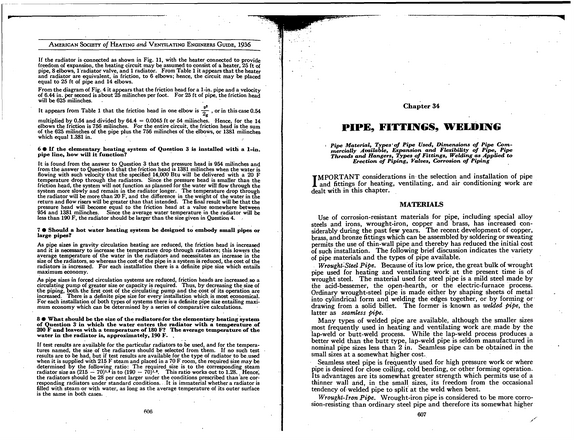
w American Society of Heating and Ventilating Engineers Guide, 1936 If the radiator is connected as shown in Fig. 11, with the heater connected to provide freedom of expansion, the heating circuit may be assumed to consist of a heater, 25 ft of pipe, 8 elbows, 1 radiator valve, and 1 radiator.
refid# 3J0QY19q87NzLo9krrBDR2k101 page
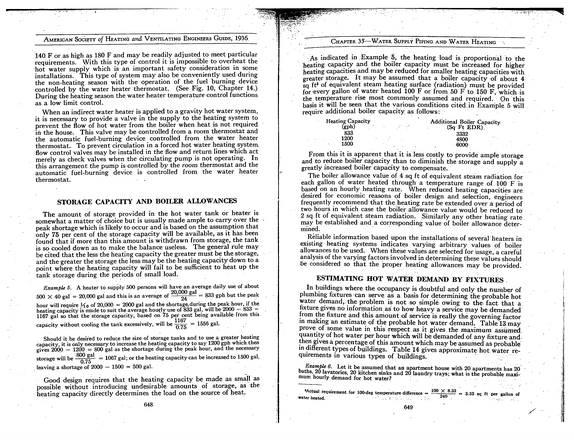
American Society of Heating and Ventilating Engineers Guide, 1936 140 F or as high as 180 F and may be readily adjusted to meet particular requirements.
refid# wqge9zamMNBnq9zDyk5yr15KE1 page
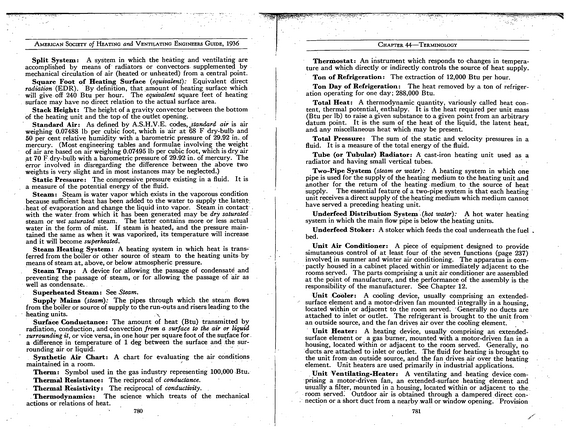
American Society of Heating and Ventilating Engineers Guide, 1936 Split System: A system in which the heating and ventilating are accomplished by means of radiators or convectors supplemented by mechanical circulation of air (heated or unheated) from a central point.
refid# aBv6bb5jv5jLOpE3zxNe5VX1e1 page
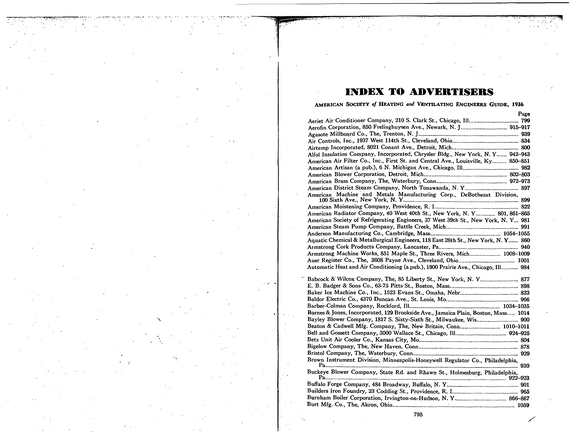
INDEX TO ADVERTISERS American Society of Heating and Ventilating Engineers Guide, 1936 Page Aeriet Air Conditioner Company, 210 S.
refid# YryxJKDN7D7RBmye05yXe7mpV1 page
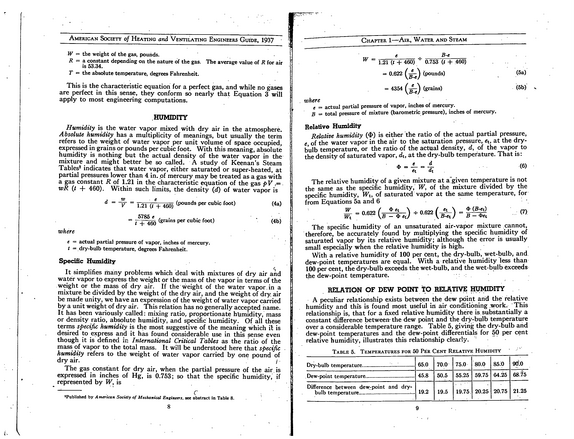
American Society of Heating and Ventilating Engineers Guide, 1937 W = the weight of the gas, pounds.
refid# 6BzrQjBm1xqKNk9awQezRG9pm1 page
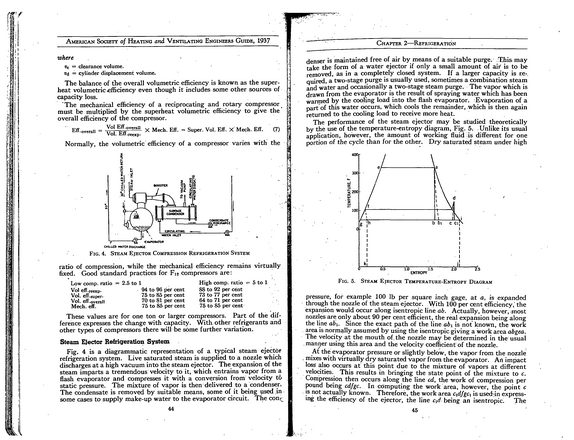
American Society of Heating and Ventilating Engineers Guide, 1937 where c = clearance volume. t>d = cylinder displacement volume.
refid# jyVxdE60LNRpvMMxakxKjEpky1 page
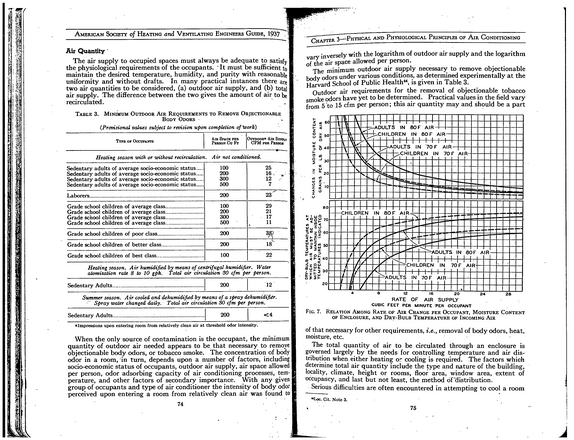
1937 .American Society of Heating and Ventilating Engineers Guide, Aii Quantity' The air supply to occupied spaces must always be adequate to satisfy the physiological requirements of the occupants. " It must be sufficient to maintain the desired temperature, humidity, and purity with reasonable uniformity and without drafts.
refid# X7rYZM0ob9Q4jp59Jz5xVM7kw1 page
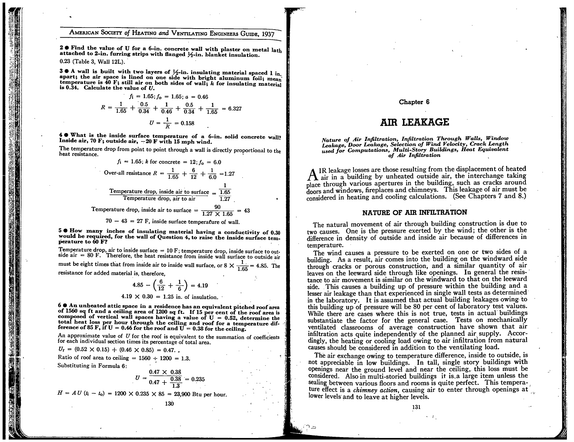
American Society of Heating and Ventilating Engineers Guide, 1937 2 0 Find the value of U for a 6-in. concrete wall with plaster on metal lath attached to 2-in. furring strips with flanged blanket insulation. 0.23 (Table 3, Wall 12L). 3 # A wall is built with two layers of J^-in. insulating material spaced 1 in apart; the air space is lined on one side with bright aluminum foil; mean' ktemperature is 40 F; still air on both sides of wall; for insulating material is 0.34.
refid# B81JNvOB6Xd0qN3dz1N7M93Q81 page
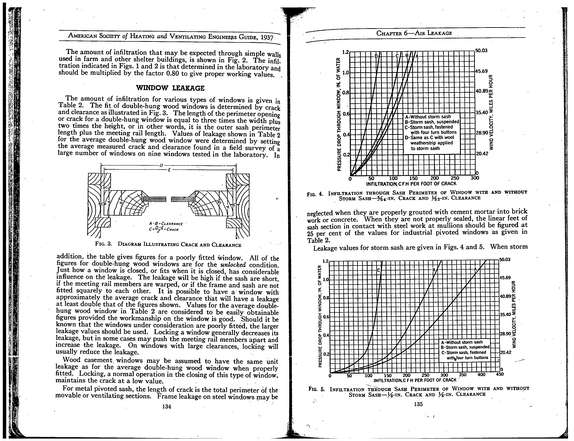
American Society of Heating and Ventilating Engineers Guide, 1937 The amount of infiltration that may be expected through simple walls used in farm and other shelter buildings, is shown in Fig. 2.
refid# G6jVM0yjLJO1wdMBD0nvZQOq1 page
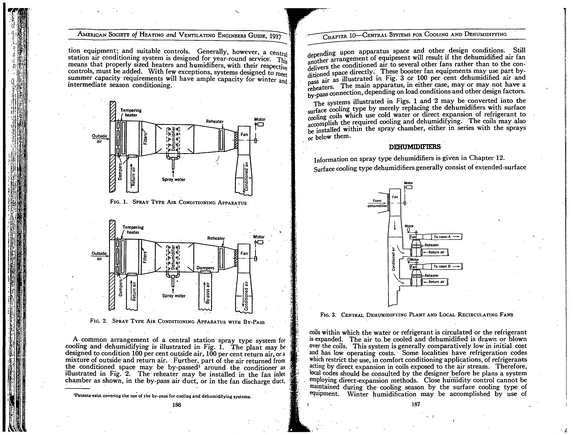
American Society of Heating and Ventilating Engineers Guide, 1937'" 1 tion equipment^ and suitable controls.
refid# xjpMrQwkvmMgRq6M0LbEDnmYb1 page
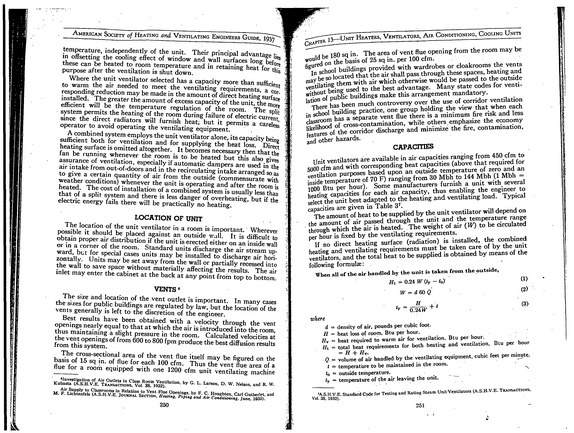
of and 1937American Society Heating Ventilating Engineers Guide, ^ temperature, independently of the unit.
refid# 7RnXaLaLZqxVR8Z4ONrpVXBXg1 page
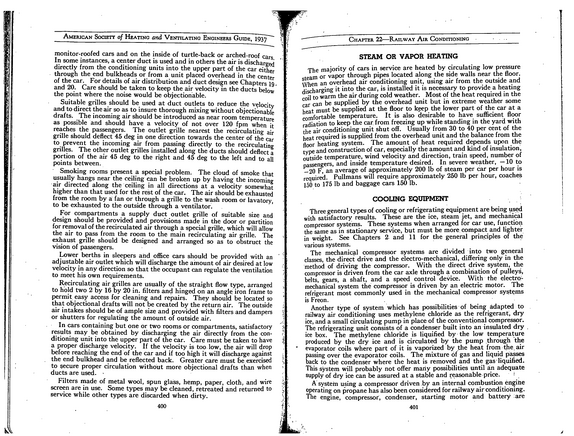
--------- --------------------------------------------------------------------------------------------------------- .--_ ^ ^$ American Society of Heating and Ventilating Engineers Guide, 1937 $ monitor-roofed cars and on the inside of turtle-back or arched-roof cars In some instances, a center duct is used and in others the air is discharged directly from the conditioning units into the upper part of the car either through the end bulkheads or from a unit placed overhead in the center of the car.
refid# yrKbDNxEDMMOQo1nDkV9Np6nE1 page
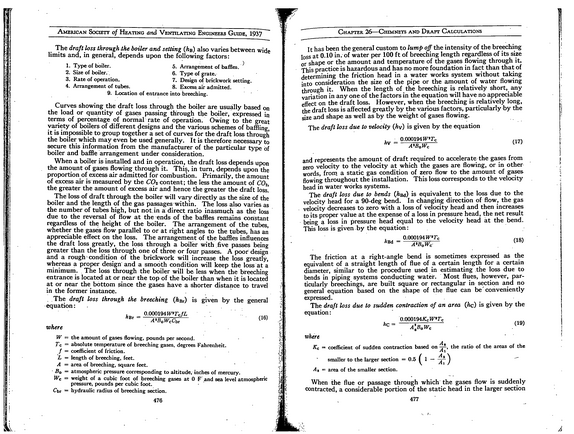
American Society of Heating and Ventilating Engineers Guide, 1937 The draft loss through the boiler and setting (hs) also varies between wide limits and, in general, depends upon the following factors: 1.
refid# 5kky4QB2dYY1YmyqpQxOOXK201 page
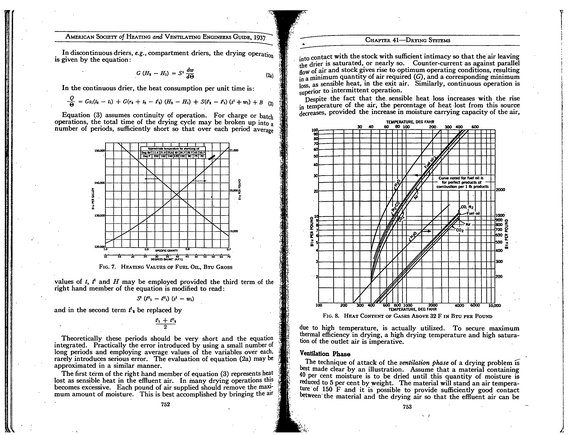
American Society of Heating and Ventilating Engineers Guide, 1937 In discontinuous driers, e.g., compartment driers, the drying operation is given by the equation: (2a) In the continuous drier, the heat consumption per unit time is: 91 -g" = Gsi(tt -- h) + G(rs + h -- (flj -- Hi) + S(t'j -- <'i) (51 + v>i) + B (3) | | Equation (3) assumes continuity of operation.
refid# RpvgV05JGZDVmEExp0QxwoV2a1 page
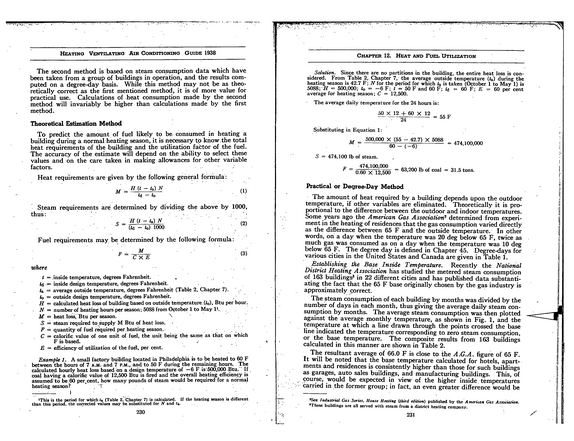
Heating Ventilating Air Conditioning Guide 1938 The second method is based on steam consumption data which have been taken from a group of buildings in operation, and the results com puted on a degree-day basis.
refid# 531XRw9mxQjNveYJd95261ZR1 page