Refine
Estimated Years 1930-1939Clear
8,921 results foundRefine Search
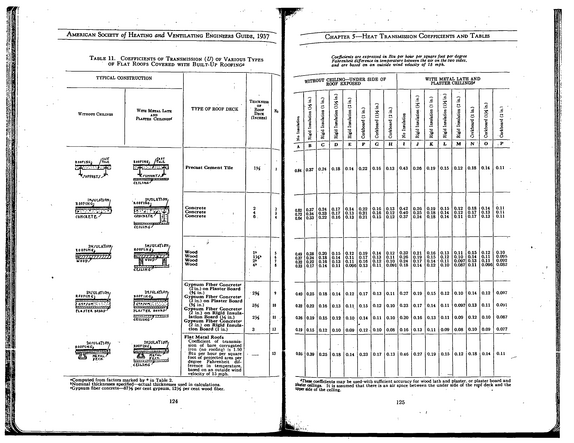
American Society of Heating and Ventilating Engineers Guide, 1937 Chapter 5--Heat Transmission Coefficients and Tables Table 11.
refid# aJQL8Lax3BkJn8vBpaBgB7g9a1 page
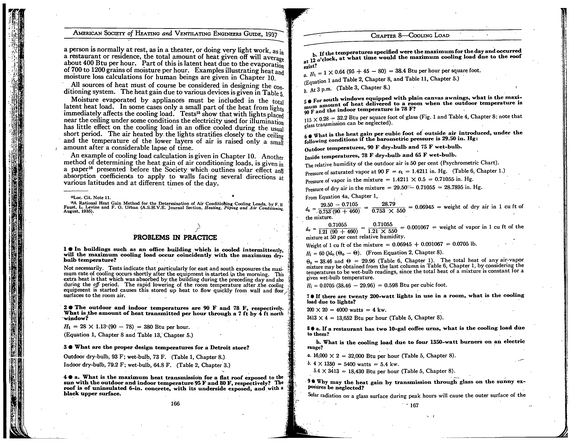
American Society of Heating and Ventilating Engineers Guide, 1937 a person is normally at rest, as in a theater, or doing very light work, as in a restaurant or residence, the total amount of heat given off will average about 400 Btu per hour.
refid# 3N9G2X0k2KNj8jJgG2949mZ31 page
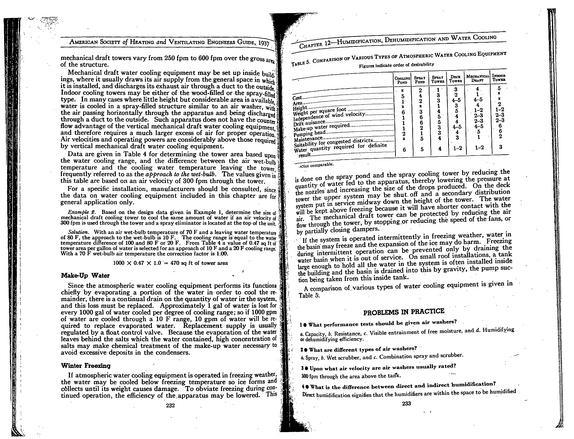
American Society of Heating and Ventilating Engineers Guide, 1937' mechanical draft towers vary from 250 fpm to 600 fpm over the gross area of the structure. ** Mechanical draft water cooling equipment may be set up inside ings, where it usually draws its air supply from the general space in whirt | it is installed, and discharges its exhaust air through a duct to the outsi(je I IIndoor cooling towers may be either of the wood-filled or the spray-fil^ type.
refid# rxwByEm5emgVEokMk1k3q9akv1 page
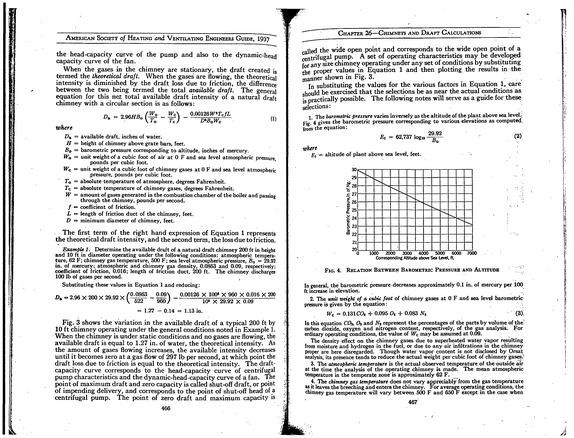
American Society of Heating and Ventilating Engineers Guide, 1937 the head-capacity curve of the pump and also to the dynamic-head capacity curve of the fan.
refid# O3YojM1GJq5jQY667kEbnLL7j1 page
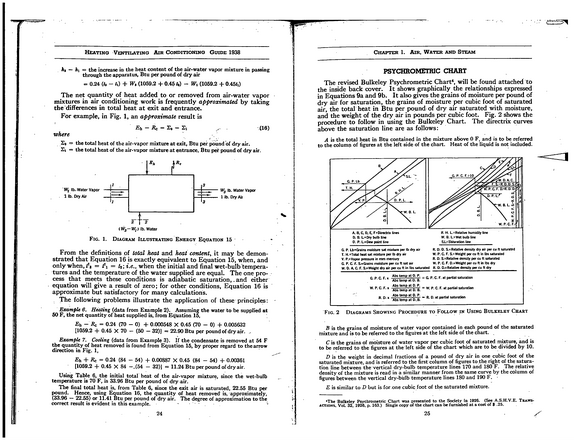
Heating Ventilating Air Conditioning Guide 1938 ht -- A, = the increase in the heat content of the air-water vapor mixture in passing through the apparatus, Btu per pound of dry air = 0.24 (/, - /,) + W, (1059.2 + 0.451,) - Wt (1059.2 + 0.451,) The net quantity of heat added to or removed from air-water vapor mixtures in air conditioning work is frequently approximated by taking the differences in total heat at exit and entrance.
refid# ppY3Jvje4OKkLB8eBkEpBemDk1 page
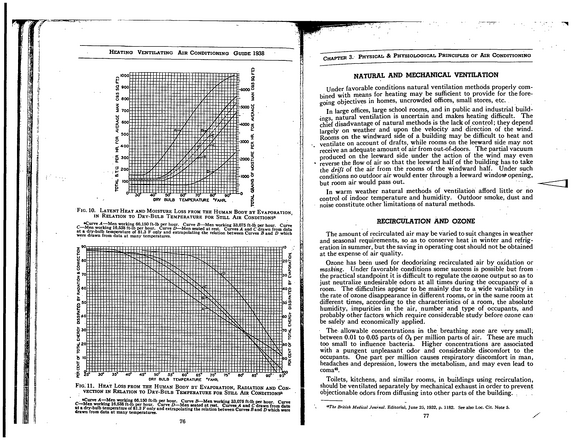
Heating Ventilating Air Conditioning Guide 1938 Fig. 10.
refid# nmnKZwjbvkoY5dJvkZGqBGzeX1 page
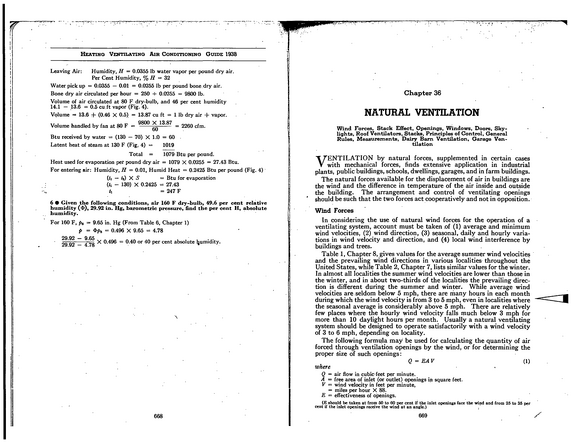
Heating Ventilating Air Conditioning Guide 1938 Leaving Air: Humidity, H = 0.0355 lb water vapor per pound dry air.
refid# 8VeeZRxXva2kMk05z5NxXbgea1 page
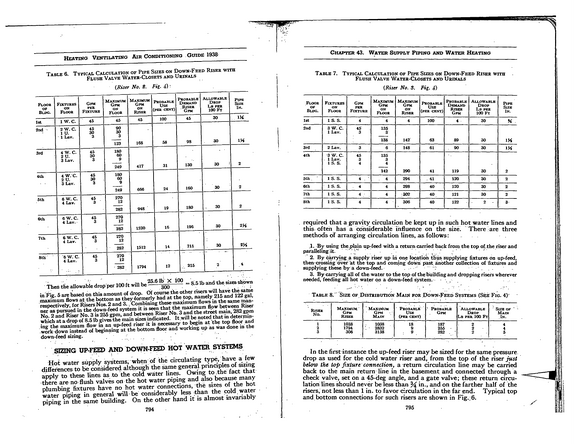
Heating Ventilating Air Conditioning Guide 1938 Table 6.
refid# NEdN7GD2kVq1KREGZ1orvDwDE1 page
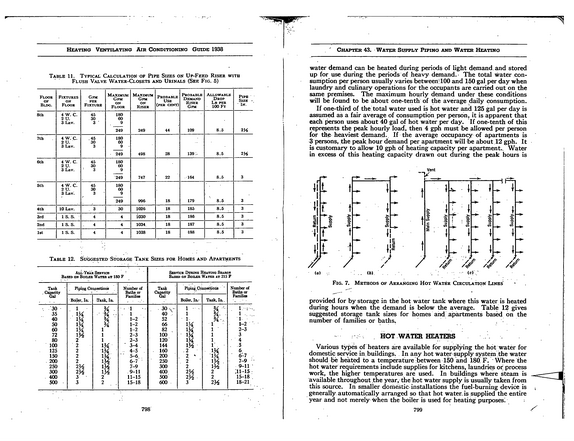
Heating Ventilating Air Conditioning Guide 1938 Table 11.
refid# 7M8qJEqD68r2QR79ZE85gRJ161 page
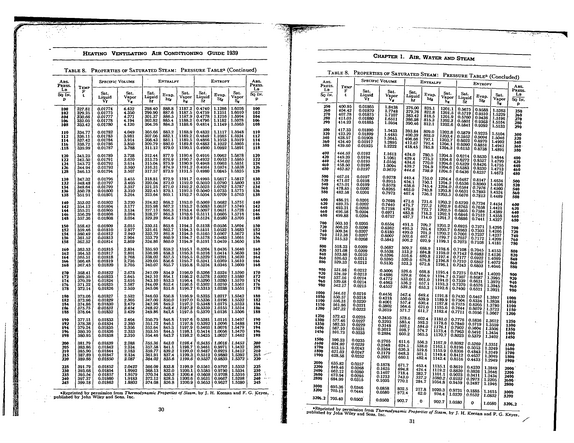
Heating Ventilating Air Conditioning Guide 1939 Table 8.
refid# 3JGxvjGjb480m3y28Lb0nYwxE1 page
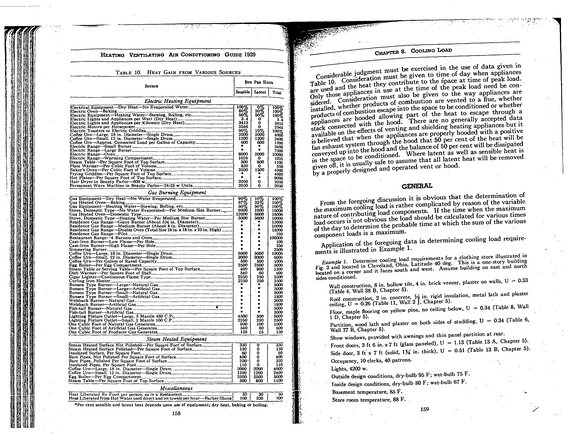
Heating Ventilating Air Conditioning Guide 1939 Table 10.
refid# pBgNkJzo4jaVGeDnykam6aOKD1 page
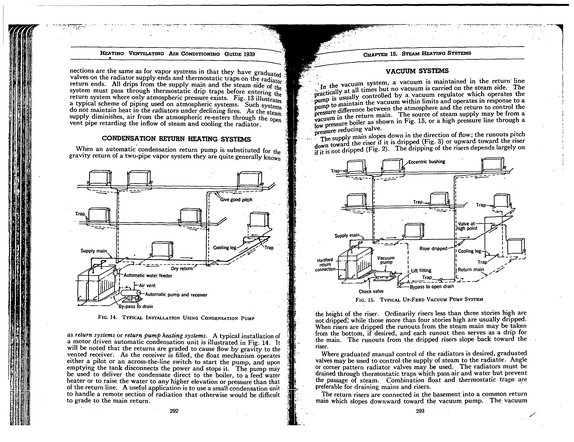
Heating Ventilating Air Conditioning Guide 1939 nections are the same as for vapor systems in that they have graduated valves on the radiator supply ends and thermostatic traps on the radiator return ends.
refid# YDX2G0oE3wVdy3ze0kBQbvQNO1 page
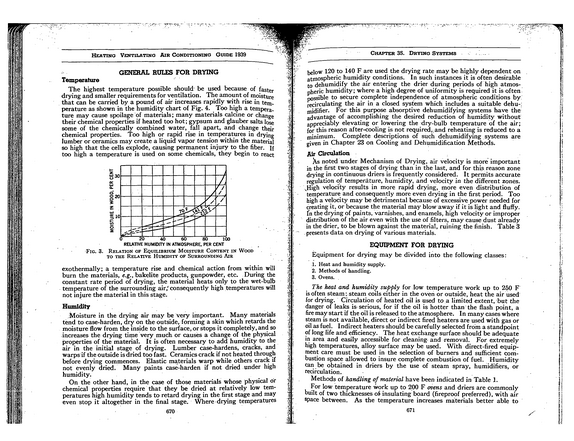
Heating Ventilating Air Conditioning Guide 1939 Temperature GENERAL RULES FOR DRYING The highest temperature possible should' be used because of faster drying and smaller requirements for ventilation.
refid# k63gOgDL7njXDQve31RXkZwkb1 page
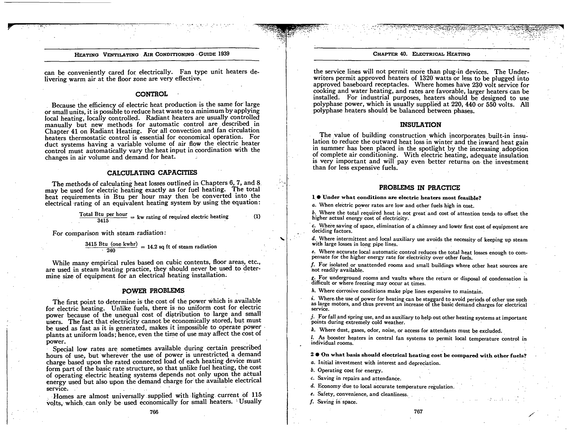
Heating Ventilating Air Conditioning Guide 1939 can be conveniently cared for electrically.
refid# JEY2MbBaMe5qQK8Nr5nBO06e1 page
Heating Ventilating Air Conditioning Guide 1939 Brownell Company, 2104 Burnham Boiler Corp., 942-943 Crane Co., 944-945 General Electric Company, 908- 909, 1044-1045 National Pipe Bending Co., 988 HEATERS, Tank American District Steam Co.. 966, 1039 American Gas Products Div., American Radiator Co., 900, 951 American Radiator Co., 898-899, 940-941 .
refid# EdzQJ3rj62M407wOE4jXydzQn1 page