Refine
Estimated Years 1910-1919Clear
1,849 results foundRefine Search
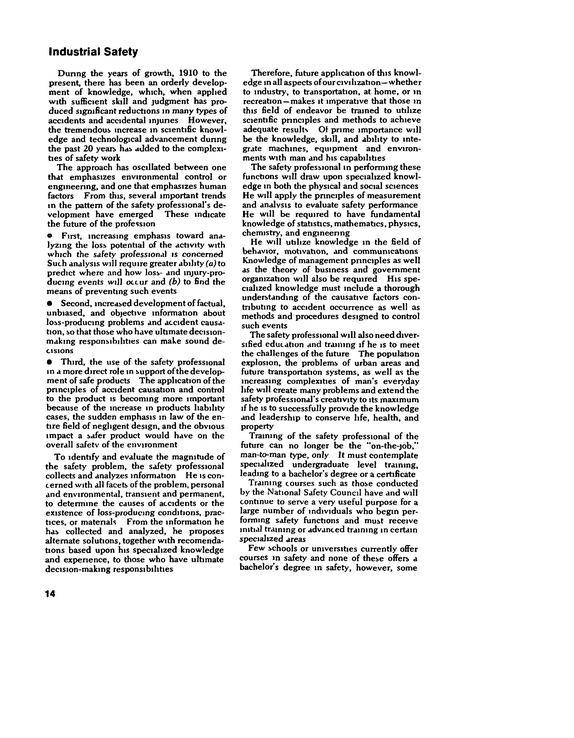
Industrial Safety During the years of growth, 1910 to the present, there has been an orderly develop ment of knowledge, which, when applied with sufficient skill and judgment has pro duced significant reductions in many types of accidents and accidental injuries However, the tremendous increase m scientific knowl edge and technological advancement during the past 20 years has added to the complexi ties of safety work The approach has oscillated between one that emphasizes environmental control or engineering, and one that emphasizes human factors From this, several important trends in the pattern of the safety' professional's de velopment have emerged These indicate the future of the profession o First, increasing emphasis toward ana lyzing the loss potential of the activity with which the safety professional is concerned Such analysis will require greater ability (a) to predict where and how loss- and injury-pro ducing events will occur and (b) to find the means of preventing such events Second, increased development of factual, unbiased, and objective information about loss-producing problems and accident causa tion, so that those who have ultimate decision making responsibilities can make sound de cisions Third, the use of the safety professional m a more direct role in support ofthe develop ment of safe products The application of the principles of accident causation and control to the product is becoming more important because of the increase in products liability cases, the sudden emphasis m law of the en tire field of negligent design, and the obvious impact a safer product would have on the overall safety of the environment To identify and evaluate the magnitude of the safety problem, the safety professional collects and analyzes information He is con cerned with all facets of the problem, personal and environmental, transient and permanent, to determine the causes of accidents or the existence of loss-producing conditions, prac tices, or materials From the information he has collected and analyzed, he proposes alternate solutions, together with recomendations based upon his specialized knowledge and experience, to those who have ultimate decision-making responsibilities Therefore, future application of this knowl edge in all aspects ofour civilization--whether to industry, to transportation, at home, or m recreation -- makes it imperative that those m this field of endeavor be trained to utilize scientific principles and methods to achieve adequate results Of prime importance will be the knowledge, skill, and ability to inte grate machines, equipment and environ ments with man and his capabilities The safety professional in performing these functions will draw upon specialized knowl edge in both the physical and social sciences He will apply the principles of measurement and analysis to evaluate safety performance He will be required to have fundamental knowledge of statistics, mathematics, physics, chemistry, and engineenng He will utilize knowledge in the field of behavior, motivation, and communications Knowledge of management principles as well as the theory of business and government organization will also be required His spe cialized knowledge must include a thorough understanding of the causative factors con tributing to accident occurrence as well as methods and procedures designed to control such events The safety professional will also need diver sified education and training if he is to meet the challenges of the future The population explosion, the problems of urban areas and future transportation systems, as well as the increasing complexities of man's everyday life will create many problems and extend the safety professional's creativity to its maximum if he is to successfully provide the knowledge and leadership to conserve life, health, and property Training of the safety professional of the future can no longer be the "on-the-job," man-to-man type, only ft must contemplate specialized undergraduate level training, leading to a bachelor's degree or a certificate Training courses such as those conducted by the National Safety Council have and will continue to serve a very useful purpose for a large number of individuals who begin per forming safety functions and must receive initial training or advanced training in certain specialized areas Few schools or universities currently offer courses in safety and none of these offers a bachelor's degree in safety, however, some 14
refid# r6EbzM4vjke7Qqwk6r19m0BD01 page
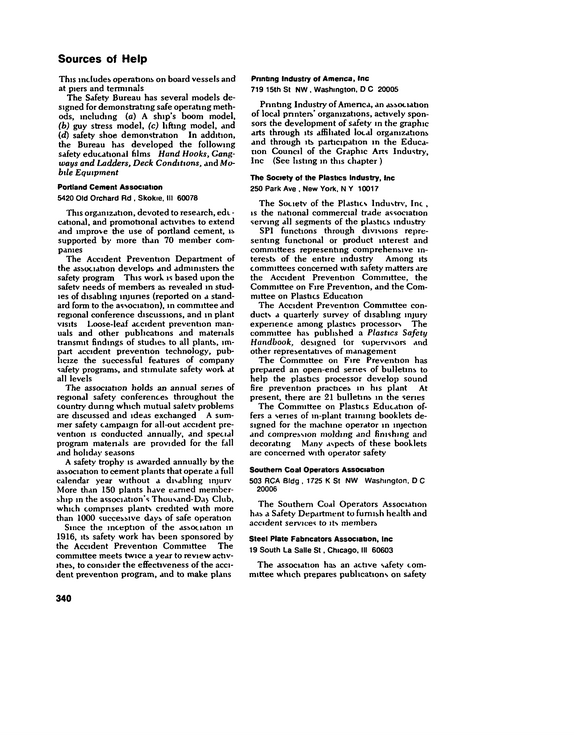
Sources of Help This includes operations on board vessels and at piers and terminals The Safety Bureau has several models de signed for demonstrating safe operating meth ods, including (a) A ship's boom model, (b) guy stress model, (c) lifting model, and (d) safety shoe demonstration In addition, the Bureau has developed the following safety educational hlms Hand Hooks, Gang ways and Ladders, Deck Conditions, and Mo bile Equipment Portland Cement Association 5420 Old Orchard Rd , Skokie.
refid# 3QJ120J1EKjaYjJVEqjn8MQQn1 page
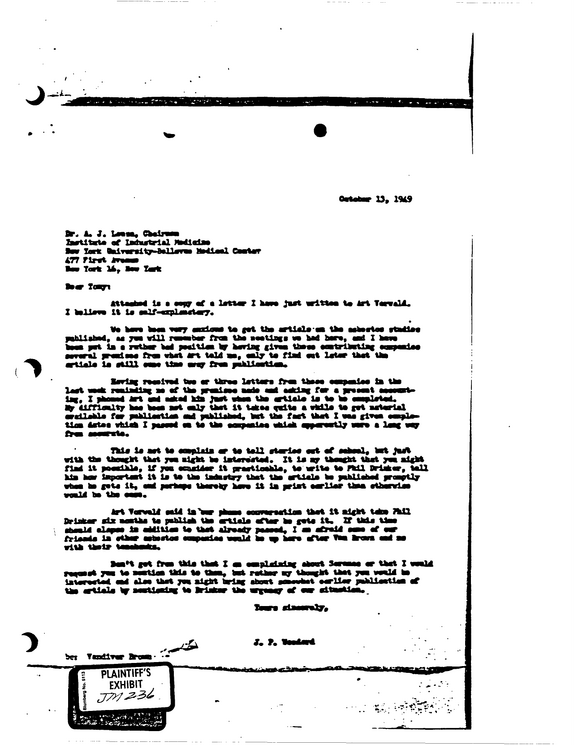
Oat to-- 13, 1919 Br. i.
refid# 6R5Nj61Zbp2amqMNB6mvj9Z0m1 page
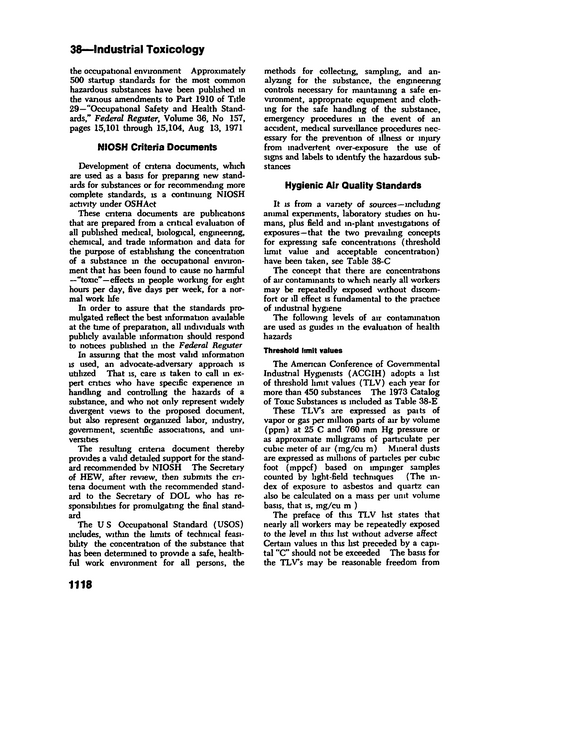
38--Industrial Toxicology the occupational environment Approximately 500 startup standards for the most common hazardous substances have been published in the various amendments to Part 1910 of Title 29--"Occupational Safety and Health Stand ards," Federal Register, Volume 36, No 157, pages 15,101 through 15,104, Aug 13, 1971 NIOSH Criteria Documents Development of cntena documents, which are used as a basis for preparing new stand ards for substances or for recommending more complete standards, is a continuing NIOSH activity under OSHAct These cntena documents are publications that are prepared from a cntical evaluation of all published medical, biological, engineenng, chemical, and trade information and data for the purpose of establishing the concentration of a substance in the occupational environ ment that has been found to cause no harmful --"toxic"--effects m people working for eight hours per day, five days per week, for a nor mal work life In order to assure that the standards pro mulgated reflect the best information available at the time of preparation, all individuals with publicly available information should respond to notices published in the Federal Register In assuring that the most valid information is used, an advocate-adversary approach is utilized That is, care is taken to call m ex pert cntics who have specific experience in handling and controlling the hazards of a substance, and who not only represent widely divergent views to the proposed document, but also represent organized labor, industry, government, scientific associations, and uni versities The resulting cntena document thereby provides a valid detailed support for the stand ard recommended by NIOSH The Secretary of HEW, after review, then submits the cn tena document with the recommended stand ard to the Secretary of DOL who has re sponsibilities for promulgating the final stand ard The US Occupational Standard (USOS) includes, within the limits of technical feasi bility the concentration of the substance that has been determined to provide a safe, health ful work environment for all persons, the 1118 methods for collecting, sampling, and an alyzing for the substance, the engineenng controls necessary for maintaining a safe en vironment, appropnate equipment and cloth ing for the safe handling of the substance, emergency procedures in the event of an accident, medical surveillance procedures nec essary for the prevention of illness or injury from inadvertent over-exposure the use of signs and labels to identify the hazardous sub stances Hygienic Air Quality Standards It is from a variety of sources--including animal experiments, laboratory studies on hu mans, plus field and m-plant investigations of exposures--that the two prevailing concepts for expressing safe concentrations (threshold limit value and acceptable concentration) have been taken, see Table 38-C The concept that there are concentrations of air contaminants to which nearly all workers may be repeatedly exposed without discom fort or ill effect is fundamental to the practice of industrial hygiene The following levels of air contamination are used as guides in the evaluation of health hazards Threshold limit values The American Conference of Governmental Industrial Hygienists (ACGIH) adopts a list of threshold limit values (TLV) each year for more than 450 substances The 1973 Catalog of Toxic Substances is included as Table 38-E These TLVs are expressed as paits of vapor or gas per million parts of air by volume (ppm) at 25 C and 760 mm Hg pressure or as approximate milligrams of particulate per cubic meter of air (mg/cu m) Mineral dusts are expressed as millions of particles per cubic foot (mppcf) based on impmger samples counted by light-field techniques (The in dex of exposure to asbestos and quartz can also be calculated on a mass per unit volume basis, that is, mg/cu m ) The preface of this TLV list states that nearly all workers may be repeatedly exposed to the level in this list without adverse affect Certain values m this list preceded by a capi tal "C" should not be exceeded The basis for the TLVs may be reasonable freedom from
refid# n9dOdekaQnR8wmKOx1Jw6vJn21 page
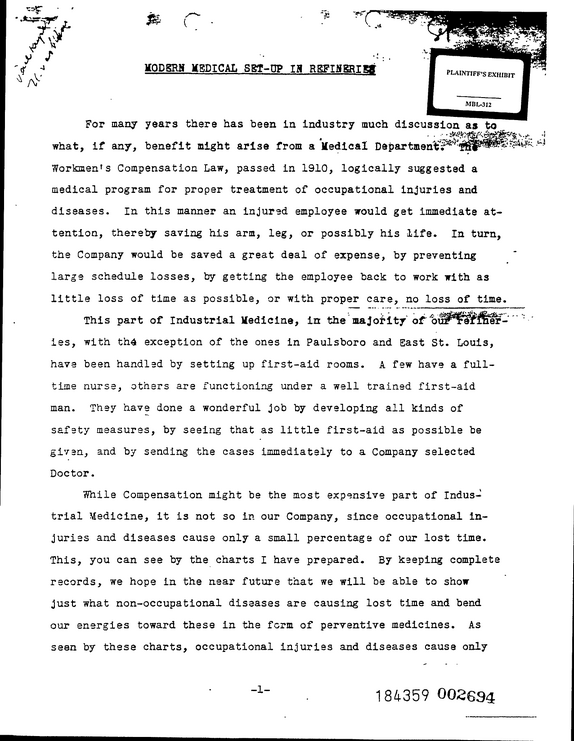
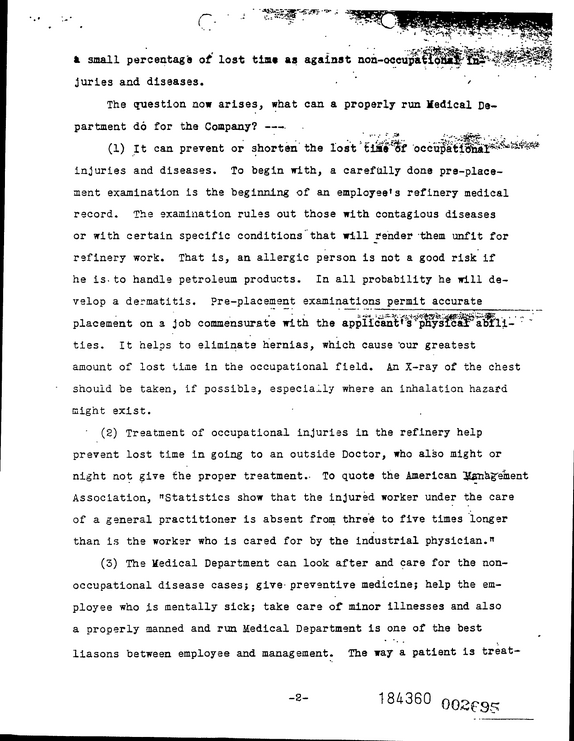
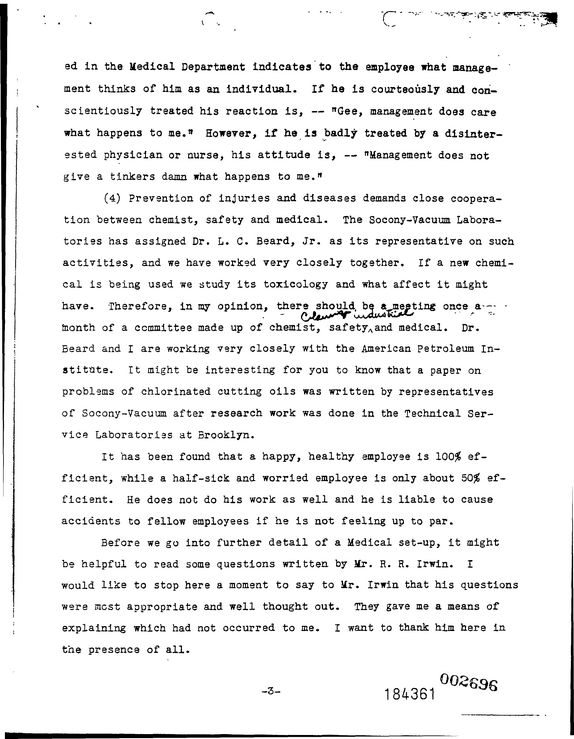
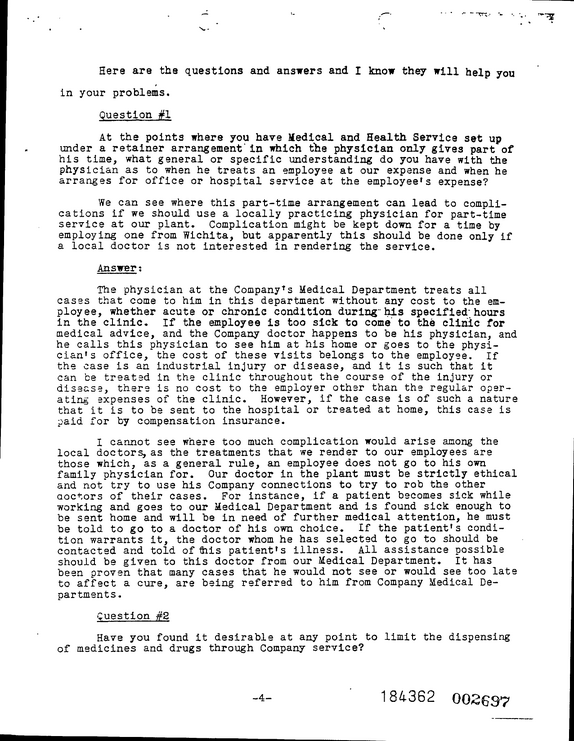
MODBRH MEDICAL SBT-OP IH RE For many years there has been in industry much discussion as to what, if any, benefit might arise from a Medical DapartmenVl^Tw^*^*' Workmen's Compensation Law, passed in 1910, logically suggested a medical program for proper treatment of occupational injuries and diseases.
refid# ypXeGdEwogL9Lvbo52vV6pN6n8 pages
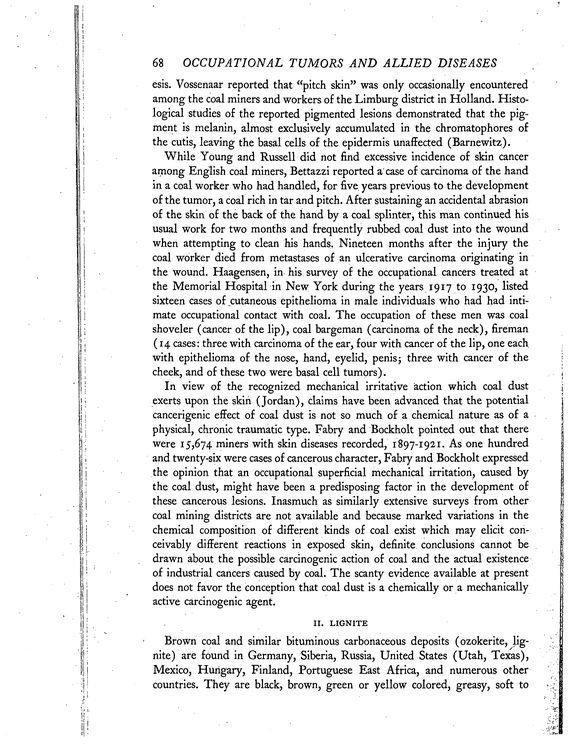
68 OCCUPATIONAL TUMORS AND ALLIED DISEASES esis.
refid# 4J7aqGjd8M8pKpezD5dDEvvwj1 page
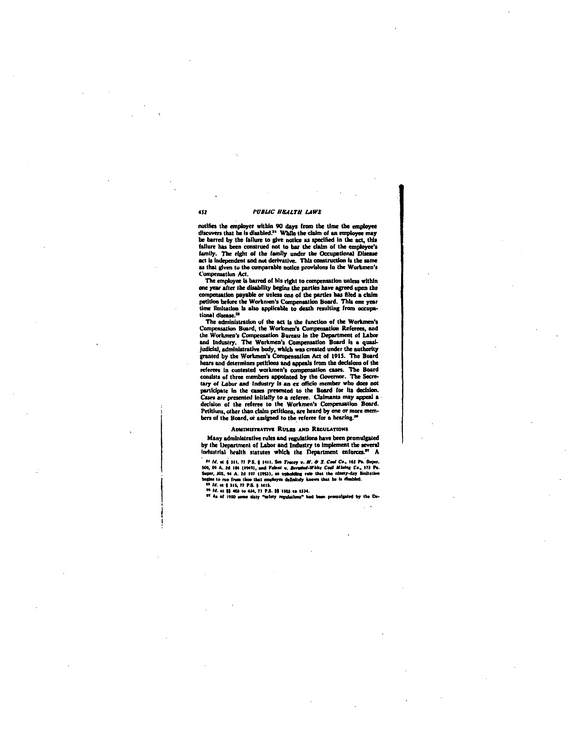
PUBUC H&ALTU LAWS notifies the employer within 90 days from the time the employee discovert that he is disabled.3' While the claim oi an employee may be barred by the (allure to give notice as specified in Urn act, this (allure has been construed not to bar the claim o( the employee's family.
refid# o9q0aoZ17d789wVdMzRyp6oR71 page
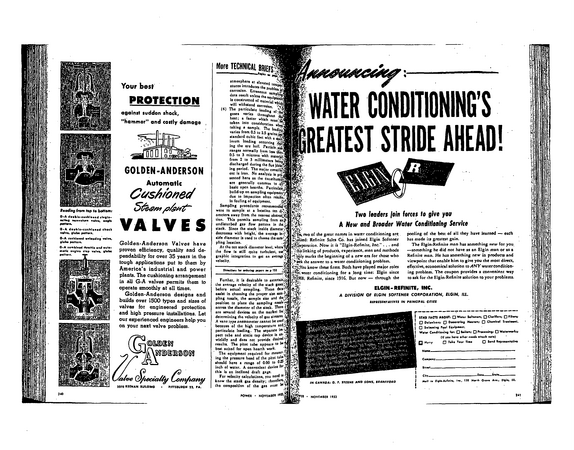
Your best PROTECTION against sudden shock, "hammer" and costly damage GOLDEN-ANDERSON Automatic Cvs/j/oneo/ Rooming from top to bottom; -A ^tlklfieikUaid iloglaMttoQ seiMilum alv., gg)s pattern. 0-A doebl*(uikloHd (heck vmtva, glaba paliwit, 0-A cu.Monad unloading volvo, glaba paHarn. 0-A itnblittd tkrdtlt anil uK< nslk angina ttap volva, glebe pattern.
refid# nk7ao1Na4E9524aog4bXdzV4G1 page
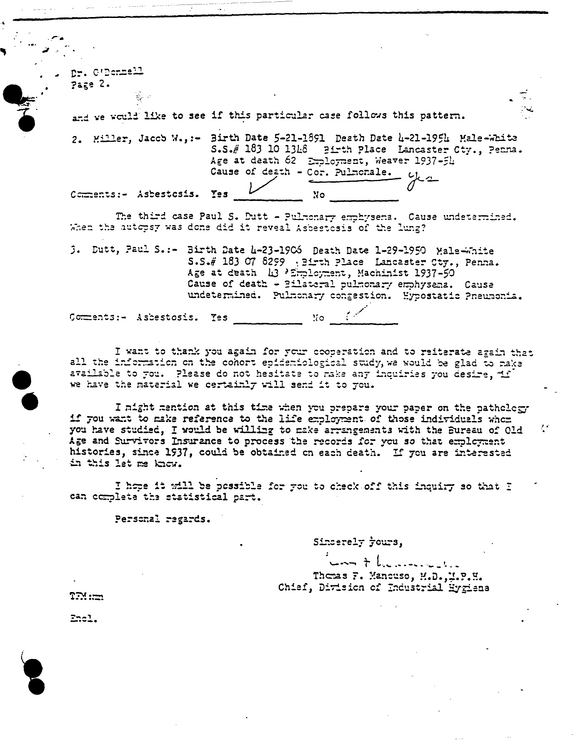
*-i<5 /WAr cc/io r ?
refid# 4aYyD4a2OyxVJM119Nzmea3G2 pages
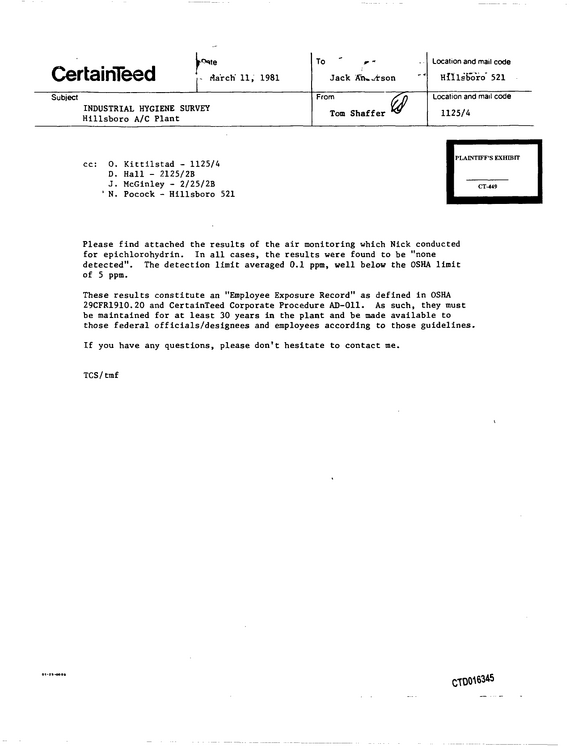
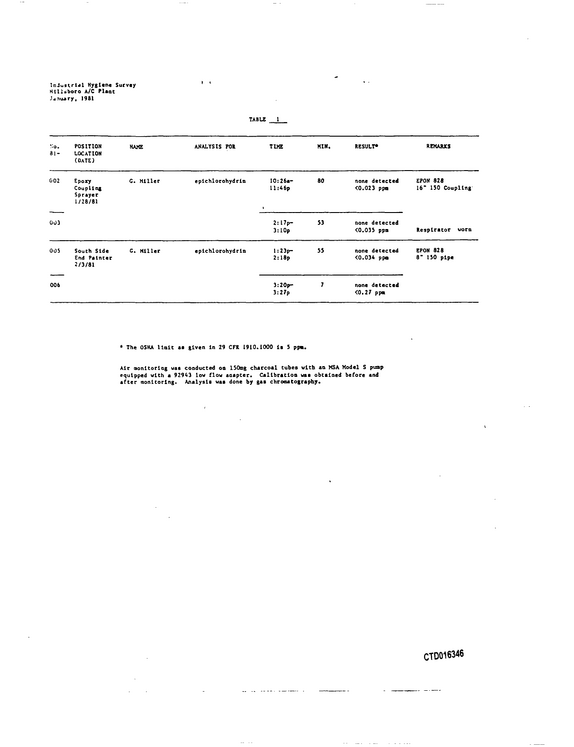
CertainTeed j Subject INDUSTRIAL HYGIENE SURVEY Hillsboro A/C Plant u, mi To ' ir- Jack AtUw'tson QF'" Tom Shaffer **' Location and mail code Hillsboro 521 Location and mail code 1125/4 cc: 0.
refid# 1QqDqxEwV5E3q6aag52046rzj2 pages
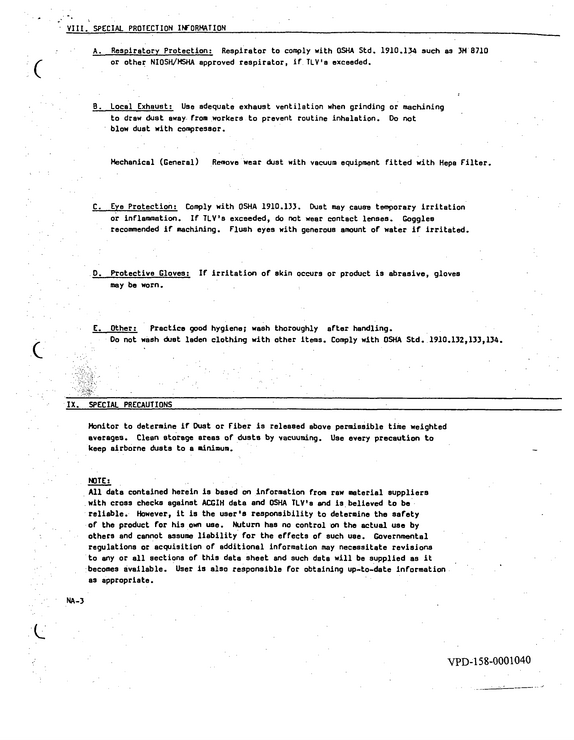
VIII.
refid# 5DXRGeJ6OyV3v8Lon5d33zL81 page
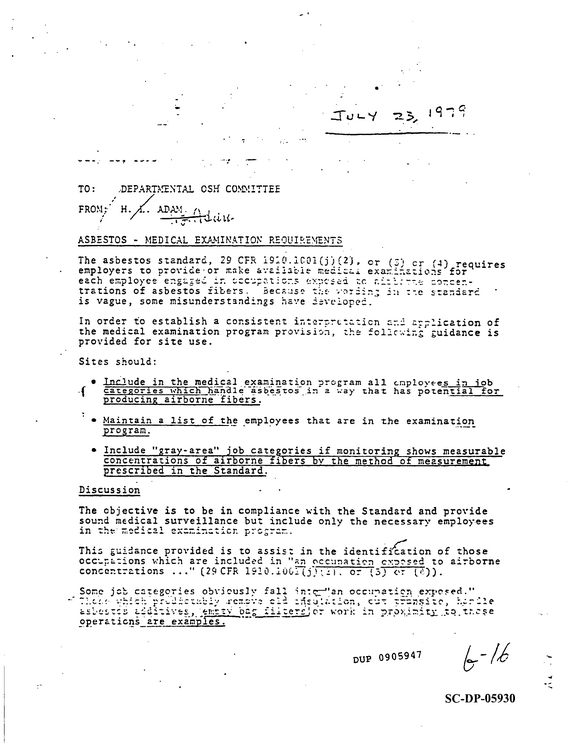
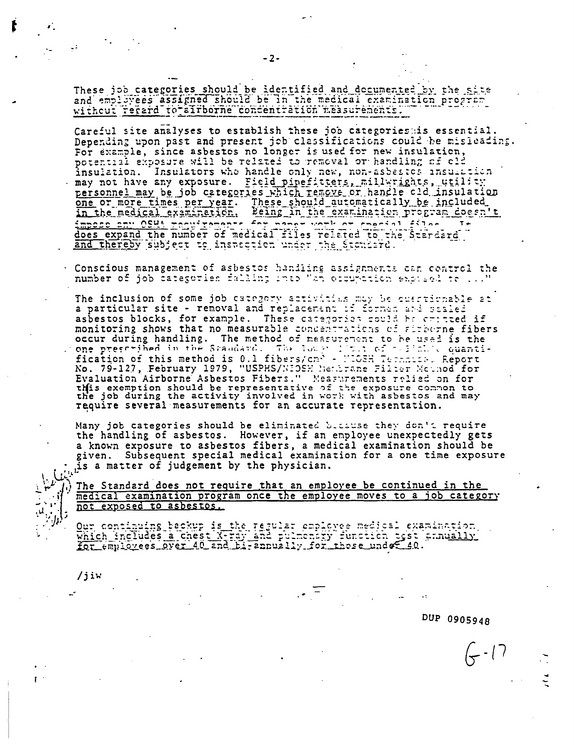
^Tui-v 1<* -< Gt TO: .
refid# qaOOZRLgOokp0p35Xx4xJJODM2 pages
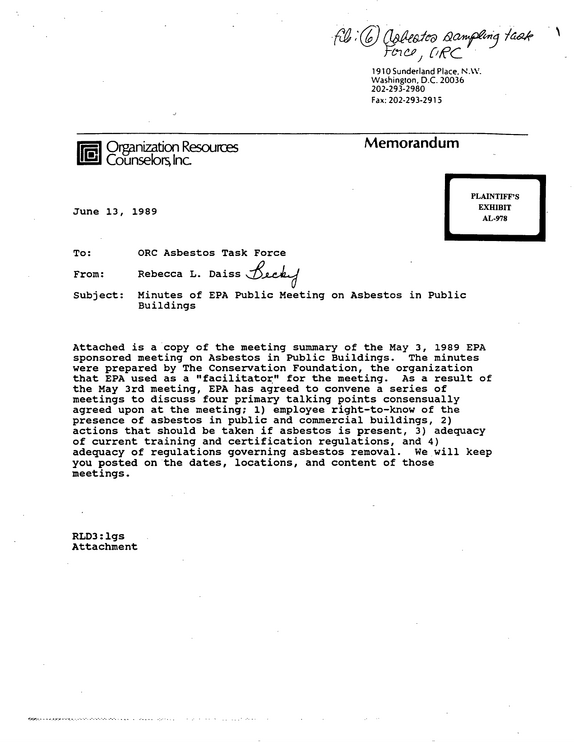
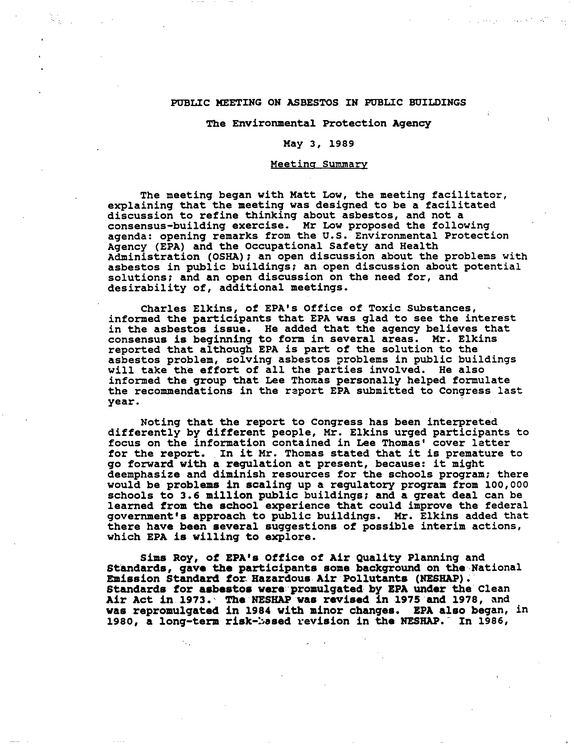
fid -(d) QMt&Jed (ncsj OfPC 1910 Sunderland Place.
refid# e7Xw45j7X7jN80ngez3k9oq0p12 pages
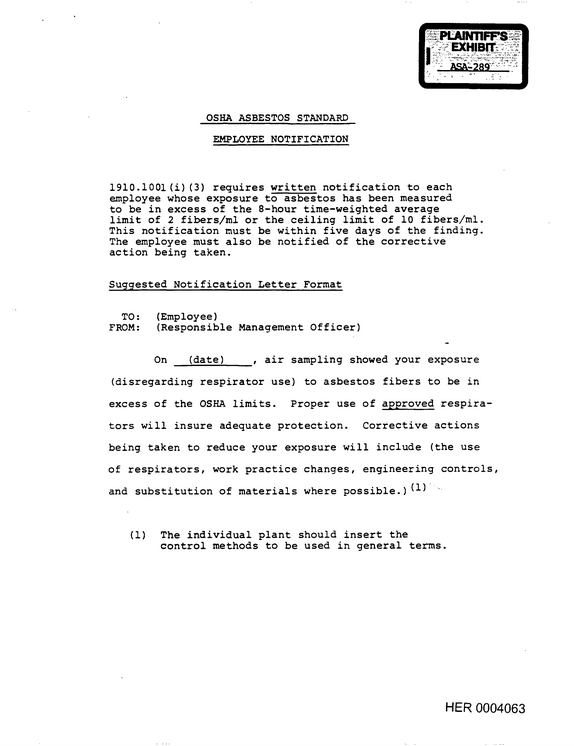
I OSHA ASBESTOS STANDARD EMPLOYEE NOTIFICATION 1910.1001 (i) (3) requires written notification to each employee whose exposure to asbestos has been measured to be in excess of the 8-hour time-weighted average limit of 2 fibers/ml or the ceiling limit of 10 fibers/ml.
refid# weRRQ92yxbzKkKKrddQLvovJ1 page
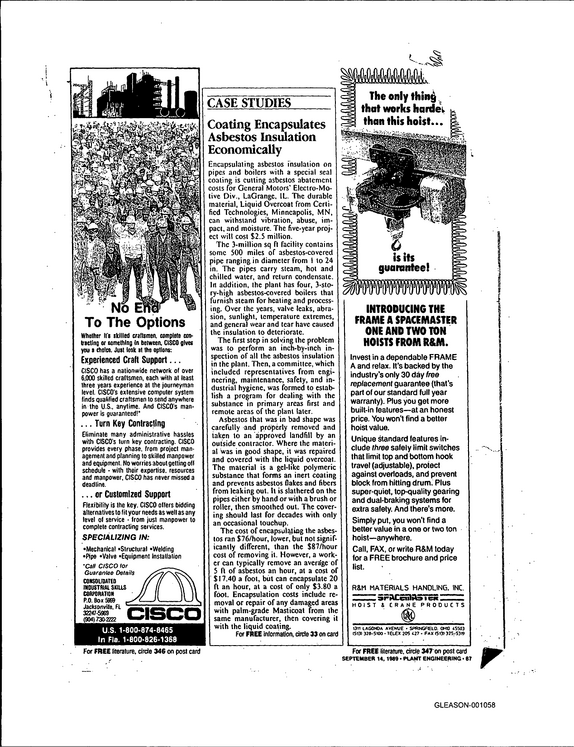
CASE STUDIES Coating Encapsulates Asbestos Insulation To The Options Whether It's skilled craftsmen, complete con tracting or something In between, CISCO gives you a choice.
refid# wqrJora7MOReQvOMB3395Kbad1 page