Refine
Estimated Years 1970-1979Clear
564 results foundRefine Search
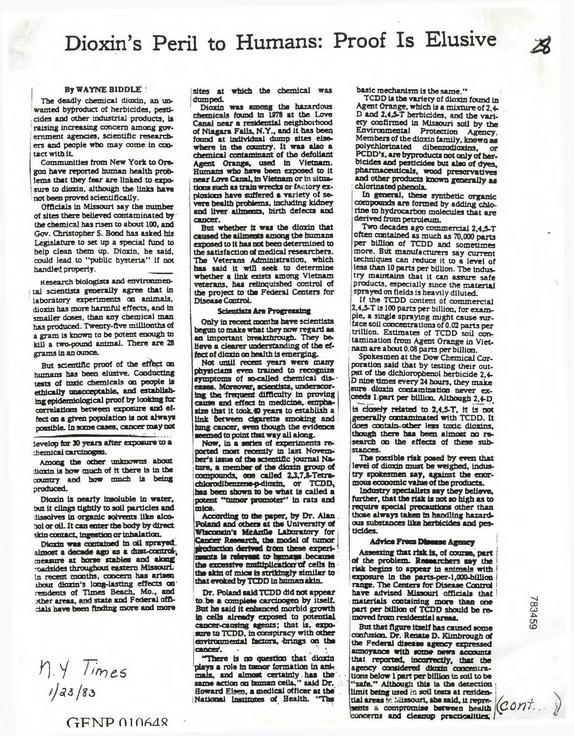
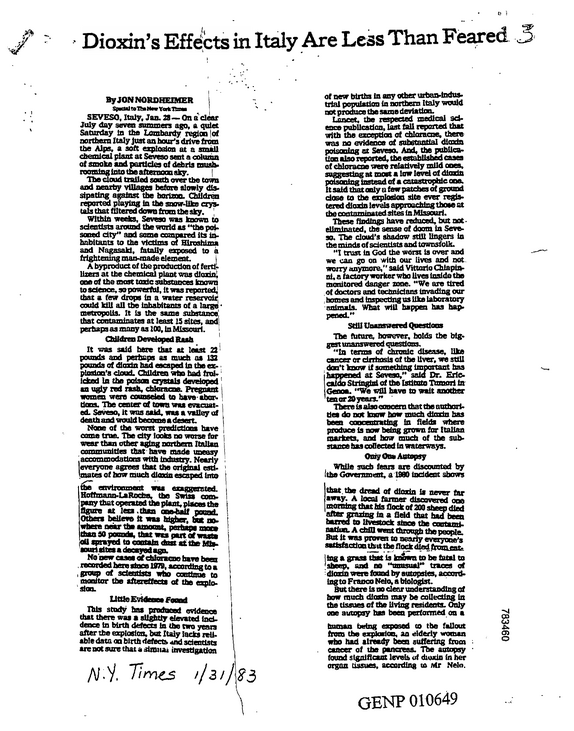
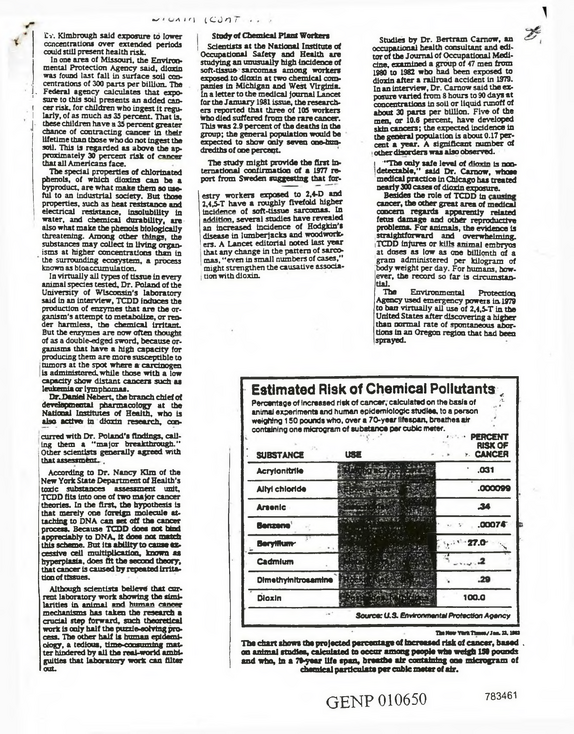
Dioxin's Peril to Humans: Proof Is Elusive By WAYNE BIDDLE The deadly chemical dioxin, an un wanted byproduct of herbicides, pesti cides and other industrial products, is raising increasing concern among gor* Ieminent agencies, scientific research ers and people who may come in con tact with i t Communities from New York to Ore gon have reported human health protv lems that they fear are linked to expo sure to dioxin, although the links have not been proved scientifically.
refid# 3ekjbDmmn1VDyg522bBy7wqNy3 pages
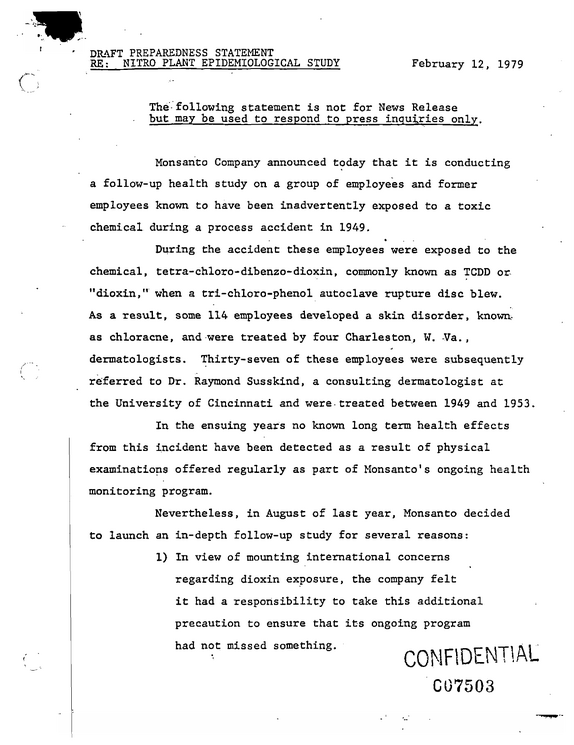
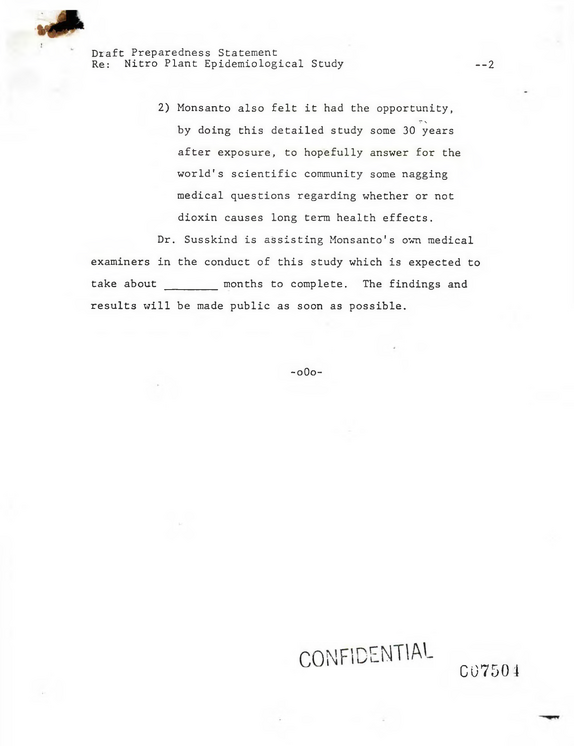
o DRAFT PREPAREDNESS STATEMENT RE: NITRO PLANT EPIDEMIOLOGICAL STUDY February 12, 1979 The-following statement is not for News Release but may be used to respond to press inquiries only.
refid# 3JZRwq30Ldb3jOQQ1QB5VZ13D2 pages
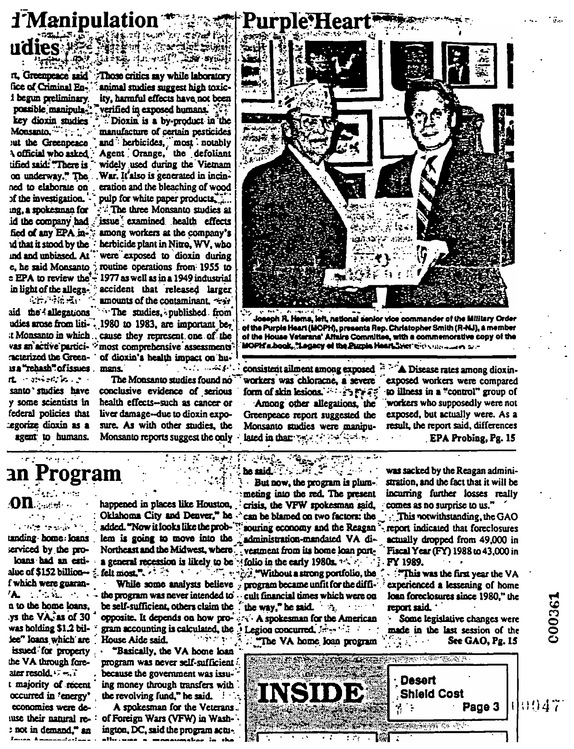
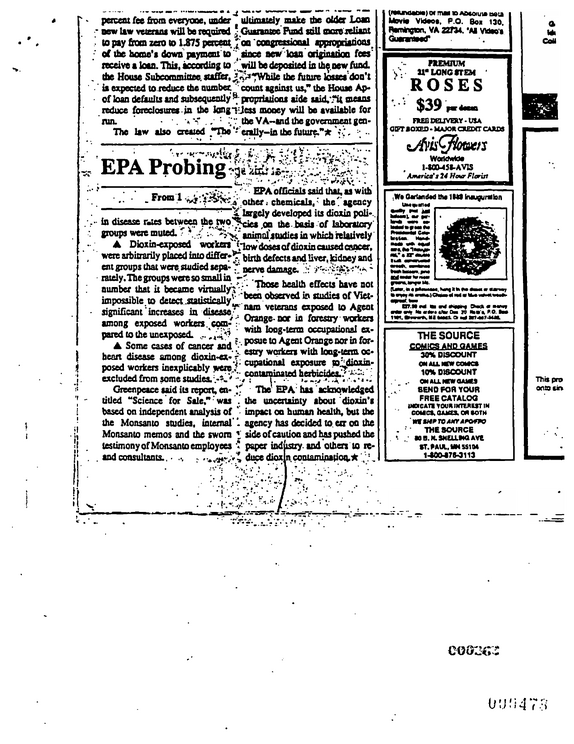
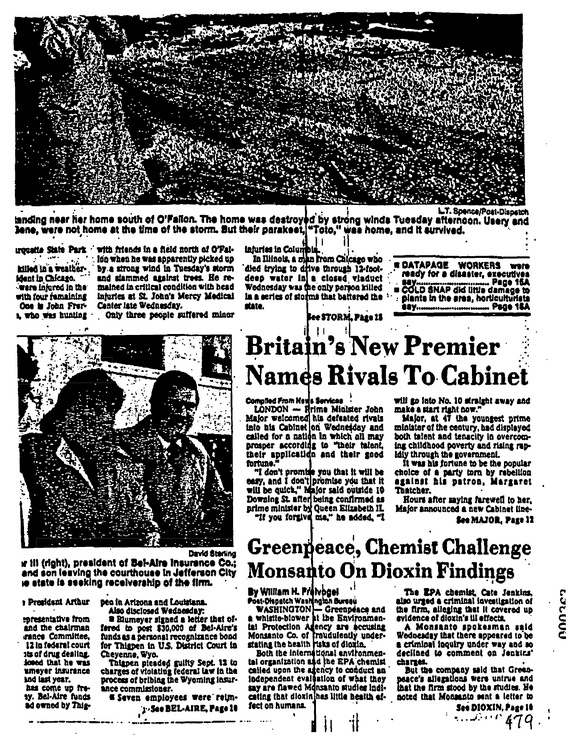
^M anipulation -r,3S ' *" " udies: a.
refid# yr97KRKaJ0nzJVxXvezG0Y8JV3 pages
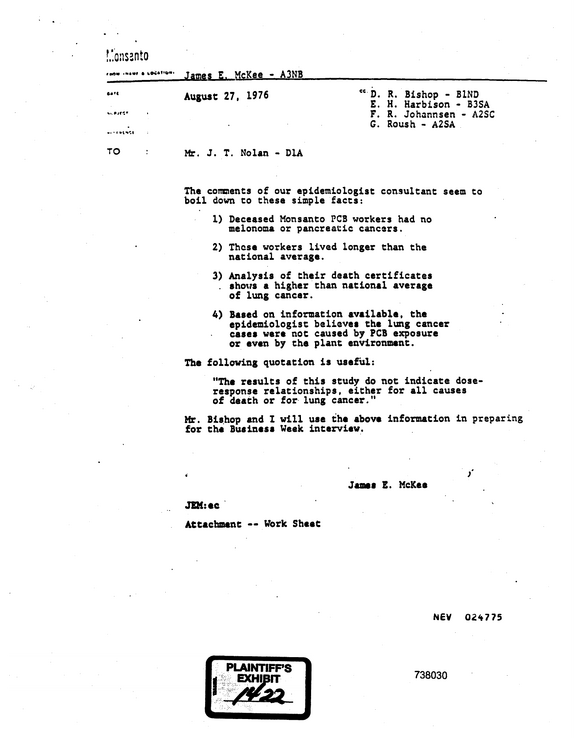
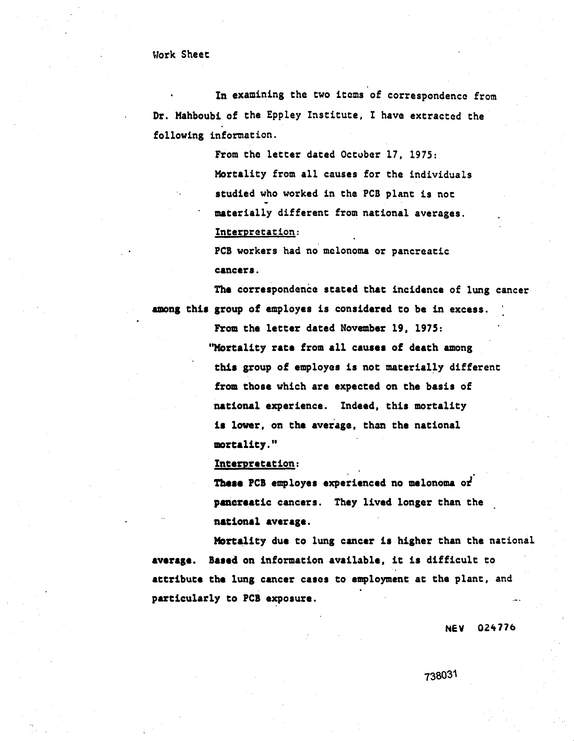
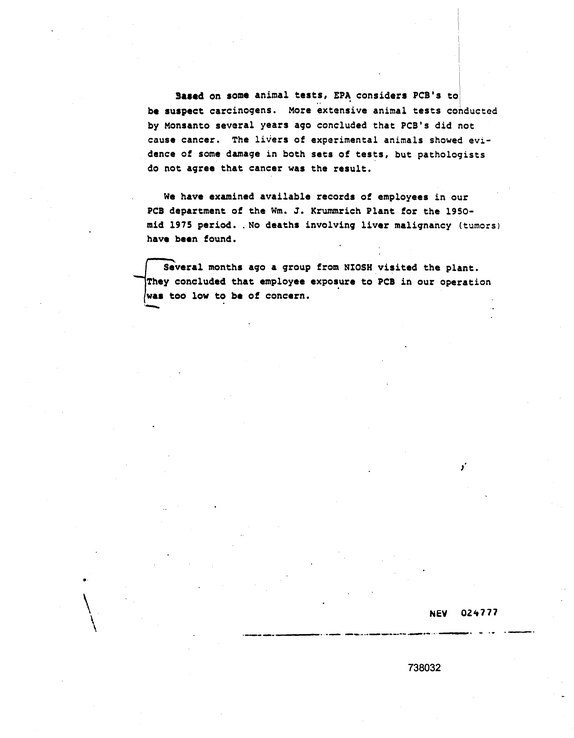
L'basanto -... . ..Sift* .
refid# nmknnJxRNwxaBz52YjmKxORaX3 pages
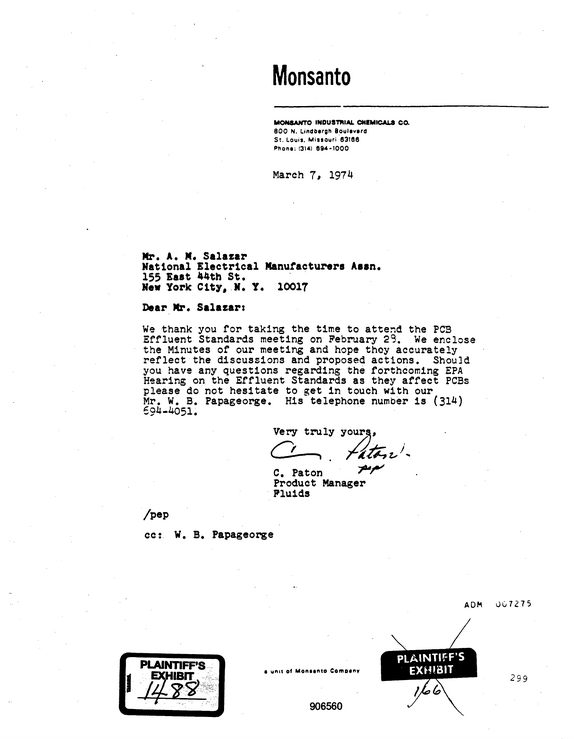
Monsanto MONSANTO INDUSTRIAL CHEM ICALS C O 8 0 0 N.
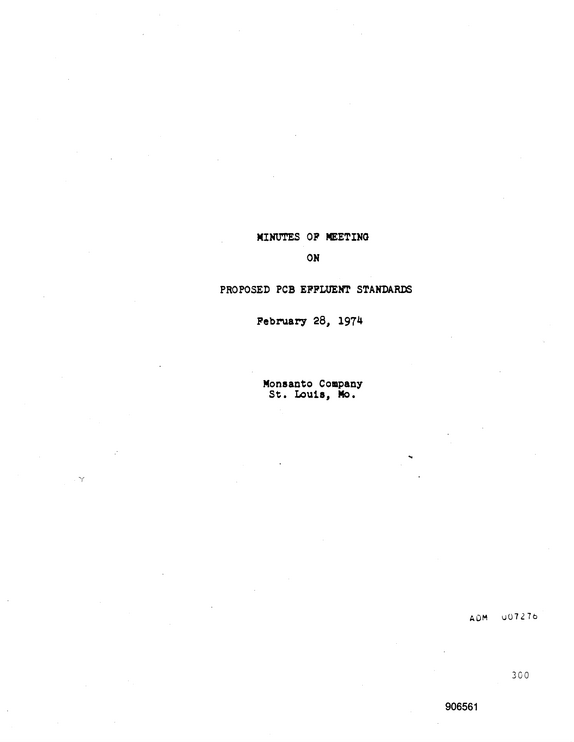
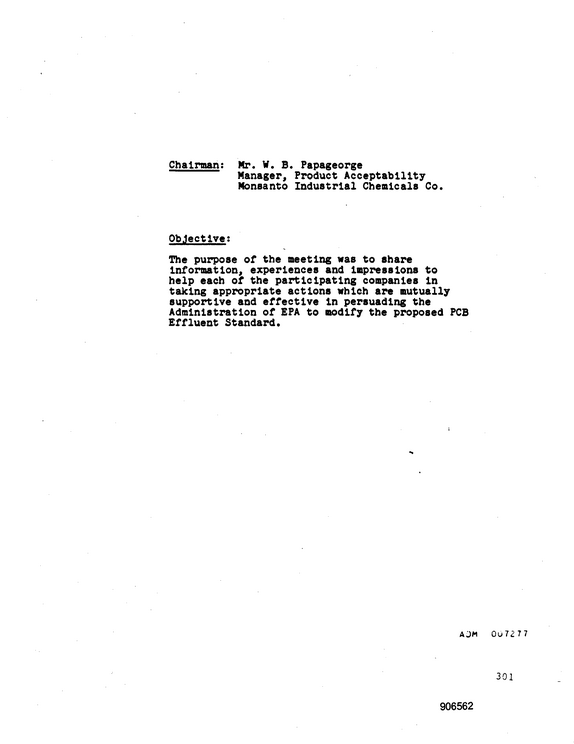
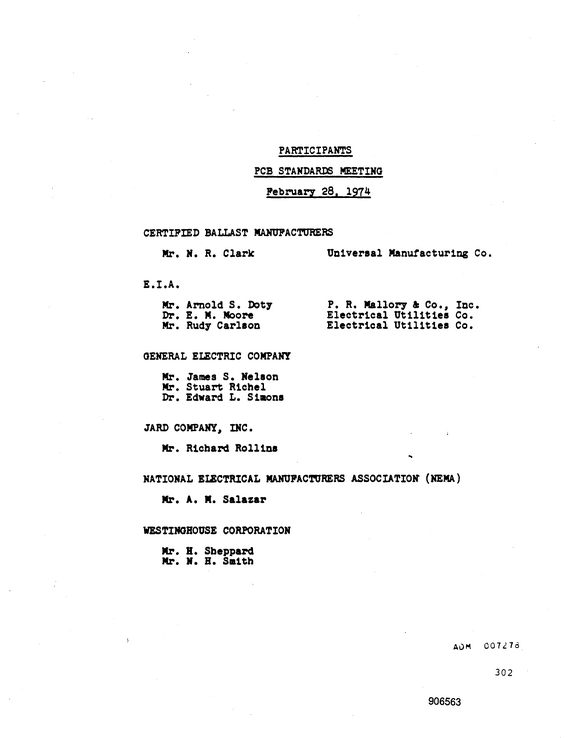
refid# 9JR8pBe8xajqEB86pVRg7MMqp22 pages
j fjf'l.'
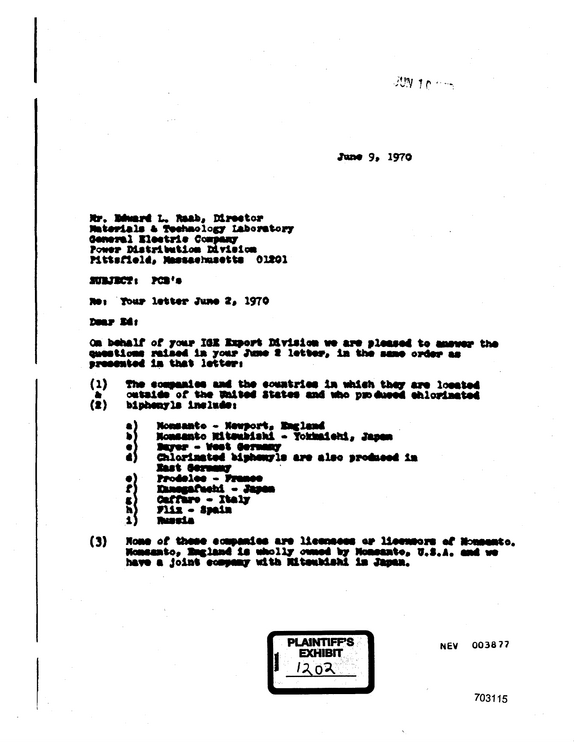
refid# dYyVzv4g7NDY5v2Dz0Vq3maoR3 pages
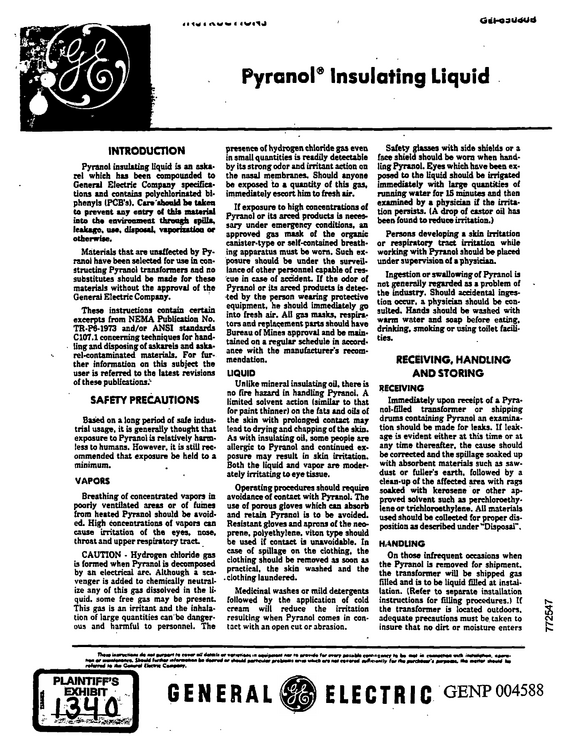
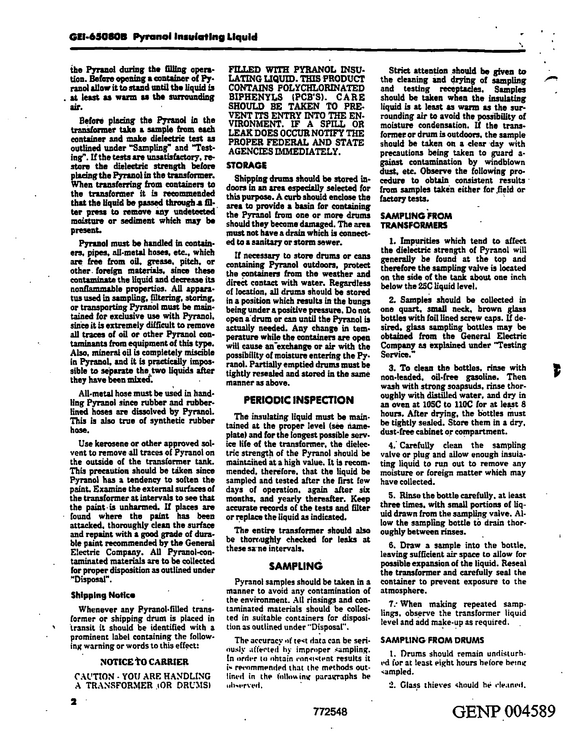
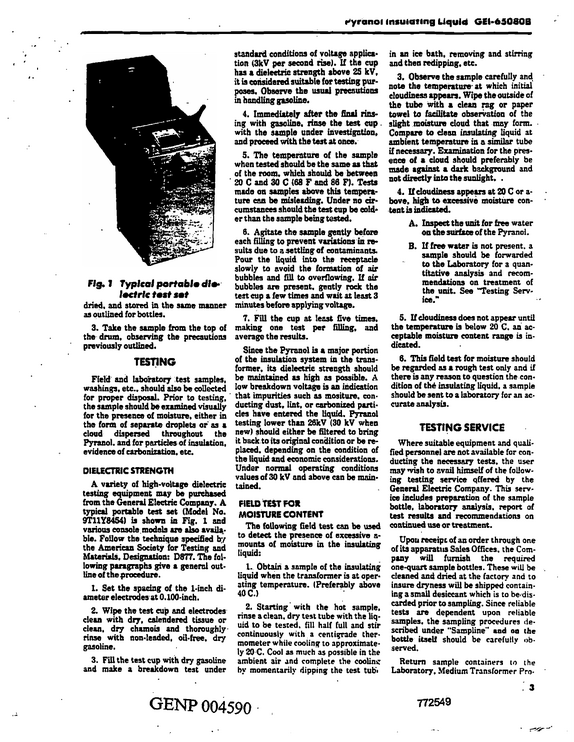
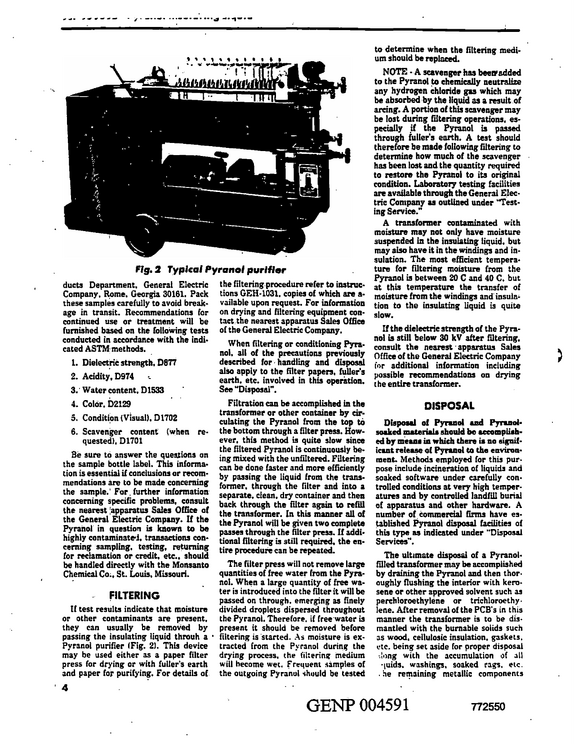
IVW I W l I J cl-eaii4rt Pyranol Insulating Liquid INTRODUCTION Pyranol insulating liquid is an askacel whieh has been compounded to General Electric Company specifica tions and contains polychlorinated bi phenyls (PCB's).
refid# 3Nd4aJgEjeNmD21wkzNwM7Qnx6 pages
Polychlorinated Biphenyl (PCB) f .
refid# ExK8Lorj8awBqKzObjV1n2Rj48 pages
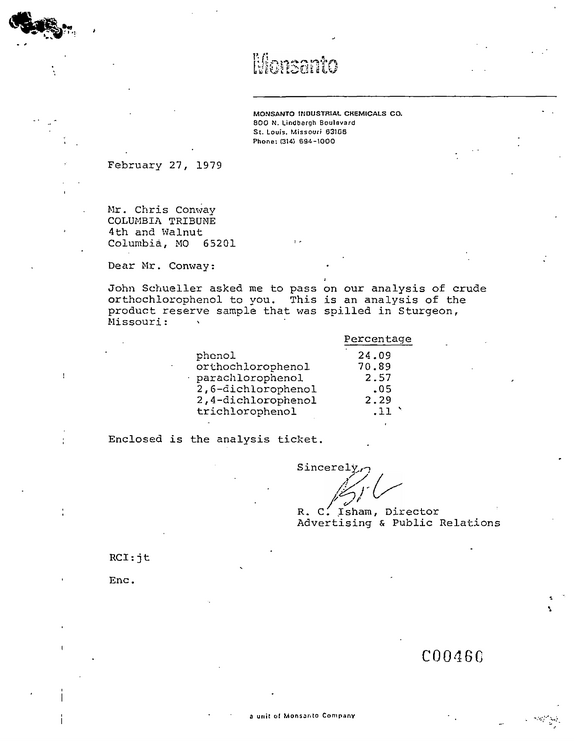
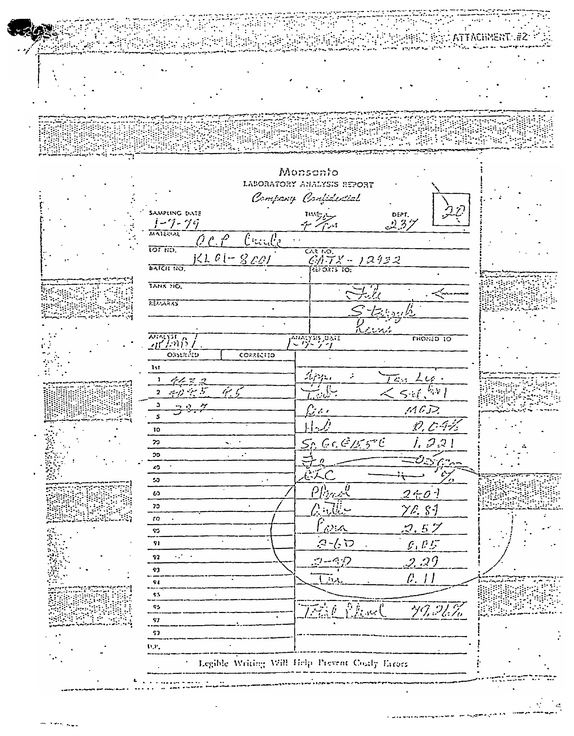
/ February 27, 1979 MONSANTO IN D USTRIA L C H EM IC A LS CO. 8 0 0 N.
refid# k6GJemBOnoE6q3o3rnRL8dp1q2 pages
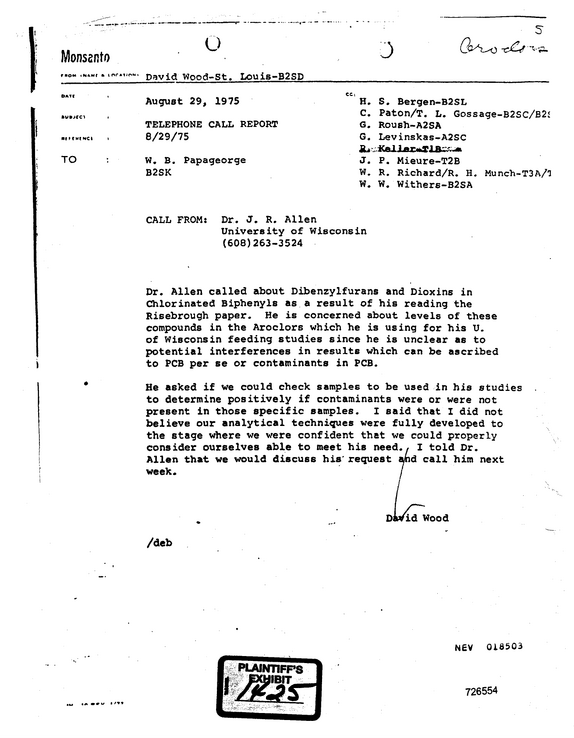
Monsanto M O M i M A M f ft L O r ATI DAT susjcci < HI tf Mf NCI t TO O David Wood-St.
refid# k5oJYQnkR7ppkyLG1DnMVrzO1 page
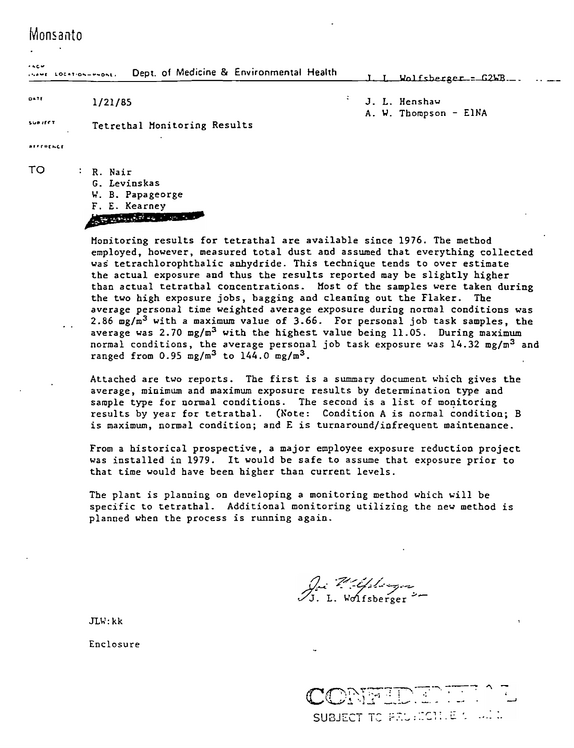
Monsanto * *.C ^ *,*m i l o ; 0 4 T| S U O iffT f'rfKCf TO Dept, of Medicine & Environmental Health 1/21/B5 Tetrethal Monitoring Results R.
refid# v6ozeMEMMkg8ZLeqap1G6ndnY1 page
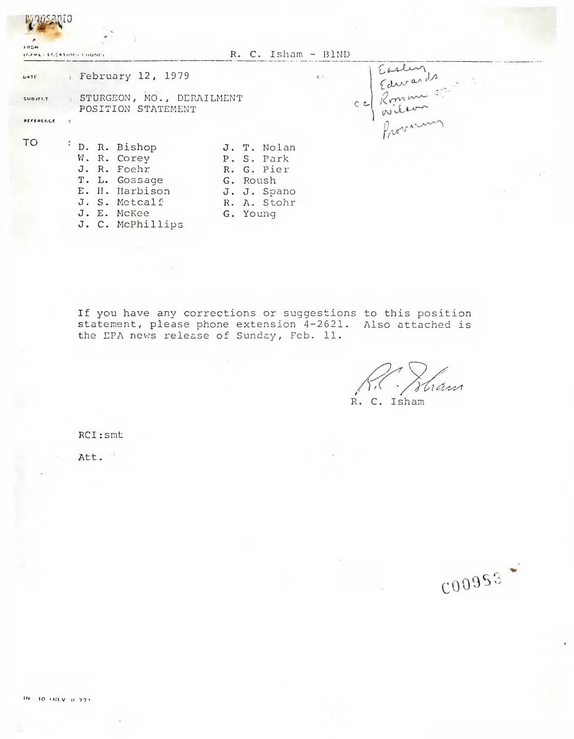
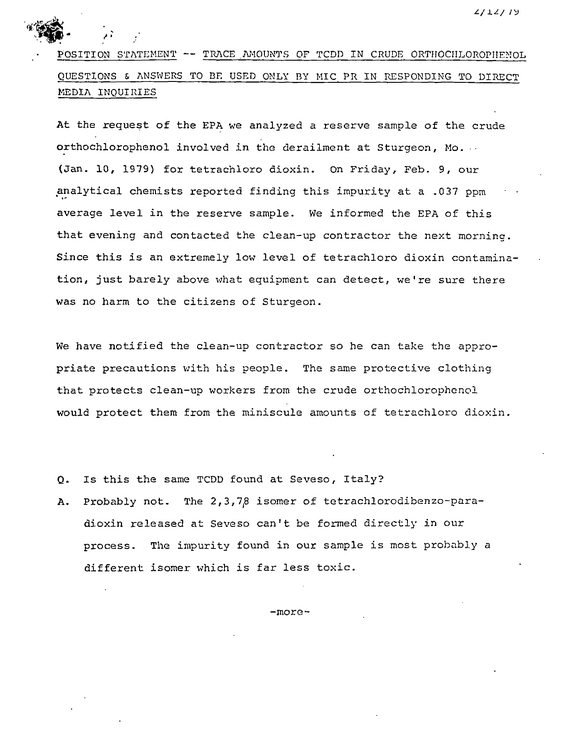
pro t nC/M *.a m l i a 7 n r : - i * O f H R.
refid# zdmpKOymrZ5gL0o7MN3wM3GGg4 pages
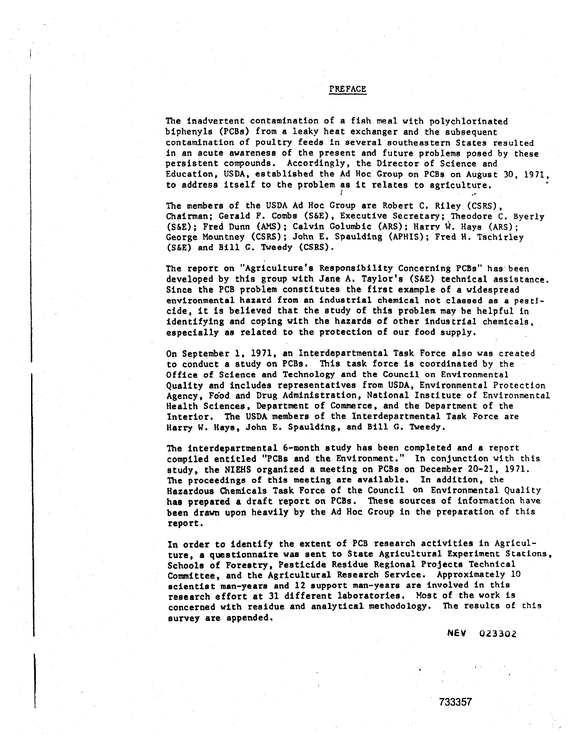
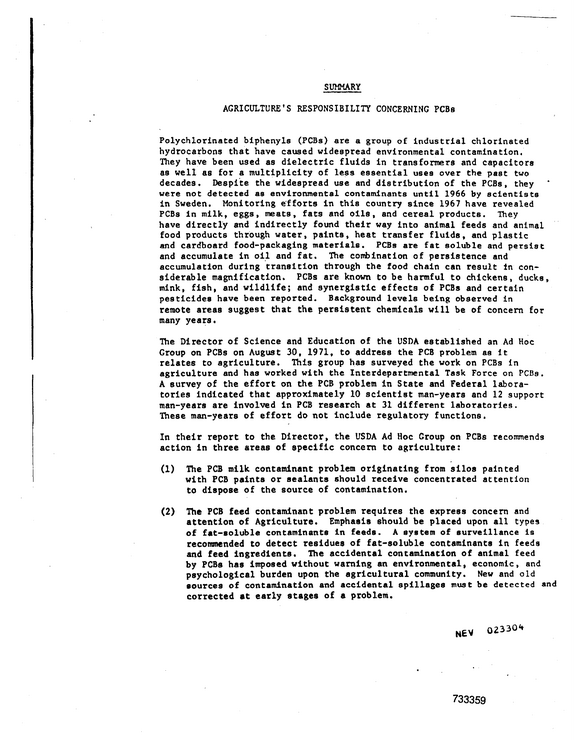
PREFACE The inadvertent contamination of a fish meal with polychlorinated biphenyls (PCBs) from a leaky heat exchanger and the subsequent contamination of poultry feeds in several southeastern States resulted in an acute awareness of the present and future problems posed by these persistent compounds.
refid# 7o7ZvnxnoRvNdyvemm2pQmXE63 pages
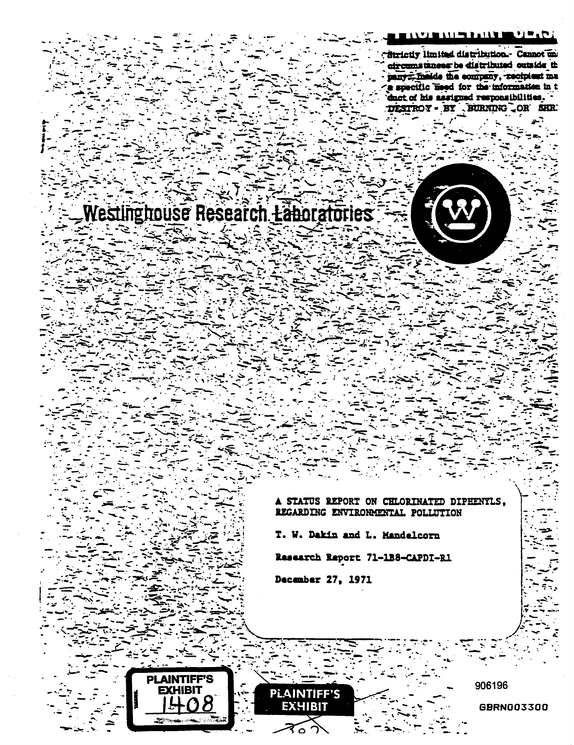
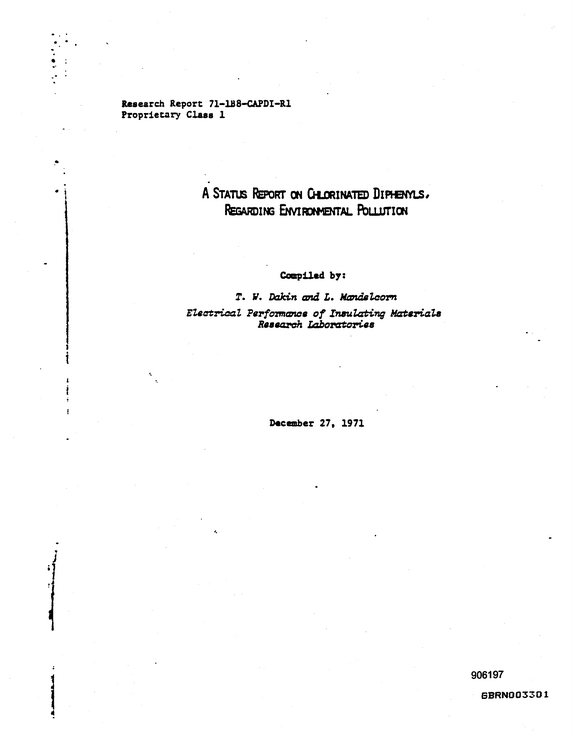
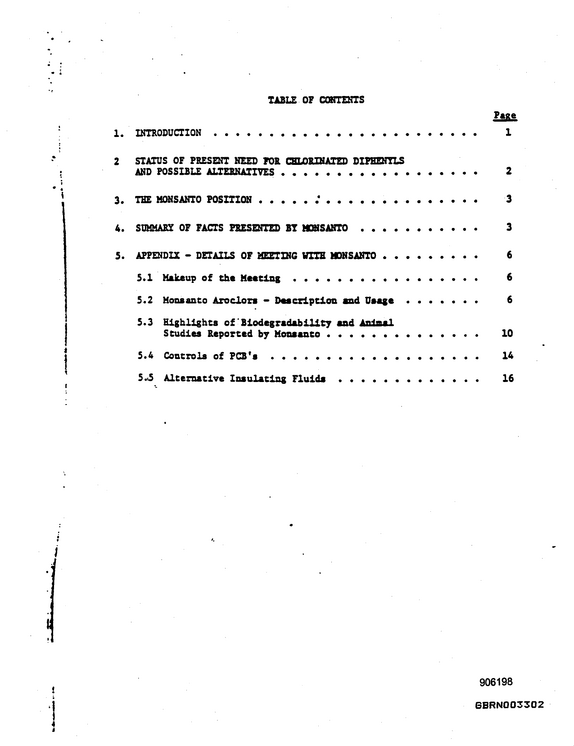
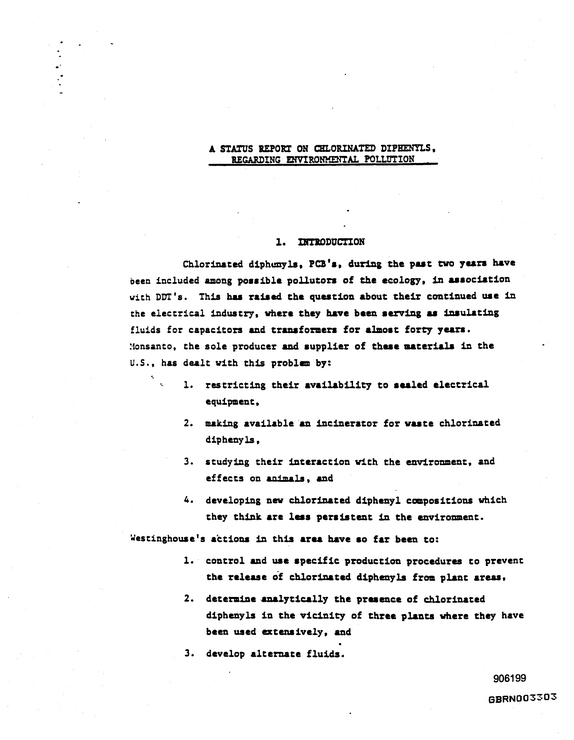
CStrlctiy U ait4 dlitrttutiOD.- Cannot ocu etireaostioewFbe diatribuiod octsidctb -ponysihaido tha to m pany,-rocipiatfm * ''m apac&lc w a d lor tbo iafoxsuuttB tnt ' w W e d r is fto u s e R e s e a r iA / t 'a t o r a t D r ie i;^ .J- ...
refid# Ner60b3rKadJgwbK3okJjXwY824 pages
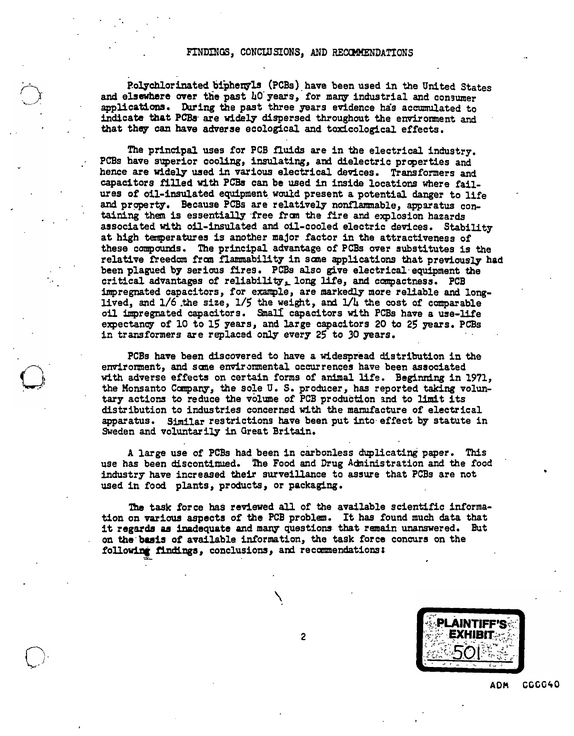
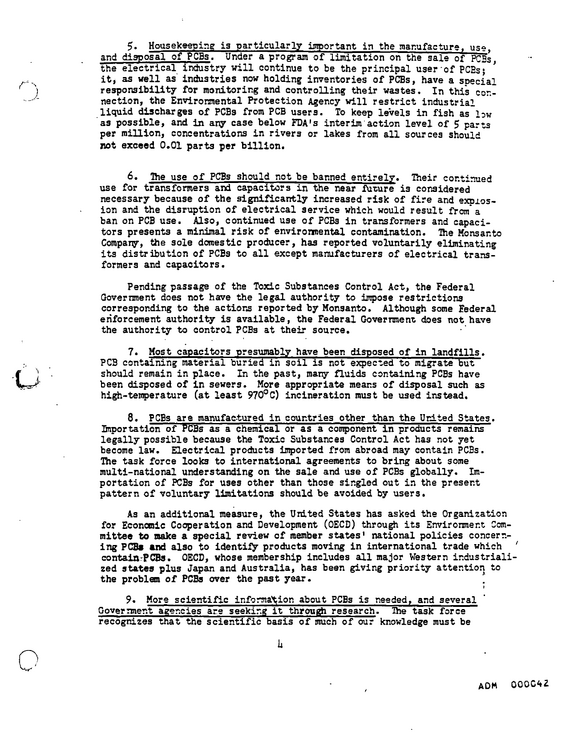
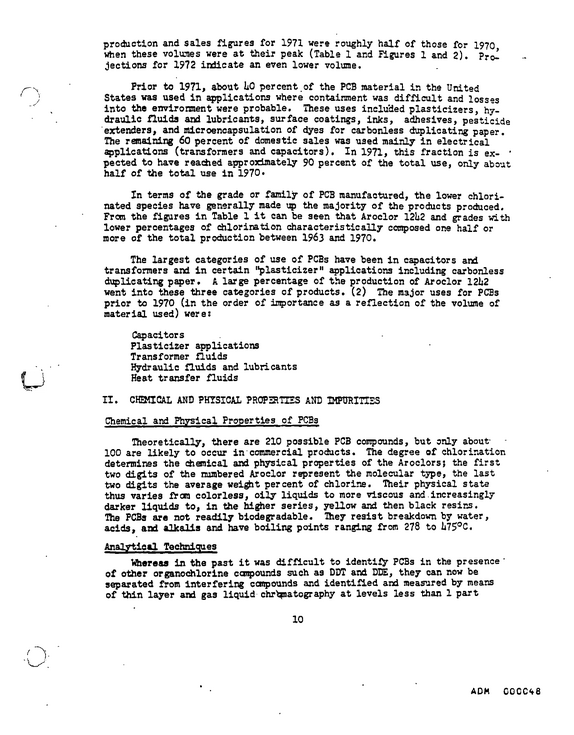
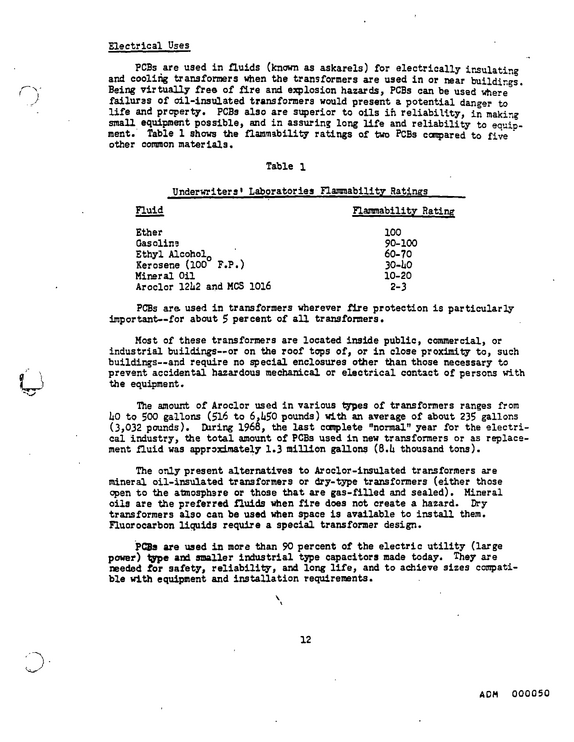
FINDINGS, CONCLUSIONS, AND RECOMMENDATIONS Polychlorinated biphenyls (PCBs) have been used in the United States and elsewhere over the past iiO'years, for many industrial and consumer applications.
refid# 7RYzVewNB9n7wzngM6ReRVDR66 pages