Kehoe, M.D.


refid# kaaDgbRGnbB2L9NXmoXgppB4O2 pages
Kehoe, M.D.
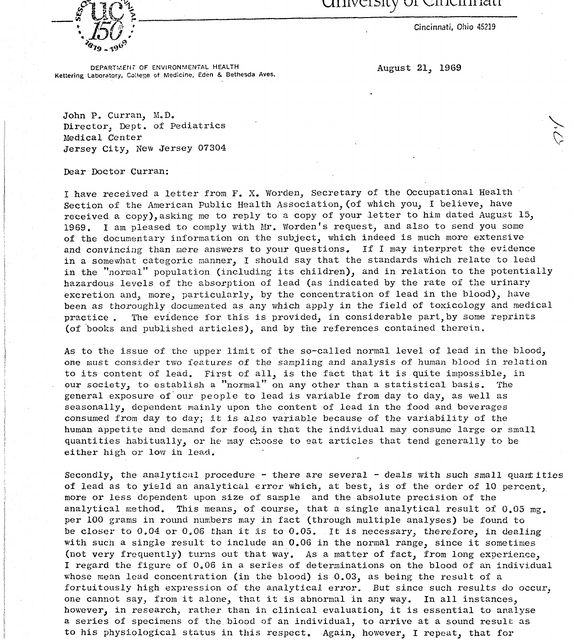
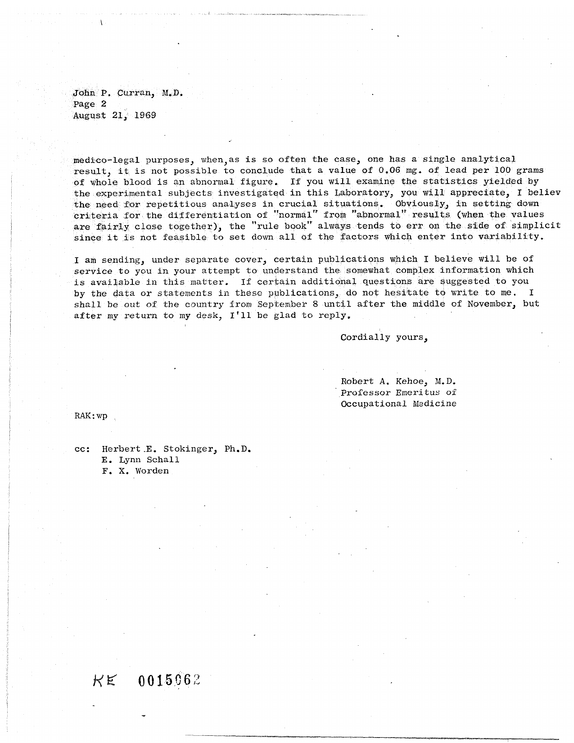
refid# bapjZxxYBg2vKqmbdXJjJOK762 pages
Kehoe , f.'
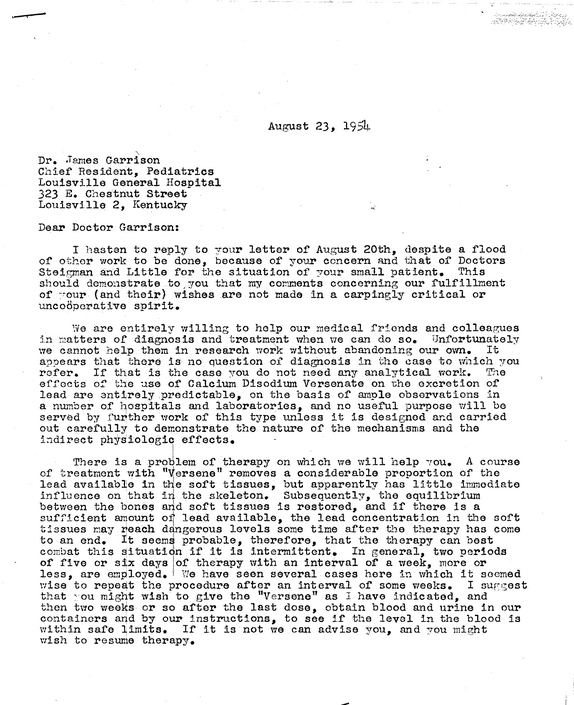
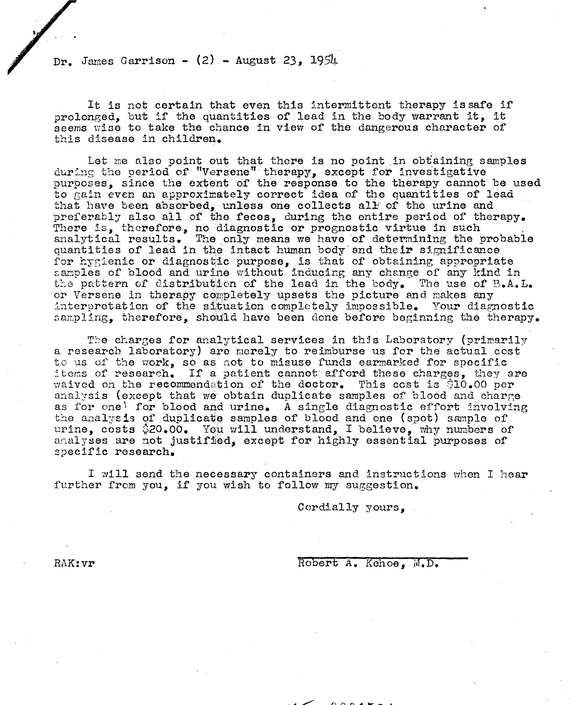
refid# pBog8oqQpBbnD5eLOwJ6GMXww2 pages
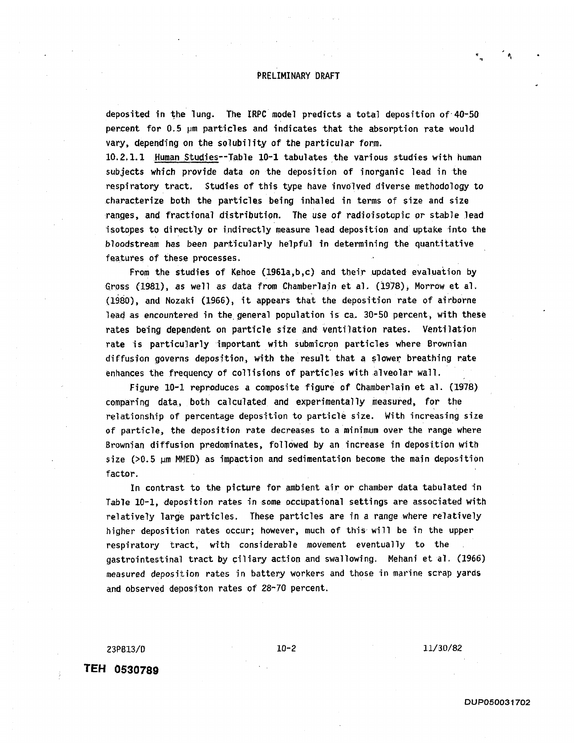
From the studies of Kehoe (1961a,b,c) and their updated evaluation by Gross (1981), as well as data from Chamberlain et al. (1978), Morrow et al. (1980), and Nozaki (1966), it appears that the deposition rate of airborne lead as encountered in the general population is ca. 30-50 percent, with these rates being dependent on particle size and ventilation rates.
refid# 0bNJQ3rXm6MJDLDKw5qYMRnR77 pages
Dr, Kehoe was a true pioneer in the field of lead ingestion and its effects.
refid# ooyYgNG56ZZEz0rY0oD2Y5xg24 pages
For, It is wall known (Kehoe, 1961; Black, 1962} that .it takes twice as long to excrete- an excessive burden -of lead from the body as it: takes to acquire the burden.
refid# QgXeJ4M2BQ8RovrmazKN4JKVv26 pages
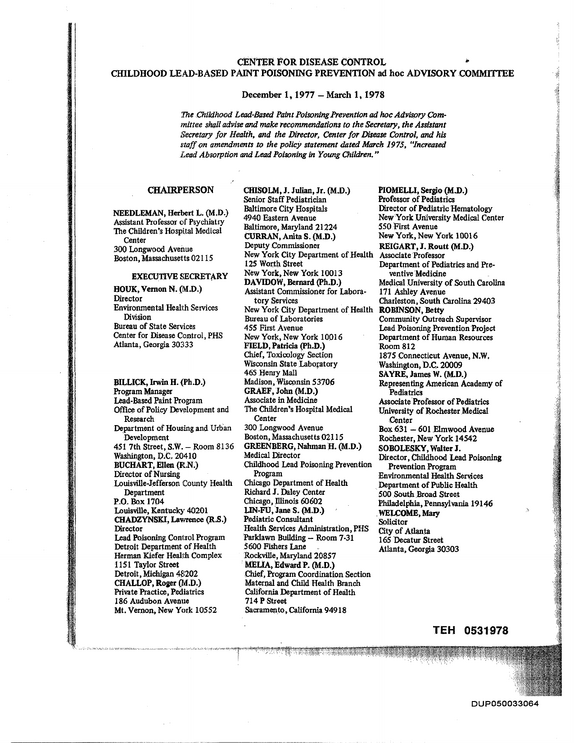
Representing American Academy of Pediatrics Associate Pofessor of Pediatrics University of Rochester Medical Center Box 631 -- 601 Elmwood Avenue Rochester, New York 14542 SOBOLESKY, Walter J.
refid# rBBO0Vo9r54MEBGaQjgBm217V44 pages
Tha 0.06X Halt originated as a reconendatlon In a report of Che Committee on Environmental Hazards of the American Acadeay of Pediatrics (1972).


refid# OEQr8e2zwOzbOX7ZjpDrQo1jK56 pages
Tha 0.06X Halt originated as a reconendatlon In a report of Che Committee on Environmental Hazards of the American Acadeay of Pediatrics (1972).
refid# YjdG79RLOx3VbO8x4ae2Rr4QN56 pages
Kehoe, M.
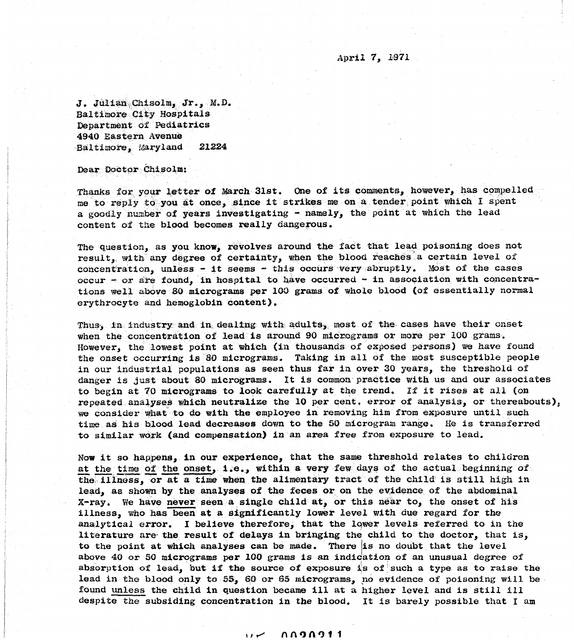
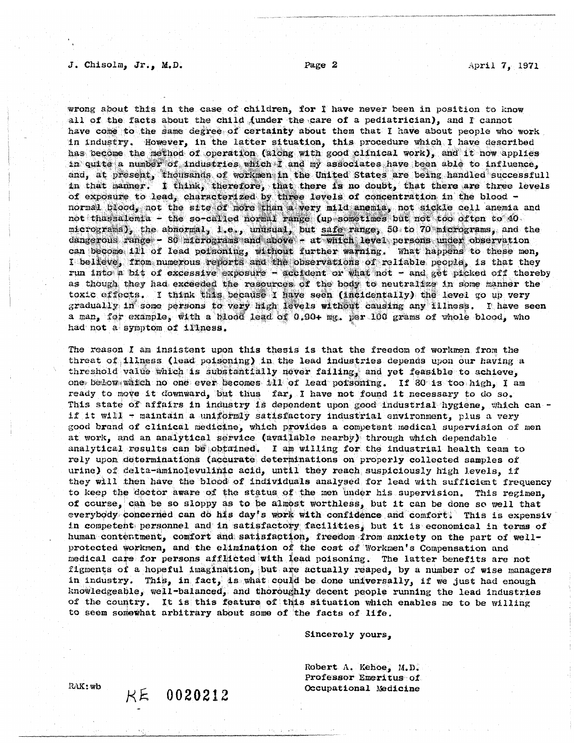
refid# j8z3xDOKr1EnKX3yKvVpGDNN2 pages
Kehoe, M.D.
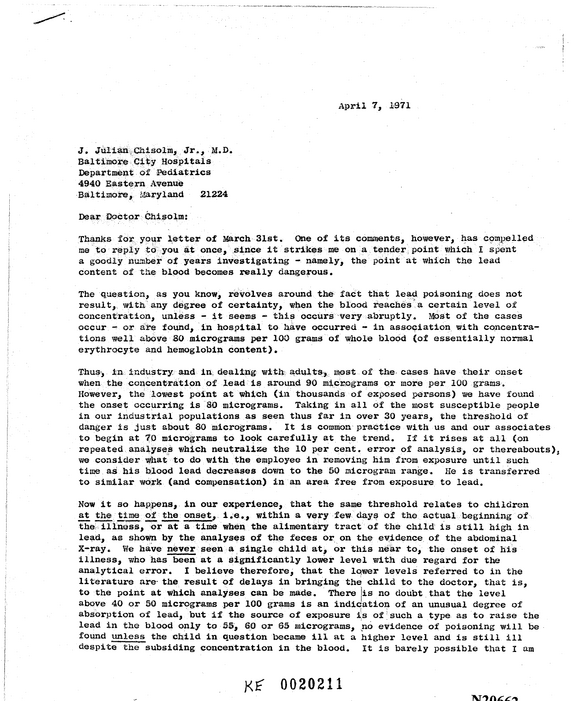
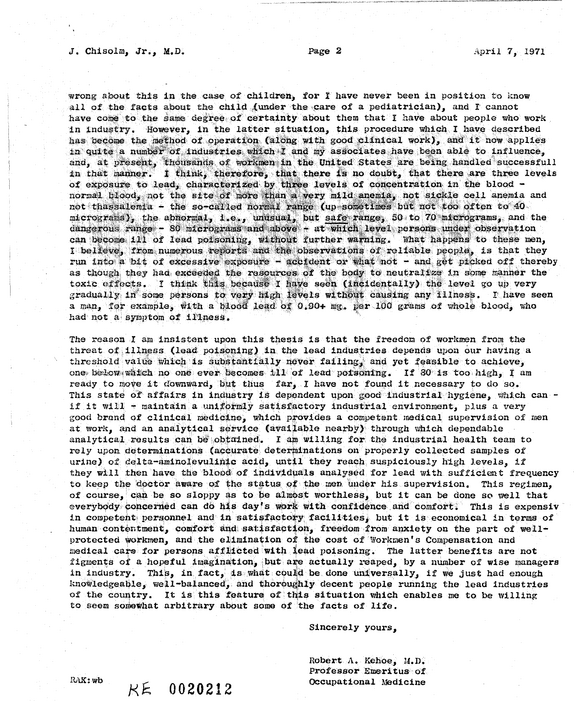
refid# jgGBvOqz09Gn8G0yOwmOdv4VZ2 pages
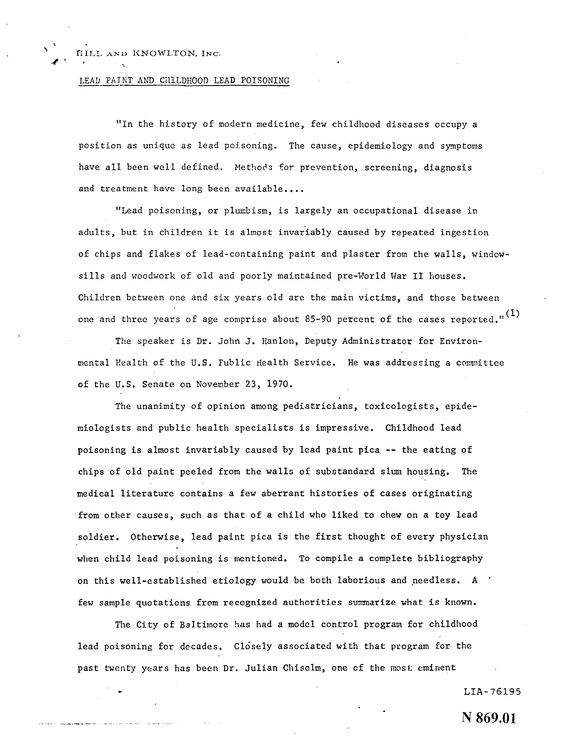
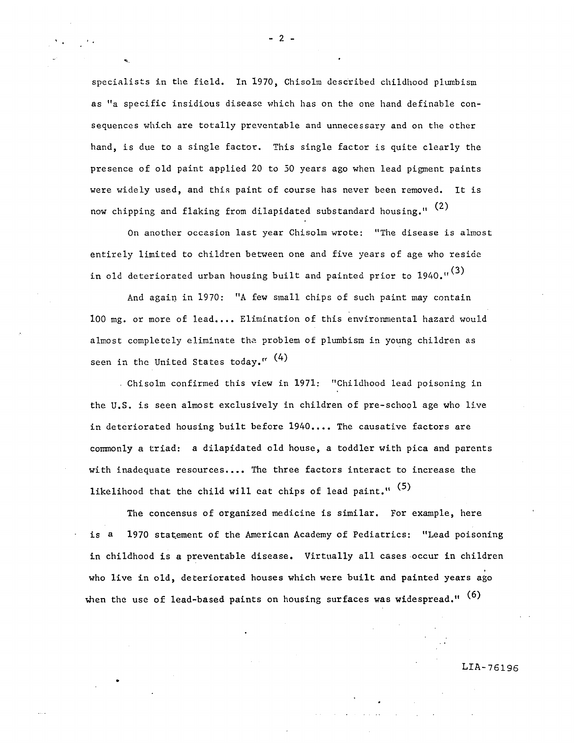
For example, here is a 1970 statement of the American Academy of Pediatrics: "Lead poisoning in childhood is a preventable disease.


refid# BRxn928wkzj0V6Z1VLL3Y7pkL19 pages
For example, here is a 1970 statement of the American Academy of Pediatrics: "Lead poisoning in childhood is a preventable disease.
refid# N4z28KVy1ekjB1J8Y2Ryew6Q19 pages
Kehoe, R.
refid# kakBaxzq3ODw81BQqorkY4zMB12 pages
The prevalence of non-industrial lead toxicity is particularly apparent in children of young age.
refid# a189jddppYZXx3RrvzQ5v7bEM145 pages