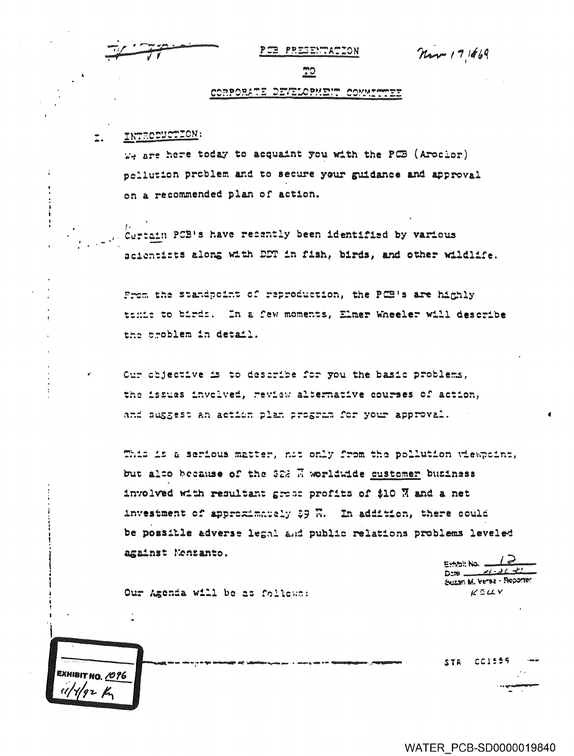
' Certain PCB's have recently been identified by various scientists along with OET in fish, birds, and other wildlife.
refid# xjEM0xp7jDKajEK7283aN3MV125 pages
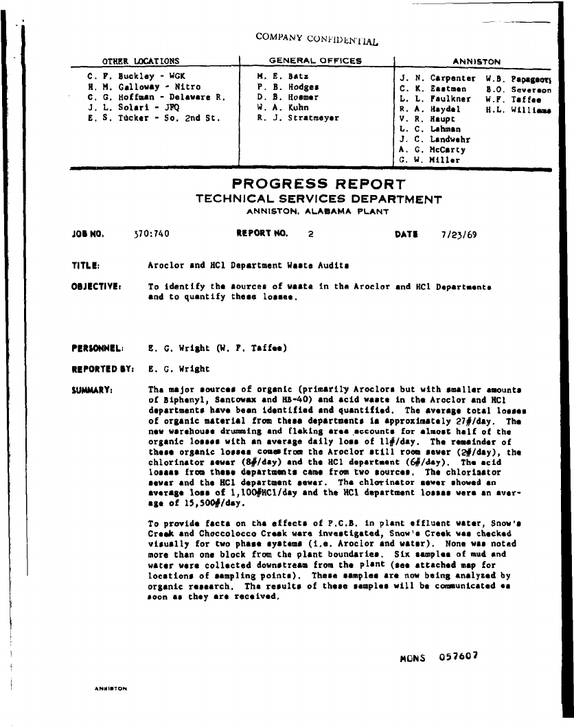
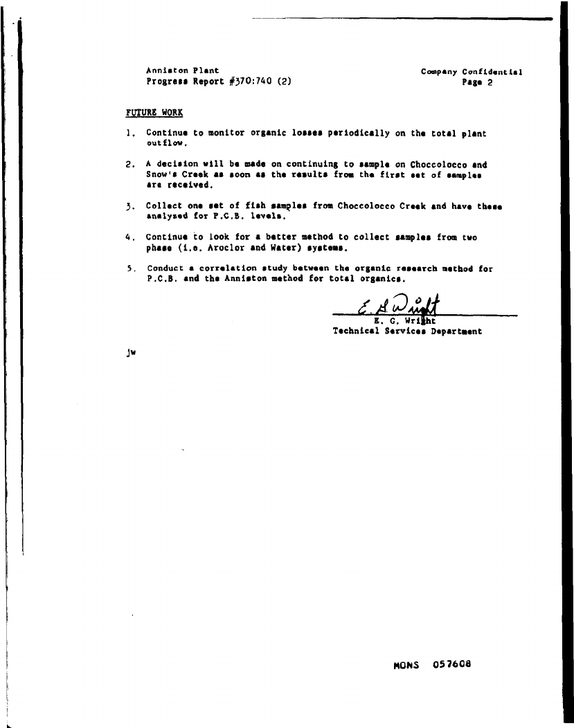
Collect one set of fish samples from Choccolocco Creek and have these analysed for P.C.E. levels, 4.
refid# 44Y01kJdbZrgn0VK0nXapqEja12 pages
One fish from a stream associated with a General Electric Plant. 10.
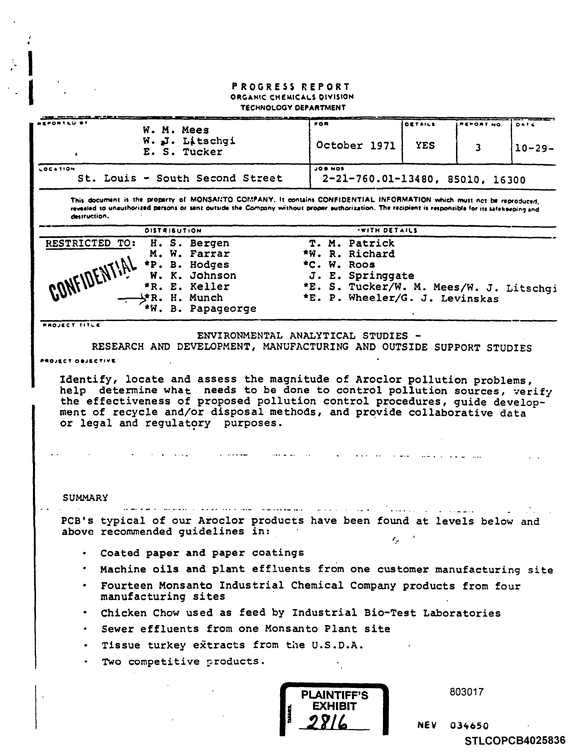
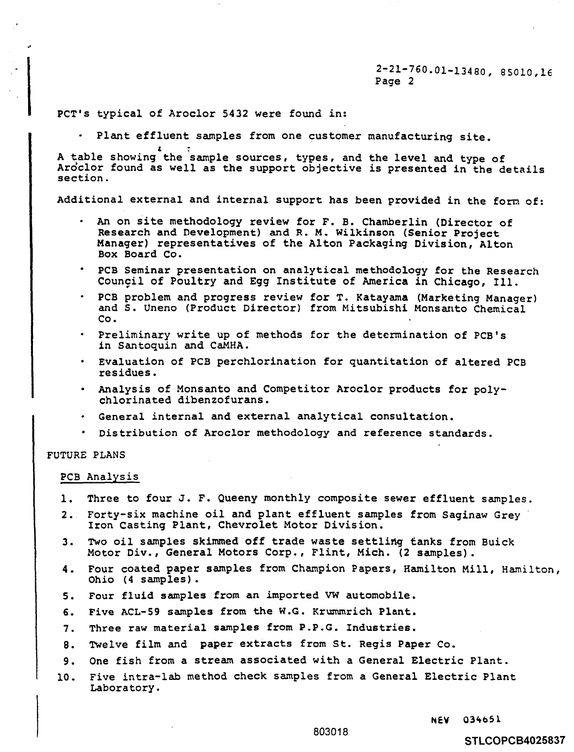
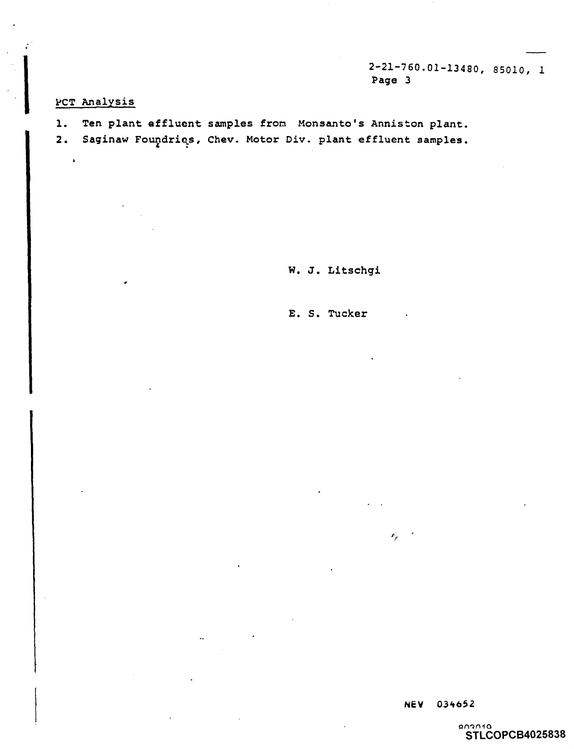
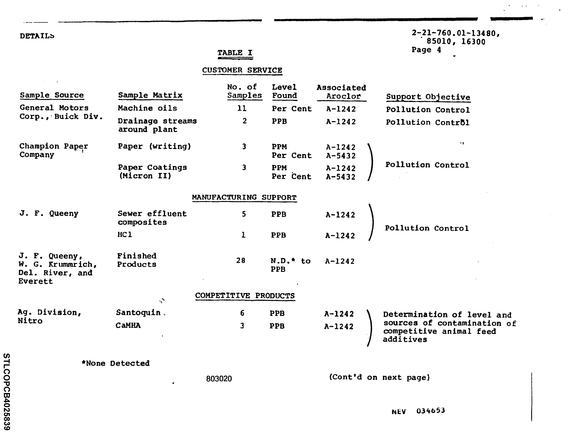
refid# Znz4vddYZDoeRr90OLj7NDMgZ10 pages
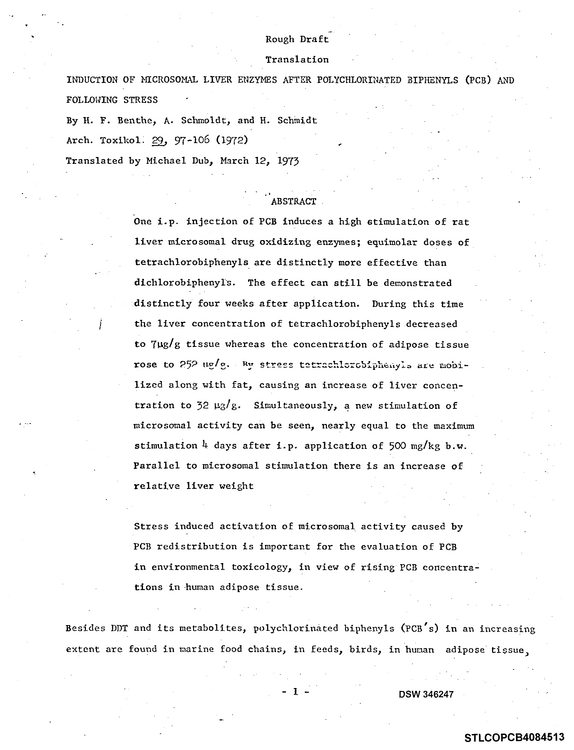
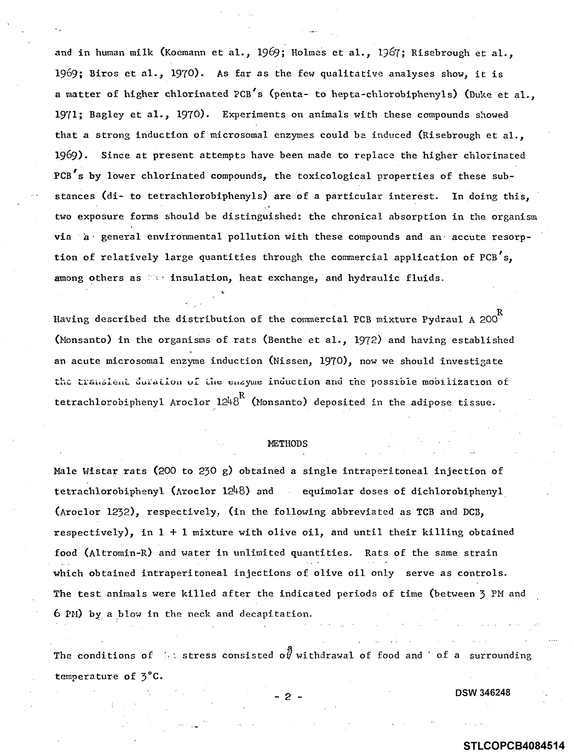
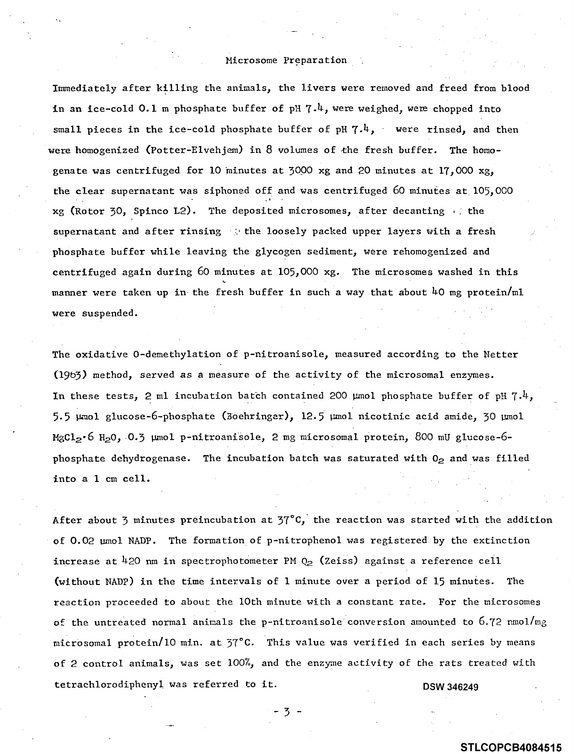
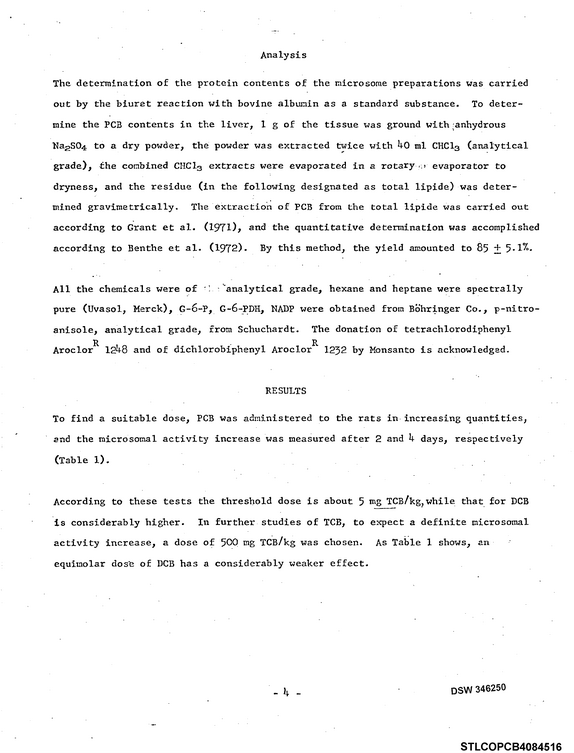
Rough Draft Translation INDUCTION OF MICROSOMAL LIVER ENZYMES AFTER POLYCHLORINATED BIPHENYLS (PCB) AND FOLLOWING STRESS ' By H.
refid# 82QBXREgj3RJ2JVVr3q1rpRBd12 pages
PCB's havo ar.d arc escaping ir.to the I urged the Secretary of the Interior to act to protect fish and wildlife from this environment.
refid# rejZZQ56X0bzKa2vGyLb1mkY72 pages
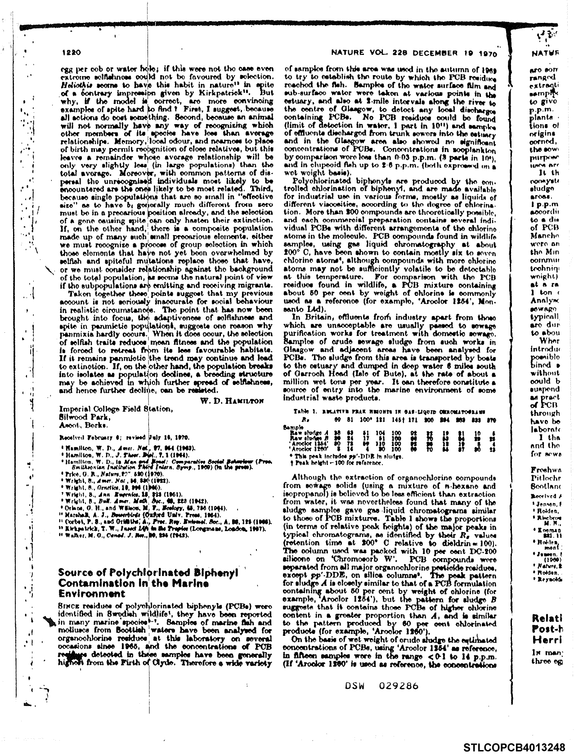
1240 NATURE VOL, 228 DECEMBER 18 1870 egg per cob or water holej if this were not tbo oaee even of samples from this area was used in tho autumn of IM) extreme aolftshnoa* oould not bo favoured by selection. to try to establish the route by whioh tho PCB residue* Hciioiftit seom* to bavje this habit in nature" in spite rcaohod the fish.
refid# rBYGqL2jnzoEZBBDmdJY5N7GG2 pages
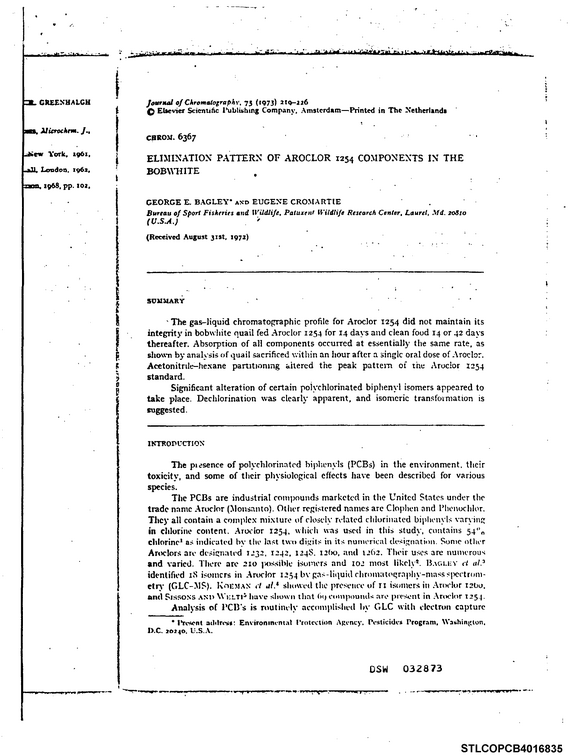
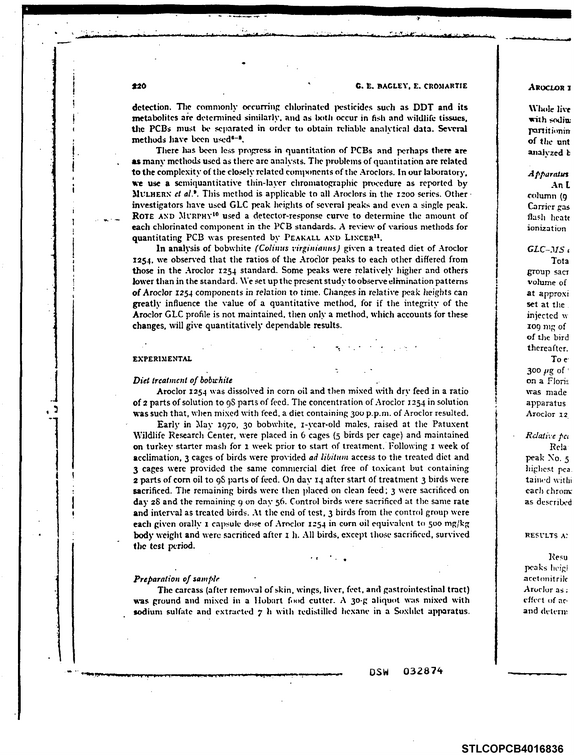
Tlic commonly occurring chlorinated pesticides such as DDT and its metabolites are determined similarly, and as lx>th occur in fish and wildlife tissues, the PCBs must be separated in order to obtain reliable analytical data.
refid# xKvdO3ky2axvkqLpYDmoe75y8 pages
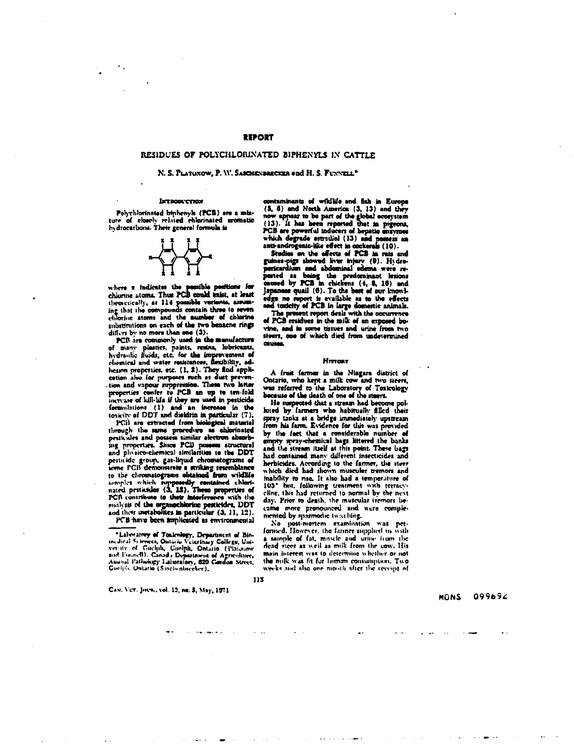
contaminants of wildlife end fish in Europe (S, 6) end North America (3, 13) and they now appear to bo pen of tho global ecosy stem (13)- U has been reported diet to pigeons, PCB an powerful inducer* of hepsbe tnsyiuo* which degrade nottlisl (13) end poesrtt an anti-androgenic-We effect to eockerab (10).
refid# DpxKKJ61EL2XY7KR7vmRnjJd5 pages
($U- QjteckmlMf A t f'f' In Sweden, Soren Jensen, using new analytical technology to ' investigate DDT residues in the environment, reported the possible presence of PCBs in fish tissue.
refid# 4J3dy8deb7ovg7M5ZV3Qvvvge13 pages
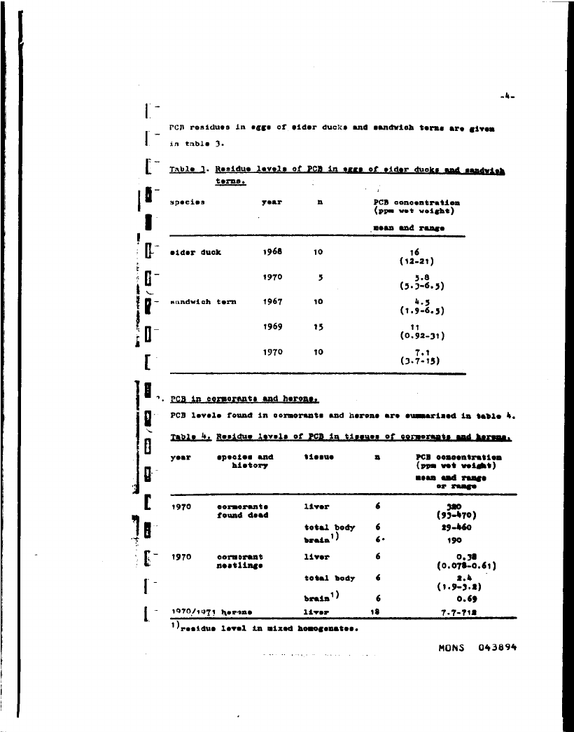
*iho dose rets at tho beginning of the experiment wee 100 ppm calculated on an amount of about 230 g fish which was a<baluletered to oach oormorant ovary day.
refid# gbVZnX441zGdG6xg0BEXm17yV14 pages
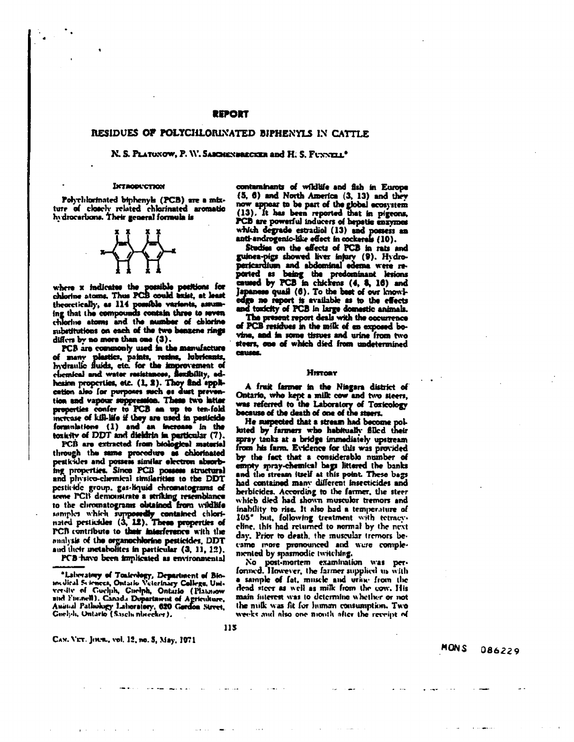
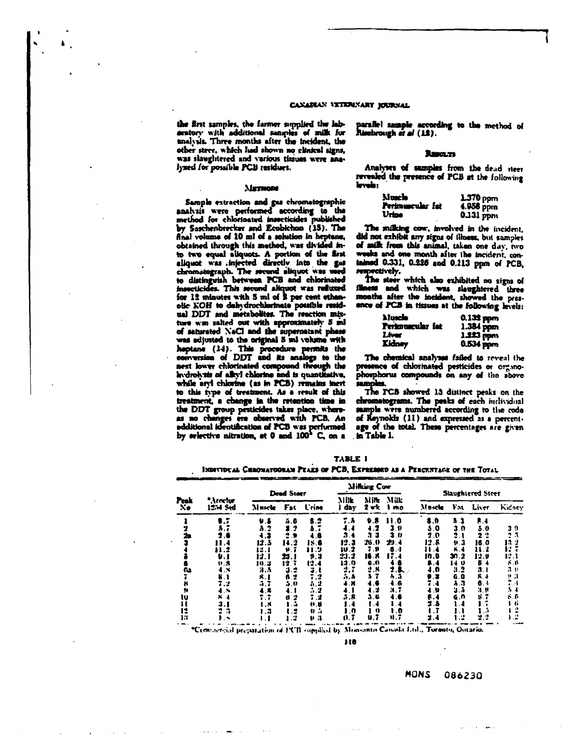
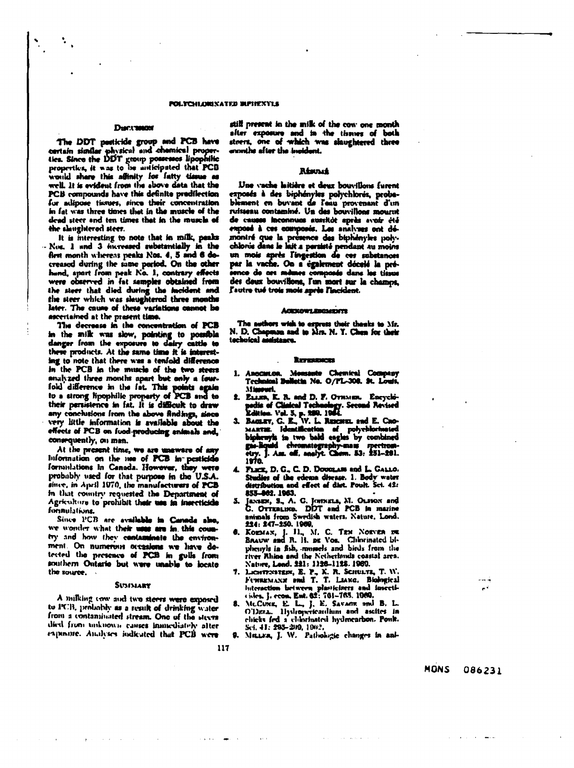
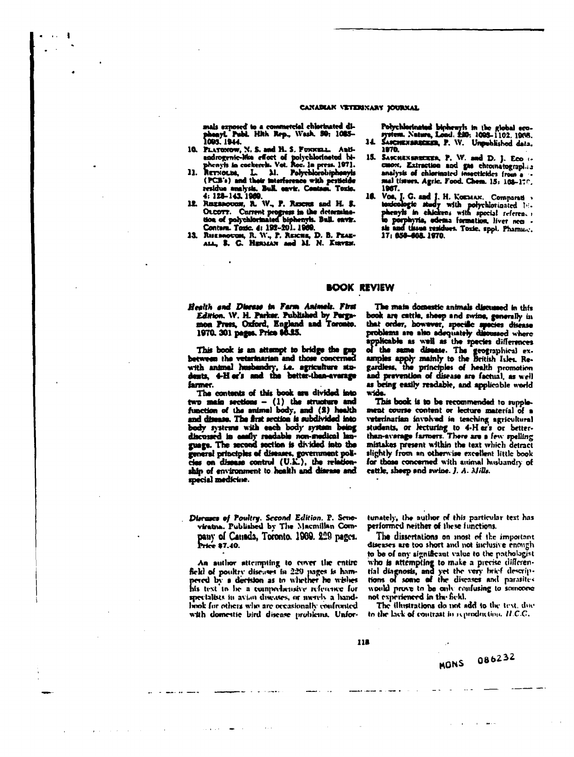
contaminants of wildlife and fish in Europe (5, 6) end North America (3, 13) and they now appear to be part of the global ecosystem (13).
refid# 6bw7mOGanD3Oxw0zn9pdvpn0o4 pages
i)
refid# X7no9rLnQvwLQkrQxqMw0602g3 pages
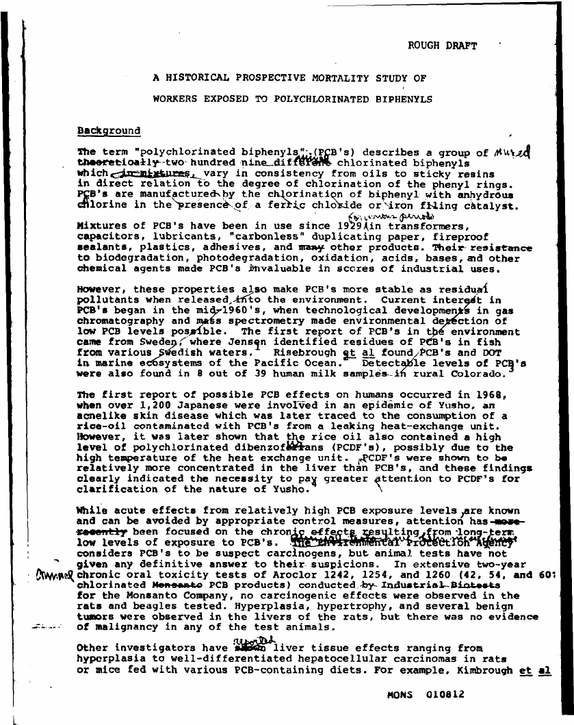
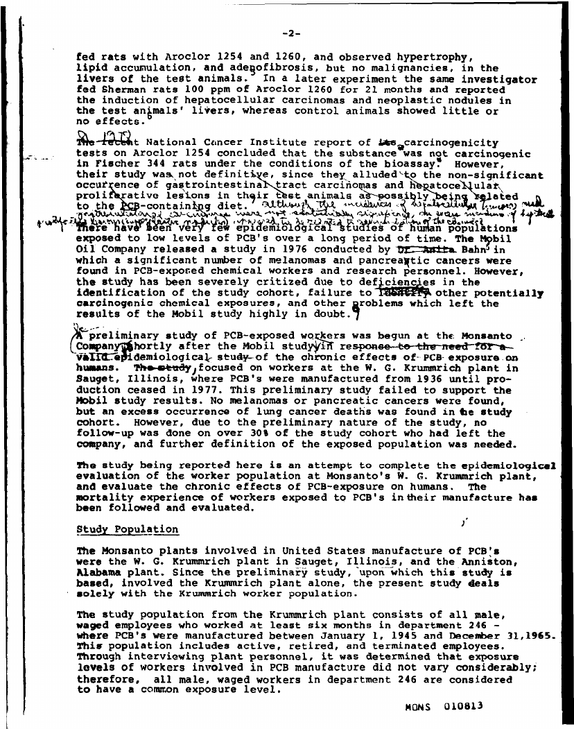
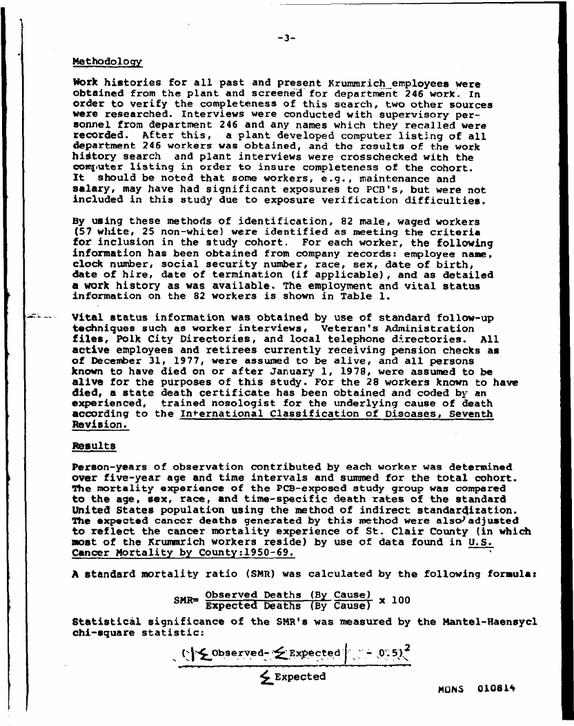
The first report of PCB's in tjie environment came from Swedepf'where Jensen identified residues of PCB1s in fish from various SWedish waters, Risebrough g_t al^ found/PcB's and DOT in marine ecosystems of the Pacific Ocean.
refid# xd16My7v4DY9JEkboMx2VeRG611 pages
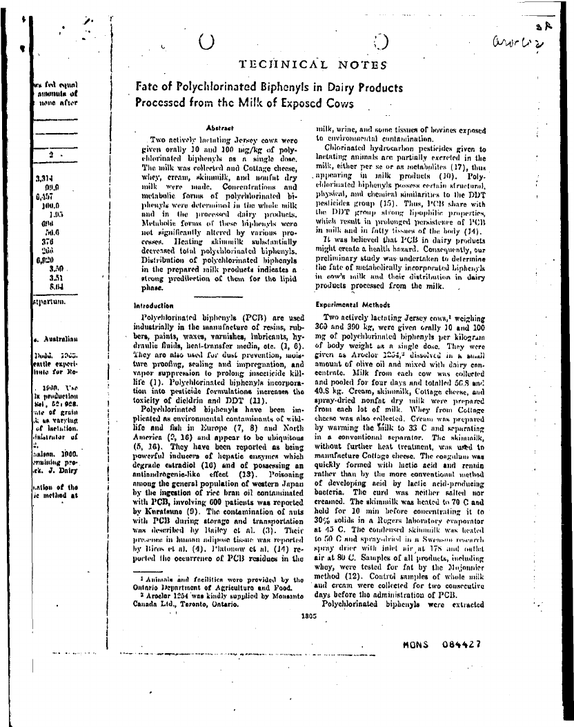
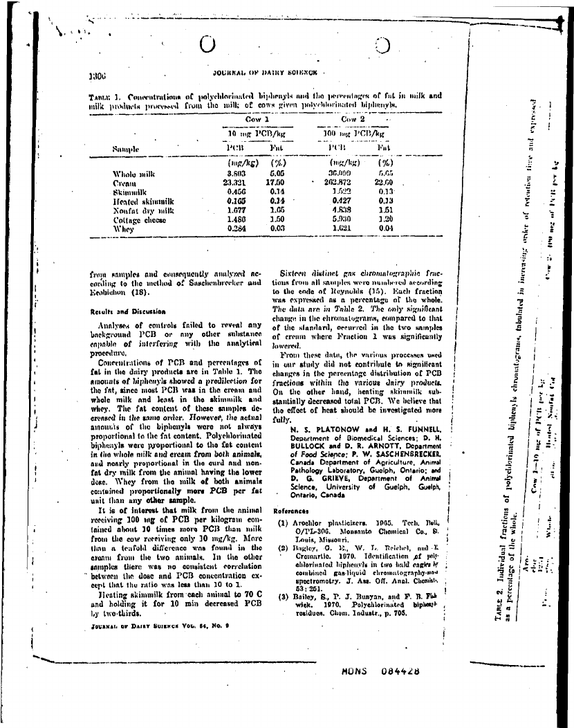
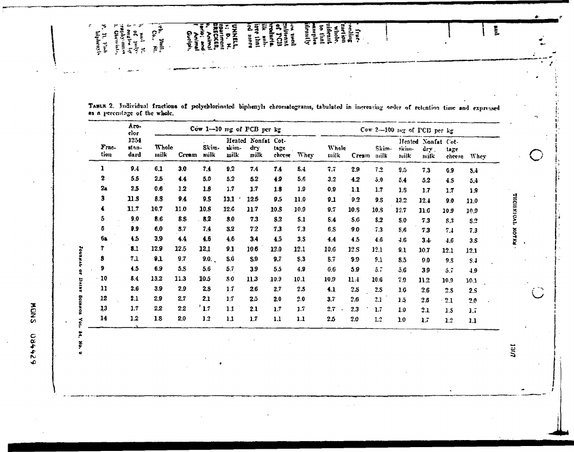
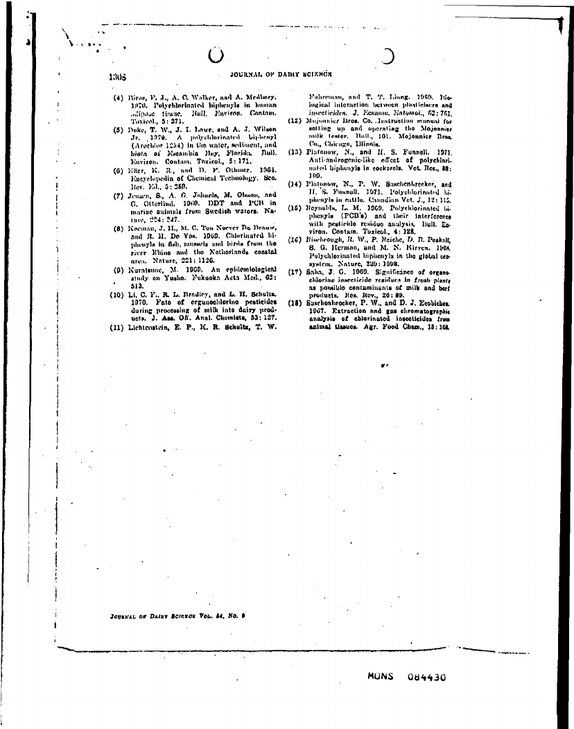
Polychlorinated biphenyls have been im plicated as environmental contaminant* of wild life and fish in Europe (7, 8) and Xorth America (2, 36) ami appear to bo ubiquitous (3, 36).
refid# O3OVJoBddOGpGx0anaqgm9Ze14 pages
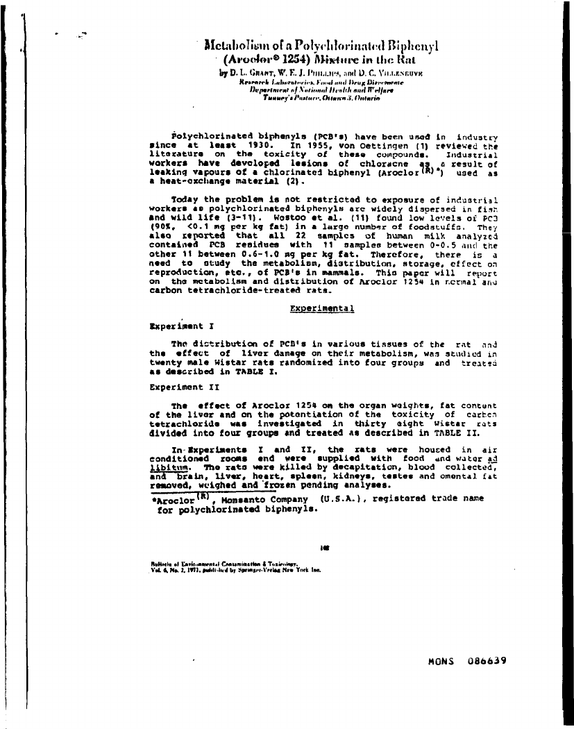
Today the problem is not restricted to exposure of industrial workers as polychlorinated biphenyls arc widely dispersed in fish and wild life (3*11).
refid# 2J25Q4D31z9G8OxR29yVeaQoR11 pages