38--Industrial Toxicology celsior, paper products, or sawdust, sufficient heat can be generated to char or ignite the materia] if the concentration is above the pyrophoric limit Solutions of butyllithium should never be exposed to the atmosphere but rather handled in enclosed systems or under inert dry atmosphere Emergency showers and eye baths should be placed in convenient locations Every em ployee should be carefully instructed, and understand that direct contact with the skin requires immediate flushing with large quan tities of water to the affected area Butyraldehydes have a relatively low degree of toxicity Although there is a lack of de tailed information on the subject, no cases are known of either acute or chronic intoxication due to exposures to butyraldehydes Butyral dehydes produce irritation and bums of the skin and eyes following contact of short dura tion Butyraldehydes have good warning properties due to a characteristic pungent aldehyde odor Butyraldehyde is a highly volatile flam mable liquid readily forming explosive mix tures with air It has a low flash point and low ignition temperature and is readily ignited by static sparks of relatively low energy It is a reactive chemical and the heat released by an uncontrolled reaction will soon cause boil ing and either pressure increase or release of large volumes of flammable vapor Butyral dehydes undergo rapid oxidation, any spills that are wiped up with rags can lead to fires in the rags Animal experiments have shown that large doses of butyraldehydes produce both de pression of the central nervous system and anesthesia so that the symptoms of acute in toxication in man (such as drowsiness, inco ordination, and headache) might be antici pated The animal experiments also suggest that these systemic symptoms may develop from exposures to concentrations below those causing uncomfortable irritation of the eyes, nose, and throat C Cadmium metal is easily flammable in the form of dust or fine powder The finely pow dered oxide produced in cadmium fires is acutely poisonous, and several cases of serious 1132 poisoning incurred in fighting fires involving cadmium metal have been recorded No at tempt should be made to approach such a fire without a supplied air respirator, universal gas mask with smoke filter, or metal fume respira tor One of the commonest sources of acute in dustrial poisoning is the heating or weldmg of cadmium plated metals This job should be done only under efficient local exhaust or by workmen equipped with supphed air respira tors Industrial poisoning by swallowing of solu ble cadmium compounds is not common, but a number of nomndustrial cases from the prep aration of acid foods in cadmium plated uten sils have occurred There is some disagreement as to the pos sibility of chronic cadmium poisoning One examinabon was made of 38 men working in the production of alkali storage batteries and exposed to atmospheres ranging from three to 900 mg of cadmium and almost equal amounts of nickel per cu m These men com plained of fatigue, nervousness and irritability, thirst, cough and shortness of breath In about half of the workmen with long penods of employment, the sense of smell was im paired Of the 19 men with more than eight years of work m the battery plant, 15 showed protein m the urine, 12 suffered more or less from loss of the sense of smell, and 14 showed impaired kidney function Fifteen of 17 men examined with the spirometer showed im paired lung function, and all of them com plained from time to time of shortness of breath In four cases the changes m the lungs were noticeable on X-ray examination, and six other cases showed signs of inactive tubercu losis One case had active tuberculosis Other examinations were made on 20 work men from a cadmium smelter at repeated in tervals over a period of 3 months These men had exposures varying from 6 months to 22 years, and the atmospheric concentrations in the plant ran from 0 04 to 31 3 mg of cad mium per cu m of air Exposures to the highest concentration, however, lasted only two to three hours per day, and the men were rotated so that total exposure to the highest concentrations was comparatively limited The most characteristic finding was a yellow nng on the teeth of the men with long ex-
refid# NGda1JqkNOV9rmvLK9KndKXaV1 page
38--Industrial Toxicology the whole area with a lime sulfur spray To prevent such inconvenience, metallic mercury should be handled over impervious tables or containers with the surfaces de pressed and arranged to drain to a central point Spilled mercury can then be collected and returned to stock A number of volatile mercury compounds are used m seed disinfection Examples are ethyl mercury chloride and phosphate and the corresponding phenyl mercury compounds These materials are highly toxic When used without adequate enclosure and dust control, they can rapidly produce severe mercurial in toxication These seed-treating compounds are also strong primary skin irritants and will cause itching, burning, and blistering on direct contact Such irritations heal slowly The type of mercury intoxication common to industry is characterized by a tremor of the hands, irritation of the mucous membranes of the mouth, excessive flow of saliva, and changes in the personality Poisoning by one of the volatile compounds may be more rapid so that personality changes are not so likely to be seen Inhalation of mercury vapor, usually in very high concentrations, may produce metal fume fever, which may disappear with no other apparent symptoms, or may be followed by a pneumonitis or other symptoms of mercurahsm The ordinary toxic dust respirator does not protect against intoxication by metallic mer cury or by the volatile seed-treating com pounds, since they are in the form of vapor rather than dust A gas mask offers some pro tection, but if enclosure and local exhaust are not possible, the only effective protection is a supplied air respirator Mesityl oxide is a high-boiling, unsaturated ketone which is thought to be somewhat more toxic than the ketones of lower molecular weights Metal hydrides (primary types) are com pounds of hydrogen and the alkali metals sodium, potassium, lithium, magnesium, cal cium, and strontium Information on the health hazards of metal hydrides is limited Since they react with water to form caustic hydroxides, they are lmtabng to the eyes. 1154 skin, and mucous membranes They also re lease a large amount of heat on reaction with the moisture of the skin Methanol (methyl alcohol) poisoning is usually produced by swallowing the liquid or inhaling high concentrations of vapor m an enclosed place such as a tank The signs of poisoning include headache nausea, vomiting, violent abdominal pains, aimless and erratic movements, dilated pupils, sometimes de lirium, and such eye symptoms as pain, ten derness on pressure, and occasionally blind ness Direct action of the liquid or the vapor on the skin and mucous membranes may pro duce an irritation and inflammation One of the peculiarities of methanol poison ing is its exceptionally severe action on the optic nerve About one-half of all the senous cases of methanol poisoning result in some im pairment of vision, which is usually permanent and may vary from dimness or bhnd spots scattered through the visual field to total blindness Methoxychlor (2,2-di[p-methoxyphenyl]-l,1,1-tnchloroethane) is a synthetic insecticide which is closely related to DDT in its action It is, however, about % to Mo as toxic as DDT Consequently, the hazard from inhalation of the dust or mist of sprays of this insecticide is remote Methoxychlor is not absorbed through the intact skin in significant amounts, and does not seem to have any effect on the central nervous system In animal experiments, con tinued feeding of diets containing methoxy chlor m toxic concentration leads to loss of weight in the animals by their voluntary re striction of food intake and also to fatty in filtration of the liver in the manner of the chlorinated hydrocarbons Methyl acetate is widely used as a lowboihng solvent m the perfume, cosmetic and paint industries It is irritating to the mucous membranes of the eyes and the respiratory passage Animal studies indicate that there may be general poisoning and long-lasting aftereffects when methyl acetate is inhaled in concentra tions below that which produces narcosis If exposure is senous, pulmonary edema and
refid# awzELnEZjOj8DrDR60kGevqa1 page
ally appears within the first few weeks of exposure but may occur m an individual who has worked with the material for a number of years Probably anyone with sufficient ex posure will eventually develop the dermatitis There are also some persons with a true hy persensitivity to TNT who should be per manently removed from exposure Inhalation or ingestion of TNT in excessive quantities will produce systemic poisoning Some of the earliest signs of excessive ab sorption of TNT are digestive disturbances and mild cyanosis The digestive signs in clude nausea, sometimes vomiting m the early morning, loss of appetite, and sometimes con stipation with colic The cyanosis probably starts with the formation of methemoglobm or similar pig ment This indication of overexposure is not in itself dangerous, but it is commonly fol lowed by a reduction m red cells and a severe anemia, which may develop into a typical aplastic anemia TNT also affects the liver and produces a toxic jaundice Young people and people with previous liver disease are the most susceptible To prevent both the dermatitis and the systemic poisoning, the most scrupulous house keeping and dust control measures should be observed TNT handlers should wear com plete work uniforms, change them daily, and never take them from the plant Thev should also be required to wash thoroughly before leaving the plant Soap is not effective Liquid soap with 5 percent potassium sulfite and a small quantity of sulfonated higher alcohol provides a good medium Triorthocresylphosphate (TOCP) is a color less, odorless high-boiling liquid and is usually found in liquid multure with the meta and para isomers Any route of exposure m single or repeated doses constitutes a high health hazard TOCP is readily absorbed through the skin, but there is little vajaor hazard at or dinary temperatures Ingestion of the compound, either as the liquid or the fog or mist, produces symptoms of paralysis without sensory effect Shortly after ingestion, there may be gastro-intestinal symptoms, including nausea, vomiting, diar rhea, and abdominal pain The majority of victims never again regain normal function of the central nervous system Turpentine is the most familiar solvent for oil paints Although there are cheaper sub stitutes, it is still widely used in fine extenor painting Many painters formerly had chronic kidney disease, which they attnbuted to tur pentine vapor but which was probably due to lead It has not been possible to produce chronic kidney disease expenmentally with tur pentine Turpentine hydrocarbons are not particu larly lmtating in themselves but some grades contain highly untabng impunties These differences depend on the method of preparation and probably are a measure of the amount of decomposition produced in the re fining It has been generally believed in this country that gum turpentine, obtained by tapping trees, is less irritating than the steamdistilled variety U Uranium and its compounds are radioactive, and they are toxic when ingested or inhaled The effects on the body depend upon the solubility of the uranium compound con cerned The soluble compounds are eliminated from the body rather rapidly, but if ingested in suf ficient amounts, they will cause a chemical poisomng, primarily affecting the kidneys One investigator has reported that long before a radiologically hazardous amount of uranium could be deposited m the bone structure, the chemical toxicitv to the kidneys would be fatal Insoluble uranium compounds are primarily an inhalation hazard They are dangerous not because of chemical toxicity to the kid neys, but because radioactive particles may ac cumulate m the lungs in an amount exceeding permissible tissue tolerance Urethanes--see Toluene 2,4-diisocyanate.
refid# bqozgOa4ZE6Gmkrn171R27001 page
TML tetramethyl lead TNT trinitrotoluene toluene diisocyanate isocyanates toluidme methyl aniline toluol toluene tolylene diisocyanate isocyanates 1,1,1 -tnthloroethjne methyl chloroform tnchloromethane chloroform trunethvlamine methvlamine tnmethvl carlnnol butanol 2.4.6-trinitrophenvlmethvlmtra nine tetryl 2.4.6-tniutroplienol picric acid triorthocresvl phosphate tncresvl phosphate u UDMH 1,1-dimethvlhydrazine unss'inmetncal dimethvl hvdr.izine 1,1 -di meths Ihvdrazi ne V vinegar acid vinyl benzene vmvlcvamde vmvl tnchlonde vinvlidene chloride monomer w acetic acid styrene monomer acrvlonitrile inethvl chloroform dichlonieths lene wood alcohol wood spirit methyl alcohol methyl alcohol X xylols xylenes
refid# QJ67OajMdX1JmO7oGqQv89E1k1 page
41--Electrical Hazards Fic 41-13 --In the circle is an exposed electrical connection inside the handle of a portable electric tool, creating a serious shock hazard This sort of defect should be remedied only by an experienced electrician Motors, circuit breakers, moving parts of switches, and similar current-carrying de vices wear out, break down, and need read justments Repairs on electrical circuits and electrical apparatus should be made only by experienced electricians (Fig 41-13) Only high-grade electrical equipment listed as standard by Underwriters Laboratories Inc, or other qualified authority, should be used m maintenance work Inferior, unap proved equipment may become hazardous because of defective material or design or poor workmanship If practicable, conductors should be deen ergized when maintenance work on them is necessary Before they begin work, main tenance men should make certain that the line is dead by testing it with the voltage testing devices provided It is not safe to test a circuit with the fingers or with make shift devices 1282 The men should be instructed m the use of electrical testing equipment and meters how to tap into the circuit, how to locate testing points from schematic diagrams, how to use insulated meter leads, clips, and probes, and how to fuse test circuits Pliers, screw driv ers, testing lights, and other tools used in electrical repair work should be insulated When maintenance or repair work must be done on energized conductors, it is advisable to have two or more employees work to gether The supervisor should give detailed proceduies to be followed He should also see that maintenance ciews are supplied with and use the right protective equipment The kind of protective equipment needed will be determined by the type of circuit, the nature of the job, and the conditions under which the work must be done Rubber gloves, sleeves, mats, line hose, insulating plat forms, safety headgear, safety glasses, safety belts, fuse tongs, and insulated switch sticks are among the more common items of equip ment usually available Safety equipment should be inspected be fore use and retested at frequent intervals Because of the location of electrical equip ment and circuits, the methods of maintain ing them, and the insulated tools required, the maintenance man must be constantly on guard to prevent accidental grounding Such grounding may result if an energized loose wire comes in contact with water pipe, con duit, metal fixtures, another wire, or anything metallic that is connected with the earth Lockouts Unexpected operation of electrical equip ment that can be started by automatic oi manual remote control may cause injuries to persons who happen to be near enough to be struck Unexpected starting of motors may injure men working on them as well as the men operating machines controlled by the motors For that reason, when men are to repair motors or other electrical equipment, the cir cuit should be opened at the switch box, and the switch should be padlocked in the "off" position and tagged with a description of the work being done, the name of the man, and the department involved Warning signs or tagging alone does not provide the positive
refid# O3BLG9KQBBvbXprLLDK1NvGNM1 page
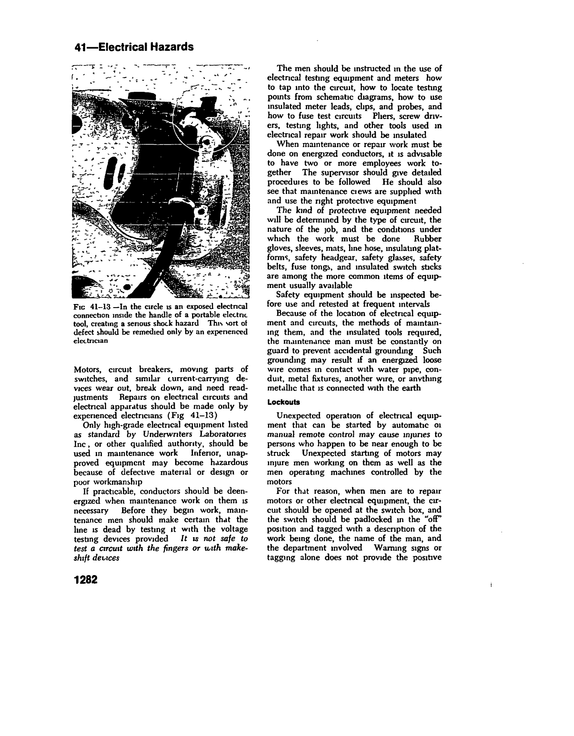
.I May 25, 1973 lb B ll \ Mr. 11.
refid# b5L3672DBJndr0VoLG9Xpo11g1 page
PLAINTt^'S exhibit ntt#/<?
refid# gDdX0LD1mMYN5q07J2EBVwxNG1 page
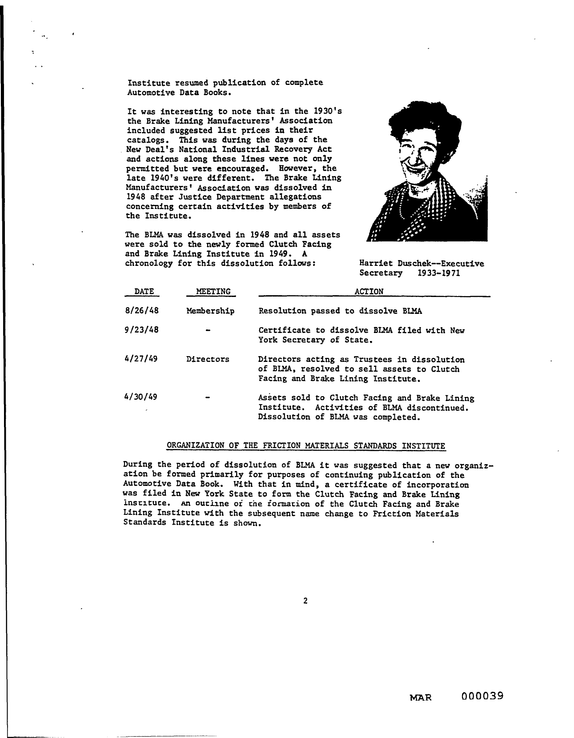
FMS HISTO RY FRICTION MATERIALS STANDARDS INSTITUTE MAR 000037 FOREWORD A history of the Friction Materials Standards Institute probably should start in its year of incorporation--1948.
refid# 2JLRE02DYbKO2JRzyMregLVGr23 pages
43--Fire Protection Flameproofing wood and fabrics Fire-retardant treatments.
refid# 0LBBJLe6kdYLjm5gBaM4ZNGdm1 page
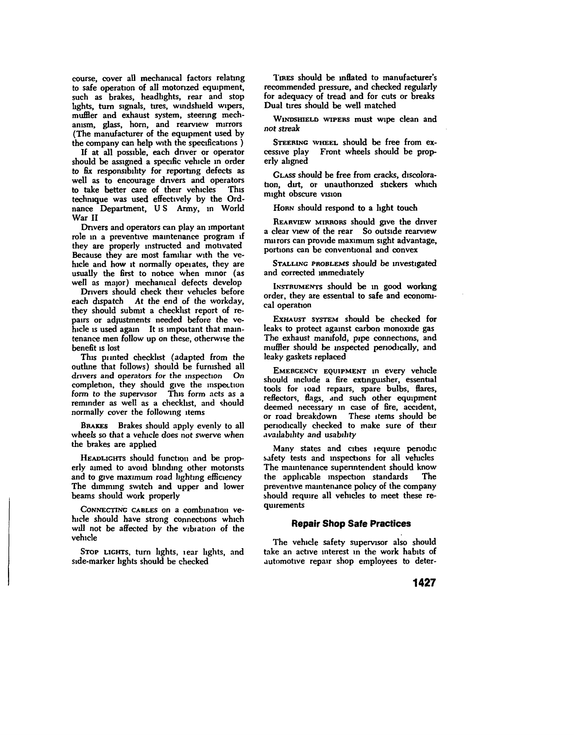
course, cover all mechanical factors relating to safe operation of all motorized equipment, such as brakes, headlights, rear and stop lights, turn signals, tires, windshield wipers, muffler and exhaust system, steering mech anism, glass, horn, and rearview mirrors (The manufacturer of the equipment used by the company can help with the specifications ) If at all possible, each driver or operator should be assigned a specific vehicle m order to fix responsibility for reporting defects as well as to encourage drivers and operators to take better care of their vehicles This technique was used effectively by the Ord nance Department, U S Army, m World War II Drivers and operators can play an important role in a preventive maintenance program if they are properly instructed and motivated Because they are most familiar with the ve hicle and how it normally opeiates, they are usually the first to notice when minor (as well as major) mechanical defects develop Drivers should check their vehicles before each dispatch At the end of the workday, they should submit a checklist report of re pairs or adjustments needed before the ve hicle is used again It is impoitant that main tenance men follow up on these, otherwise the benefit is lost This punted checklist (adapted from the outline that follows) should be furnished all drivers and operators for the inspection On completion, they should give the inspection form to the supervisor This form acts as a reminder as well as a checklist, and should normally cover the following items Brakes Brakes should apply evenly to all wheels so that a vehicle does not swerve when the brakes are applied Headlights should function and be prop erly aimed to avoid blinding other motorists and to give maximum road lighting efficiency The dimming switch and upper and lower beams should work properly Connecting cables on a combination ve hicle should have strong connections which will not be affected by the vibiation of the vehicle Stop lights, turn lights, lear lights, and side-marker lights should be checked Tires should be inflated to manufacturer's recommended pressure, and checked regularly for adequacy of tread and for cuts or breaks Dual tires should be well matched Windshield wipers must wipe clean and not streak Steering wheel should be free from ex cessive play Front wheels should be prop erly aligned Class should be free from cracks, discolora tion, dirt, or unauthorized stackers which might obscure vision Horn should respond to a light touch Rearview mirrors should give the driver a clear view of the rear So outside rearview murors can provide maximum sight advantage, portions can be conventional and convex Stalling problems should be investigated and corrected immediately Instruments should be in good working order, they are essential to safe and economi cal operation Exhaust system should be checked for leaks to protect against carbon monoxide gas The exhaust manifold, pipe connections, and muffler should be inspected periodically, and leaky gaskets replaced Emergency equipment in every vehicle should include a fire extinguisher, essential tools for toad repairs, spare bulbs, flares, reflectors, flags, and such other equipment deemed necessary in case of fire, accident, or road breakdown These items should be periodically checked to make sure of their availability and usability Many states and cities require periodic safety tests and inspections for all vehicles The maintenance superintendent should know the applicable inspection standards The preventive maintenance policy of the company should require all vehicles to meet these re quirements Repair Shop Safe Practices The vehicle safety supervisor also should take an active interest in the work habits of automotive repair shop employees to deter- 1427
refid# vVvVZbgZxa08wkxrxKVGL20Bb1 page
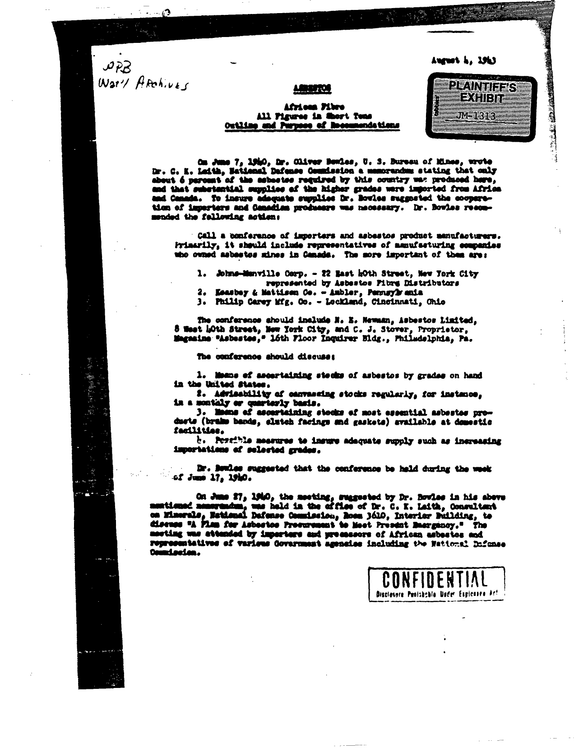
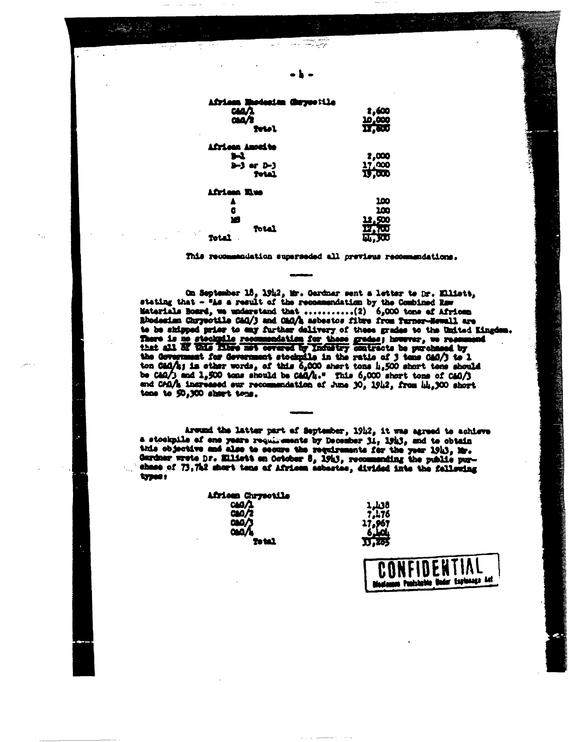
JP3 UkJ IMuaflln ill rt|WM la Ibert mu-- al ynin rf Auguat k, 1*0 CM Jmm 7, lfM>, Or* OUm 1--In, 0. 3. tom of Bmi, roM Or.
refid# 91jQODw00NMaqNVKDN71bn0x78 pages
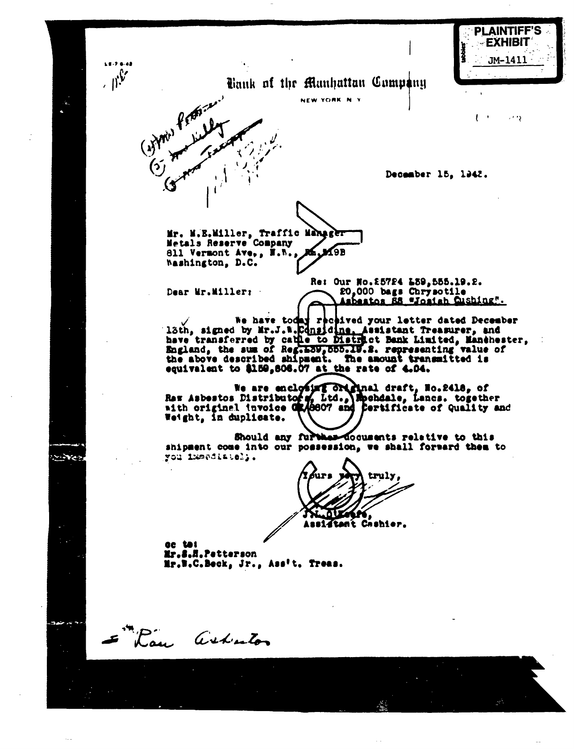
PLAINTIFFS EXHIBIT - JM-1411 t' linuk nf tlir fRunljattaii Guimpitui DtOMbir It, li, Dear Ur.Hlllen Rat Our Ro.5?
refid# 2JV9Jq0v6xa4anGJd5aR0J9n71 page
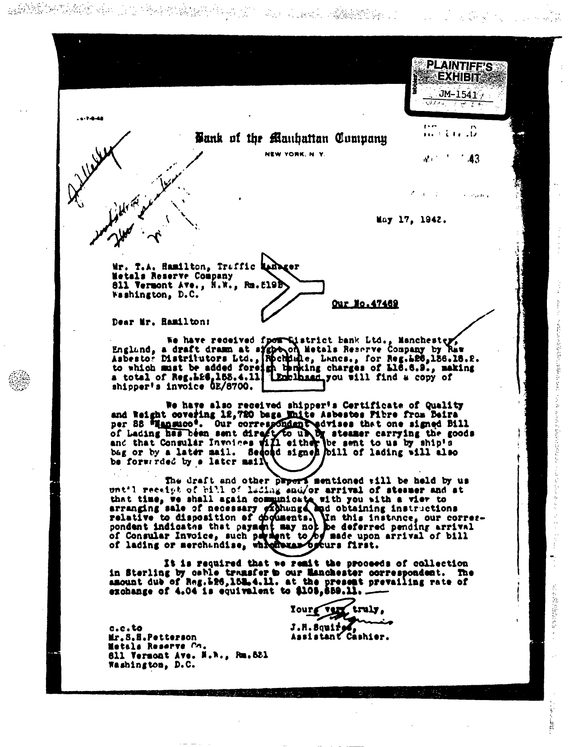
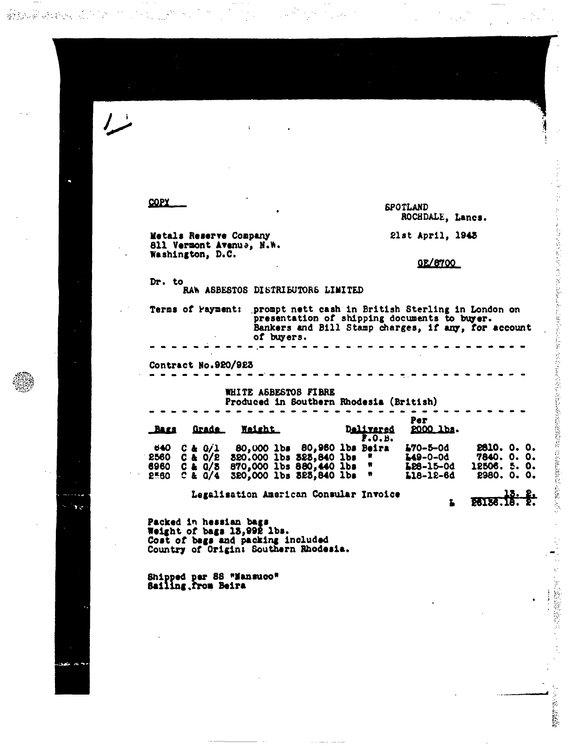
Mr.
refid# RpOKKjpX8p4M1OEeBGm9R9d2V3 pages
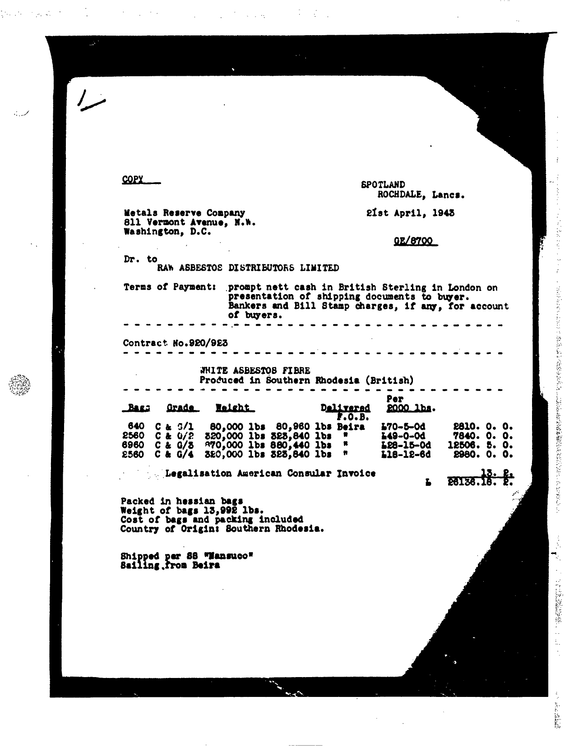
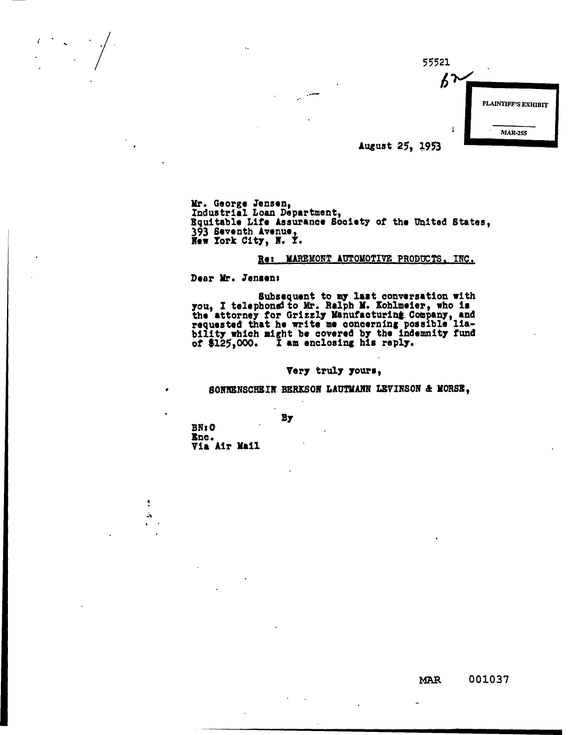
August 25, 1953 PLAINTIFF'S EXHIBIT Ur.
refid# jNV4VJd9xJ2eN0L0Dqy052jYR1 page
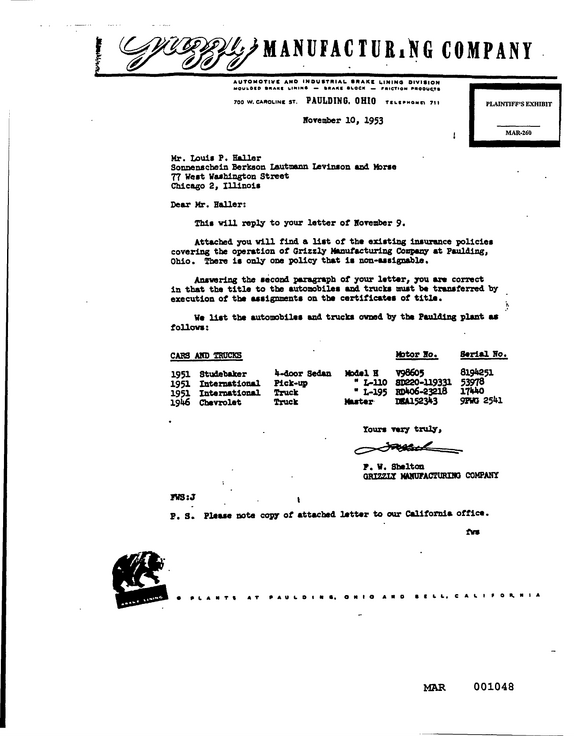
^t^^p^MANUFACIURi^G COMPANY automotivc amp INDUSTRIAL IRAKI LI NINO DIVISION PMOOUCjTt 700 w.
refid# KzzvogXDe67NN0EwgLLzd5V802 pages